

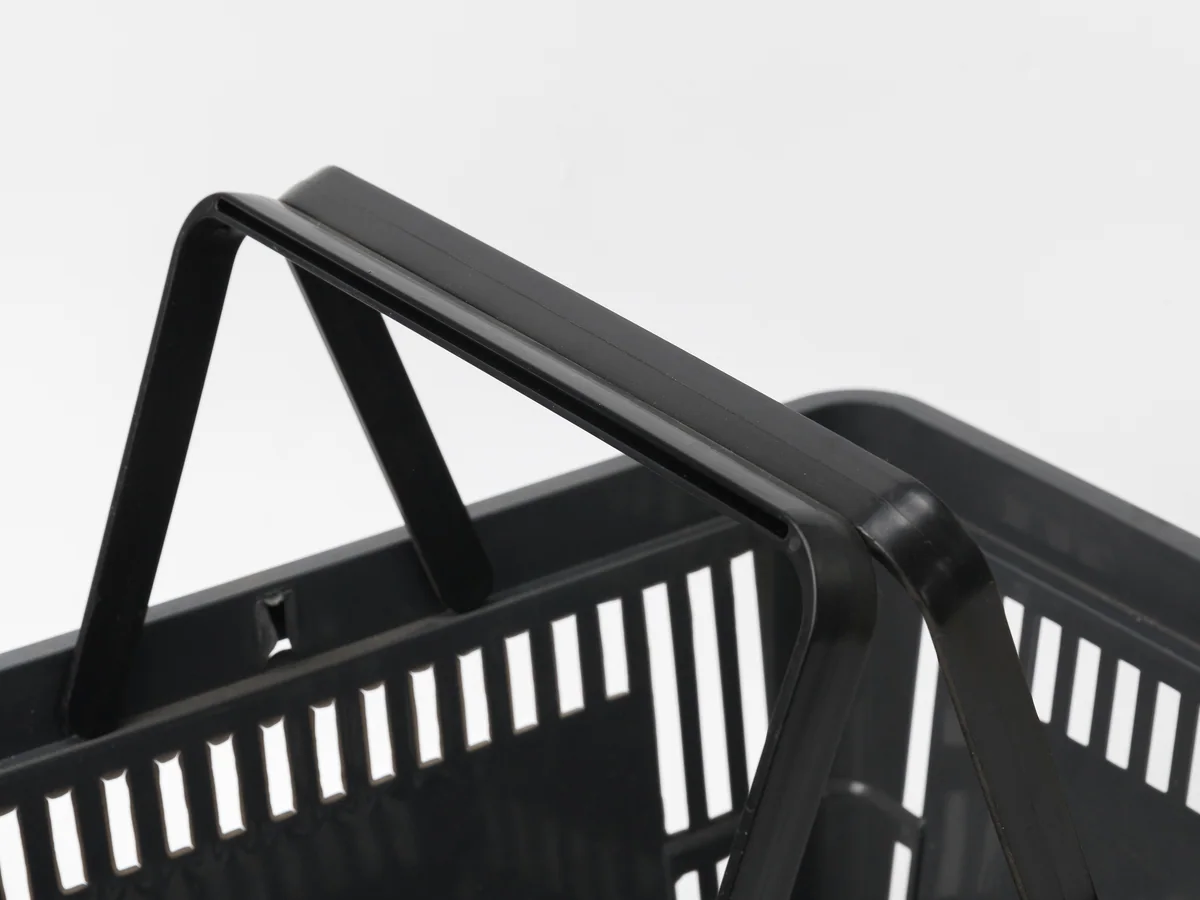
Black Moulded Body
Wear shows least
Black moulded plastic scuffs like any other and shows it less. On a fleet of several hundred baskets that survive several thousand cycles each, that is what decides when they get replaced.
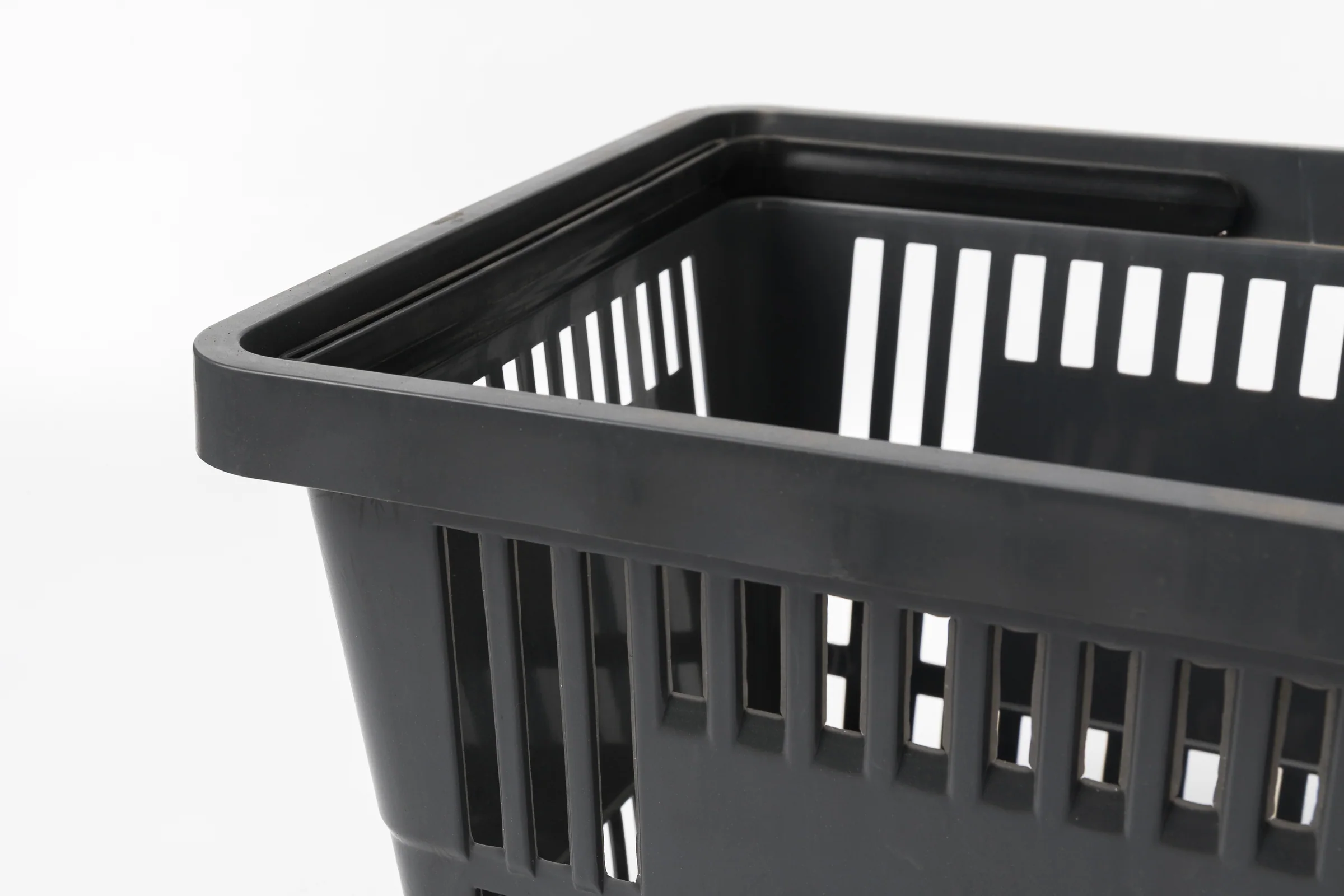
Moulded black · twin folding handles · stacks flat
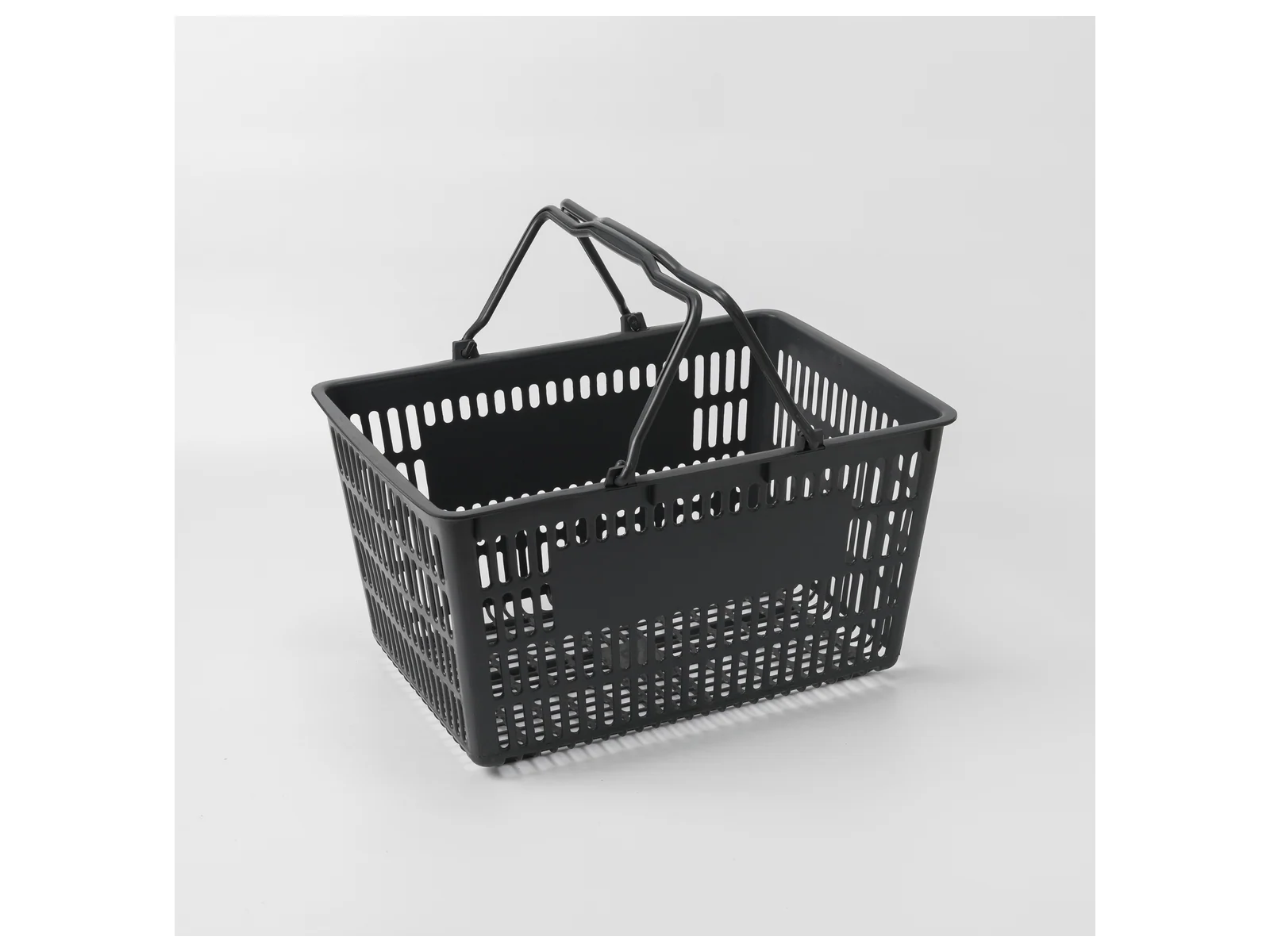
The twin-handle hand basket in black, which after two years of being stacked, dropped and kicked across floors still looks like a basket rather than a problem.
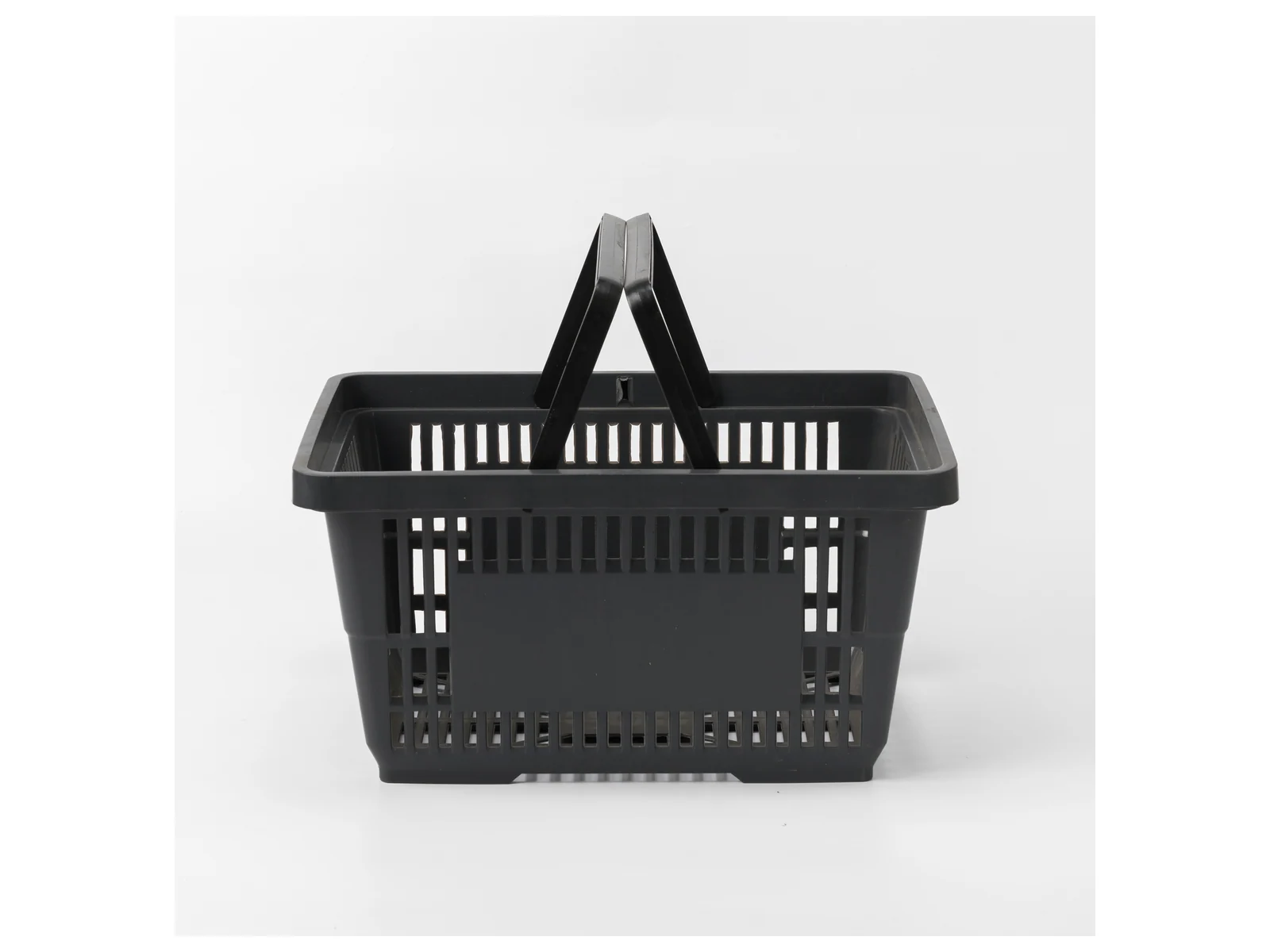
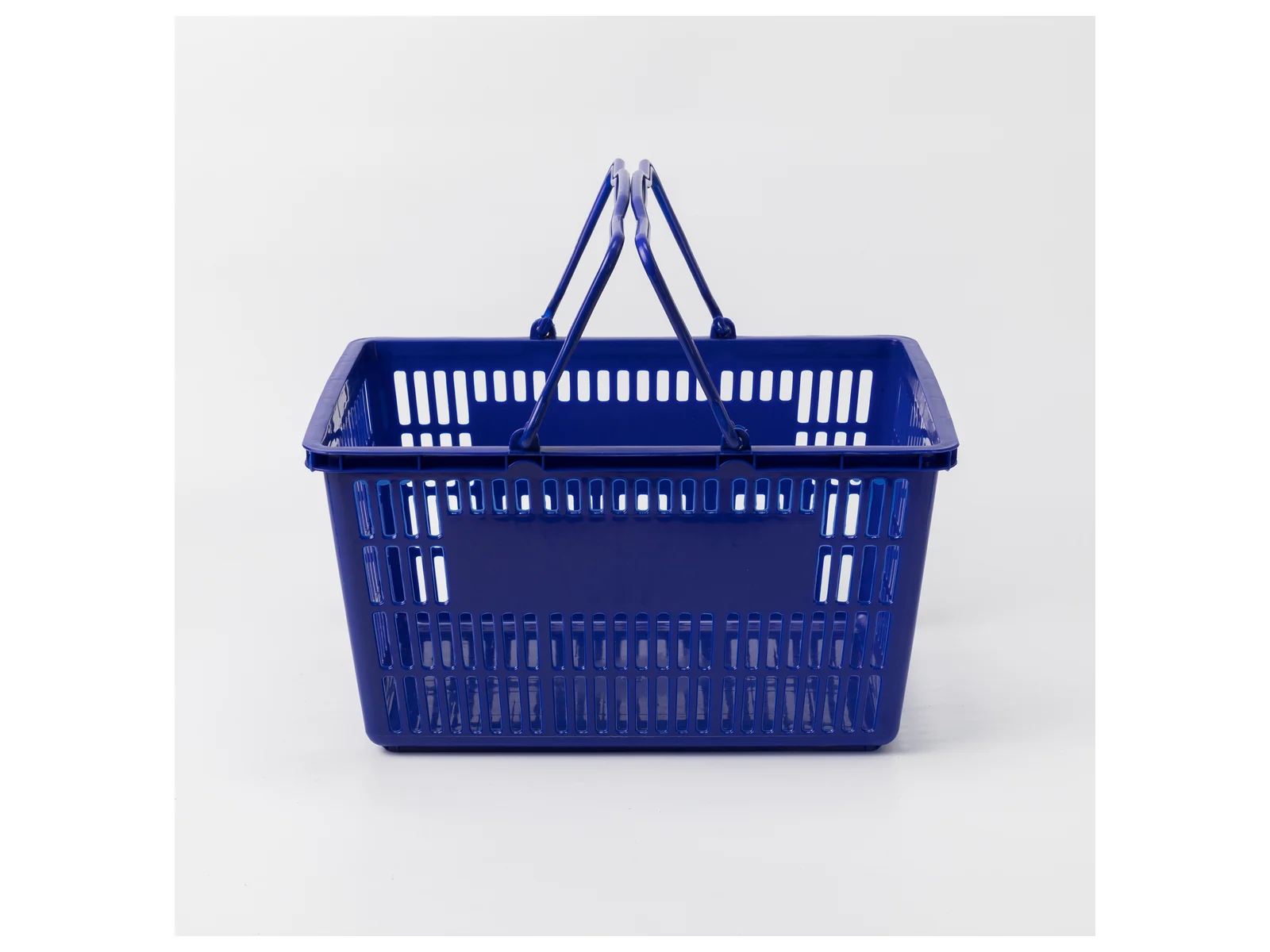
Studio angles on white, with close-ups below.
Every hand basket looks good on day one. The question is what a stack of them looks like in year two, after several thousand cycles of being dropped, kicked and stacked hard. Black moulded plastic answers that best — the scuffs are there and they are invisible from any distance a shopper stands at.
The build is the standard twin-handle basket otherwise: handles that fold flat onto the rim, a perforated body light enough to carry loaded, and a taper that releases cleanly from the stack. Nothing about choosing black changes how the basket works.
The twin-handle hand basket in black, which after two years of being stacked, dropped and kicked across floors still looks like a basket rather than a problem.
Supermarkets, convenience stores, chain retail and speciality stores. Tell us the store format and the floor area and the specification comes back written against them.
Black is a durability decision rather than a design one, and these four are the wear points it is protecting.
Wear shows least
Black moulded plastic scuffs like any other and shows it less. On a fleet of several hundred baskets that survive several thousand cycles each, that is what decides when they get replaced.
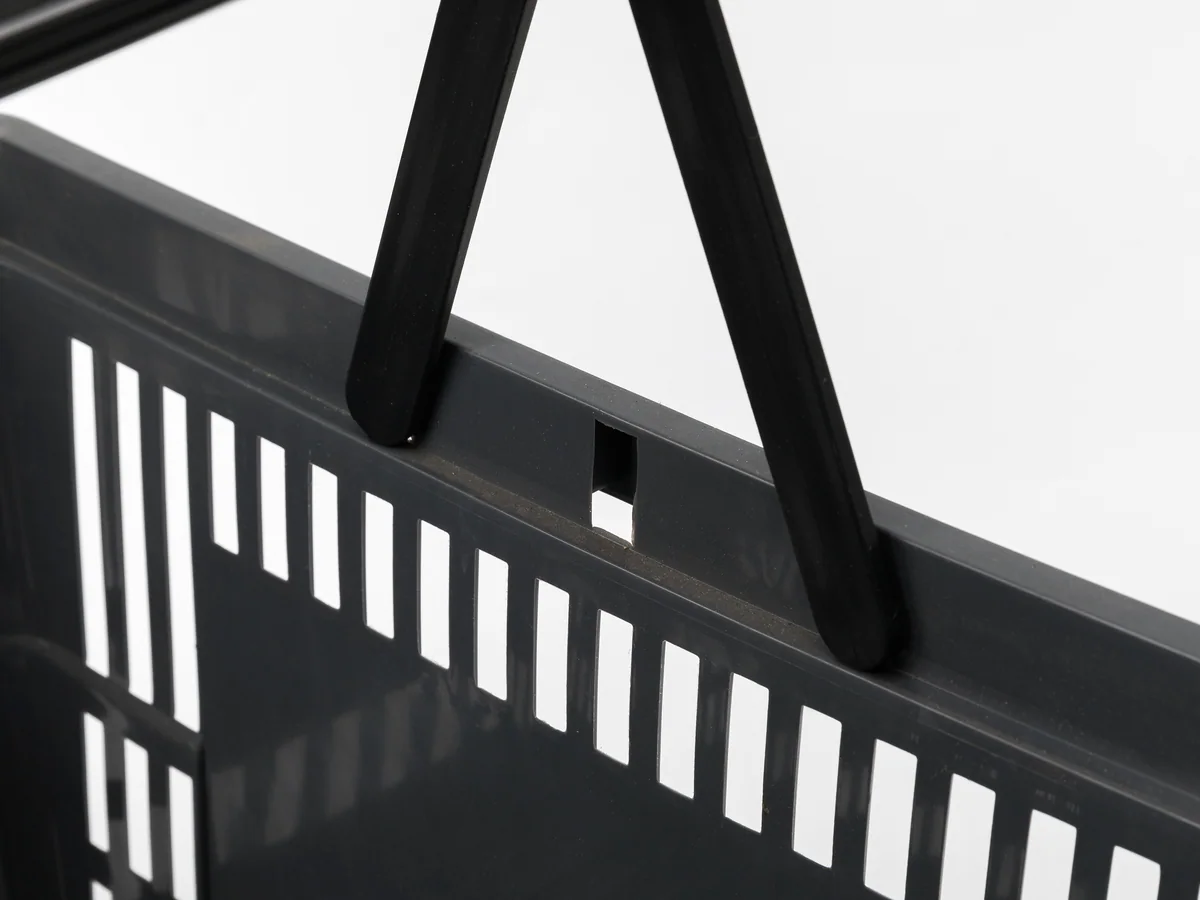
The first wear point
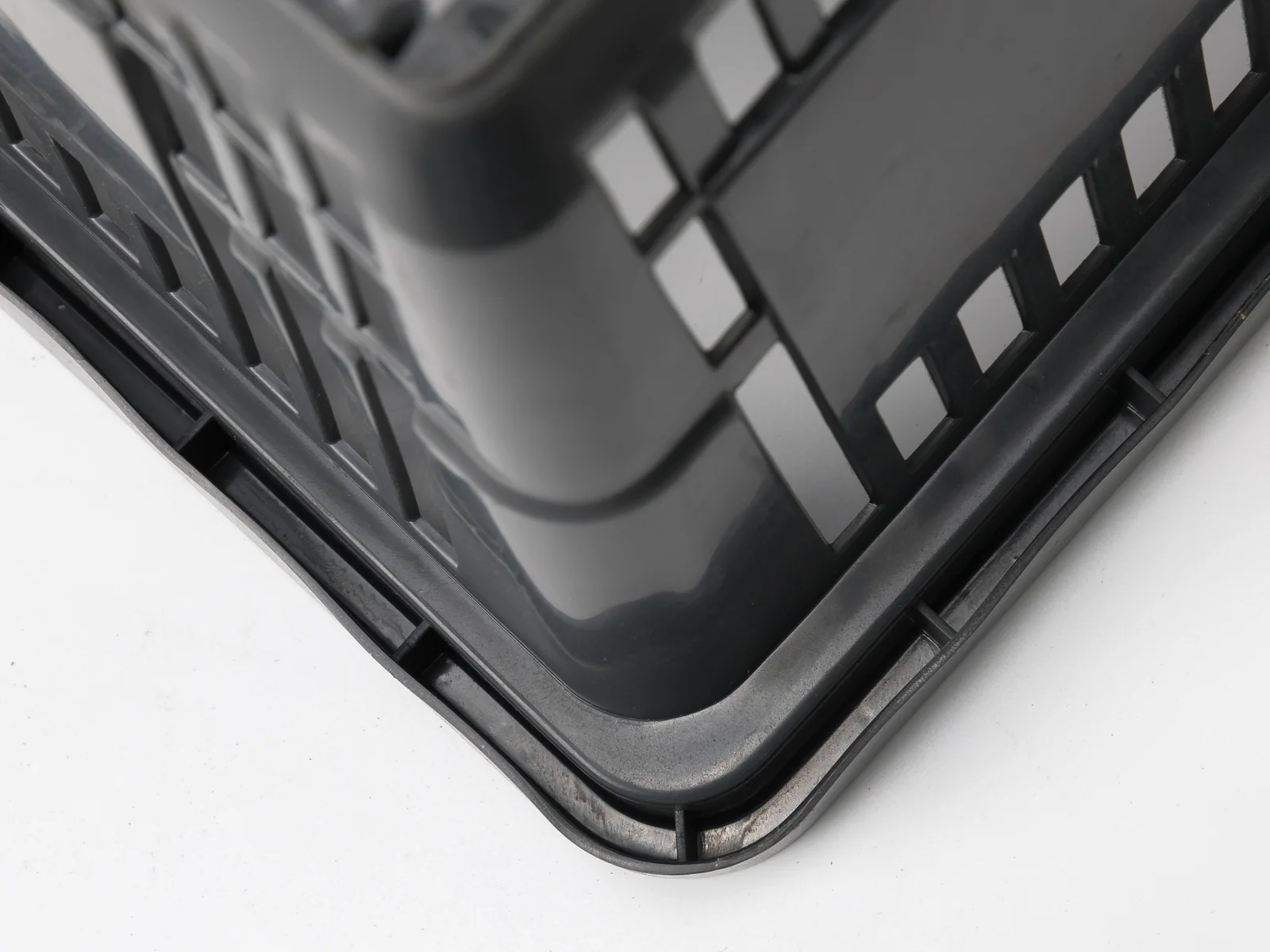
The bottom corners take the impact every time a basket is set down hard or dropped. It is where wear shows first on any colour, and where black earns its specification.
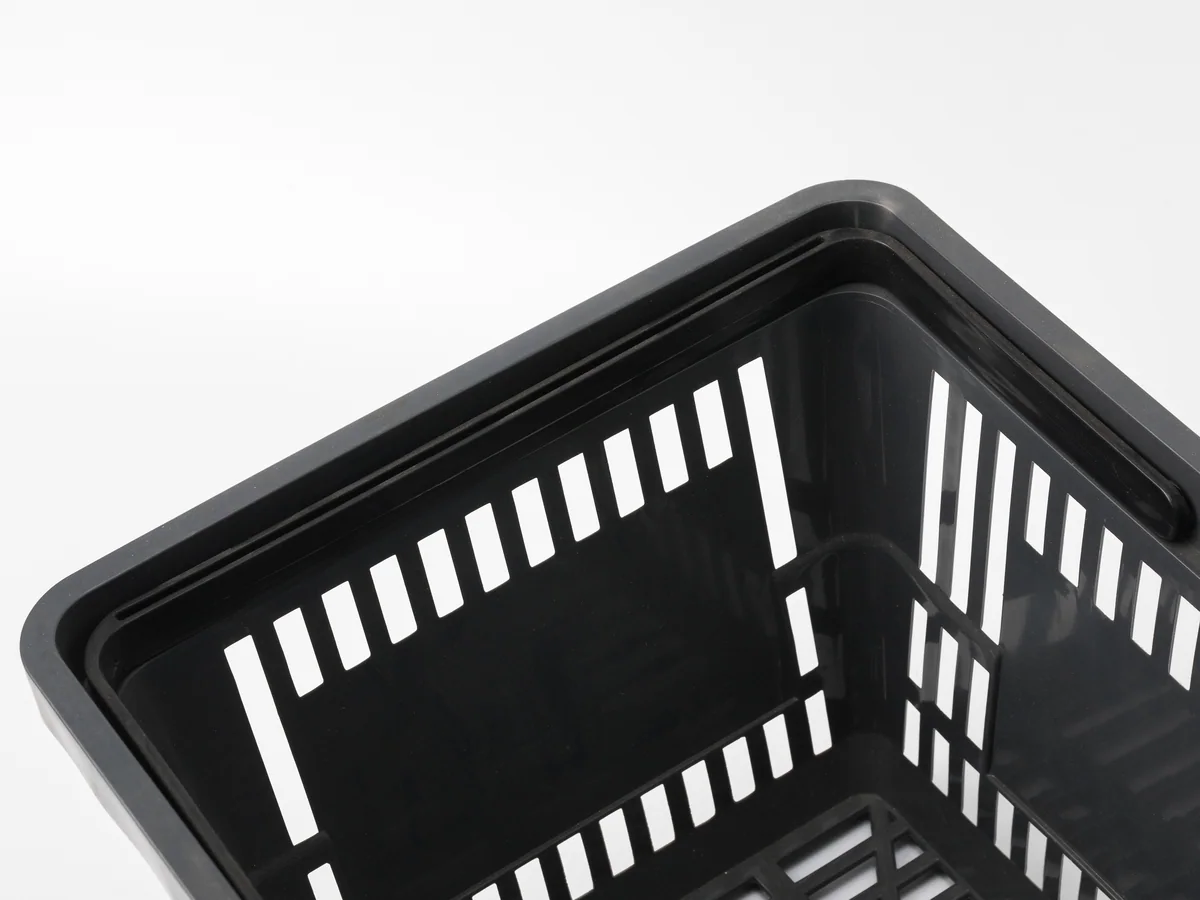
Basket against basket
This line is where one basket meets the next in a column. Over a year it collects more contact than any other part of the basket, including the handles.
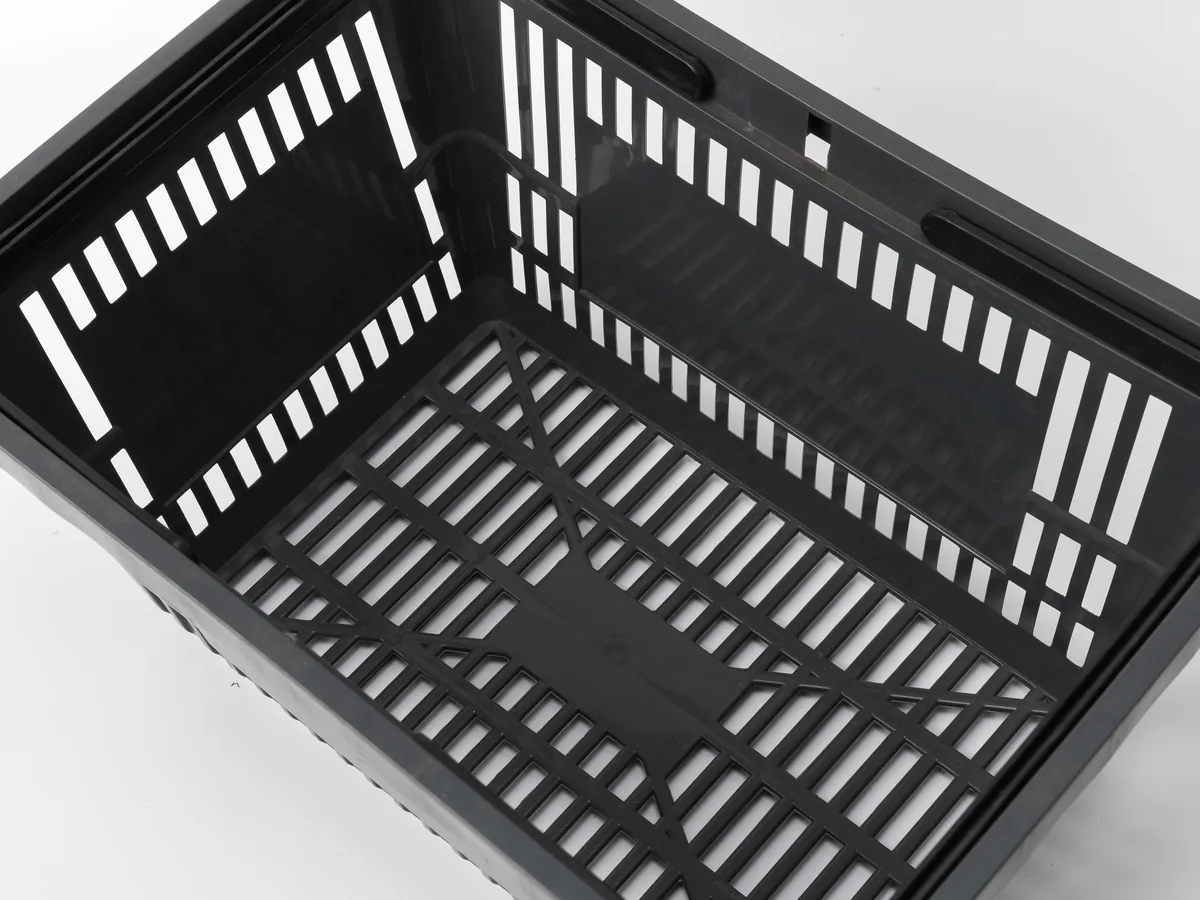
Flat on the rim
The handles fold flat like every twin-handle build here. Nothing about the colour choice changes the mechanism, which is the correct outcome.
Every item on this page is made to order. Send a floor plan, a hand sketch or a photograph of a fixture you like, and we quote against it.
Store fixtures are light for their size, so a container fills up on volume long before it fills up on weight. What decides your freight is not what one unit weighs — it is what shape the goods are in when they go through the container door. Everything we build leaves in one of three shapes.
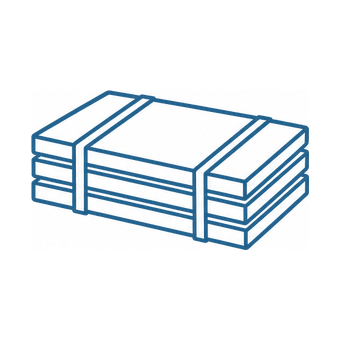
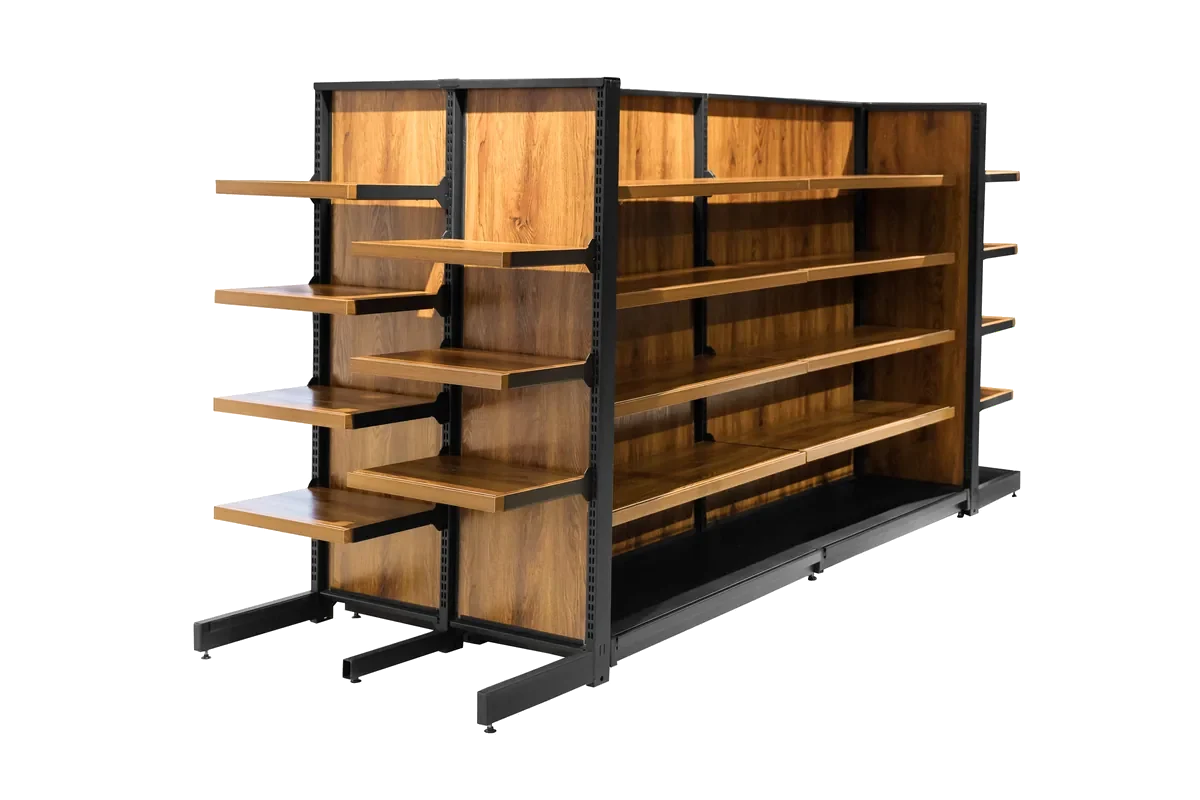
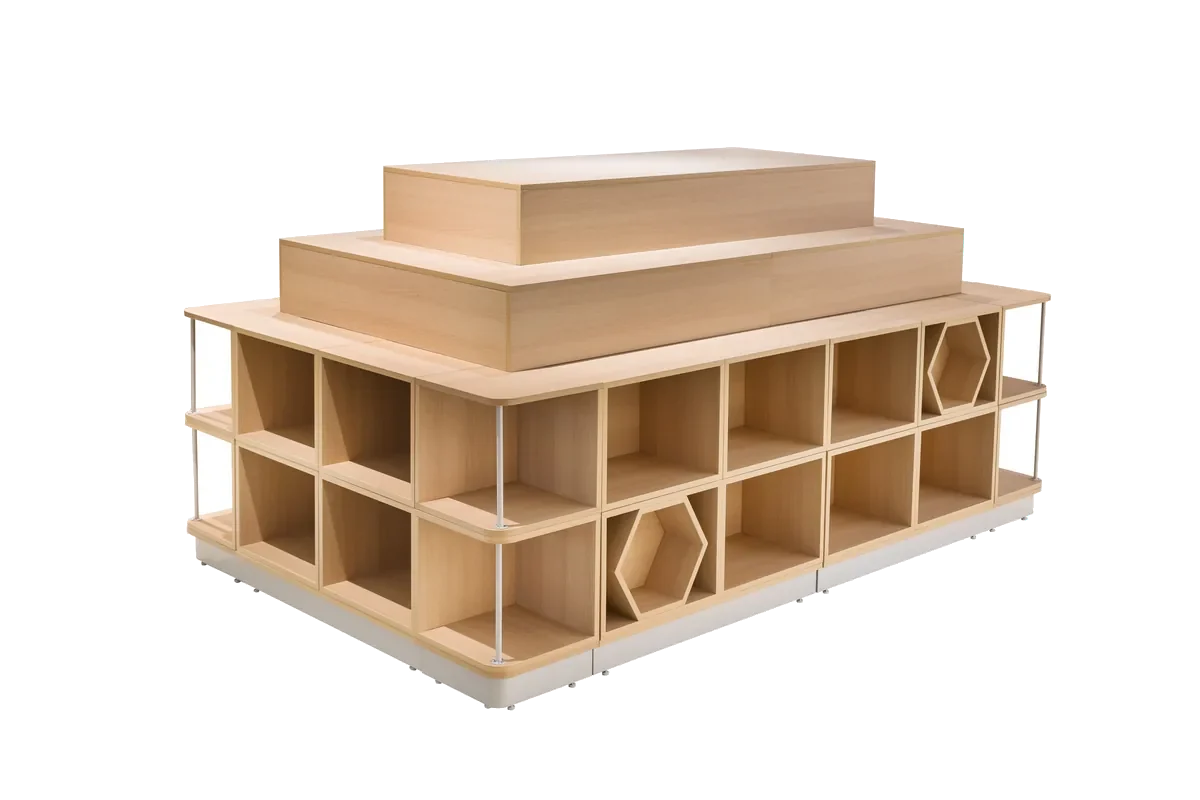
Shelving bays, produce islands and bulk cabinets travel as panels — uprights, shelves, back panels and plinths, strapped flat with bubble wrap on every component. They are built up on the shop floor, so the packing list and the assembly drawings travel with the goods.
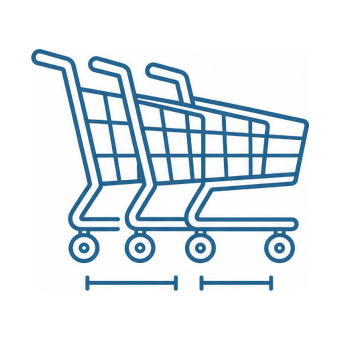
Trolleys slide into one another and baskets stack. Past the first unit, each extra one adds only its nesting pitch instead of its full length, so the shipped volume ends up a fraction of what the unit count suggests.
This model
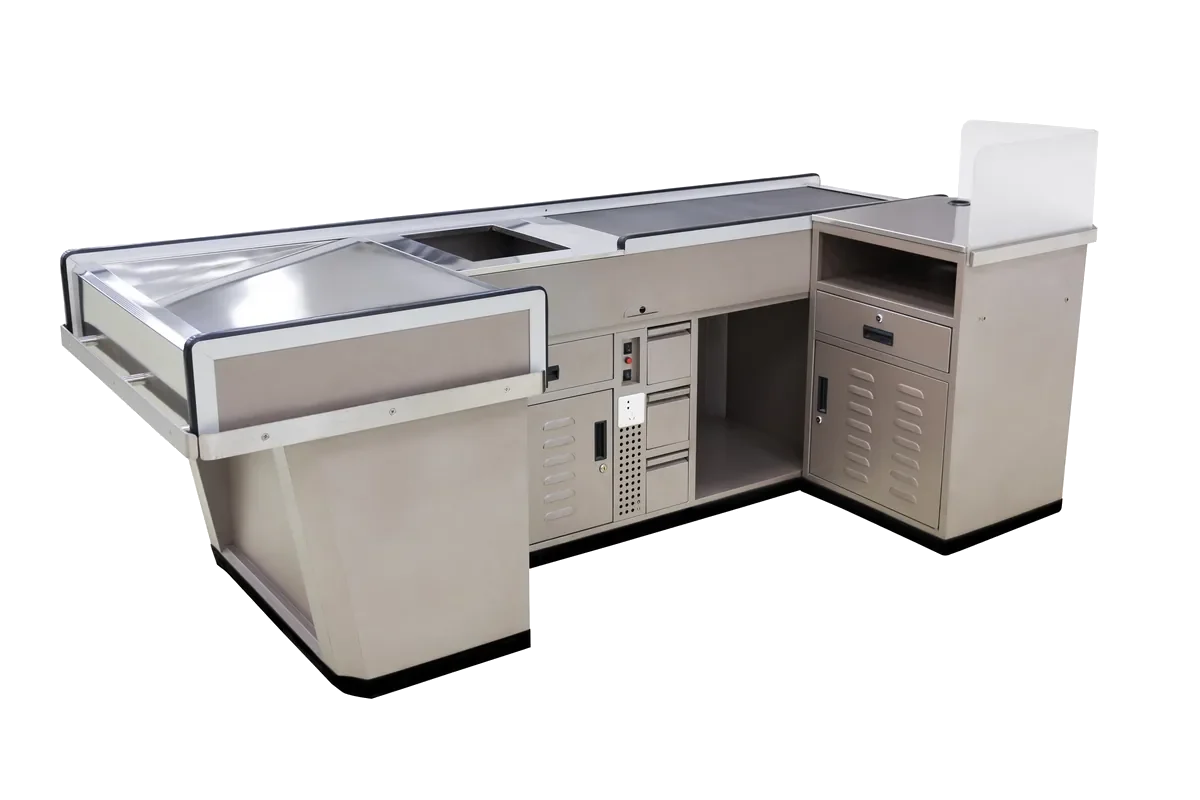
A checkout lane is welded, coated and fitted out as one piece, so it is crated whole with padding on the steel. Nothing waits to be assembled at the store beyond levelling it into the lane, and the crate is the counter plus a margin.
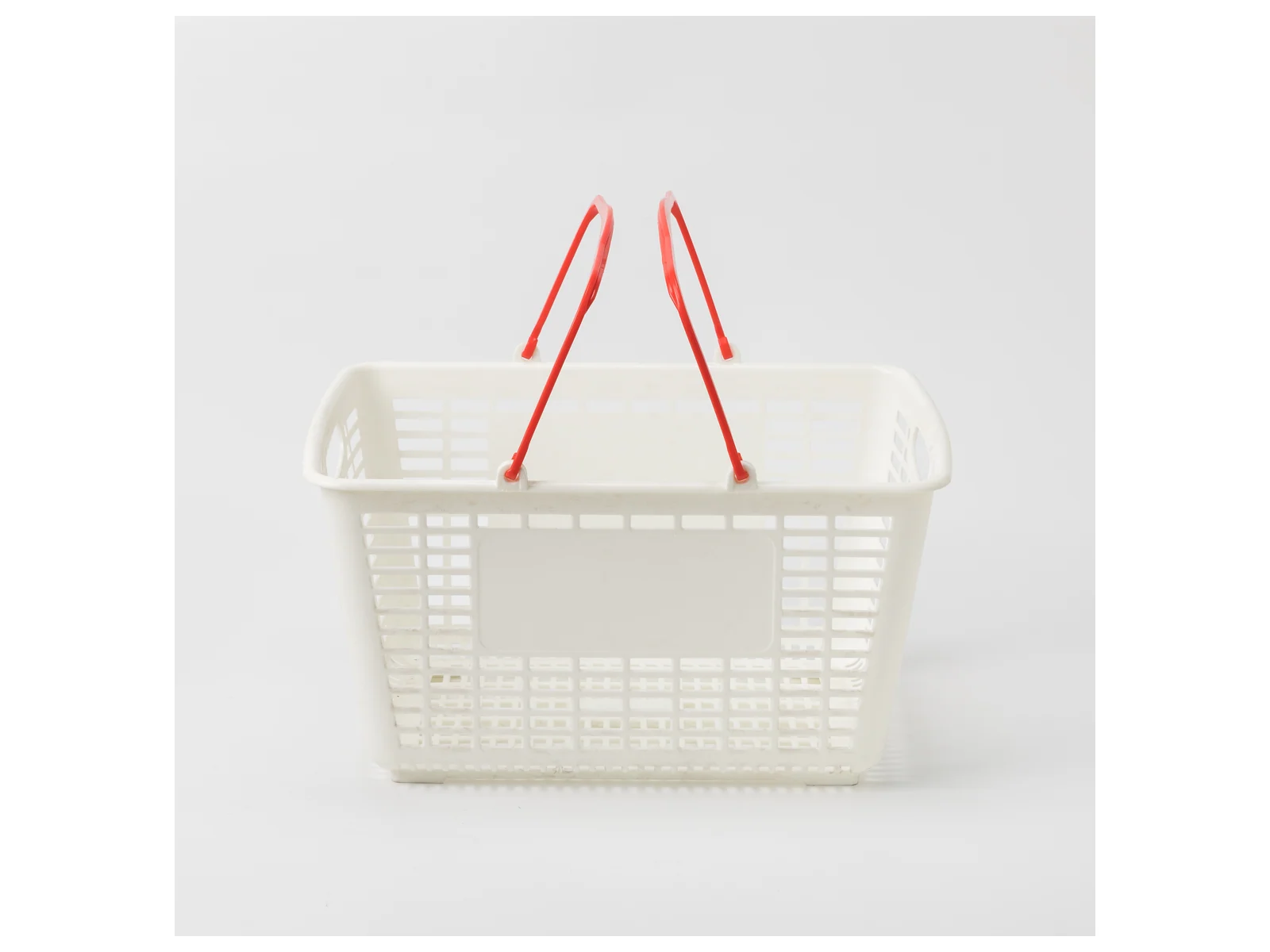
Baskets stack, which makes them the densest thing we ship. A column of nested baskets is close to solid plastic, so the freight cost per basket is a fraction of anything else in this catalogue — which is why baskets are almost always added to a container that is going anyway rather than shipped on their own. We do not publish litre capacities for this range. The figures circulating for it came from an old third-party listing rather than from our own production records, and they are being confirmed with the factory first.
A trolley bay is part of the front of store, and what it stands next to decides how well it works.
The lane length has to leave room for a loaded trolley to turn out of it, which is a dimension worth checking before either is ordered.
See checkout countersAisle width is set by two loaded trolleys passing, so the shelving depth and the trolley size are one decision rather than two.
See shelving baysA promotion square at an aisle head is the first thing a trolley has to get past, and the clearance between them is worth drawing.
See promotional standsHow many of each a store needs is a floor area question rather than a product question, and it is answered store by store on the store layout planning page.
Black is the practical answer. It is not always the right one.
Tell us whether your entrance is a designed space or a functional one. Black is the practical choice for a hard-worked fleet; where the door is part of the brand, a colour may be worth the faster ageing.
The four that come up on nearly every enquiry for this build. If yours is not here, send it with your layout and it is answered alongside the quotation.
It is the practical answer and not always the right one. A black basket fleet is invisible; a coloured one is part of your store's look. If the entrance is a designed space, colour is worth the faster ageing.
The bottom corners, from being set down hard, and the rim line where baskets strike each other in a stack. Both are places black hides and a light colour does not.
More than a mid tone, less than white. In practice basket fleets are wiped rather than washed, and a dusty black basket is a maintenance signal rather than a design problem.
Yes, and it reads well in a light ink. Moulded-in branding is less legible on black than on a light body, so print is usually the better route here.