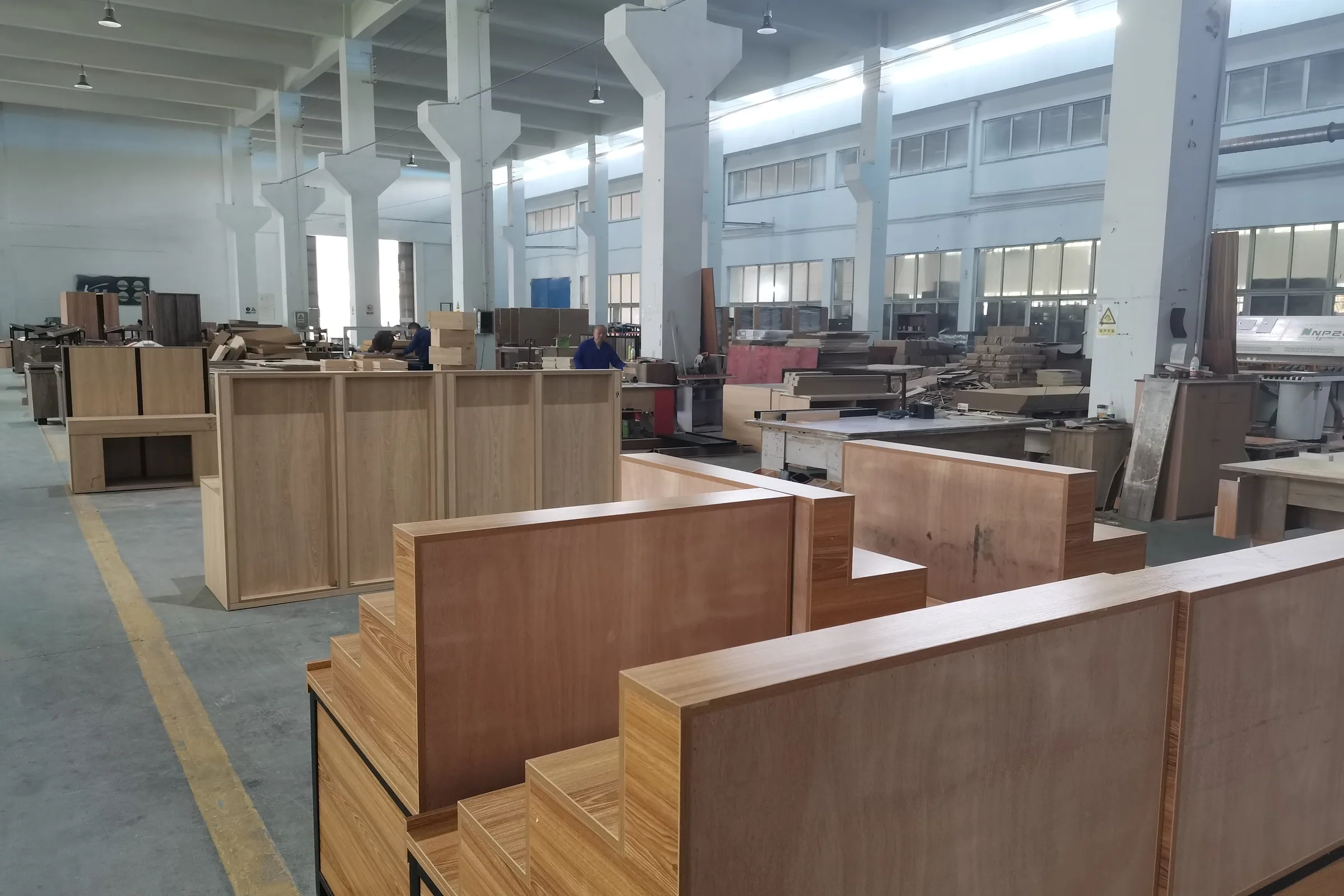
Board stock for Keshun bakery bread display racks at the panel saw in the Changshu plant

Bakery Bread Display Racks

Bread Racks, Slanted Bread Display Racks and Bread Cooling Racks With Wheels

Bread is the one department where the fixture is measured in trays. Get the tray you bake on right and the rack designs itself around it.

Full Range

Bread Display Case And Bakery Shelving Builds

Six bakery builds, photographed in our own studio. They split cleanly into two jobs: the racks a shopper serves themselves from, and the cabinets that keep the bread behind glass. Which one you need is decided by how your bakery sells, not by how the rack looks.

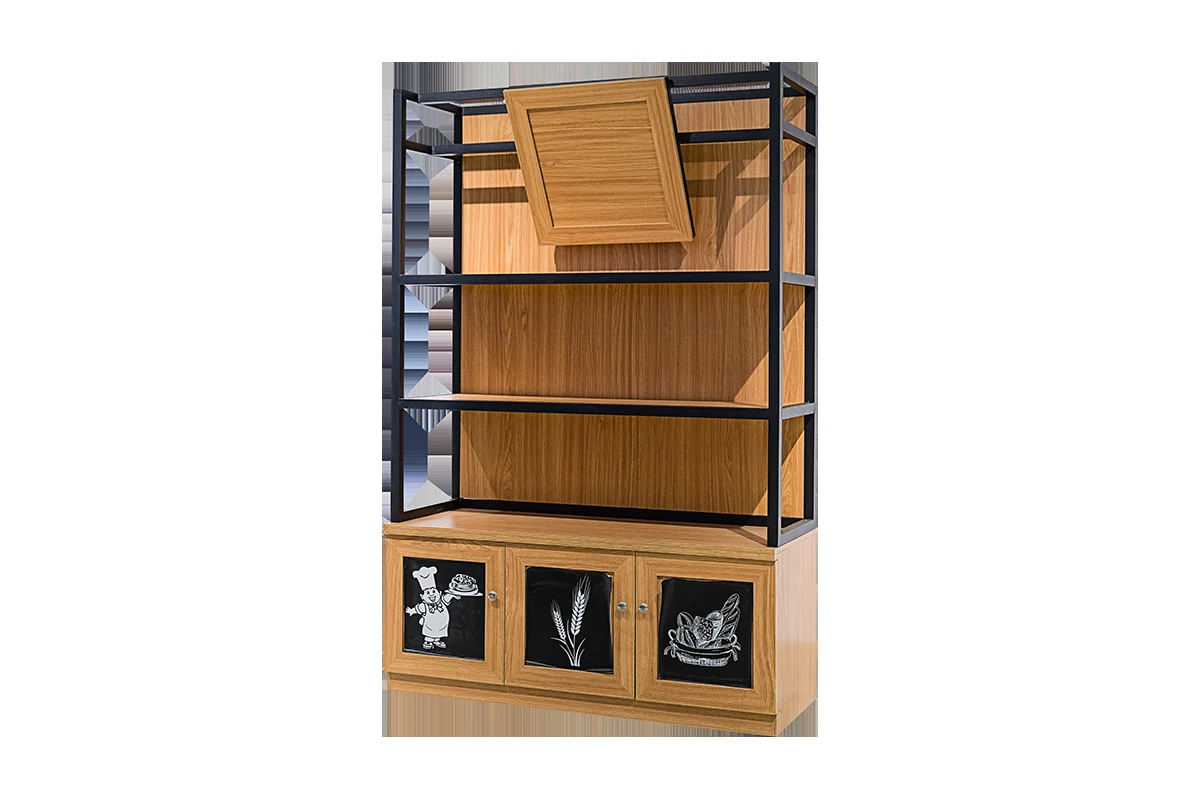
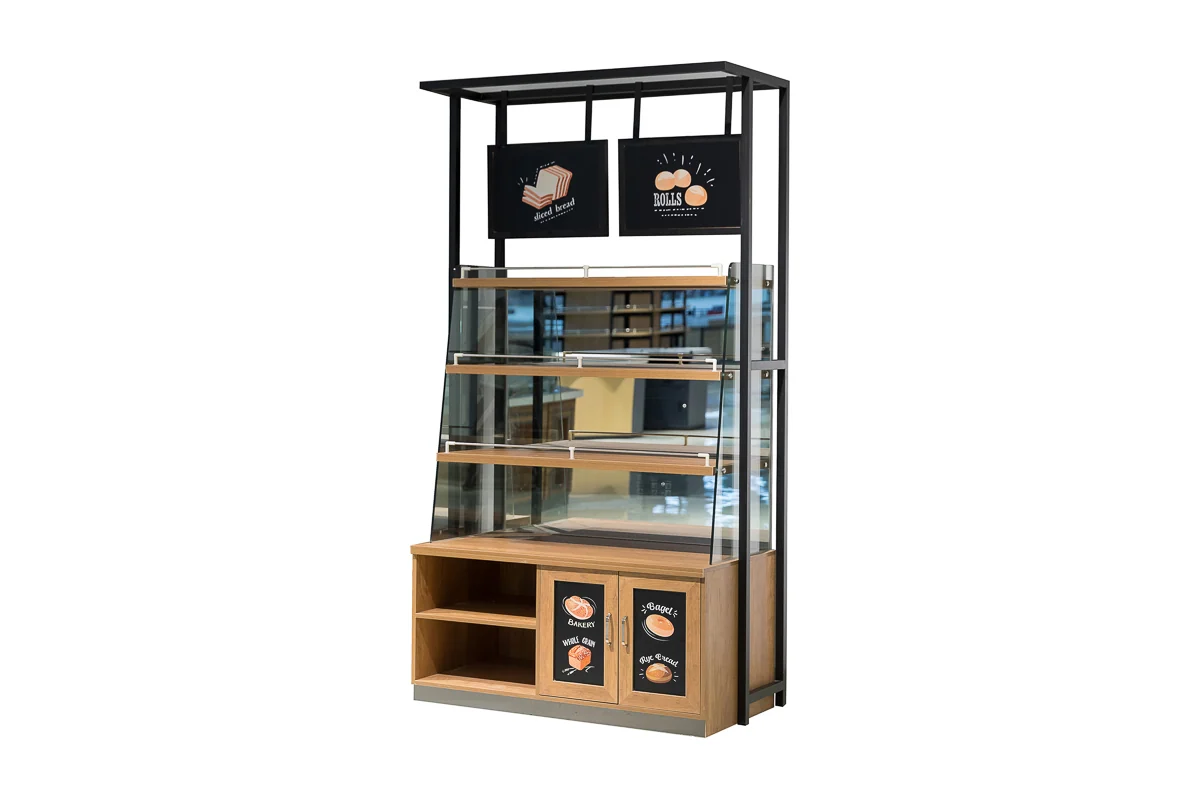
Tall bakery cabinet with glazed tiers

A black frame carrying glazed tiers over closed timber storage, with chalkboard panels worked into the body. The bread is behind glass and the display still reads as a bakery rather than as a cabinet.

Glazed tiers over closed storage

Open the product file
Long bakery counter with an angled front

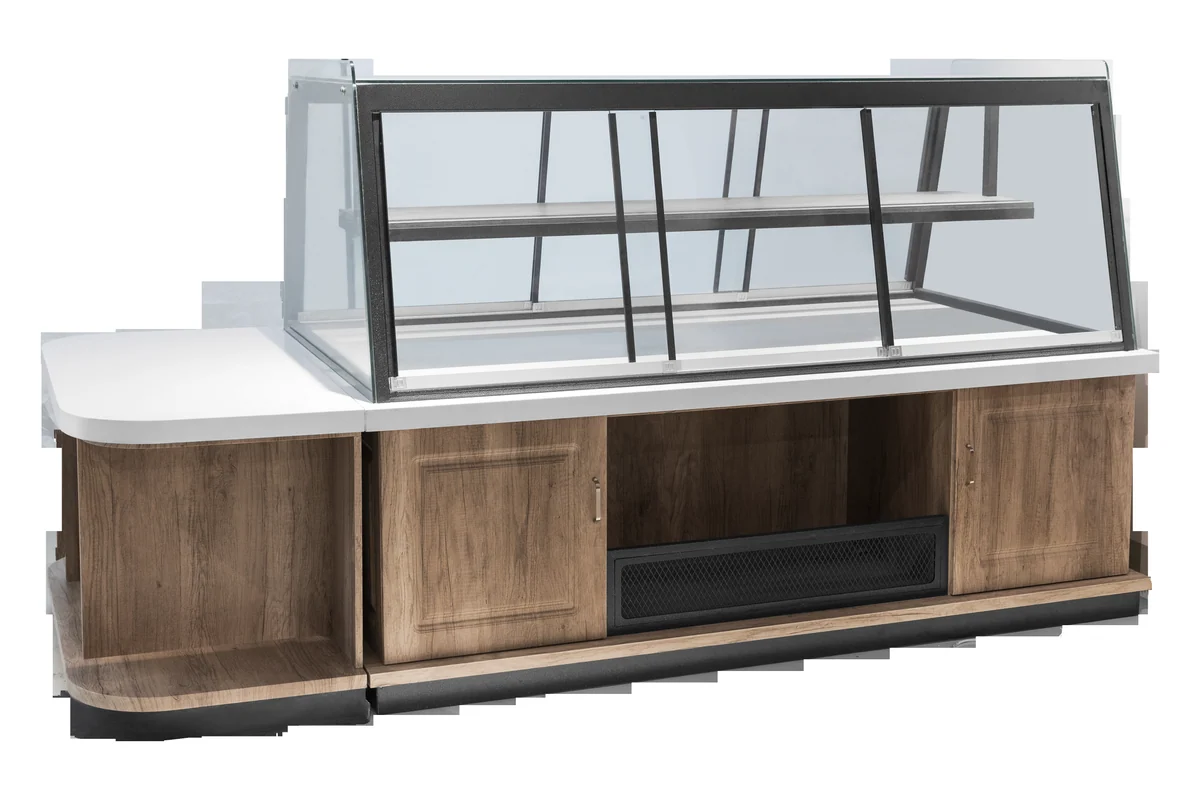
A full counter run with an angled glass front over a timber carcase and a pale worktop, built for a bakery that serves across the counter rather than letting shoppers reach in.

Served counter, angled glass front

Open the product file

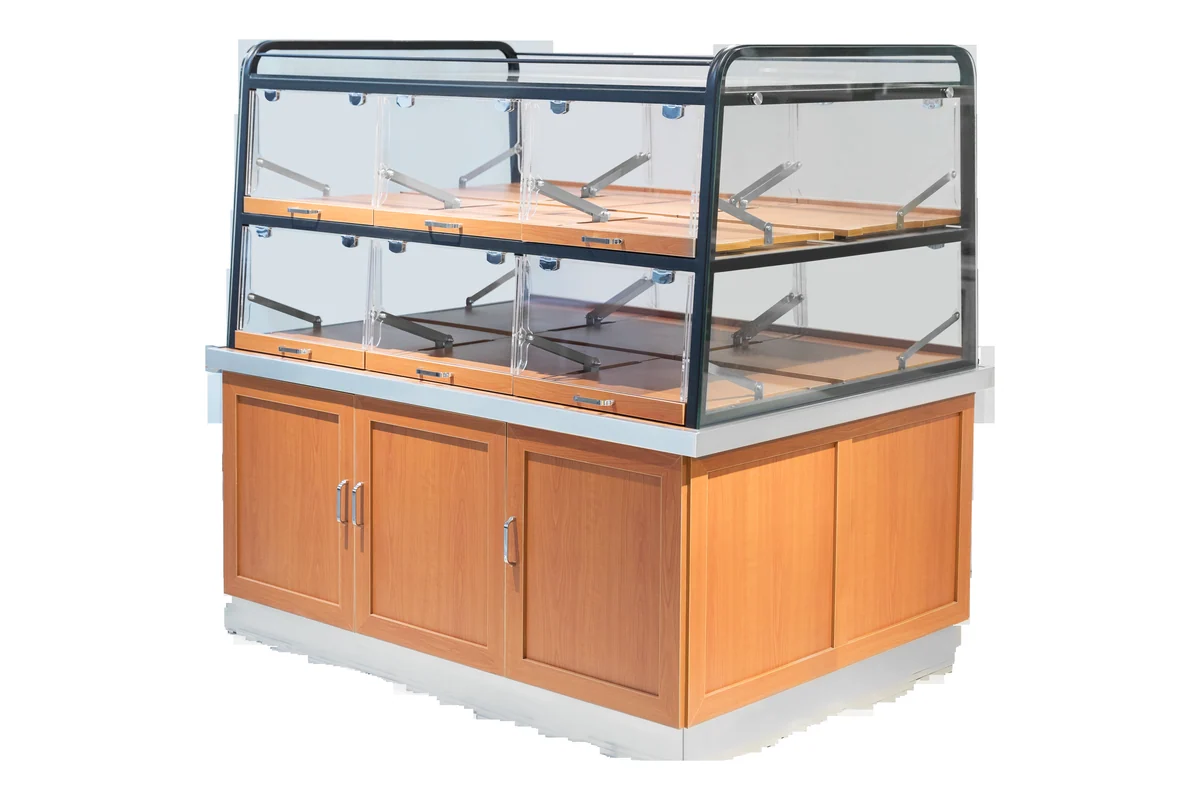
Twin glazed bread cases on a cabinet base

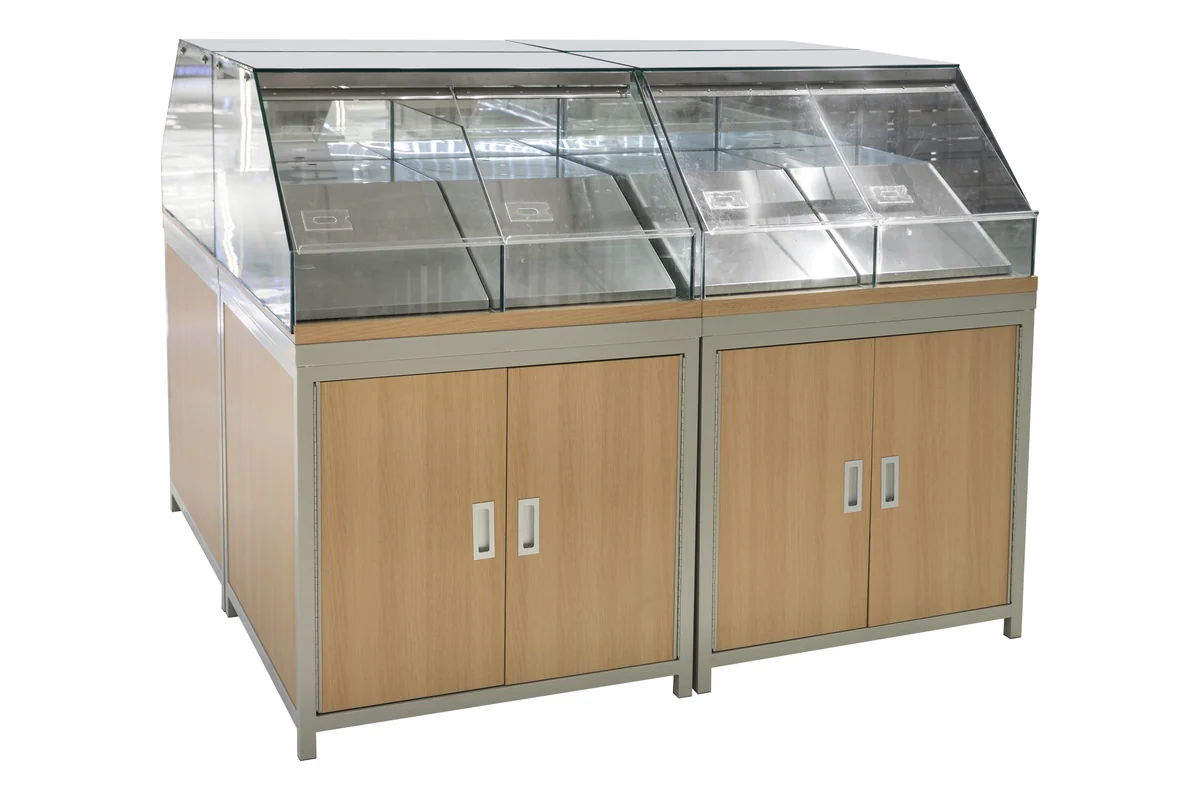
Two angled display cases side by side on one timber base, each with its own shelves. Two cases rather than one long one means two products can be merchandised without either spilling into the other.

Twin cases, shared timber base

Open the product file

Corner bakery case in warm timber

A cranked glazed case that turns a corner, in a warmer timber with a pale plinth. It is the build that stops a bakery counter dying where it meets the wall.

Cranked case for a corner

Open the product file

Slanted self-service bread rack

Open sloped shelves in a black frame with timber facings, so loose bread faces the shopper instead of lying flat. Chalkboard panels between the levels carry the names.

Slanted open shelves, self-service

Open the product file

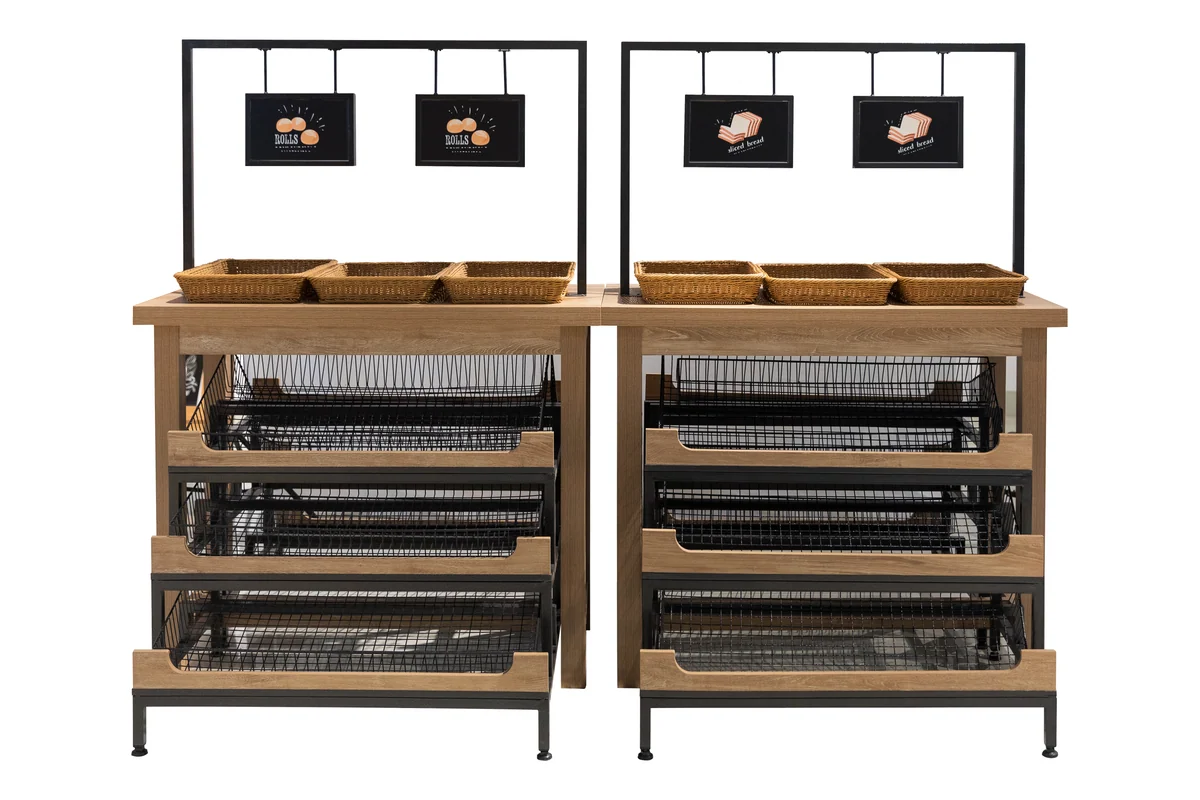
Paired bread bays with overhead signage

Two bays of sloped tray racks under a shared sign frame. This is the shape a supermarket in-store bakery takes when the bread has to be reachable from a main aisle.

Paired tray bays, overhead signs

Open the product file

Tray levels and level spacing are set against the tray you actually bake on, so those are the two figures worth putting in your enquiry. Colour is a RAL or PANTONE reference held across the order, which is how a bakery fixture ends up matching the shelving that runs past it.

Selection Axis

How To Choose A Bread Display Case: Start With The Tray

Every other display category is sized against the aisle. Bread is sized against the tray it comes out of the oven on, because a rack whose levels do not match your tray wastes the gap on every single level, all the way up.

The constant

The tray sets the level, the level sets the rack

A bread rack is not a shelf unit that happens to hold bread. Level spacing is set so a full tray slides in and comes out again without the loaves on it being crushed, and level count follows from the height that leaves. Change the tray and every figure on the rack changes with it.

Sizing reference Your bake tray Level pitch set against it
Recorded builds KS-MBJ-01 / 02 Two bread racks on record

Because of that, the useful thing to send us is not a rack size. It is the outside dimensions of the tray your bakery uses and how many of them you want the rack to hold.

The ruler

Bread rack types by how the bread is reached

Bread racks are built to your bake tray and your bay rather than to a catalogue size, so there is no millimetre ruler to draw here. What follows instead is the ladder that actually separates these builds: how close the shopper is allowed to get to the bread.

Keshun bread rack builds ordered by how close the shopper gets to the bread: back-of-house cooling racks, glazed served cabinets, angled-front cases and slanted self-service racks Back of house Wheeled tray racks, never on the floor Behind glass Staff hand the bread over Angled front Glass tilted towards the shopper Slanted open Shopper takes the loaf Cooling Served Self-service
  • Bar length shows how close the shopper gets, not a dimension
  • Tray pitch is set against your own bake tray on every build

This ladder is not to scale and carries no millimetres. KS-MBJ-01 and KS-MBJ-02 are both built to the bay, so a drawing only becomes useful once we have your tray size and your run length.

Once your tray size is known the ladder becomes a real one. Send the tray and the level count and the recorded sizes come back with the quotation, at which point this chart is replaced by your own figures.

The regroup

Which bread rack suits which bakery

The same builds, regrouped by where they stand and who touches the bread. This is the decision that has to be made before size, because it changes the fixture completely rather than just its dimensions.

Self-service Slanted racks The open sloped builds above

Sloped open shelves facing the aisle, with tongs and bags beside them. Sells the most bread per metre and suits a supermarket in-store bakery where nobody is standing behind a counter.

Served Glazed cabinets The angled-front counter builds above

Bread behind glass, handed over by staff. Slower per shopper, but it is the only answer where local rules or the store's own standards keep hands off unwrapped food.

Back of house Cooling racks Cooling racks with wheels, built to order

Wheeled tray racks that come out of the oven area and cool before the bread is put out. They never reach the shop floor, so they are built for tray pitch and castors rather than for looks.

Corner and end Cranked builds The cranked case above

A bakery counter usually meets a wall or an aisle at an awkward angle. A cranked case keeps the run selling right up to the corner instead of finishing with a blank cheek.

Two Formats

Open Bakery Shelving Or Glazed Cases

This category forks on one question, and it is not a question about bread. It is about whether the shopper is allowed to pick the loaf up. Everything else — how many levels, how deep, how it is cleaned — follows from the answer.

Slanted self-service bread display rack with open sloped levels in a black steel frame Self-service

Slanted bread display racks

Open sloped levels, timber and steel

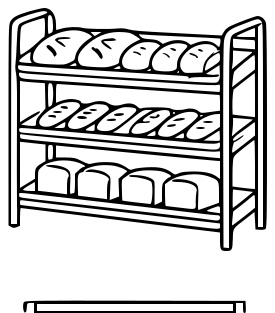
The levels slope towards the aisle so a shopper sees the face of the loaf rather than its crust. Nothing is between the bread and the customer except a pair of tongs. This sells the most bread per metre of any build we make, and it is the reason the slanted rack exists as a category at all.

Twin angled glass bakery display cabinets on a shared timber base Behind glass

Glazed bakery display cabinets

Angled glass front, timber carcase

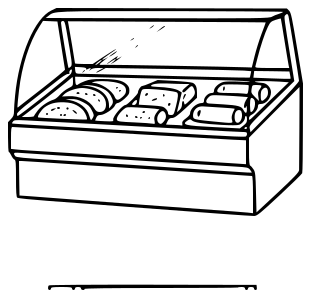
An angled glass front tilts the display towards the shopper while keeping hands off it. Staff serve from the back. It is slower and it holds less, but where unwrapped food cannot be self-served it is the only build that is allowed on the floor.

Most in-store bakeries we quote run both: glazed cases for the counter-served lines and slanted racks for the bagged and packaged ones. Both come out of the same plant in the same timber and the same colour, so the bakery reads as one department.

Build Detail

What A Bakery Bread Rack Is Made Of

The four things a buyer checks when a sample bread rack is finally standing in front of them, quoted from our own build sheet rather than from a brochure.

Slanted tray levels on a Keshun self-service bakery bread display rack Levels

Slanted tray levels

Pitch set to your bake tray

Levels are slanted and their pitch is set against the tray your bakery bakes on. A rack built to somebody else's tray wastes the same gap on every level, and by the top of the rack that is a whole level lost.

Black steel frame and timber facings on a Keshun bakery display cabinet Frame

Steel frame and timber facings

0.8 – 1.5 mm steel, board facings

A folded steel frame carries the load and the timber does the talking. Bakery fixtures take more wiping down than anything except the checkout, so the frame is powder coated rather than painted.

Angled glass front on a Keshun bakery display counter over a timber carcase Glazing

Angled glass fronts

Tilted towards the shopper

Glass is set at an angle rather than upright, so the shopper looks into the display instead of at a reflection of the ceiling lights. It also stops fingerprints landing at eye level.

Overhead sign frame above paired Keshun bakery bread tray bays Signage

Chalkboards and sign frames

Fitted before shipping

Chalkboard panels between the levels and a sign frame overhead are part of the fixture. Bread ranges change weekly, so the naming has to be something the bakery can rewrite rather than something printed at the factory.

Colour is given as a RAL or PANTONE reference and held across every category on the same order, so the bakery, the shelving beside it and the checkout beyond it leave the plant in one shade. The finish standard is set out in full on our About page, and the rest of the store is on the product overview.

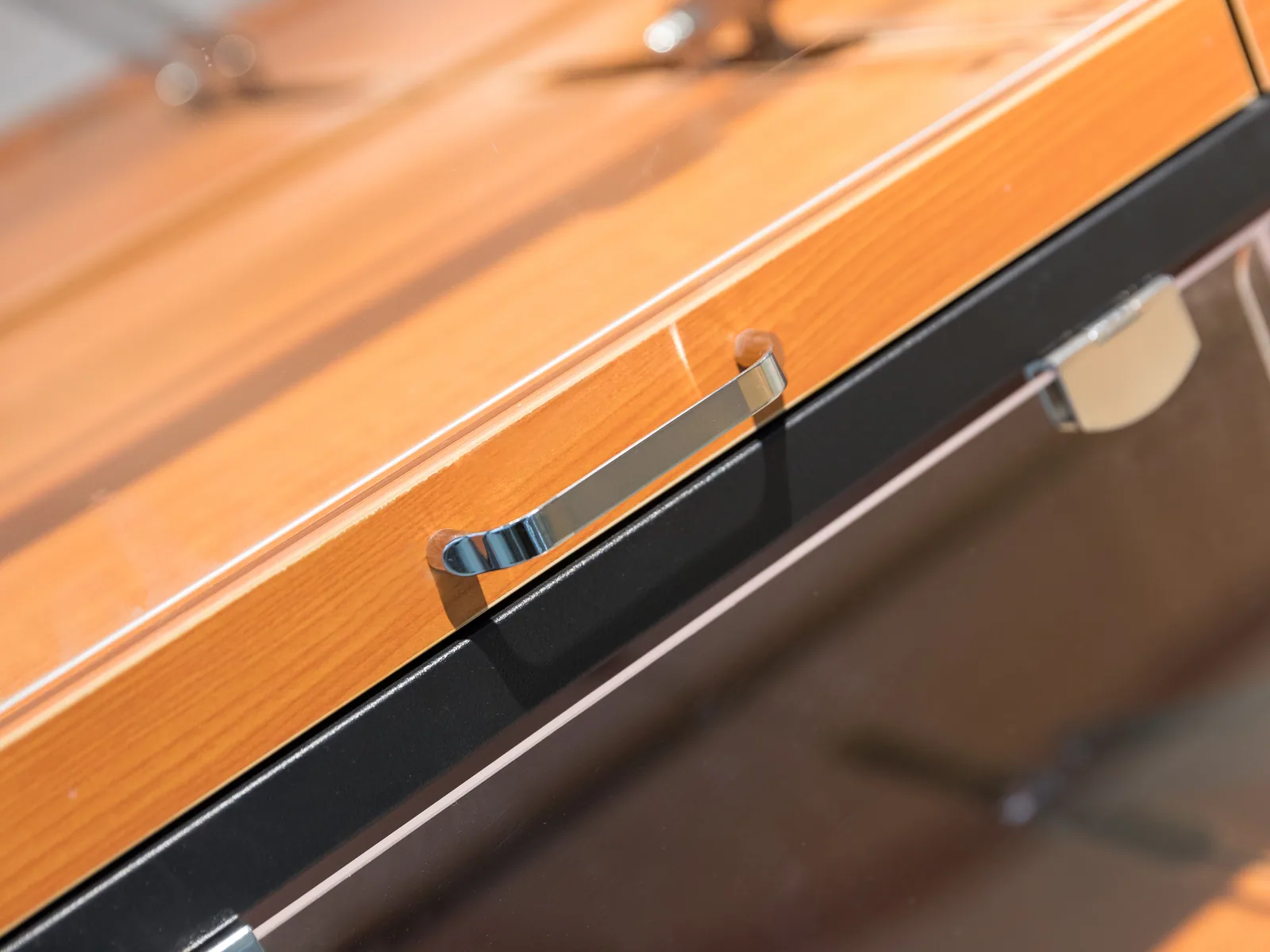
Close-up of a slanted timber tray level on a Keshun bakery bread display rack

Send the outside size of the tray your bakery bakes on and how many trays you want on display. That is more useful to us than a rack dimension.

Get A Quotation

What Does Your Bakery Bake On?

Every question below is one we would have to ask you anyway. Answering them now takes a round trip out of the quotation.

Your enquiry goes to keshun@kssyt.com. Floor plans, CAD files and photographs of a store you like are all welcome — a hand sketch on paper is enough to start.

Buyer Questions

Bread Display Rack Questions

Seven things buyers ask before they order a bakery. If yours is not here, put it in the message box above and it gets answered with the quotation. The longer version of that decision is written up in Trays, Cases or Racks: Choosing a Bakery Display.

What size are your bakery bread racks?

Both bread racks we build, KS-MBJ-01 and KS-MBJ-02, are sized to your bake tray and your bay rather than sold in fixed sizes, so there is no size table to publish. In practice the size is derived rather than chosen: tell us your bake tray size and how many levels you want, and the rack dimensions come back with the quotation.

What is a slanted bread display rack for?

Sloping the level towards the aisle turns the loaf to face the shopper instead of showing its crust. It is the single change that makes an open bread rack sell, and it is why self-service bakeries use slanted racks rather than flat shelves. The trade-off is that the bread is reachable, which not every store or every local rule allows.

Do you make bread racks with wheels?

Yes, as back-of-house cooling racks. Bread comes out of the oven on the tray, goes onto a wheeled rack to cool, and is put out from there. Those racks never reach the shop floor, so they are built around tray pitch and castors rather than around appearance, and they are quoted separately from the display fixtures.

Can I get a stainless steel bread rack rather than a wooden one?

Yes. The frame is steel on every build in this category; what changes is whether it is faced in board or left as metal. A stainless build is the usual answer for back-of-house and for anywhere the rack is washed down, while board facings are what a shop-floor bakery normally wants.

Do the racks come with chalkboards and sign frames?

Yes, and they are fitted before the rack is packed. A bread range changes weekly, so the naming has to be something the bakery staff can rewrite themselves. Printed panels made at the factory are out of date before the container lands.

How much does a bread display rack cost?

It follows the level count, the width, whether the build is glazed, and whether the frame is faced. A glazed cabinet and an open slanted rack of the same width are not comparable machines, so we do not publish a single figure. Send the tray size and level count and the price comes back against your own bakery.

What rack is best for bread?

It depends on who serves it. Self-select bread wants covered compartments with tong stations; a served counter wants a bakery display case with curved glass and tiered shelves. Both are built to your bake tray rather than to a catalogue size, which is the dimension we ask for first.