
Bay Divide
One carcase, two bays
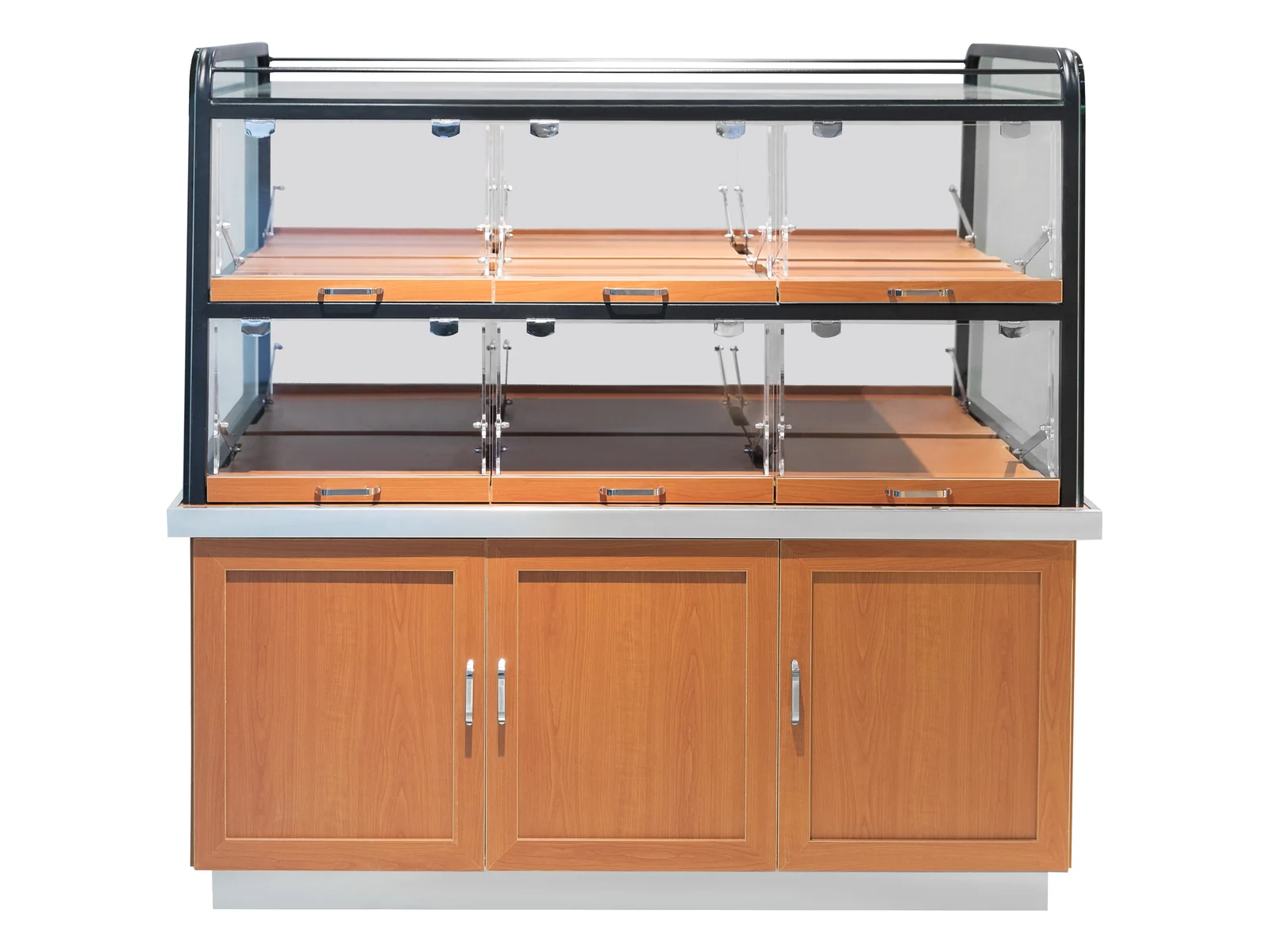
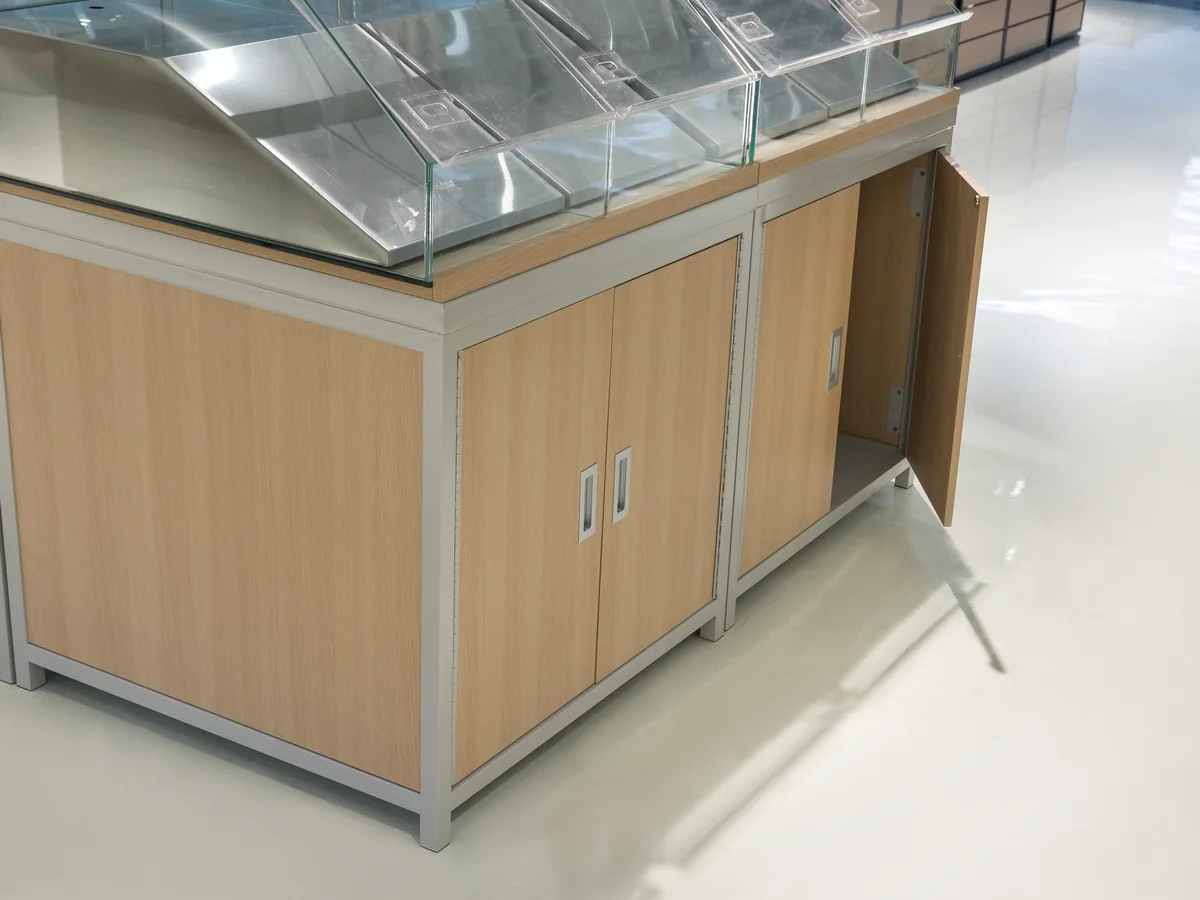
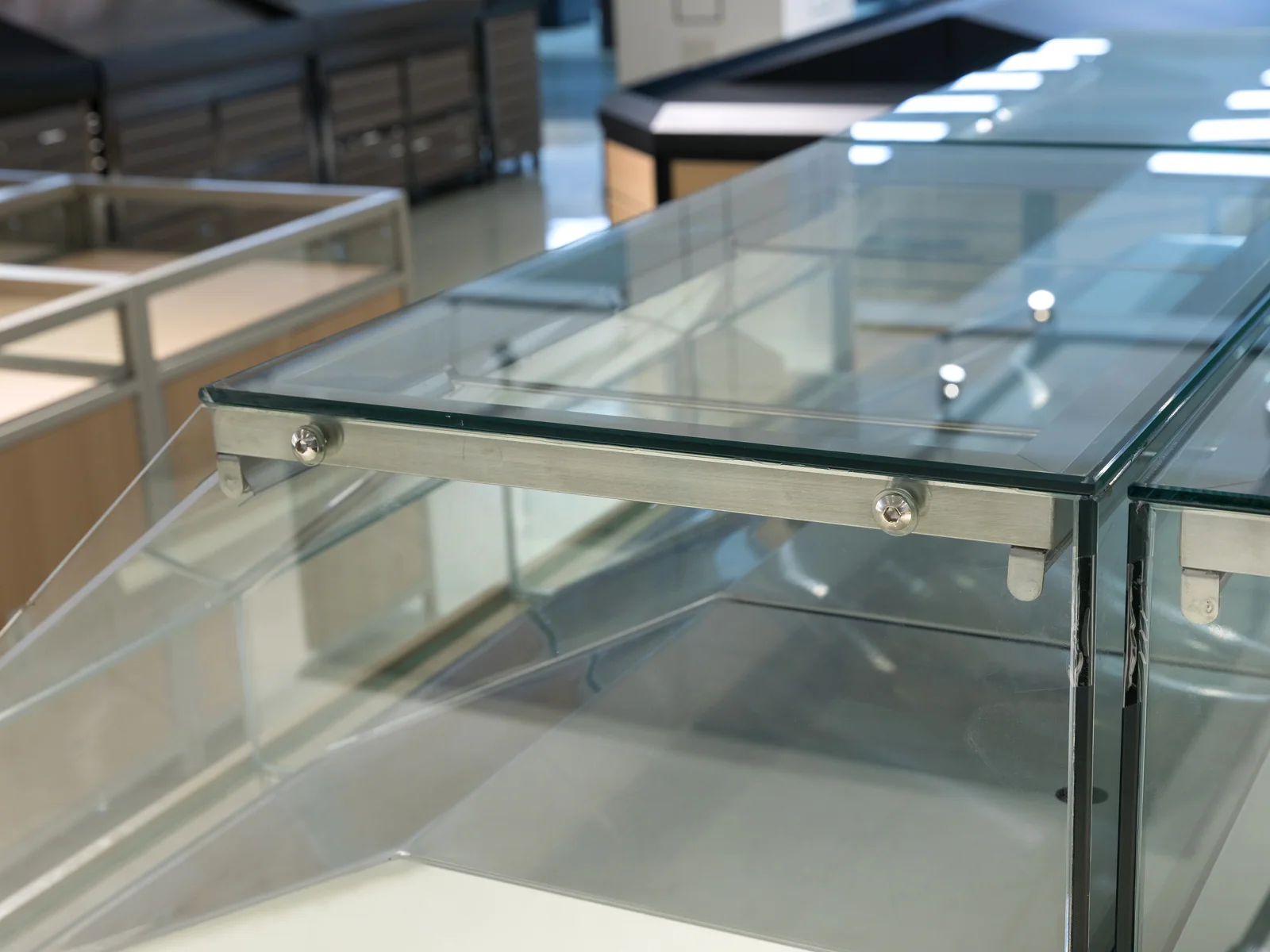
The bays are divided inside a single carcase rather than being two cases touching. There is no double end panel and no strip of dead counter between them.
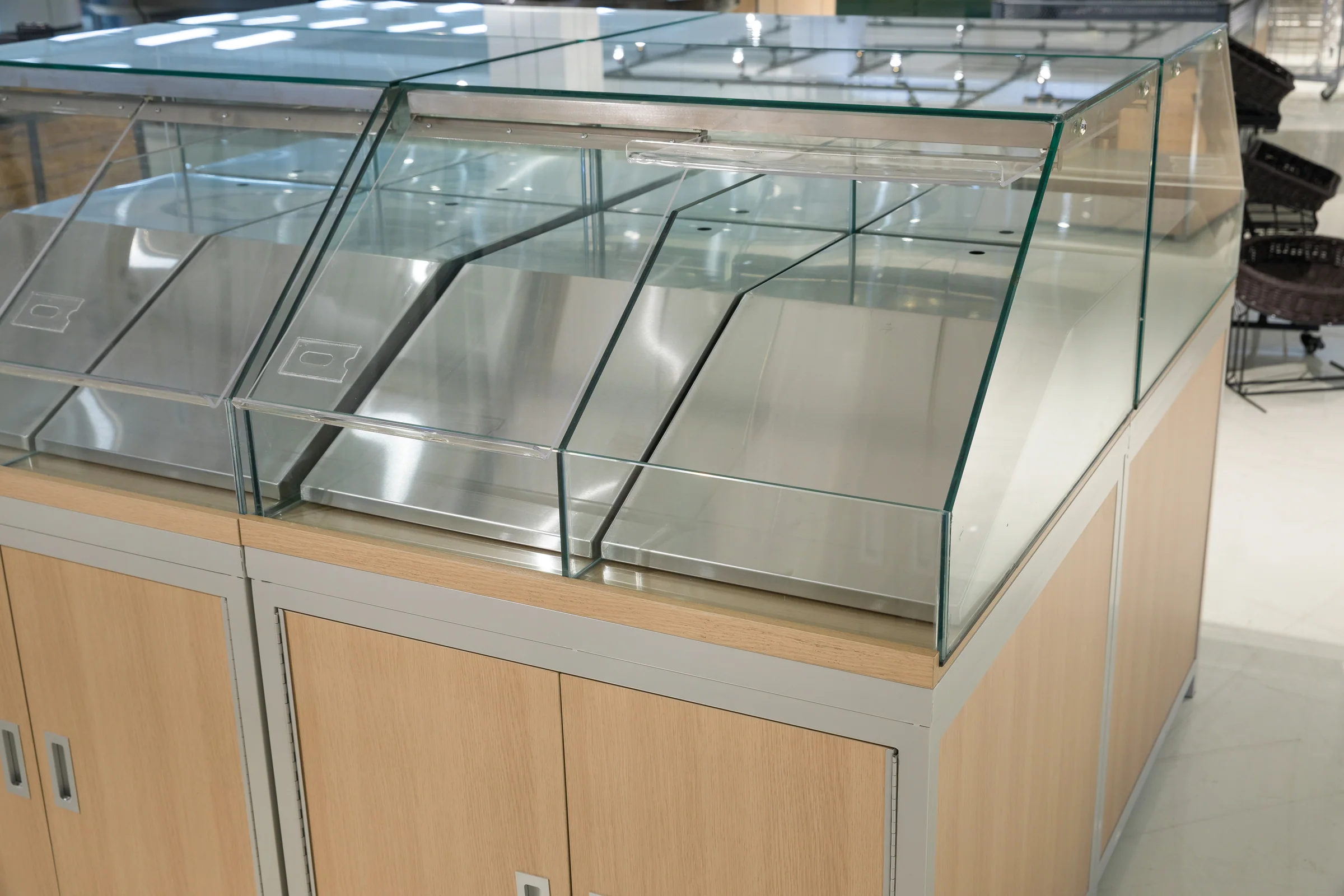
Two bays, one run · curved glass · pale timber base
Two bakery bays built as one continuous run rather than two cases pushed together. It recovers the gap between them and gives the department one glass line instead of two.
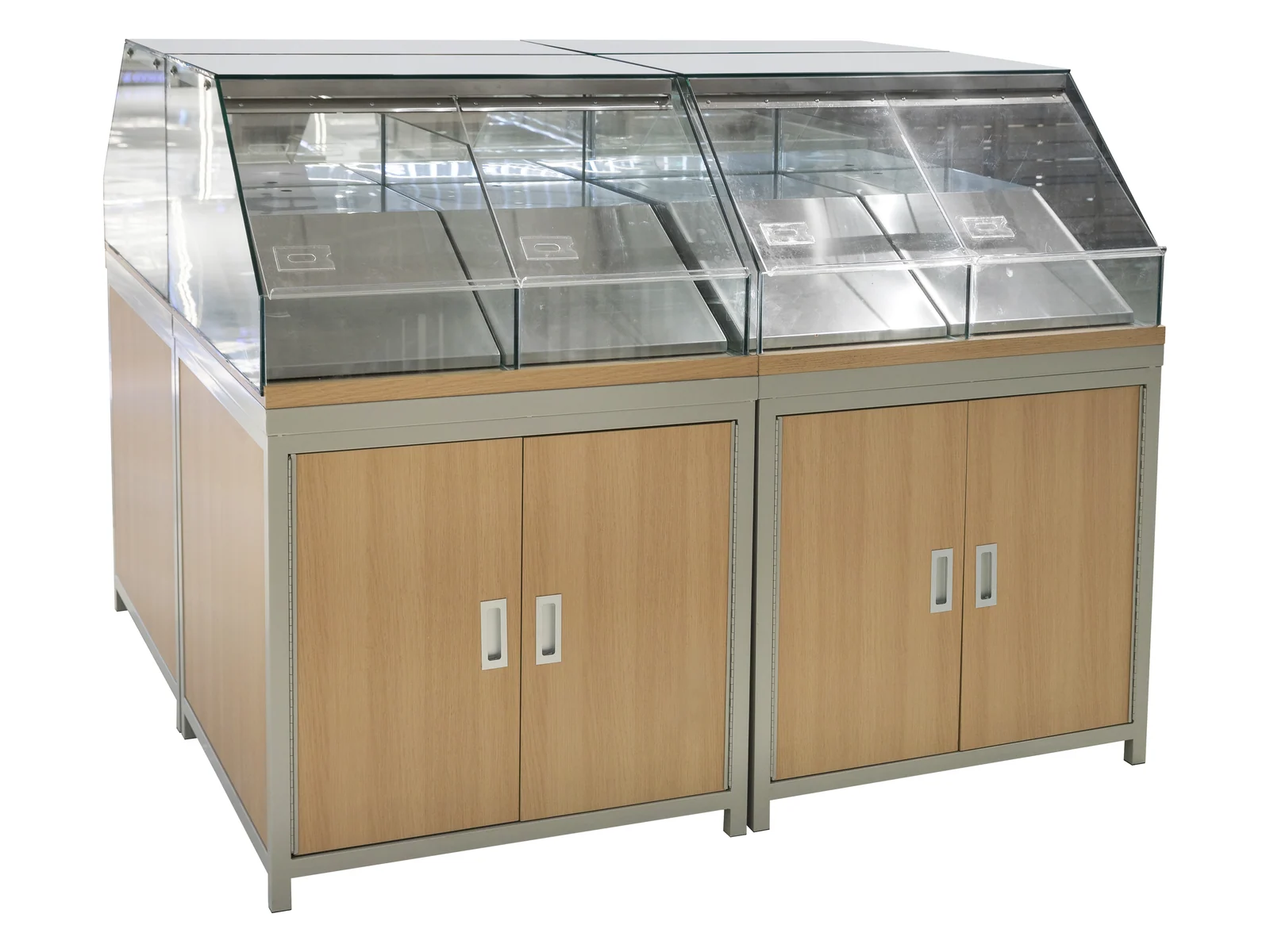
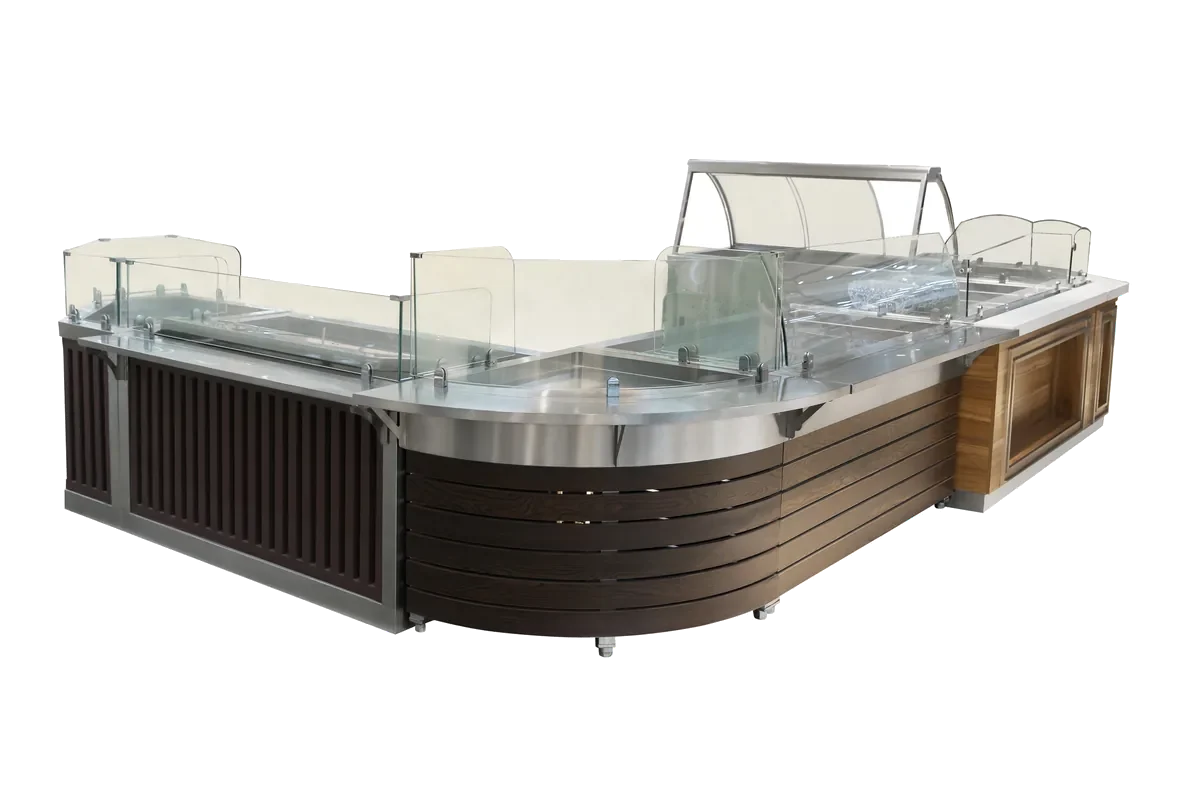
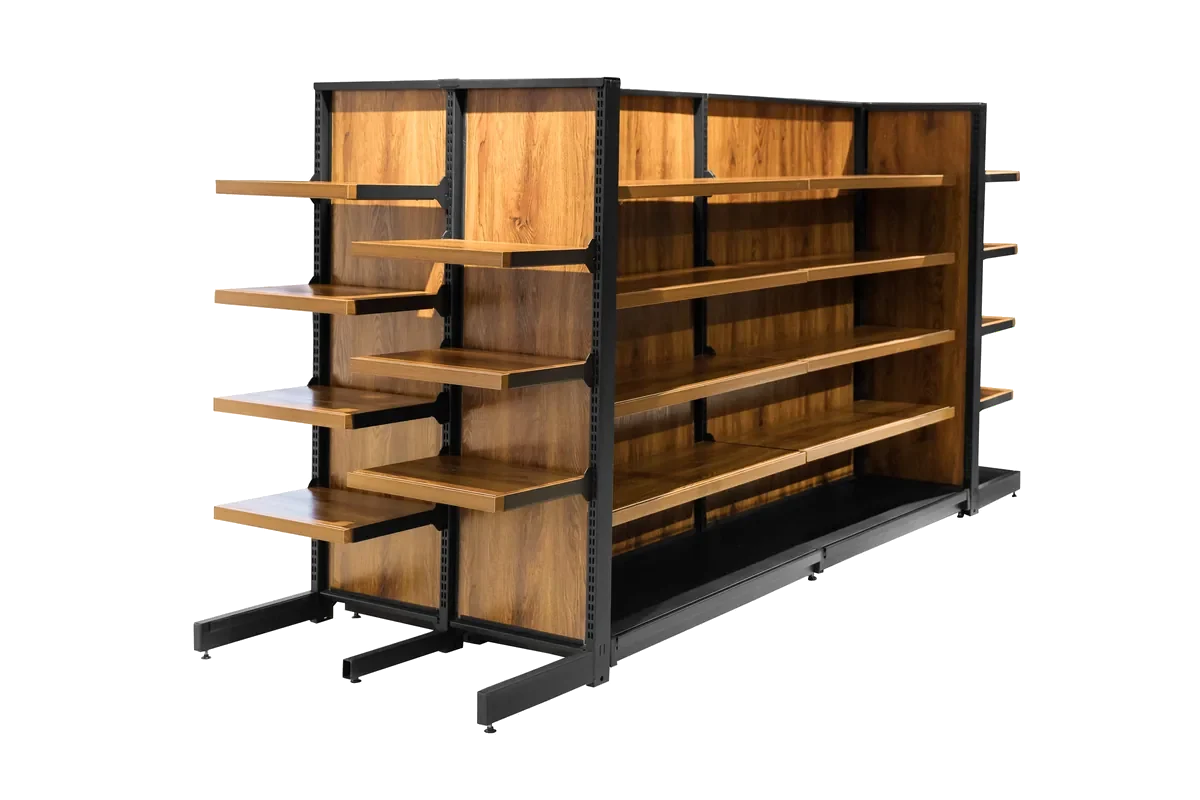
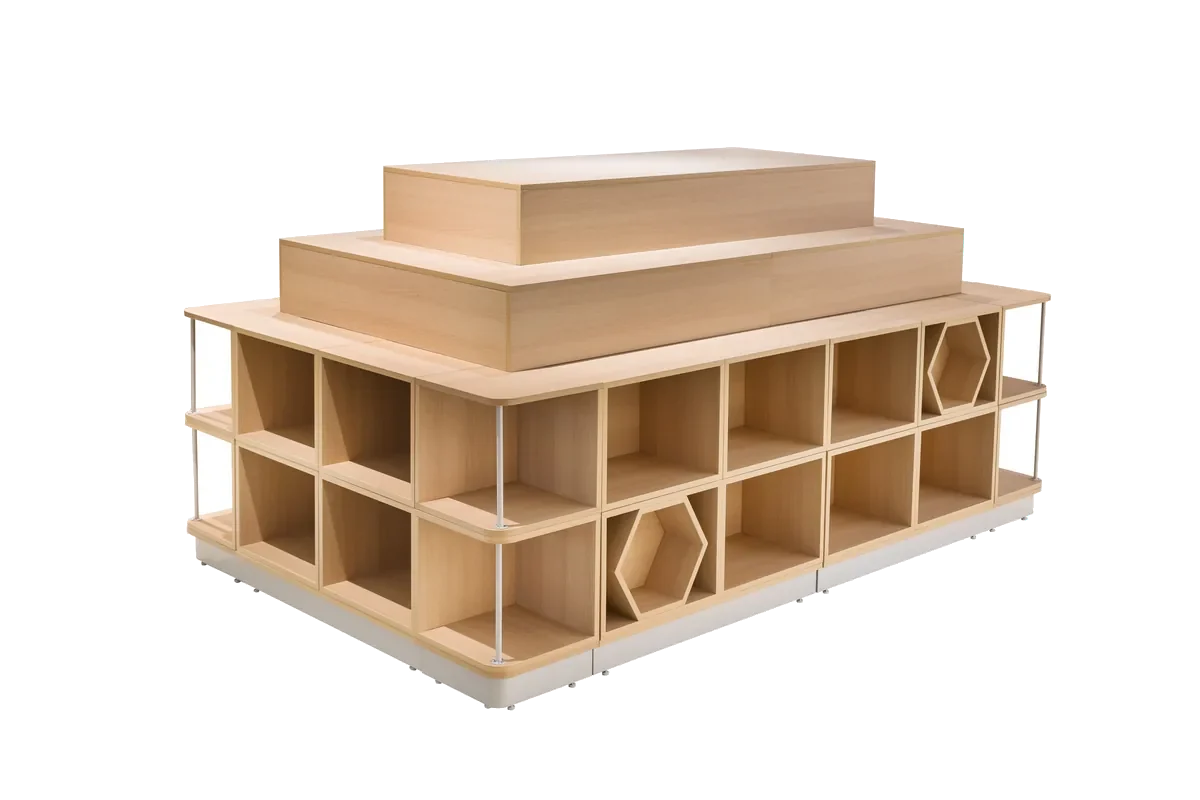
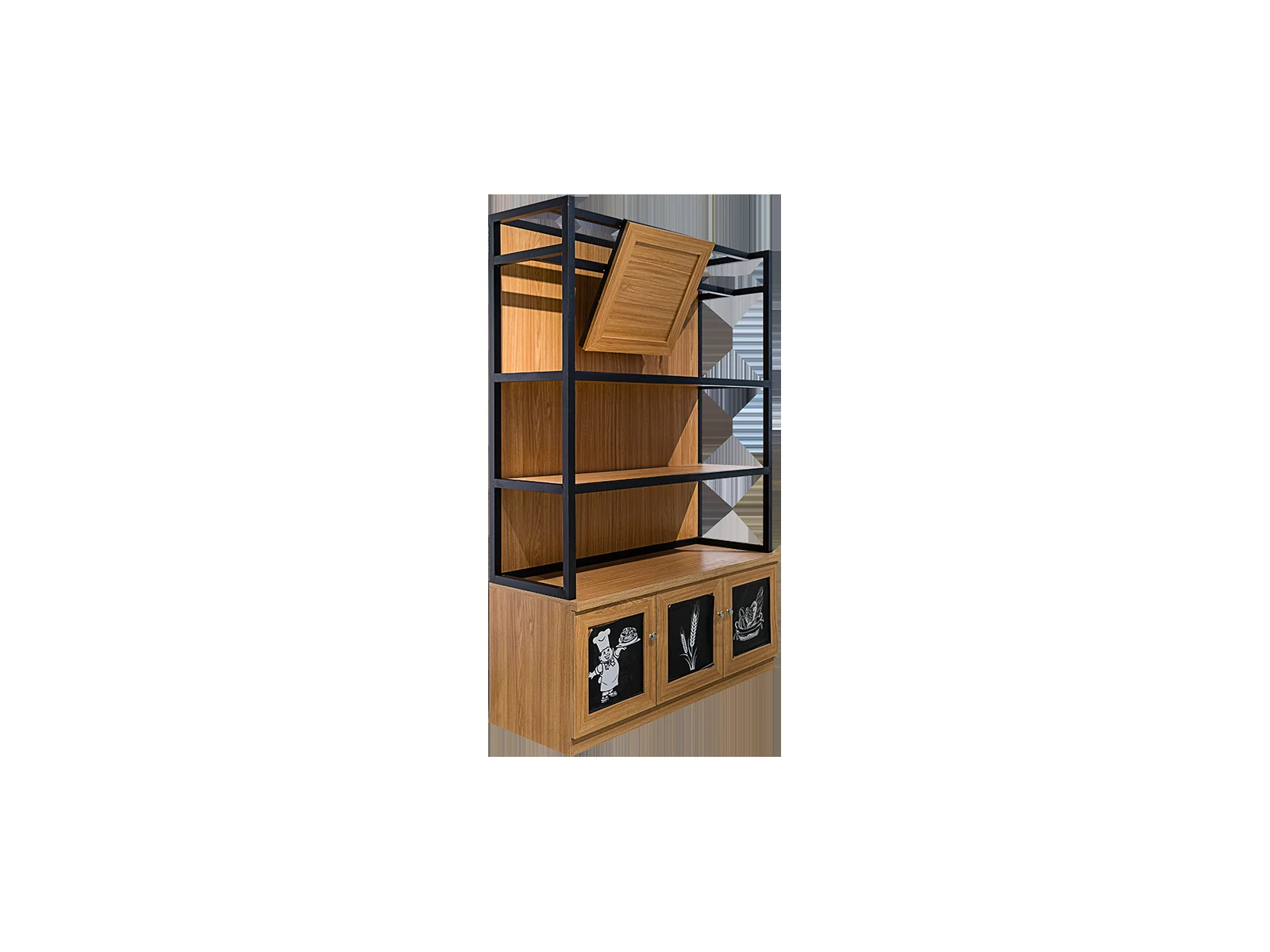
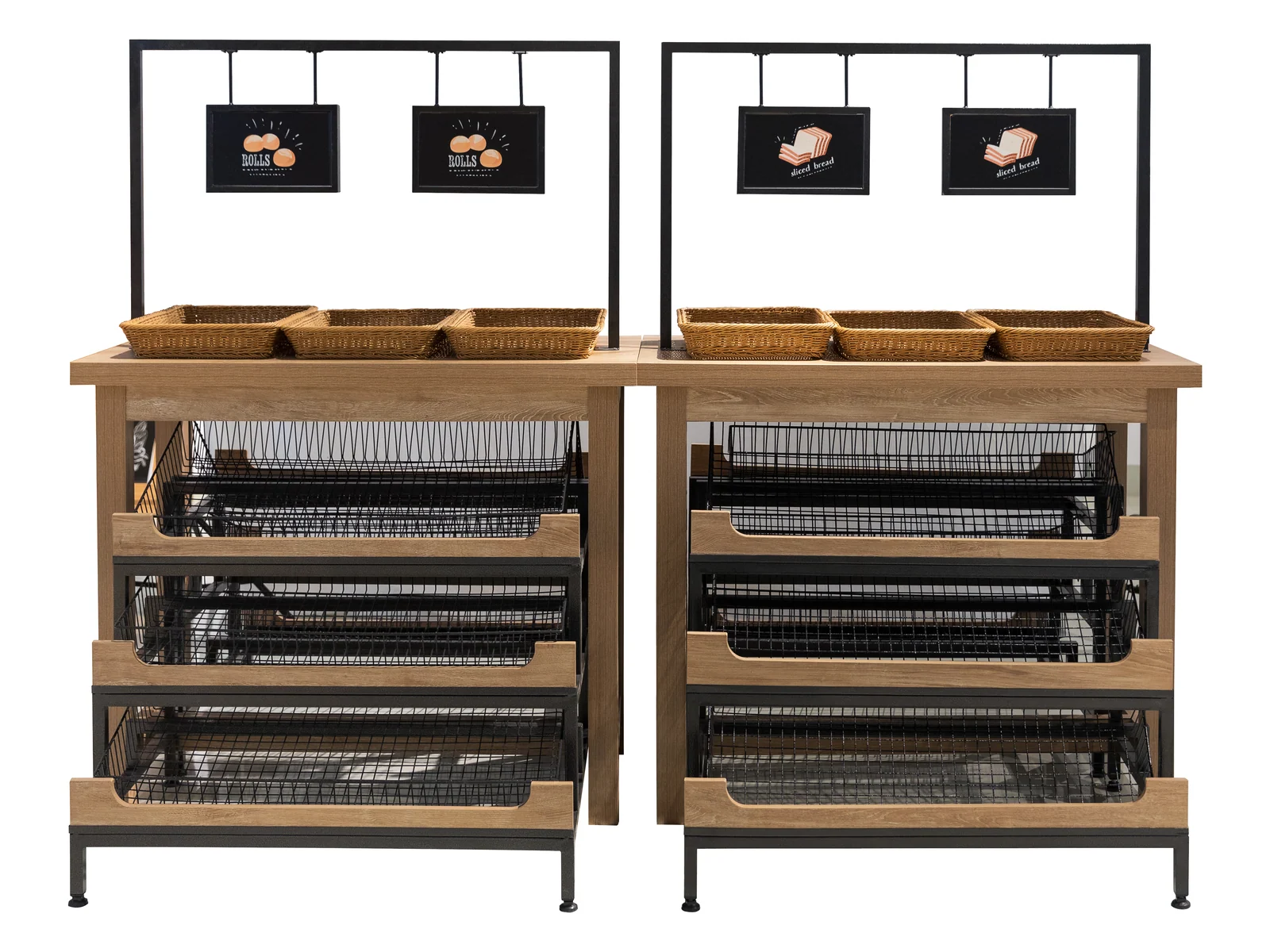
Studio angles on white. The bay divide, the glass line, the base cupboard and the frame are photographed below.
Put two bakery cases side by side and there is always a joint: two end panels, two glass edges and a strip of counter that belongs to neither. Building them as one run with two bays removes all three. The glass reads as one line, the base is one carcase, and the space that would have gone to the joint becomes display.
Each bay keeps its own internal tiers so the range can be separated — savoury one side, sweet the other, or morning and afternoon bake. The base is pale timber with cupboards under both bays for tray and packaging storage.
Two bakery bays built as one continuous run rather than two cases pushed together. It recovers the gap between them and gives the department one glass line instead of two.
Supermarkets, convenience stores, chain retail and speciality stores. Tell us the store format and the floor area and the specification comes back written against them.
Building two bays as one run is a carcase decision, so these four are about the joint that is not there.
One carcase, two bays
The bays are divided inside a single carcase rather than being two cases touching. There is no double end panel and no strip of dead counter between them.
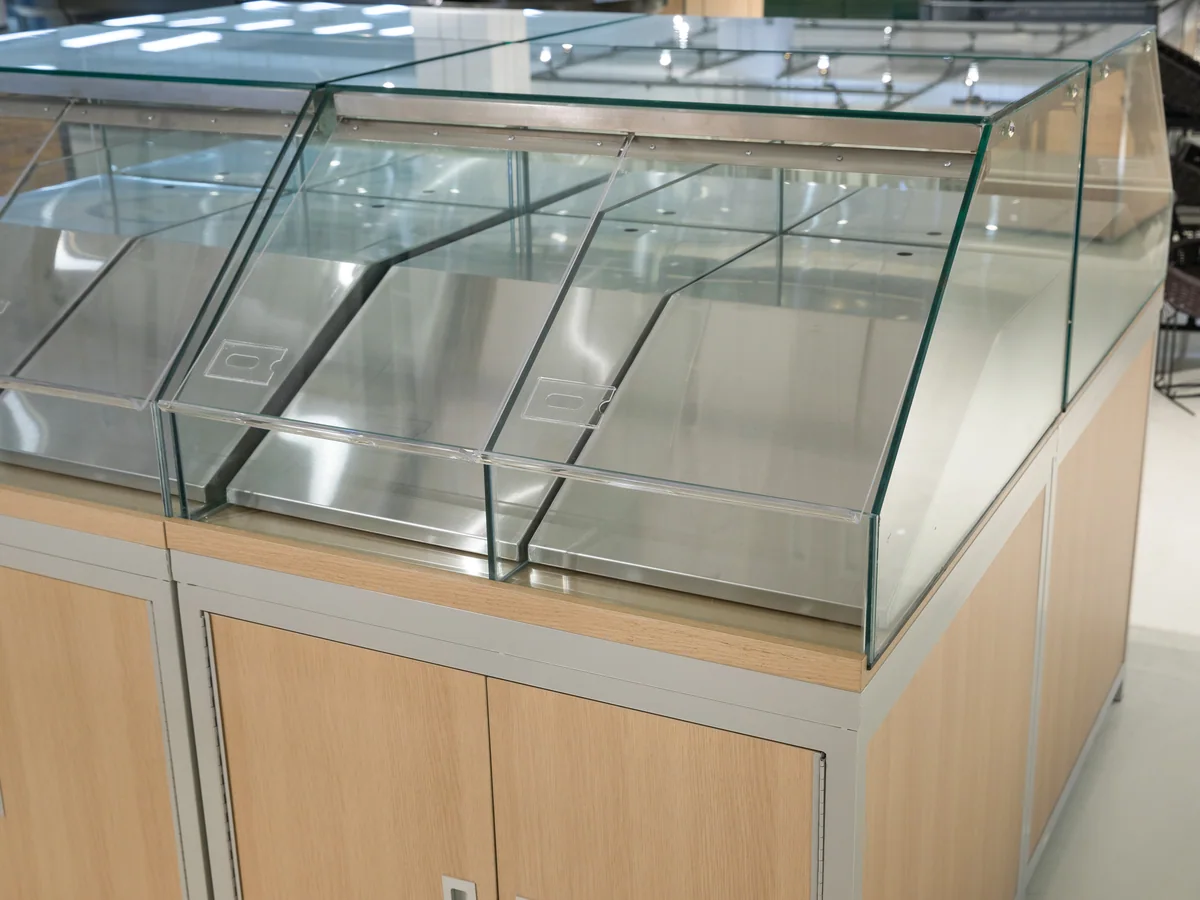
Reads as one
The glass carries across both bays in one line. From the shopper's side the department has a single front, which is what makes a two-bay counter read as bakery rather than as two cabinets.
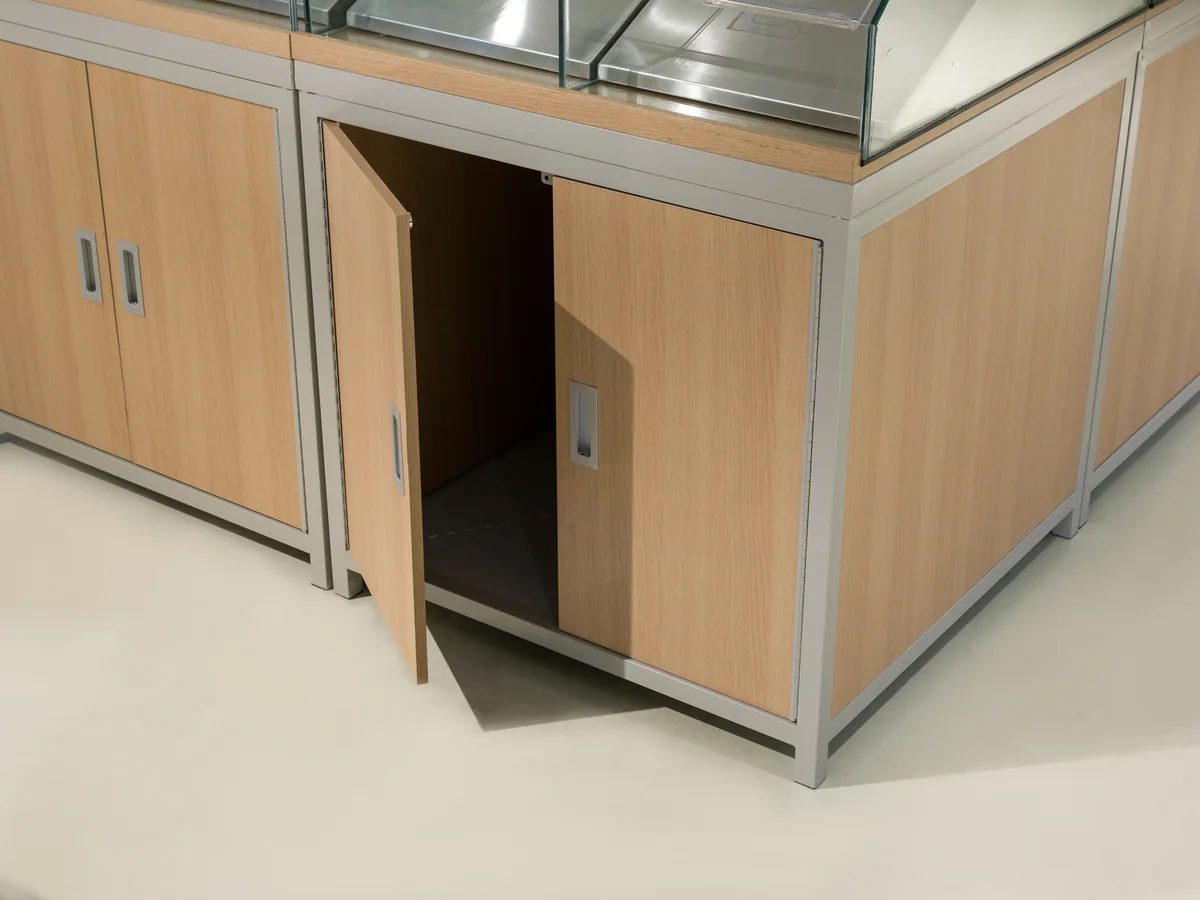
Under both bays
Cupboards run under both bays for trays and packaging. Bakery generates more packaging per sale than any other department, and a counter without storage puts it all on the floor.
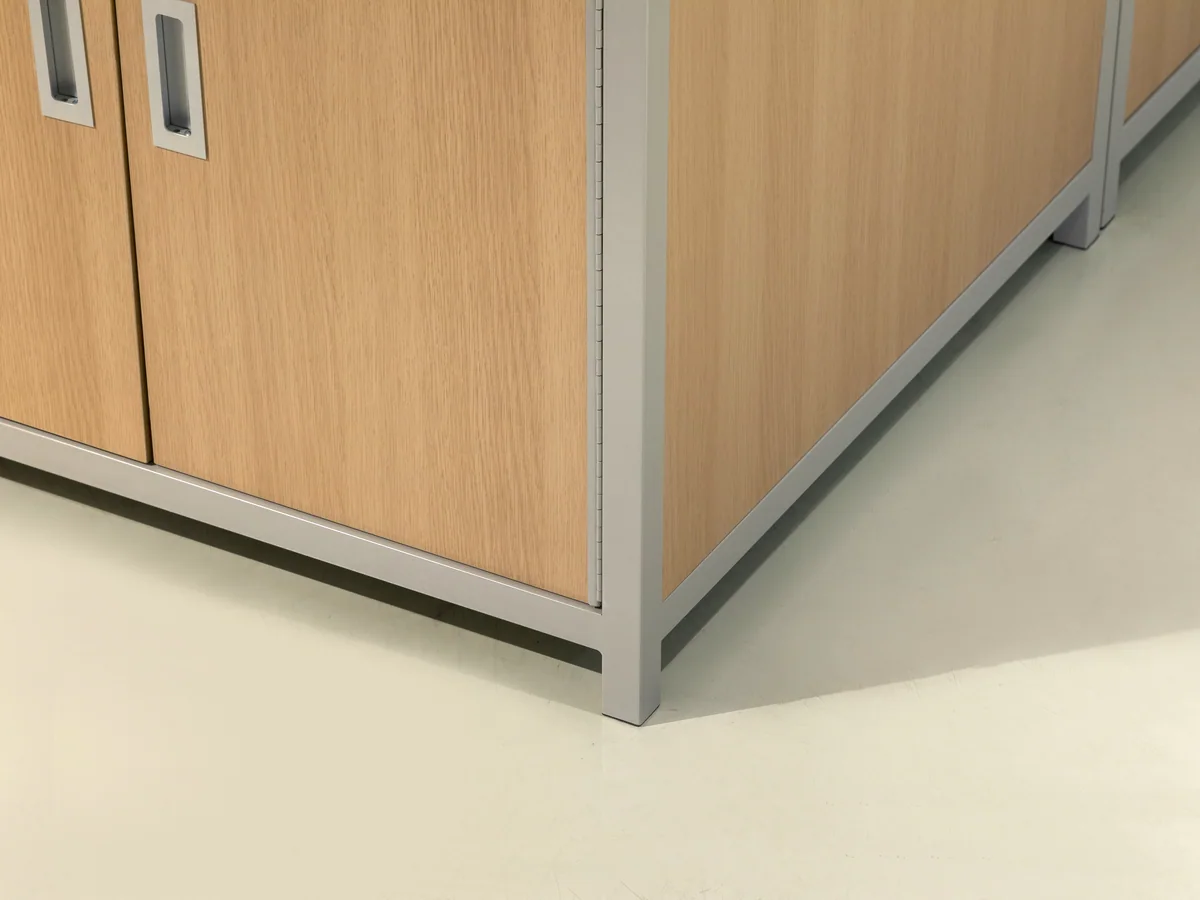
Board over steel
Pale board over the steel carcase. Bakery is one of the few departments where a pale fixture is unambiguously right — the product is brown, and it needs something light behind it.
Every item on this page is made to order. Send a floor plan, a hand sketch or a photograph of a fixture you like, and we quote against it.
Store fixtures are light for their size, so a container fills up on volume long before it fills up on weight. What decides your freight is not what one unit weighs — it is what shape the goods are in when they go through the container door. Everything we build leaves in one of three shapes.
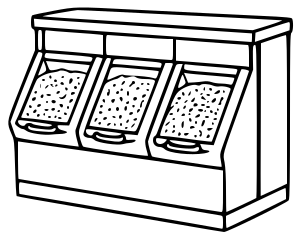
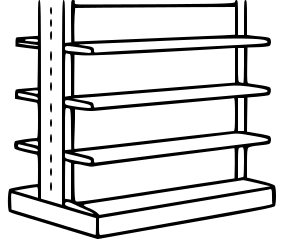
Shelving bays, produce islands and bulk cabinets travel as panels — uprights, shelves, back panels and plinths, strapped flat with bubble wrap on every component. They are built up on the shop floor, so the packing list and the assembly drawings travel with the goods.
This model
Trolleys slide into one another and baskets stack. Past the first unit, each extra one adds only its nesting pitch instead of its full length, so the shipped volume ends up a fraction of what the unit count suggests.
A checkout lane is welded, coated and fitted out as one piece, so it is crated whole with padding on the steel. Nothing waits to be assembled at the store beyond levelling it into the lane, and the crate is the counter plus a margin.
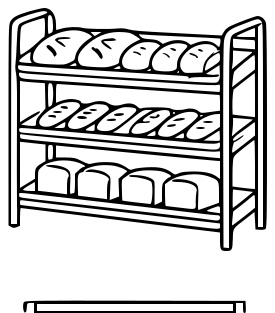
Bakery fixtures flat pack as panels, shelves, glazing and trim. Two bread racks are on record — KS-MBJ-01 and KS-MBJ-02 — and both are built to your bake tray and your bay rather than sold in fixed sizes, so the case dimensions come back on the packing list once the run is confirmed.
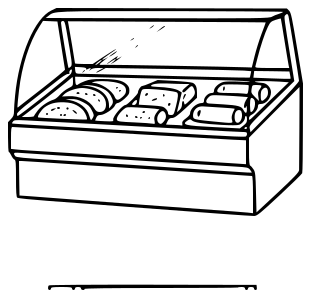
Bakery is a served department in most stores and a self-select one in others. Either way these three sit beside it.
Bakery and cooked food sit next to each other in most stores, and both are served rather than self-selected.
See serve over countersPackaged bakery lines go on the bays behind the counter, and they carry the same board tone.
See shelving baysBakery is promoted on the day, and a square at the counter end is where a morning batch actually moves.
See retail display tablesHow many of each a store needs is a floor area question rather than a product question, and it is answered store by store on the store layout planning page.
Send your bake tray and how you want the two bays split.
Send the bake tray size and tell us how you want the two bays split — savoury and sweet, or morning and afternoon bake. That decides the internal tiers.
The four that come up on nearly every enquiry for this build. If yours is not here, send it with your layout and it is answered alongside the quotation.
The same principle extends, though past two bays the run gets long enough that crating and access start to drive the decision. Send the counter length and we will say where the sensible break is.
No, and most stores split them. Separate internal tiers per bay is exactly what makes that work — savoury one side and sweet the other, or a morning and an afternoon bake.
It is built to your bake tray and your counter length rather than sold in a fixed size, like both recorded builds in this category. Send both and it comes back drawn.
Glazing specification is set per order, because a counter in a store with high child footfall is not glazed the same way as one in a wholesale room. Tell us the store type and it comes back on the quotation.