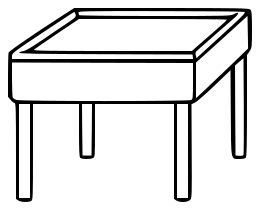


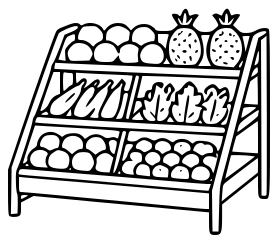
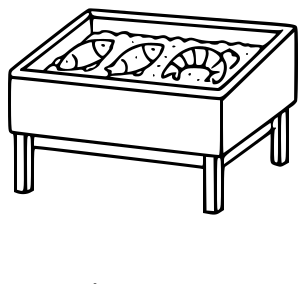
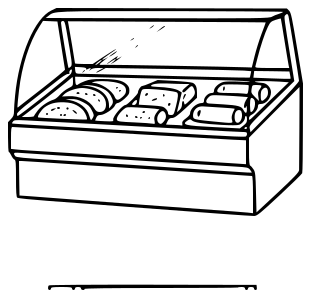
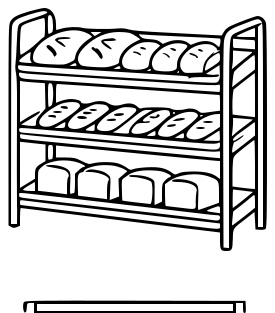
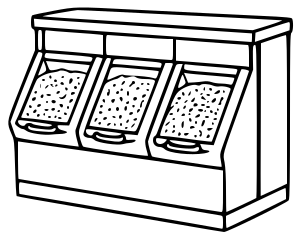
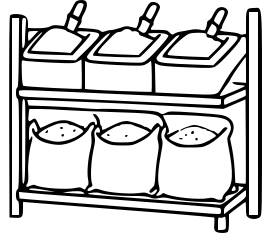
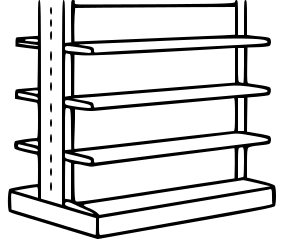
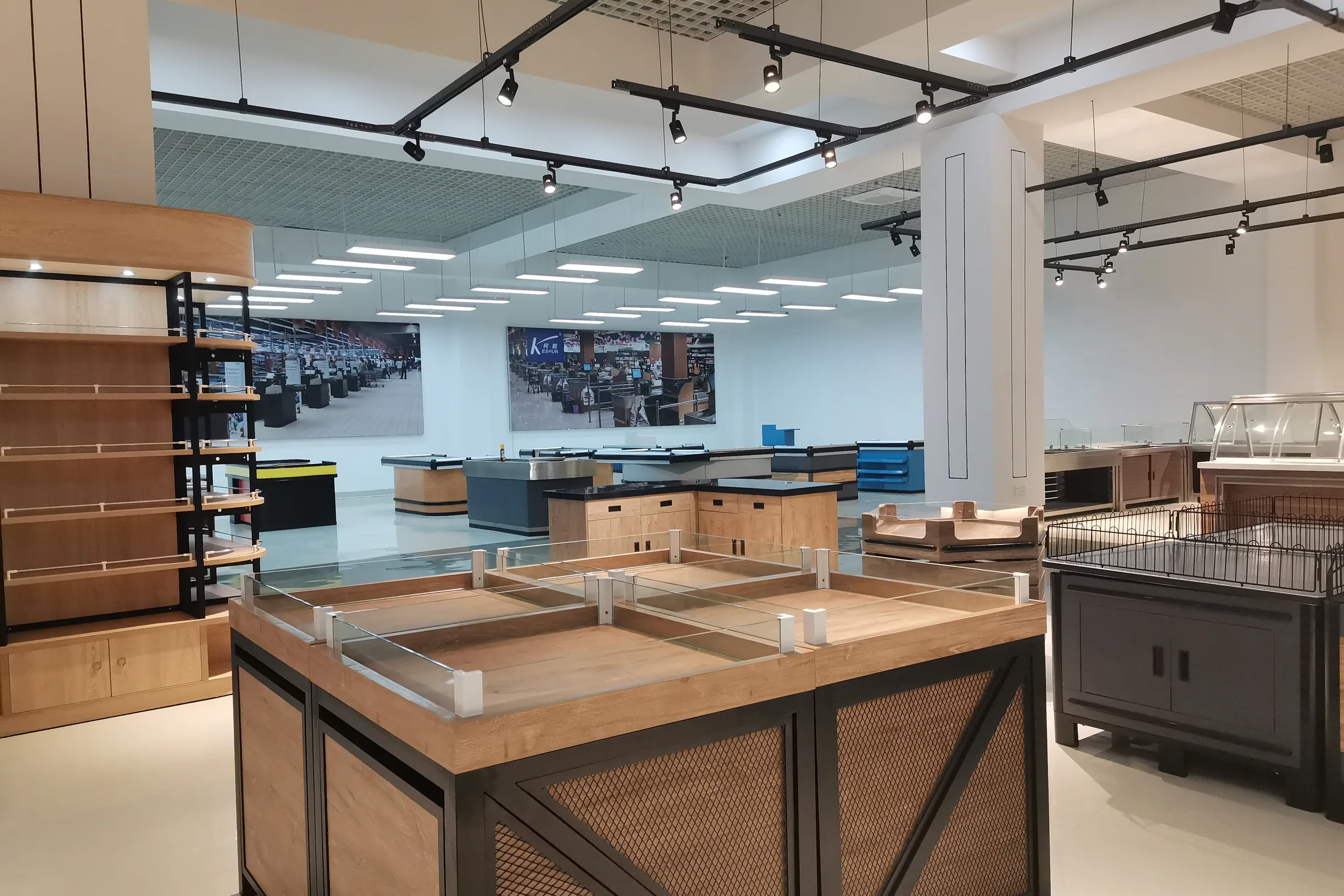
Timber display tables and grain rack bodies under track lighting in the Keshun showroom

Grain and Rice Racks

Grain Racks, Rice Display Racks and Wooden Grain Storage Bins

Grain is sold by weight out of an open bin, which makes this the one category where the fixture has to survive a scoop being dragged through it every day.

Full Range

Rice Rack For Supermarket Builds

Five grain and rice builds, photographed in our own studio. What separates them is not size but how the grain is held and reached: an open bin a shopper scoops from, a hooded case, a stepped platform for sacks, or a wall of shelves for packaged rice.

Long grain run with mesh flanks and end towers

A full-length run with mesh side panels, open bins along the top and taller towers closing each end, so a rice department reads as one block rather than as a row of separate bins.

Run with mesh flanks and end towers

Open the product file
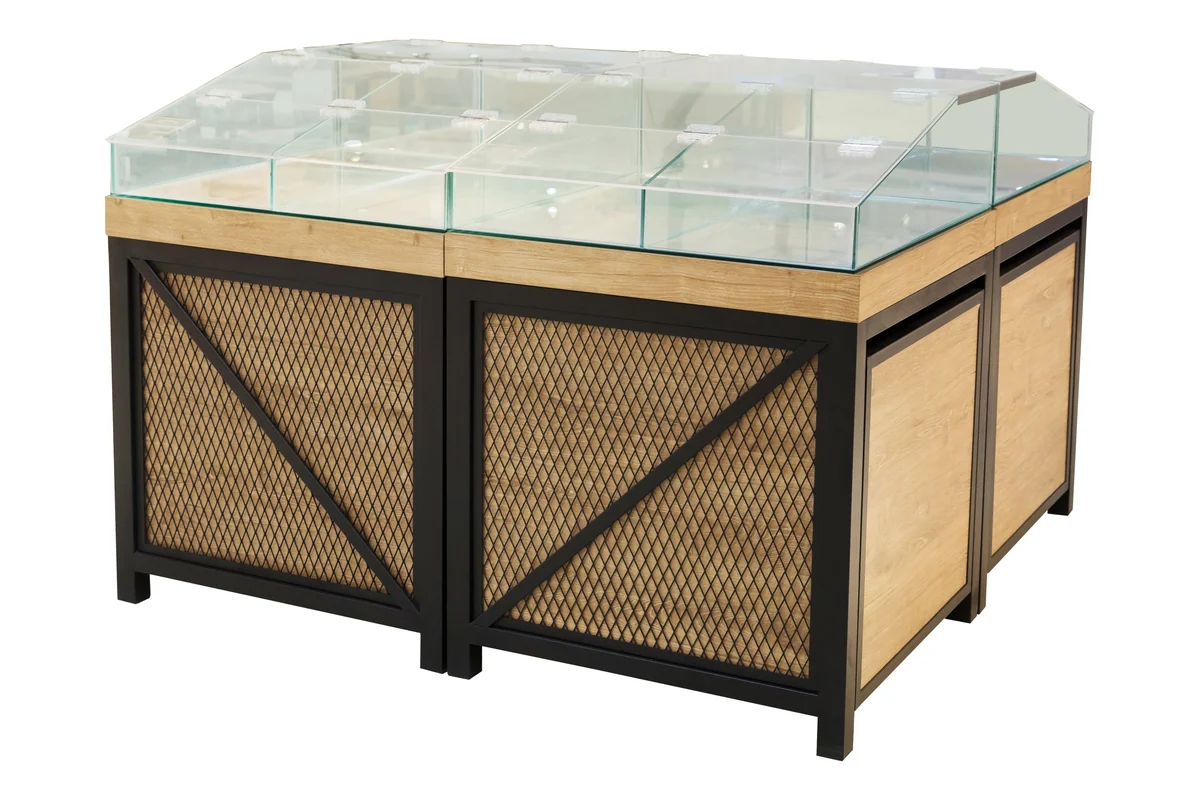
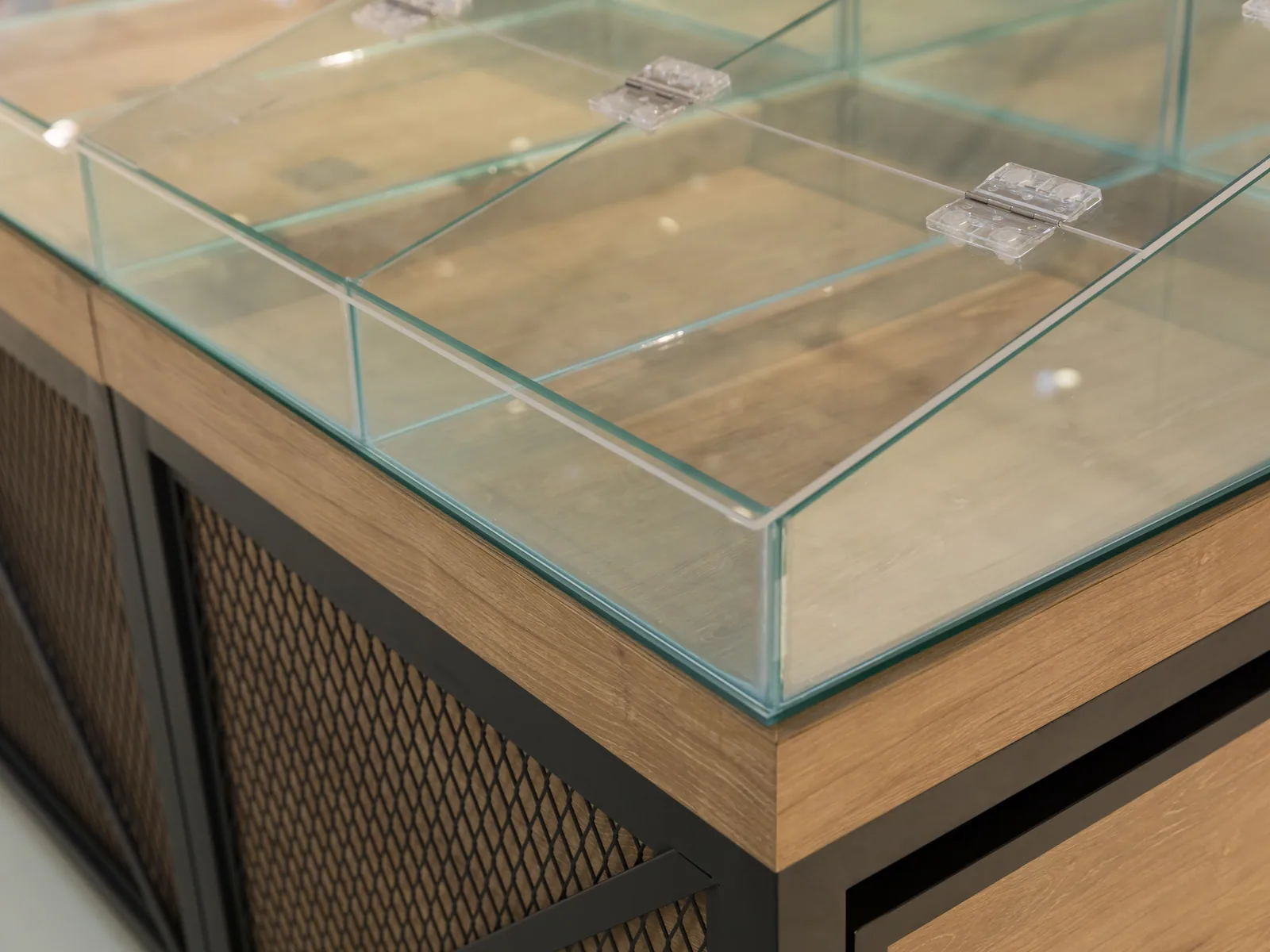
Hooded grain bin with a glass top

A square bin unit under a glass hood, mesh panelled below. The hood keeps the grain covered without hiding it, which is the compromise a store makes when hygiene rules stop short of sealed dispensers.

Square bin unit, glass hood

Open the product file

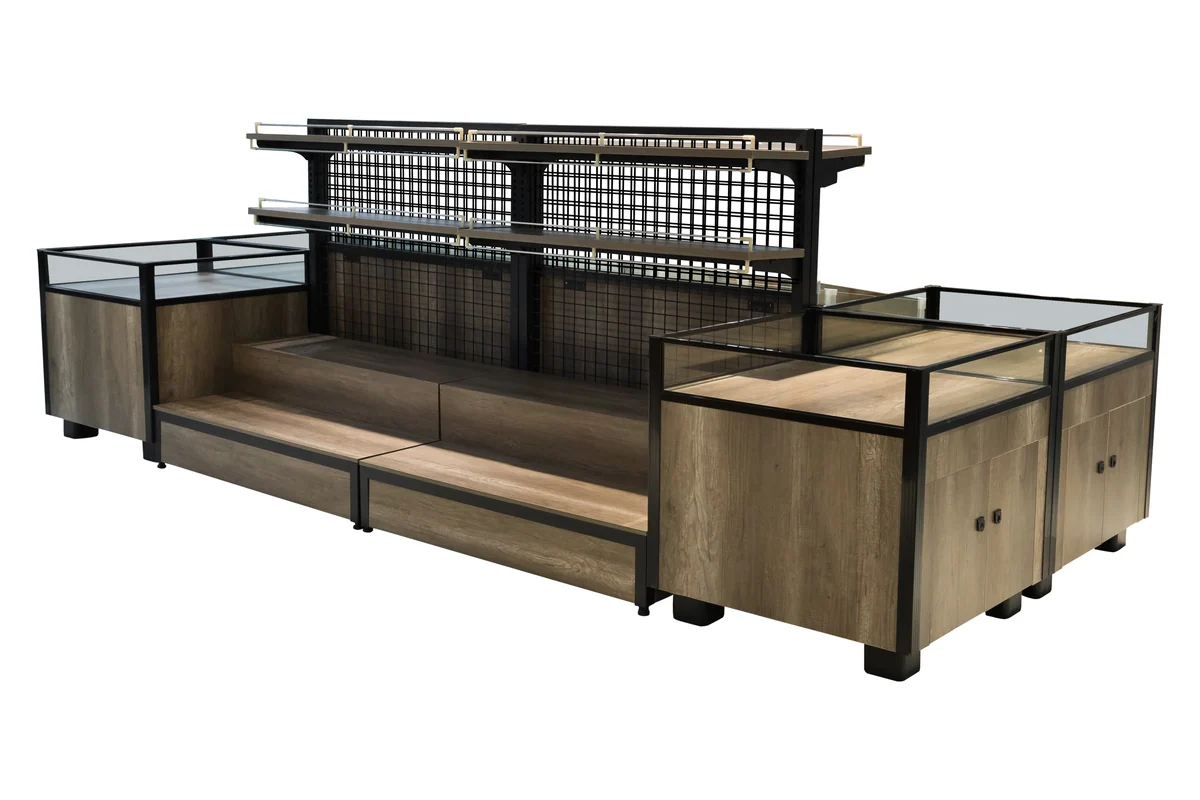
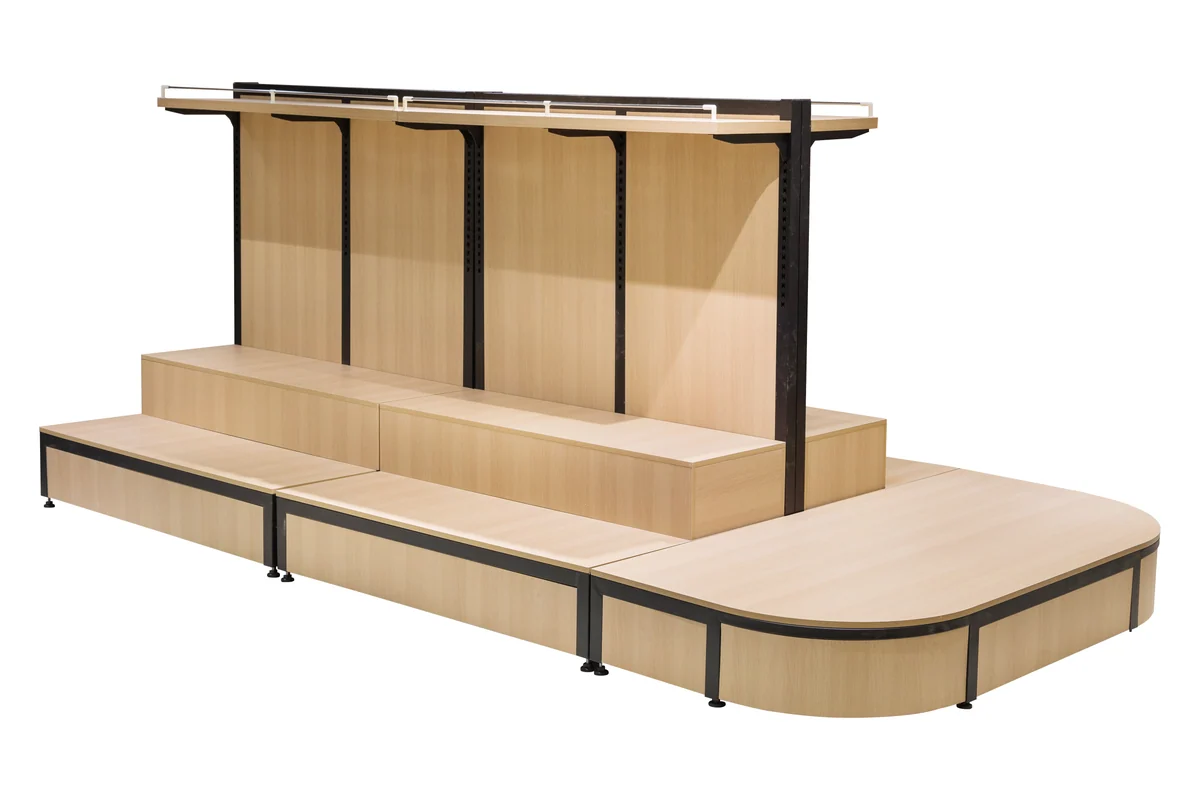
Stepped platform for sacked rice

Two timber platforms at different heights with no bins at all. Sacked rice is heavy and does not want to be lifted twice, so it is displayed on the floor of the fixture rather than in it.

Stepped platform, no bins

Open the product file

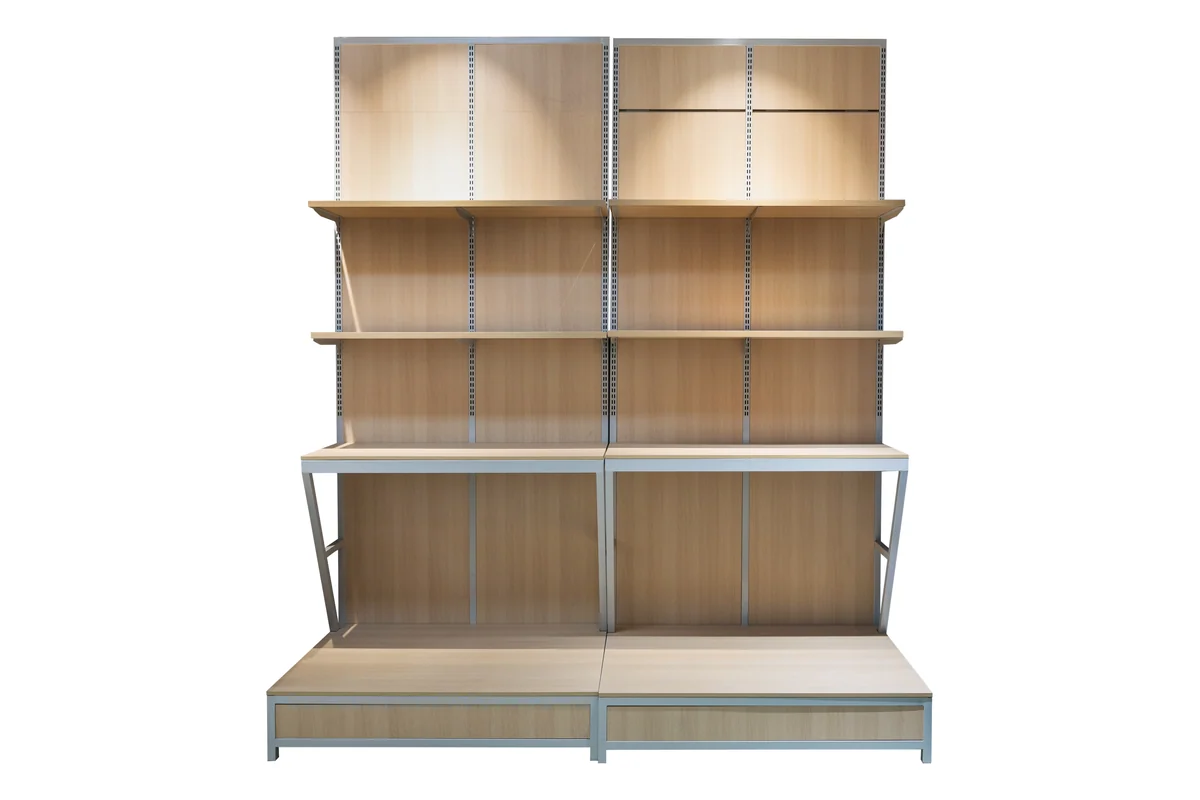
Open wall unit for packaged grain

A light timber wall unit with open shelves and no back panel, for the packaged half of the department where the goods sell themselves and the fixture stays out of the way.

Open-backed wall shelving

Open the product file

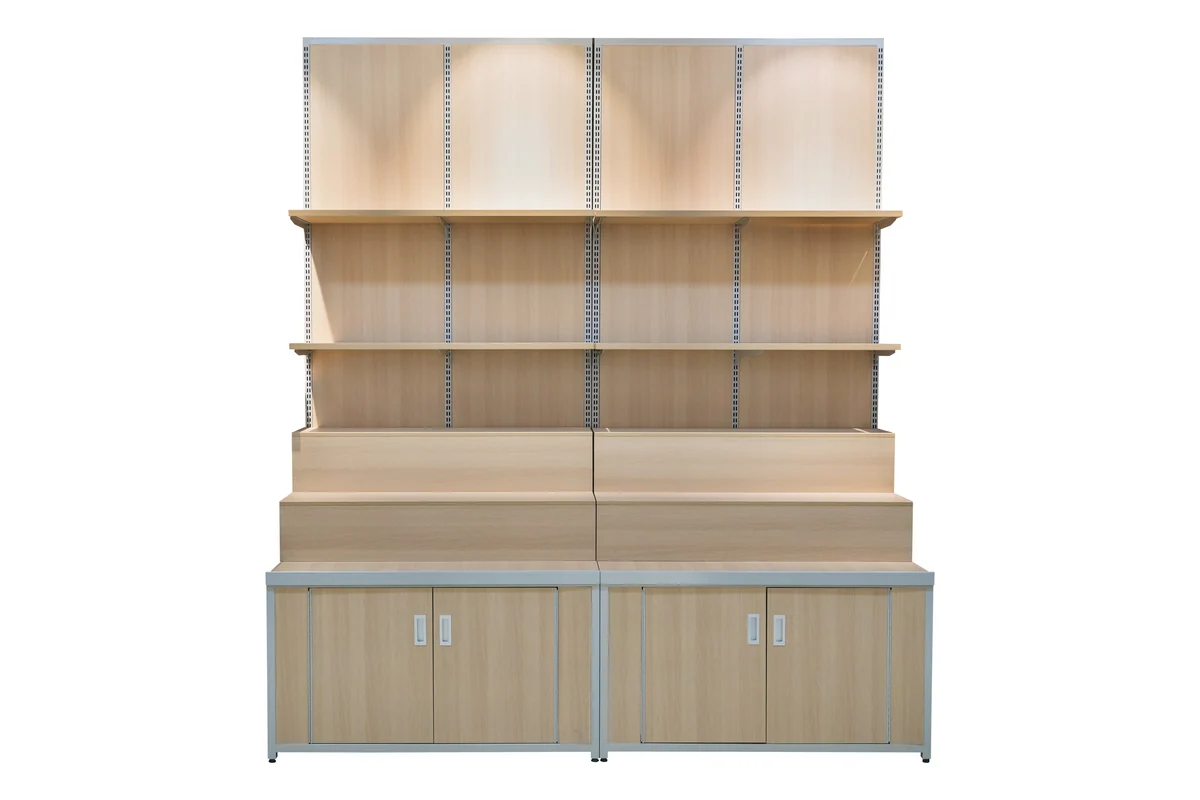
Wall unit with a base cabinet

The same open shelving over a closed base cabinet, so the slow-moving large bags live under the display instead of in the stock room.

Wall shelving over base cabinets

Open the product file

Two grain builds are on record, and they differ in the one way that matters for a bulk grain fixture: what the body is made of. Sizes are drawn against your plan. Colour is a RAL or PANTONE reference held across the order, so a grain run matches the bulk bins beside it.

Selection Axis

How To Choose A Grain Display Rack: Loose Or Packaged

Rice and grain arrive in a store in two completely different states, and the fixture that suits one is wrong for the other. Loose grain needs a bin that can be scooped from and cleaned out. Packaged grain needs shelving that can carry a lot of weight. Most departments need both.

The constant

The two recorded builds, and what separates them

Exactly two grain racks are on record, and the interesting thing is that they are distinguished by material rather than by size. Grain Rack-Y01 is metal sheet with stainless; Grain Rack-Y02 is MDF board. In a category where the fixture is scooped out of daily, that is the specification that decides how long it lasts.

Metal build Grain Rack-Y01 0.8 – 1.5 mm sheet and stainless board
Board build Grain Rack-Y02 1.5 – 2.5 mm MDF board

Neither is sold in a fixed size, so this page gives you the material decision and the format ladder instead of a size table. The sizes are drawn against your plan and come back with the quotation.

The ruler

Grain fixture formats by how the grain is held

No millimetre ruler on this page, because a grain fixture is built to the bay rather than sold in a fixed size. What follows is the ladder that decides the fixture: what state the grain is in when the shopper meets it.

Keshun grain and rice fixture formats ordered by how the grain reaches the shopper: packaged wall shelving, sack platforms, hooded bins and open scoop bins Wall shelving Bagged and boxed grain on shelves Sack platform Heavy sacks displayed at floor level Hooded bin Loose grain under a glass hood Open bin Shopper scoops it directly Packaged Sacked Covered Loose
  • Bar length shows how loose the grain is, not a dimension
  • Stainless is specified wherever a scoop touches the fixture

This ladder is not to scale and carries no millimetres. Both grain builds are made to the bay you have, so the drawing comes after your run length rather than before it.

The material split is real and recorded, though: Grain Rack-Y01 in metal sheet and stainless, Grain Rack-Y02 in MDF board. Which one a bin should be depends entirely on whether a scoop ever touches it.

The regroup

One department, four jobs

The same builds regrouped by what they hold. A rice aisle usually needs at least three of these four, which is why the module and the colour matter more than any single unit does.

Open bins Loose grain The mesh-flanked run above

Scooped from directly by the shopper. Highest turnover per metre and the cheapest way to sell staples, but the fixture has to take a metal scoop dragged across it every single day.

Hooded Covered loose The glass-hooded bin above

The same loose grain under a glass hood. It costs display speed and gains a cover, which is what most hygiene regimes ask for once a store goes beyond a market stall.

Platforms Sacked rice The stepped platform above

A 25 kg sack of rice does not go on a shelf, it goes on the floor of the fixture. Stepped platforms lift the second row above the first so the display reads without anything being lifted twice.

Shelving Packaged The two wall units above

Bagged and boxed grain on open shelves, with the large slow lines in a base cabinet underneath. This half of the department behaves like ordinary shelving and is priced like it.

Two Builds

Metal Bodies Or Board Bodies

The two retail bulk grain bins on record differ in material, and in this category that is not a cosmetic difference. Loose grain is abrasive, it is scooped, and the bin gets emptied and wiped more often than any other fixture on the floor except the deli counter.

Metal and stainless supermarket grain bin unit with a glass hood and mesh panels Metal and stainless

Grain Rack-Y01

0.8 – 1.5 mm metal sheet and stainless board

On record as metal sheet with stainless board. Stainless is what you want wherever the scoop touches, because grain is abrasive and a coated surface wears through at the scoop line first. This is the build for high-turnover loose staples.

Light timber MDF supermarket grain shelving unit with a base cabinet MDF board

Grain Rack-Y02

1.5 – 2.5 mm MDF board

On record as 1.5 to 2.5 mm MDF board. Warmer, quieter and cheaper per metre, and the right answer for the packaged half of the department where nothing abrasive ever touches the fixture.

A rice aisle almost always wants both: stainless-lined bins where the grain is loose, board shelving where it is bagged, in one colour so the department does not look like two departments. Both are built in the same plant.

Build Detail

What A Grain Rack Is Made Of

The four things a buyer checks when a sample grain unit is finally standing in front of them, quoted from our own build sheet rather than from a brochure.

Open grain bin with a stainless lining on a Keshun supermarket grain unit Bins

Bins and scoop surfaces

Stainless where the scoop lands

Grain is abrasive and a scoop is metal. Where the two meet the surface is stainless, because a coated panel wears through at the scoop line long before the rest of the fixture is anywhere near worn out.

Steel mesh side panel on a Keshun supermarket grain and rice run Flanks

Mesh side panels

Ventilated steel mesh

Mesh rather than a solid panel on the flanks. Grain stored in quantity needs air moving through the body, and a mesh flank also lets the fixture read as lighter than the tonnage it is actually carrying.

Glass hood over the bin mouth of a Keshun supermarket grain unit Hood

Glass hoods and covers

Hinged, over the bin mouth

A hood covers the grain without hiding it. It is the ordinary answer where the local hygiene regime wants loose food covered but stops short of requiring a sealed gravity dispenser.

Stepped timber sack platform on a Keshun supermarket rice display Platforms

Sack platforms and steps

Load-bearing timber decks

Sacked rice is displayed on a deck rather than on a shelf, because nobody is lifting a 25 kg sack to shoulder height twice. Two steps give the display depth without asking anything of the staff.

Colour is given as a RAL or PANTONE reference and held across every category on the same order, so the grain run, the bulk bins beside it and the shelving beyond it leave the plant in one shade. The finish standard is set out in full on our About page, and the rest of the store is on the product overview.

Close-up of a timber grain display body and shelf edge on a Keshun supermarket fixture

Tell us how much of your rice aisle is loose grain and how much is bagged. The split decides the fixture before any dimension does.

Get A Quotation

How Is Your Grain Sold?

Every question below is one we would have to ask you anyway. Answering them now takes a round trip out of the quotation.

Your enquiry goes to keshun@kssyt.com. Floor plans, CAD files and photographs of a store you like are all welcome — a hand sketch on paper is enough to start.

Buyer Questions

Grain And Rice Rack Questions

Seven things buyers ask before they order a rice aisle. If yours is not here, put it in the message box above and it gets answered with the quotation. Because this category lives or dies on the material, see Steel Shelf or Steel and Wood Shelf: Which Suits Your Store.

What size are your grain racks?

Neither build on record, Grain Rack-Y01 or Grain Rack-Y02, carries dimensions, so there is no size table on this page. A grain run is drawn against the aisle you have and the split between loose and bagged, and the figures come back with the quotation.

What is the difference between your two grain racks?

Material, and in this category that decides everything else. Grain Rack-Y01 is recorded as metal sheet with stainless board; Grain Rack-Y02 is recorded as 1.5 to 2.5 mm MDF board. Loose grain is abrasive and gets scooped daily, so it wants stainless. Bagged grain touches nothing, so board is fine and cheaper.

Why are the side panels mesh rather than solid?

Air. Grain held in quantity needs some movement through the body of the fixture, and mesh gives it that without the unit becoming a set of louvres. It also makes a run that is carrying a serious tonnage of rice read as lighter than it is, which matters in a narrow aisle.

How do you display sacked rice?

On a stepped platform, not on a shelf. A 25 kg sack is not going to be lifted to shoulder height twice, so the display puts it at or near floor level and uses a second step to lift the back row above the front one. That gives the display depth without asking anything of the staff who restock it.

Do the bins have covers?

They can. A hinged glass hood covers the grain without hiding it, and that is what most stores specify once the local hygiene regime asks for loose food to be covered. Tell us the rule you are working to and the bins are built to meet it rather than adapted afterwards.

Can a grain run match the bulk food bins beside it?

Yes, and it usually should. Grain and bulk food bins generally share an aisle, and both come out of the same plant, so a single RAL or PANTONE reference on the order keeps them in one shade. A rice section in a slightly different brown from the bulk section beside it is one of the more obvious ways a fit-out looks unfinished.

What is the best way to display loose rice in a store?

In a rice display rack with the scoop contact surfaces in stainless steel board, because loose grain is abrasive and wears a timber edge through inside a season. Whether the bins can be open or must be covered is decided by your local food hygiene rule, not by us — tell us the market and we build to it.