

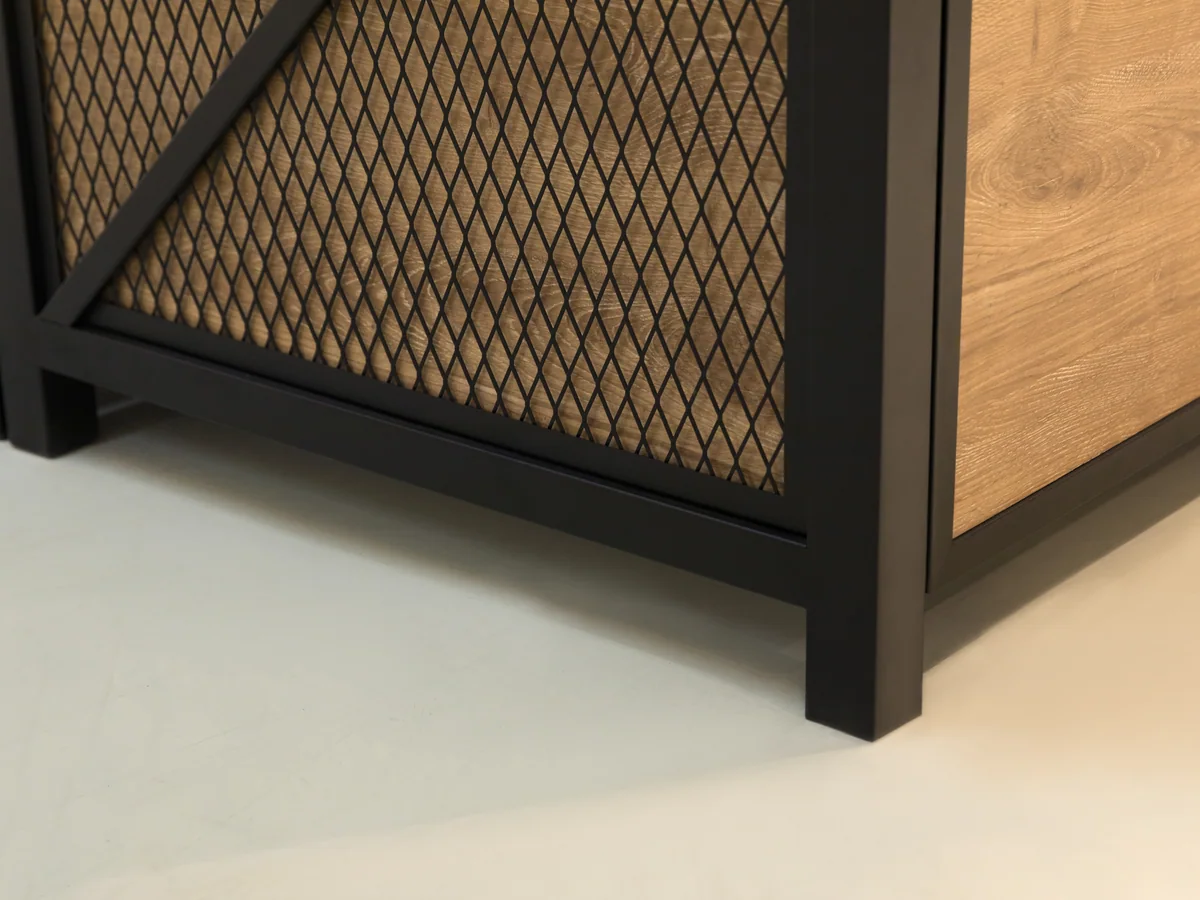
Expanded Mesh Panel
Ventilates the cabinet
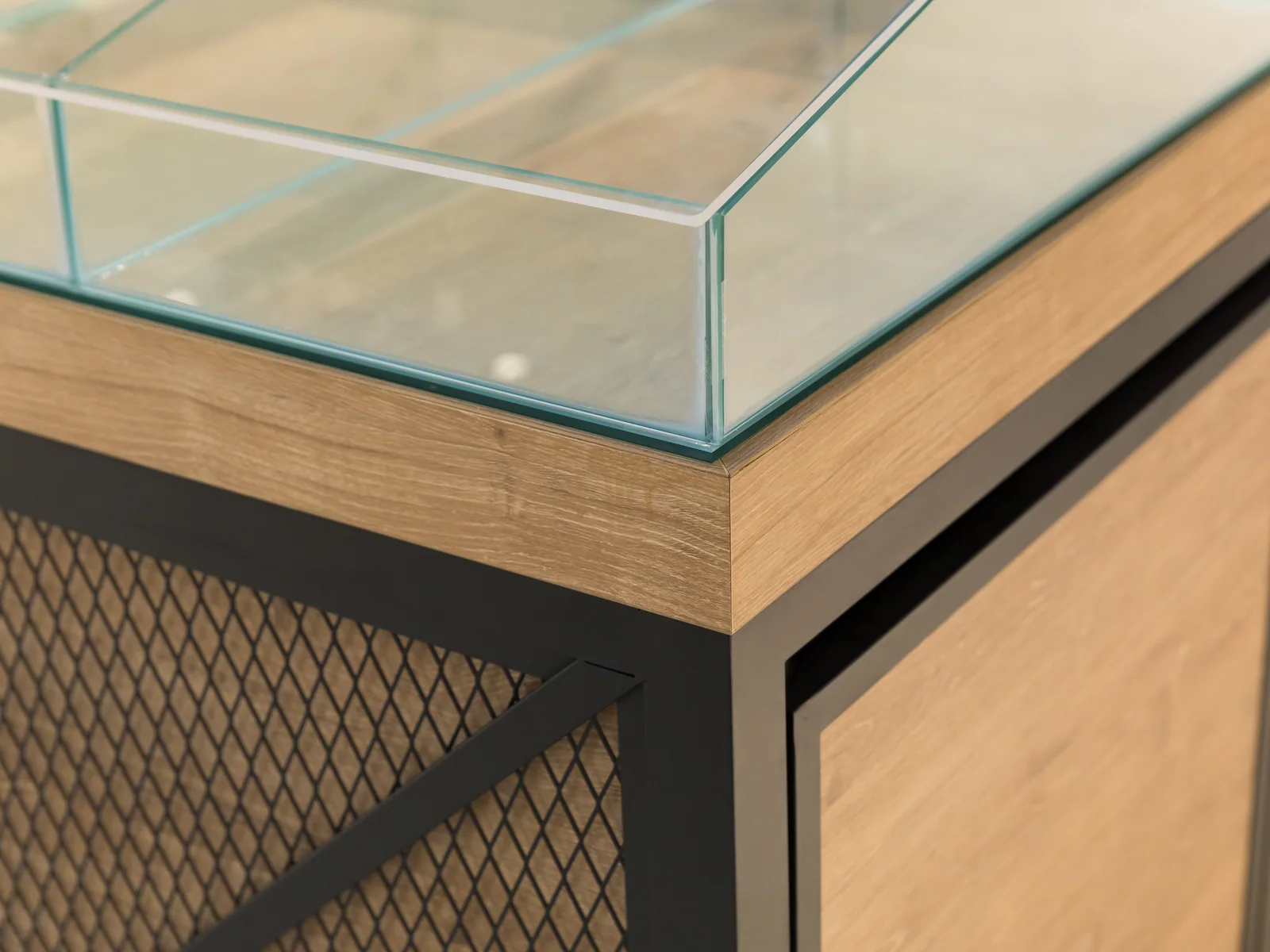
Expanded metal rather than a solid sheet. It satisfies a requirement that the goods be enclosed while still letting the moisture grain gives off get out, which a sealed panel does not.
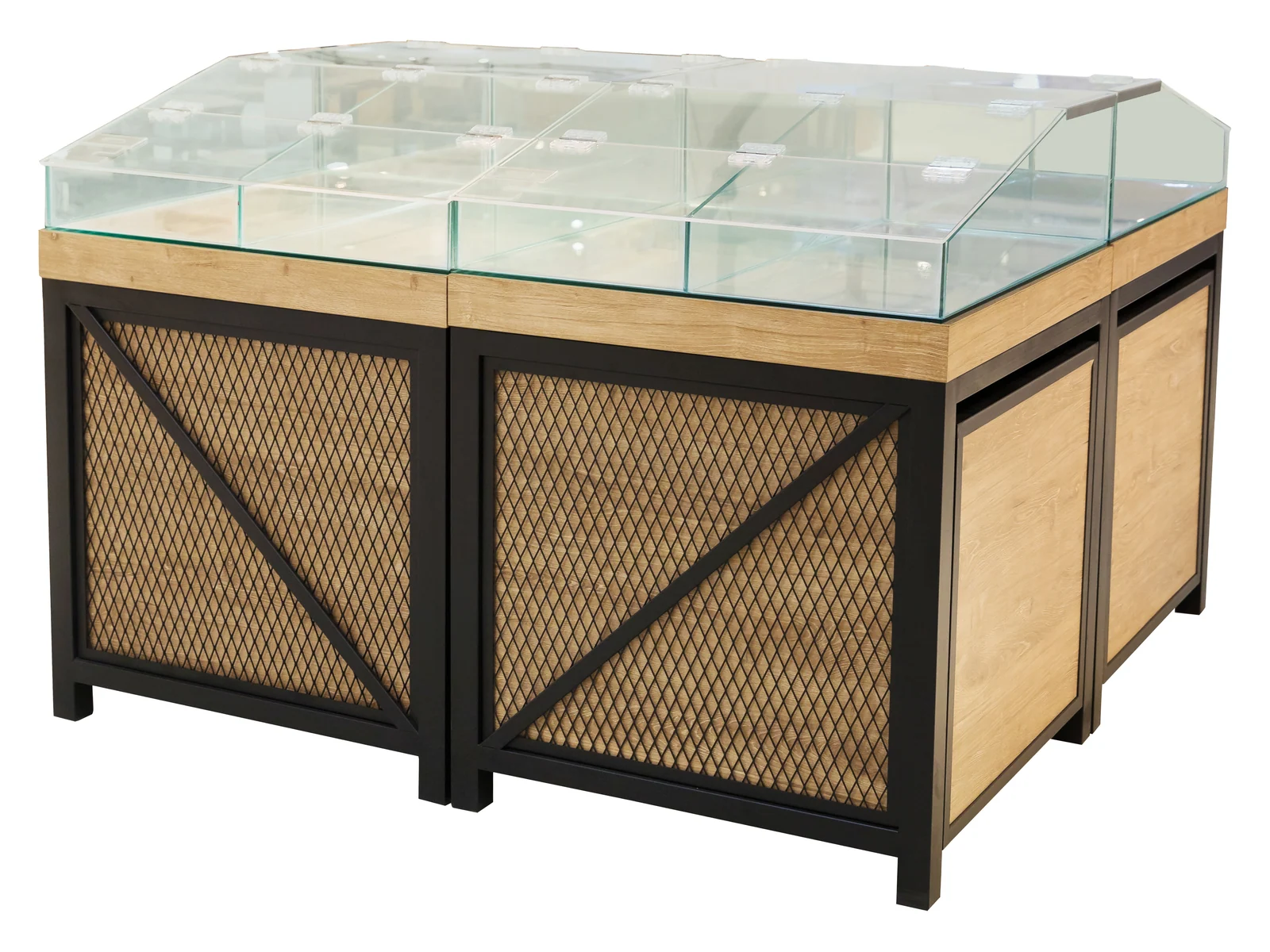
Mesh sides · glazed top · enclosed for hygiene
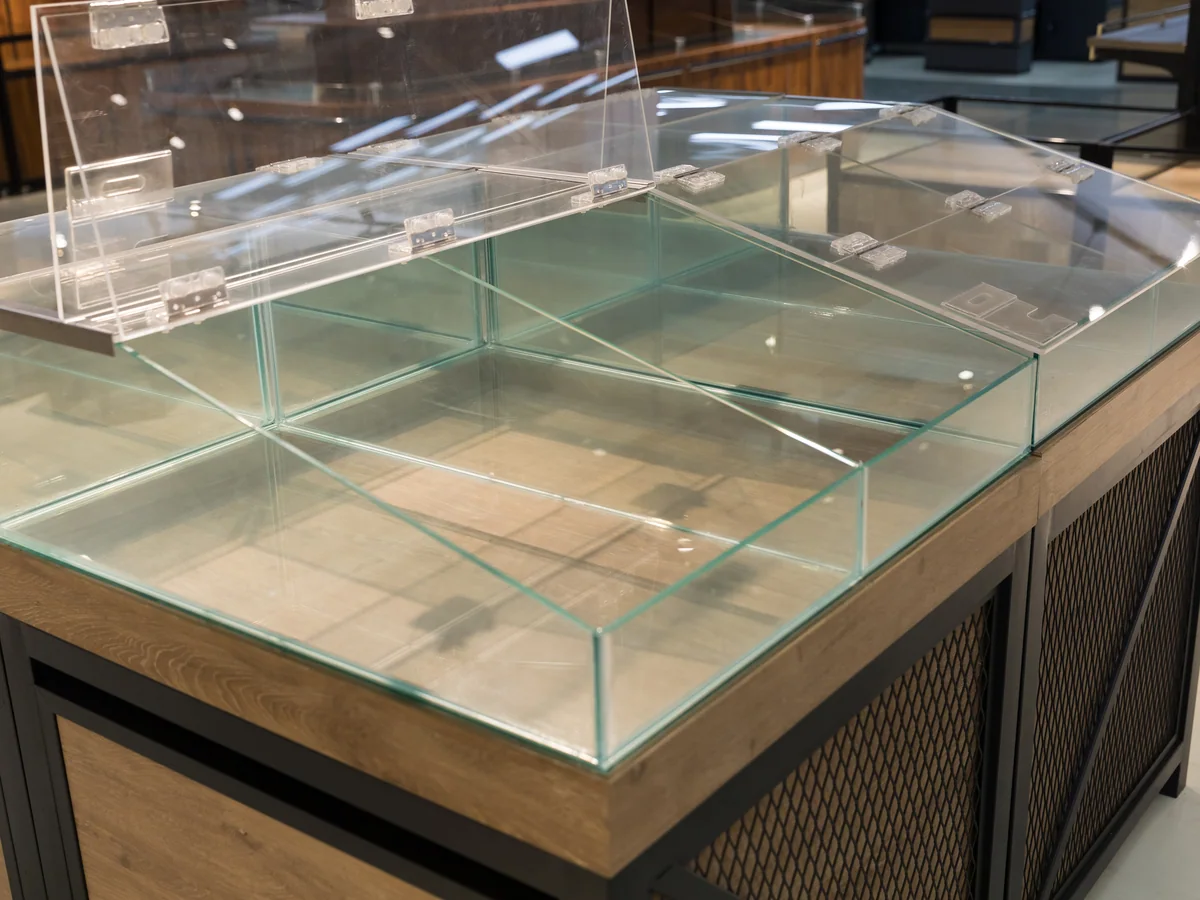
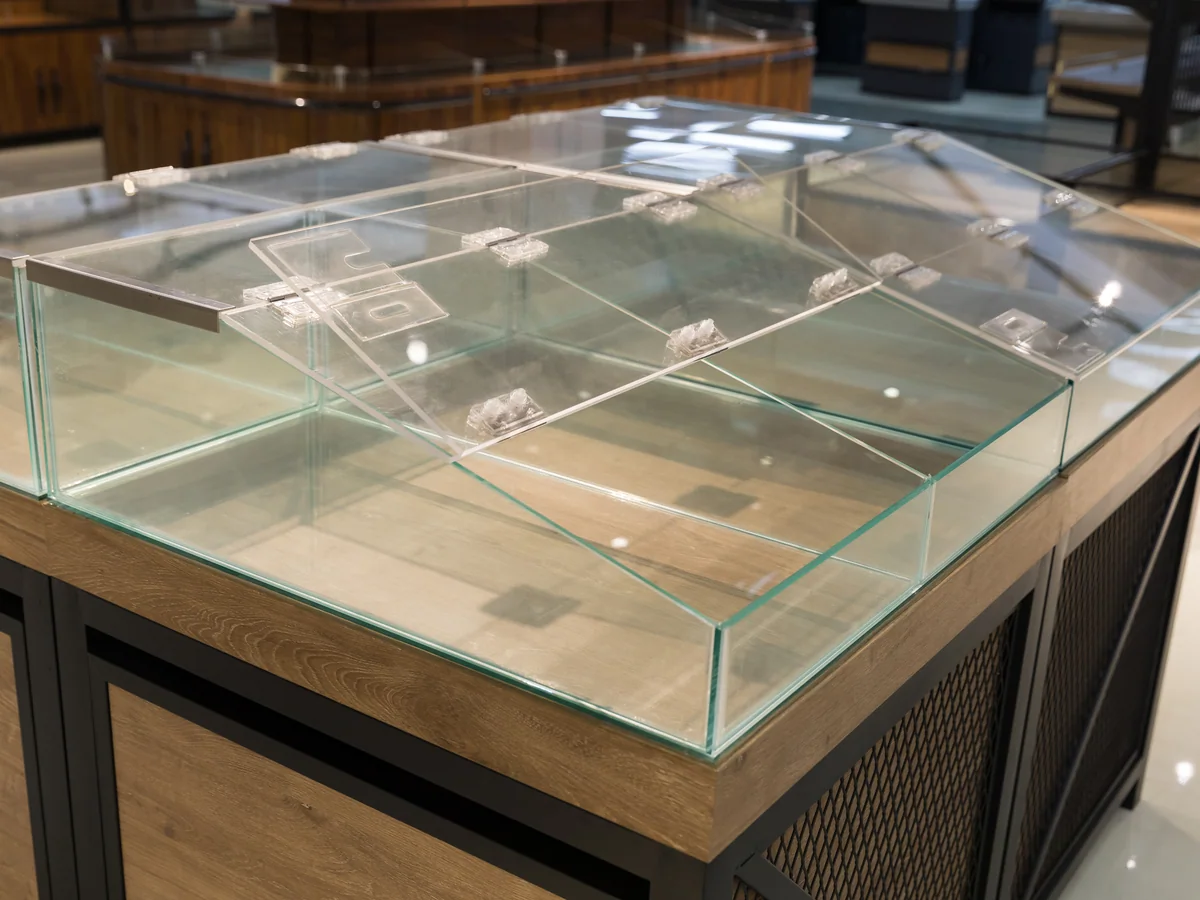
An enclosed grain cabinet for markets where open bins are not allowed. The top is glazed so the goods still sell themselves, and the sides are expanded mesh so the cabinet still breathes.
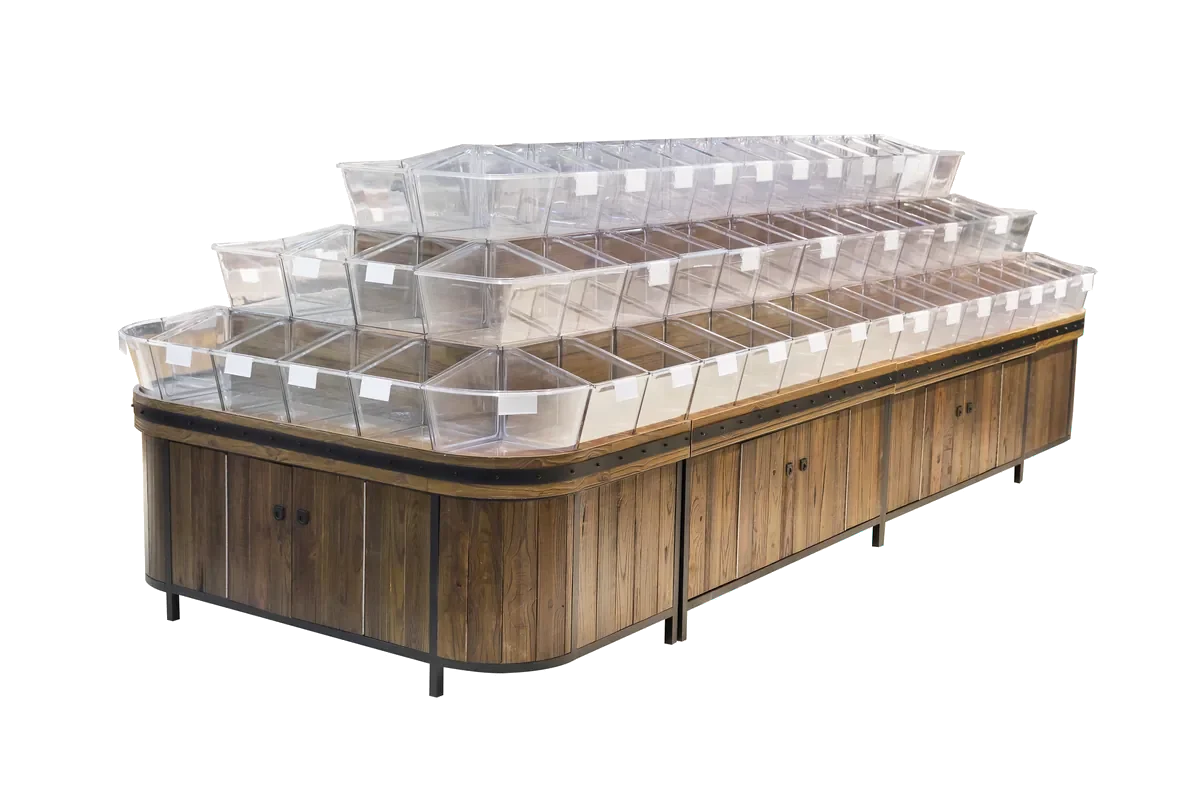
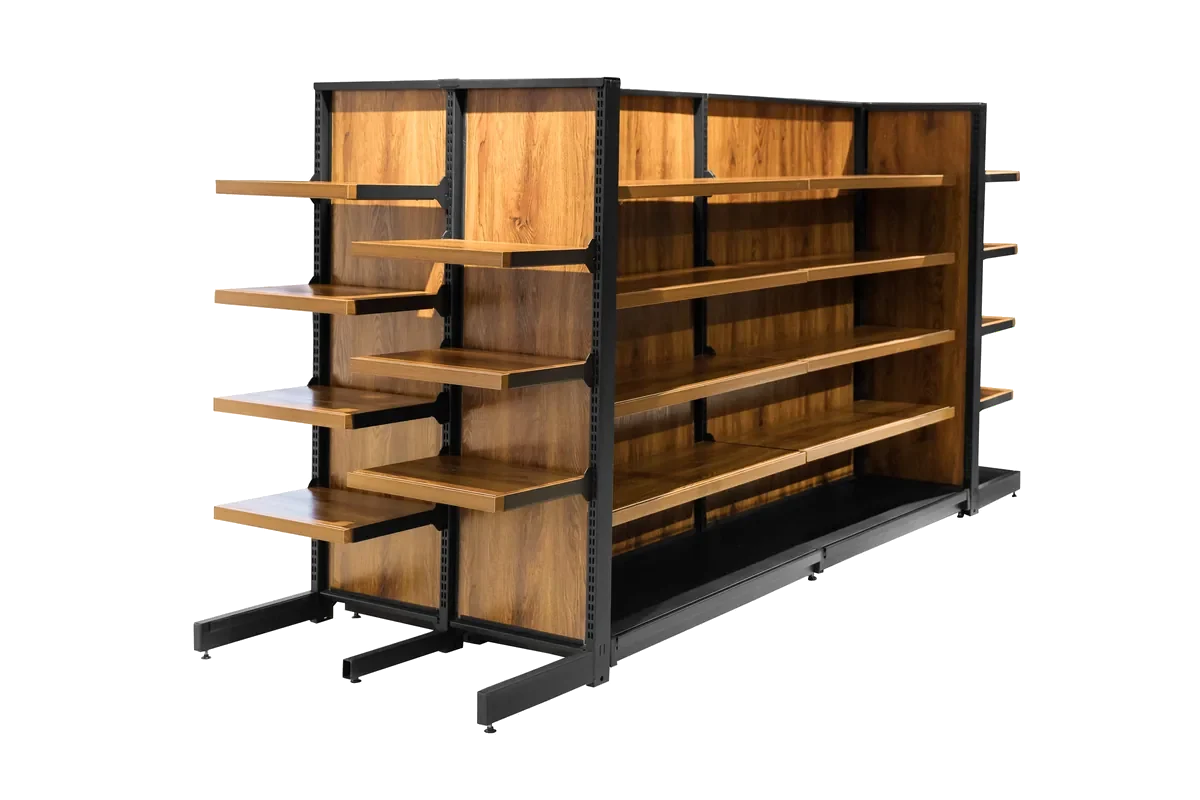
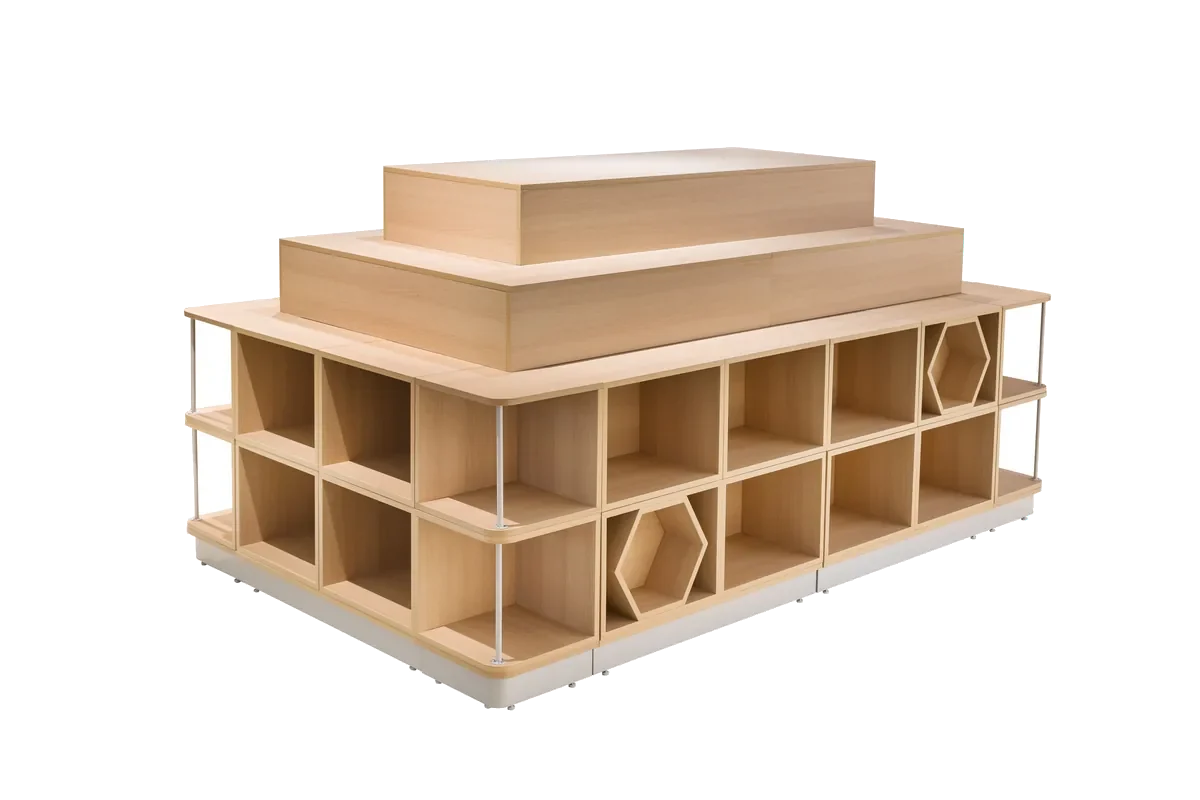
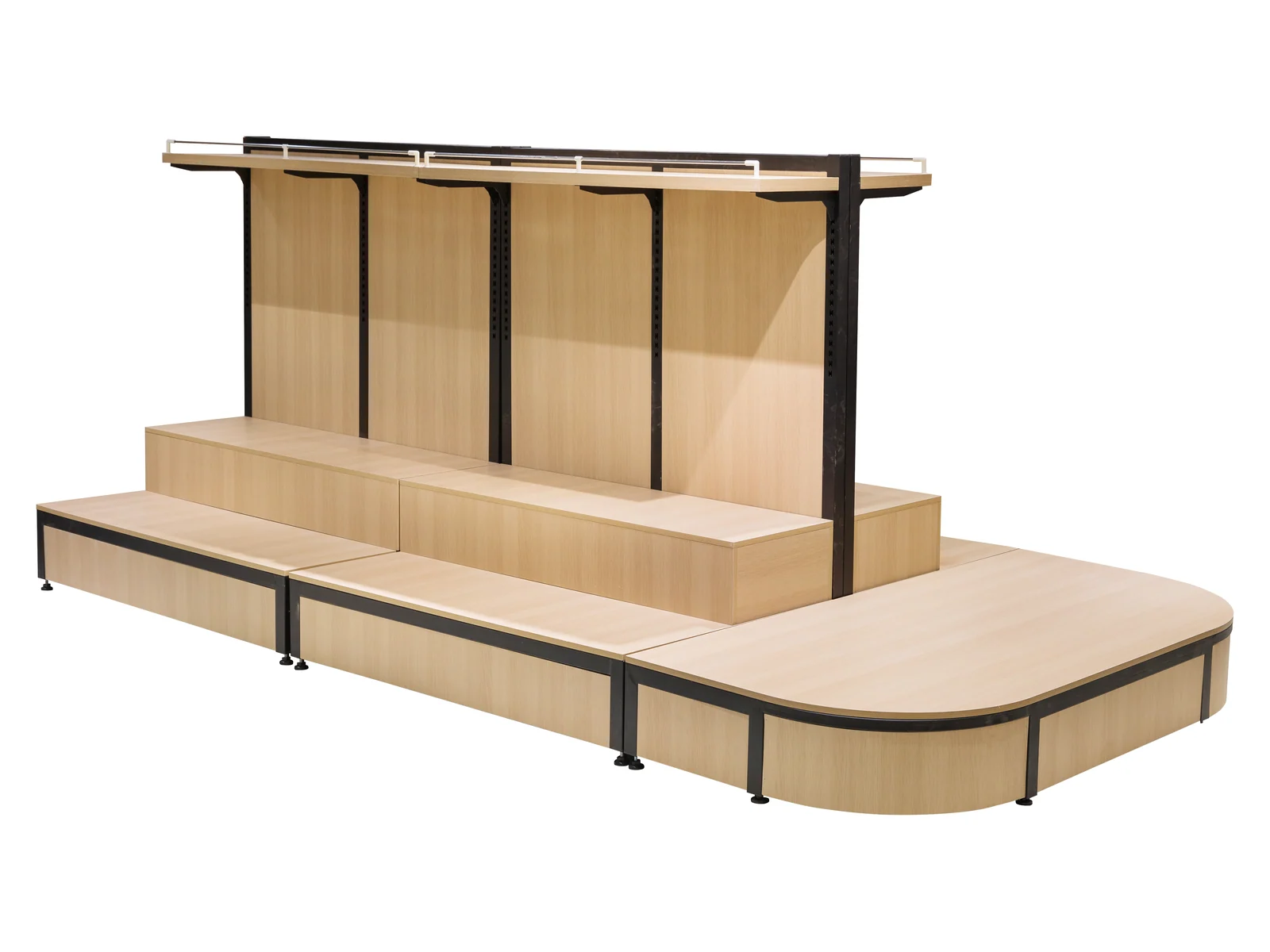
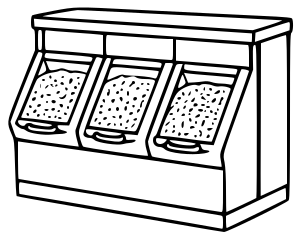
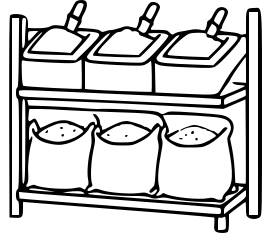
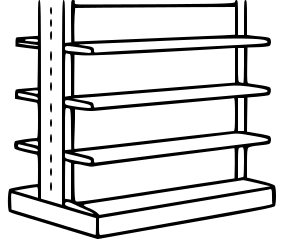
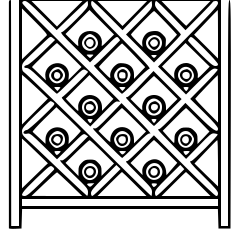
Studio angles on white. The mesh panel, the glazed top, the frame corner and the base are photographed below.
Where the local hygiene rule does not permit an open bin, the usual answer is a sealed cabinet — and a sealed cabinet full of grain is a humidity problem waiting for a warm week. This build closes the goods off from the shopper without closing off the air: the display top is glazed and the side panels are expanded mesh in a black steel frame.
The mesh is doing real work. Grain and pulses release moisture, and in a sealed box that moisture has nowhere to go. Expanded metal on the flanks lets the cabinet breathe while still meeting a requirement that the goods be enclosed, which is the whole reason this build exists alongside the open bin island.
An enclosed grain cabinet for markets where open bins are not allowed. The top is glazed so the goods still sell themselves, and the sides are expanded mesh so the cabinet still breathes.
Supermarkets, convenience stores, chain retail and speciality stores. Tell us the store format and the floor area and the specification comes back written against them.
Two competing requirements — enclose it, and let it breathe — meet in these four details.
Ventilates the cabinet
Expanded metal rather than a solid sheet. It satisfies a requirement that the goods be enclosed while still letting the moisture grain gives off get out, which a sealed panel does not.
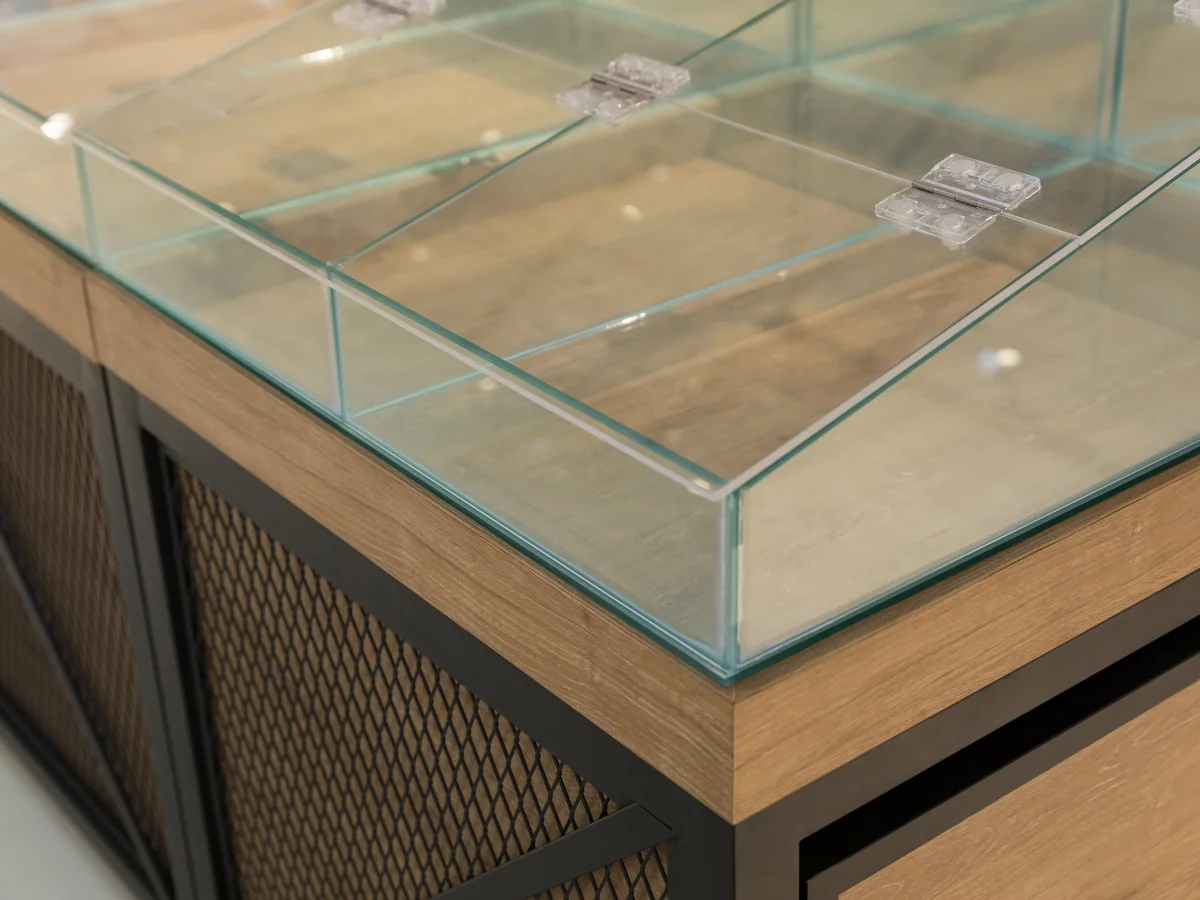
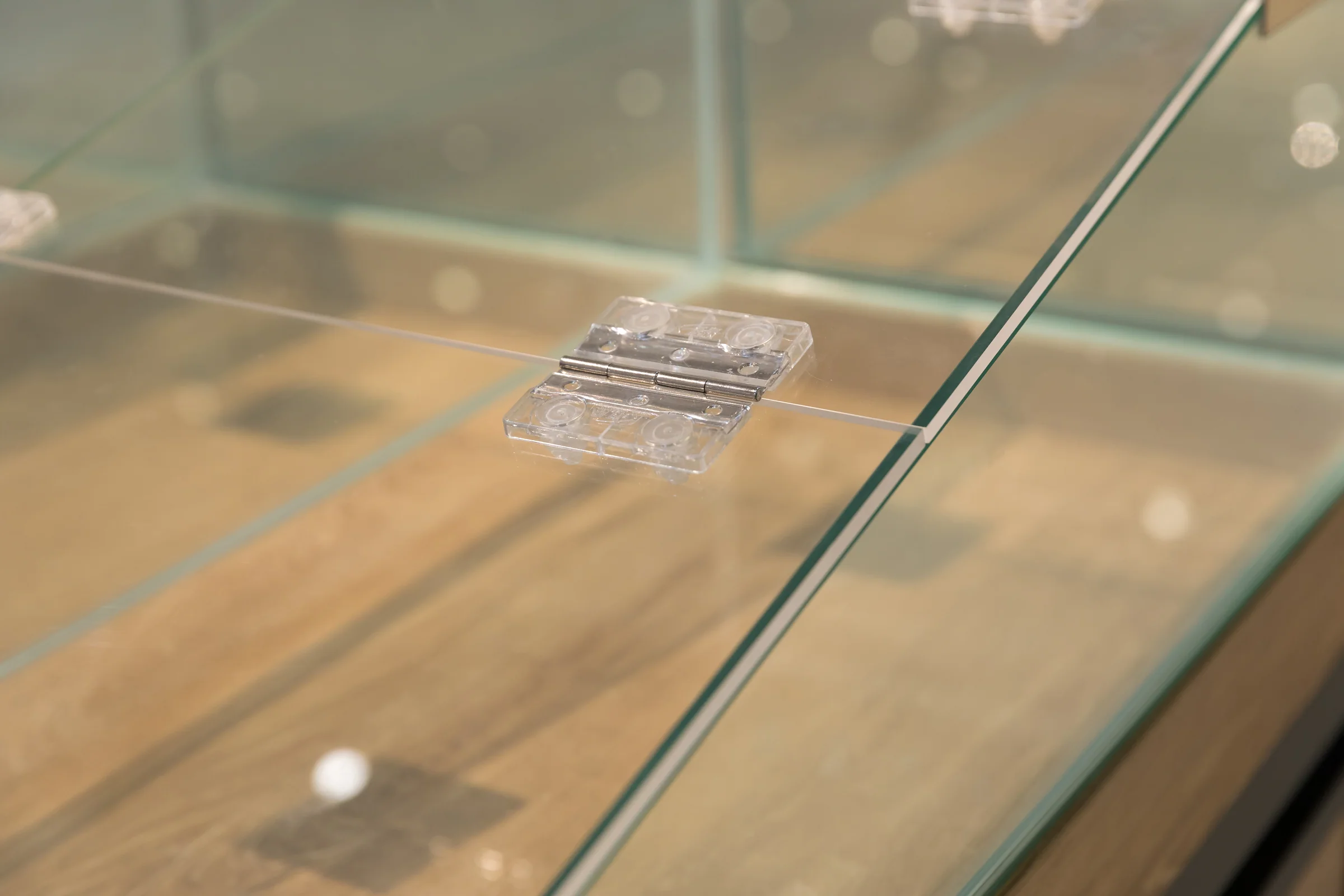
Goods stay visible
The top is glass so the grain is still merchandising itself. An enclosed fixture that also hides its contents sells nothing, which is the mistake the sealed-box version of this cabinet makes.
Coated after welding
Corners are welded and coated afterwards, so there is no bare edge at the joint. On a mesh panelled cabinet the frame is the whole visible structure, which is why the corners get this attention.
Clear of the floor
The base lifts the cabinet clear of the floor. Dry goods areas get swept and washed, and a cabinet that meets the floor is the one that wicks water into its lowest panel.
Every item on this page is made to order. Send a floor plan, a hand sketch or a photograph of a fixture you like, and we quote against it.
Store fixtures are light for their size, so a container fills up on volume long before it fills up on weight. What decides your freight is not what one unit weighs — it is what shape the goods are in when they go through the container door. Everything we build leaves in one of three shapes.
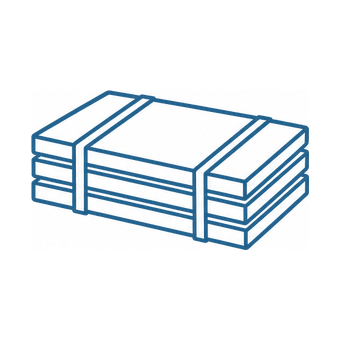
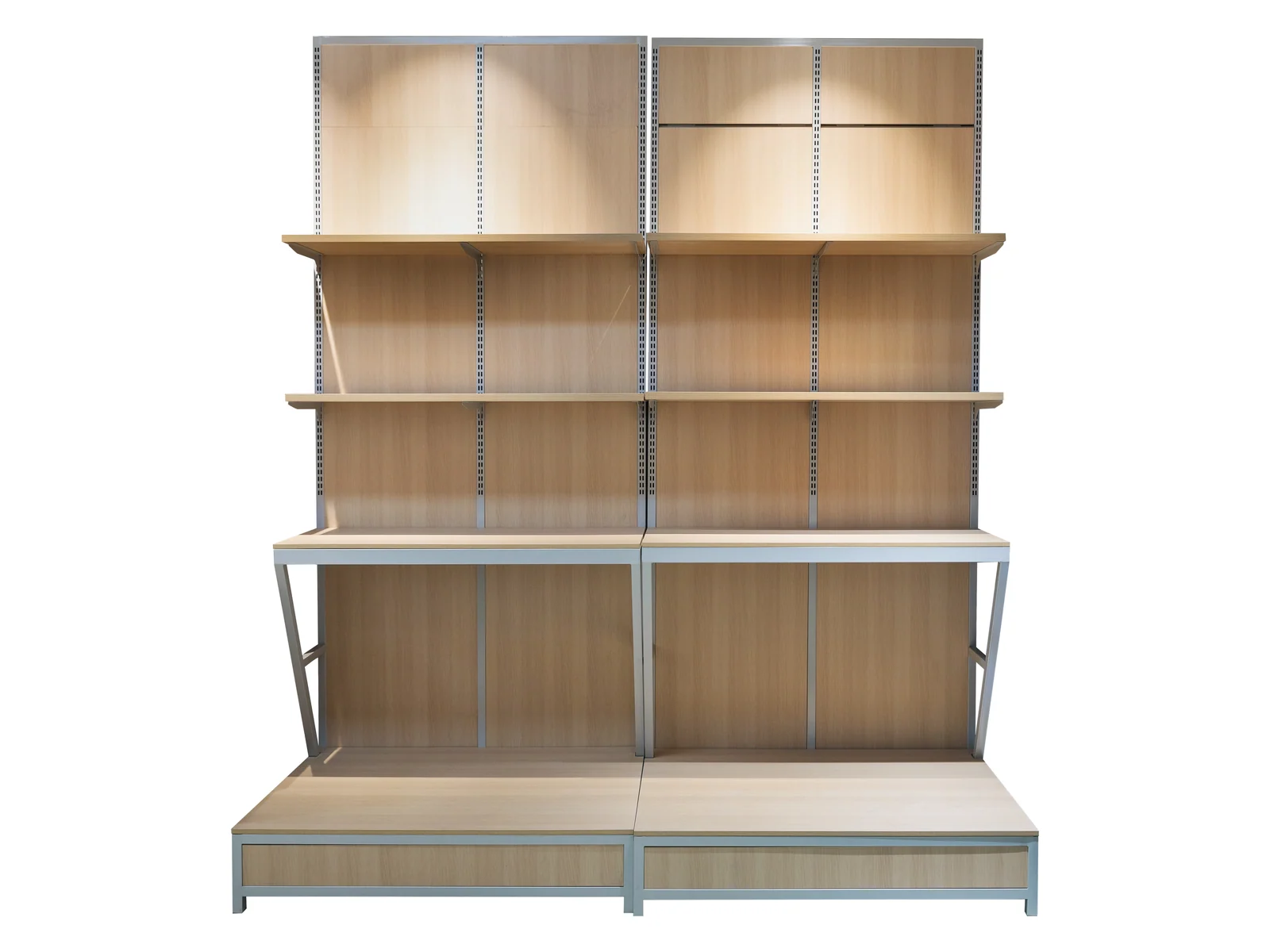
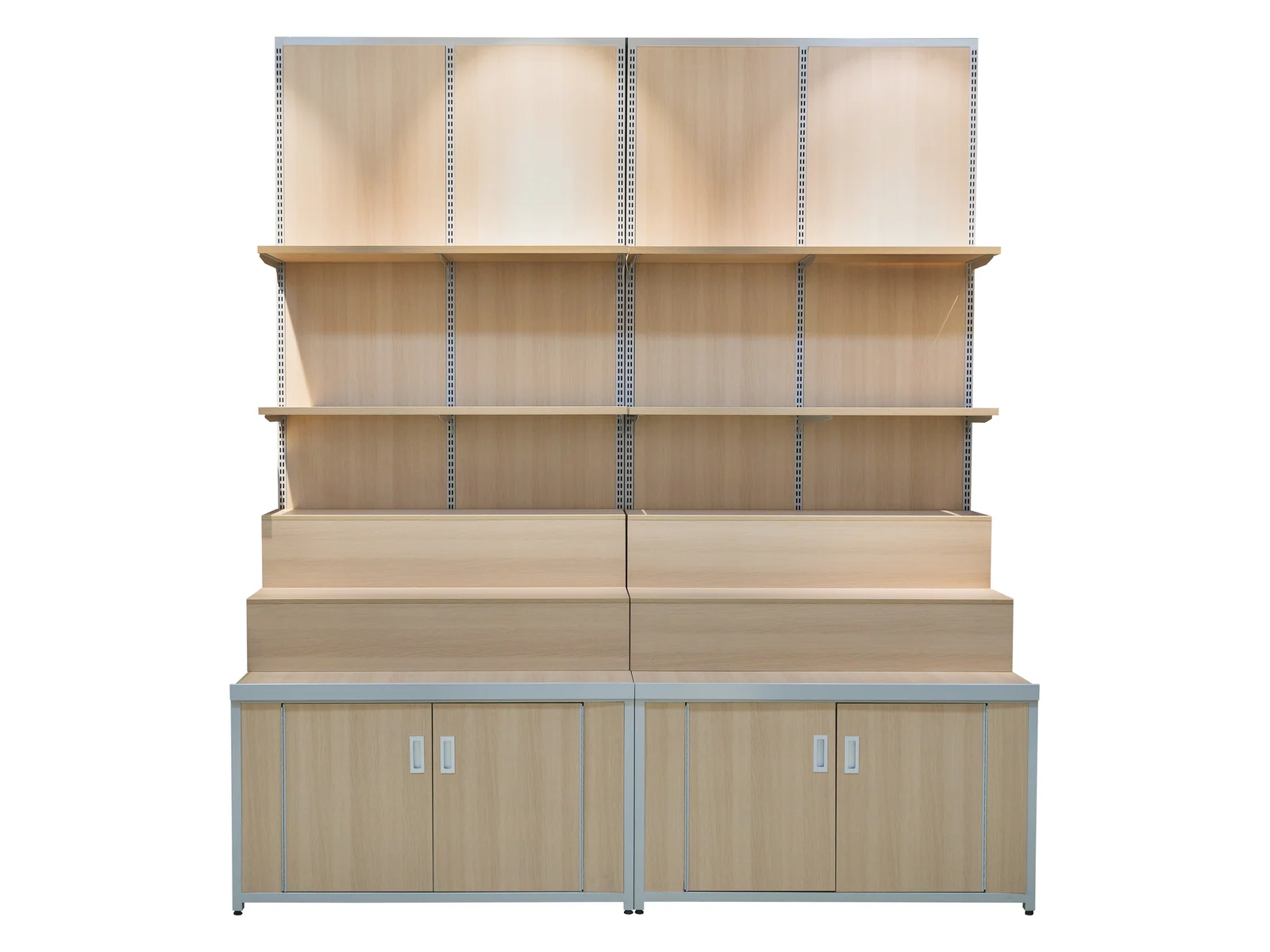
Shelving bays, produce islands and bulk cabinets travel as panels — uprights, shelves, back panels and plinths, strapped flat with bubble wrap on every component. They are built up on the shop floor, so the packing list and the assembly drawings travel with the goods.
This model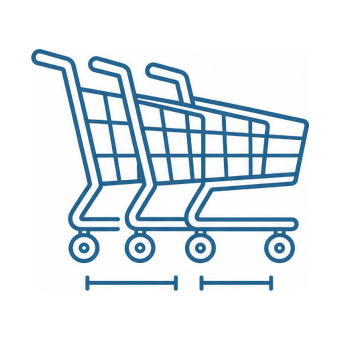
Trolleys slide into one another and baskets stack. Past the first unit, each extra one adds only its nesting pitch instead of its full length, so the shipped volume ends up a fraction of what the unit count suggests.

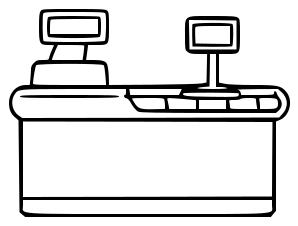
A checkout lane is welded, coated and fitted out as one piece, so it is crated whole with padding on the steel. Nothing waits to be assembled at the store beyond levelling it into the lane, and the crate is the counter plus a margin.
Grain racks flat pack as panels, bins and lids, so the container arithmetic runs on compartment count rather than on finished size. Two grain builds are on record — Grain Rack-Y01 in metal sheet with stainless board and Grain Rack-Y02 in 1.5 to 2.5 mm board — and neither is sold in a fixed size. The loading plan is worked from your compartment count and confirmed on the packing list.
Loose grain sits in the dry goods aisle and rarely arrives alone. These three share the aisle with it.
Loose grain and loose dry goods are one department to a shopper, and both want stainless wherever a scoop lands.
See bulk food binsSacked and packeted grain goes on the bays behind the loose fixture, and both carry the same board tone.
See shelving baysRice and grain are promoted on volume, and a square at the aisle head is where a bulk buy actually gets sold.
See promotional display tablesHow many of each a store needs is a floor area question rather than a product question, and it is answered store by store on the store layout planning page.
Tell us your local rule on loose grain. It decides open bins versus this cabinet.
Tell us what your local food hygiene rule requires for loose grain. That single answer decides whether you want the open bin island or this enclosed cabinet.
The four that come up on nearly every enquiry for this build. If yours is not here, send it with your layout and it is answered alongside the quotation.
Because grain and pulses give off moisture, and in a sealed cabinet that moisture stays in. Expanded mesh meets an enclosure requirement while letting the cabinet breathe, which is the whole reason this build exists.
Staff served or pre-packed, depending on your local rule. The serving method is a regulatory answer rather than a product one, so it is settled against your market.
Mesh aperture is specified per order. A finer mesh gives more enclosure and less airflow, so the right answer depends on what your rule actually requires. Tell us the requirement and we will specify to it.
Wherever a scoop or a wet line touches the fixture, yes. On a staff-served cabinet that is a smaller area than on an open bin island, which is one of the ways this build costs less to specify.