

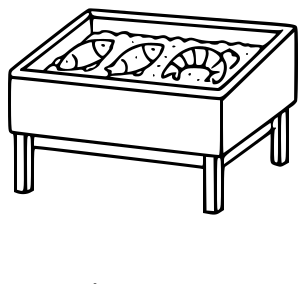
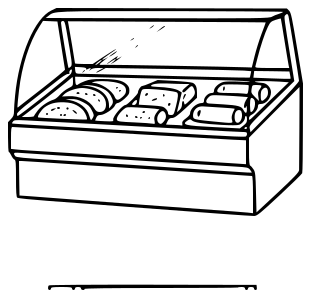
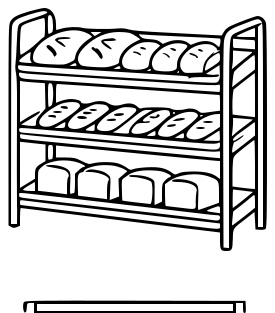
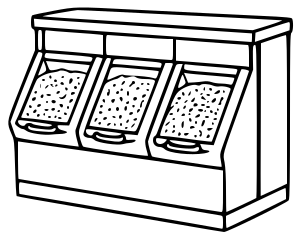
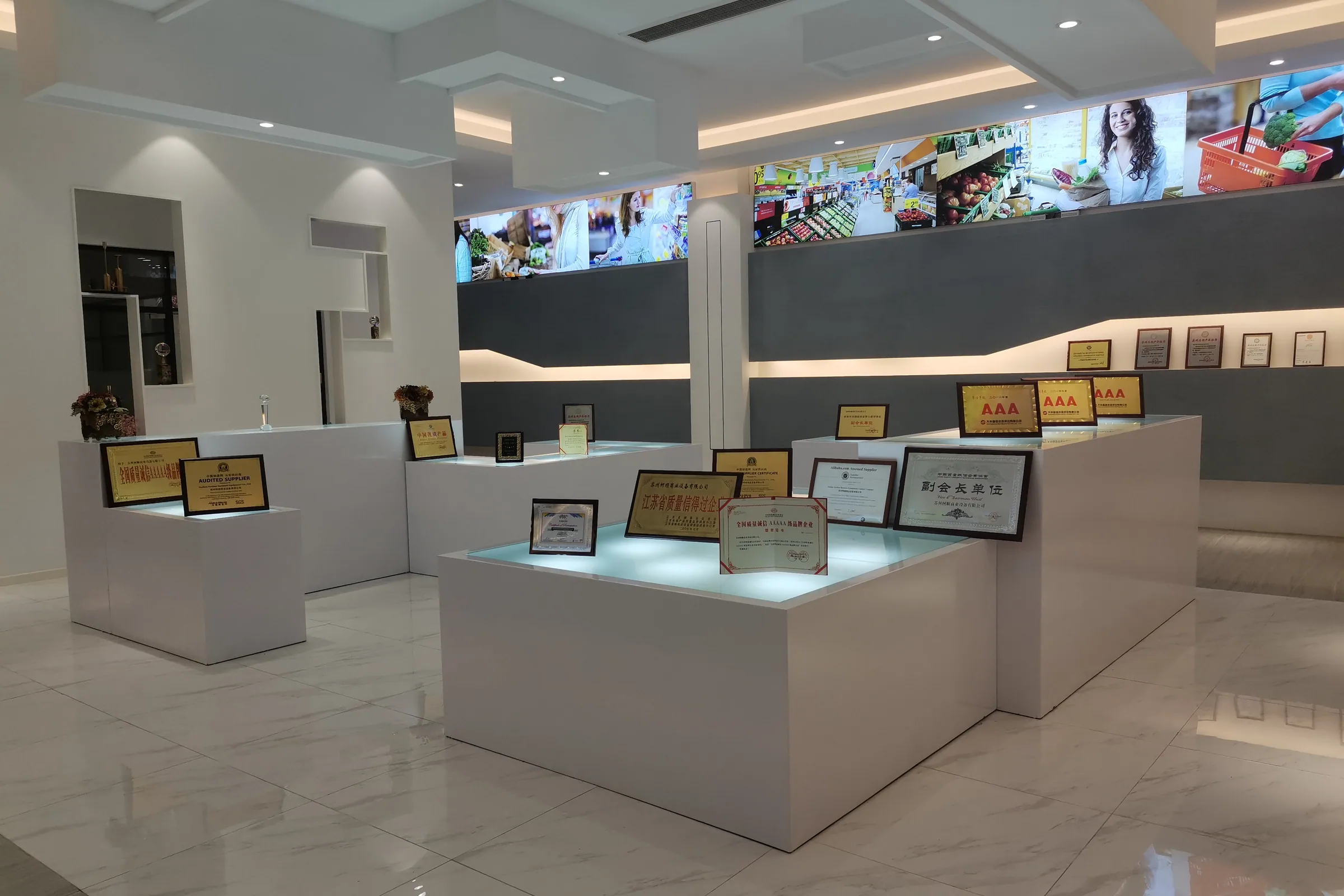
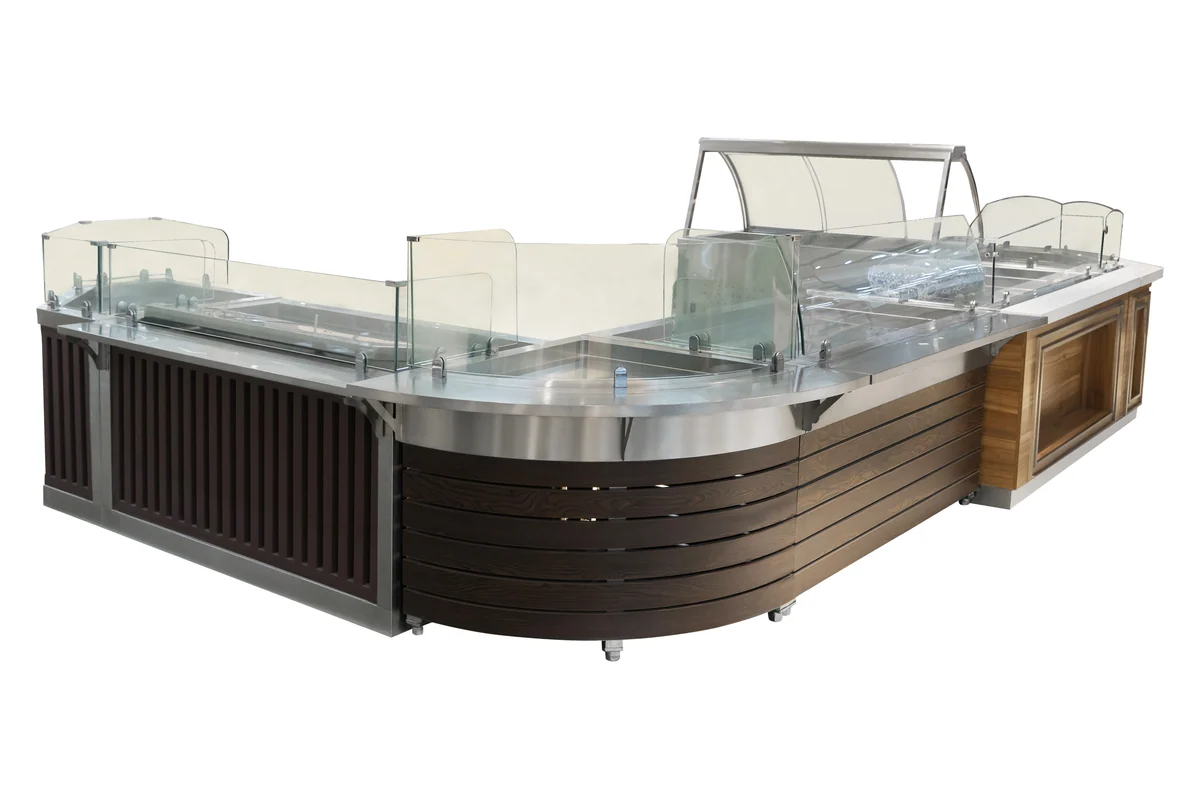
Glazed display cases and timber service counters on the Keshun showroom floor

Cooked Food Display Cabinets

Deli Counters, Cured Meat Racks and Cooked Food Service Cabinets

The one counter in the store where a member of staff and a customer stand on opposite sides of the same food. Everything about it is a compromise between reach and hygiene.

Full Range

Cooked Food Counter Builds

Two builds, photographed in our own studio, and they could hardly be further apart: a full served deli run in dark timber and stainless, and a timber market cart on cartwheels. Both sell prepared food, and which one suits you is a question about the store rather than about the food.

Served deli run with glass screens

A cranked run in dark timber with a stainless service well and curved glass screens, worked from behind by staff. The return at the end turns the counter towards the aisle so the queue does not block the walkway.

Cranked run, curved glass screens

Open the product file
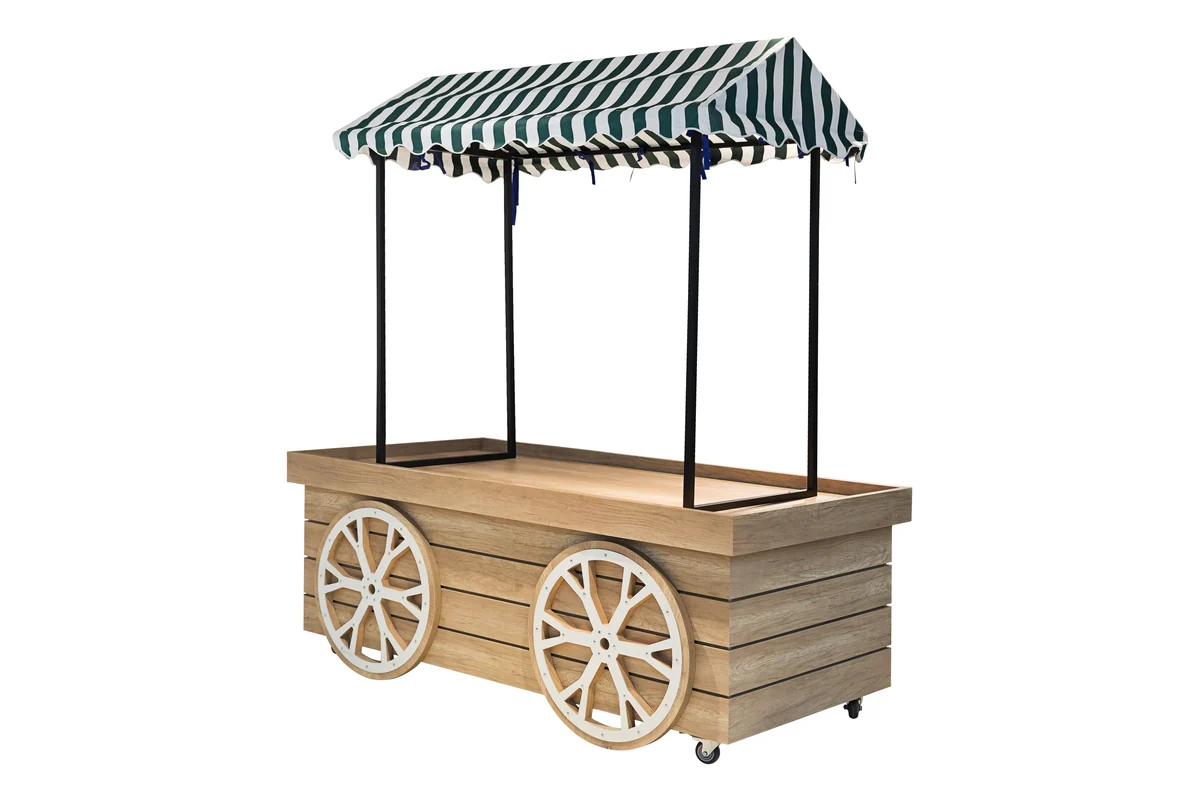
Timber market cart with a canopy

A wheeled cart with a striped canopy on cartwheels, for a store selling prepared food as a stall rather than from a counter. It moves, which no other fixture in this category does.

Mobile cart, fabric canopy

Open the product file

This is the thinnest category in the catalogue. One cured meat rack is on record for the cooked food area, KS-LW-01, and everything in this category is built to the serve-over run rather than to a fixed size. Deli counters are drawn against your service line, so nothing here is a stock size.

Selection Axis

How To Choose A Deli Display Case: Who Reaches In

A cooked food counter has to do two contradictory things at once. It has to put prepared food where a customer can see it clearly enough to buy it, and it has to keep that same customer from touching it. Every detail of the build is a settlement between those two.

The constant

Two sides, one piece of food

Unlike every other fixture in this catalogue, a deli counter is worked from both sides at once: the customer looks in from the front, staff reach in from the back. That is why it is deeper than a shelf, why the glass leans, and why the service well and the display well are usually not the same thing.

Worked from Both sides Customer front, staff behind
Recorded build KS-LW-01 Cured meat rack, on record

Because staff stand behind it all day, the figure we most need from you is not the counter length. It is how many people work behind it at once, which sets the working depth and where the returns go.

The ruler

What has to be settled on a cooked food counter

Cooked food counters are cut to the serve-over run, so this page carries no size ruler. What it carries instead is the order in which the decisions get made, because on a deli counter the sequence matters more than in any other category.

The four decisions behind a Keshun cooked food counter, in the order they are settled: glass screen rules, working depth for staff, well types along the run, and finally the counter shape Shape Straight, cranked, or a cart Wells Ambient, chilled or hot Depth One server, or three passing Screens Set by your local hygiene rule Last Per line Staff First
  • Bar length shows how early the decision is made, not a dimension
  • Refrigeration equipment is specified on your side, not ours

This page carries no millimetres. One cured meat rack is on record for the cooked food area, KS-LW-01, and it is built to the serve-over run, so nothing here is presented as a size.

The screen rule comes first for a reason: it is the only decision on this list that is not yours to make, and it changes the entire front of the counter rather than a detail of it.

The regroup

Four decisions behind a deli counter

Not a size table. These are the four things that have to be settled before a cooked food counter can be drawn, and the first two are usually not the store's choice to make.

Hygiene First decision Glass screens, to local rule

Whether a sneeze screen is required, how high it has to reach and whether it may be open at the ends is set by your local food regime. It changes the whole front of the counter, so it is settled before anything else.

Staff Working depth One server, or three

How many people work behind the counter at once decides the depth and the length far more than the range does. Two servers passing behind a shallow counter is the most common complaint about a deli fit-out.

Heat and cold Per line Ambient, chilled or hot wells

Cured meats, salads and hot prepared food want three different things from the well. Which of the three you carry decides how the counter is divided up along its length.

Shape Last decision Straight, cranked or an island cart

A return at the end turns the queue away from the aisle. A cart is a counter that gave up on being fixed. Shape is decided last because it depends on all three answers above.

Two Formats

A Serve Over Counter Or A Market Cart

Prepared food sells in two completely different ways, and this category holds one build for each. One is a permanent service line with staff behind it. The other is a stall that can be pushed to wherever the trade is that day.

Supermarket deli counter with glass sneeze screens over a stainless service well in a dark timber carcase Served counter

Cooked food display cabinets

Stainless well, glass screens, timber carcase

A fixed run with a stainless service well, glass screens over it and staff working behind. This is the build for a supermarket that treats prepared food as a department, with weighing, serving and wrapping all happening at the counter.

Timber market cart with cartwheels and a striped canopy used for selling prepared food in a store Market cart

Timber market carts

Cartwheels, fabric canopy, open top

A cart on wheels with a canopy over it. No glass, no well, no staff position — it sells packaged prepared food as a stall. Stores use it for seasonal lines and for the space near the entrance where a fixed counter would be in the way.

The two are not alternatives so much as different jobs. A great many stores run a fixed deli counter at the back and a cart near the door, in the same timber, so the second reads as an outpost of the first.

Build Detail

What Is Inside A Cooked Food Counter

The four things a buyer checks when a sample deli counter is finally standing in front of them, quoted from our own build sheet rather than from a brochure.

Curved glass sneeze screen over the service well of a Keshun supermarket deli counter Screens

Curved glass sneeze screens

Height set to local rule

Curved rather than flat, so the customer looks through the glass at the food instead of at a reflection of the ceiling. Height and end coverage are set by your local food regime, which differs in nearly every market we ship to.

Stainless steel service well inside a Keshun supermarket cooked food display counter Well

Stainless service wells

Pressed and welded stainless

The well is pressed and welded stainless because it is emptied, washed and refilled every day. This is the single component in the fixture that decides how long the counter lasts.

Dark timber carcase and end return on a Keshun supermarket deli counter Carcase

Timber carcase and returns

Steel frame, 1.5 – 2.5 mm board

The body is board over a steel frame, and the end return is part of the same run rather than a bolted-on afterthought. The return is what turns the queue away from the main aisle.

Cartwheel and canopy post on a Keshun timber market cart for prepared food Mobility

Cartwheels and canopies

On the market cart build

The cart runs on real cartwheels rather than castors, which is a deliberate piece of theatre. Its canopy is fabric on a timber frame and comes off for shipping.

Colour is given as a RAL or PANTONE reference and held across every category on the same order, so the deli counter, the ice fresh table beside it and the checkout beyond leave the plant in one shade. The finish standard is set out in full on our About page, and the rest of the store is on the product overview.

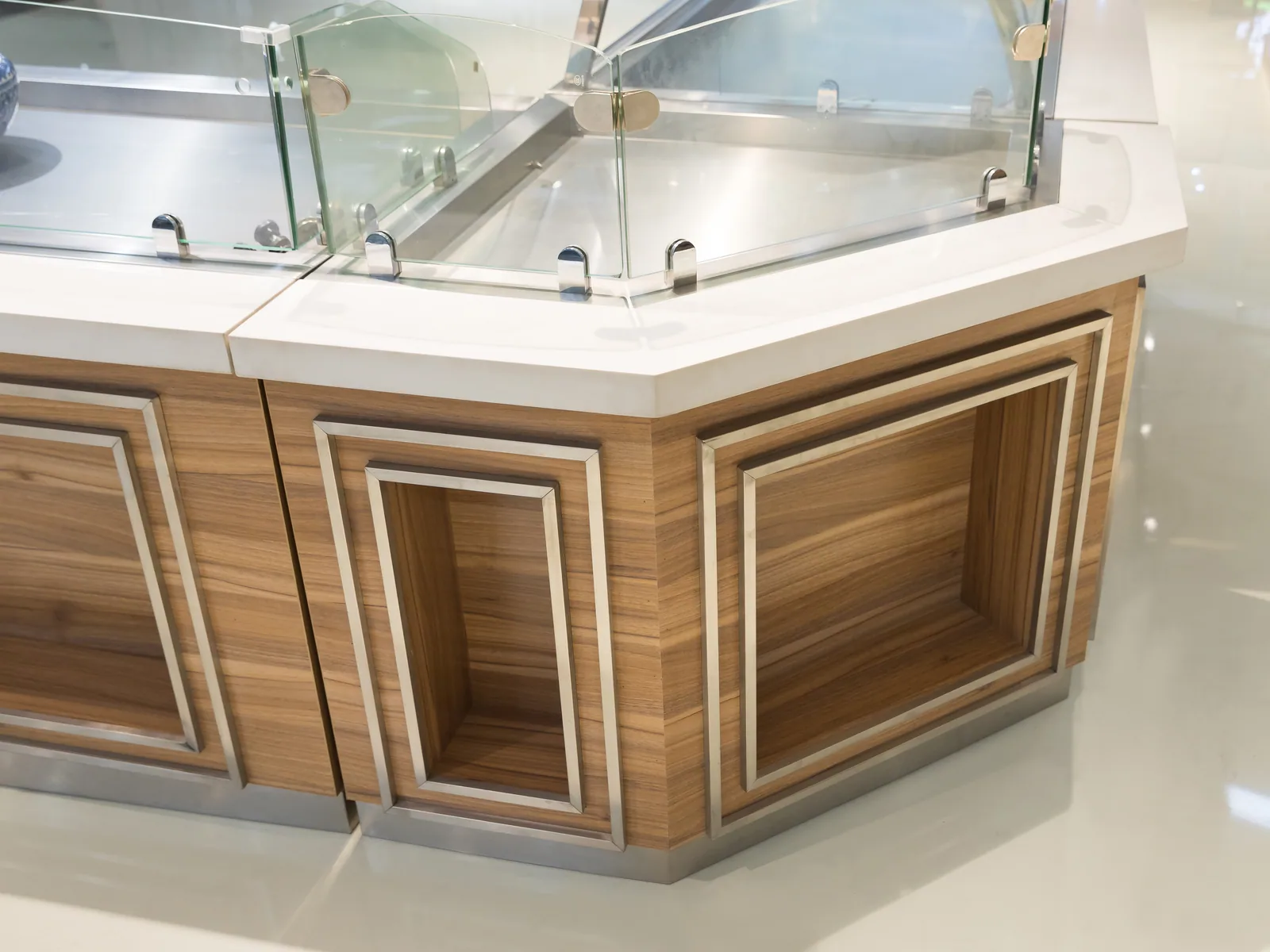
Close-up of a timber service counter and worktop edge in the Keshun showroom

Tell us how many people work behind the counter at the same time. That answer shapes a deli run more than its length does.

Get A Quotation

How Is Your Deli Counter Worked?

Every question below is one we would have to ask you anyway. Answering them now takes a round trip out of the quotation.

Your enquiry goes to keshun@kssyt.com. Floor plans, CAD files and photographs of a store you like are all welcome — a hand sketch on paper is enough to start.

Buyer Questions

Cooked Food Counter Questions

Six things buyers ask before they order a deli. If yours is not here, put it in the message box above and it gets answered with the quotation. The same served-counter question comes up in bakery, worked through in Trays, Cases or Racks: Choosing a Bakery Display.

What size are your cooked food display cabinets?

Cooked food cabinets are built to your serve-over run rather than sold in fixed sizes, so there is no size table on this page. A deli run is drawn against your service line, and the figure that shapes it most is how many staff work behind it at once rather than how long it is.

How high do the glass screens have to be?

That is set by your local food hygiene regime, not by us. Requirements differ widely between the markets we ship to, from a low screen open at both ends to a full screen that wraps the returns. Send us the rule you are working to and the glass is built to meet it rather than adapted on site.

Why do you ask how many staff work behind the counter?

Because it sets the depth. A counter deep enough for one server is too shallow for two to pass behind each other, and that is the most common complaint about a deli fit-out after the store opens. It also decides where the returns go, since a return is what gives a second server somewhere to stand.

Do you supply the refrigeration?

No. We build the counter, the stainless well, the screens and the carcase; chilled and hot equipment is specified and supplied on your side. Tell us what unit is going in and the well and the cabinet are built around it, which is far easier than fitting equipment into a counter that was drawn without it.

Is the market cart a serious fixture or a display piece?

Both, honestly. It runs on real cartwheels and it is built to be pushed around a shop floor, but it has no well, no screens and nowhere for staff to stand, so it sells packaged prepared food rather than served food. Stores use it near the entrance and for seasonal lines, usually in the same timber as the fixed deli counter at the back.

What is the difference between a deli counter and a deli display case?

The counter is the whole fixture a customer stands at; the deli display case is the glazed part holding the product. A serve over counter is the same thing named for how it works — staff behind, customer in front, product between. We build the cabinetry for all three; we do not manufacture refrigeration.