

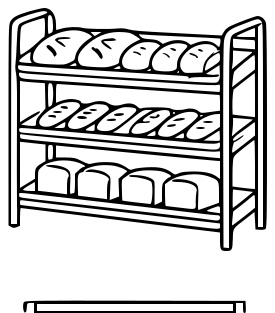
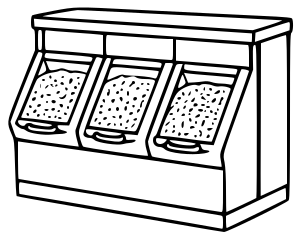
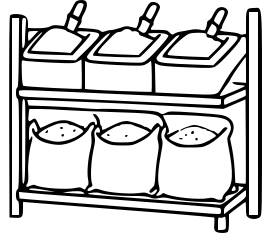
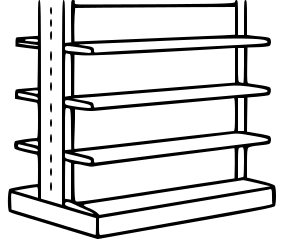
Walk past the bakery section of a supermarket and the fixtures look a lot like the produce racks a few aisles away. They are related, but a bakery display is sized around something a produce rack is not: the tray the bread is baked on. Get the tray right and the rack designs itself; get it wrong and you lose the same gap on every level, all the way up.
Key takeaways
- Bakery fixtures are sized around the bake tray, not around the aisle.
- Sheet pans come in standard fractions — full, two-thirds, half and quarter. The full sheet is 26 by 18 inches and is commercial only.
- Lipped and unlipped trays behave differently. A cookie sheet slides product off; a jellyroll pan contains it.
The Tray Is The Module
Start in the oven rather than in the shop. A bake tray is a rectangular metal pan — metal or aluminium during manufacture — used for baking, and it is the thing everything else in a bakery is dimensioned around. Rack level pitch, case depth, how many loaves fit in a display: all of it is derived from the tray.
The trays themselves come in variations that matter for the fixture. To stop food spilling over, a bakery tray is usually made with one or more raised ends. Along with the cookie sheet, there is the jellyroll pan, which has four developed sides and contains what is on it. A cookie sheet is made so baked products slide off the flat end without any lifting, and so it has one or more flat sides rather than a lip all the way round.
Standard Sheet Sizes
Professional baking trays carry a raised lip along the edges, made from the aluminium the pan is formed from, and they are made in standard sizes: full sheet, two-thirds, half and quarter. The full sheet is 26 by 18 inches and is mostly a commercial baking size — it is far too large for a domestic kitchen. In supermarkets, the quarter sheet is the size most commonly seen as a mass-market baking sheet.
That standardisation is the useful part for anyone specifying a display. If your bakery works to a known sheet fraction, the level pitch on the rack can be set to it exactly, and the display holds full trays without a gap above each one.
| Sheet | Notes |
|---|---|
| Full sheet | 26 by 18 inches; commercial baking, too large for a domestic kitchen |
| Two-thirds sheet | Intermediate commercial size |
| Half sheet | Common in professional and in-store bakeries |
| Quarter sheet | The size most commonly available as a mass-market baking sheet |
Send us the outside size of the tray your bakery bakes on. It is a more useful number than any rack dimension you could give us.
Liners And What The Fixture Has To Cope With
For sticky items, sheet pans are not used directly, because the product would be spoiled by contact. Waxed paper, aluminium foil or a glaze coating goes down first, and in professional baking it is the bakers themselves who apply the parchment or foil. For a display fixture the consequence is small but real: trays arriving on the rack are often lined and slightly larger than the bare pan, which is one reason level pitch should be measured from the tray in use rather than from the catalogue tray.
Trays, Cases Or Open Racks
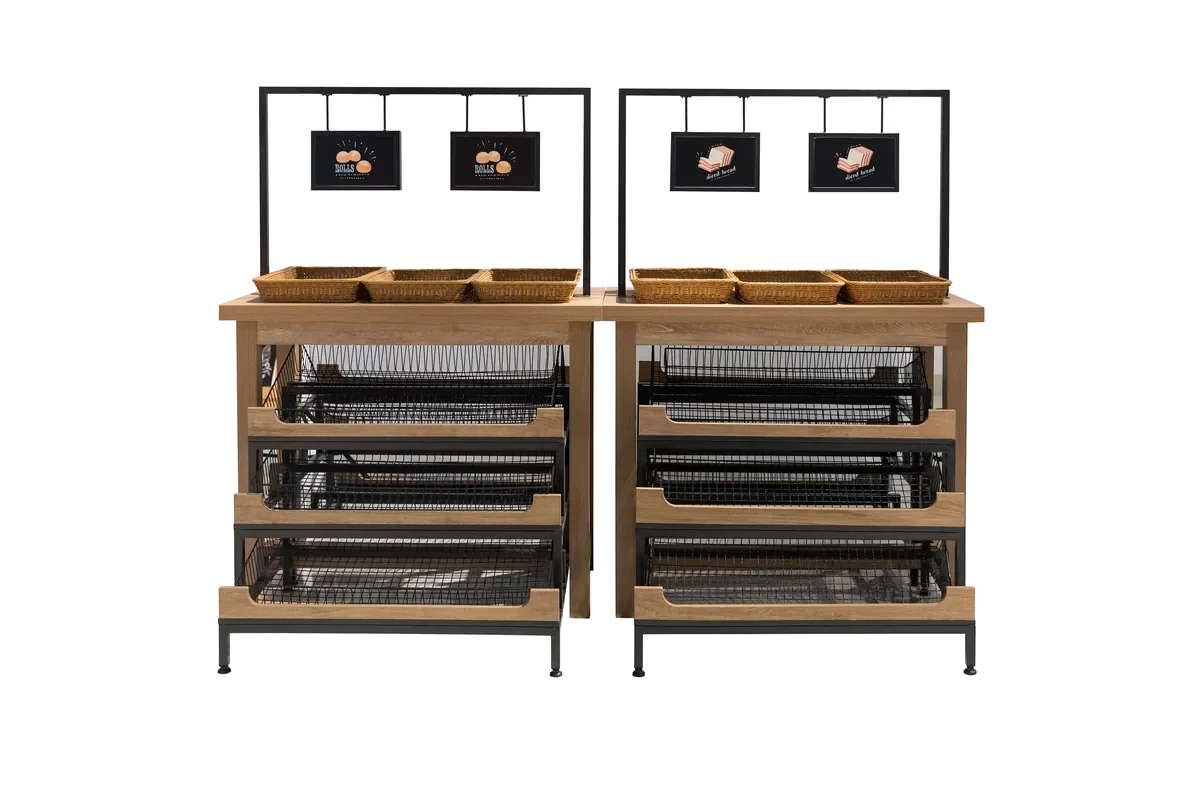
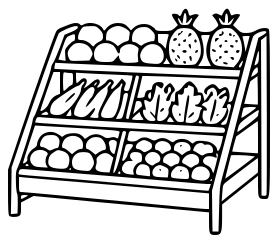
With the tray settled, the display format is the next decision, and it turns on one question: is the shopper allowed to pick the loaf up? Slanted open racks put the bread at an angle facing the aisle, so the customer sees the face of the loaf rather than its crust, and takes it with tongs. That format sells the most bread per metre of anything we build.
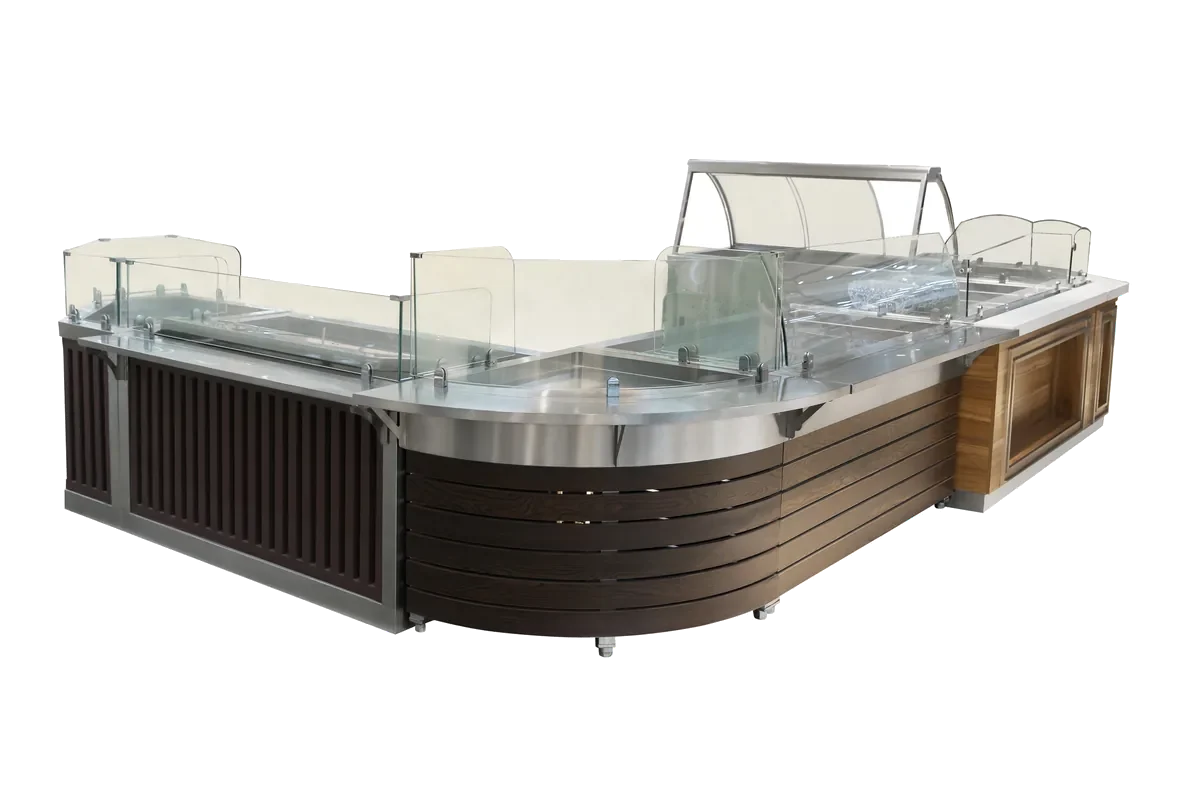
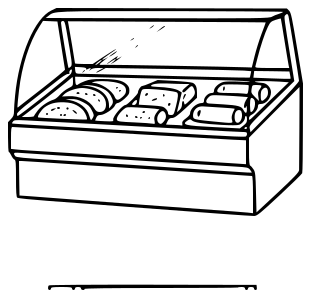
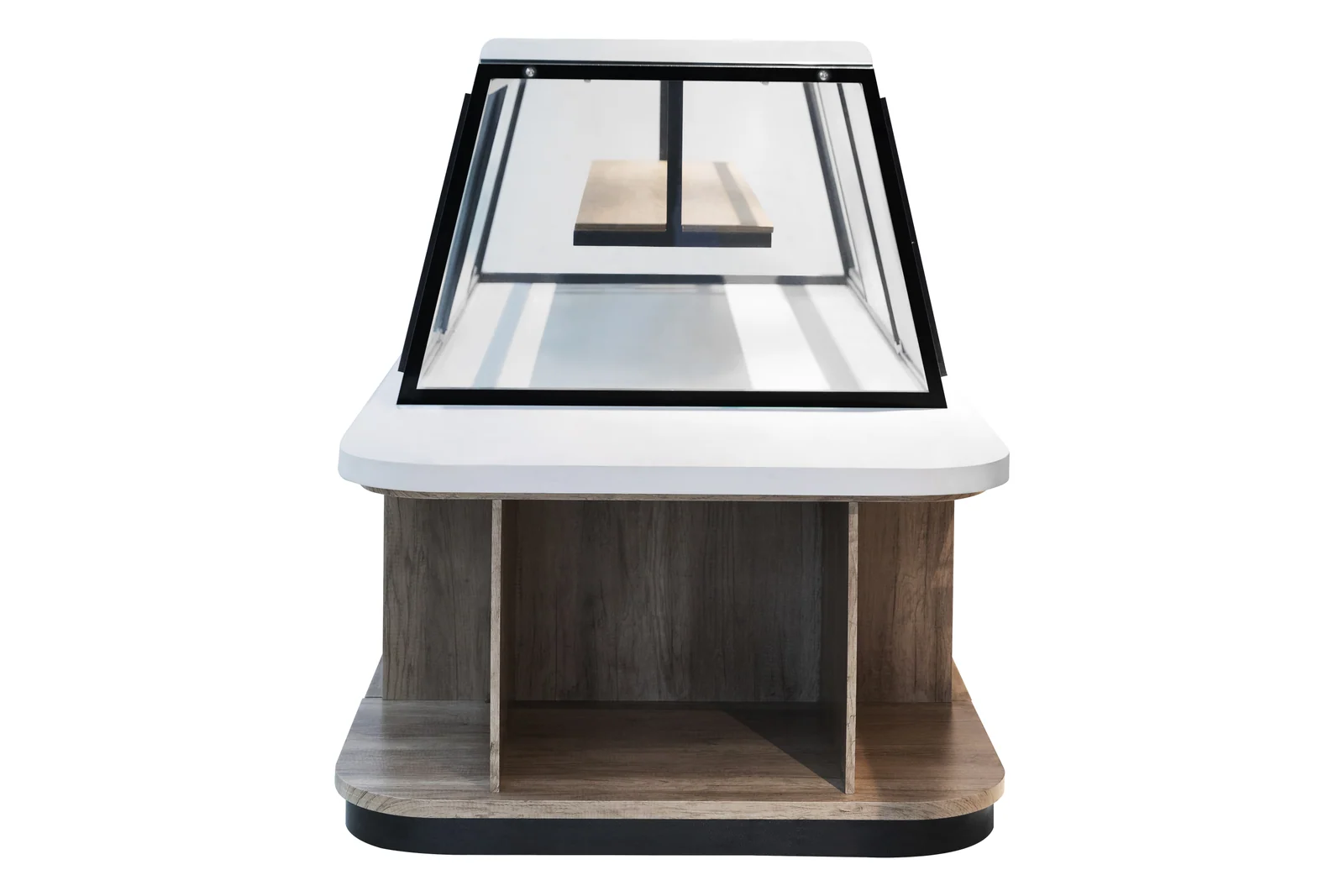
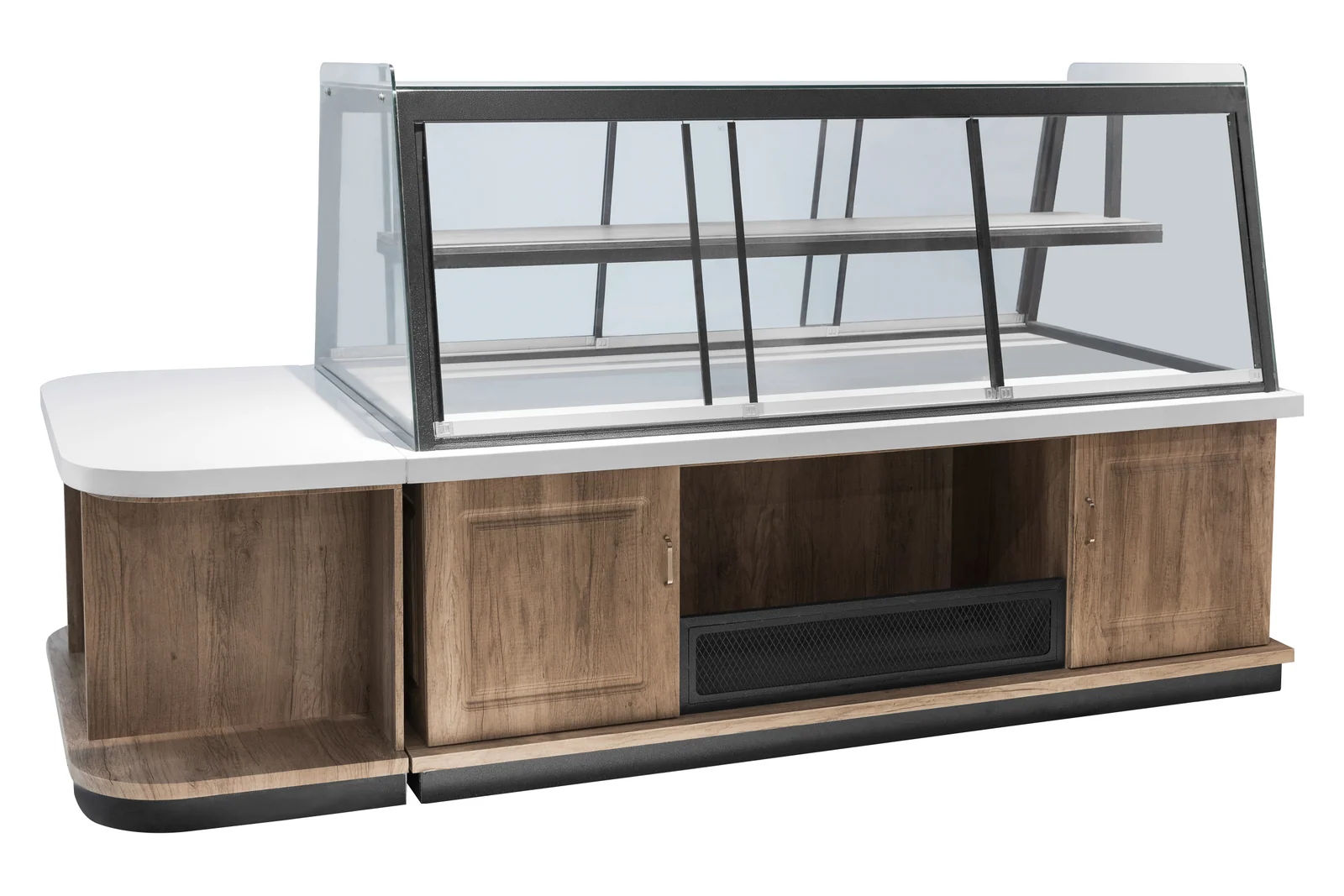
Glazed cases tilt the display towards the shopper behind angled glass and are served by staff. They hold less and shop more slowly, but where local rules will not allow unwrapped food to be self-served they are the only build that will pass. Most in-store bakeries we quote run both: glazed cases for the counter-served lines, slanted racks for the bagged and packaged ones.
What is on record for this category
Two bread racks are on record, KS-MBJ-01 and KS-MBJ-02, and neither carries dimensions, so we do not publish a size table. Racks are drawn from your tray size and level count. Back-of-house cooling racks with wheels are quoted separately from the display fixtures. See the bread rack range.
Keshun Technical Team. First published 3 January 2019, rewritten 8 August 2026. Sheet pan sizes are industry standards. Our bread racks are built to the tray and the bay rather than sold in fixed sizes.