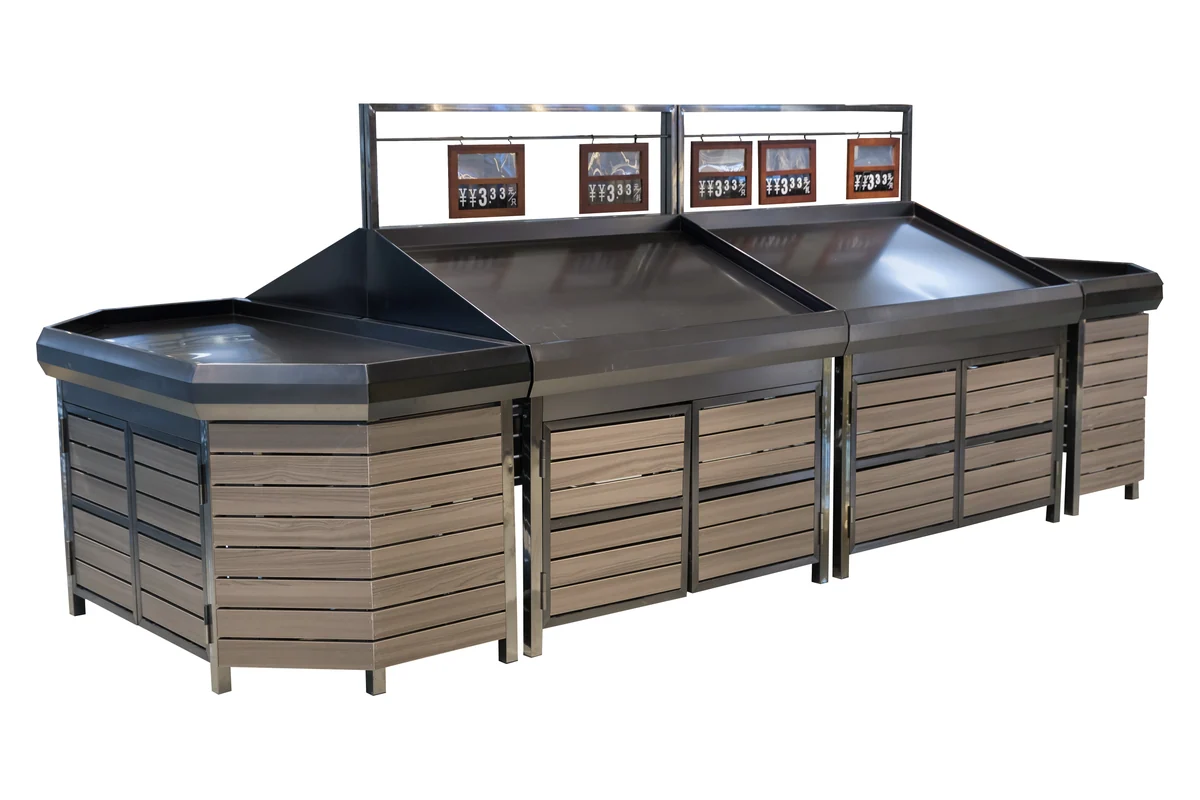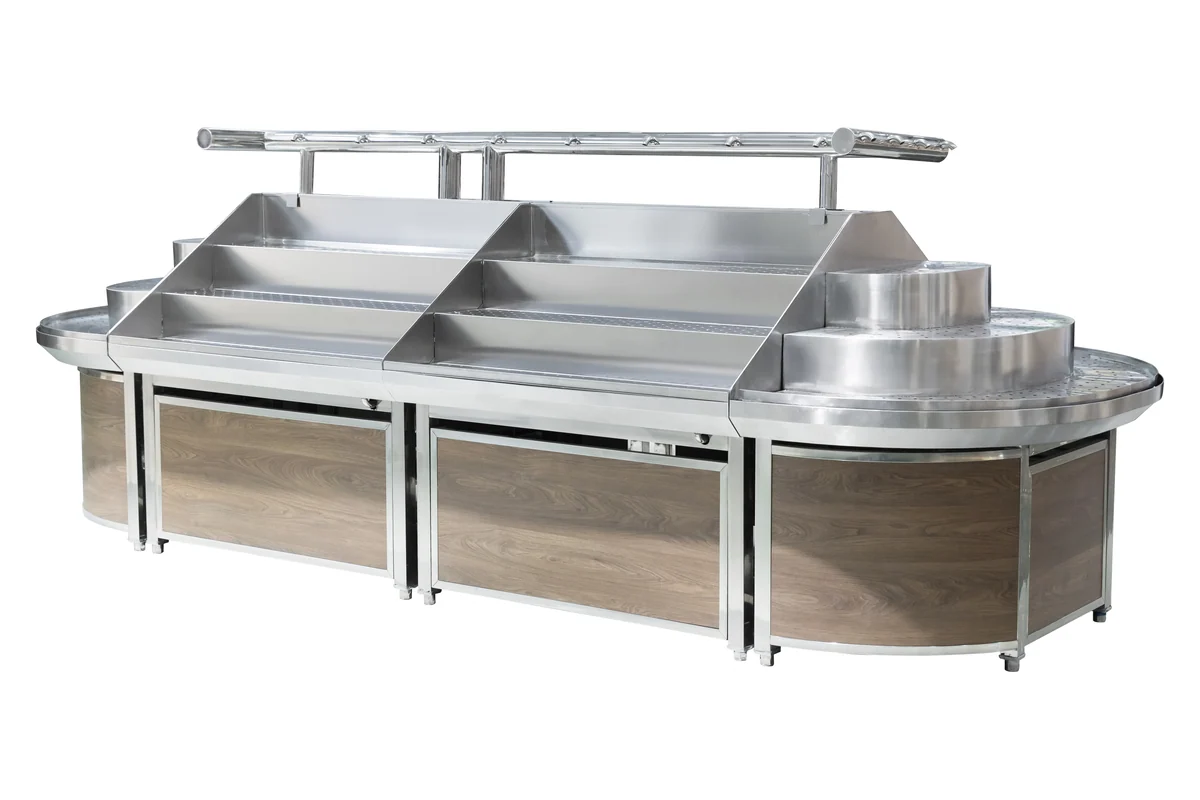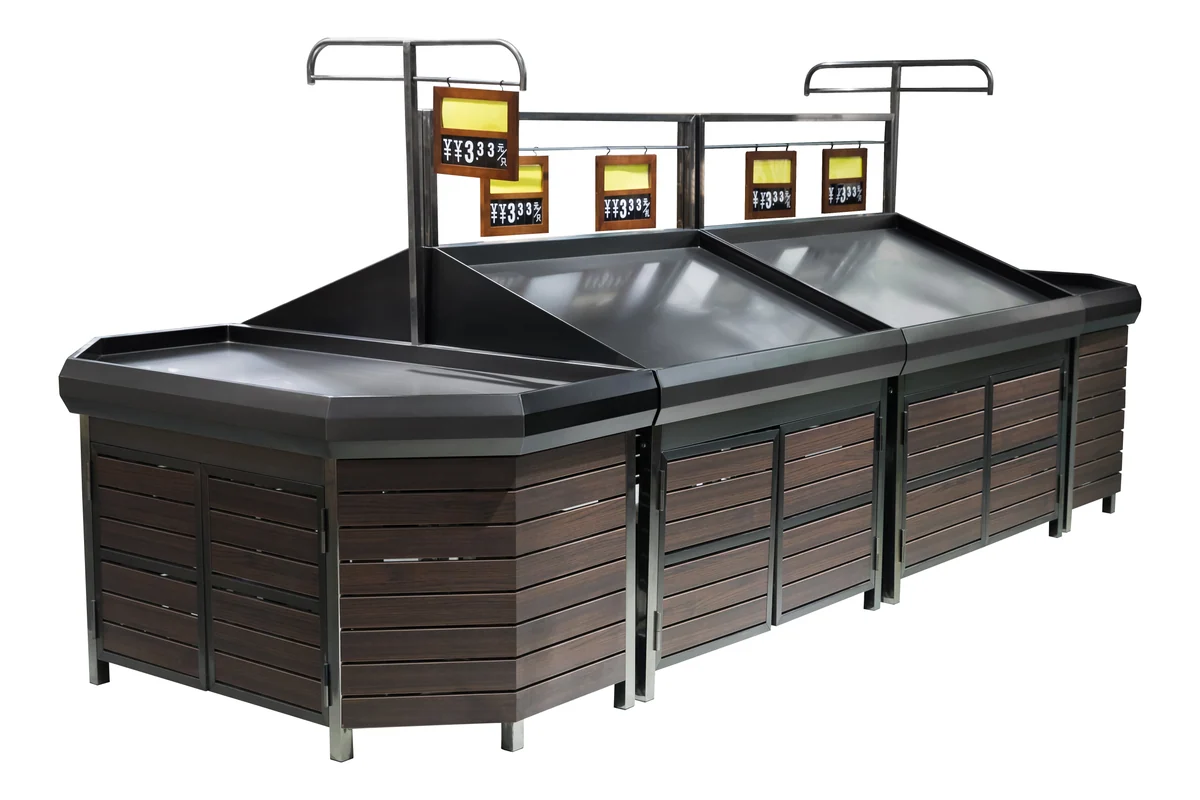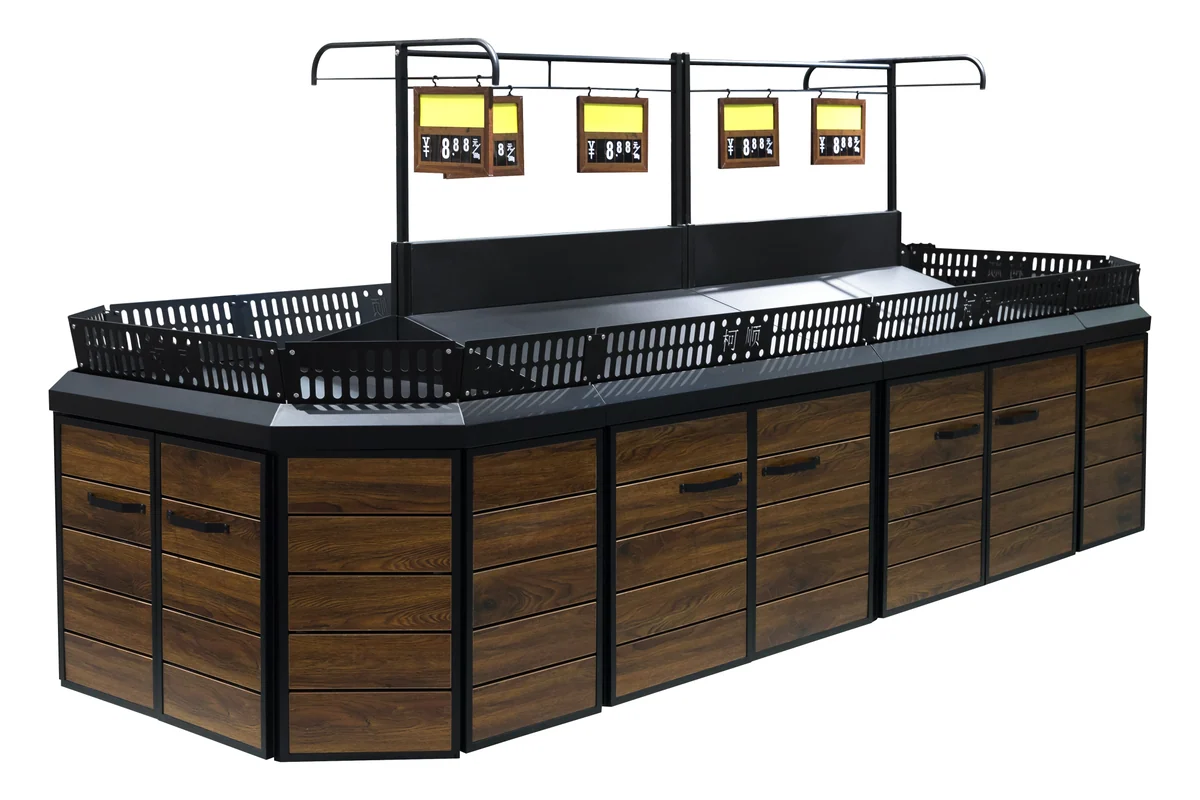


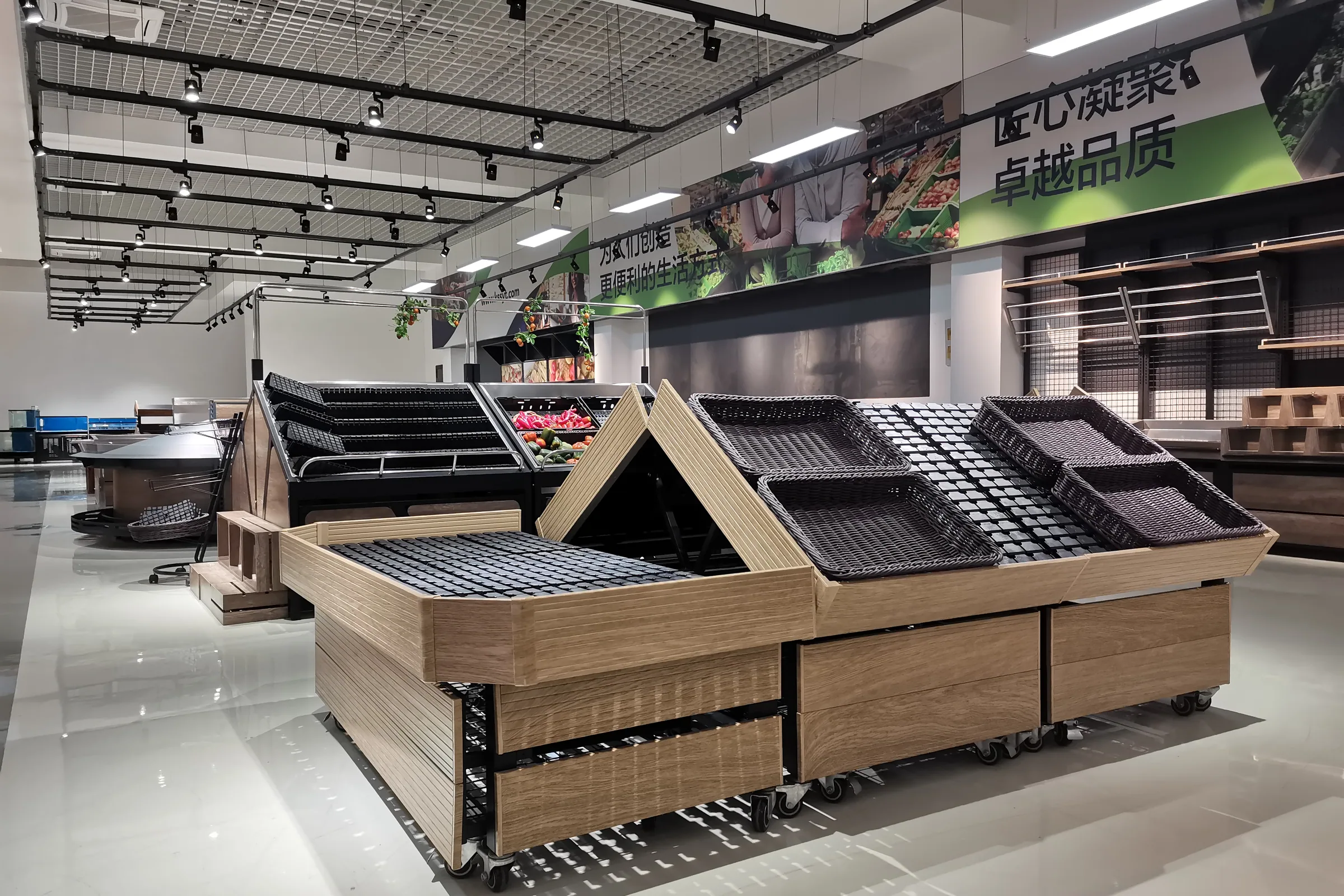
Keshun showroom aisle lined with wooden supermarket fruit and vegetable display racks under overhead signage

Supermarket Fruit and Vegetable Racks

Vegetable Racks, Wooden Fruit and Vegetable Display Shelves and Stainless Produce Tables

A produce aisle is bought by the metre, not by the unit. Twelve builds on file, from a 1200 mm wall rack to an island that seats four sides.

Full Range

Vegetable Racks We Have Built

Twelve produce builds, photographed in our own studio. Fruit and vegetable racks are not ordered off a page here — the run length, the number of tiers and whether the unit is served from one side or four are all set against the aisle it has to sit in. Find a body close to what you want, then read the ruler below.

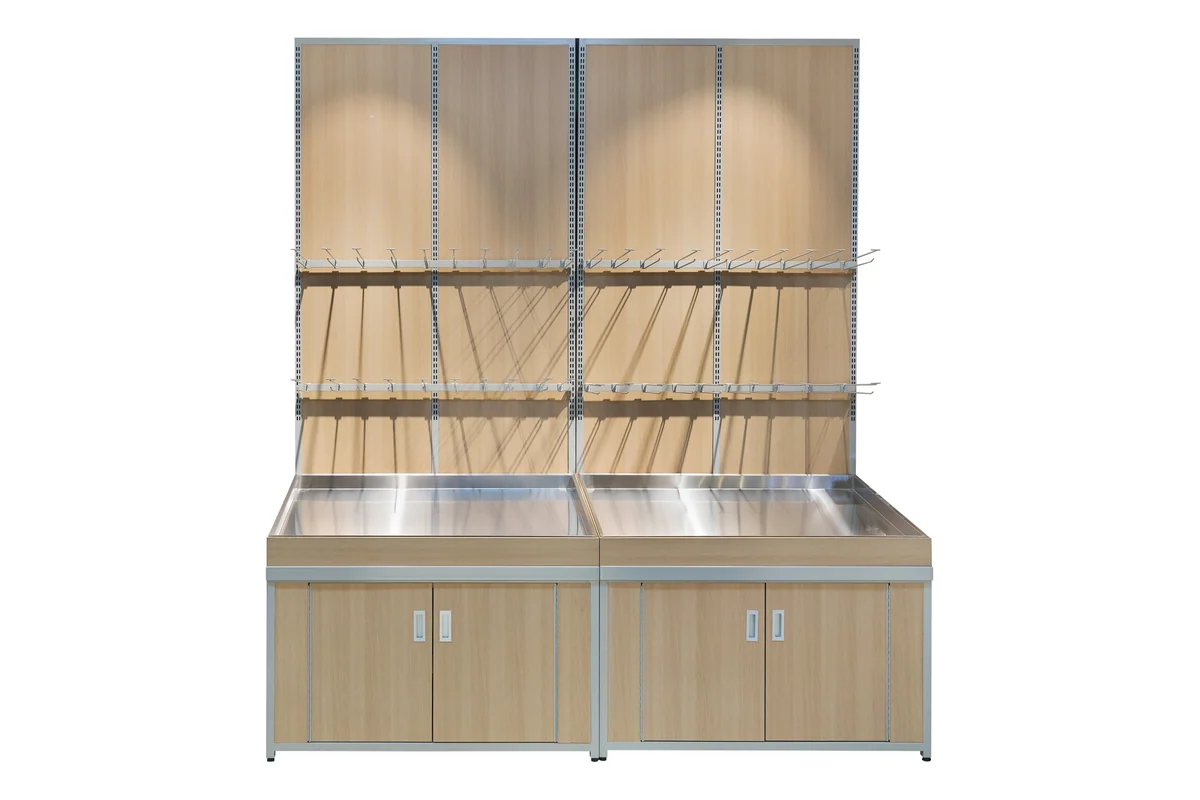
Wall vegetable rack with a mirrored back

A single-sided unit for the wall of a produce aisle: light timber uprights, a mirrored back panel that doubles the apparent depth of the display, and a stainless well at floor level.

Single-sided wall rack in wood and stainless

Open the product file
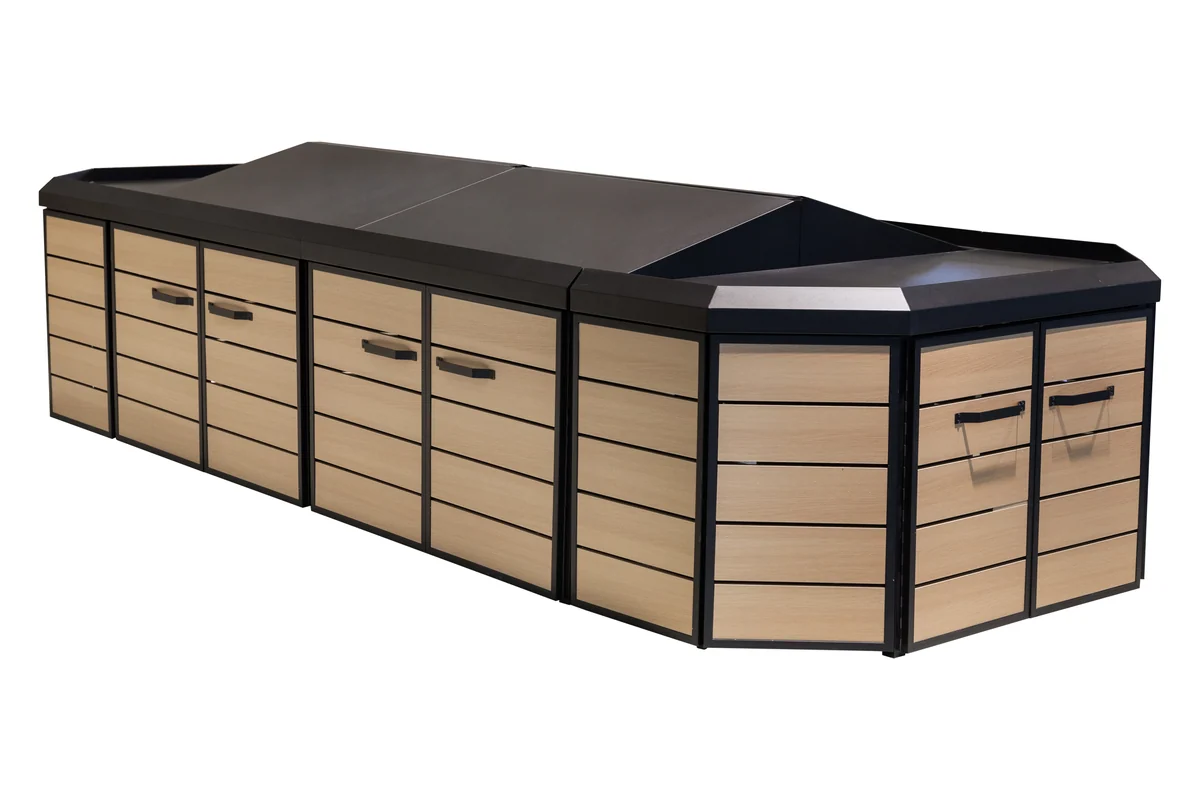
Long produce island with a dark canopy

A full-length island run with cupboard doors along both flanks and a dark canopy over the top tier, which is what keeps the display reading as one block rather than a row of tables.

Island run with base cabinets

Open the product file

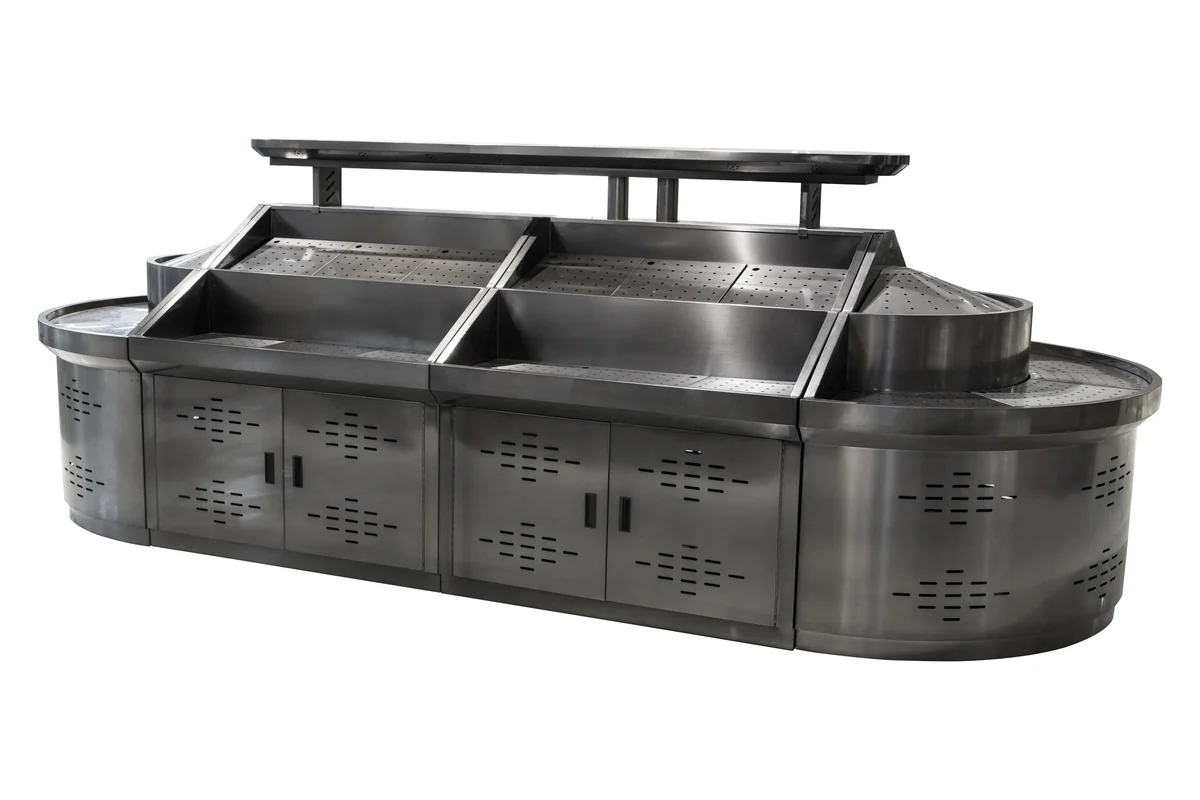
Stainless produce table with rounded ends

An all-stainless build with rounded ends and a stepped upper tier. This is the body a wet produce section reaches for, because everything the water touches is metal.

Stainless steel island, rounded ends

Open the product file

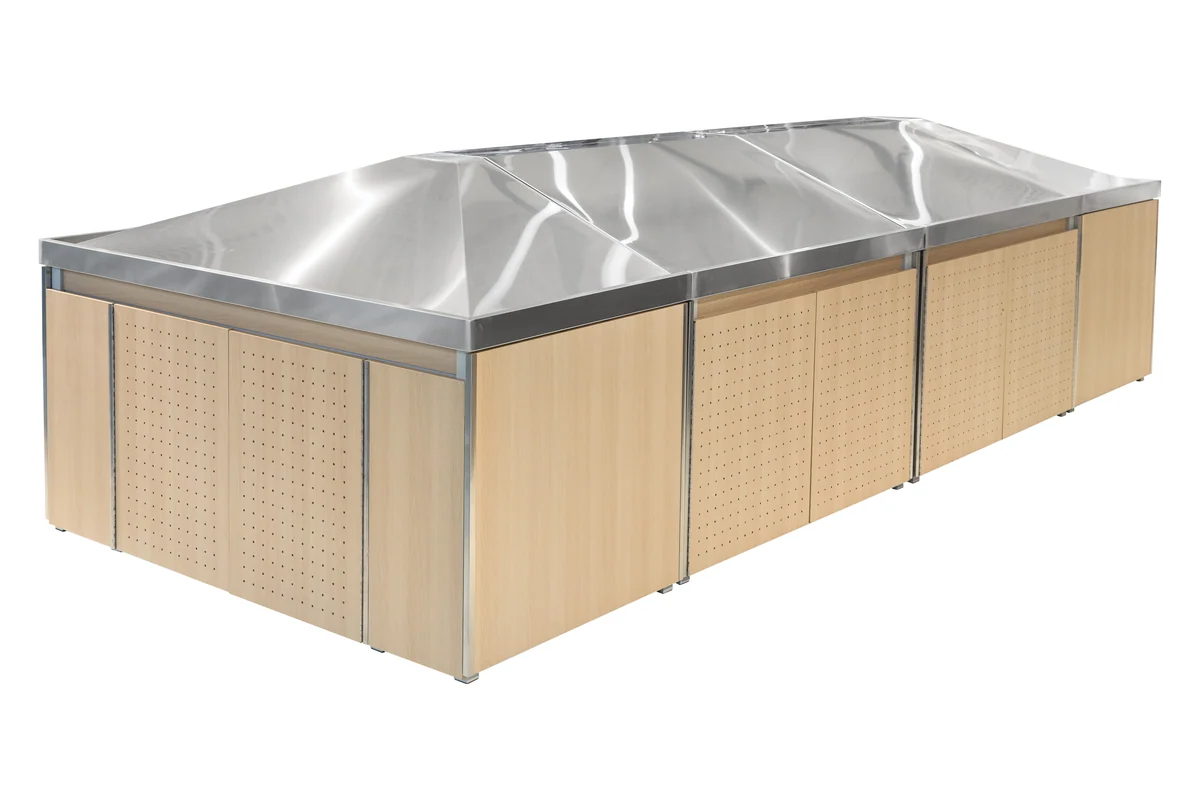
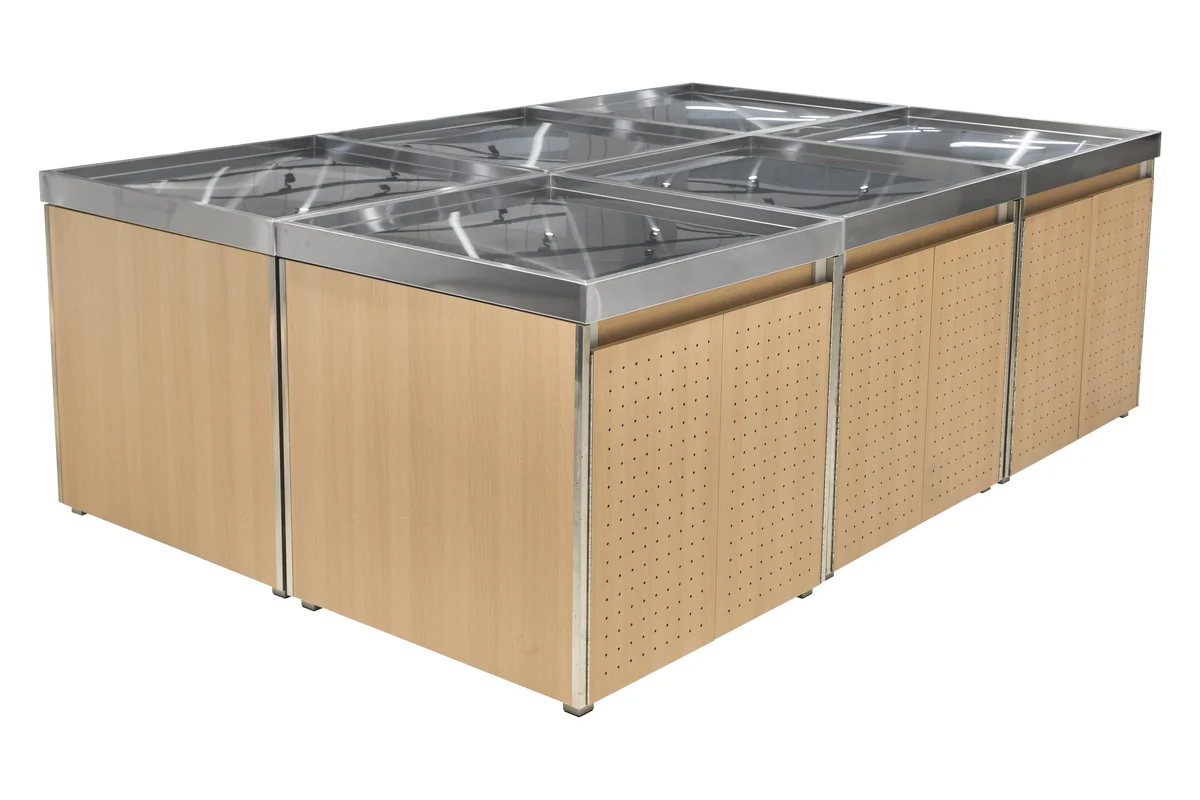
Wide island with a brushed stainless deck

One large flat stainless deck over a timber-clad carcase. Nothing subdivides the top, so the display is laid out in crates and changed around as the season changes.

Flat-deck island, timber clad

Open the product file

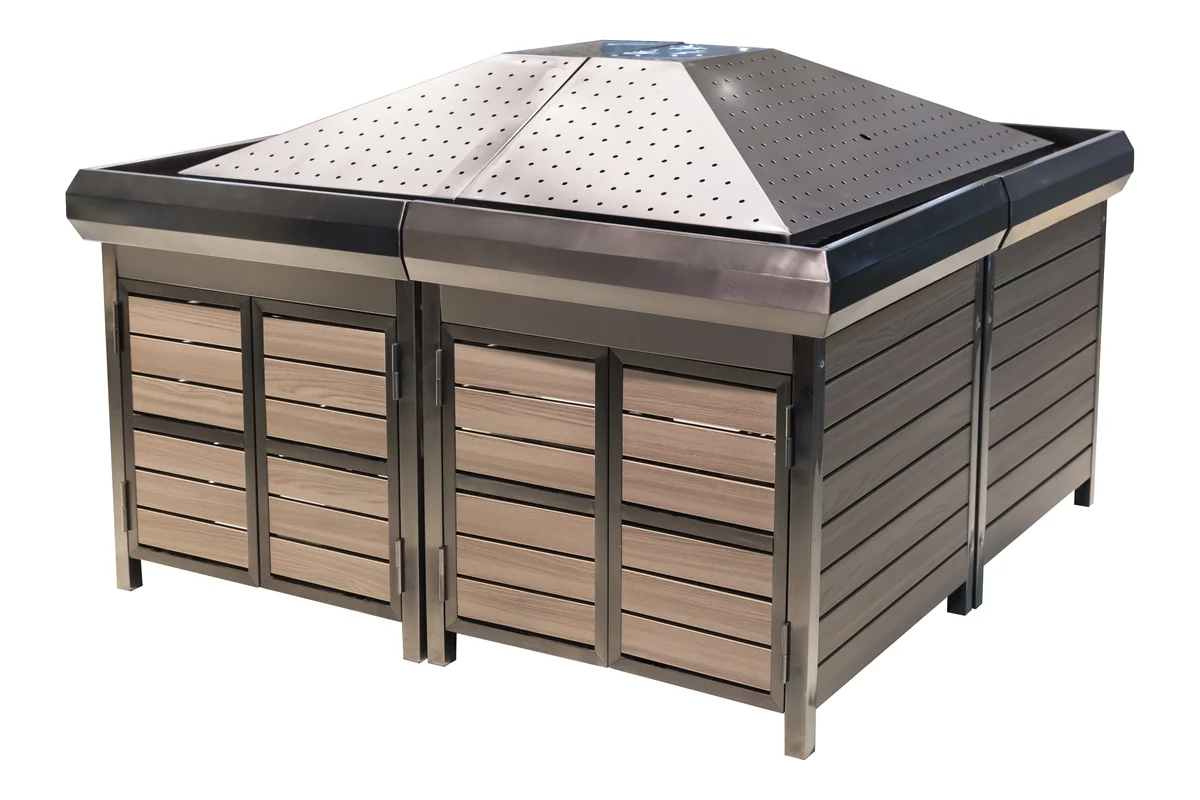
Four-sided island with a peaked top

A square island served from all four sides, with a peaked centre section that lifts the middle of the display above the rim so the far side is still visible across the unit.

Four-sided island with a raised centre

Open the product file

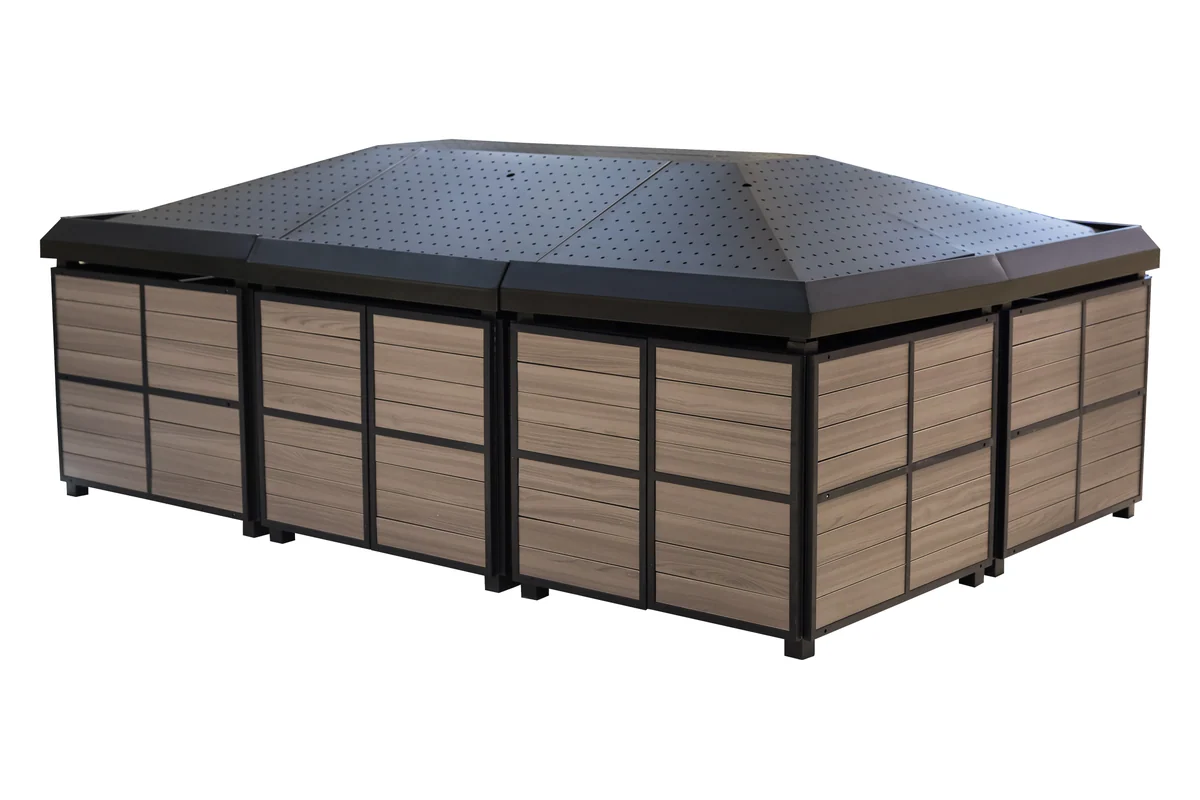
Slatted produce island with a dark deck

Horizontal timber slats around the whole carcase and a dark deck on top. The slats are the reason this one is specified where the store wants the fixture to read as furniture rather than as equipment.

Slatted carcase, dark deck

Open the product file

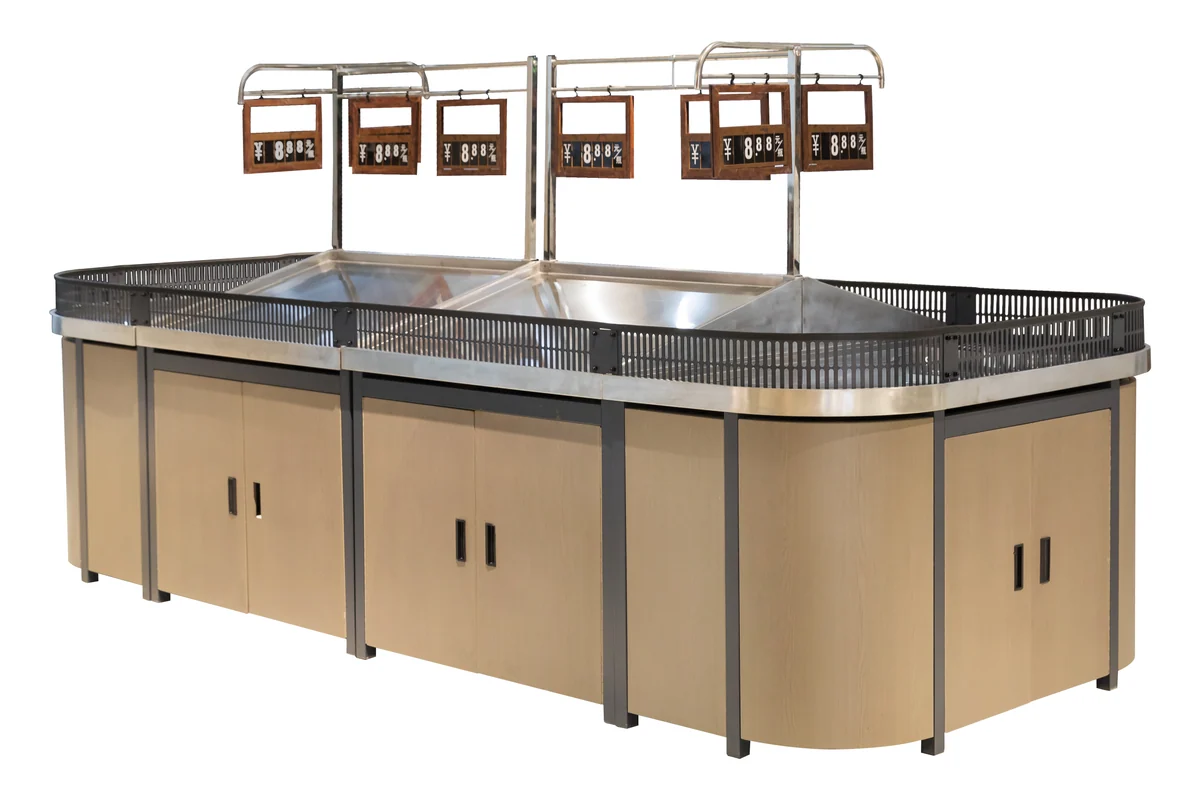
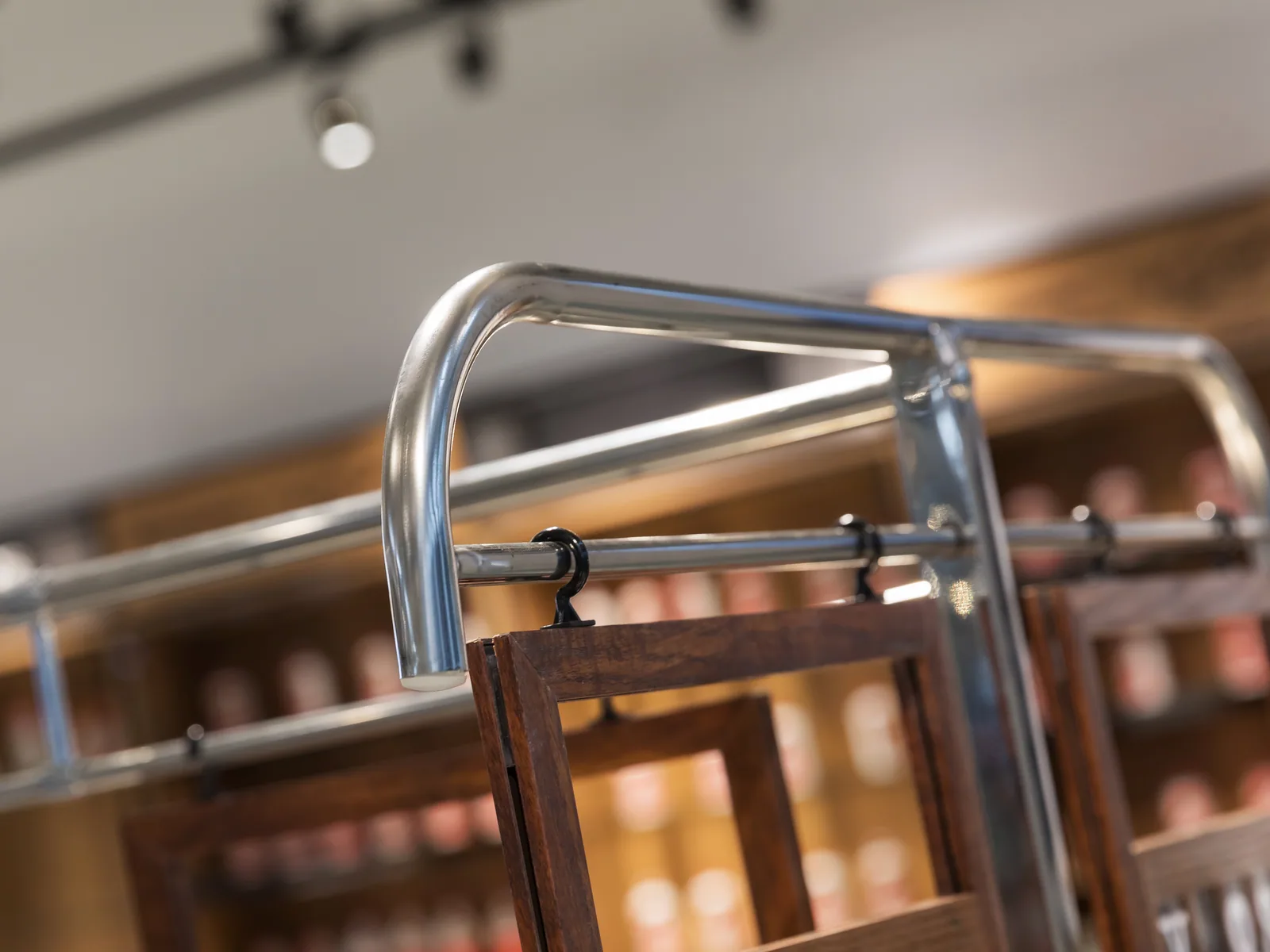
Produce island with overhead sign frames

A stainless tiered deck on a timber base, with a frame over the top carrying four sign panels. The signage rail is part of the fixture, so the price cards are not taped to the glass on opening day.

Tiered stainless deck, overhead signage

Open the product file

Angled corner island for a produce aisle

A cranked body that turns a corner in the aisle instead of leaving a dead triangle behind it, with the same slatted flanks and overhead sign frames as the straight runs.

Cranked island, slatted flanks

Open the product file

Curved stainless island with a round end

A long stainless run finished with a full round at one end, which is what stops trolleys catching the corner where the produce aisle meets the main walkway.

Stainless run with a rounded end

Open the product file

Dark timber island with lit sign panels

The darkest body in the file. Deep timber flanks under a black deck, with illuminated sign panels overhead — the combination a store uses when it wants the produce to be the only bright thing in the aisle.

Dark timber island, illuminated signage

Open the product file

Black island with wire crate rails

A black slatted carcase carrying wire crate rails along the top edge, so loose produce can be shown in its own delivery crate without being tipped out into a tray.

Black carcase with crate rails

Open the product file

Island with a multi-well stainless top

A timber carcase under a stainless top that is pressed into separate wells, which keeps wet lines apart from dry ones without any dividers being dropped in loose.

Pressed multi-well stainless top

Open the product file

Nothing on this page is a stock item with a shelf date. Every rack is drawn against the plan you send, which is why the cards describe how a unit is built rather than quoting a price. Colour is given as a RAL or PANTONE reference and held across the whole order, so a produce island leaves the plant in the same shade as the checkout counters and the shelving that go with it.

Selection Axis

How To Choose A Produce Display Rack: Start With The Run

This category is not bought by the piece. A produce section is a length of aisle that has to be filled, and the question is how many metres of it are served from the wall and how many from an island in the middle. Everything else on a produce rack follows from that.

The constant

The sight line every produce rack is built around

Shoppers look at the third and fourth tier of a fixture, not at the top and not at the floor. Our own archive has said so since 2019: attention sits between roughly 100 and 150 cm above the floor. That band does not move from store to store, which is why the tier a rack puts in it matters more than how many tiers it has.

Prime display band 100 – 150 cm Recorded in our own produce guidance
Wall rack module L1000 × W400 × H1700 Per group, from our fresh rack records

The two figures beside this are fixed points, not options. What changes from store to store is how many groups you put against the wall, how many islands go down the middle, and whether the tops are timber or stainless.

The ruler

Recorded produce rack sizes, 1200 × 750 × 850 and 1200 × 800 × 1300

Two produce racks on record carry dimensions, and the fresh rack records add the two group sizes a wall run and an island run are built from. Bars below are drawn at their real length on one scale, so the block shape is the answer rather than the numbers.

Recorded Keshun produce rack sizes drawn to scale: two island tables at 1200 mm long and the 1000 mm wall and island group modules, on a 0 to 1300 mm ruler F&V Rack-21 1200 × 750 × 850 F&V Rack-22 1200 × 800 × 1300 Wall group L1000 × W400 × H1700 Island group L1000 × W800 × H1500 0 1000 1200 mm
  • Bar length is the recorded rack or group length, drawn to the ruler below it
  • Stainless throughout rather than board faced

The two group figures are quoted per group, which is how a produce run is counted: a nine-metre wall is nine single-sided groups, not one nine-metre rack. Order quantity is groups, not metres.

Ten of the twelve builds photographed above have no recorded dimensions. That is not an omission we can paper over with a plausible number — produce fixtures are drawn against an aisle, so sizes for those are specified per store plan.

The regroup

One side or four: how a produce rack is served

The same records, regrouped by how many sides a shopper can reach the produce from. This is the figure that decides how much aisle one fixture eats, and it is the first thing we need from your plan.

Wall run Single-sided L1000 × W400 × H1700 per group

Backs onto the wall, 400 mm deep, and reaches 1700 mm high because nobody has to see over it. The cheapest metre of produce display in the store and the one that costs no aisle at all.

Island run Double-sided L1000 × W800 × H1500 per group

Twice the depth, served from both flanks, and deliberately shorter at 1500 mm so a shopper on one side can still see the aisle beyond. Double the display per metre of floor.

Four-sided Island tables F&V Rack-21, and the peaked and cranked builds above

A table rather than a run: 1200 × 750 × 850 on file, approached from any side, with the centre raised so the far edge is not hidden. This is the fixture that anchors the middle of a produce aisle.

Tall stainless Wet lines F&V Rack-22, 1200 × 800 × 1300

The one recorded build that goes to 1300 mm on a 800 mm body, in stainless throughout. Height here is about drainage and reach into a deep well, not about display area.

Two Builds

Wooden Produce Display Stands Or Stainless Racks

Before size, before tier count, every fruit display rack here forks once: is the body timber-faced or is it stainless throughout? It is not a styling choice. It decides what the fixture can hold, how it is cleaned, and how long it lasts in a wet aisle.

Wooden supermarket vegetable rack with slatted timber flanks and a dark display deck Timber faced

Wooden vegetable racks

Board-faced carcase over a steel frame

A steel frame faced in board, which is what most of the file is. Timber reads warm against produce and takes a colour or a grain to match the rest of the store. It belongs where the produce arrives dry and in crates — hard fruit, root vegetables, packed lines.

Stainless steel supermarket produce display table with rounded ends and stepped tiers Stainless

Stainless steel produce tables

0.8 to 1.5 mm sheet, stainless deck

Stainless from the deck down, with rounded ends and welded wells. This is the answer where the produce is misted, iced or washed on the floor, because there is no board edge for water to get behind and nothing that swells.

Both are folded and finished in the same plant, so a timber island and a stainless table can stand in the same aisle in the same colour. Tell us which of your produce lines are wet and which are dry, and the split writes itself.

Build Detail

What A Produce Rack Is Made Of

The four things a buyer checks when a sample rack is standing in front of them, quoted from our own build sheet rather than from a brochure.

Pressed multi-well stainless steel display deck on a Keshun supermarket produce island Deck

Pressed stainless display deck

Stainless steel board

The deck is pressed into wells and welded rather than assembled from loose trays. Water runs where the pressing sends it, and there is no joint for a leaf to lodge in and rot.

Corner of a wooden supermarket produce rack showing the board facing over the steel frame Carcase

Steel frame and board facing

0.8 – 1.5 mm metal sheet, 1.5 – 2.5 mm board

Bodies are folded from 0.8 to 1.5 mm sheet and either powder coated or faced in 1.5 to 2.5 mm board. The frame is the same either way, which is why a timber rack and a steel one line up when they meet.

Wire crate rails along the top edge of a black slatted supermarket produce island Tiers

Tiers and crate rails

Tier count set per store plan

Tiers are set so that one of them lands in the 100 to 150 cm band. Where produce is sold in its delivery crate, a crate rail replaces the tray so nothing has to be decanted at six in the morning.

Overhead sign frame carrying four price panels above a Keshun supermarket produce island Signage

Overhead sign frames

Frame and price ticket holders

Sign frames and price ticket holders are part of the fixture and fitted before it ships. We supply price tickets with the order, which is the difference between a display that looks finished on opening day and one that does not.

Colour is given as a RAL or PANTONE reference and held across every category on the same order, so the produce island, the shelving and the checkout leave the plant in one shade. The finish standard is set out in full on our About page, and the rest of the store is on the product overview.

Close-up of the stainless deck and timber flank on a Keshun supermarket produce rack

Send the length of your produce aisle and say how much of it is wall and how much is island. That is enough for us to come back with a rack layout and a price.

Get A Quotation

What Does Your Produce Aisle Look Like?

Every question below is one we would have to ask you anyway. Answering them now takes a round trip out of the quotation.

Your enquiry goes to keshun@kssyt.com. Floor plans, CAD files and photographs of a store you like are all welcome — a hand sketch on paper is enough to start.

Buyer Questions

Fruit And Vegetable Rack Questions

Seven things buyers ask before they send a produce aisle drawing. If yours is not here, put it in the message box above and it gets answered with the quotation. For how the tiers themselves are set, read Adjustable and 3-Tier Fruit and Vegetable Displays.

What size are your supermarket fruit and vegetable display racks?

Two builds on record carry dimensions: 1200 × 750 × 850 mm for the standard island table and 1200 × 800 × 1300 mm for the tall stainless one. Wall and island runs are built from group modules instead, L1000 × W400 × H1700 single-sided and L1000 × W800 × H1500 double-sided. Anything outside those is drawn to your plan.

Should I buy wooden vegetable racks or metal ones?

It depends on whether the produce is wet. A wooden vegetable rack is a steel frame faced in board, and it suits hard fruit, roots and packed lines. Stainless suits anything misted, iced or hosed down, because water cannot get behind a board edge. Most produce aisles we quote are a mixture, and both come out of the same plant in the same colour.

How high should a produce rack be?

Lower than you would think. Shoppers look at the band between roughly 100 and 150 cm, so a double-sided island is deliberately built to 1500 mm rather than 1700 — anything taller and the shopper on one side cannot see the aisle beyond. Wall racks go to 1700 mm because there is nothing behind them to see.

Can you make a vegetable rack in a colour to match the rest of my store?

Yes. Colour is quoted as a RAL or PANTONE reference and held across every category on the order, so the produce racks, the shelving and the checkout counters leave in one shade rather than three near-misses. Copper, chrome and plastic finishes have all been done as customisations.

What is the vegetable rack price?

We do not publish one, because a 400 mm wall group and a four-sided stainless island are not the same machine. Price follows the metres of run, the number of sides, the deck material and the tier count. Send the aisle length and the figure comes back against your own layout.

How do produce racks arrive?

In a standard wooden export case, which is what makes long-distance sea freight survivable. Sign frames, crate rails and price ticket holders are fitted before packing rather than shipped loose. Loading quantity depends on the sizes on the order and is confirmed with the packing list.

What material is best for a supermarket vegetable rack?

Two, used in different places on the same fixture. Timber board over a steel frame everywhere the shopper looks, and stainless steel board wherever produce, ice or wash water actually lands. An all-timber produce display rack looks excellent for one season and then swells; an all-stainless one reads as a kitchen rather than a shop.