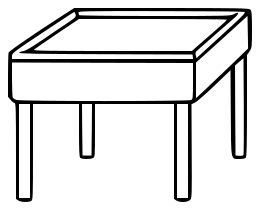
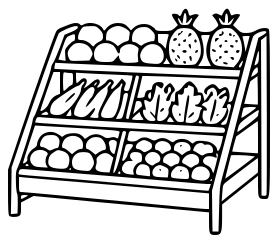
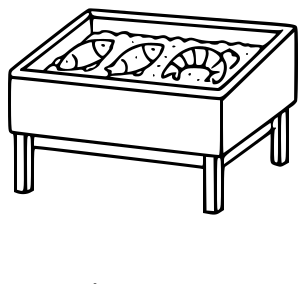
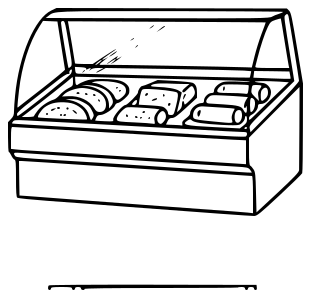
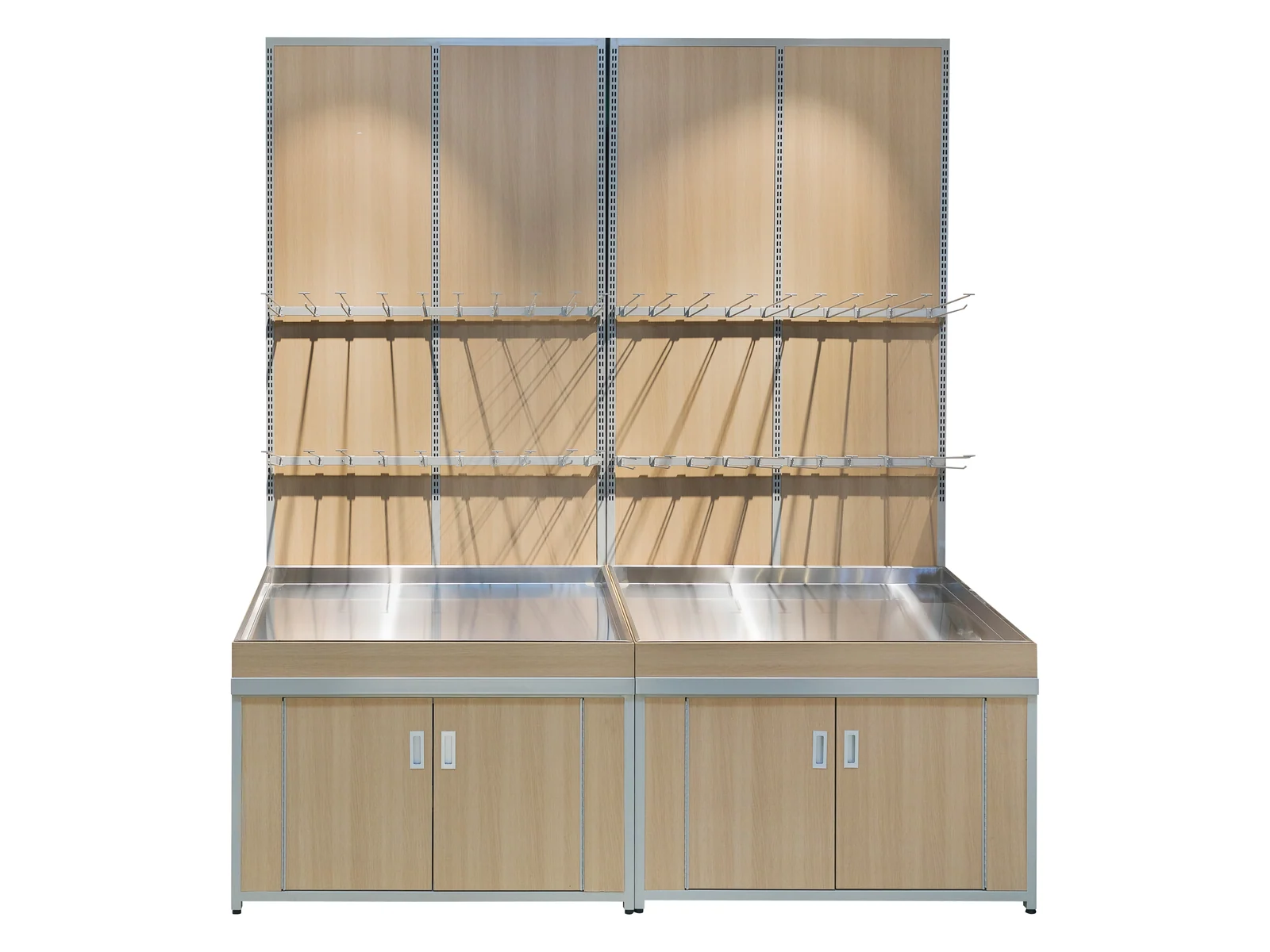
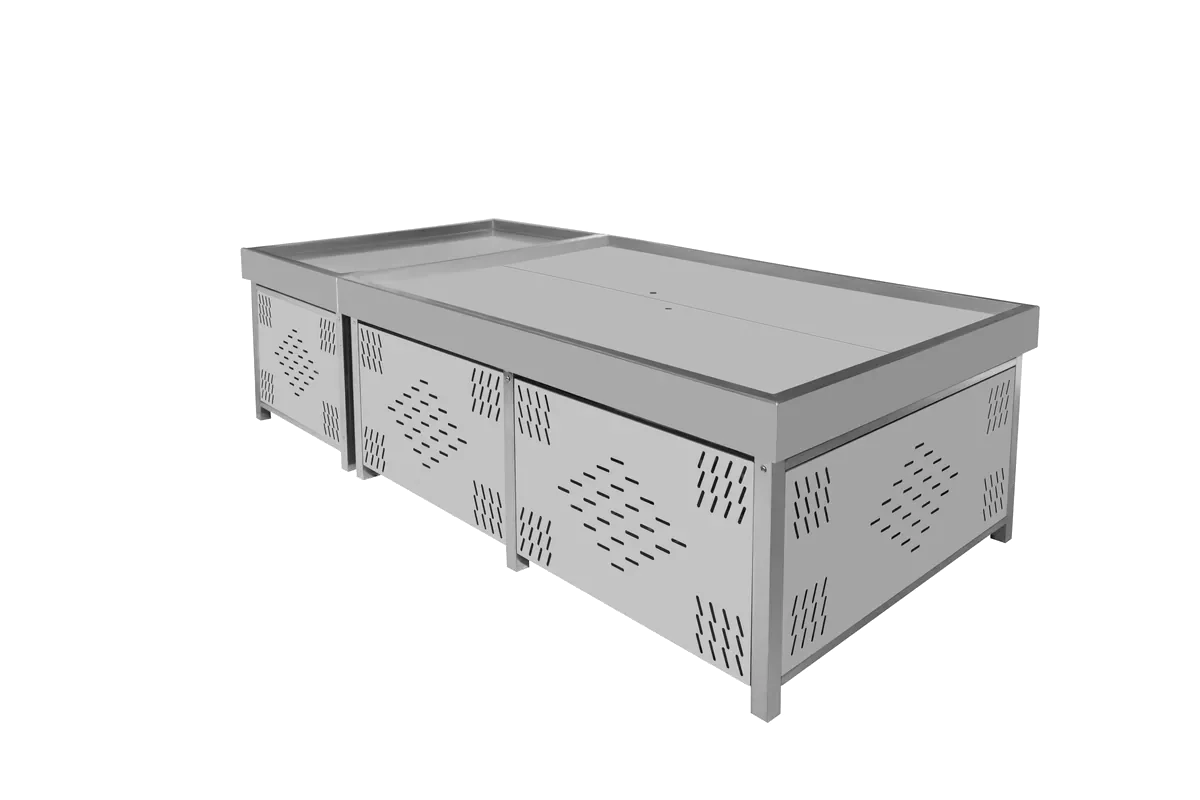
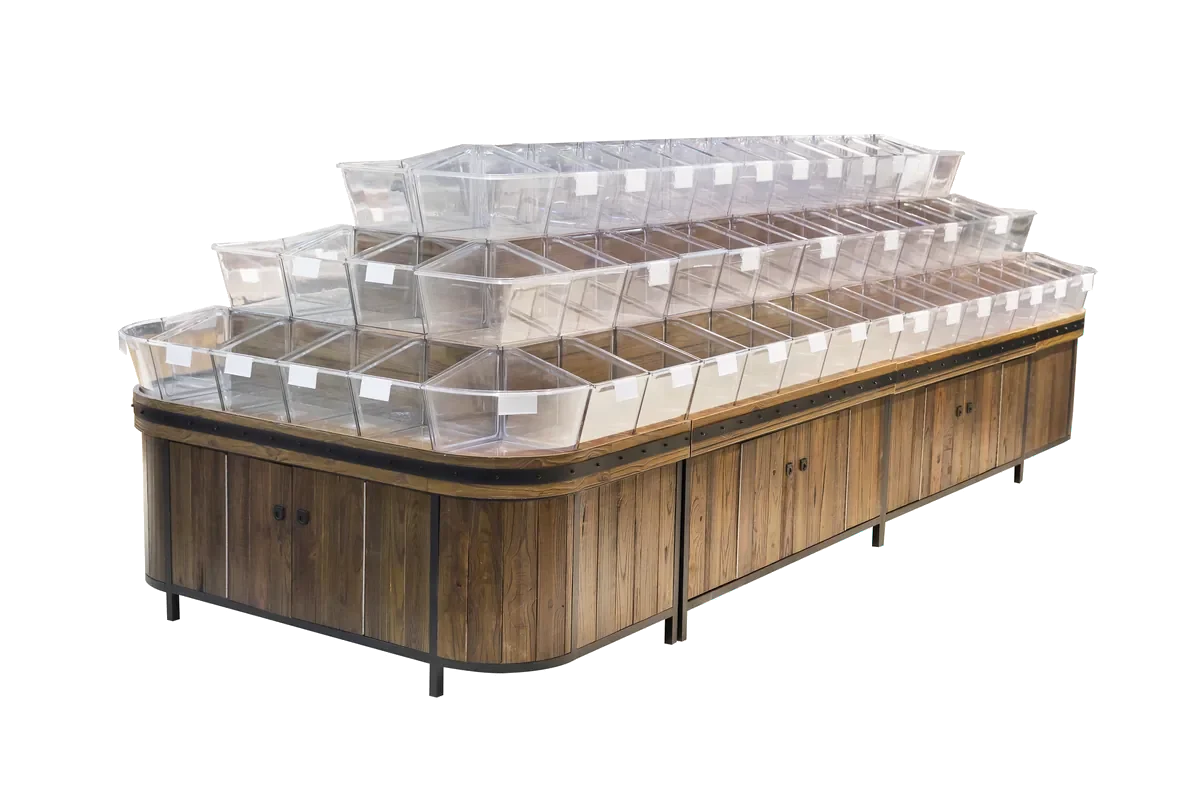
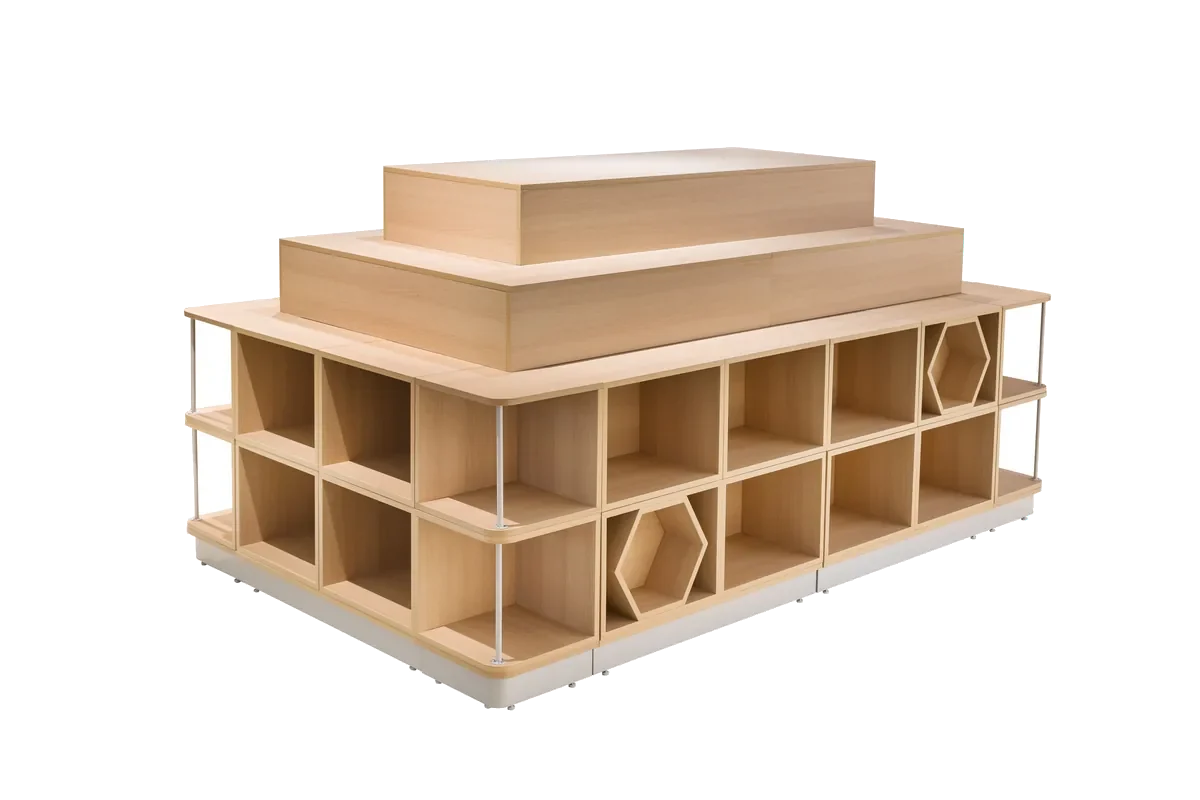
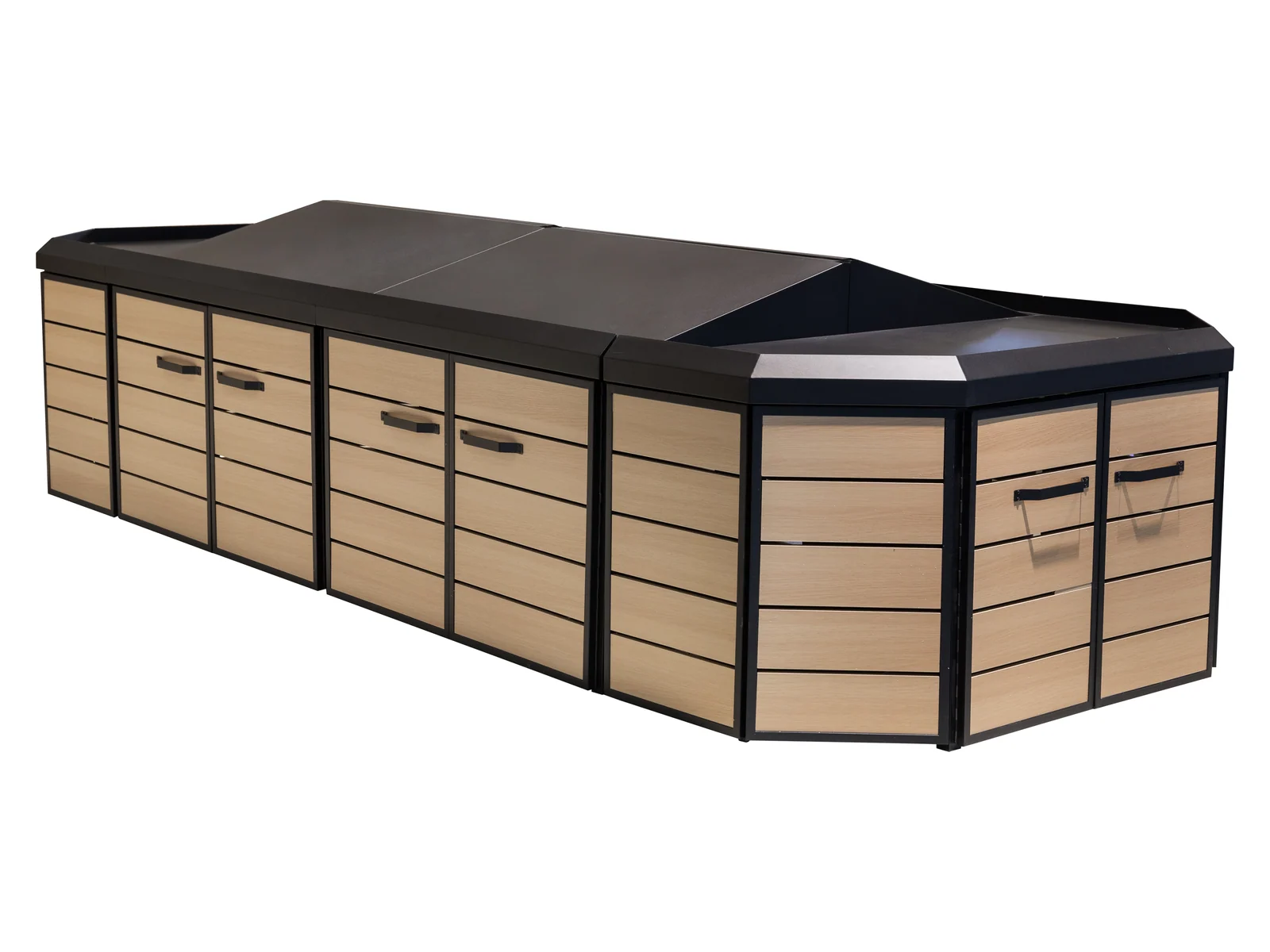
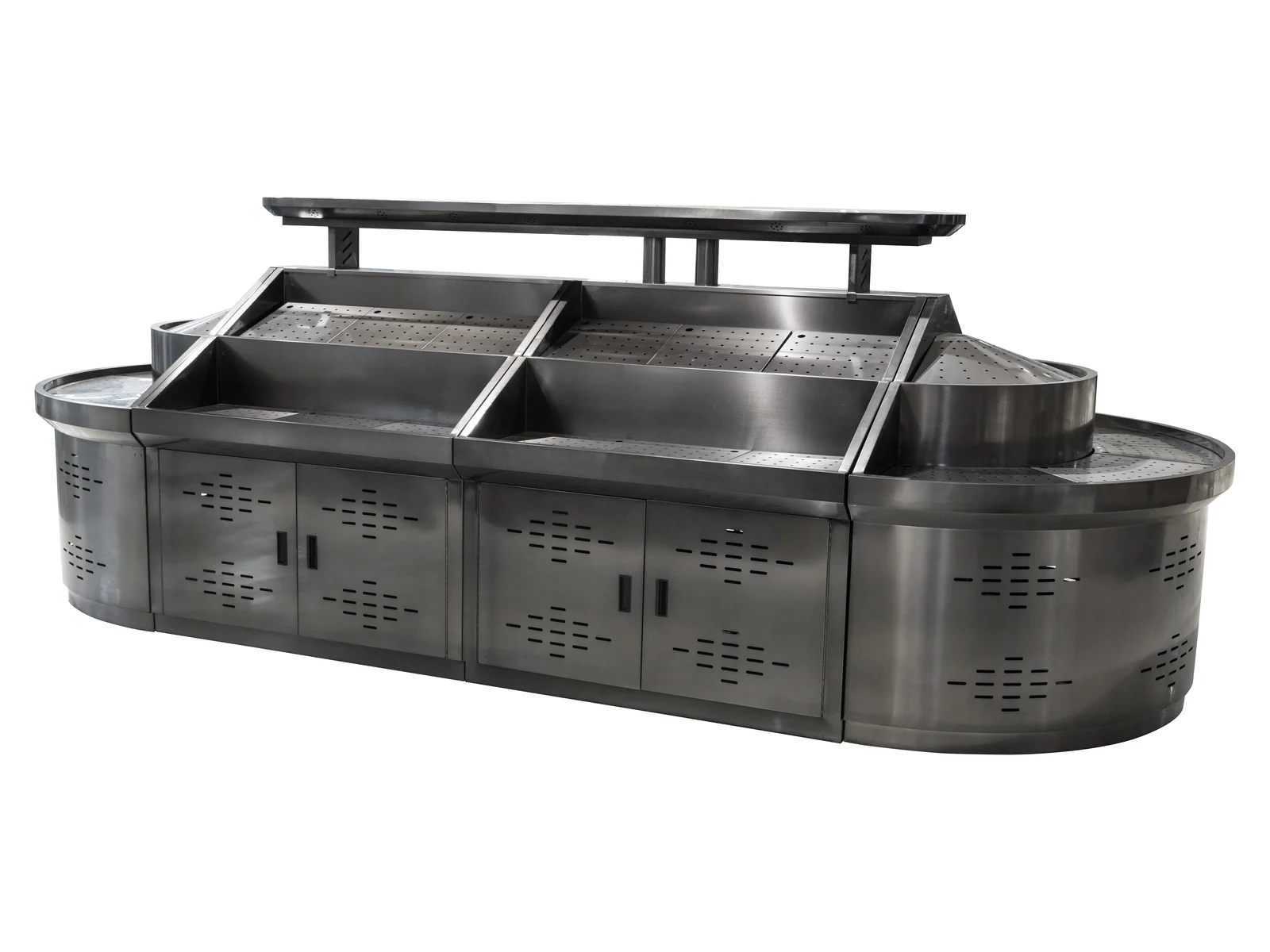
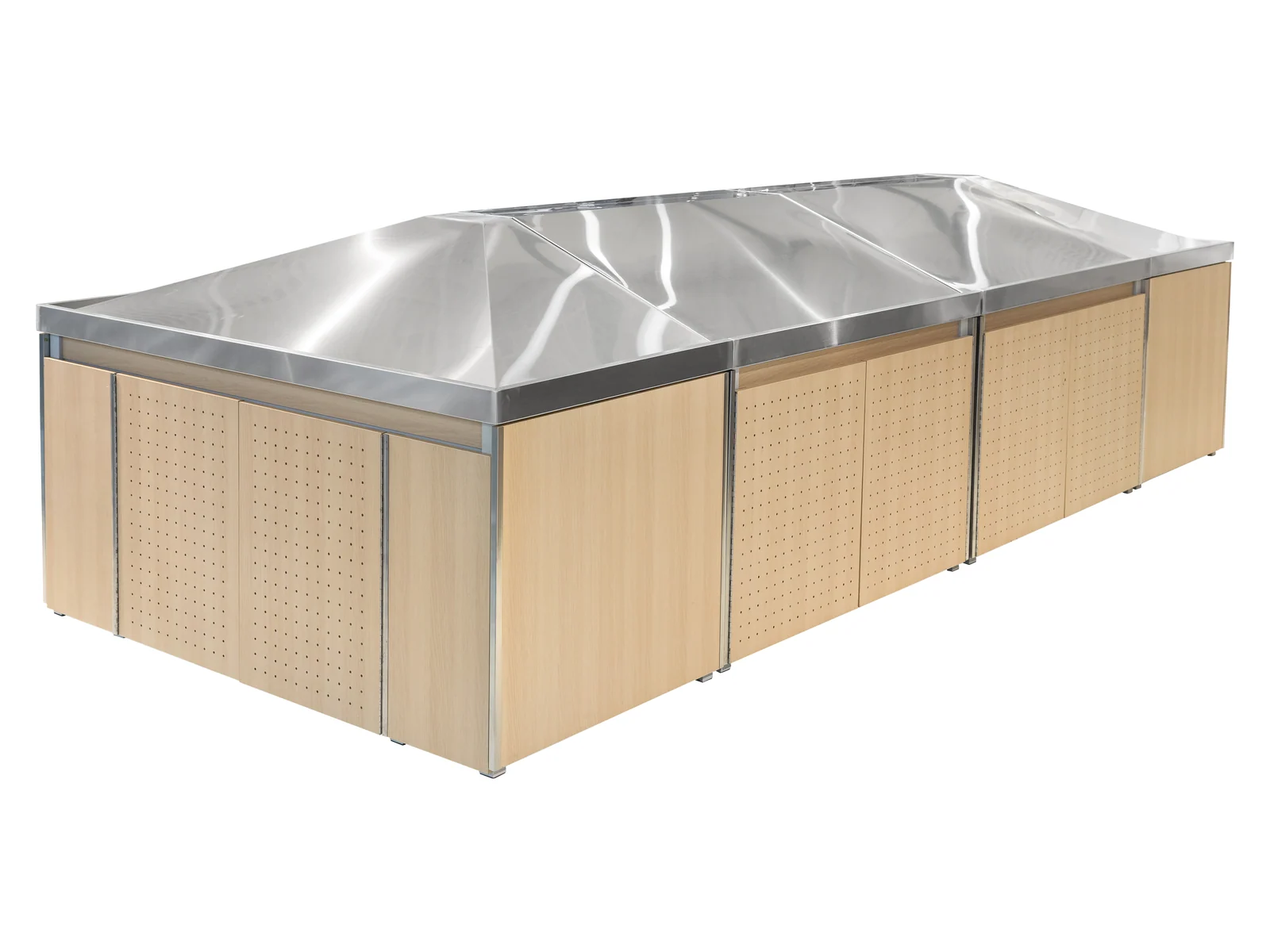
Keshun single-sided wall produce rack with angled shelf arms over a stainless base table

Wall Produce Rack with Angled Shelf Arms

Wall run · angled shelf arms · stainless base table

The only single-sided build in this category. It stands against a wall with angled arms carrying the display above a stainless base table, and closed cabinets underneath for the reserve stock.

Product File

For The Wall Side Of The Produce Aisle

A produce aisle usually has one side that is a wall, and an island cannot use it. This rack can: angled arms project from a pale timber back panel and carry the display, tipping every shelf toward the shopper so the goods are read from below rather than from above. Under them a stainless base table takes the wet lines, and closed cabinets below that hold the reserve.

The arms are the part worth understanding. They are set at a rising angle so the upper shelves present their contents rather than their edges, which is the whole difference between a wall unit that sells and one that stores. Our records hold a tall produce build at 1200 × 800 × 1300 mm, and this is the format that dimension belongs to.

Sided Single, against a wall
Display Angled shelf arms
Recorded tall build 1200 × 800 × 1300 mm
Island size Cut to your aisle
  • Since 1999
  • Changshu, Jiangsu
  • ISO 9001
  • HS Code 94031000
Product Description

Wall Produce Rack with Angled Shelf Arms

The only single-sided build in this category. It stands against a wall with angled arms carrying the display above a stainless base table, and closed cabinets underneath for the reserve stock.

Key Features

  • Built to your drawing rather than to a fixed configuration — length, depth, height and internal layout all follow your floor plan.
  • Cold rolled steel body with the finish carried across every category on the same order, to one RAL or PANTONE reference.
  • Manufactured in our own plant in Changshu, where steel fabrication, woodworking and stainless steel production run on one site.

Applications

Supermarkets, convenience stores, chain retail and speciality stores. Tell us the store format and the floor area and the specification comes back written against them.

What The Photographs Show

A wall rack is judged on the angle of its arms and on what happens where wet produce meets timber. These four cover both.
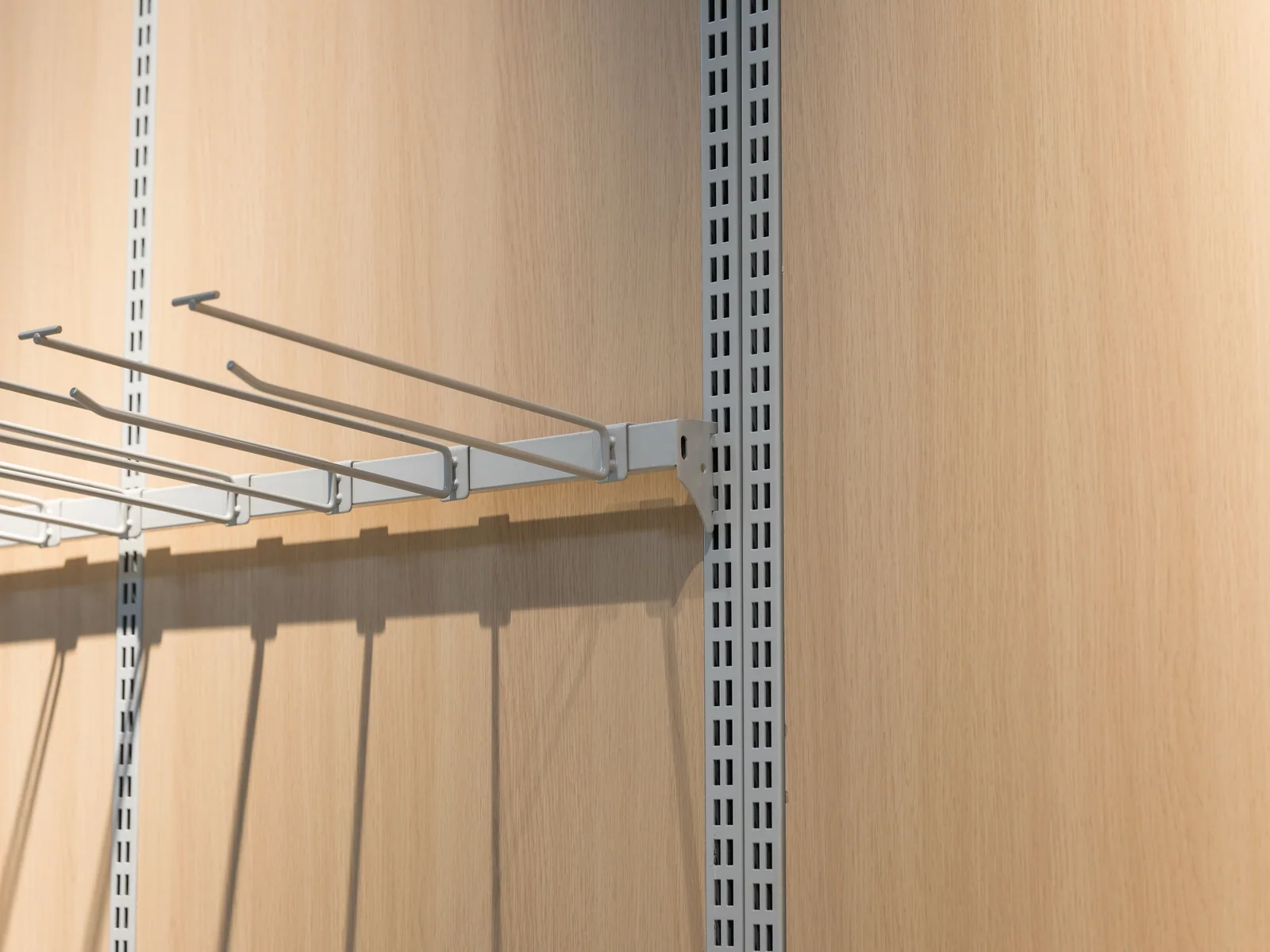
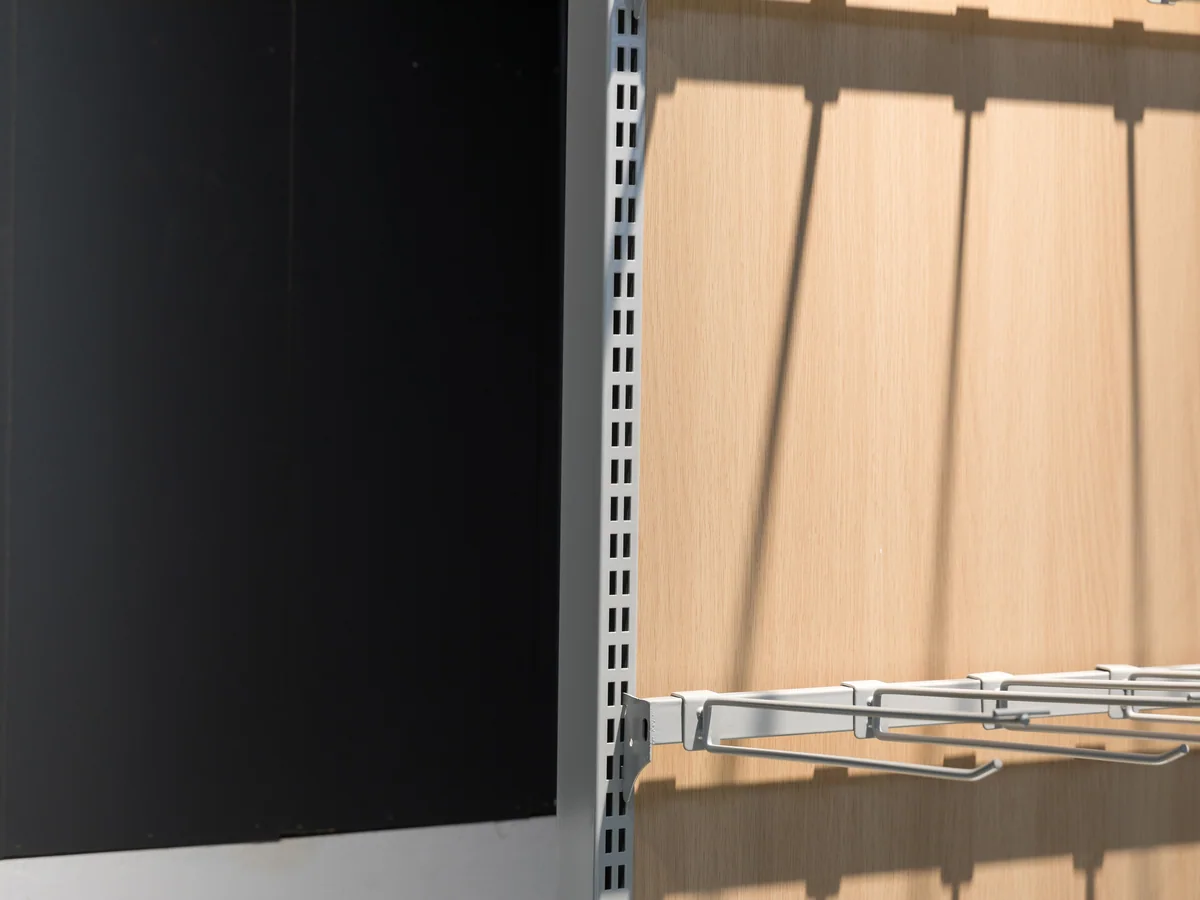
Close-up of the angled wire shelf arms projecting from the back panel

Angled Shelf Arms

Rising angle, tipped forward

Each arm rises and tips its shelf toward the aisle. Level shelves at this height show a shopper the edges of the crates and nothing else, which is why an angled arm sells produce that a flat shelf sits on.
Close-up of the pale timber back panel behind the shelf arms

Timber Back Panel

Paint-free wood grain board

The back panel is board over a steel frame rather than a bare wall. It gives the arms something to fix into at any height and it stops the produce being read against whatever colour the store wall happens to be.
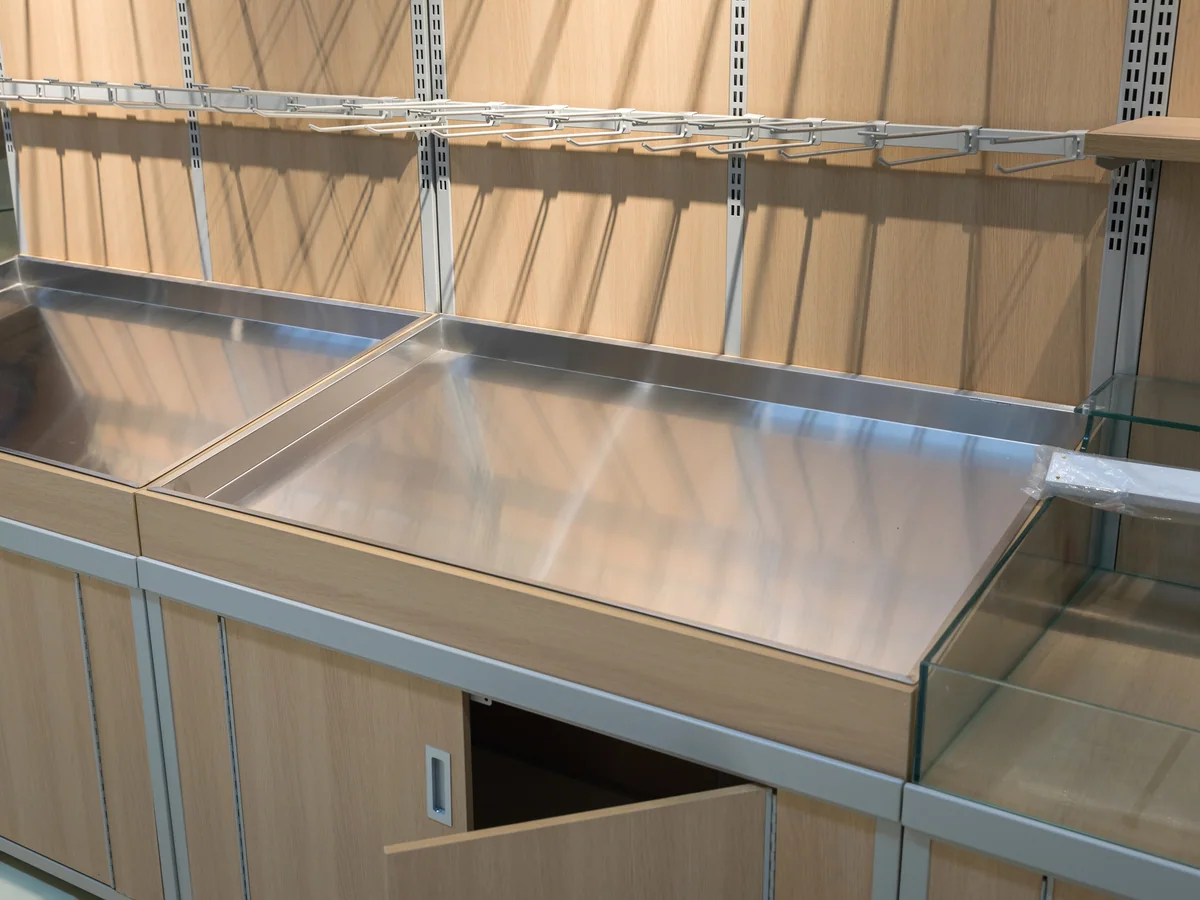
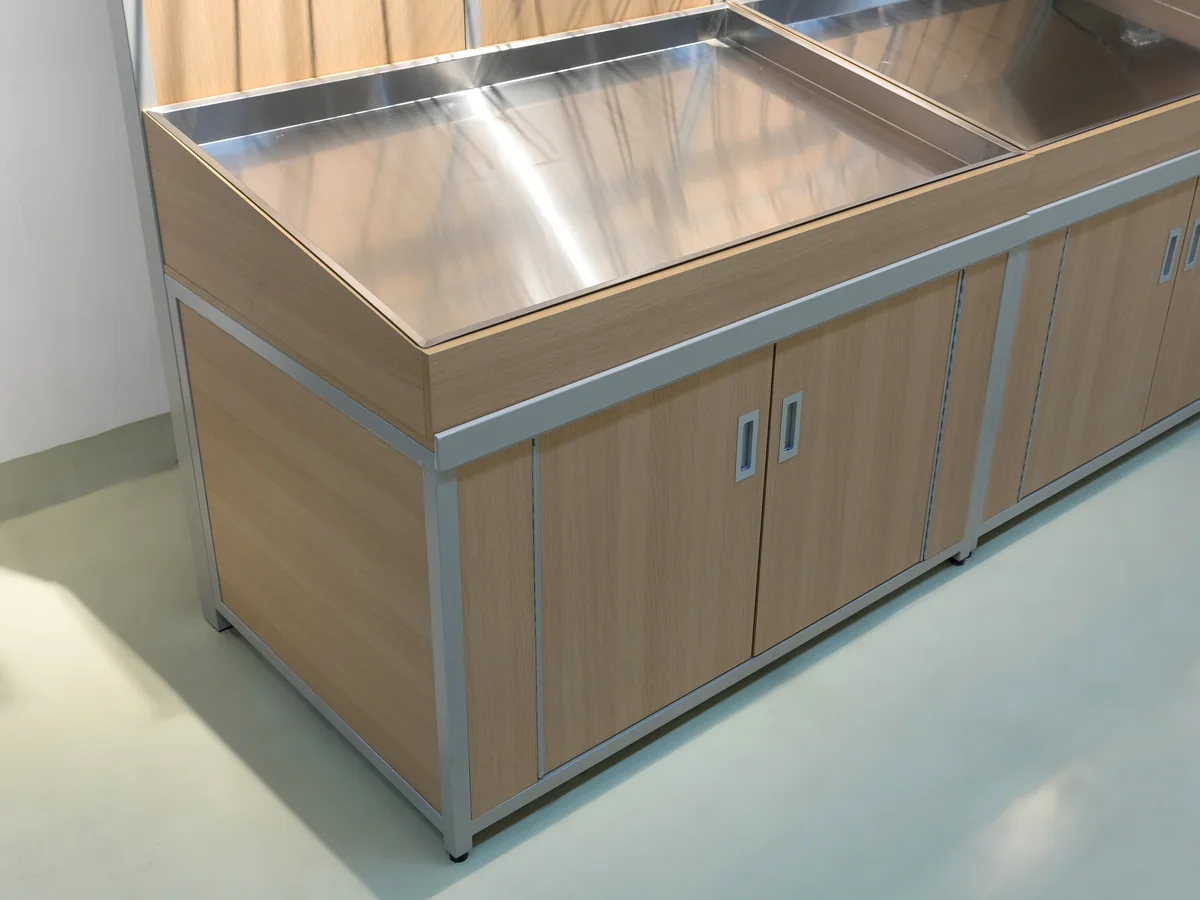
Close-up of the stainless steel base table under the shelf arms

Stainless Base Table

For the wet lines

The base table is stainless because it is where the misted and the dripping lines end up. Stainless steel board goes wherever produce, ice or wash water touches the fixture, and a base table is the clearest case of it.
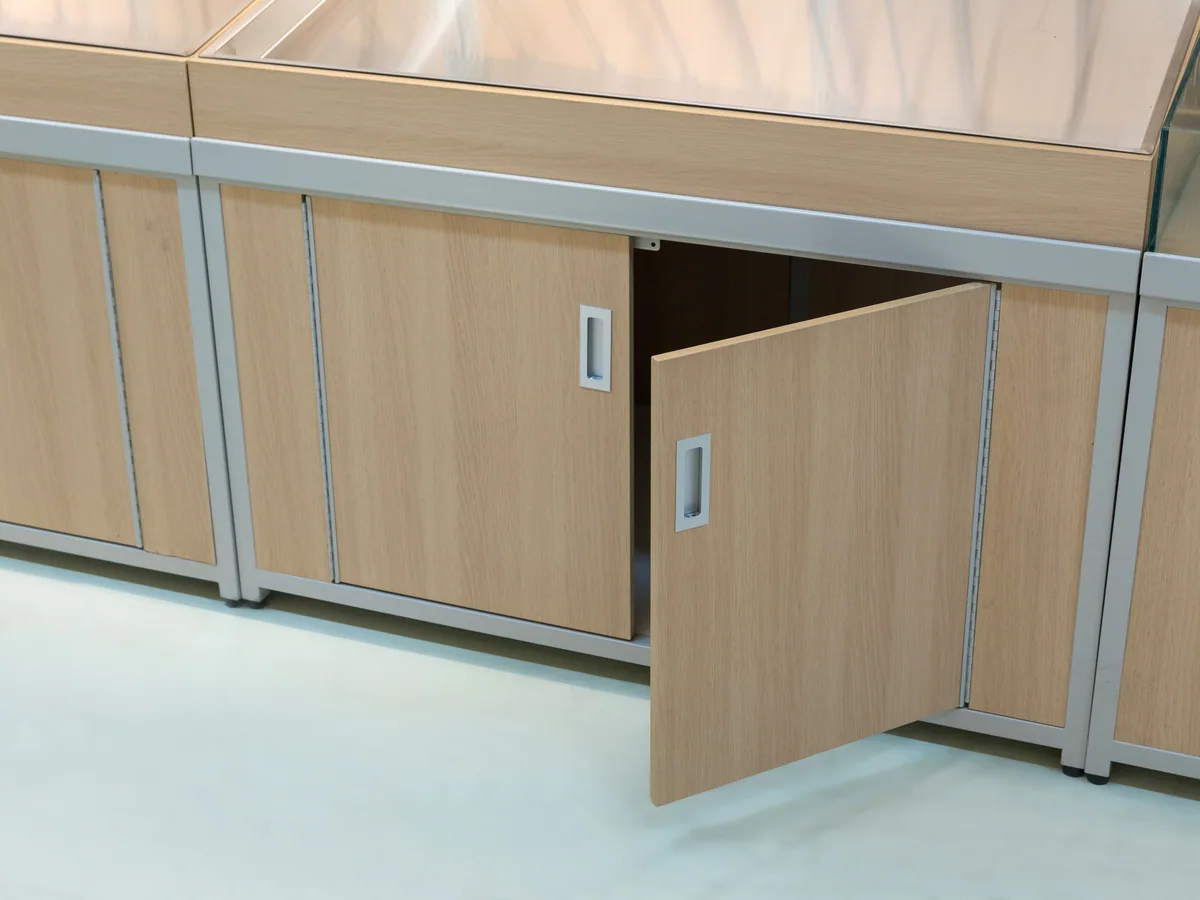
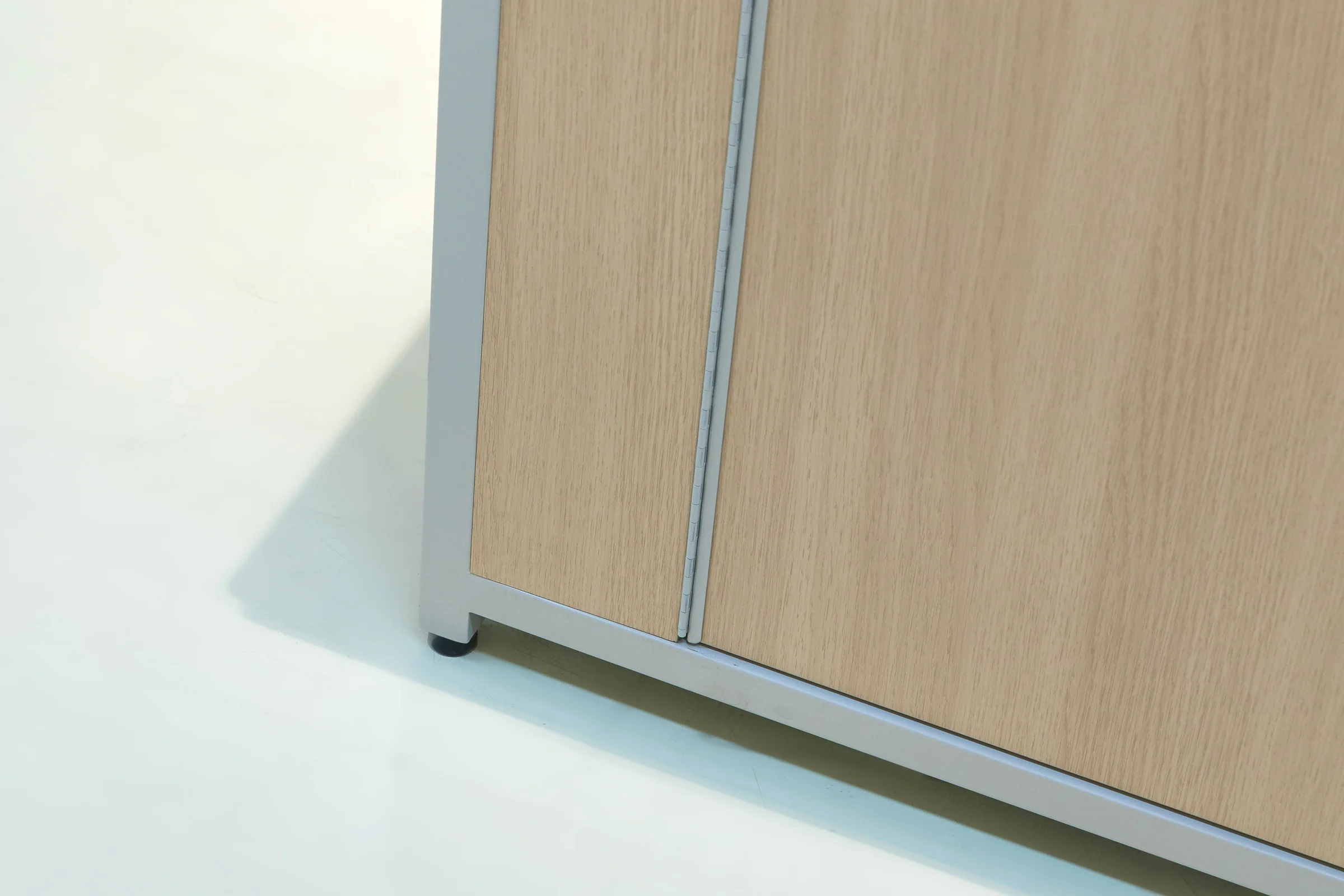
Close-up of the closed cabinet doors under the base table

Reserve Cabinets

Closed, under the table

Reserve stock lives directly under the display it feeds. Produce turns faster than any other department, so a rack that has to be restocked from the back room is a rack that spends half the day looking empty.

Customisation

Every item on this page is made to order. Send a floor plan, a hand sketch or a photograph of a fixture you like, and we quote against it.

Shipping Form

How This Produce Island Leaves The Factory

Store fixtures are light for their size, so a container fills up on volume long before it fills up on weight. What decides your freight is not what one unit weighs — it is what shape the goods are in when they go through the container door. Everything we build leaves in one of three shapes.

Line icon of four flat panels stacked and bound with two strapping bands

Flat Packed Cabinet And Shelving Panels

Shelving bays, produce islands and bulk cabinets travel as panels — uprights, shelves, back panels and plinths, strapped flat with bubble wrap on every component. They are built up on the shop floor, so the packing list and the assembly drawings travel with the goods.

This model
Line icon of three supermarket trolleys nested into one another with a bracket marking the nesting pitch

Nested Trolleys And Hand Baskets

Trolleys slide into one another and baskets stack. Past the first unit, each extra one adds only its nesting pitch instead of its full length, so the shipped volume ends up a fraction of what the unit count suggests.

Line icon of an assembled checkout counter inside a dashed crate outline

Fully Assembled Counters

A checkout lane is welded, coated and fitted out as one piece, so it is crated whole with padding on the steel. Nothing waits to be assembled at the store beyond levelling it into the lane, and the crate is the counter plus a margin.

Produce islands ship flat as panels, so the container arithmetic runs on panel count rather than on finished size. Two of the builds in this category carry recorded dimensions — 1200 × 750 × 850 mm for the standard island table and 1200 × 800 × 1300 mm for the tall build — and those two are the reference points a loading plan is worked from. Everything else is cut to your aisle and confirmed on the packing list.

Ships With

What Usually Travels In The Same Container

Produce is the wettest, heaviest and fastest turning department in the store, and it rarely arrives on its own. These three categories share the fresh aisle with it.

Bulk Food Bins

Loose dry goods sit alongside loose produce in most store plans, and the two departments are read by shoppers as one open market area.

See bulk food bins

How many of each a store needs is a floor area question rather than a product question, and it is answered store by store on the equipment lists by store size.

Wall produce rack photographed straight on, showing the angled arms above the stainless table

Send the wall length and the ceiling height, and flag any doors or columns along the run.

Get A Quotation

Quote This Produce Rack

Send the wall length and ceiling height, and flag any door, column or service run along it. Those obstructions decide the bay count on a wall build.

Your enquiry goes to keshun@kssyt.com. Drawings and floor plans are welcome by email — hand sketches included.

Buyer Questions

Four Questions Buyers Ask Before Ordering

The four that come up on nearly every enquiry for this build. If yours is not here, send it with your layout and it is answered alongside the quotation.

Q01 What size is one bay of the wall produce rack?

A tall produce build is on record at 1200 × 800 × 1300 mm, and that is the format this rack belongs to. Run length is built in bays to your wall, so send the wall length and the bay count comes back with the drawing.

Q02 Can the arms be adjusted after installation?

The arms fix into the back panel, so they move. Produce ranges change with the season more than any other department, and a rack that cannot be re-set by the third month is a rack the store works around.

Q03 Does the base table drain?

Fall and drain position are set against where your wet lines actually sit, so it is drawn against your layout. Tell us which lines are misted and where the nearest floor drain is.

Q04 Can it be combined with the island builds?

That is the normal arrangement: wall racks down one side, islands down the middle. Ordering them together keeps one colour reference across the department, because it becomes a single batch of powder coating.