


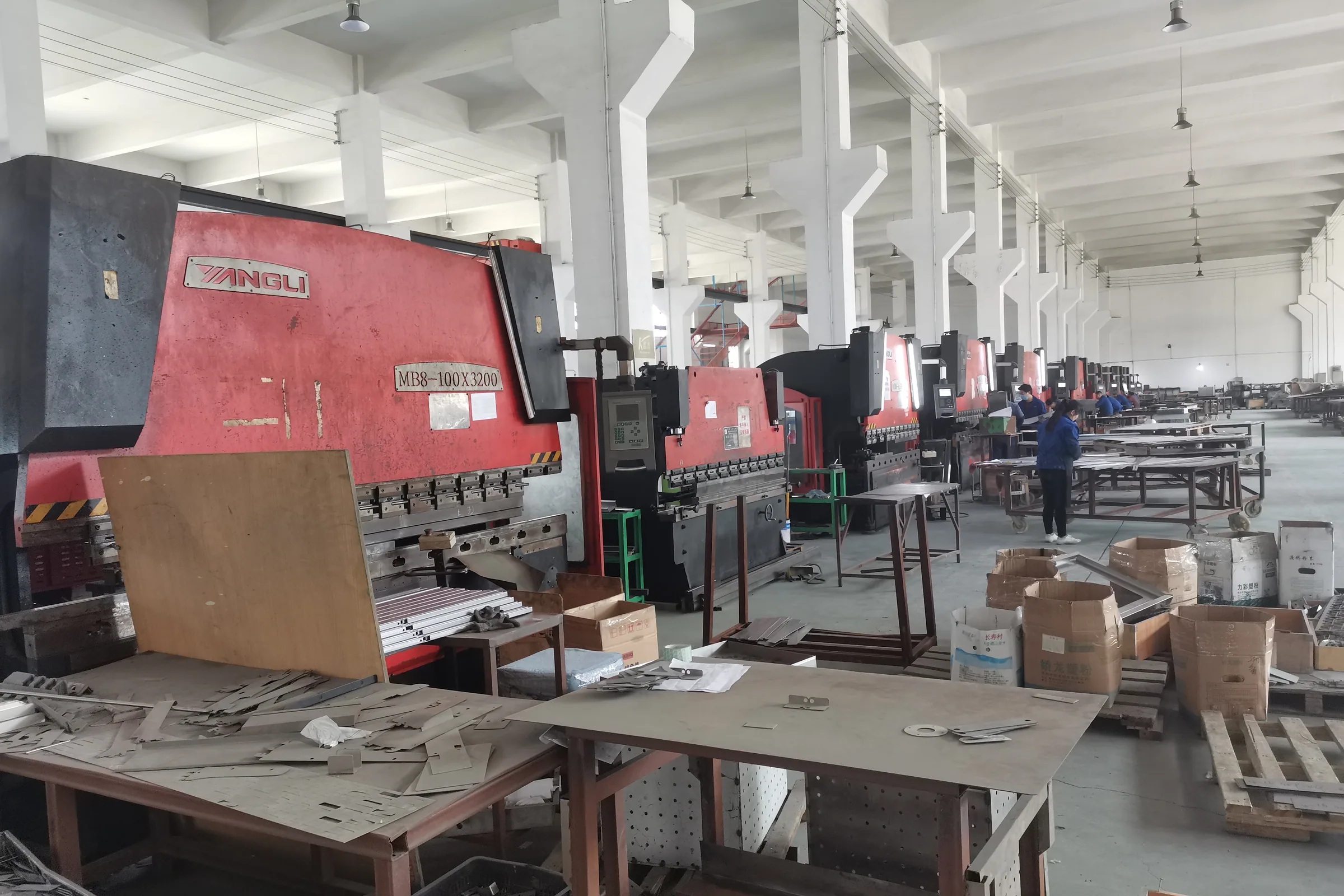
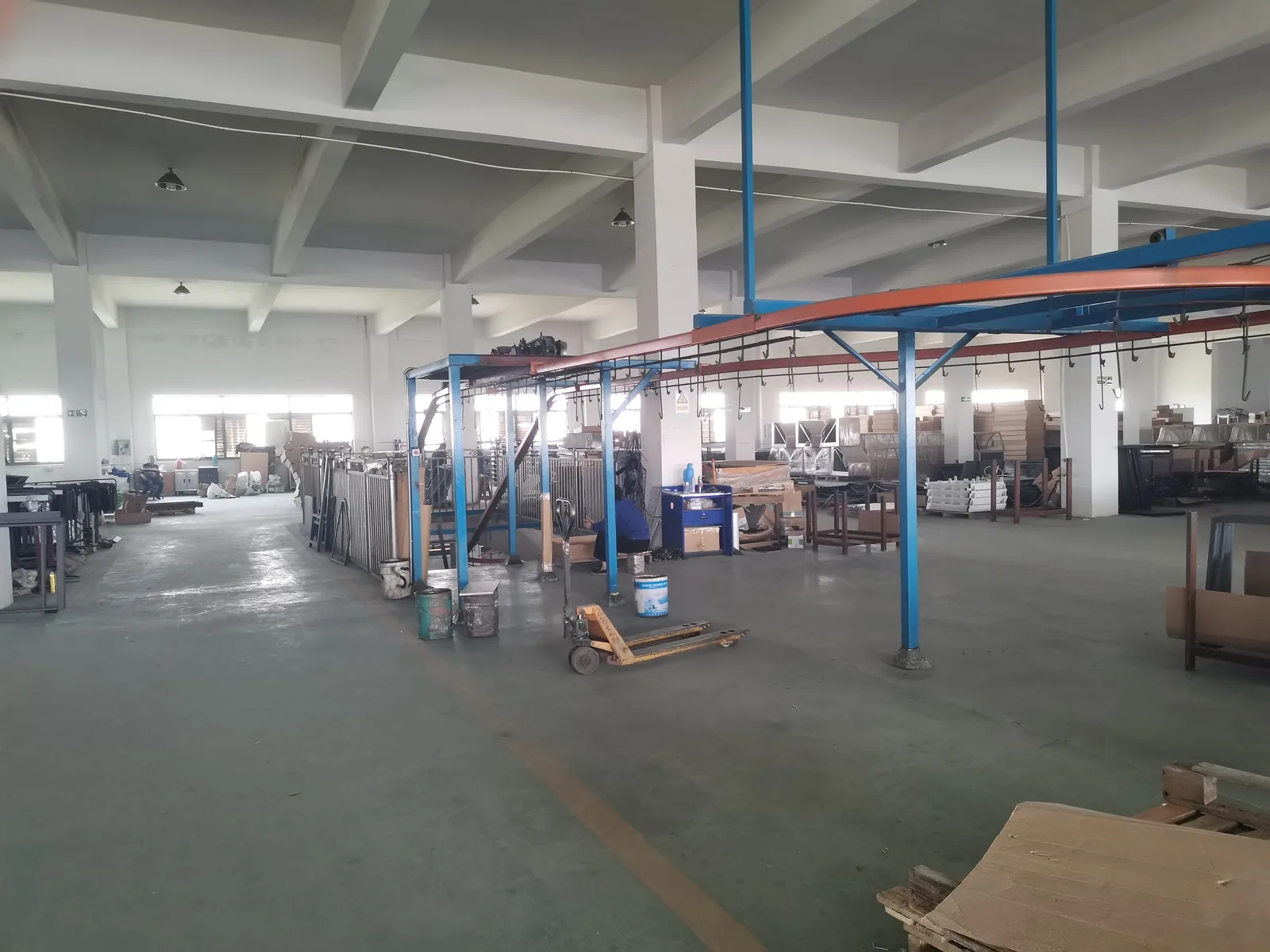
Frame assembly benches in the Keshun plant where shopping trolley frames are built

Shopping Trolleys and Baskets

Shopping Trolleys, Rolling Baskets, Hand Baskets and Platform Trolleys

Forty builds, and the only category in the catalogue where the fixture goes home with the shopper's hands on it. What it holds matters less than whether it stacks.

Full Range

Trolleys And Baskets We Have Built

Forty builds, photographed in our own studio: twenty-two baskets and eighteen trolleys. This is by far the widest range we make, and unusually the reason is not that stores want variety. It is that a supermarket needs several of these at once — a hand basket by the door, a rolling basket for the shopper who came in for six things, a full trolley for the weekly shop, and a platform trolley for staff.

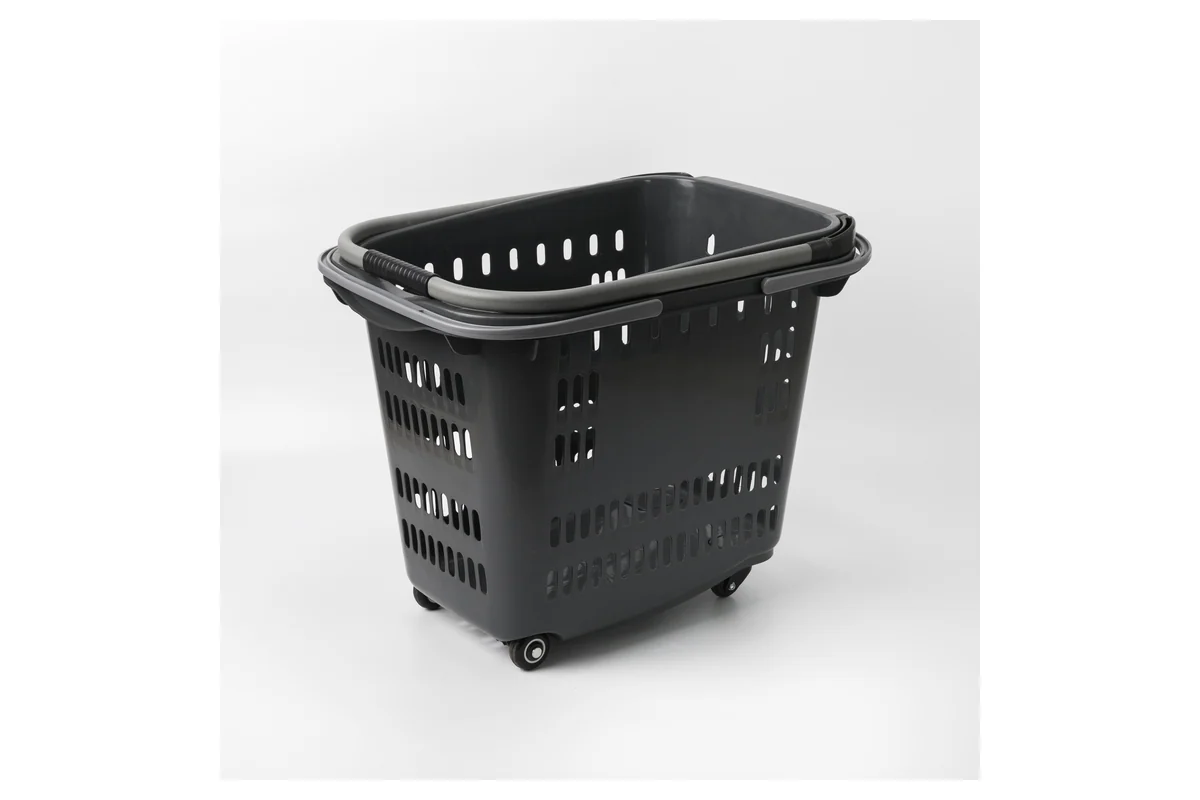
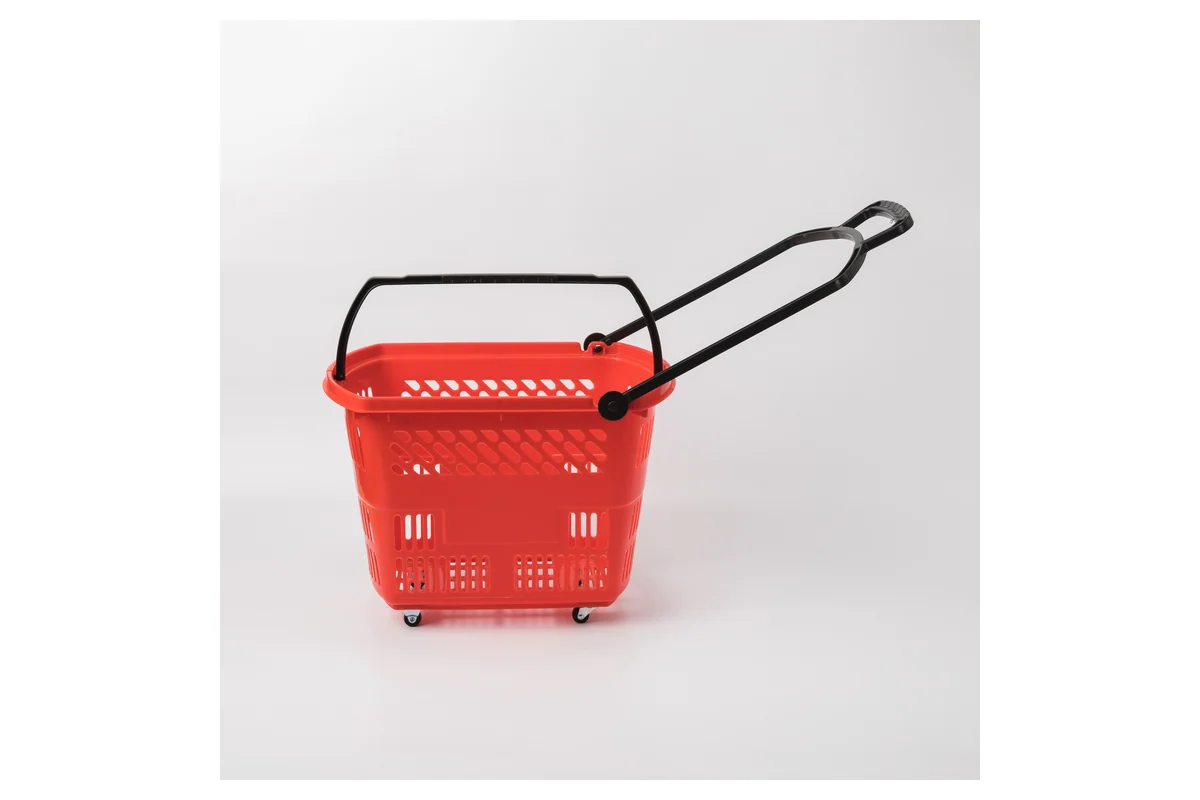
Rolling basket with a long pull handle

A wheeled basket with a telescopic pull handle, dragged behind the shopper like a case. It carries far more than a hand basket without asking anyone to take a full trolley round a small store.

Rolling basket, telescopic handle

Open the product file
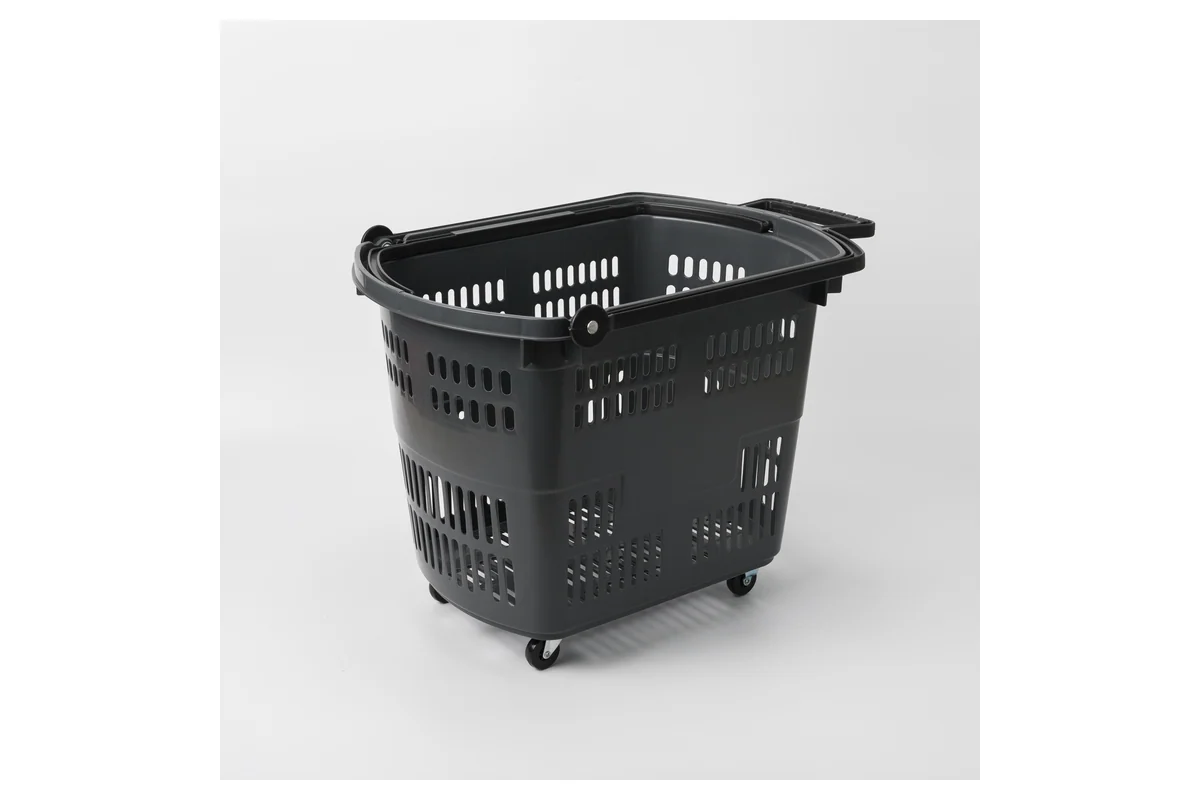
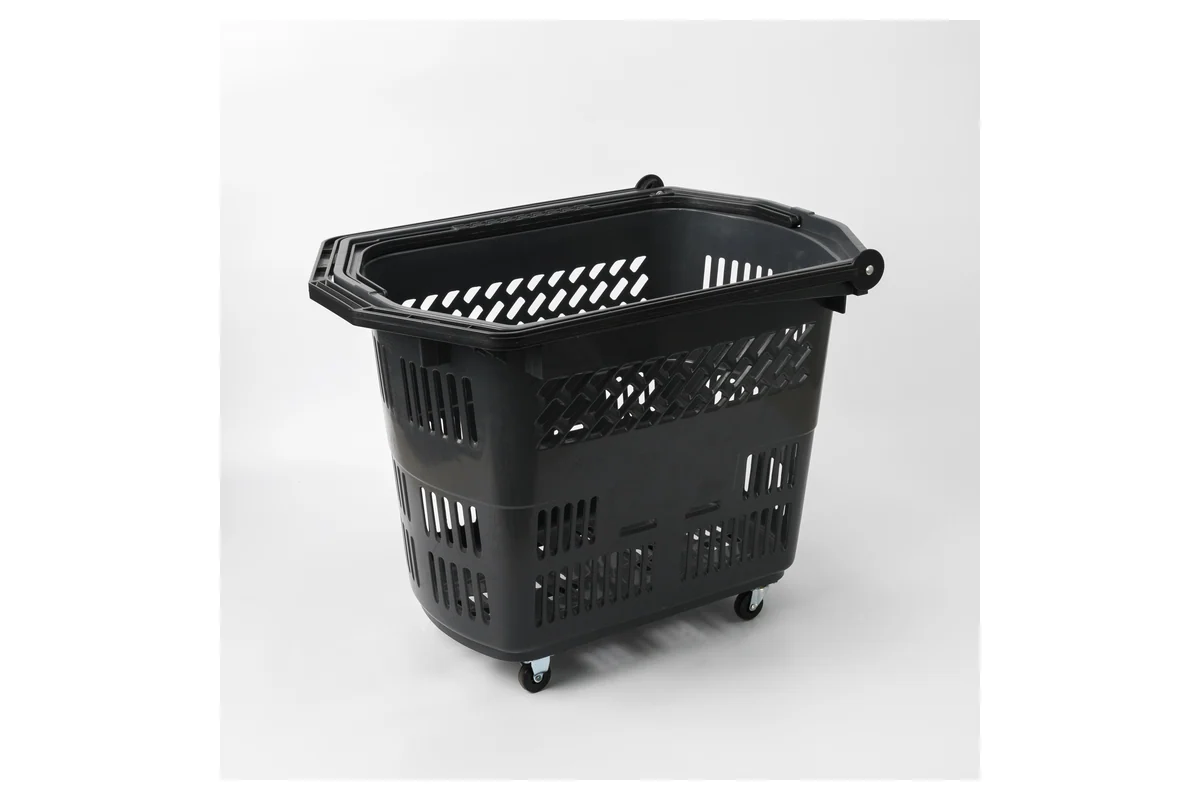
Wheeled basket with a moulded grip

The same rolling format with a shorter moulded grip instead of a telescopic pole. Cheaper, lighter, and it nests deeper because there is no handle assembly in the way.

Rolling basket, fixed grip

Open the product file

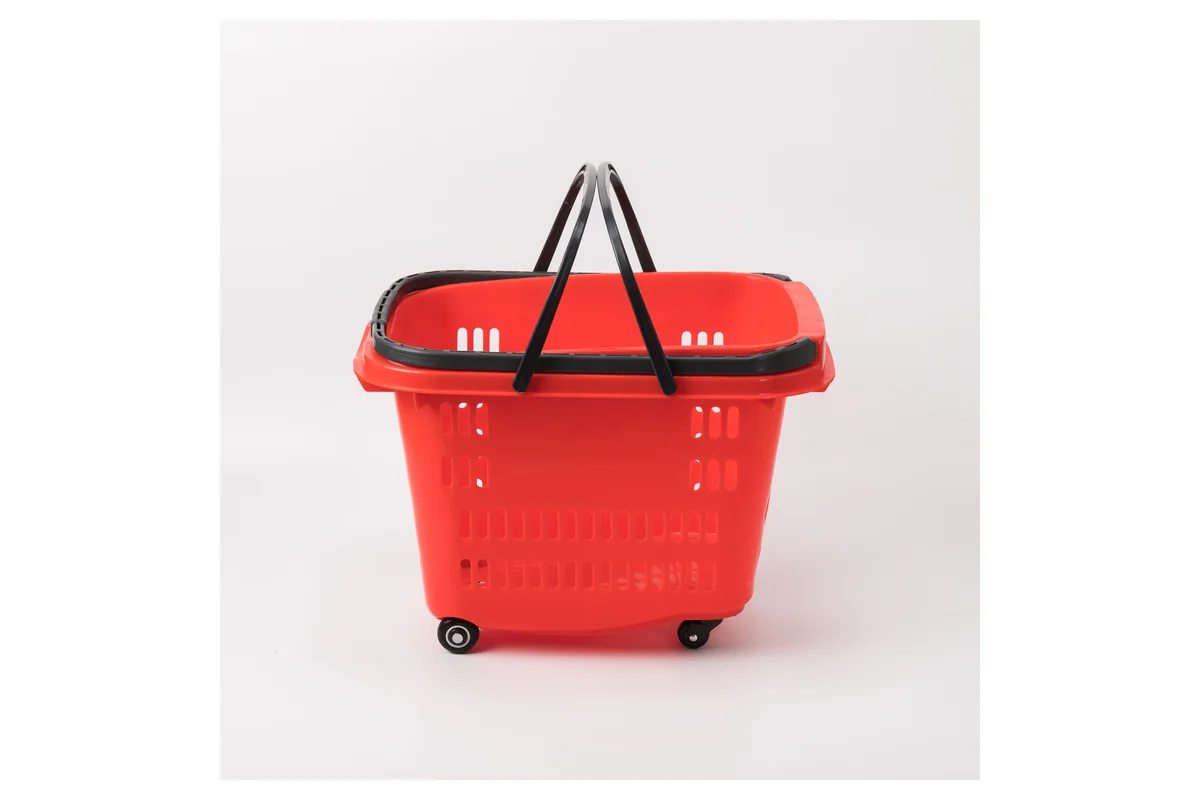
Deep rolling basket in red

A deeper body on the same wheelbase, for a convenience store where shoppers routinely fill the basket and would otherwise need a trolley.

Deep rolling basket

Open the product file

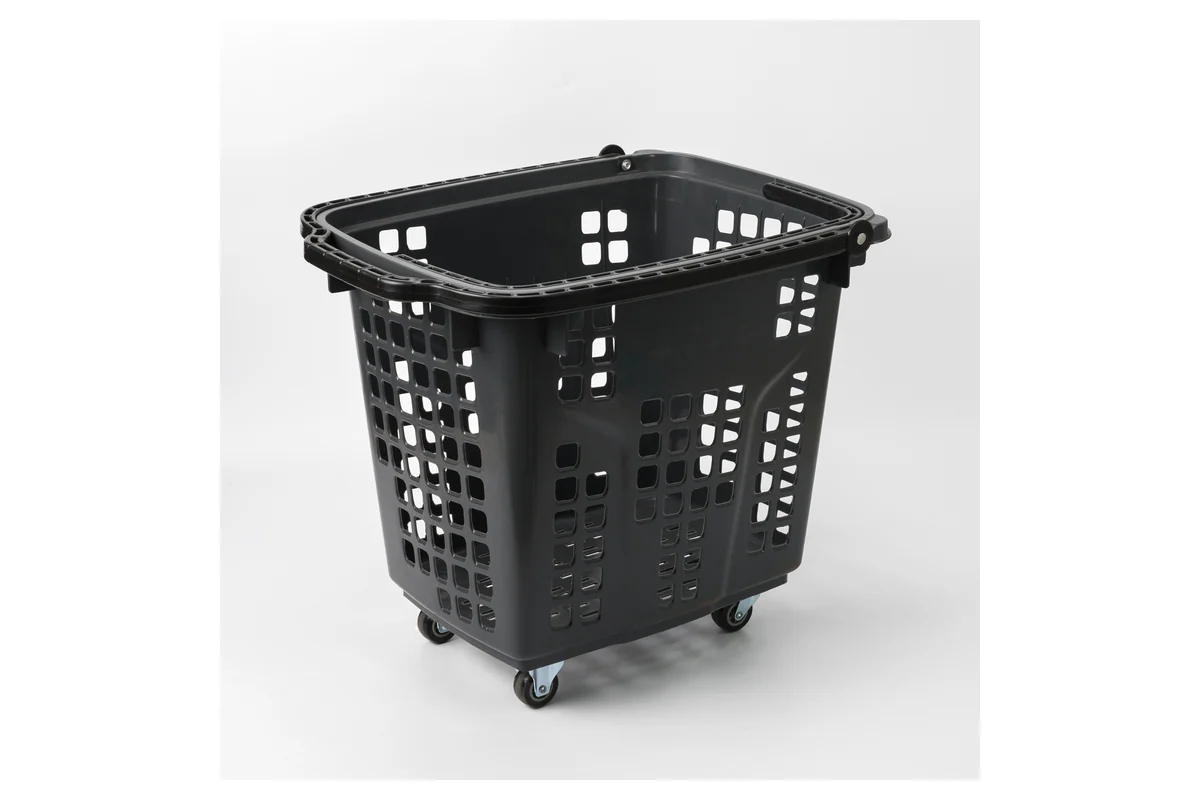
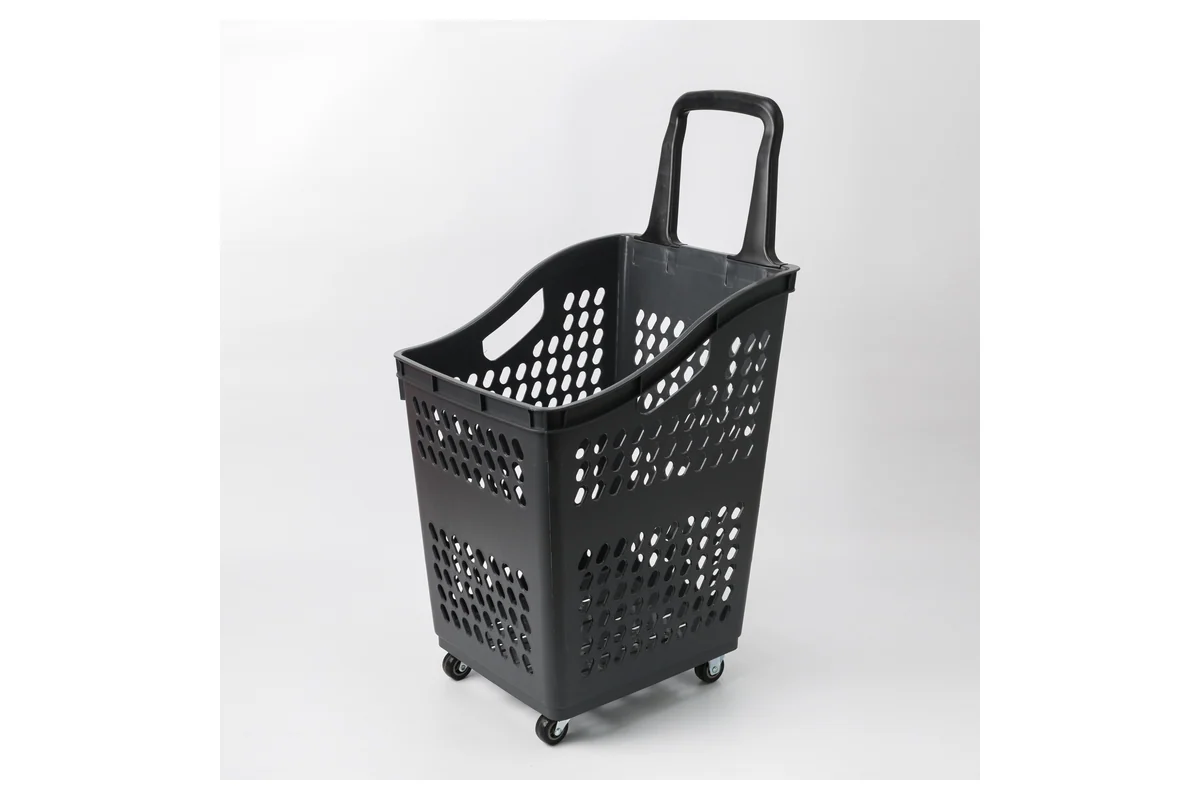
Tall rolling basket with a slim base

Taller and narrower than the standard rolling basket, so it takes less aisle in a store where the gaps between fixtures are tight.

Tall rolling basket, narrow base

Open the product file

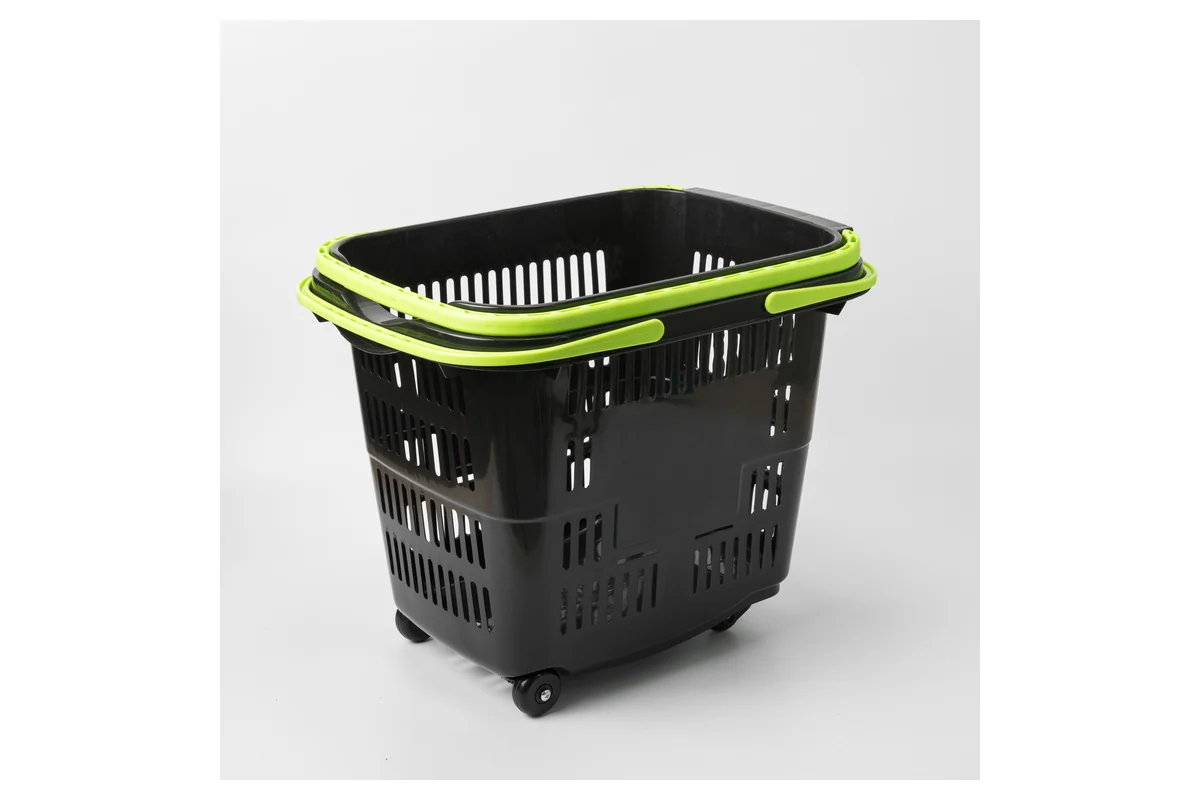
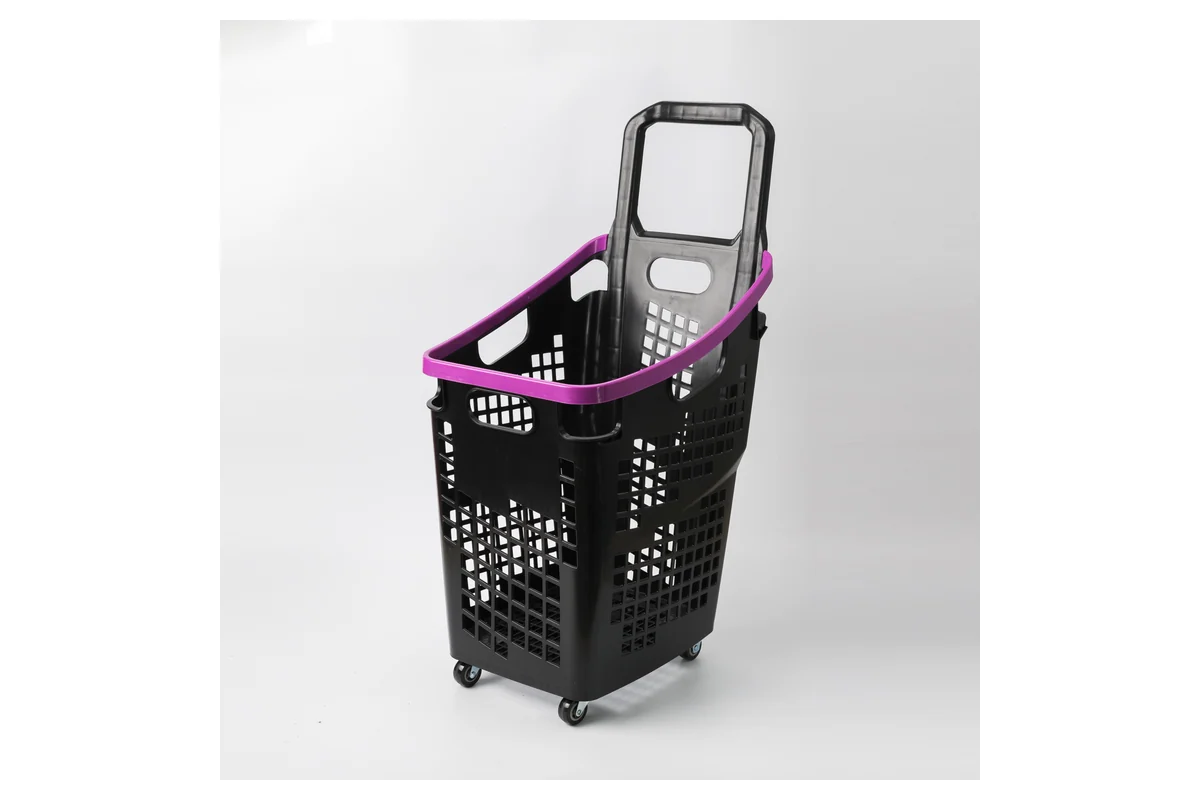
Rolling basket with a coloured handle rail

The standard body with the handle rail picked out in a second colour, which is what a store specifies when the baskets have to be findable across a busy floor.

Rolling basket, two-colour handle

Open the product file
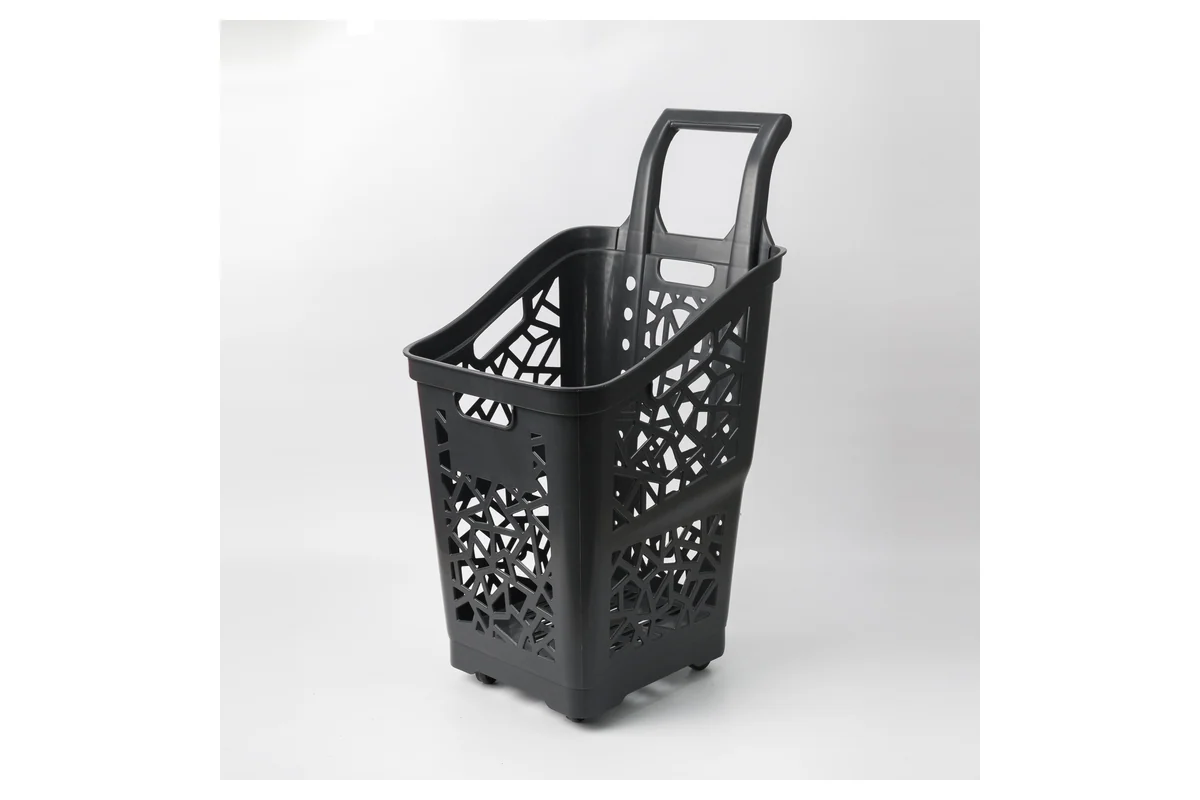
Rolling basket with reinforced sides

Heavier ribbing down the flanks. It is the build for a store whose baskets get dragged up kerbs and into car parks rather than kept indoors.

Reinforced rolling basket

Open the product file

Compact rolling basket

A smaller body for stores with a short shop: enough for a lunch run or a top-up, and it stacks more per metre of the basket stand.

Compact rolling basket

Open the product file

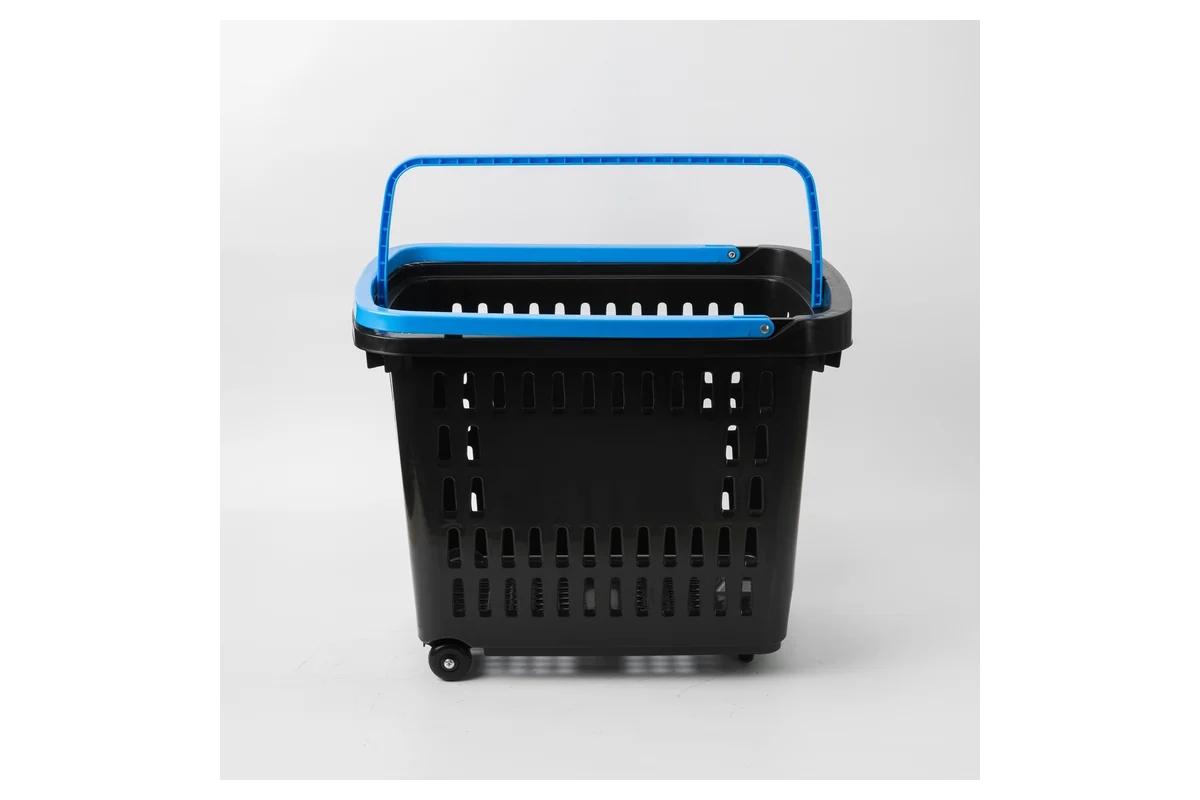
Rolling basket with a blue handle rail

Same body, blue rail. Colour on the handle is the cheapest way to distinguish two basket sizes on a stand without printing anything.

Rolling basket, blue rail

Open the product file

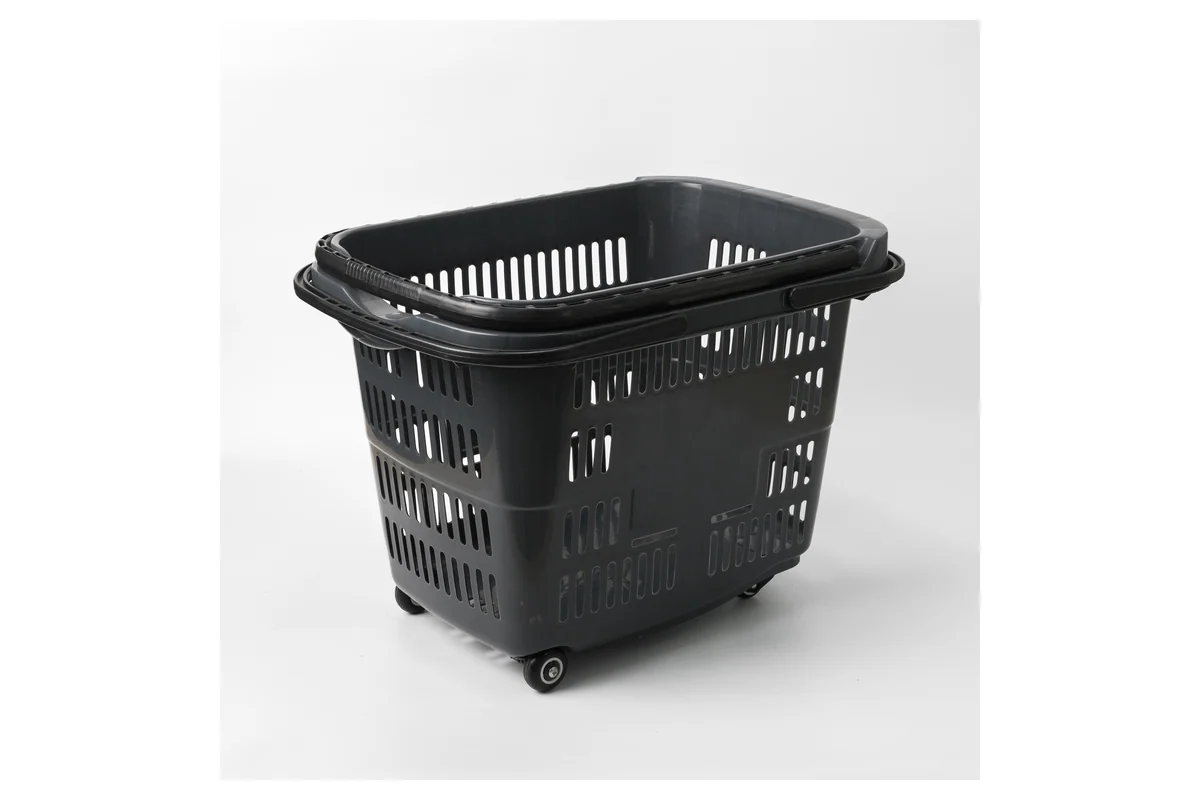
Standard rolling basket in black

The plain version of the rolling basket and the highest volume build in this half of the range. Nothing on it that a shopper can break off.

Standard rolling basket

Open the product file

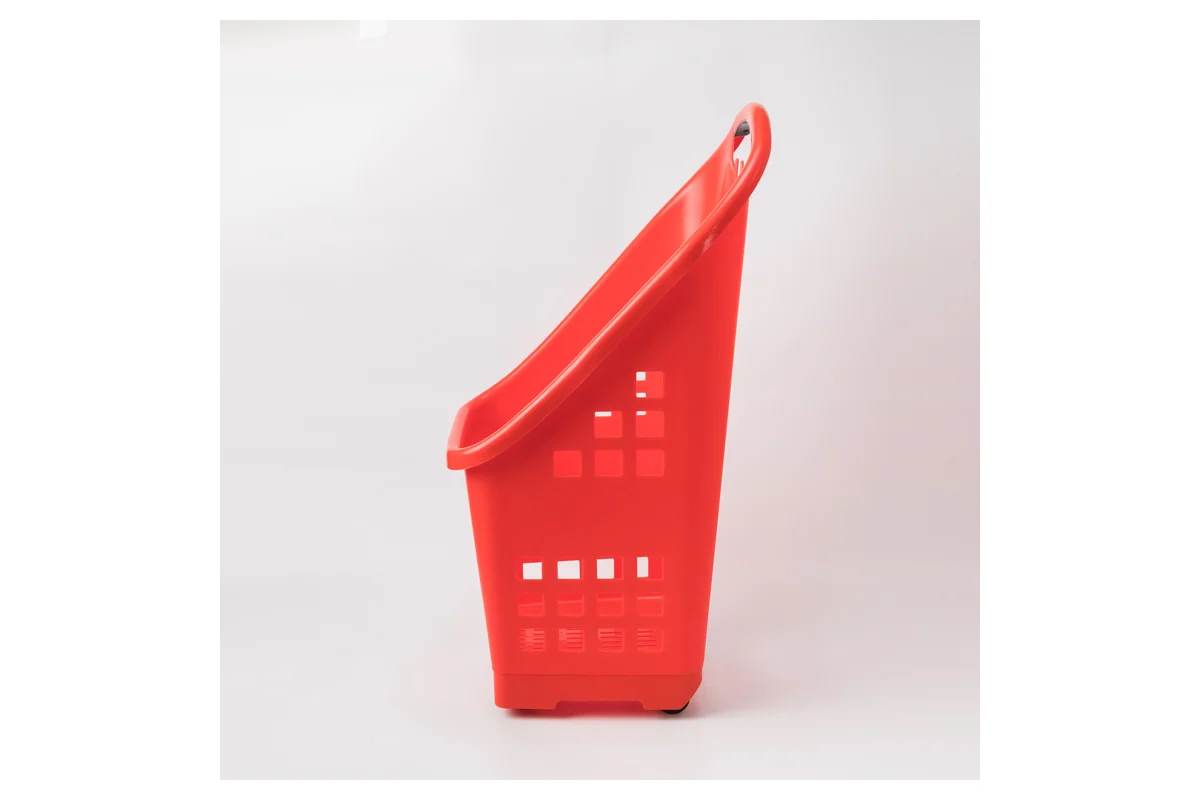
Slim upright shopper in red

An upright body on a narrow wheelbase, closer to a shopping trolley than to a basket. It suits a market stall or a store with very narrow aisles.

Upright shopper, narrow base

Open the product file

Rolling basket with a tall pull handle

A longer handle so a taller shopper is not stooping to pull it. Worth specifying if the store's own staff use the baskets to pick online orders.

Rolling basket, tall handle

Open the product file
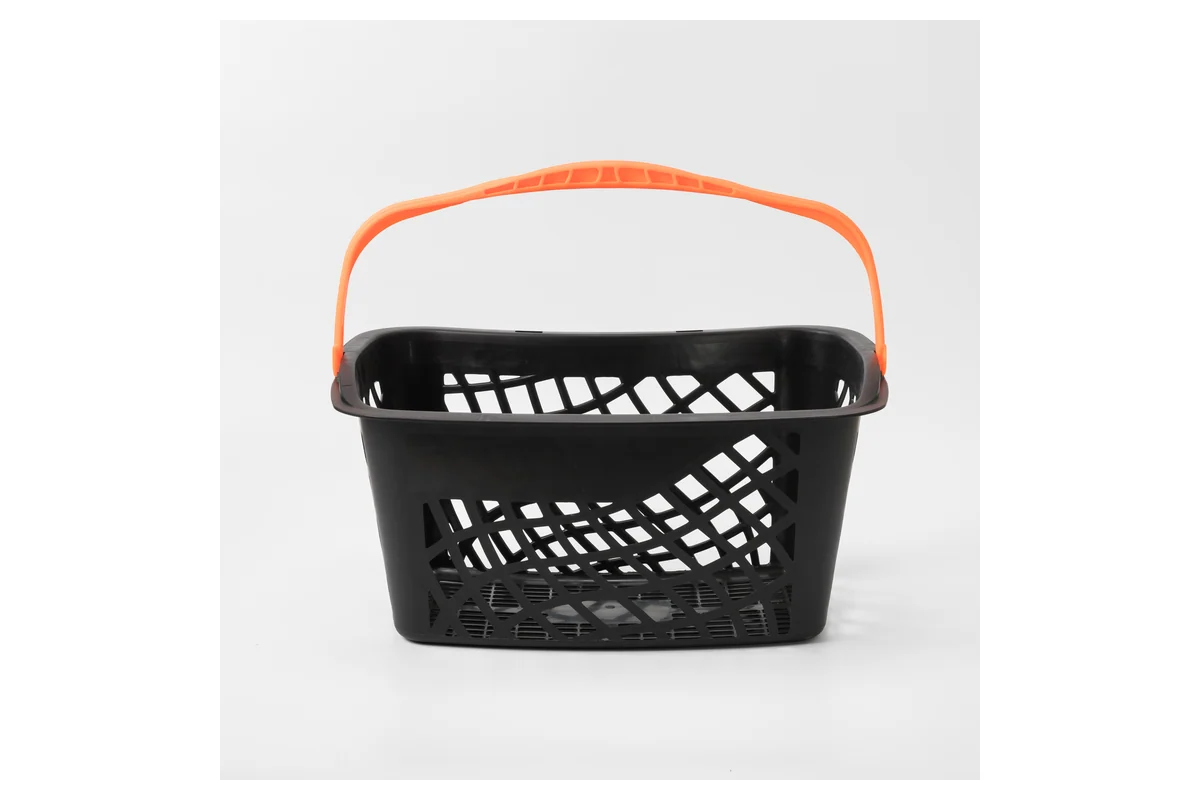
Rolling basket with a bright handle

A high-visibility handle in a strong colour, usually specified where the basket stand is somewhere a shopper has to spot from the door.

Rolling basket, high-visibility handle

Open the product file
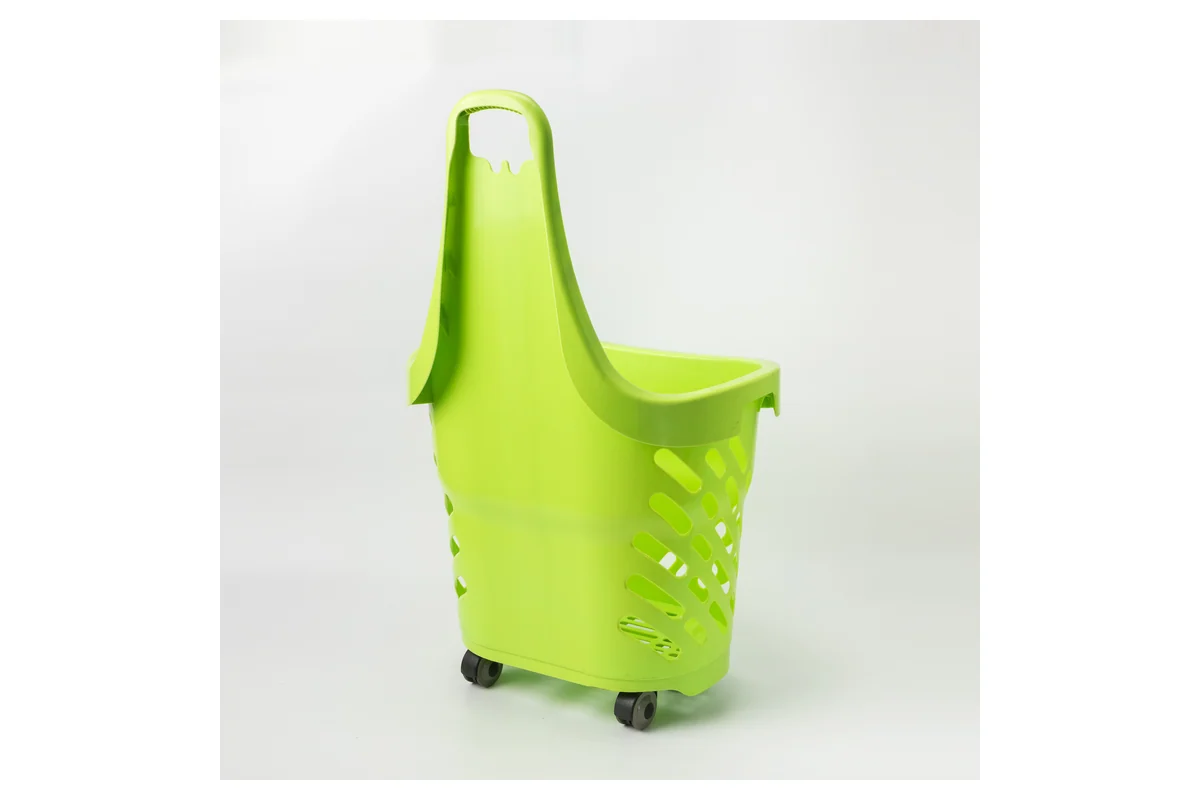
Rolling basket with a grey pull handle

A quieter finish for stores that do not want the basket fleet to be the loudest thing at the entrance.

Rolling basket, neutral handle

Open the product file
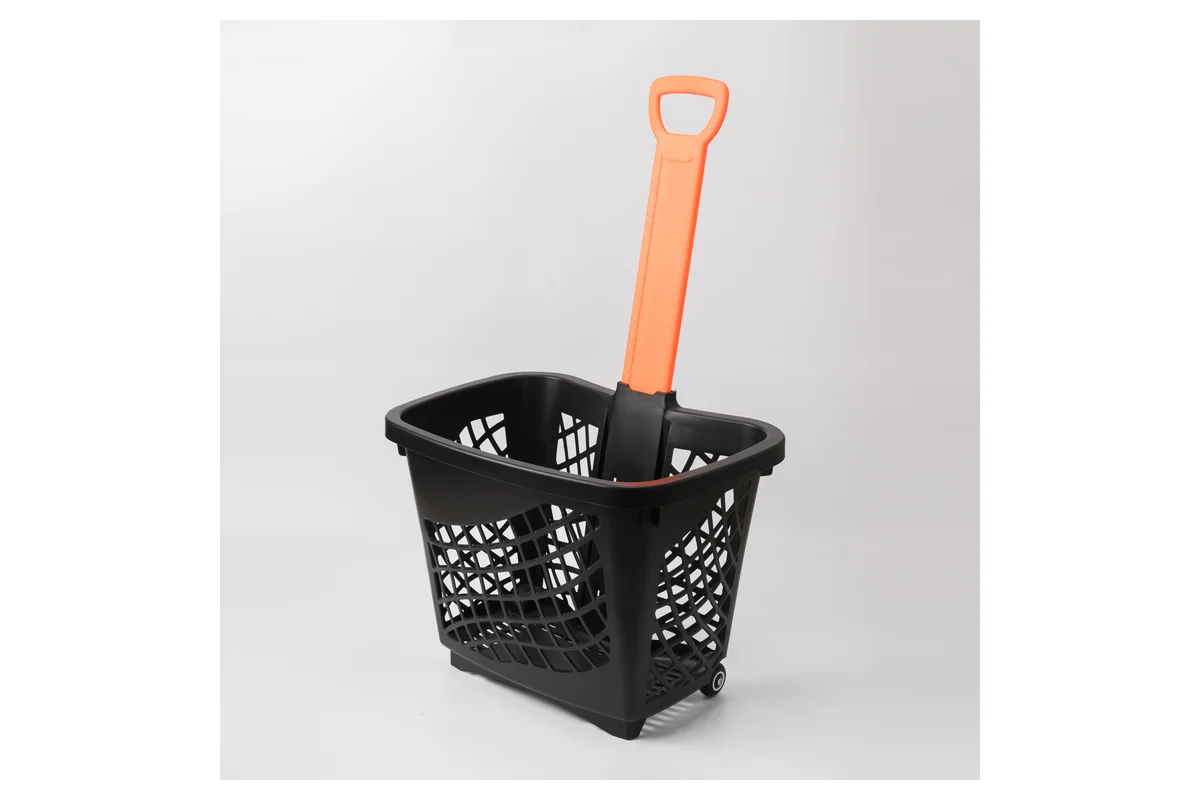
Rolling basket with a folding grip

The grip folds flat onto the rim, so the basket nests tighter on the stand and takes less of the entrance.

Rolling basket, folding grip

Open the product file

Upright shopper in green

A tall narrow body in a single bright colour. Loud on purpose: this is a build for a store that treats its baskets as part of the branding.

Upright shopper, single colour

Open the product file

Rolling basket with an orange handle

Same body, orange rail. Stores commonly order two handle colours and use them to separate a small basket from a large one at a glance.

Rolling basket, orange rail

Open the product file

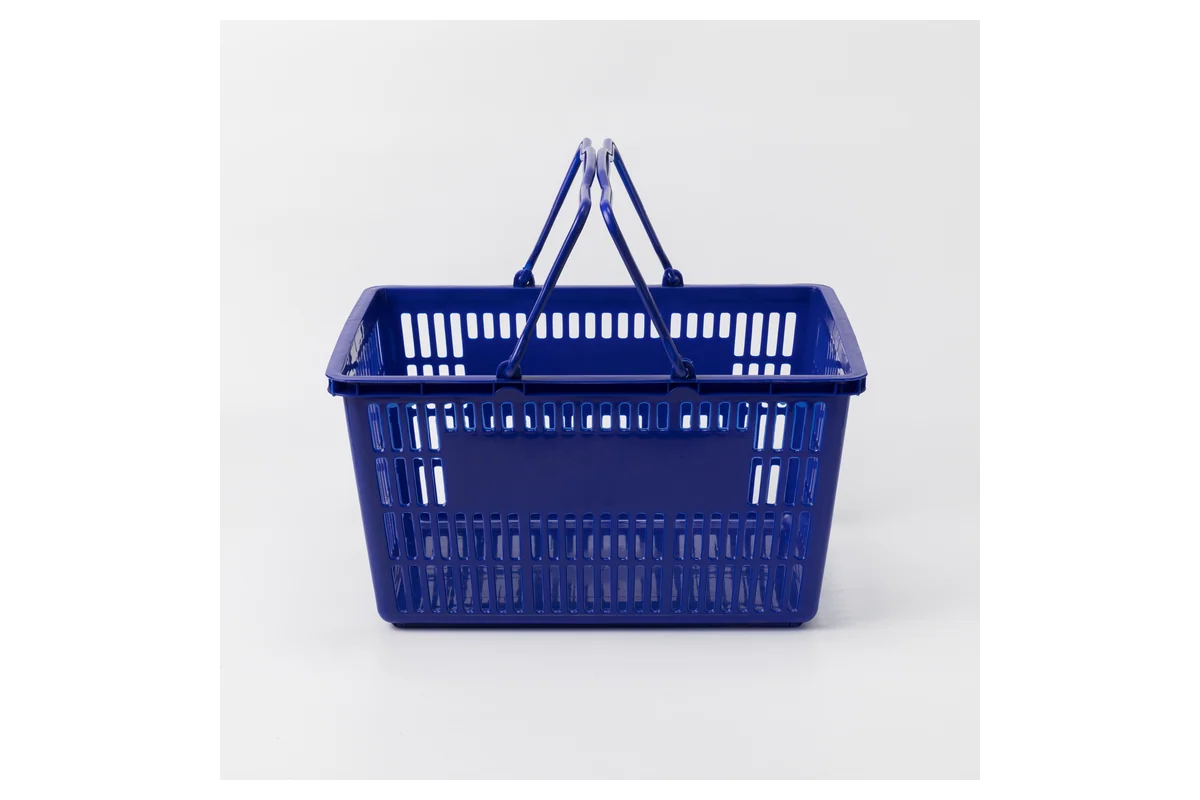
Hand basket in bright green

No wheels at all. A moulded hand basket with twin folding handles, carried rather than pulled, for the shopper who came in for three things.

Hand basket, twin handles

Open the product file

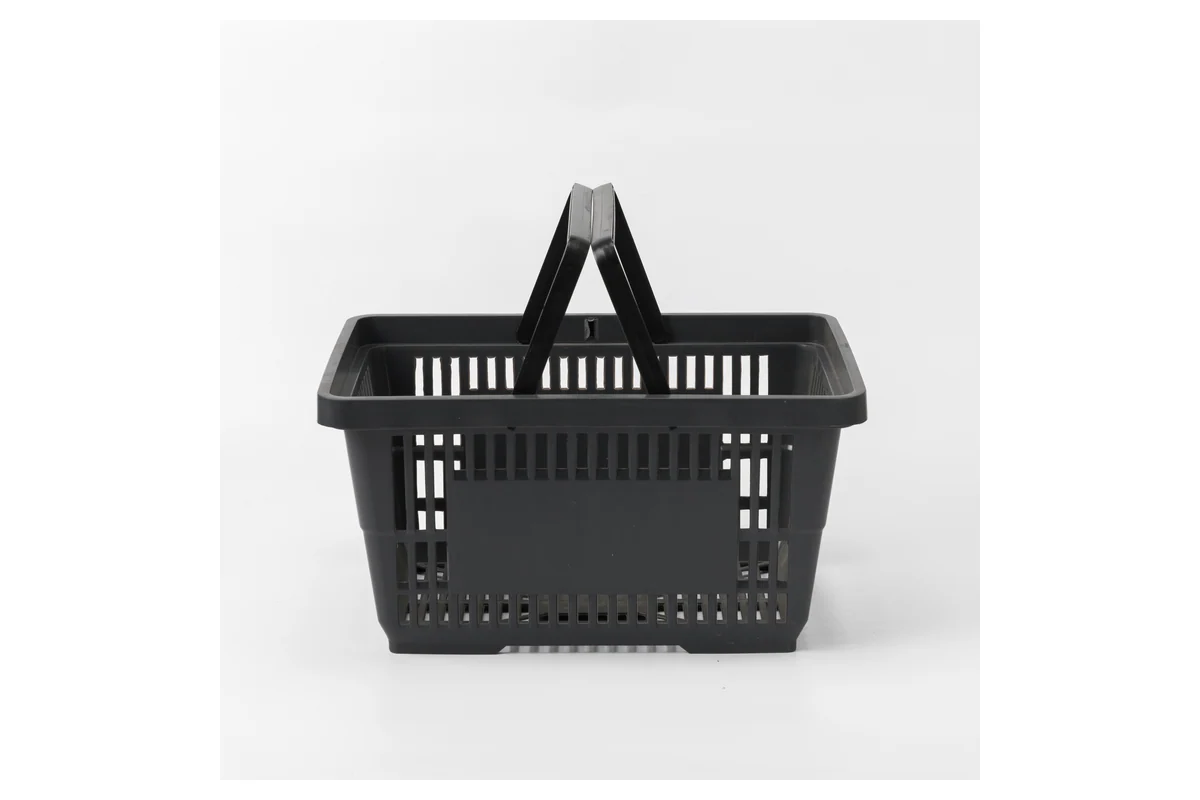
Standard black hand basket

The plainest thing we make and probably the most ordered. Twin folding handles, deep nesting, and nothing on it to break.

Hand basket, standard

Open the product file

Hand basket in white with red handles

A pale body with contrasting handles, which shows dirt sooner but reads much cleaner in a store with a bright interior.

Hand basket, two-tone

Open the product file

Deep hand basket

A taller body for a store where hand baskets are doing the work a small trolley would do elsewhere. It is heavier when full, which is a real limit.

Hand basket, deep body

Open the product file

Hand basket in blue

Same moulding in blue. Colour is a whole-fleet decision in this category, so it is worth settling at the order rather than later.

Hand basket, blue

Open the product file

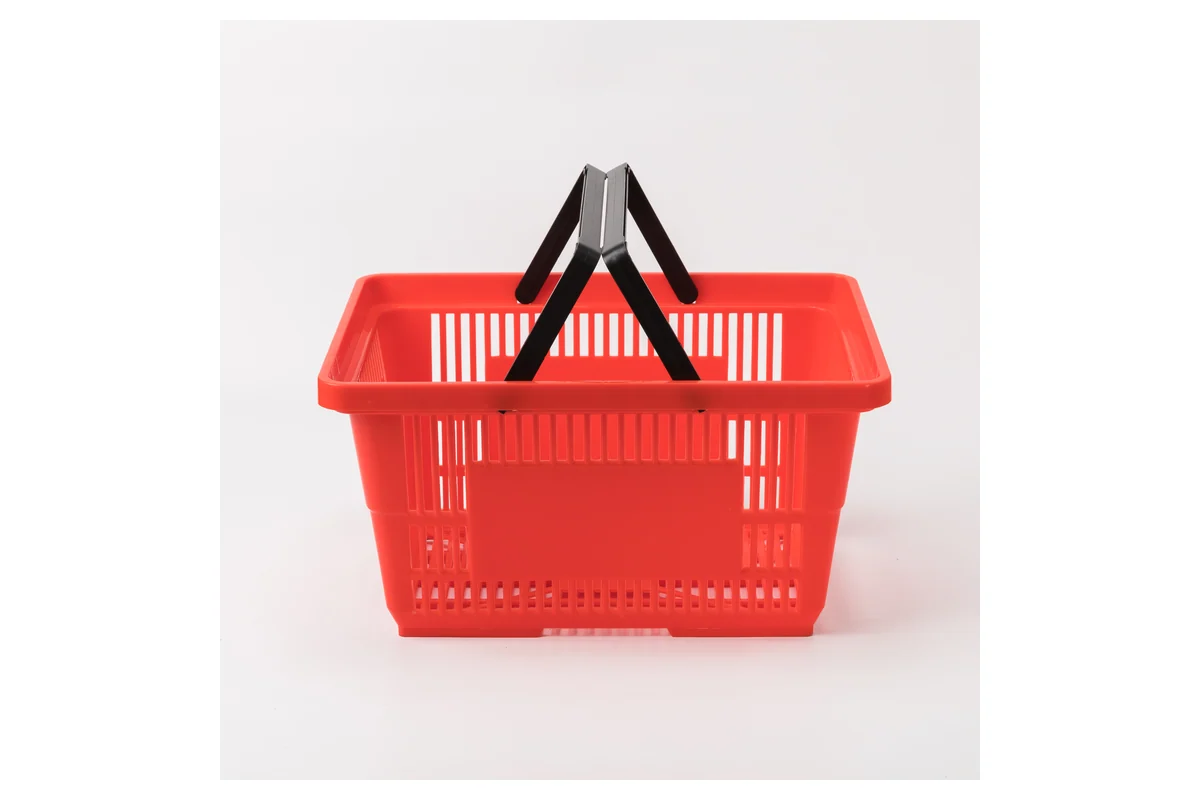
Hand basket in red

Red is the most ordered colour in the range, for the ordinary reason that it is the easiest to see from the door and the hardest to lose in a car park.

Hand basket, red

Open the product file

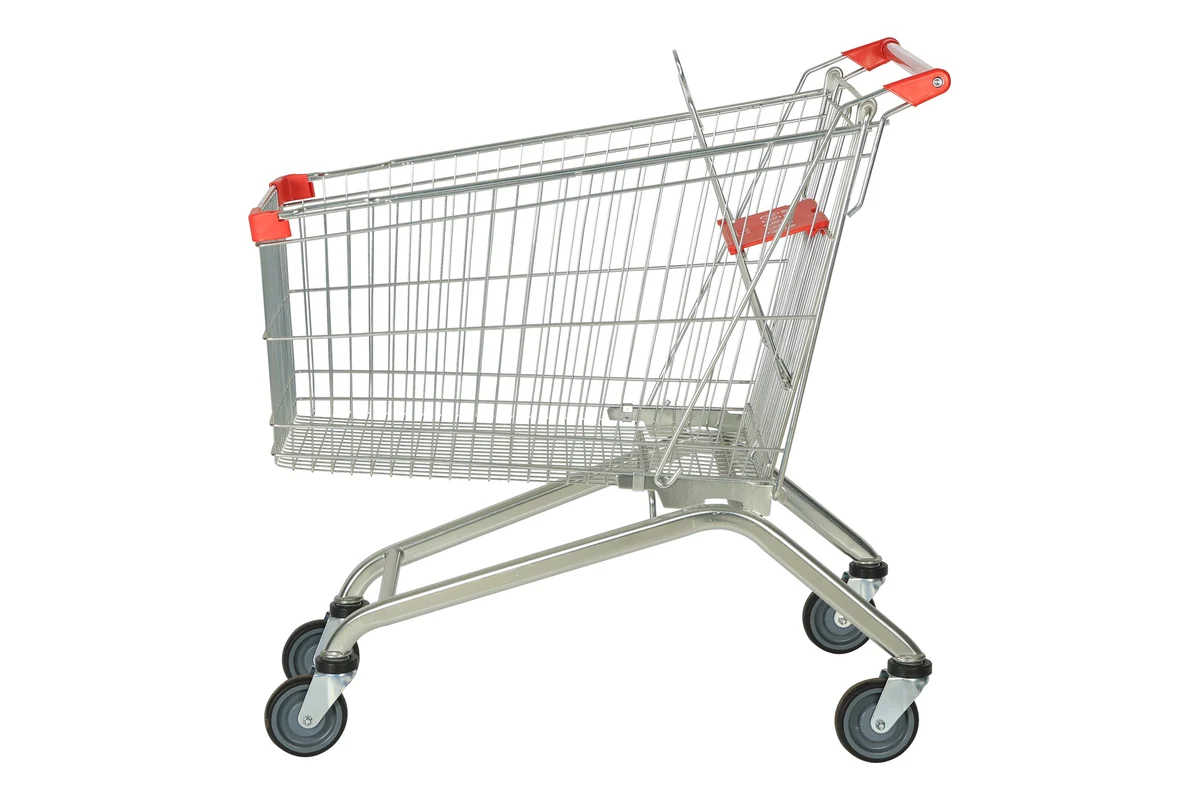
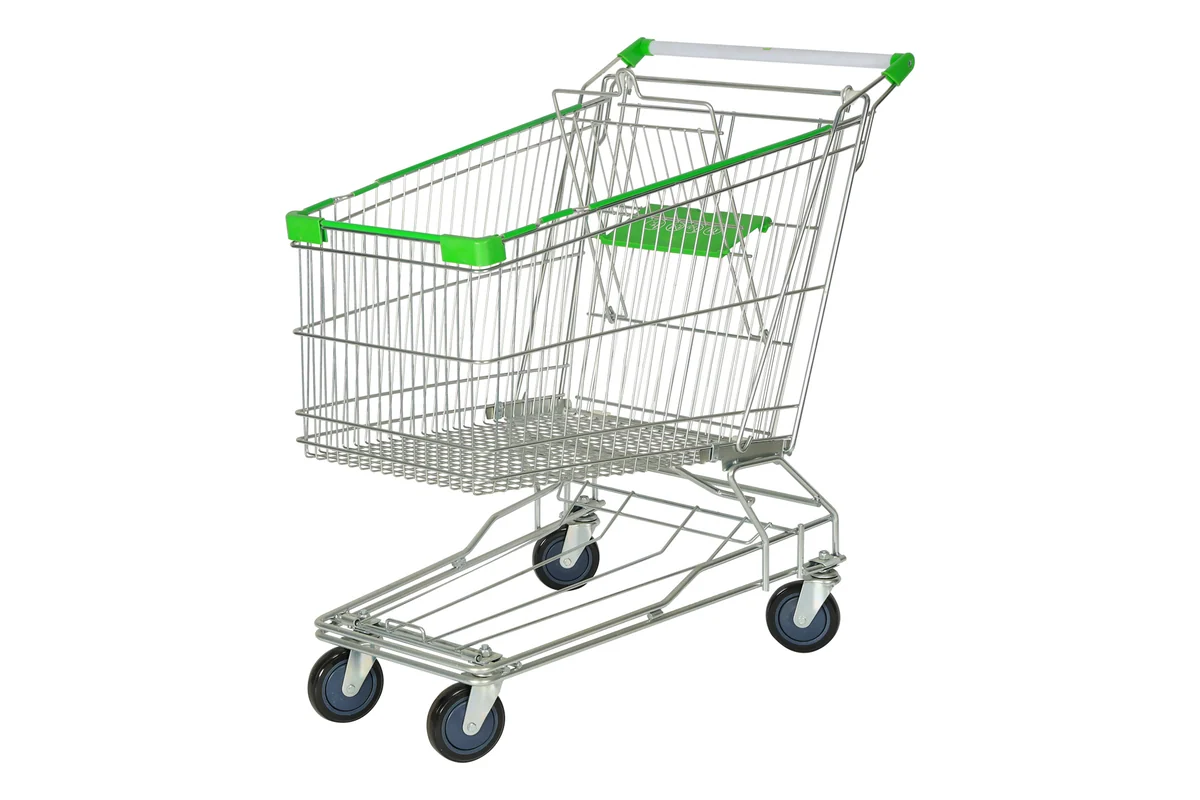
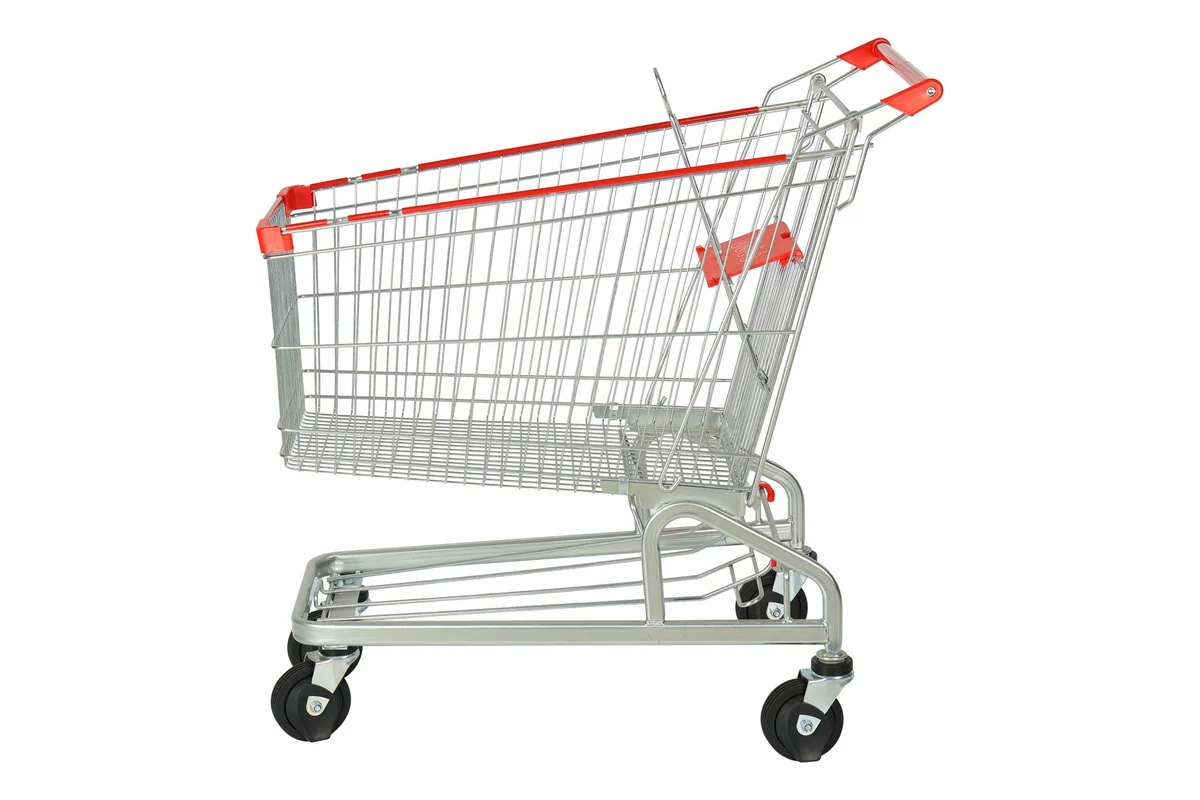
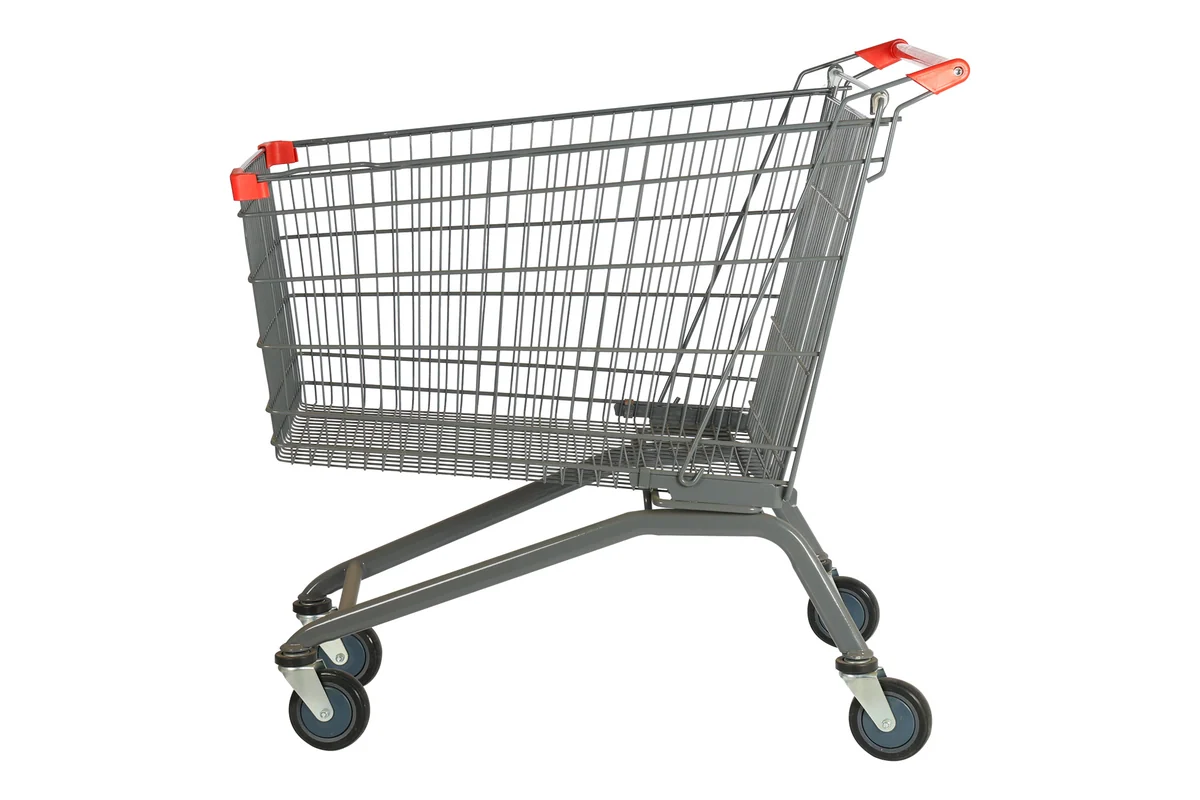
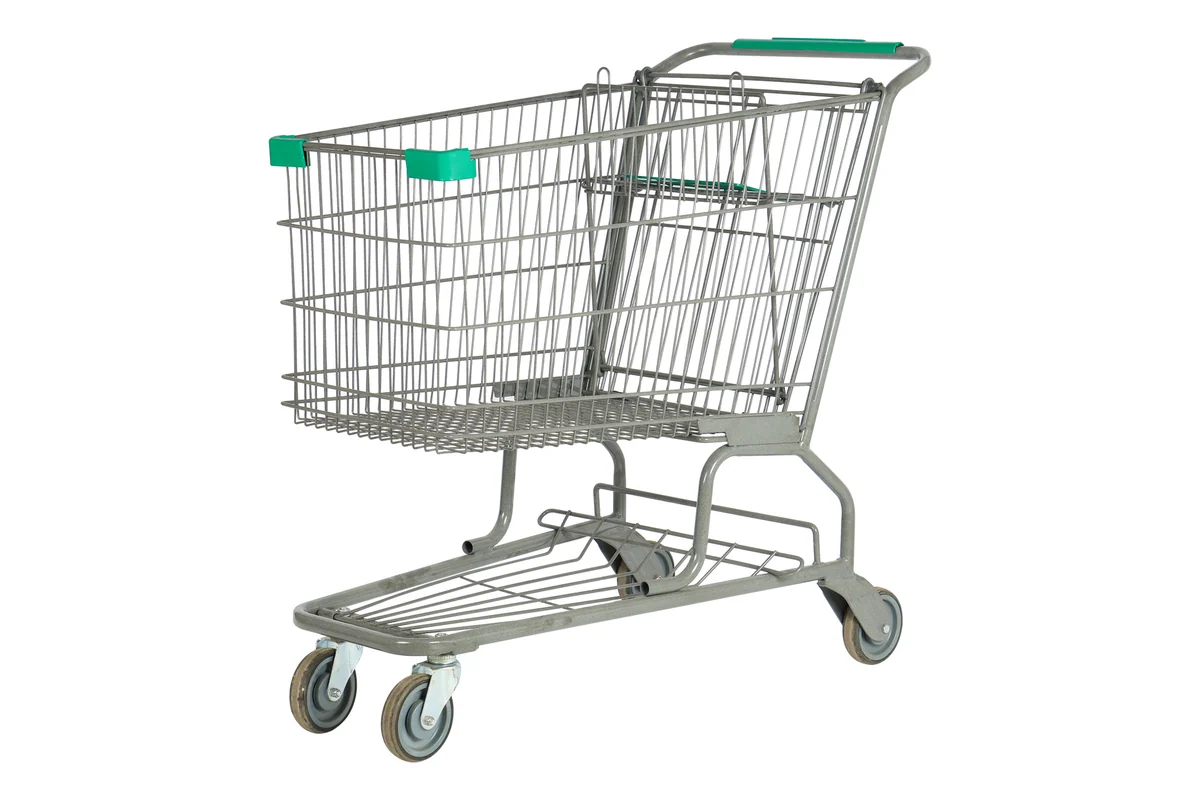
Nesting wire trolley with a red handle

The standard supermarket trolley: a tapered wire basket that nests into the one in front of it, on four castors with a coloured handle bar.

Nesting wire trolley

Open the product file

Nesting wire trolley with a child seat

The same trolley with a fold-down child seat in the rear of the basket, which is the single most requested option in the whole category.

Nesting trolley, child seat

Open the product file

Large nesting wire trolley

A deeper basket on the same nesting geometry, for a store where the weekly shop is genuinely weekly and a standard trolley fills up halfway round.

Large nesting trolley

Open the product file

Narrow frame trolley without a basket

An open frame with no basket at all, so the shopper's own crate or bag sits in it. It nests almost flat and is common in wholesale and cash-and-carry formats.

Open frame trolley

Open the product file

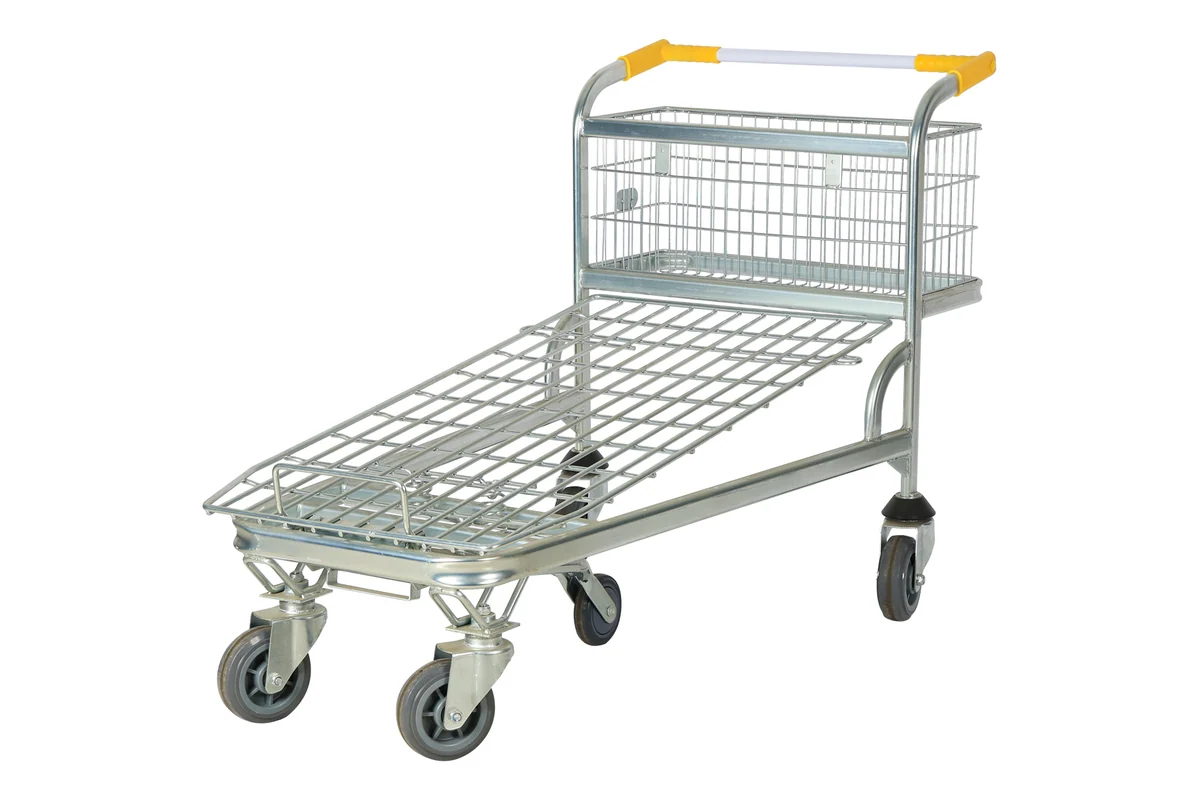
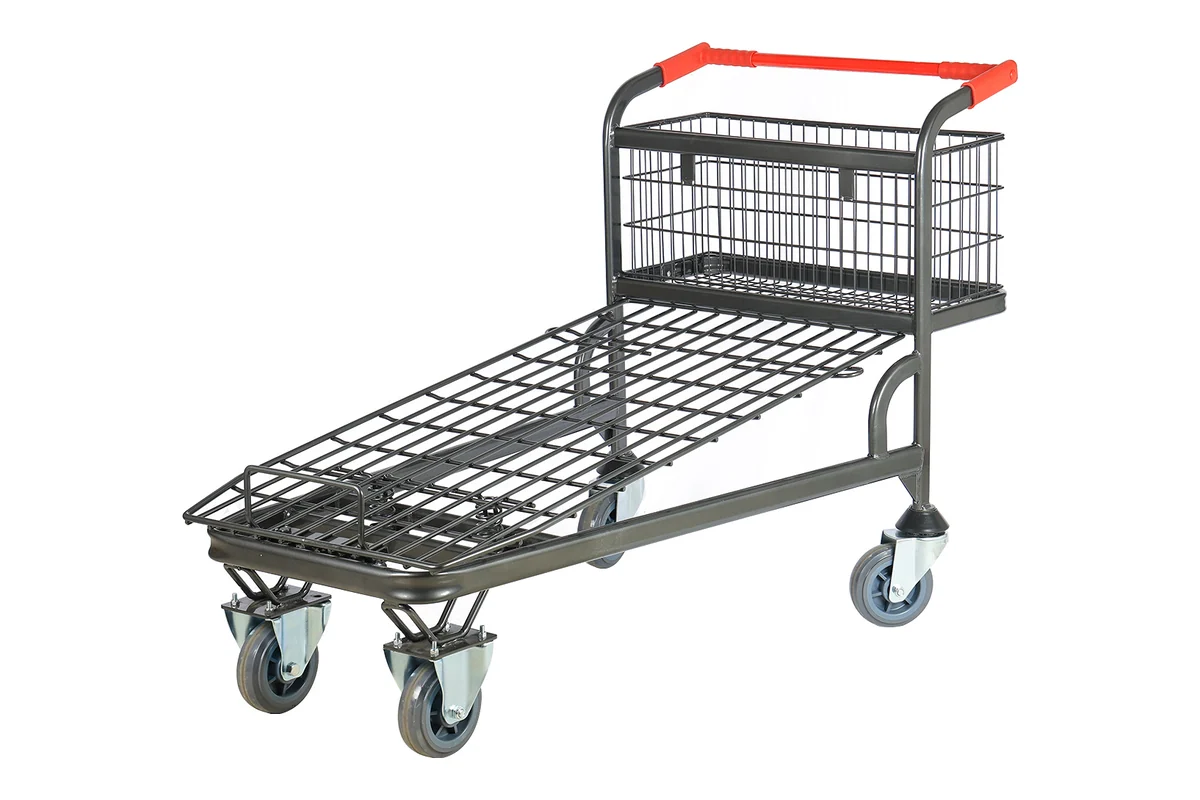
Flatbed platform trolley

A long flat deck with a single push handle, for stock movement rather than for shoppers. It is a staff tool and it is built heavier than anything on the shop floor.

Flatbed platform trolley

Open the product file

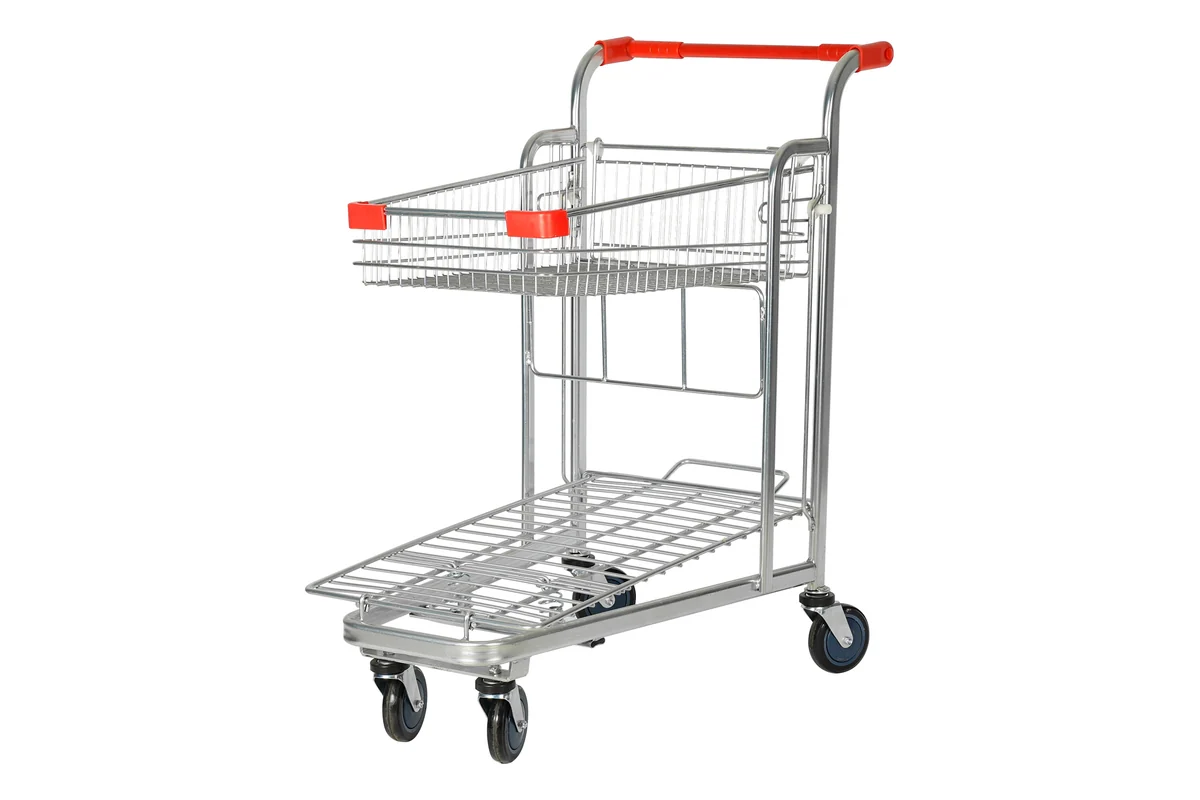
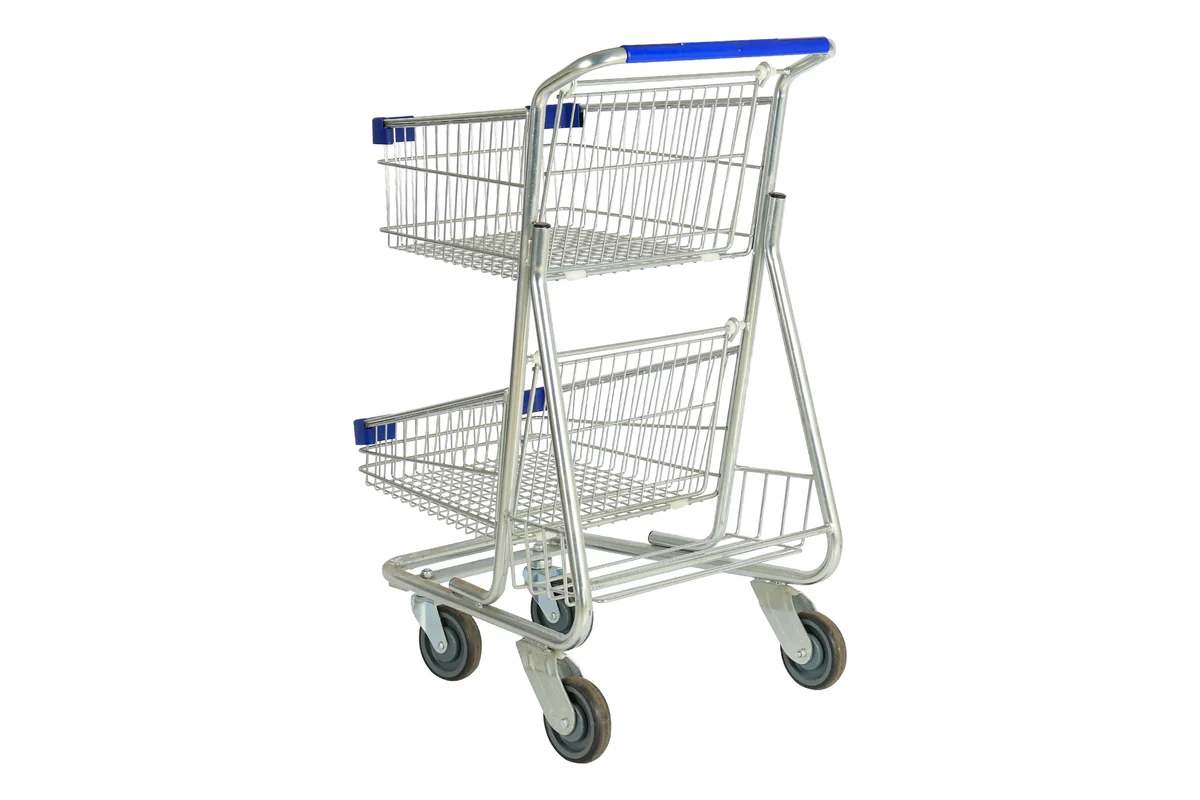
Two-tier platform trolley

A deck with a second level above it, so two orders or two categories can be moved without being stacked on each other.

Two-tier platform trolley

Open the product file

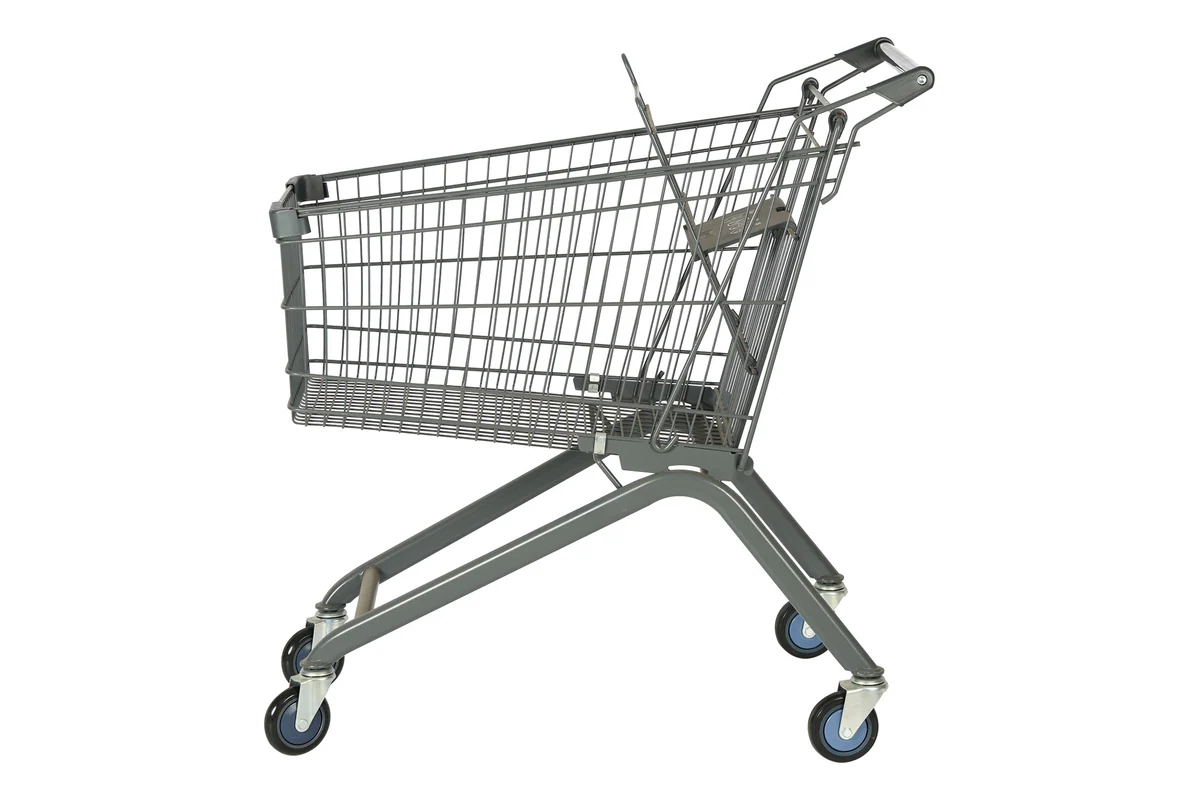
Deep nesting trolley in dark finish

The large basket in a dark coating rather than bright chrome, which hides scuffs and is what a store specifies when the trolley park is outdoors.

Deep nesting trolley, dark coat

Open the product file

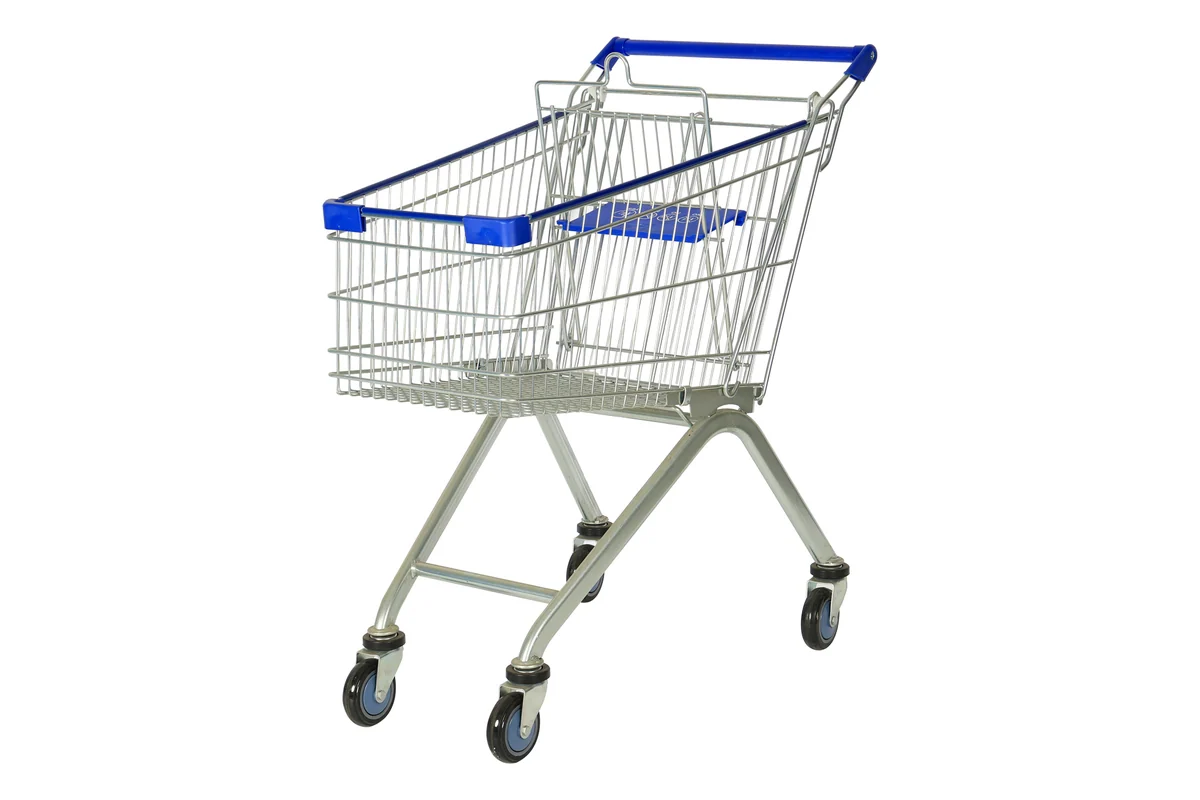
Nesting trolley with a blue handle and seat

Blue handle, child seat, standard basket. Handle colour is usually chosen to match the store's own livery rather than for any functional reason.

Nesting trolley, blue livery

Open the product file

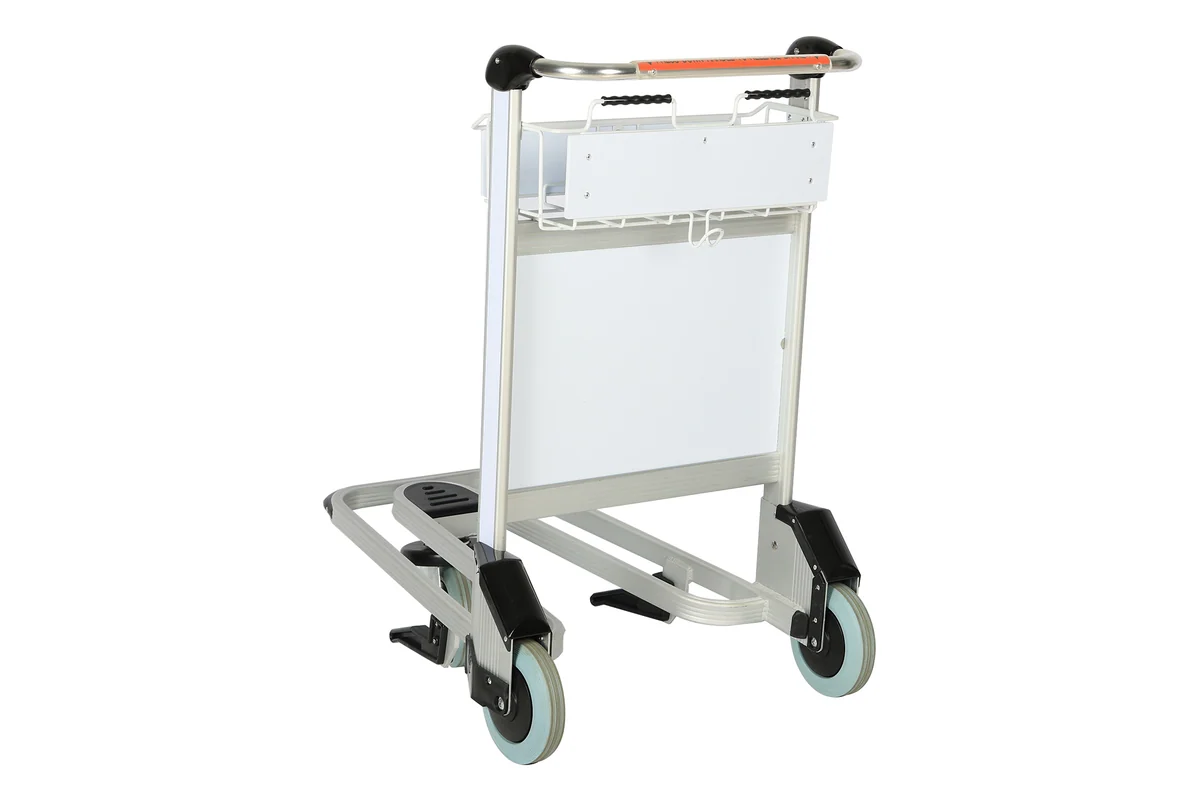
Trolley with a display board

A frame trolley carrying a flat board panel at handle height, which is used either for store notices or as a working surface for staff picking orders.

Frame trolley with a display board

Open the product file

Three-tier shelf trolley

Three wire shelves rather than one basket. It is what a store uses for shelf-edge replenishment, because stock can be sorted by aisle before anyone leaves the stock room.

Three-tier shelf trolley

Open the product file

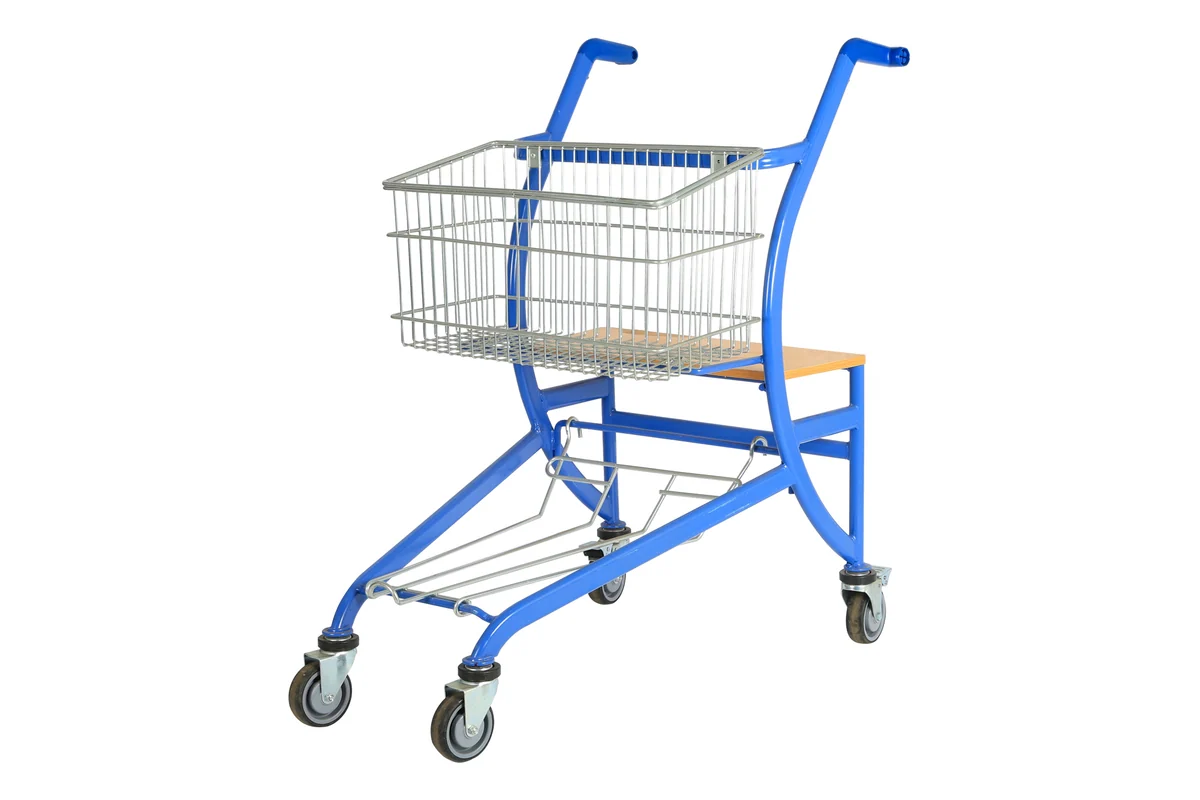
Blue frame trolley with a lower deck

A coated frame carrying a wire basket above and a timber-faced deck below, so bulky items travel underneath instead of crushing what is in the basket.

Frame trolley, basket and lower deck

Open the product file

Large trolley with an orange handle

The large basket with an orange handle bar. Bright handles are worth the small extra cost in a big car park, where a loose trolley is much easier to spot.

Large nesting trolley, bright handle

Open the product file
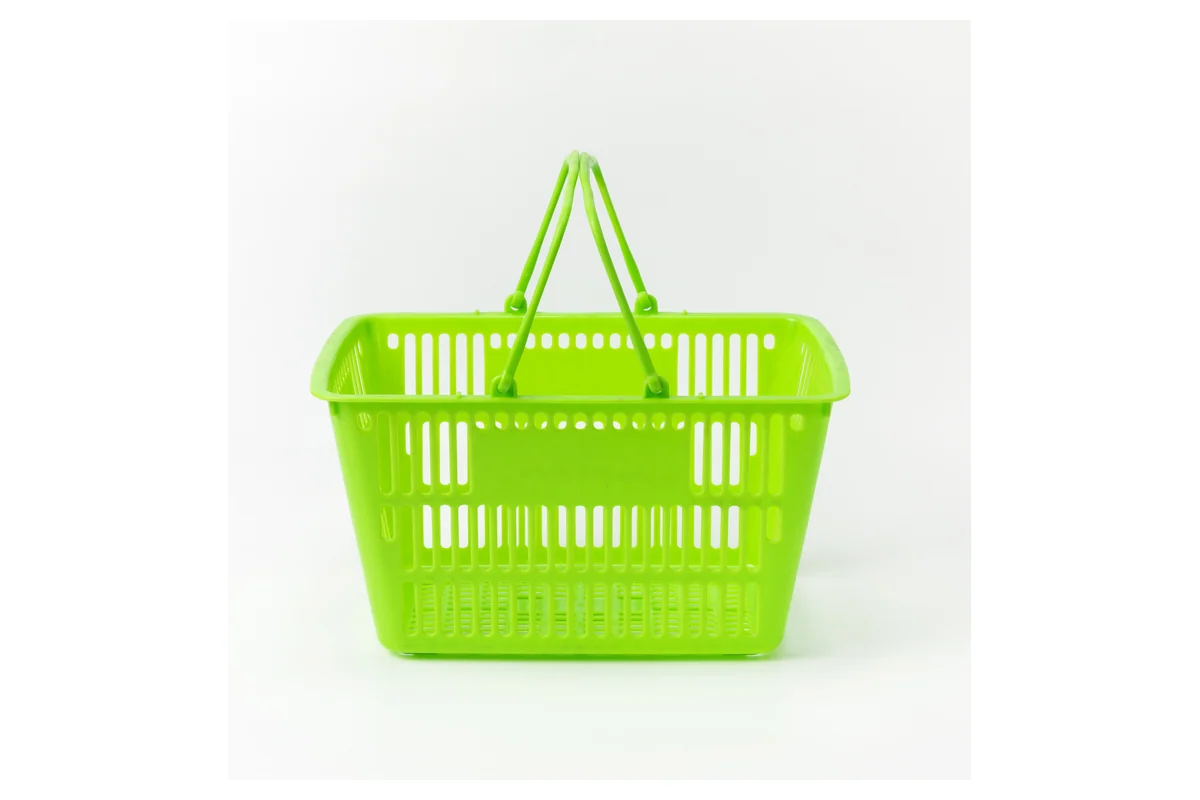
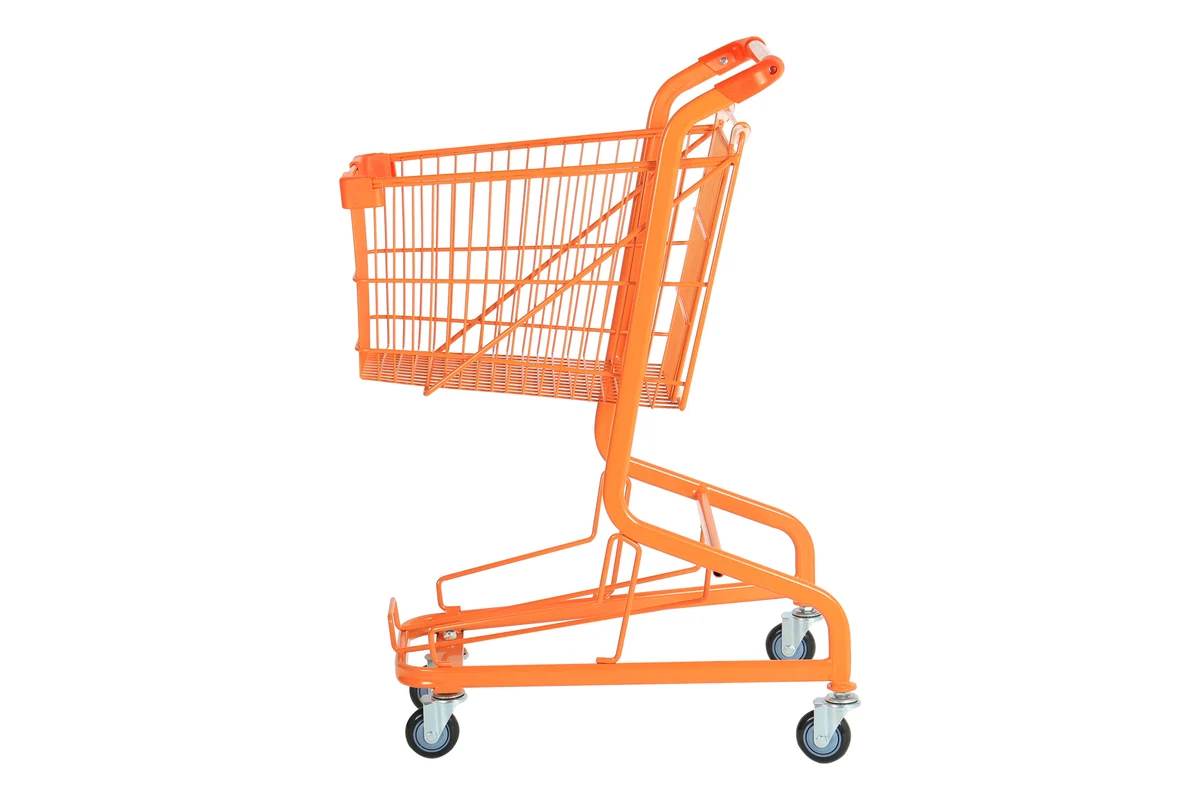
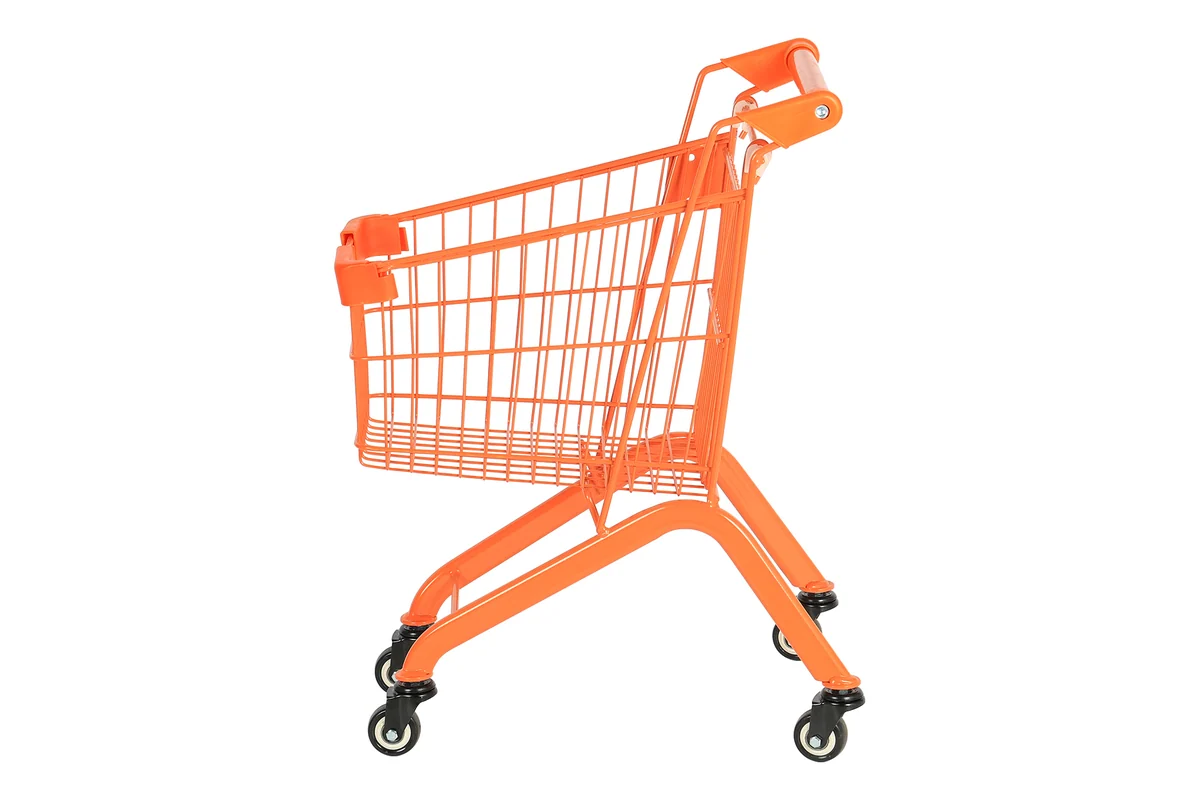
Compact coated trolley in orange

A small fully coated trolley, bright right through rather than chrome with coloured trim. Common in convenience formats and in stores with a strong house colour.

Compact trolley, fully coated

Open the product file

Nesting trolley with a green handle and seat

Standard basket, green handle, child seat down. Shown with the seat open because that is how most of them spend their working life.

Nesting trolley, green livery

Open the product file

Two-tier stock trolley in dark finish

A dark-coated version of the two-tier platform trolley, for back-of-house work where appearance matters less than the coating surviving a loading bay.

Two-tier stock trolley, dark coat

Open the product file

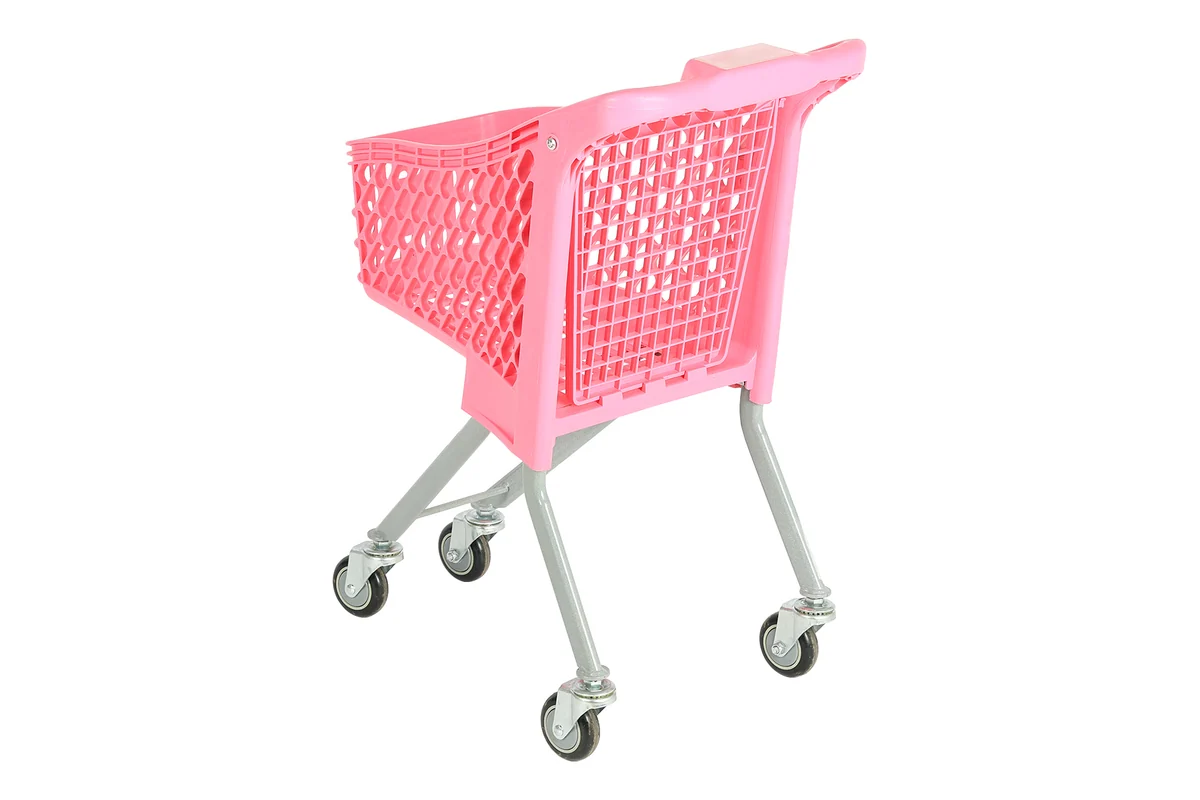
Plastic basket trolley in pink

A moulded plastic basket on a wheeled frame. Lighter and quieter than wire, and it is the build most often chosen where the trolley fleet is part of the store's look.

Plastic basket on a wheeled frame

Open the product file
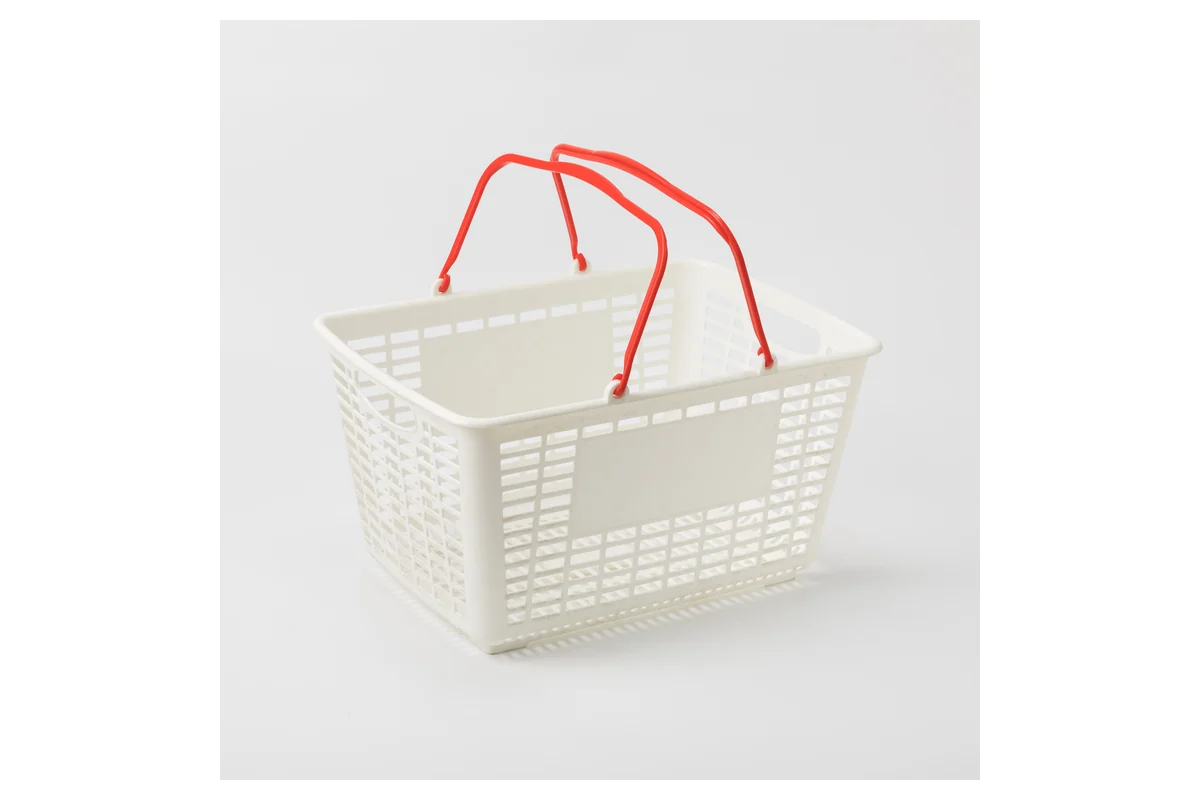
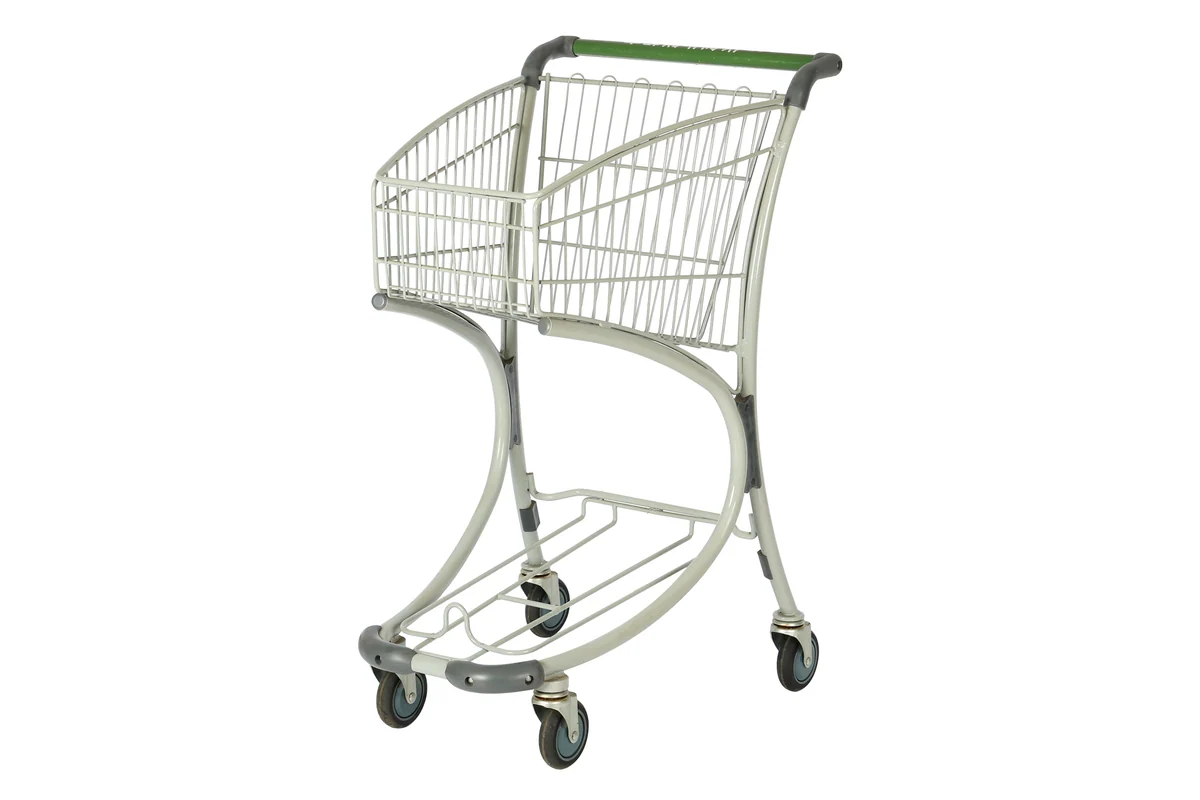
Compact coated trolley with a low frame

A small trolley on a low open frame, easy to steer one-handed. Stores put these near the entrance for shoppers who do not want a full trolley.

Compact trolley, low frame

Open the product file
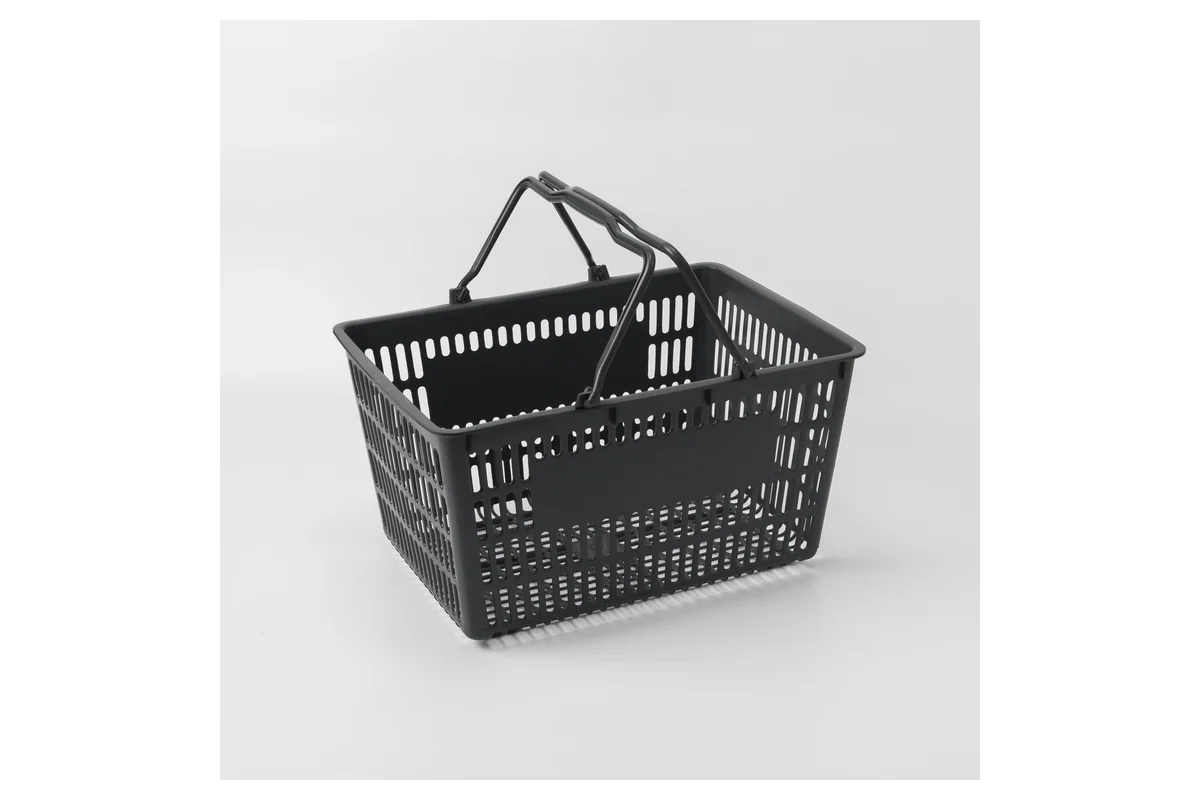
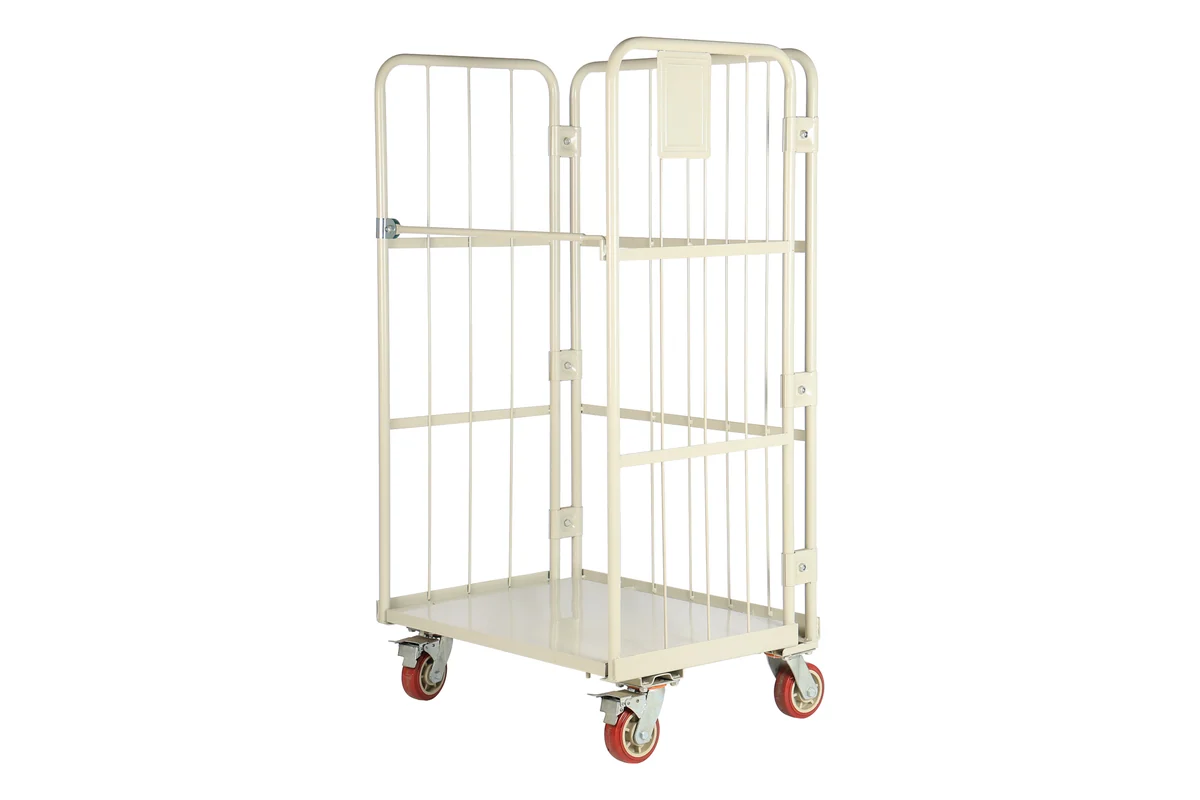
Roll cage with fold-down sides

A caged logistics trolley for moving stock between the lorry and the stock room. The sides fold so it returns empty in a fraction of the space.

Roll cage, folding sides

Open the product file
The one figure buyers always ask for in this category is litre capacity, and it is the one we will not publish here. The litre figures circulating for this range came from an old third-party listing rather than from our own production records, so they are being confirmed with the factory before they go on the site. Ask and we will send whatever is confirmed.

Selection Axis

How To Buy Supermarket Shopping Carts: Everything Turns On Nesting

Every other category on this site is bought against a floor plan. A nesting shopping cart fleet is bought against a store's traffic, and the figure that actually constrains the order is not capacity. It is how much floor the fleet takes up when nobody is using it, which is a question about how well the units stack into each other.

The constant

A trolley fleet is stored, not just used

A hundred trolleys spend most of their week nested in a bay by the door. If each one adds 300 mm to the stack, the bay is 30 metres long; if each adds 250 mm, it is 25. That difference is the single biggest planning constraint in this category, and it is decided by the taper of the basket rather than by anything a buyer usually asks about.
Recorded builds 40 22 baskets and 18 trolleys
Planning figure Nest pitch Added length per unit in the stack

So the question we ask first is not what capacity you want. It is how many units the fleet has and how much room the trolley bay has, because those two together decide which builds can even be considered.

The ruler

Four formats, from a hand basket to a roll cage

There is no capacity ruler on this page, and that is deliberate rather than an oversight — see the note under the chart. What the ladder shows instead is the format progression, which is what a store actually chooses between.

Keshun shopping trolley and basket formats ordered by how much the shopper is carrying: hand baskets, rolling baskets, nesting wire trolleys and staff roll cages Roll cage Goods-in, sides fold flat Nesting trolley Tapered basket, optional child seat Rolling basket Wheeled, pulled behind Hand basket Carried, nests tightest Staff Weekly shop Top-up shop Few items
  • Bar length shows the size of the shop, not a capacity
  • Every format is chosen against how tightly it nests in store

This ladder deliberately carries no litre figures. A capacity table for this range does exist, but it comes from an old third-party listing rather than from our own production records, and it is with the factory for confirmation. Publishing somebody else's numbers under our name is not something we are prepared to do.

The figure that is genuinely ours and genuinely useful is the nest pitch — how much length each unit adds to the stack. Send your fleet size and bay length and we will quote against that.

The regroup

What each format is for

The forty builds regrouped by format. Almost every supermarket needs at least three of these four at once, which is why this category is quoted as a fleet rather than as a product.

Hand baskets 6 builds The moulded twin-handle baskets above

Carried, not wheeled. They nest tighter than anything else we make, they cost the least, and they are the only build a shopper can pick up with one hand at the door.

Rolling baskets 16 builds The wheeled pull-handle baskets above

The middle of the range and the fastest-growing part of it. More capacity than a hand basket without the floor cost of a trolley, which suits convenience and city-centre formats.

Nesting trolleys 10 builds The wire basket trolleys above

The weekly shop. Tapered wire baskets that nest into each other, with or without a child seat, in chrome or fully coated for outdoor trolley parks.

Staff trolleys 8 builds Platform, shelf and roll cage builds above

Never touched by a shopper. Flatbeds, tiered shelf trolleys and roll cages for replenishment and goods-in, built heavier and finished for a loading bay rather than a shop floor.

Two Users

For The Shopper Or For The Staff

The forty builds split in two before they split any other way, and the line runs between people who are buying things and people who are being paid to move them. A plastic shopping basket and a staff picking trolley are specified against completely different criteria.

Chrome supermarket nesting wire shopping trolley with a red handle bar Shopper

Shopping trolleys and baskets

Nesting, finished, fleet-coloured

Judged on how well they nest, how they look at the entrance, whether the castors still steer after two years in a car park, and whether a child seat is fitted. Anyone in the store may use one, so nothing on them can be sharp, loose, or hard to steer one-handed.

Long flatbed platform trolley with a yellow push handle for supermarket stock movement Staff

Platform trolleys and roll cages

Load rated, coated, back of house

Judged on load, deck size and whether the coating survives a loading bay. Nobody cares what colour they are. Roll cages fold so they go back on the lorry empty in a fraction of the space, which is a shipping cost rather than a shop floor one.

Most orders in this category cover both halves, because a store fitting out from scratch needs a shopper fleet and a replenishment fleet on the same delivery. Tell us the split and both come back on one quotation.

Build Detail

What Is Inside A Shopping Trolley

The four things a buyer checks when a sample trolley is finally standing in front of them, quoted from our own build sheet rather than from a brochure.

Tapered welded wire basket on a Keshun supermarket nesting shopping trolley Basket

Tapered wire basket

Welded wire, tapered to nest

The taper is the whole design. A basket that nests 40 mm deeper than another saves four metres on a hundred-unit trolley bay, and that is usually worth more to a store than any amount of extra capacity.

Fully coated orange frame on a compact Keshun supermarket shopping trolley Finish

Chrome or full colour coating

Bright chrome, or coated throughout

Chrome for indoor fleets, full coating where the trolley park is outdoors. A coated trolley hides scuffs and takes weather better; a chrome one looks newer for longer inside.

Fold-down child seat in the rear of a Keshun supermarket nesting wire trolley Seat

Fold-down child seat

Optional on the nesting builds

The most requested option in the category. It folds flush into the basket rear so the trolley still nests, which is the part that has to be got right rather than the seat itself.

Castor and fold-down mesh side on a Keshun roll cage logistics trolley Castors

Castors and folding cages

Four castors, folding cage sides

Castors are the part that fails first on any wheeled fixture, so they are specified against the floor and the distance rather than fitted as standard. On roll cages the sides fold, which halves the return shipping volume.

Trolleys and baskets are the one category where colour is a fleet decision rather than a fit-out decision, so it is worth settling at the order. The rest of the store is on the product overview, and the finish standard is on our About page.

Stock and packing area of the Keshun plant where trolley fleets are prepared for export

Tell us the fleet size and how long the trolley bay is. Those two numbers rule out more builds than any capacity figure does.

Get A Quotation

How Big Is Your Trolley Fleet?

Every question below is one we would have to ask you anyway. Answering them now takes a round trip out of the quotation.

Your enquiry goes to keshun@kssyt.com. Floor plans, CAD files and photographs of a store you like are all welcome — a hand sketch on paper is enough to start.

Buyer Questions

Shopping Trolley And Basket Questions

Eight things buyers ask before they order a fleet. If yours is not here, put it in the message box above and it gets answered with the quotation. Trolley size and lane length are decided together — see How to Choose a Supermarket Checkout Counter.

What capacity are your shopping trolleys and baskets?

We are not publishing capacity figures on this page yet, and it is worth explaining why. The litre figures circulating for this range came from an old third-party listing rather than from our own production records. Until the factory has confirmed them, publishing them would mean passing somebody else's numbers off as ours. Ask us and you get whatever is confirmed.

Why do you ask about the trolley bay before the capacity?

Because the bay is the real constraint. A hundred trolleys spend most of the week nested by the door, and every extra 50 mm of nest pitch adds five metres to that bay. Capacity you can usually work around; a trolley bay that is four metres too short you cannot.

Can I get trolleys with child seats?

Yes, and it is the most requested option in the range. The seat folds flush into the rear of the basket so the trolley still nests properly, which is the part that has to be engineered rather than the seat itself. Tell us how many of the fleet need one; most stores fit them to a portion rather than to all.

Should I choose chrome or a coloured coating?

Ask where the trolleys are kept. Chrome looks newer for longer indoors. A fully coated trolley hides scuffs and handles weather better, so it is the usual answer where the trolley park is outside. Coating the whole trolley also lets the fleet carry the store's own colour, which chrome with a coloured handle only half achieves.

Do you make trolleys for staff as well as shoppers?

Yes, and they are about a fifth of the range: flatbed platform trolleys, tiered shelf trolleys for shelf-edge replenishment, and roll cages for goods-in. They are load rated and coated for a loading bay rather than finished for a shop floor. Roll cage sides fold, which cuts the return shipping volume substantially.

How are trolleys and baskets shipped?

Nested, which is the reason this category ships economically at all. Baskets stack into each other and trolleys nest, so the loading quantity per container is high compared with counters or islands. Roll cages fold flat. The exact figures depend on the mix on your order and come with the packing list.

What are supermarket carts called?

Shopping cart in North America, shopping trolley in the UK and most of the Commonwealth, and grocery cart or buggy regionally. They are the same fixture. What actually changes between markets is the basket depth and the nesting pitch, not the name.

What is a nesting cart?

One built so each unit slides into the one in front of it. Past the first cart, every extra one adds only its nesting pitch instead of its full length — which is why a container of trolleys holds several times what its unit count suggests, and why the bay at your entrance takes far less floor than people expect.