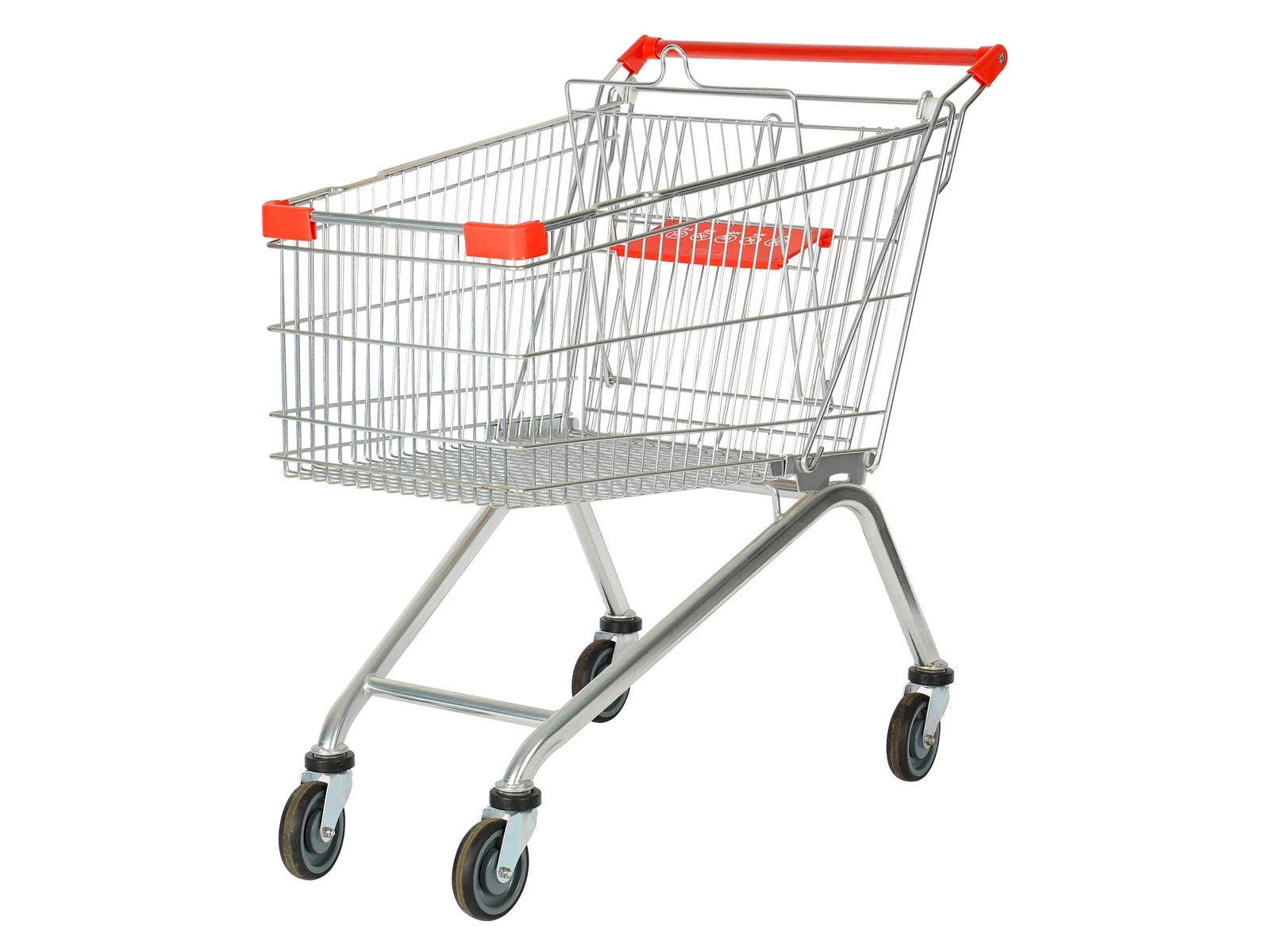
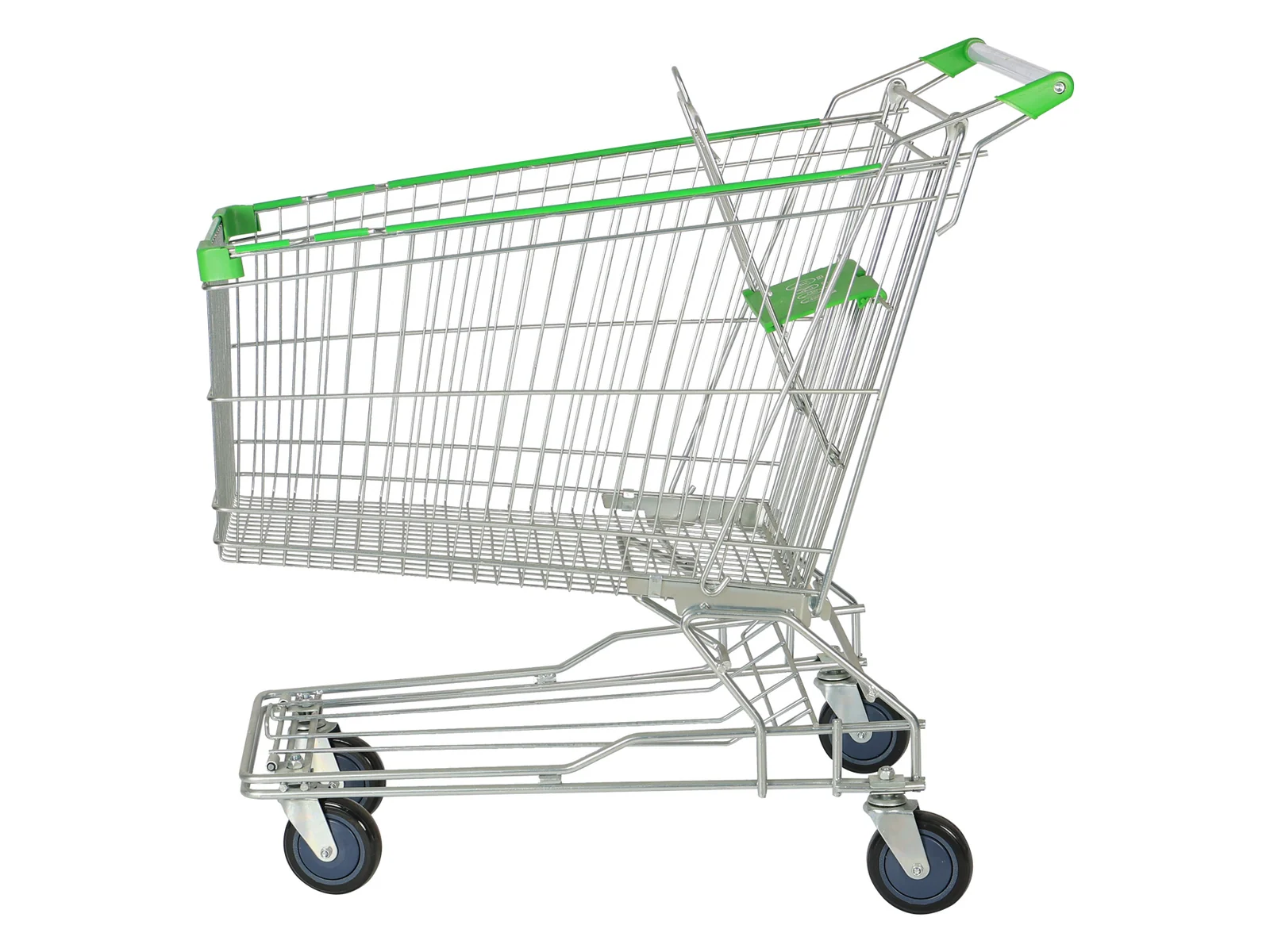
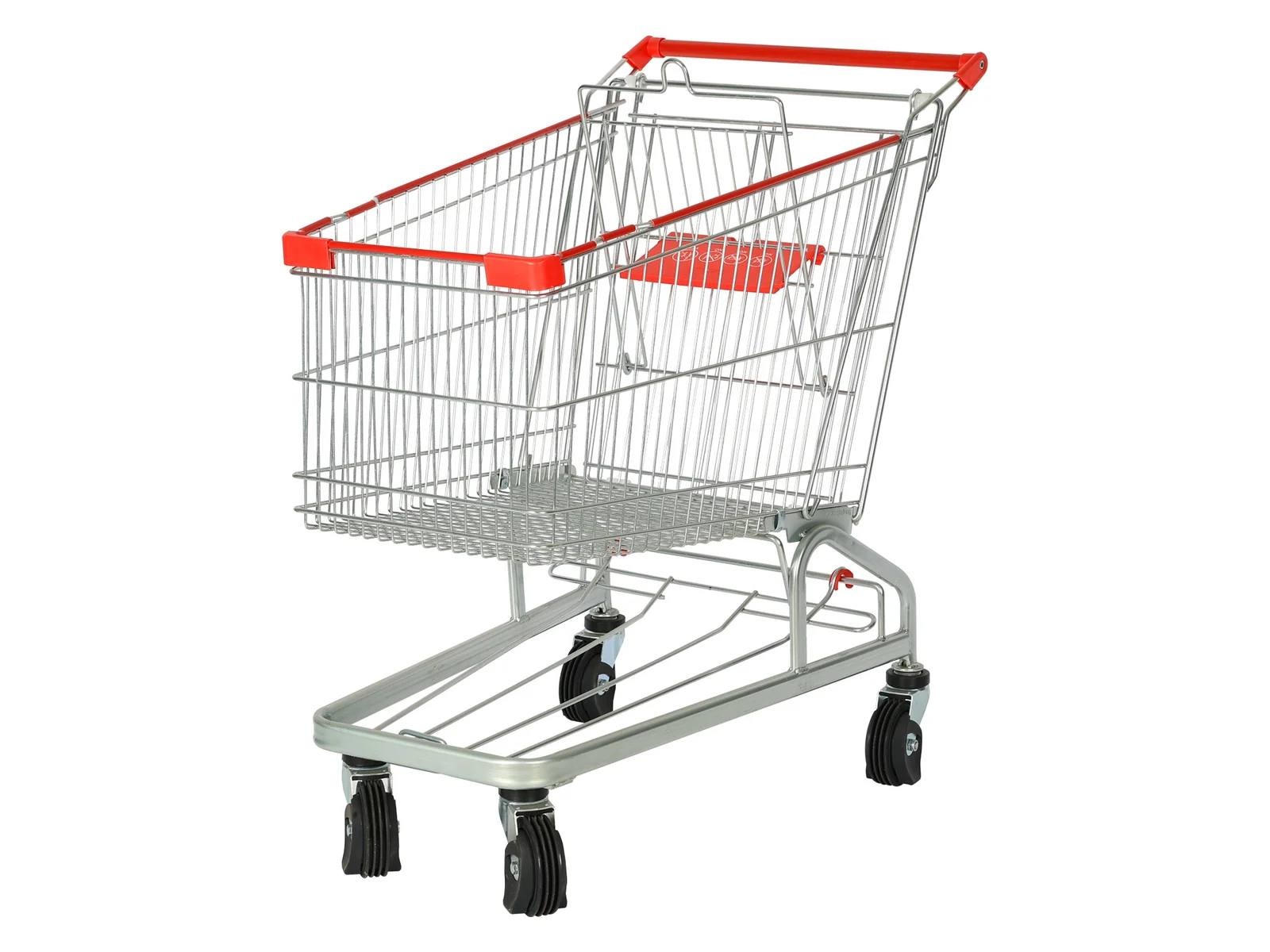
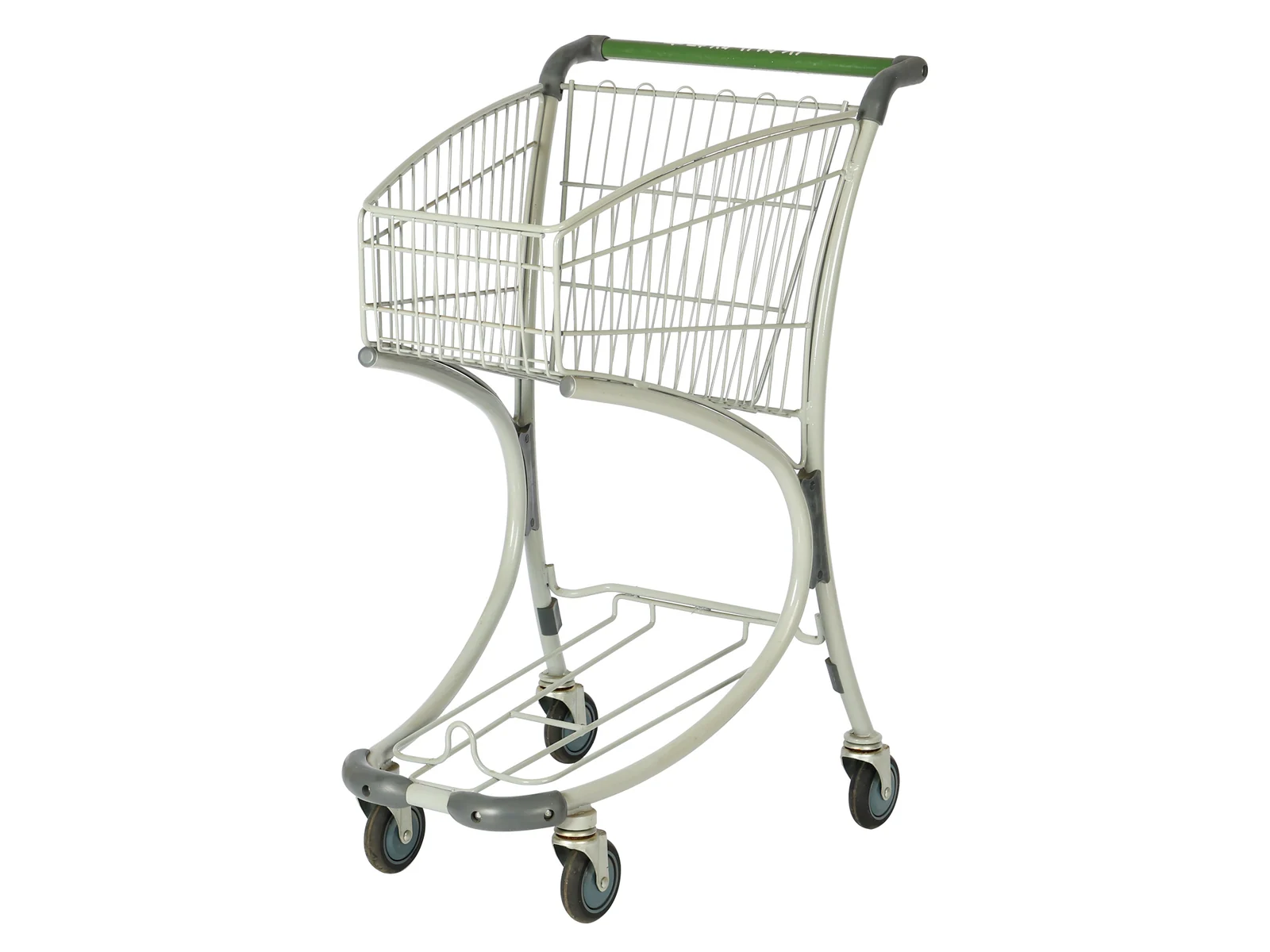
The trolley most stores buy most of: a welded wire basket on a nesting frame, with a folding child seat in the basket and a moulded handle that carries your store colour.
Key Features
- Built to your drawing rather than to a fixed configuration — length, depth, height and internal layout all follow your floor plan.
- Cold rolled steel body with the finish carried across every category on the same order, to one RAL or PANTONE reference.
- Manufactured in our own plant in Changshu, where steel fabrication, woodworking and stainless steel production run on one site.
Applications
Supermarkets, convenience stores, chain retail and speciality stores. Tell us the store format and the floor area and the specification comes back written against them.
What The Photographs Show
A trolley is bought in hundreds and lives outdoors half the time, so these four are all durability rather than features.
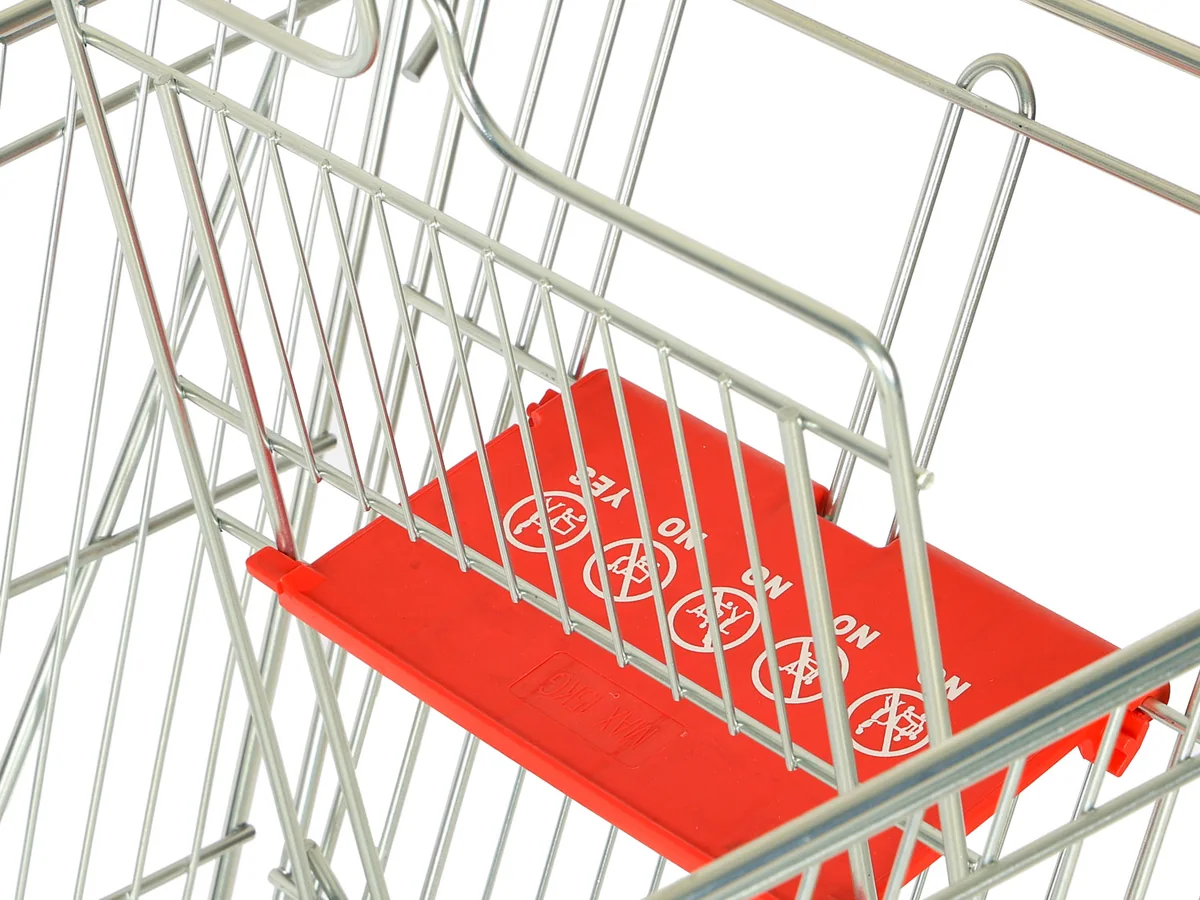
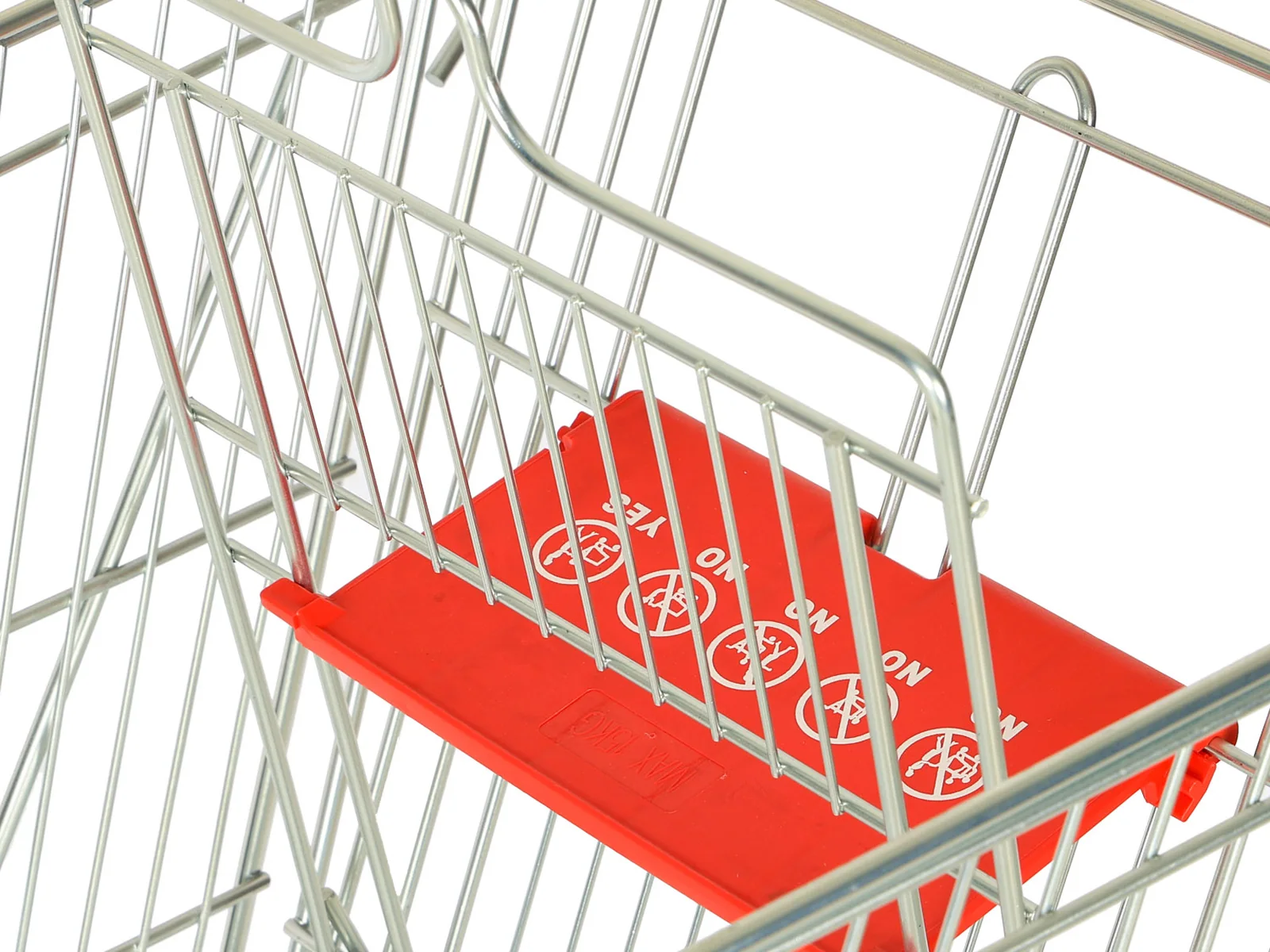
Folding Child Seat
Folds flat, pitch unaffected
The seat folds down into the basket. A seat that props the next trolley open costs bay space at the front of the store and container volume on the way over, which is why the fold matters more than the seat.
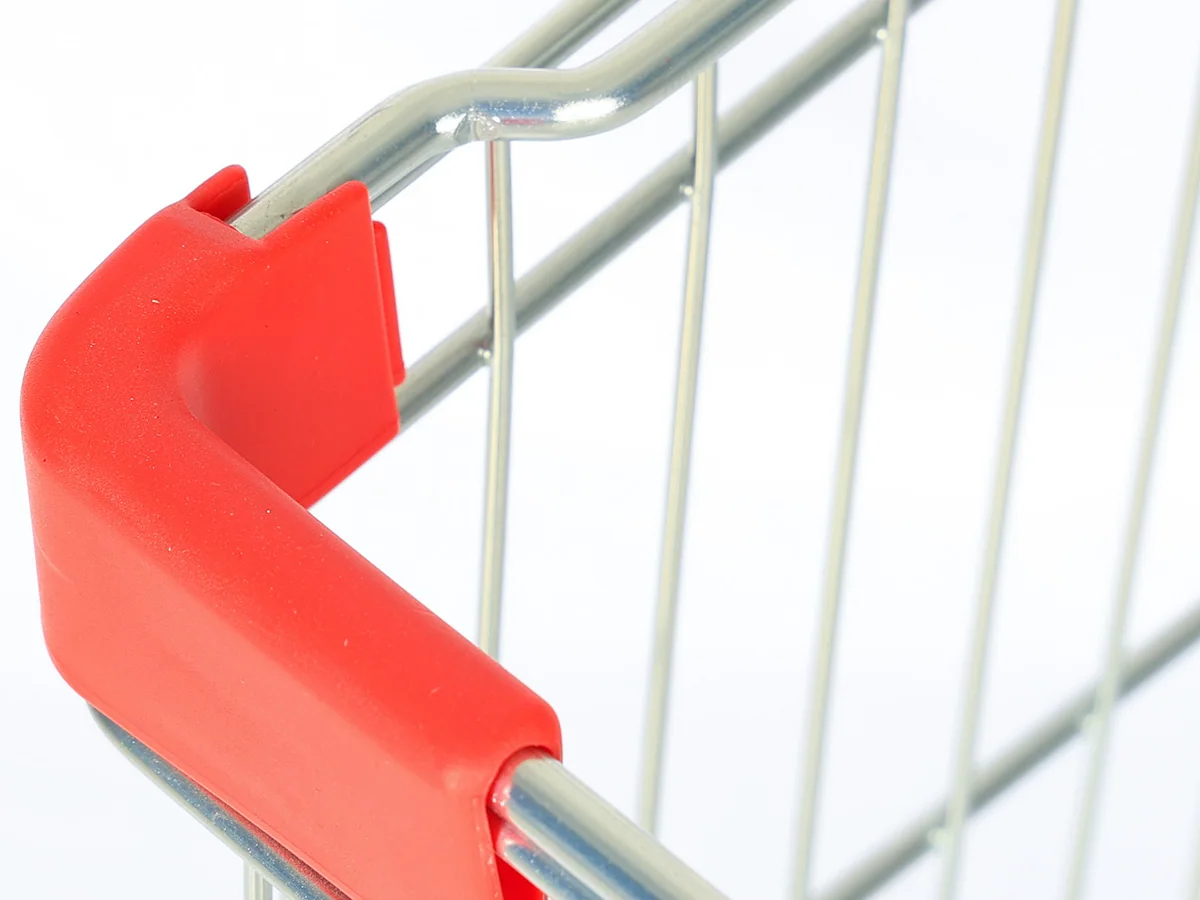
Welded Frame Joint
Welded, not bolted
Every frame junction is welded. A bolted trolley loosens, and a loose trolley is one a shopper abandons in an aisle rather than one that gets repaired.
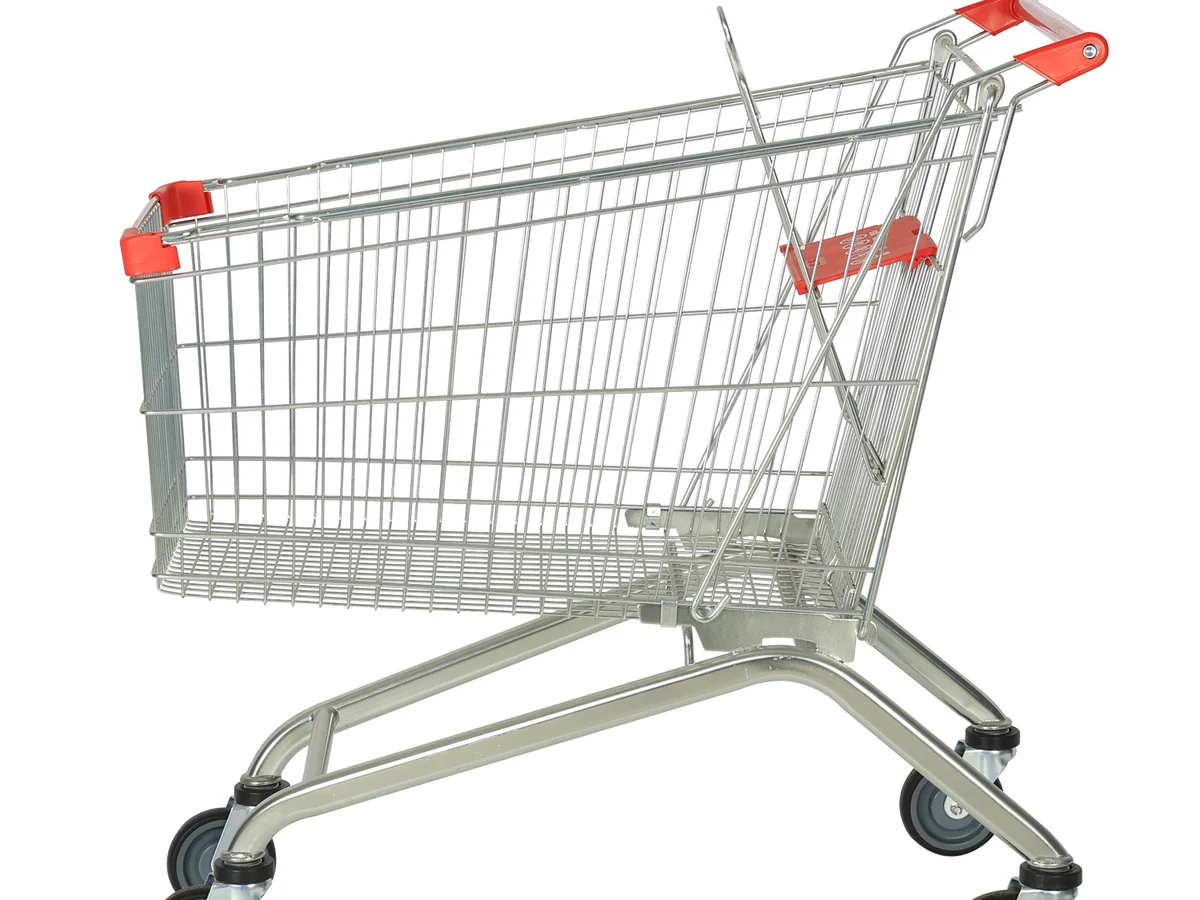
Moulded Handle
Any colour, brandable
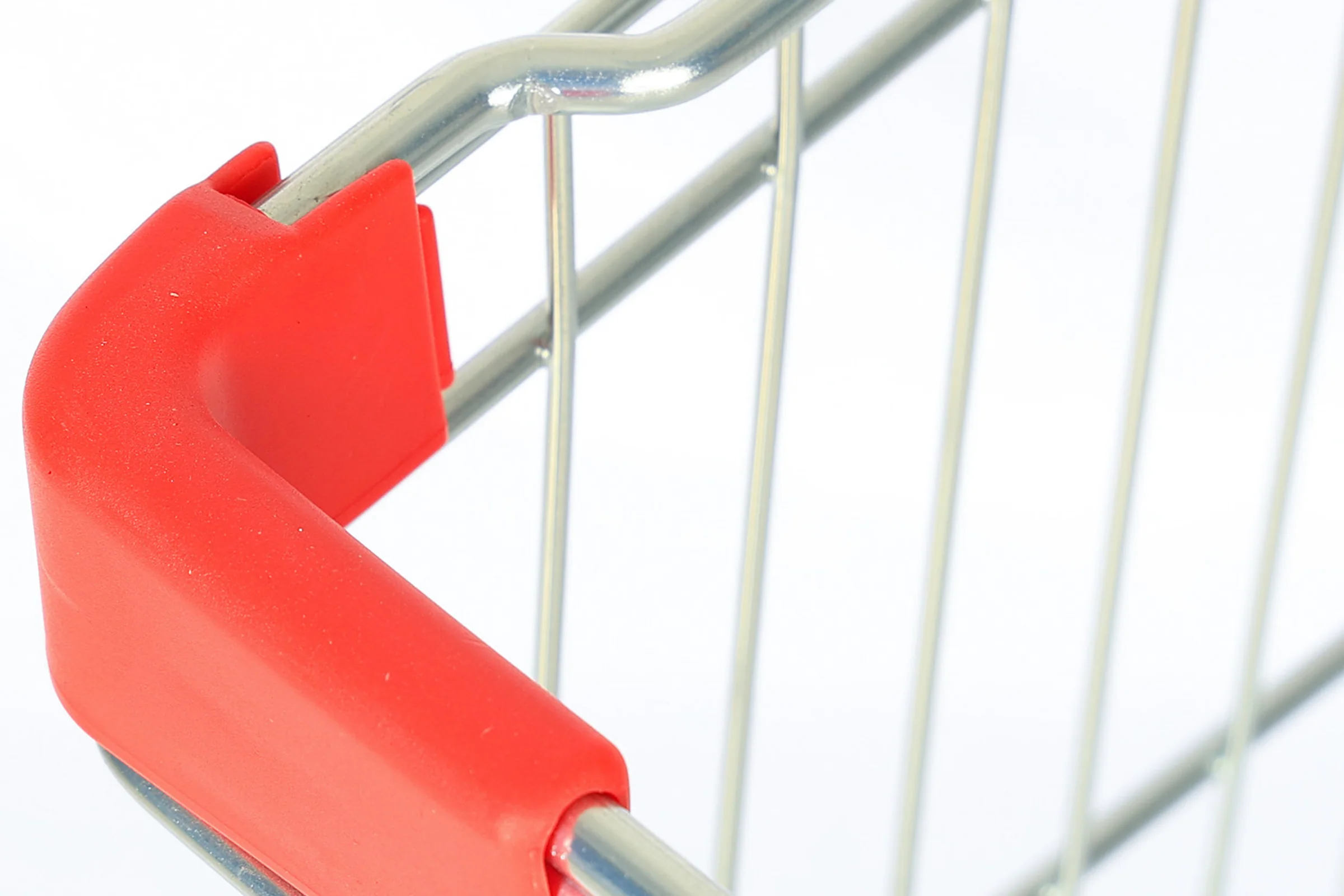
The handle takes any colour and is where store branding goes. It is also the part that takes every impact when trolleys are pushed into a bay, so it is moulded rather than sleeved.
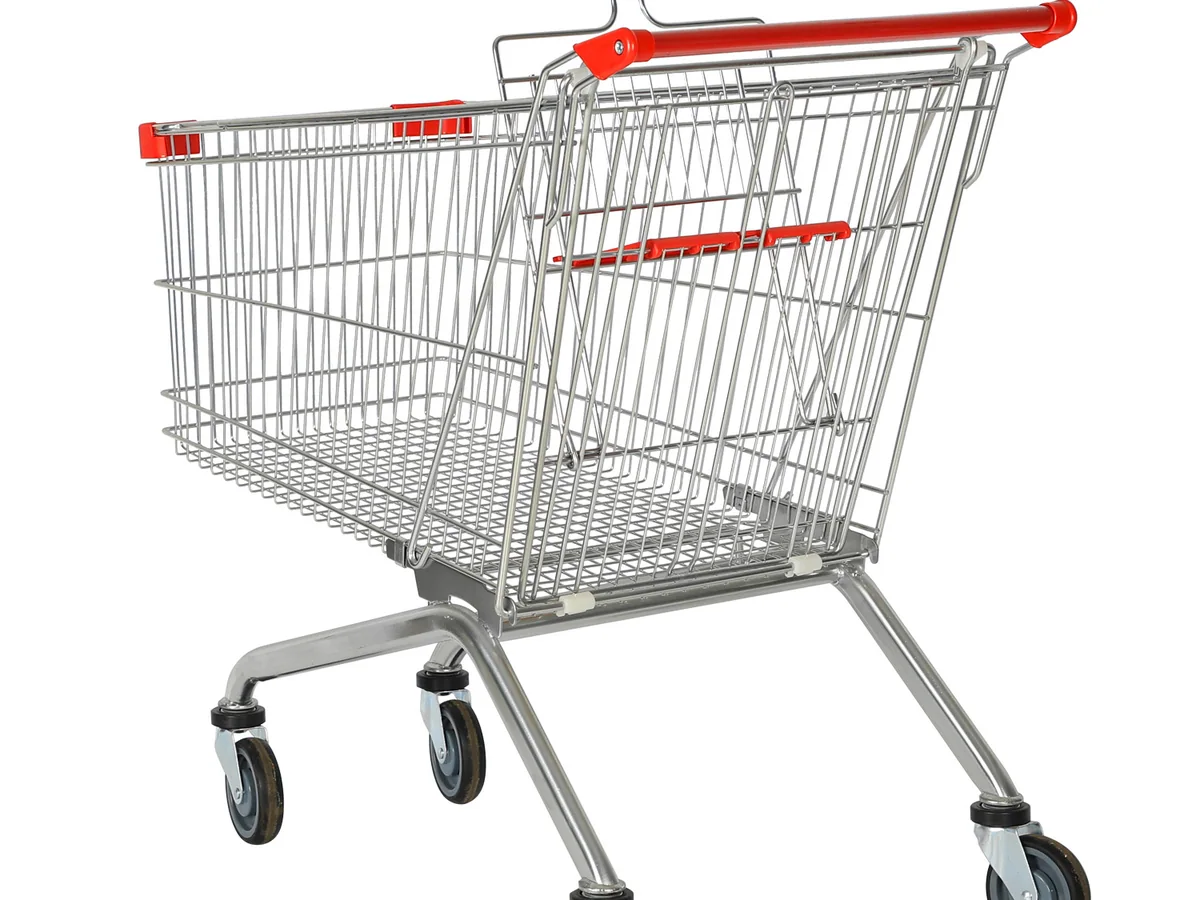
Castor
Specified to your floor
Castor size and type are set against your actual floor. A castor that suits smooth tile is the wrong one for a car park apron, and getting it wrong shows up as noise and drift within months.
Customisation
Every item on this page is made to order. Send a floor plan, a hand sketch or a photograph of a fixture you like, and we quote against it.