Keshun roller basket with telescopic handle for supermarket use

Roller Basket with Telescopic Handle

Two wheels · telescopic pull handle · stacks

A basket on wheels with a pull handle, for the shopper who wants more than they can carry and less than a trolley. It is dragged behind rather than pushed in front.

Product File

Dragged, Not Pushed

A roller basket is used completely differently from a trolley. It follows the shopper rather than leading them, which means it takes corners differently, gets pulled up steps, and spends its life at an angle. Two wheels rather than four, a telescopic handle rather than a fixed one, and a body profiled to sit stably when the handle is dropped all follow from that.

It fills the gap between a hand basket and a trolley, and in city-centre and convenience formats it is often the most used item in the store. The handle retracts fully into the body so a stacked column is no taller than the baskets themselves.

Wheels Two
Handle Telescopic
Shipping Stacked
Colour Any reference
  • Since 1999
  • Changshu, Jiangsu
  • ISO 9001
  • HS Code 94031000
Product Description

Roller Basket with Telescopic Handle

A basket on wheels with a pull handle, for the shopper who wants more than they can carry and less than a trolley. It is dragged behind rather than pushed in front.

Key Features

  • Built to your drawing rather than to a fixed configuration — length, depth, height and internal layout all follow your floor plan.
  • Cold rolled steel body with the finish carried across every category on the same order, to one RAL or PANTONE reference.
  • Manufactured in our own plant in Changshu, where steel fabrication, woodworking and stainless steel production run on one site.

Applications

Supermarkets, convenience stores, chain retail and speciality stores. Tell us the store format and the floor area and the specification comes back written against them.

What The Photographs Show

Everything on a roller basket is a consequence of it being dragged at an angle. These four are where that shows.
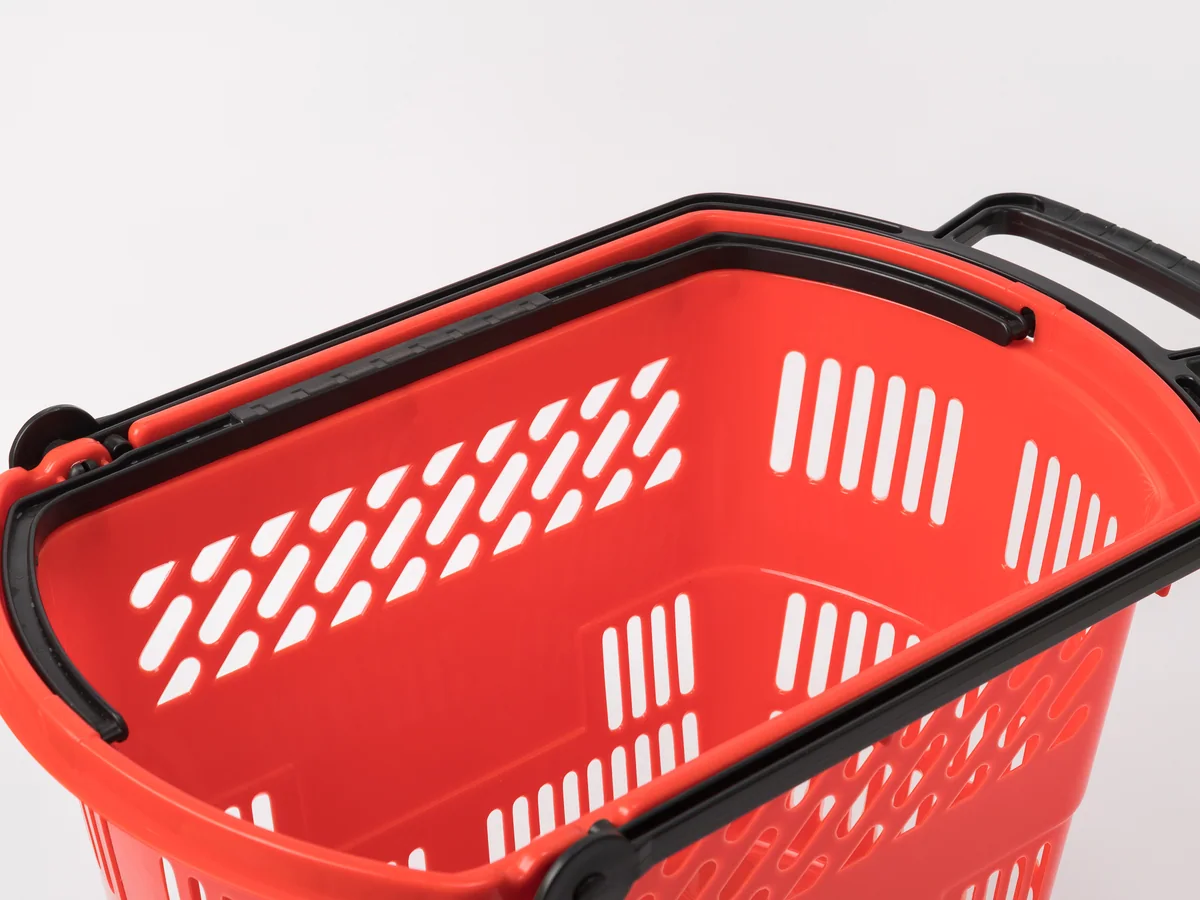
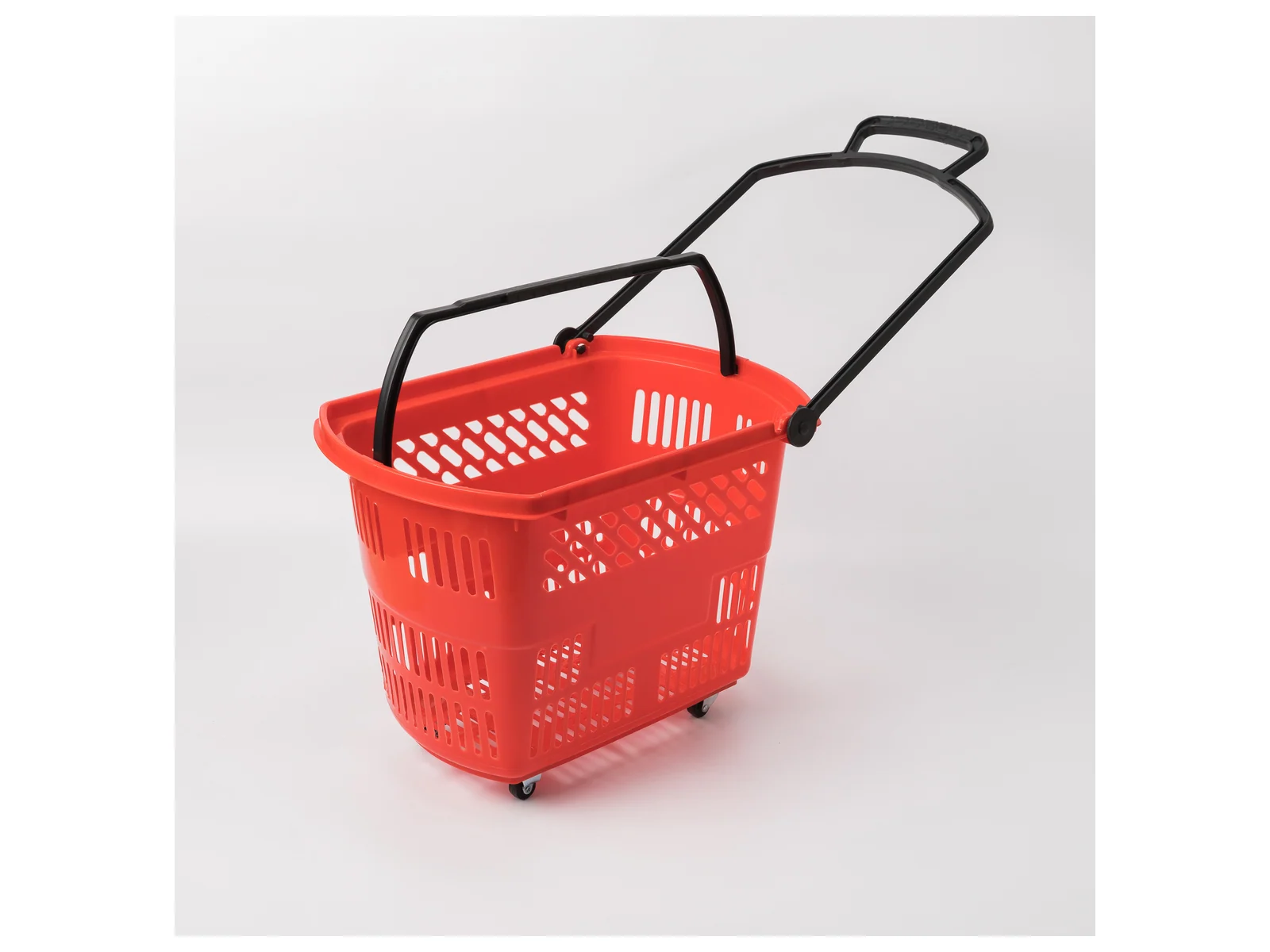
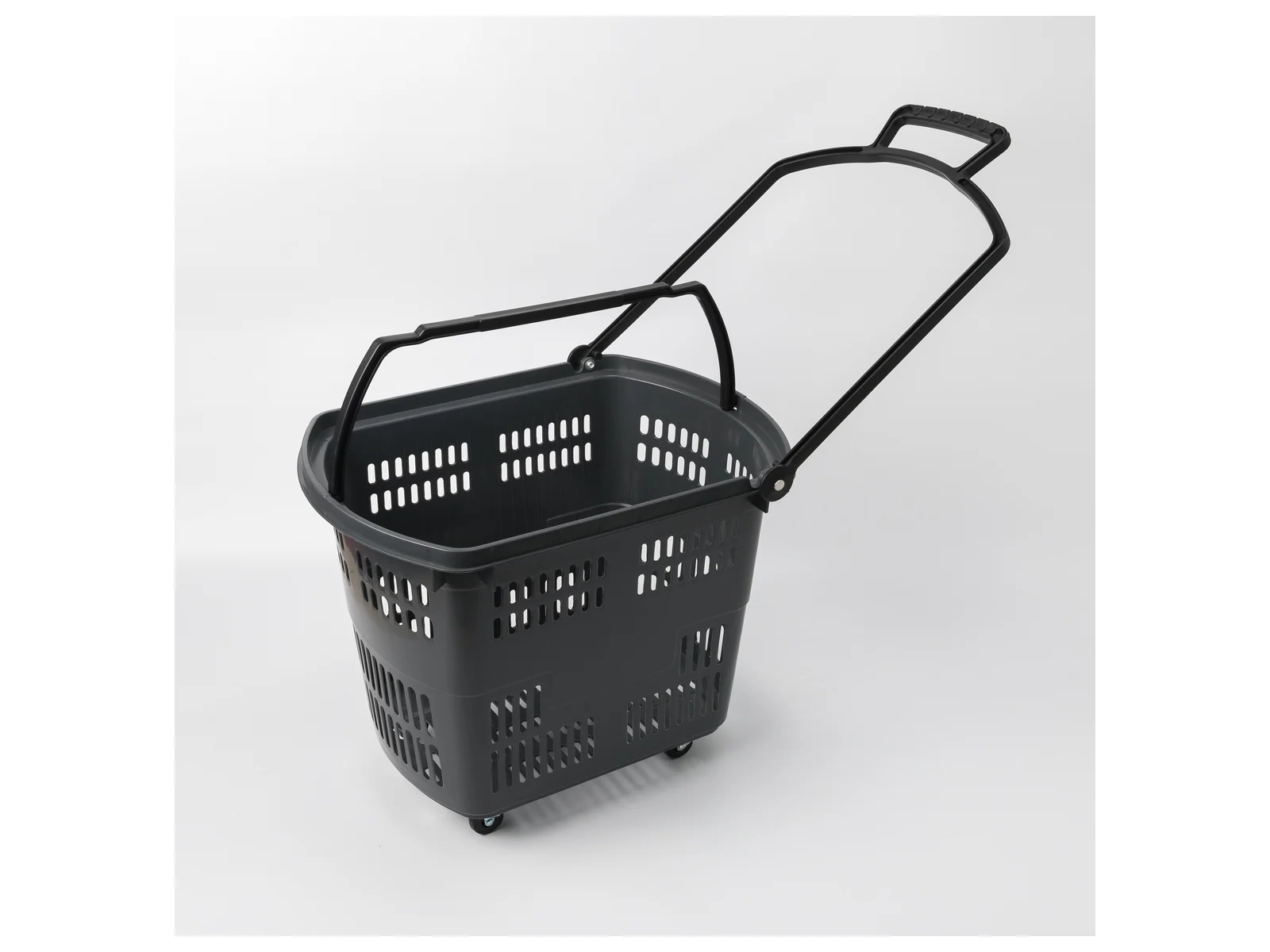
Close-up of the two-stage telescopic handle extended

Two-Stage Handle

Retracts fully into the body

Two stages rather than one gives a comfortable pull height for a tall shopper without the handle standing proud when retracted. Retracted, the column of stacked baskets is no taller than the baskets themselves.
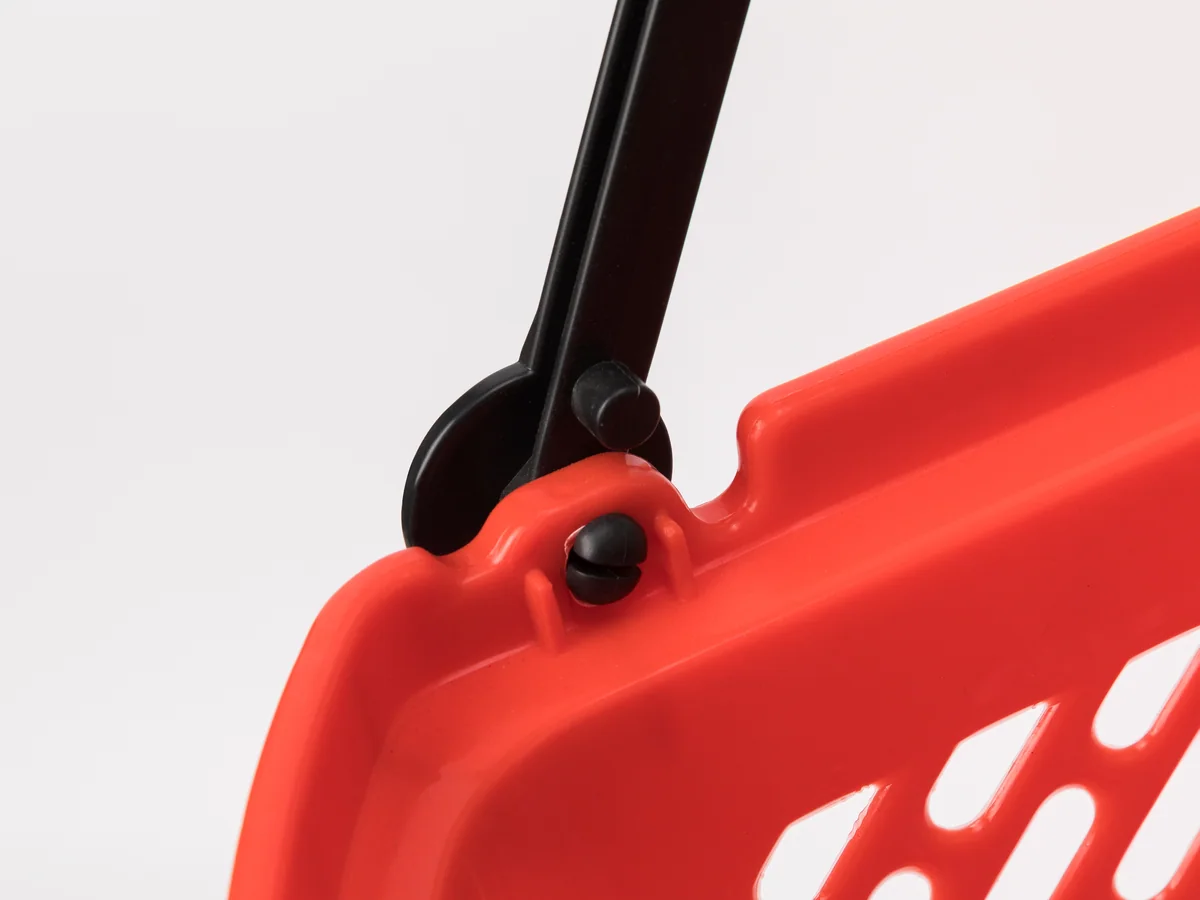
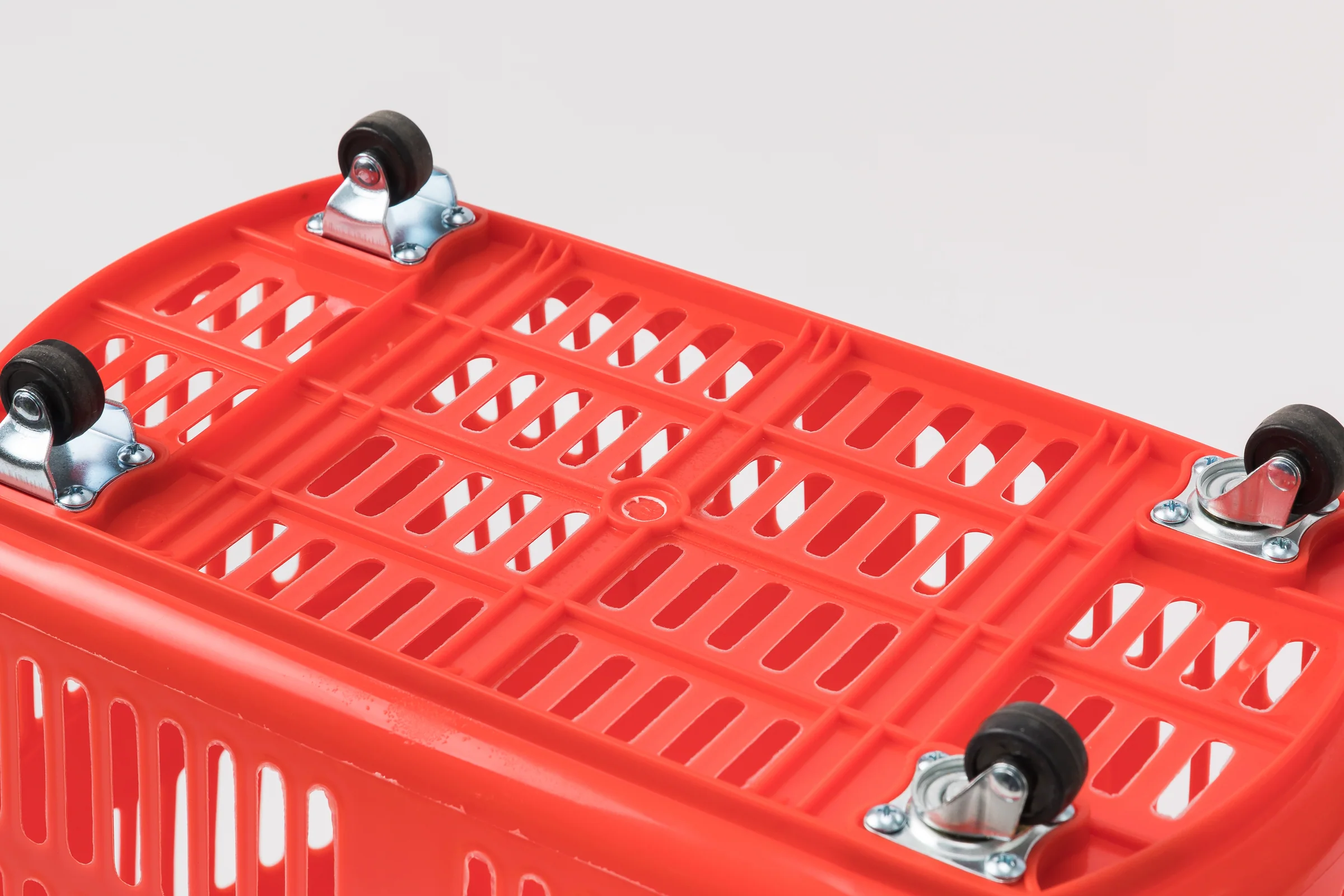
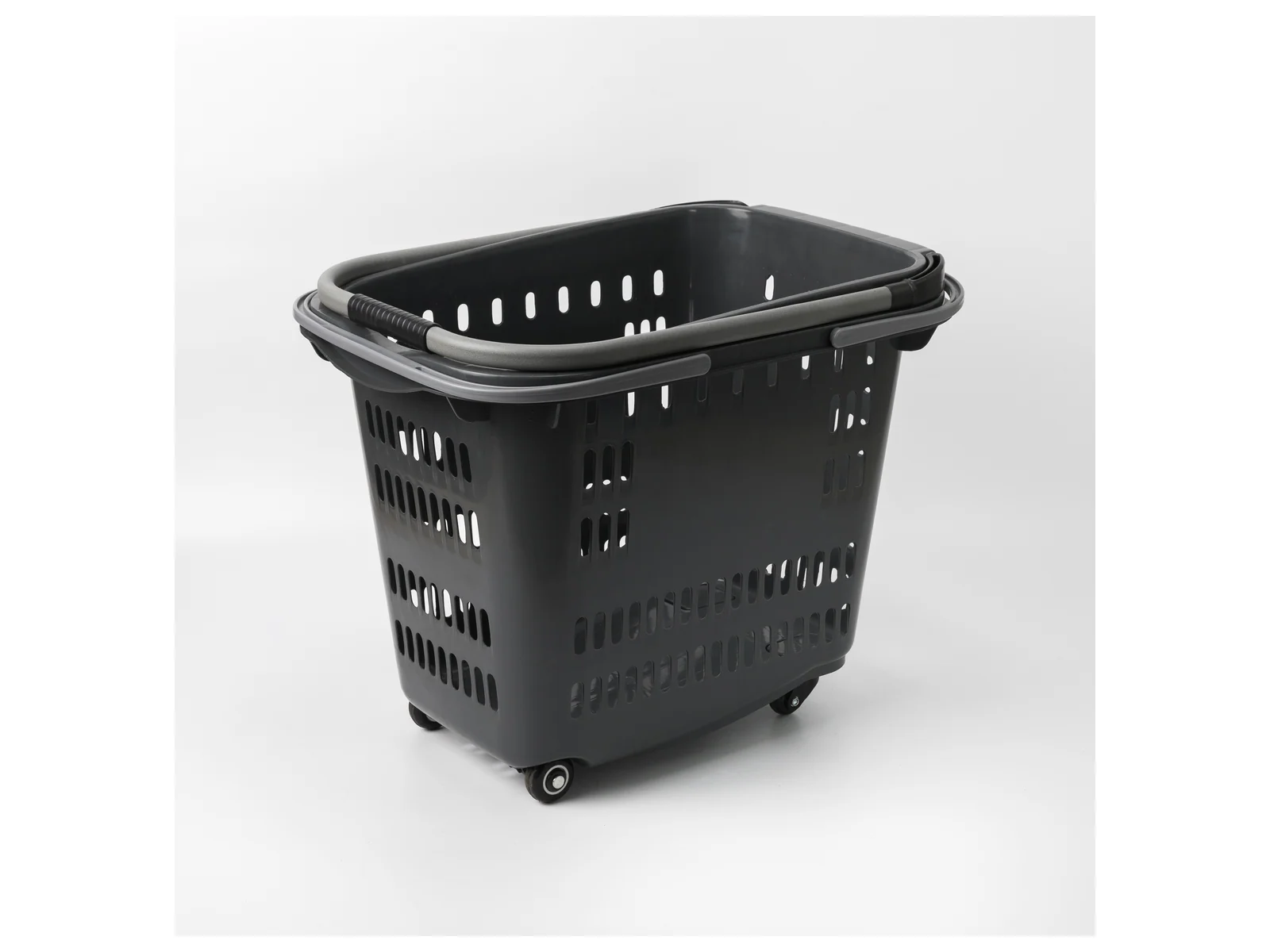
Close-up of the rear wheels mounted at the corners of the basket

Rear Corner Wheels

Two, set at the corners

Both wheels sit at the rear corners rather than under the middle. On a basket dragged at an angle the load transfers to one wheel through a turn, and cornering them is what stops it digging in.
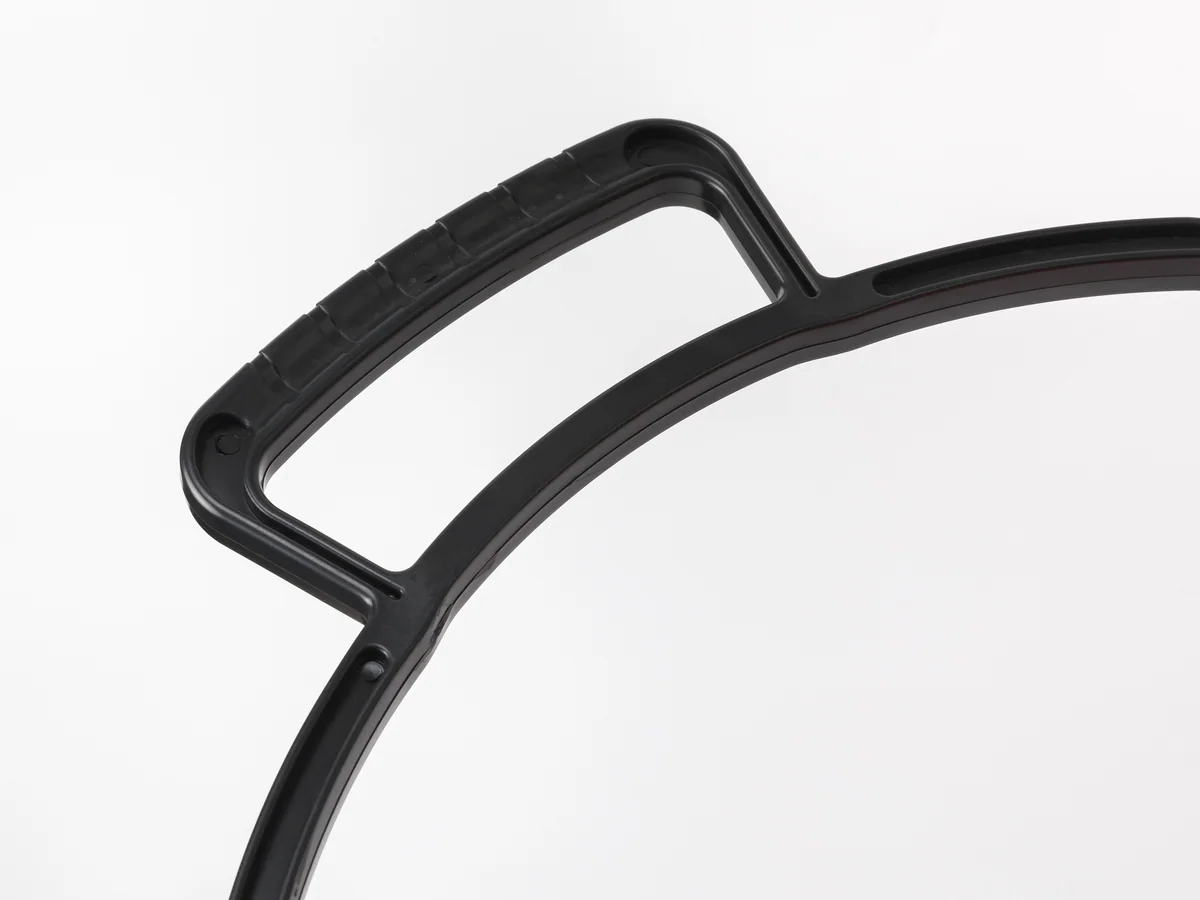
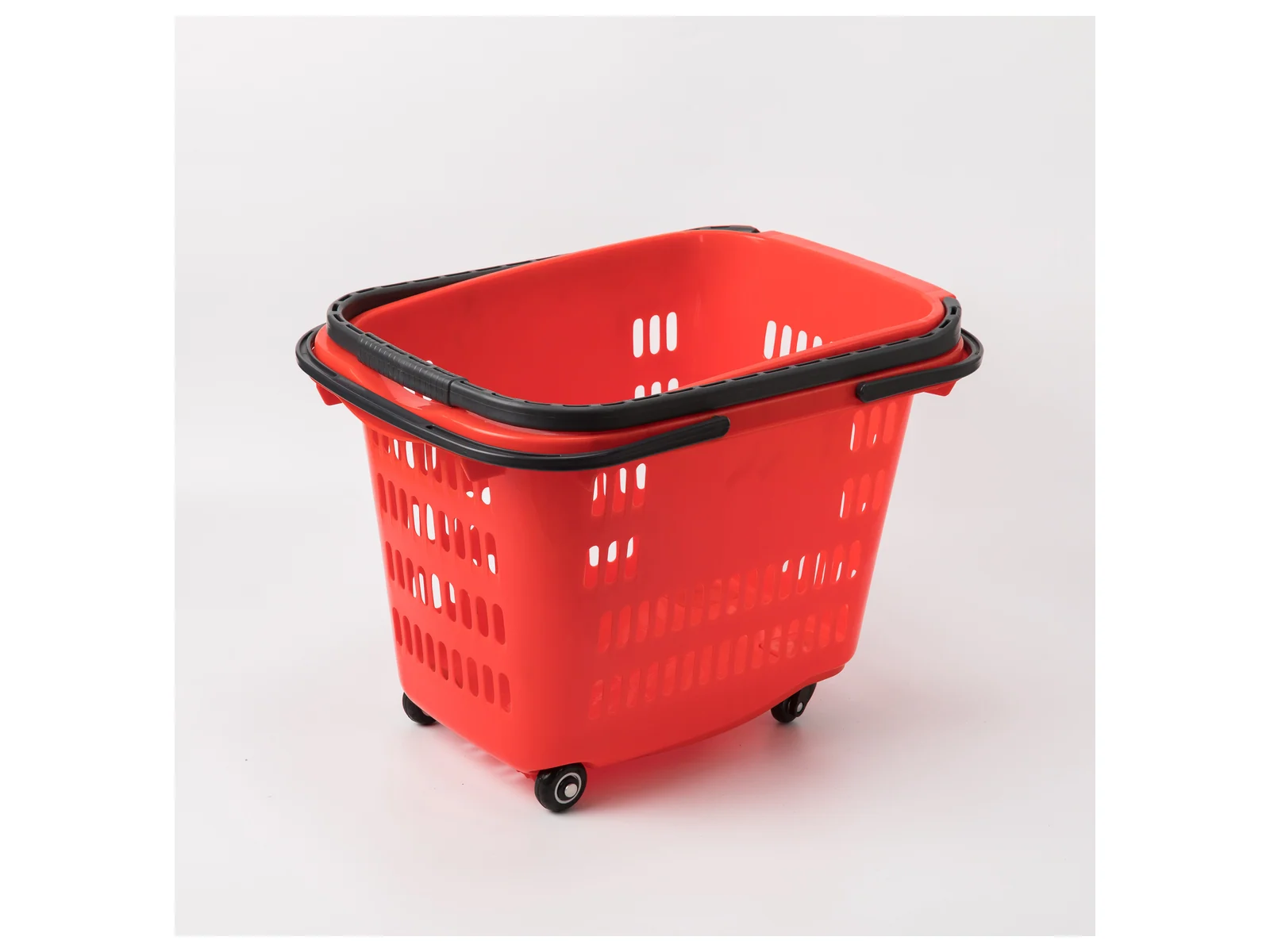
Close-up of the moulded body showing the perforation pattern

Perforated Body

Weight down, drainage out

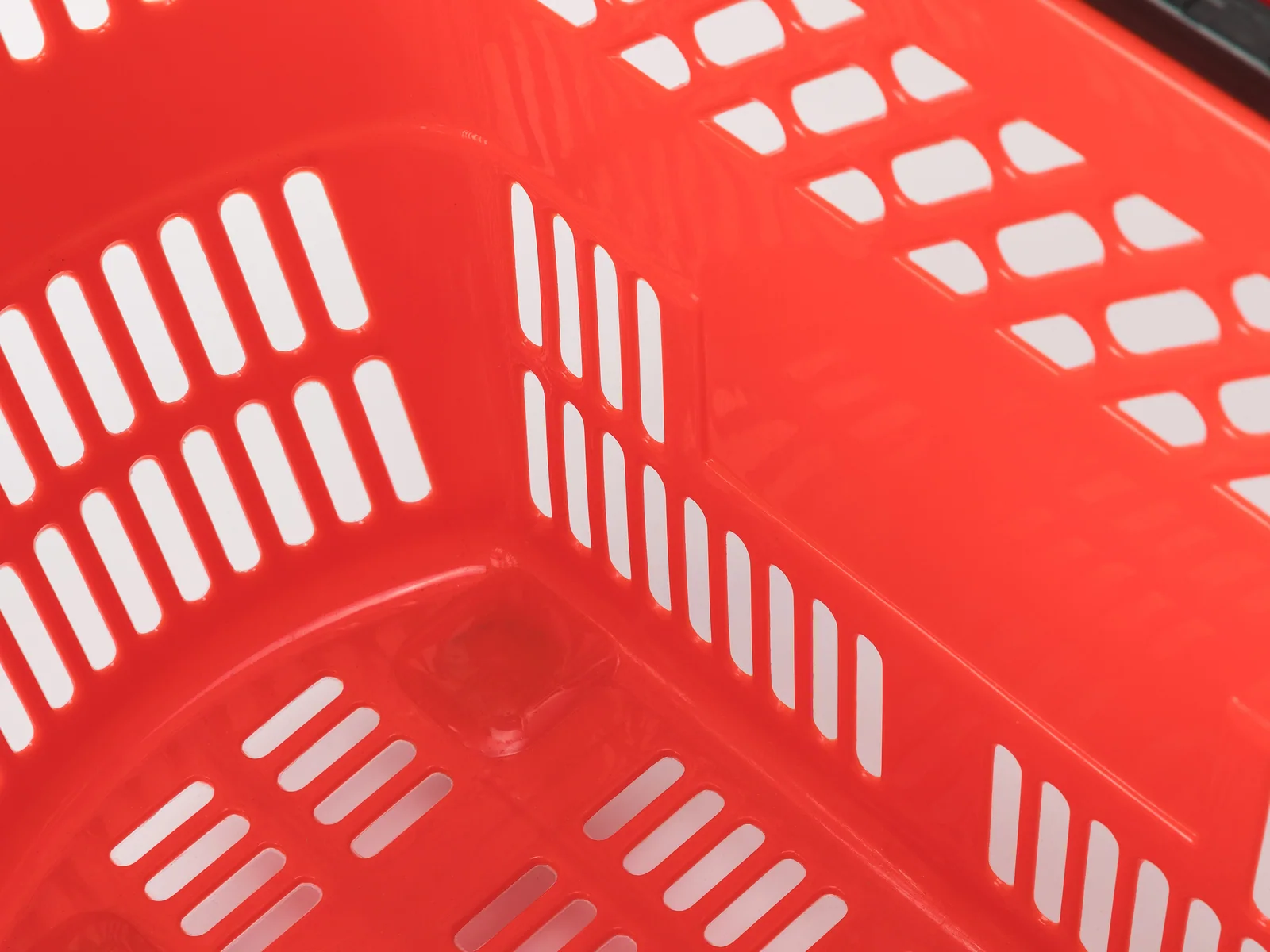
The perforations do two jobs: they take weight out of a basket that gets lifted onto a counter loaded, and they let a wet item drain instead of sitting in a puddle at the bottom.
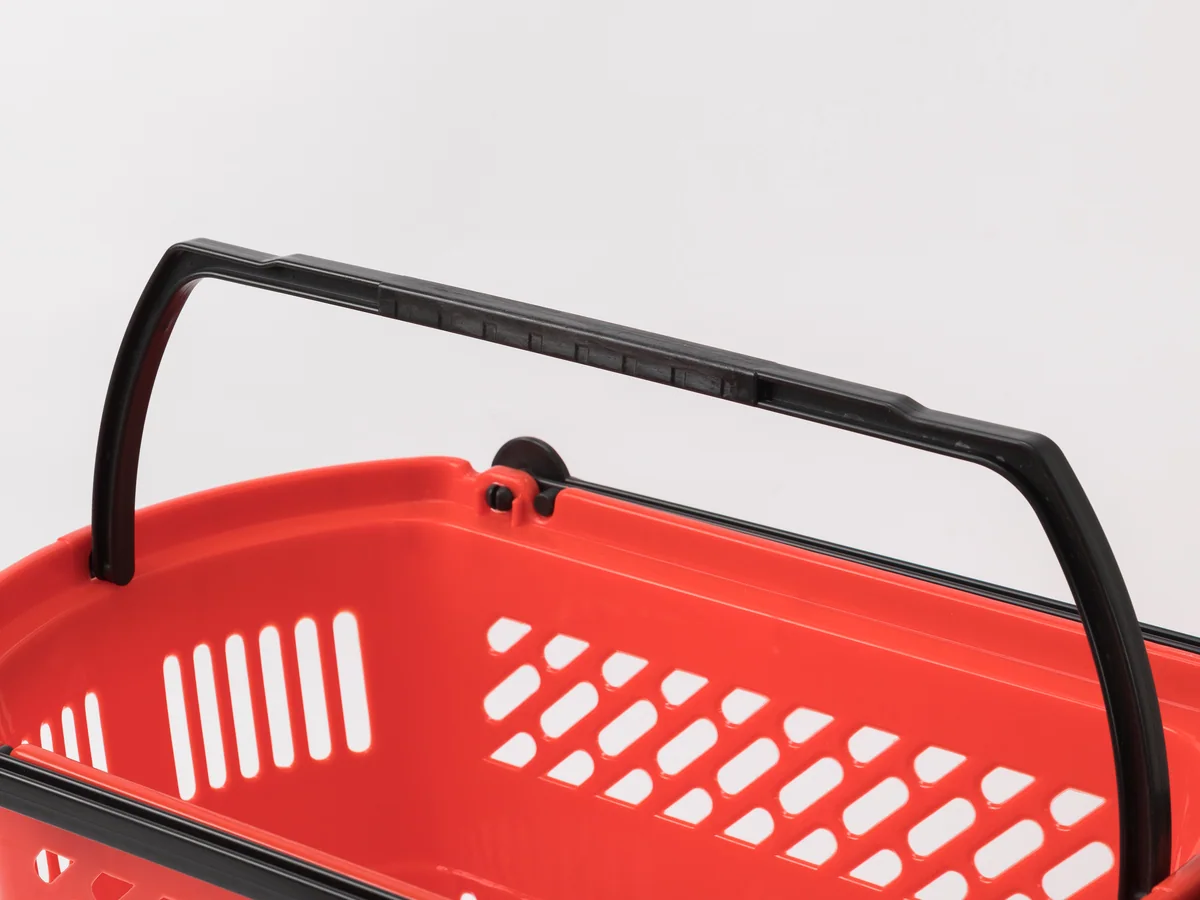
Close-up of the base of the basket where it rests when parked

Resting Base

Sits stable with the handle down

The base is profiled so the basket stands square when the handle is dropped. A roller basket that rolls away the moment it is let go is one shoppers stop using by the second aisle.

Customisation

Every item on this page is made to order. Send a floor plan, a hand sketch or a photograph of a fixture you like, and we quote against it.

Shipping Form

How These Baskets Leave The Factory

Store fixtures are light for their size, so a container fills up on volume long before it fills up on weight. What decides your freight is not what one unit weighs — it is what shape the goods are in when they go through the container door. Everything we build leaves in one of three shapes.

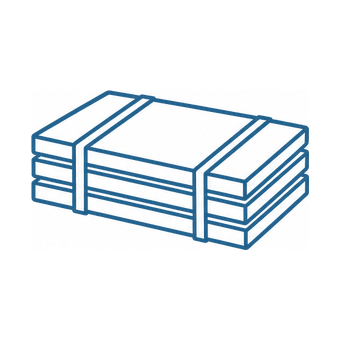
Line icon of four flat panels stacked and bound with two strapping bands

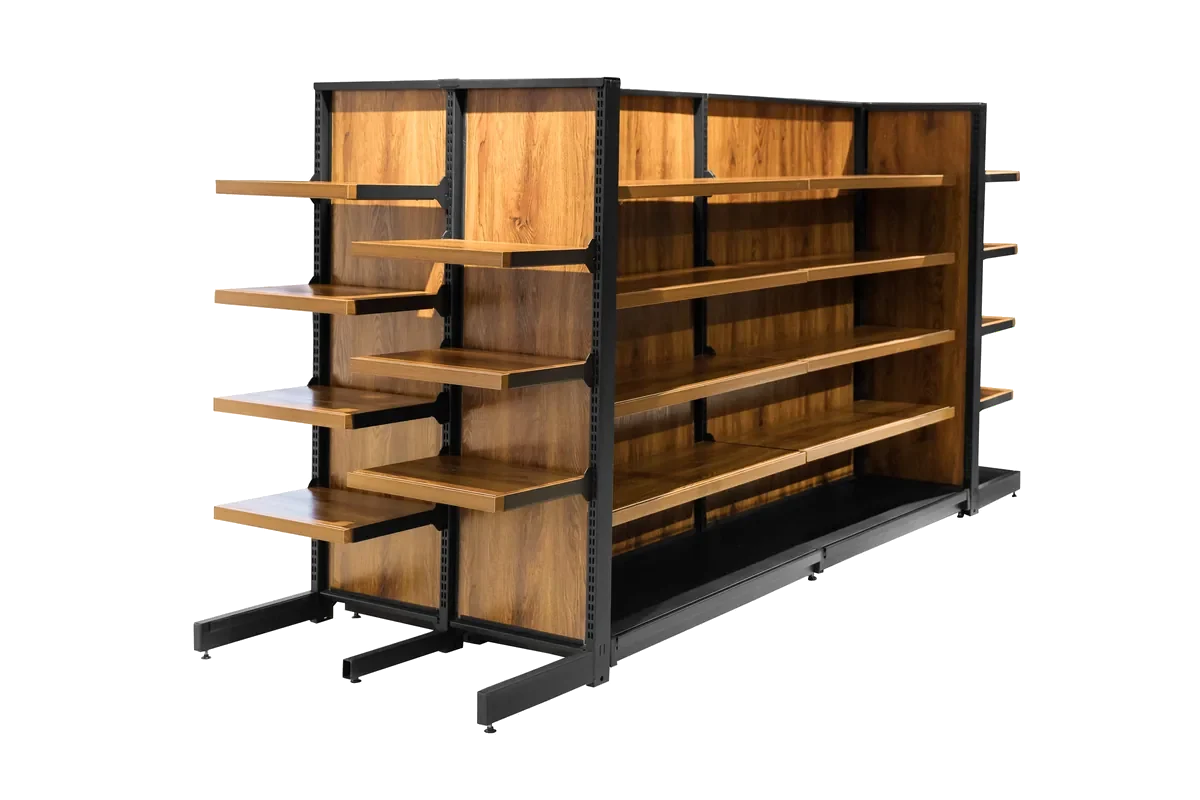
Flat Packed Cabinet And Shelving Panels

Shelving bays, produce islands and bulk cabinets travel as panels — uprights, shelves, back panels and plinths, strapped flat with bubble wrap on every component. They are built up on the shop floor, so the packing list and the assembly drawings travel with the goods.

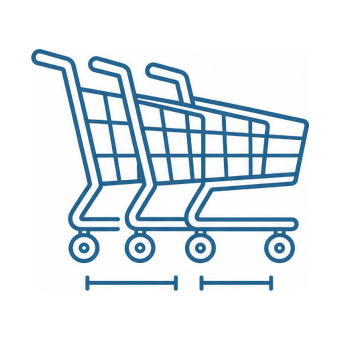
Line icon of three supermarket trolleys nested into one another with a bracket marking the nesting pitch

Nested Trolleys And Hand Baskets

Trolleys slide into one another and baskets stack. Past the first unit, each extra one adds only its nesting pitch instead of its full length, so the shipped volume ends up a fraction of what the unit count suggests.

This model
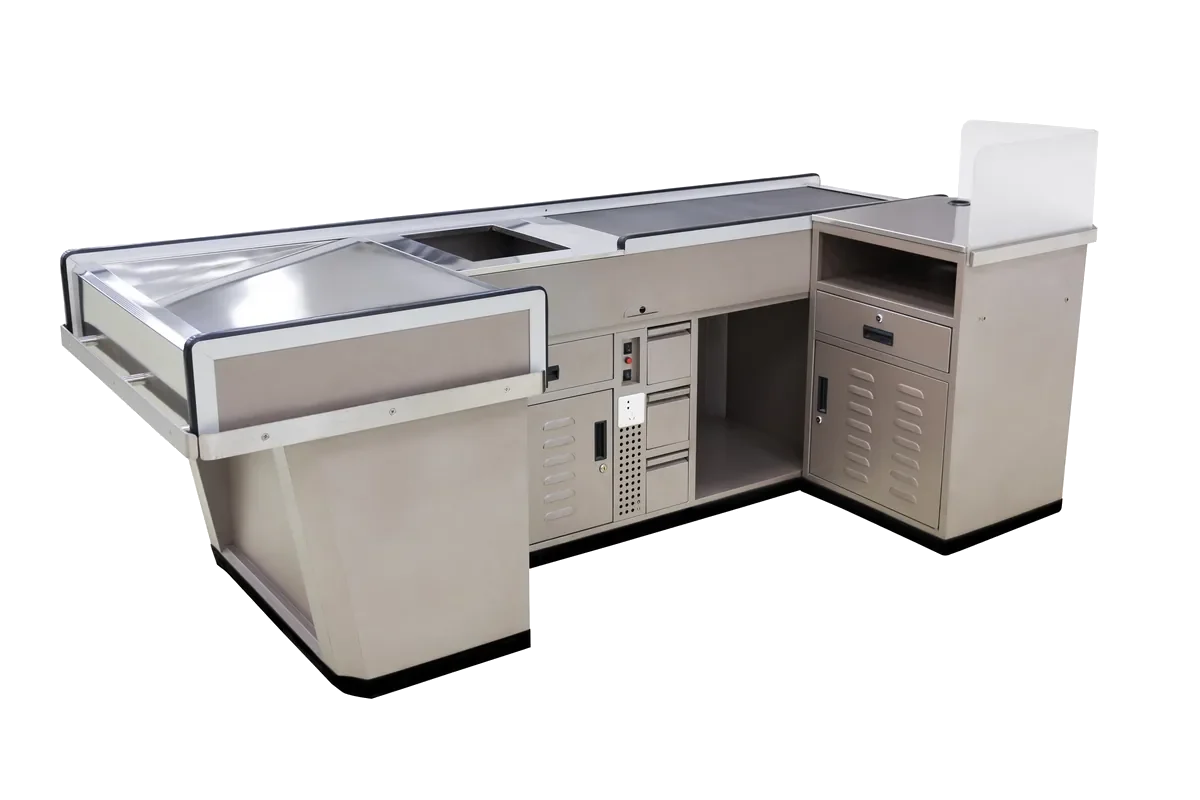
Line icon of an assembled checkout counter inside a dashed crate outline

Fully Assembled Counters

A checkout lane is welded, coated and fitted out as one piece, so it is crated whole with padding on the steel. Nothing waits to be assembled at the store beyond levelling it into the lane, and the crate is the counter plus a margin.

Baskets stack, which makes them the densest thing we ship. A column of nested baskets is close to solid plastic, so the freight cost per basket is a fraction of anything else in this catalogue — which is why baskets are almost always added to a container that is going anyway rather than shipped on their own. We do not publish litre capacities for this range. The figures circulating for it came from an old third-party listing rather than from our own production records, and they are being confirmed with the factory first.

Ships With

What Usually Travels In The Same Container

A trolley bay is part of the front of store, and what it stands next to decides how well it works.

How many of each a store needs is a floor area question rather than a product question, and it is answered store by store on the store layout planning page.

Roller Basket with Telescopic Handle photographed on a white studio background

Send your quantity and colour reference. Baskets ride on a container that is already going.

Get A Quotation

Quote These Baskets

Tell us the quantity, the colour reference and whether your floors have any slope. Roller baskets are the densest thing we ship, so adding them to a fixture order that is already going costs very little in freight.

Your enquiry goes to keshun@kssyt.com. Drawings and floor plans are welcome by email — hand sketches included.

Buyer Questions

Four Questions Buyers Ask Before Ordering

The four that come up on nearly every enquiry for this build. If yours is not here, send it with your layout and it is answered alongside the quotation.

Q01 Why only two wheels rather than four?

Because a roller basket is dragged behind the shopper at an angle rather than pushed level. Four wheels fight that angle and the basket skews sideways; two let it track properly behind the person pulling it.

Q02 How far does the handle extend?

Two stages, which gives a comfortable pull height for a tall shopper. The exact extension is confirmed with the order, because it is set against the basket height rather than being a fixed figure.

Q03 What capacity is the roller basket in litres?

We are not publishing litre figures for this range. The numbers circulating for it came from an old third-party listing rather than from our own production records, and they are being confirmed with the factory. Ask and we will tell you where that stands.

Q04 Will it roll away on a sloped floor?

The base is profiled to stand square with the handle down, but no unbraked wheeled basket holds on a real gradient. If your floor slopes, say so and we will recommend the four-wheel build instead.