
When a store is being set up, the checkout counter has to be settled early. It is not only the place where a customer pays. It is where the shop assistant deals with that customer face to face, it is where the sale is finally completed, and it is the last fixture anyone touches on the way out. Choosing one is less about styling than about four things that get locked in at the factory: the size of the lane, the shape of the counter, what sits inside the cabinet, and whether the lane runs a belt.
Key takeaways
- Measure the lane before you open a catalogue. Counter lengths on our records run from 1200 to 2000 mm, and every one of them sits on an 850 mm worktop.
- A counter is a display position as well as a payment position, so the tiers facing the queue belong in the specification rather than in the shopfitting budget.
- Drawer or full POS cut-out, blind cabinet or glass front, belt or no belt — all three are build decisions, and all three cost nothing to state in the first enquiry.
Start With The Lane, Not With The Catalogue
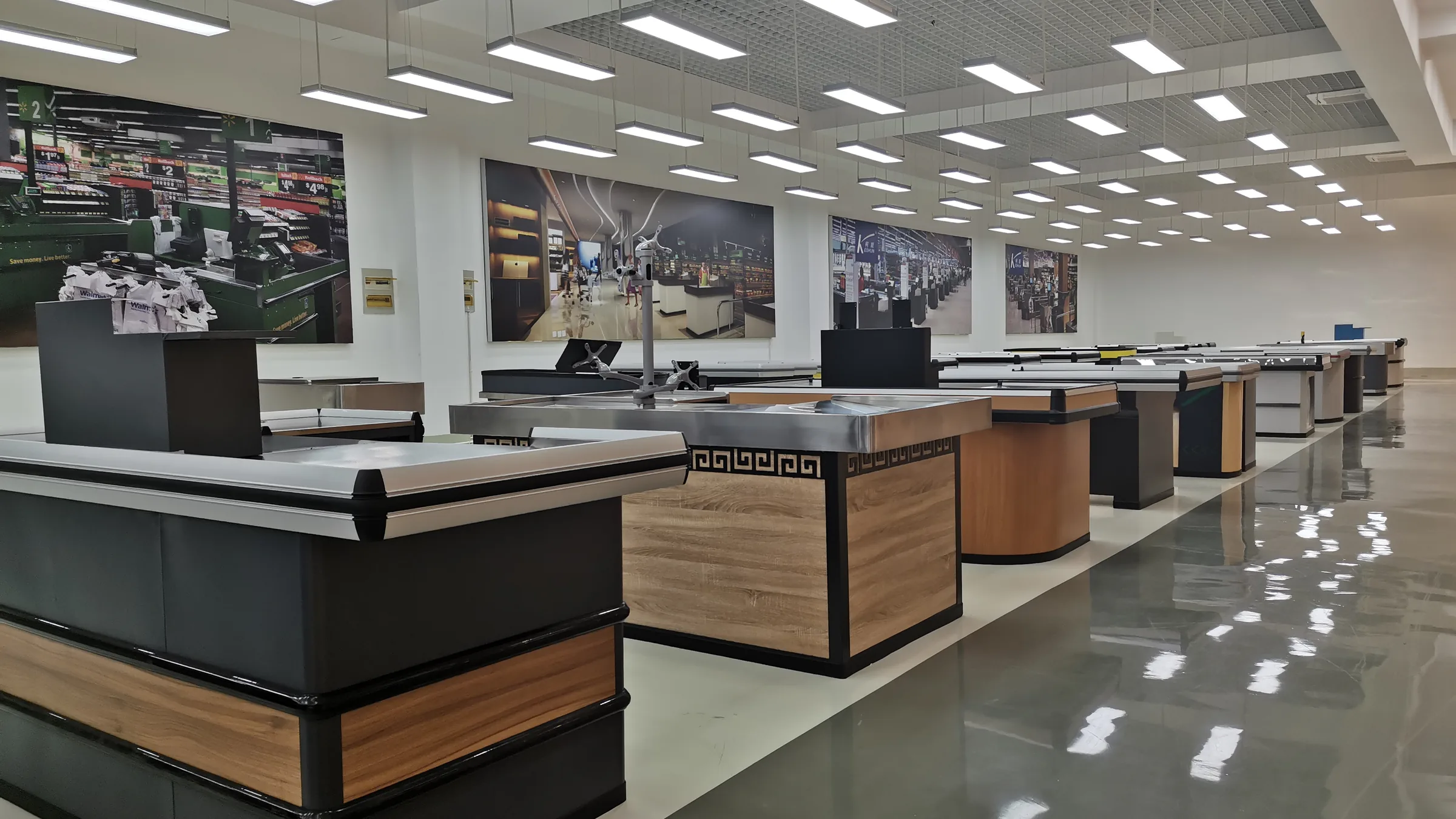
Before you compare products, work out where the counter is going to stand. If the front of the store has room, a longer counter is worth having; if it does not, a medium or a short one is the honest answer, and forcing an oversized counter into a tight front end costs more in queue space than it gains in worktop. Placing it near the exit keeps the payment point on the natural way out instead of sending shoppers back across the floor.
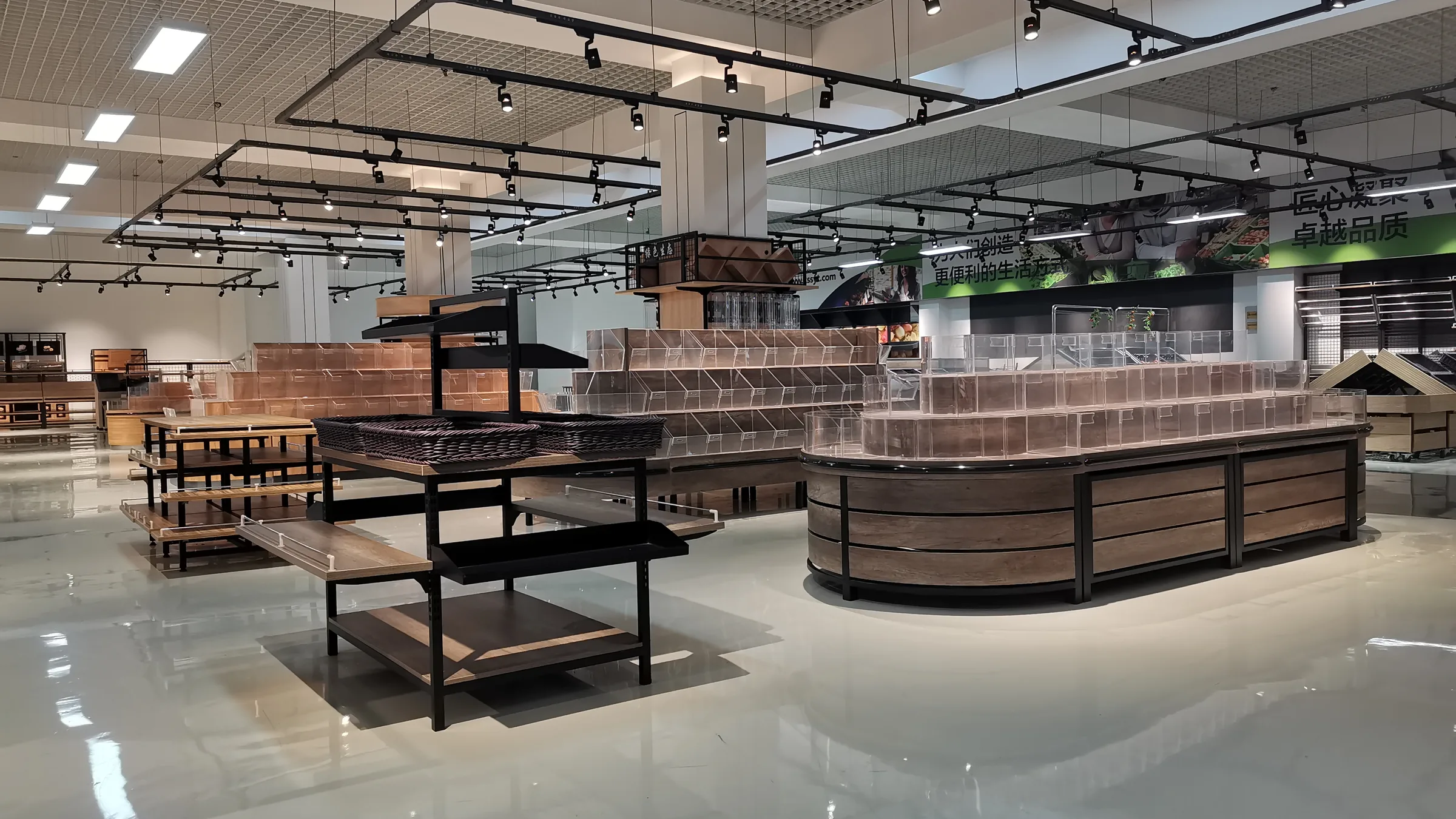
In a larger store the same decision has a second answer. A U-shaped counter saves floor area, and set in the middle of the front end it both marks out the route a customer takes and gives the person standing behind it a view over the whole floor. Whichever shape you land on, it has to sit with the fixtures around it — a counter that fights the shelving beside it reads as an afterthought.
Length is the obvious dimension. Depth is the one buyers under-specify. A 600 mm deep counter is a paying station and very little else. A counter of 1000 to 1200 mm gives the cashier somewhere to land a full basket and the customer somewhere to pack, which is what actually clears a queue. The sizes below are the combinations recorded against our own supermarket checkout counters.
| Length | Recorded depths | Worktop height |
|---|---|---|
| 600 | 600 — cashier station module used to extend a run | 850 |
| 1200 | 1200 | 850 |
| 1800 | 600, 1100 | 850 |
| 1850 | 1100 | 850 |
| 2000 | 600, 900, 1000, 1100 | 850 |
Read down the last column and the point of the table becomes clear. Length and depth move with the store; the worktop does not. Height is set by the person standing at it for a shift, which is why the small cashier station module is also built at 850 mm — put the two together and the working surface stays flat across the whole lane.
The counter is the last fixture a shopper touches and the only one a cashier stands at all day. Settle the reach and the height first; everything else on the specification can still be argued about.
Blind Cabinet Or Glass Front
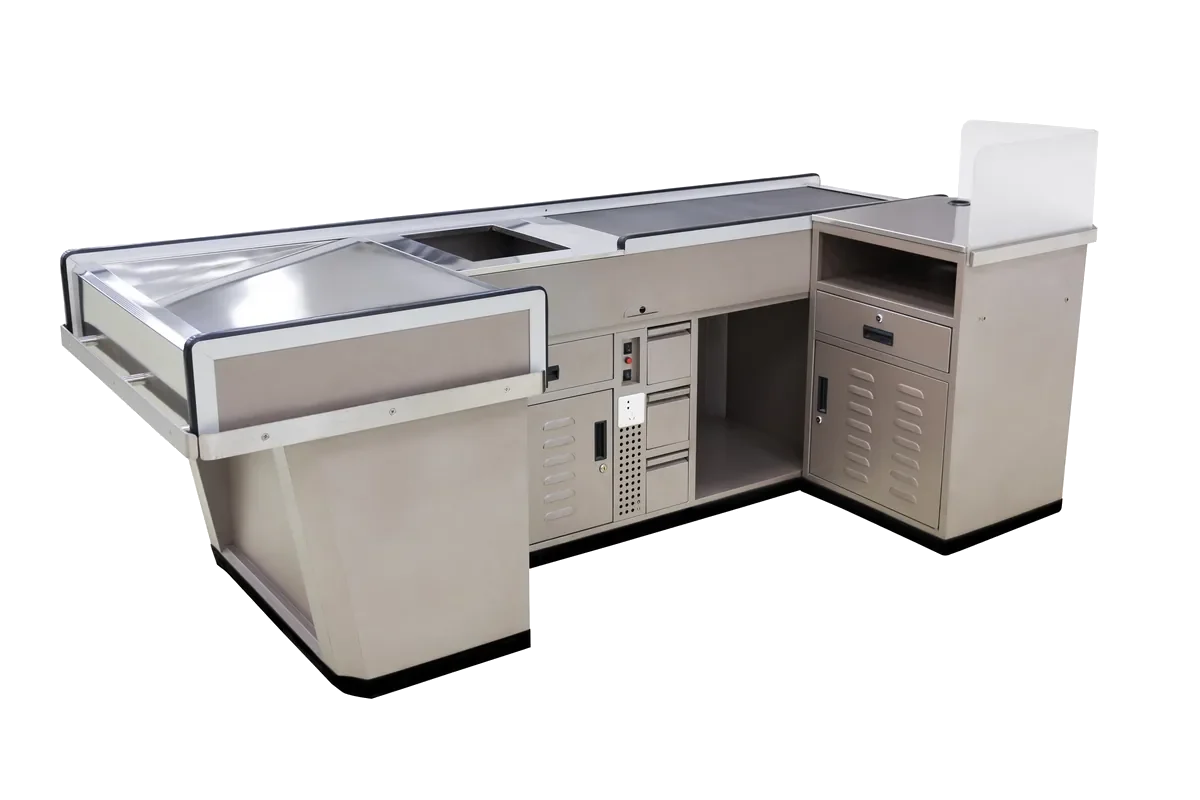
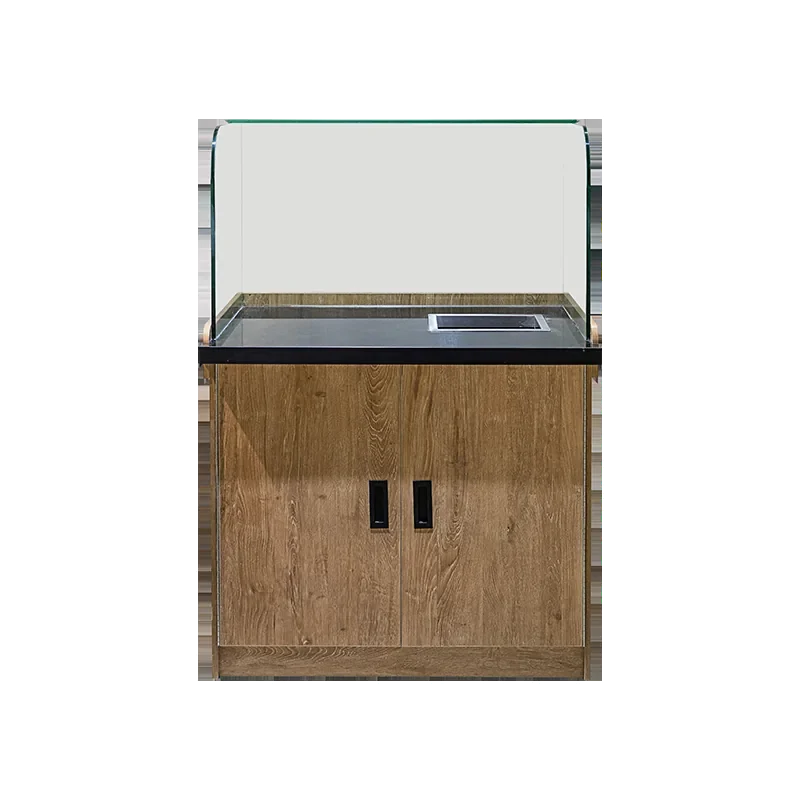
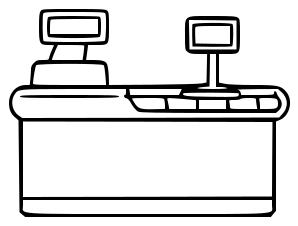
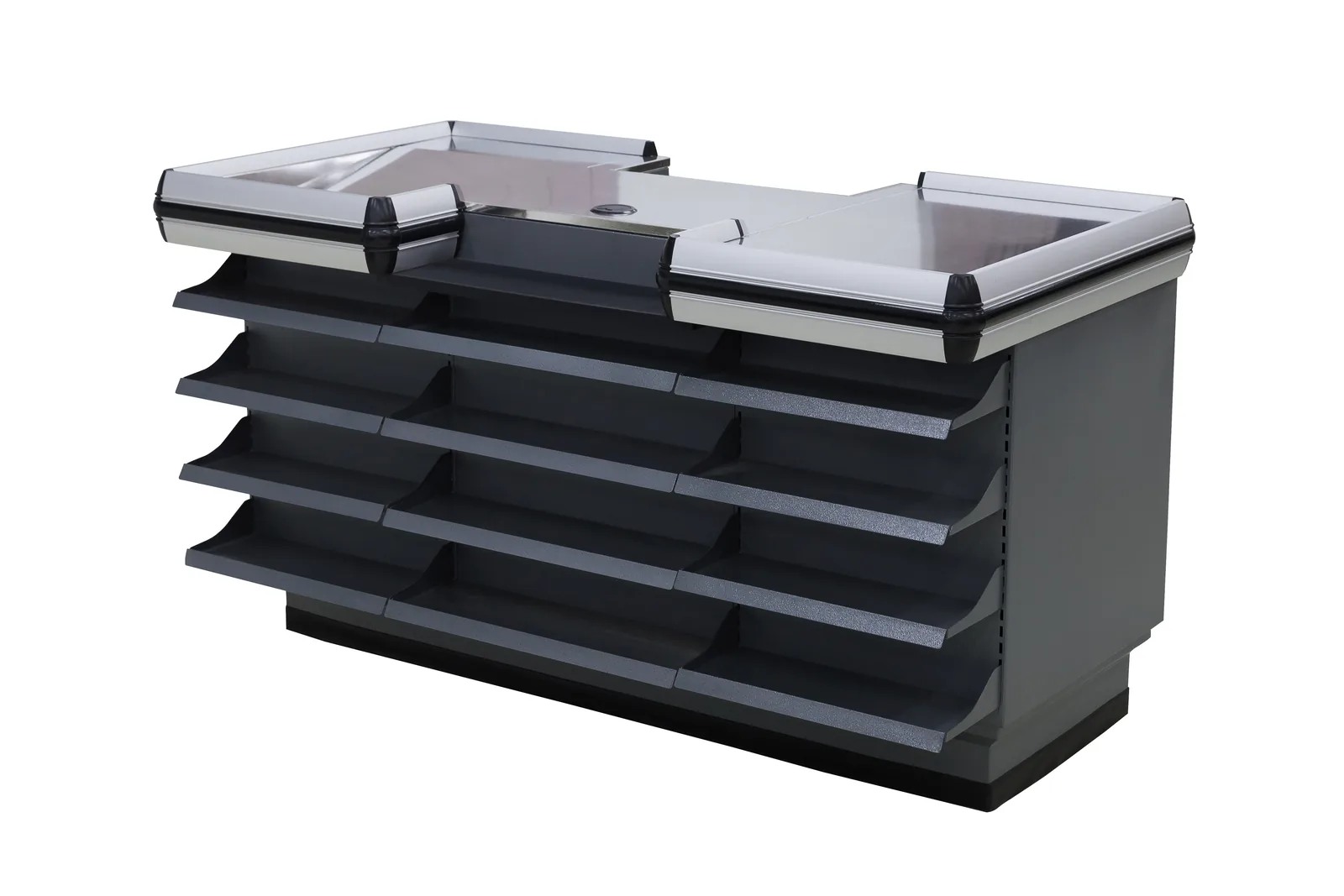
The second decision is what the shopper side of the counter does. A semi-display counter carries a glass lid with a front of roughly 12 to 20 cm of glass, so goods laid inside stay visible to somebody standing in the queue. Behind that there is normally a blind section for the till equipment and for the staff’s own belongings. It is worth asking for that combination by name, because a fully blind cabinet is cheaper to build and is what you will be quoted if you say nothing.
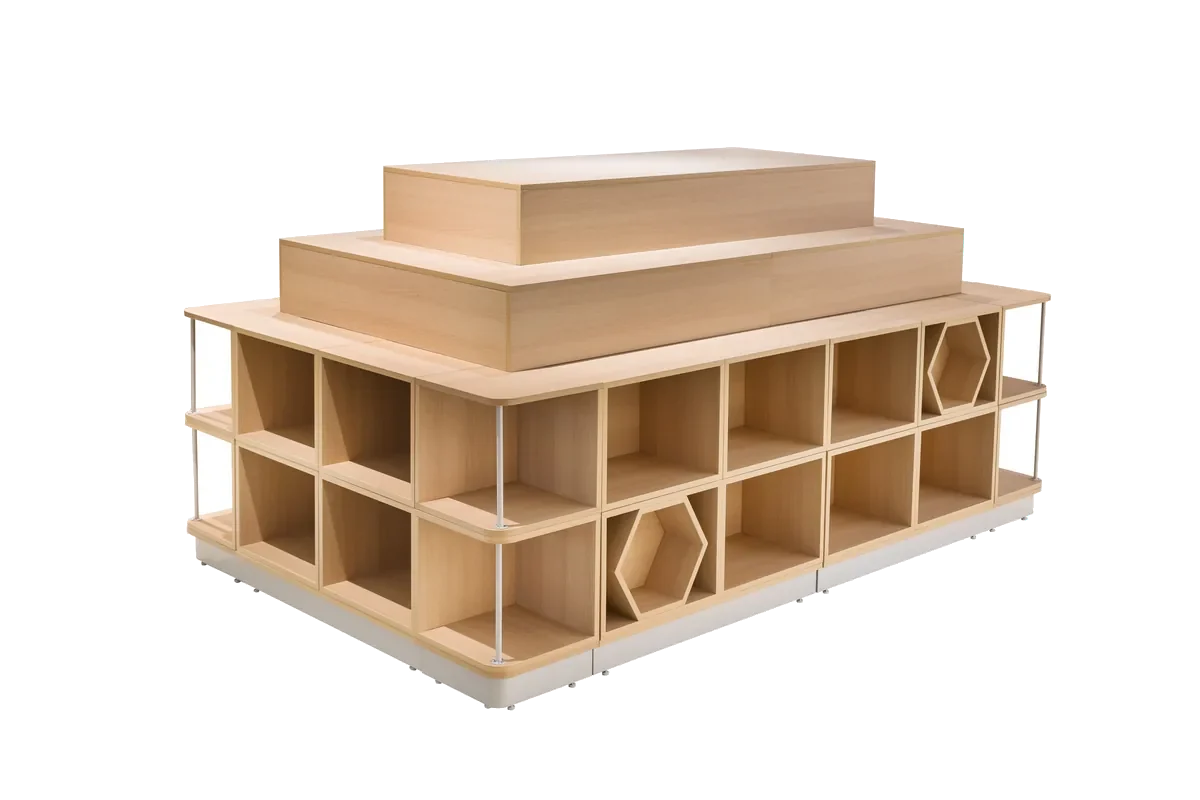
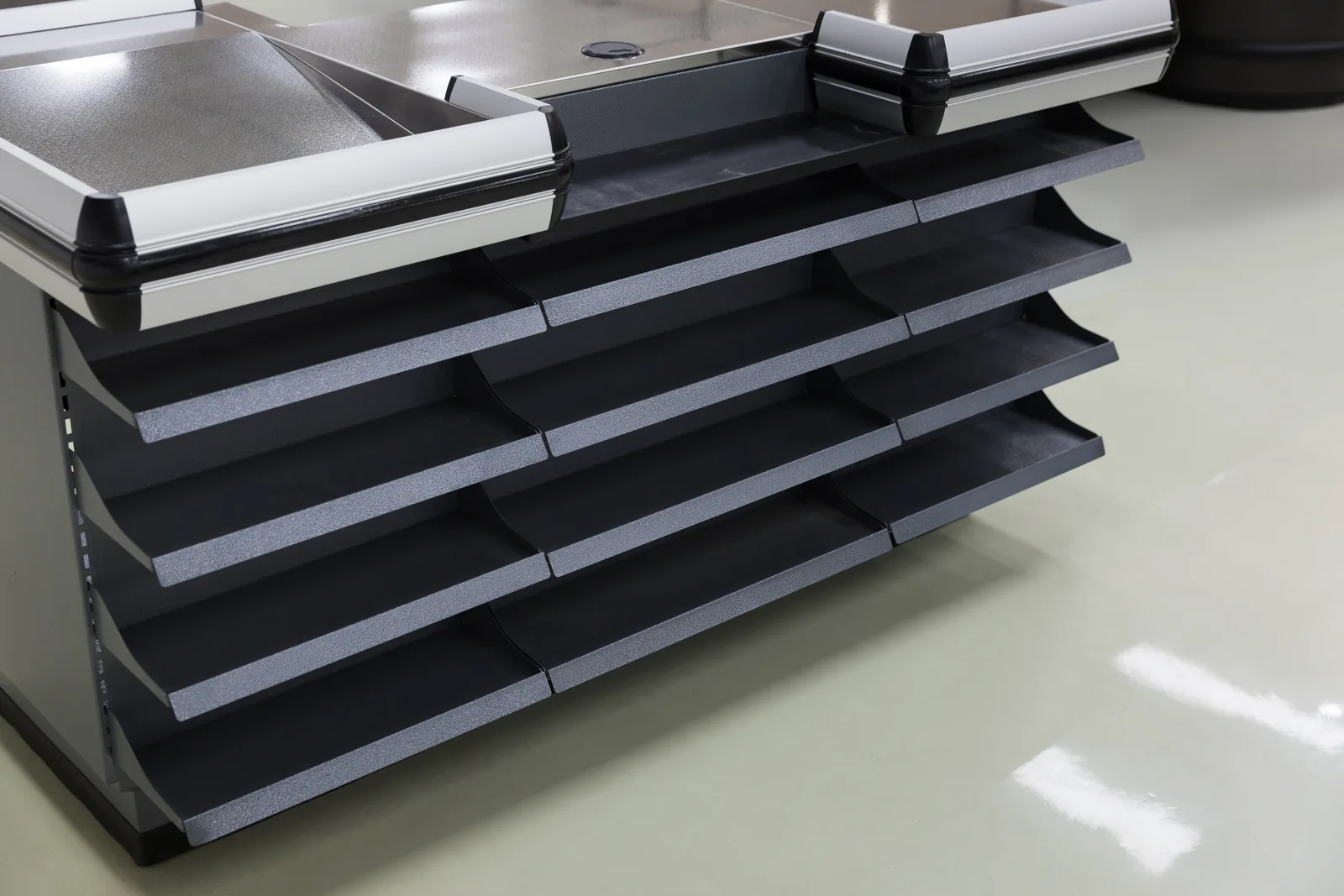
This matters more than it sounds. A counter is a good exhibitor position and it is normal to hang display cases or a showcase on it. Small, appealing items — chocolate, sweets, batteries, anything picked up without planning — sell from the counter precisely because people are standing still in front of it. Ask how many tiers a counter carries on the customer side and how deep they are, and treat the answer as part of the price comparison rather than as trim.
There is a third thing the counter does that rarely appears on a specification at all. It is the one place in the store where staff and customers stand still opposite each other, which makes it the place where a store owner hears what its customers actually think. Leaving room for that conversation — a counter that is not so cramped that the transaction has to be rushed — is a layout decision as much as a courtesy.
What Goes Inside The Cabinet
Two counters can look identical and be different products once the doors are open. At its simplest a till is a keyboard for entering quantities and prices, a drawer where the money is kept, and a mechanism for printing receipts, either built in or standing separately. Around that base sit the accessories that decide how the cabinet has to be built:
- Cash drawer. Divided for coins and notes, usually with a double bottom that also takes card slips, refund dockets and change records.
- Barcode scanner. In a store carrying a large number of lines this is what makes the payment process efficient, and it needs a home on or under the worktop rather than a spare corner.
- Receipt printer. On newer equipment the printer is a separate unit from the main body, so it needs its own space and its own cable route.
It is worth being clear about the difference between a cash counter and a point-of-sale terminal, because the two words get used interchangeably in enquiries. A POS is the more modern version: a terminal usually networked to other terminals or computers, with the scanner and the receipt module attached, and a piece of software behind it that handles the information. A cash counter records the sale; a POS is normally tied into the accounting system and tracks stock and cost as well. Which one you are fitting changes the cut-out in the worktop and the cable run beneath it.
The same applies to security. If you intend to run an anti-theft system off the till, that has to be planned around a proper cash register position rather than added afterwards; if the store already runs cameras, you may decide the simpler cabinet is enough. None of this is expensive to specify and all of it is expensive to retrofit, so sending a photograph of the equipment you already own is usually faster than describing it.
Do You Need A Conveyor Belt?
A belt exists to keep the shopper and the cashier working at the same time. The shopper unloads at one end while the cashier scans at the other, so neither waits for the other and goods travel along the lane in an orderly line instead of being pushed across a worktop. On a busy front end that is worth having, and it is not the expensive option people assume it is.
Where a belt is not worth having is a store where baskets are small and a queue rarely builds. There the same budget buys a deeper counter with a real packing end, which does more for the same shopper. Longer lanes are the ones normally built with a belt; the shorter sizes in the table above are usually quoted without one. Tell us the busiest hour of the week and the typical basket, and the answer picks itself.
Judging The Build Before You Order
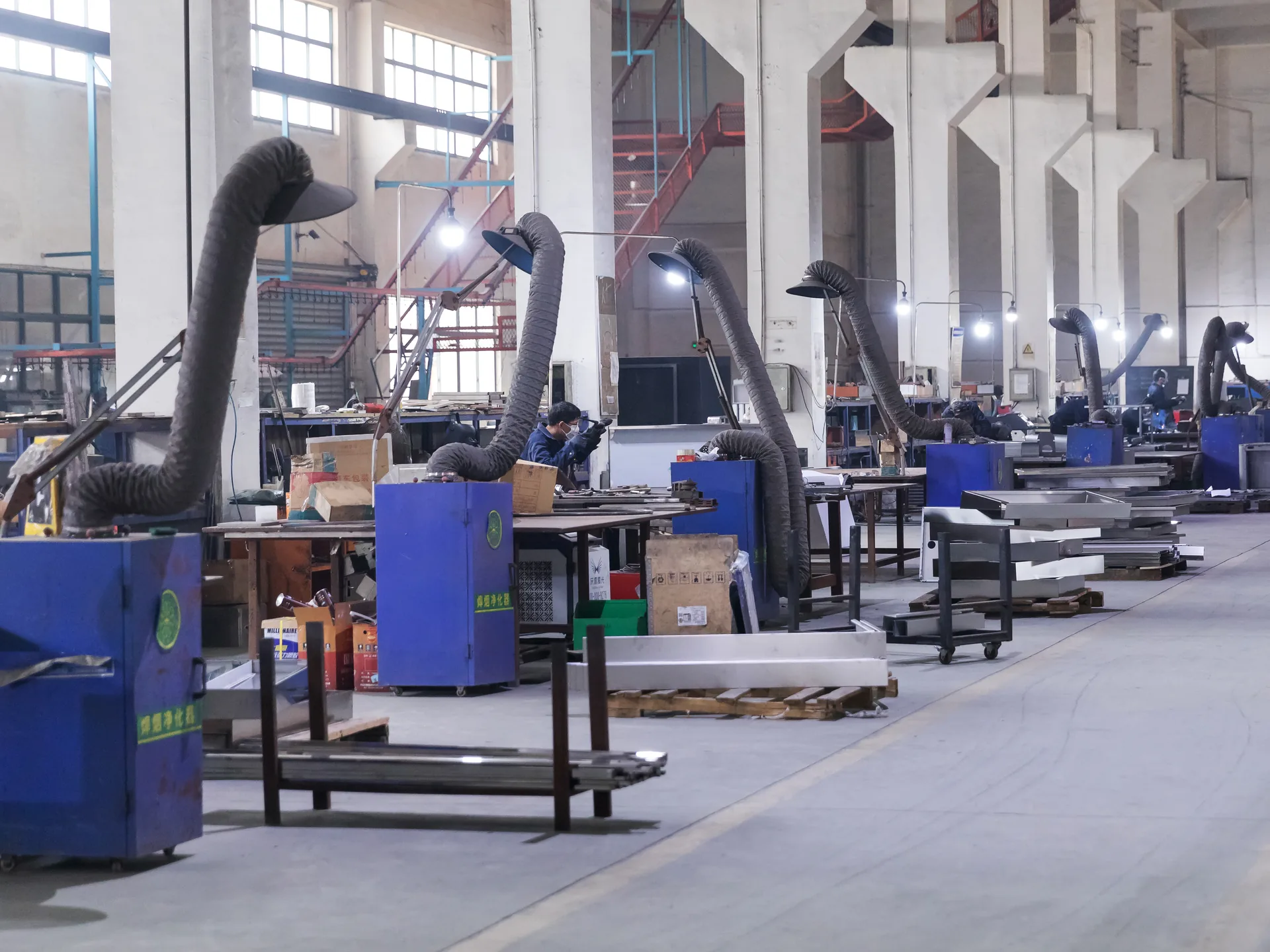
A counter is bought once and lived with for years, so start with what it is made of. Look for a worktop in wood or metal that is actually built to last rather than to photograph well. Ours are made from 0.8 to 1.5 mm metal sheet with stainless steel board where the surface takes wear, and finished in RAL or PANTONE colours to suit whatever the rest of the store is using. Whatever the supplier, the questions are the same: what thickness, what surface treatment, and how is the edge protected where trolleys hit it.
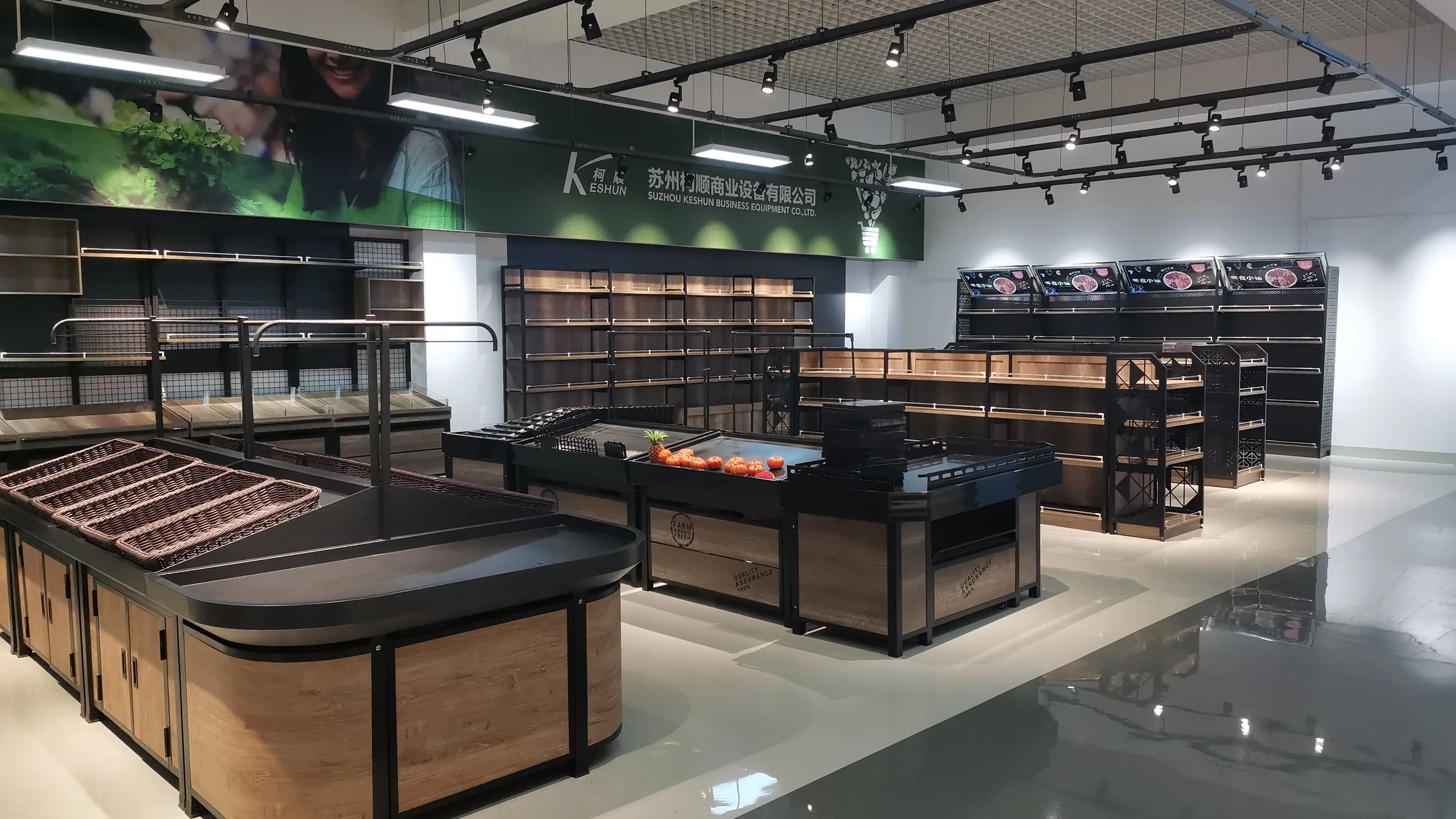
The second question is who is making it. Steel fabrication, woodworking and stainless steel production all run in the same plant in Changshu, which is what lets a counter, the shelving behind it and the fresh racks across the floor leave in one colour and one wood tone. Our About page sets out how that plant is organised.
What is on record for this category
Seventeen checkout counter models. Lengths 1200 to 2000 mm, depths 600 to 1200 mm, every worktop at 850 mm. Built from 0.8 to 1.5 mm metal sheet and stainless steel board, quoted in RAL and PANTONE colours. Manufacturing in Changshu since 1999.
Put the four decisions together and the enquiry writes itself: the clear length and depth you have for each lane, the shape you want, the till you are fitting, and whether the lane needs a belt. Answer those and the first quotation is a short conversation instead of a long one.
Keshun Technical Team. First published 7 May 2019, rewritten 6 August 2026 from five earlier articles on the same subject. The sizes and materials quoted above are the ones currently on record for this category.