


Fit out a produce section and you will be quoted racks in three different materials, often on the same page and often at a similar price. Plastic, metal and wood behave nothing alike once they are standing in an aisle that gets wet several times a day, gets hit by trolleys and gets stripped and restocked before the store opens. This guide covers what each material actually does there, and the two things buyers most often forget to check: the geometry of the trays and the size ladder the rack is built on.
Key takeaways
- Plastic cannot rust and is light to move, but it is the first to give way under impact or sustained pressure.
- Metal is steadier and takes wear better, and it is only as good as its coating — once moisture gets behind a breach, corrosion starts there.
- On a real floor most produce racks are a combination: a welded steel frame, plastic or iron baskets, and wood facing. Specify the material part by part, not rack by rack.
What A Produce Aisle Does To A Rack
Fruit and vegetables are the one category in a store where the fixture is part of keeping the goods saleable. Whatever holds them has to protect quality, integrity and shelf life at the same time, and it has to do it while shoppers pick through the display all day. Three demands follow from that, and they are the ones to hold a supplier to.
- Hygiene. The way produce is held must not compromise the hygienic state of the goods, which rules out any surface that cannot be wiped down properly.
- Durability through the supply chain. The fixture has to withstand the range of conditions it meets between the delivery bay and the shop floor, not just the conditions on the day it is installed.
- Retrieval. Goods have to come out easily. A rack that protects produce perfectly but makes a shopper dig for it has solved the wrong problem.
Which material serves those three best depends on which produce you are selling and how the section is run, so it is worth taking the two candidates separately before looking at what a fruit and vegetable rack is actually made of in practice.
Plastic Racks: Light, Colourful, Easy To Dent
A plastic rack is made up primarily of plastic components and is noticeably lighter than the metal equivalent, which matters every time the section gets rearranged. The surface is smooth, and it is not easily affected by the immediate conditions around it, temperature included. Its most useful property in a wet aisle is that it cannot rust: leave it in moisture, in the conditions that would corrode an unprotected metal rack, and it keeps its integrity.
Plastic is also the easy material to colour. Different shades are straightforward to produce, which is why plastic display is so often used to build a colour scheme across a produce section — the aesthetic effect is a merchandising device in its own right, not just a finish. The trade-off is strength. A heavy impact or sustained pressure will damage a plastic rack sooner than it will damage a metal one, and in a store where trolleys are moving all day that is the failure you will actually meet.
Metal Racks: Heavier, Steadier, Only As Good As The Coating
A metal rack carries more weight because of the metallic material in it, and that weight is mostly a virtue: it stays where it is put. Metal racks are frequently coated with plastic, which is where the real question sits. Coated metal is prone to rust wherever the coating is breached and moisture is allowed to get in behind it, so the parts to inspect are the cut edges, the welds and the fixing points rather than the flat faces. Beyond that, metal is easy to maintain and it adapts to the temperature around it faster than plastic does.
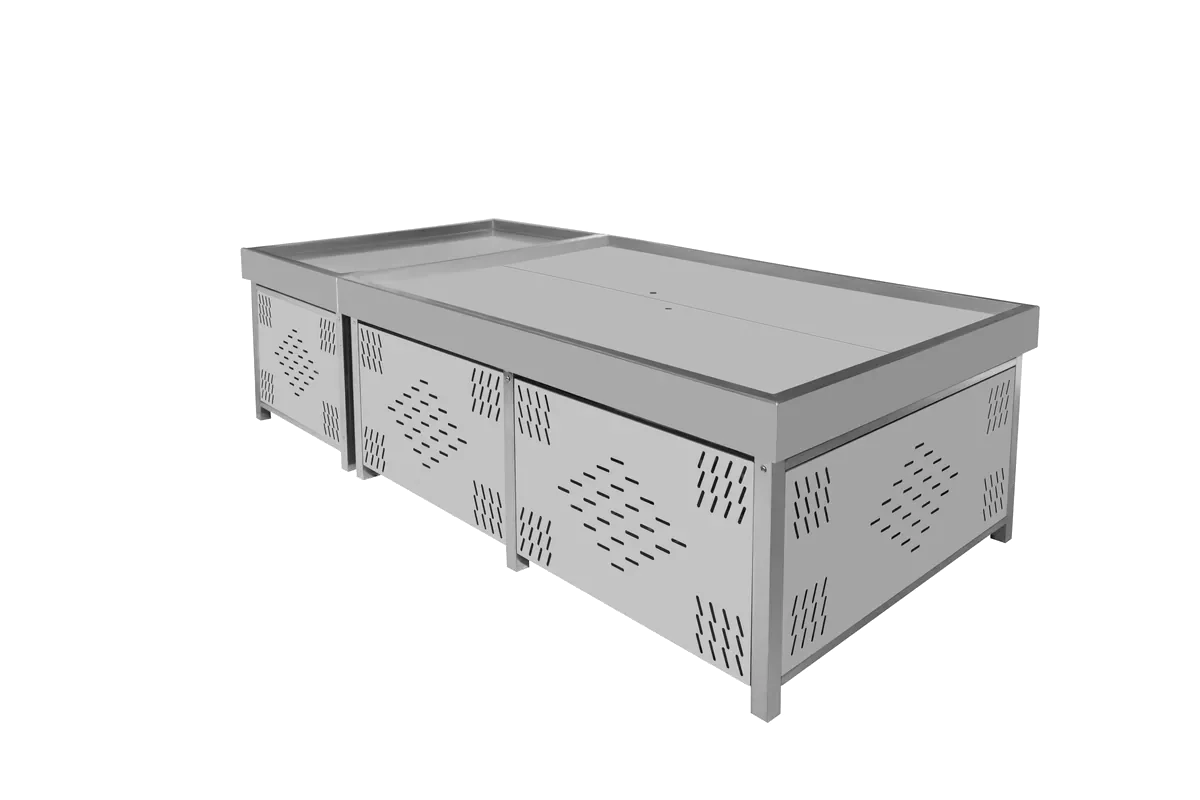
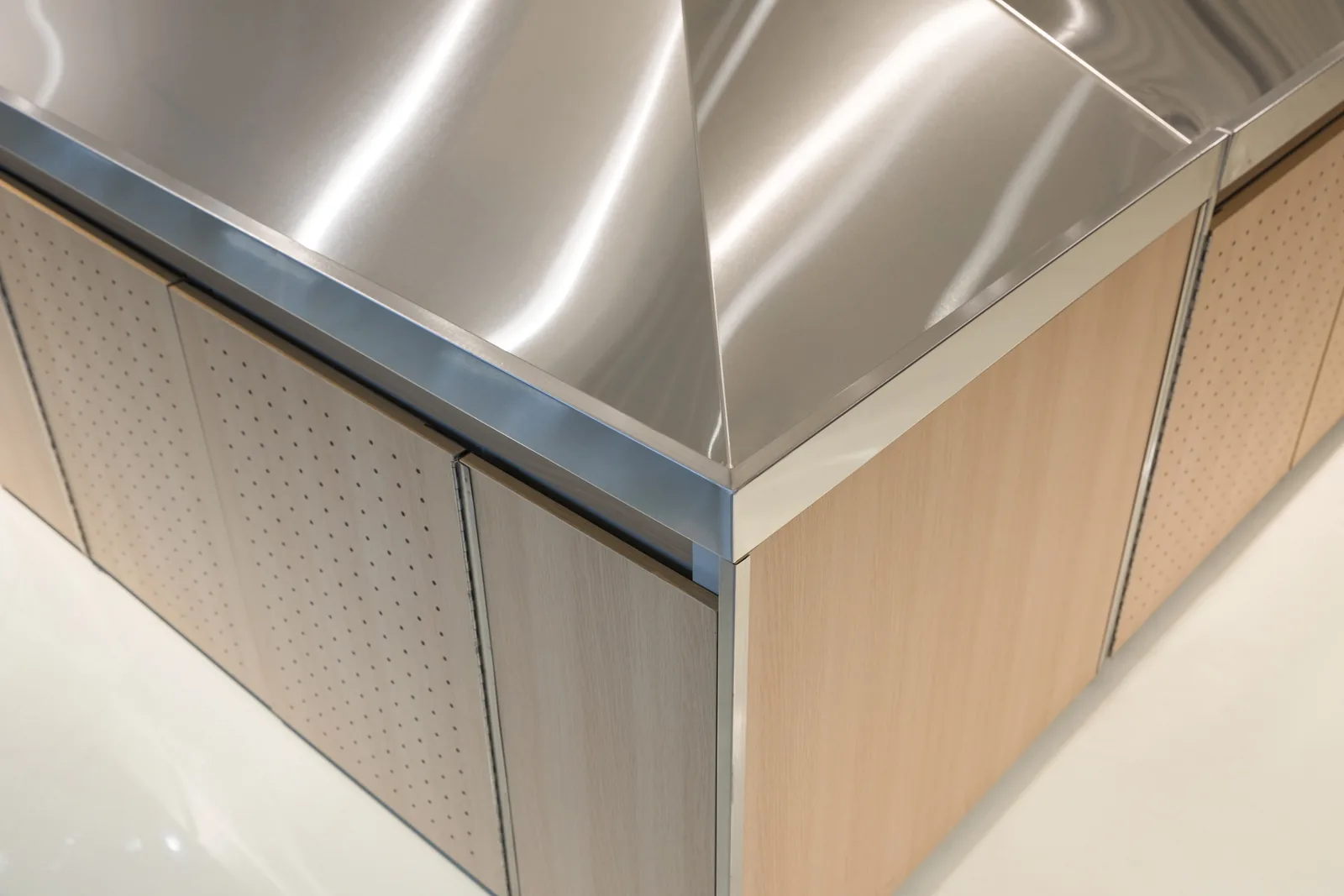
Stainless steel racks are the ones most commonly seen in supermarkets and produce outlets, and the reason is straightforward: they are made from pretreated, standardised steel built to industrial specifications, and they come in a range of standard modular sizes. What you buy with stainless is strength, corrosion resistance and durability in one material, which is why it tends to end up in the wettest positions in the section.
| Property | Plastic rack | Metal rack |
|---|---|---|
| Weight | Relatively light, easy to move when the section is rearranged | Heavier because of the metallic material, and steadier for it |
| Rust | Cannot rust, keeps its integrity in moisture | Prone to rust wherever the coating is breached and moisture penetrates |
| Impact and pressure | Affected sooner by a heavy knock or sustained load | Takes impact better |
| Ambient temperature | Not easily affected by the surrounding conditions | Adapts to the immediate temperature more quickly than plastic |
| Colour | Easy to produce in different shades, so colour becomes part of the display | Colour is applied as a finish and can be set to whatever the store is using |
| Maintenance | Smooth surface, easy to keep clean | Easy to maintain, with the coating as the thing to watch |
On A Real Floor Most Racks Are Both
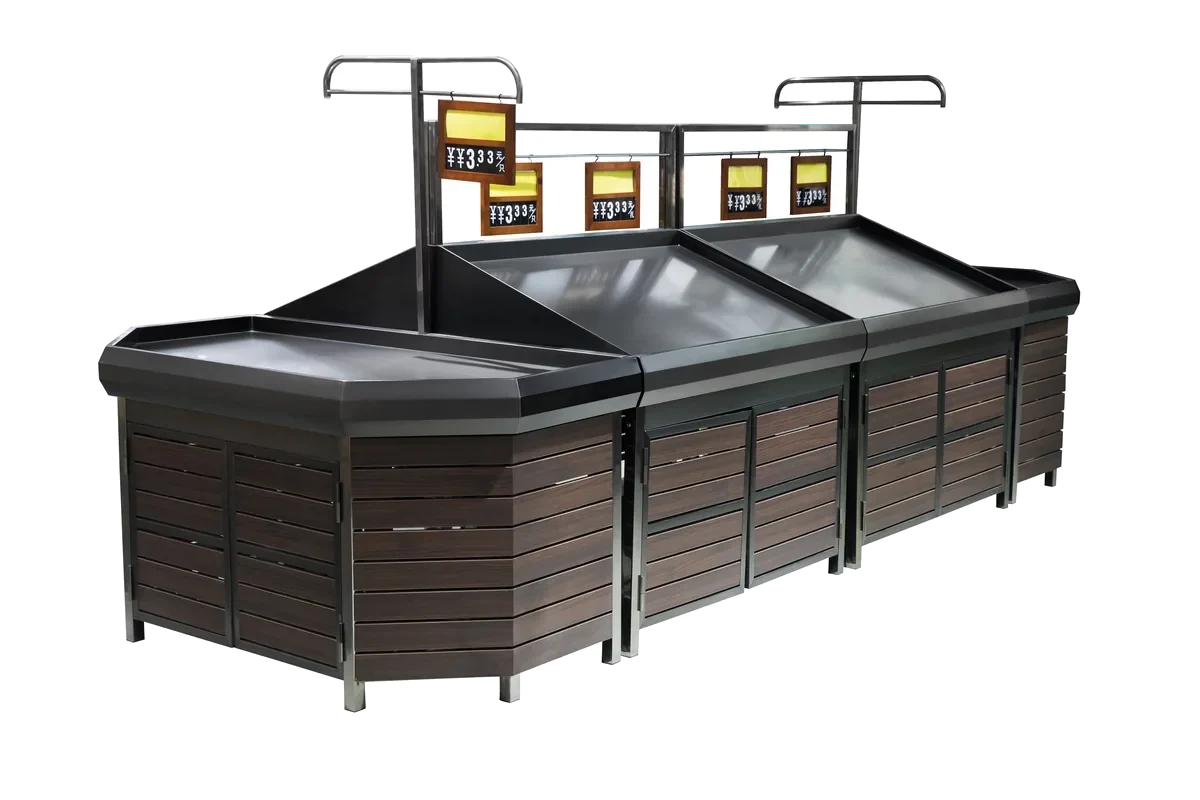
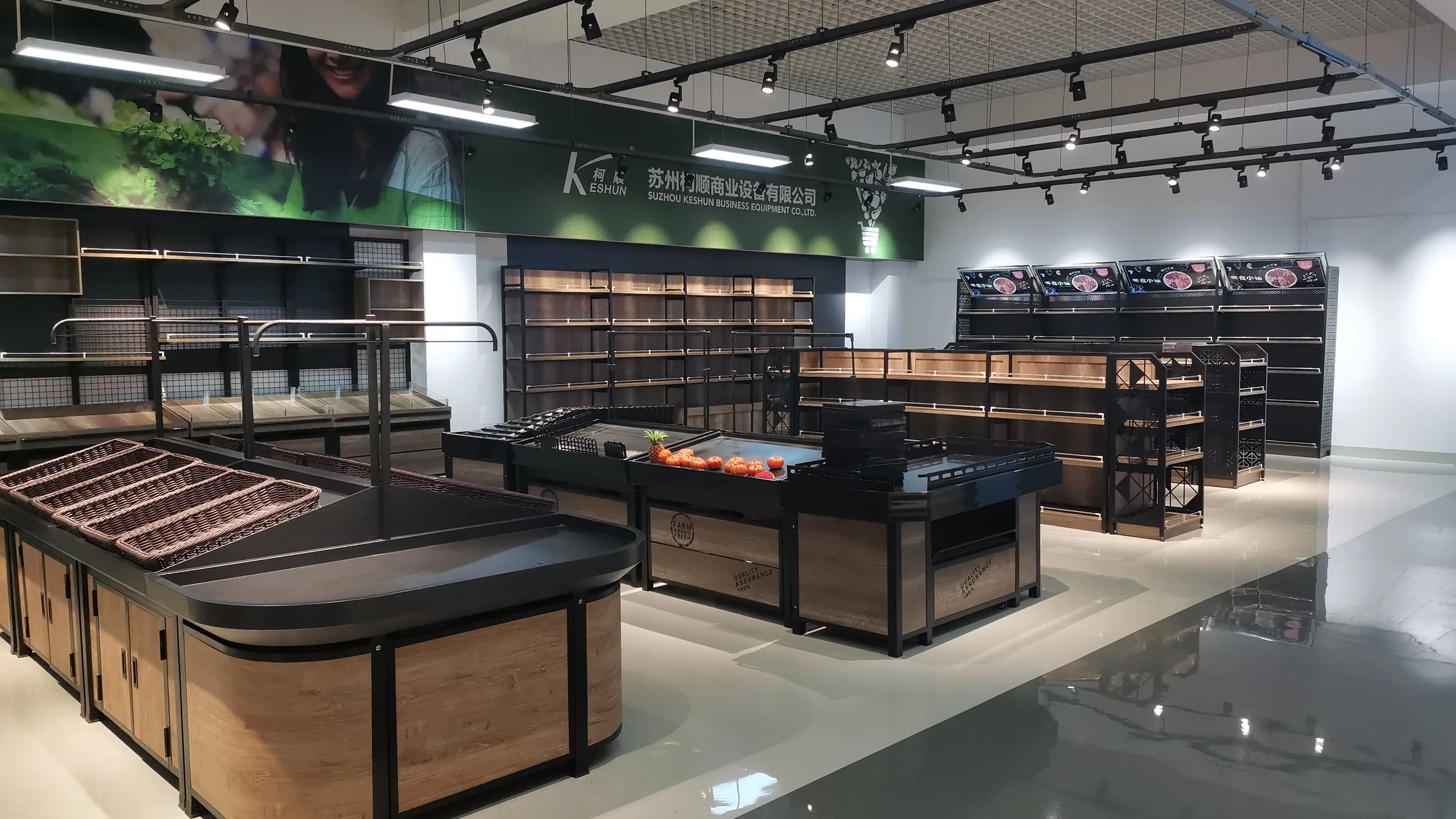
Ask what a fresh rack is made of and the honest answer is usually all three materials at once. The fresh racks seen most often are built in iron, wood and steel, and the produce baskets sitting on a steel rack are themselves commonly high-quality plastic or iron. Steel fruit and vegetable racks are normally made from square pipe, or from steel columns and frame structures put together with NC welding, with the colour adjusted to whatever the rest of the store is using.
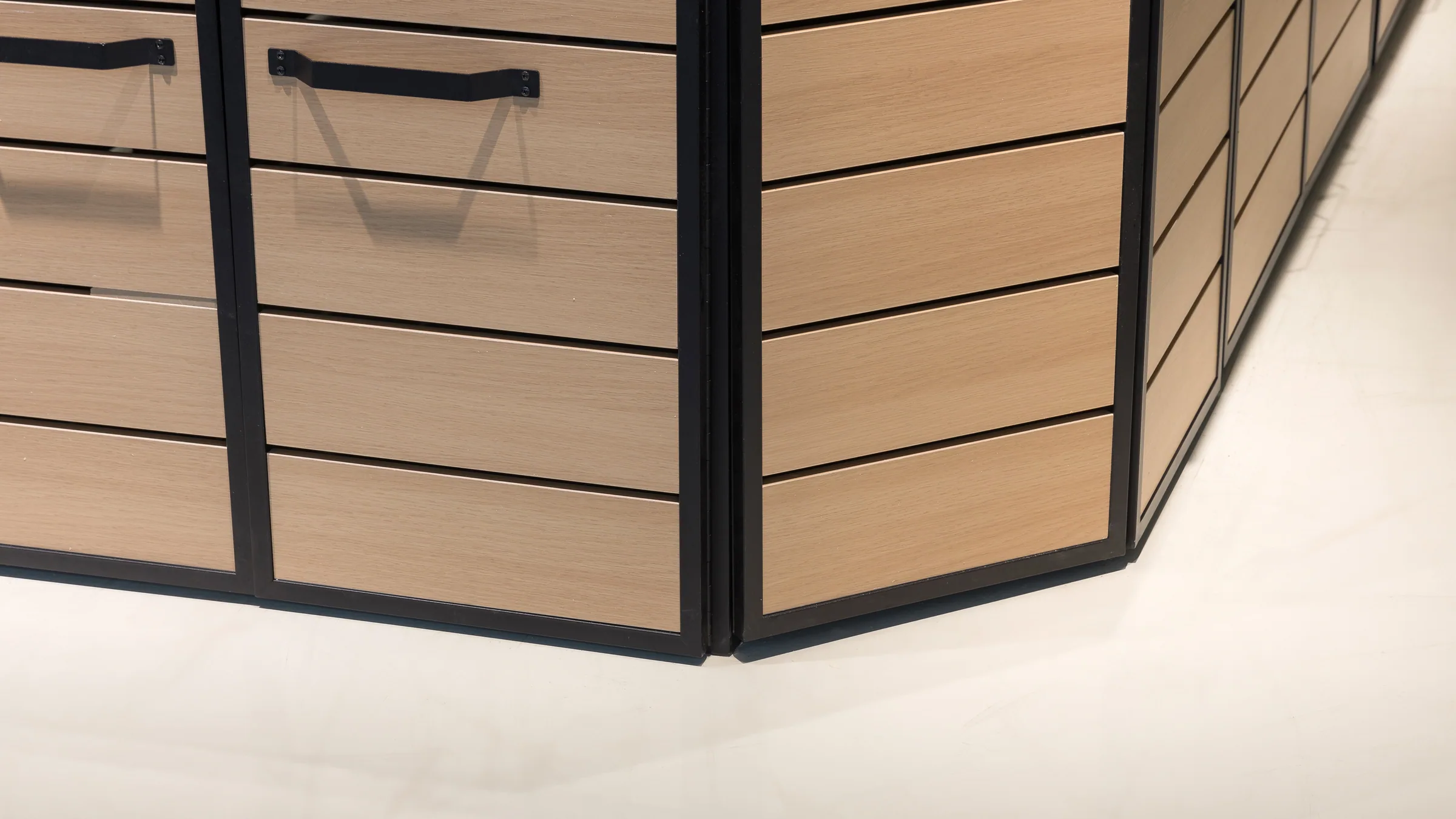
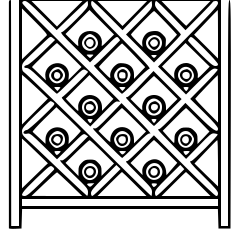
Wood is a different proposition. Wooden fruit and vegetable racks are usually made from cedar or pine board, with E0-class board where the environmental grade matters, a scratch-proof protective varnish on the wood surface, injection-moulded legs and a hardware combination holding it together. The structure is generally fixed rather than adjustable, which makes it compact and stable, and the appearance is the reason it gets chosen — it suits produce stores, grain and rice stores and dry goods stores where the section is meant to read as a market rather than a warehouse. One practical note that gets missed on site: all-wood racks should be painted straight after installation rather than left.
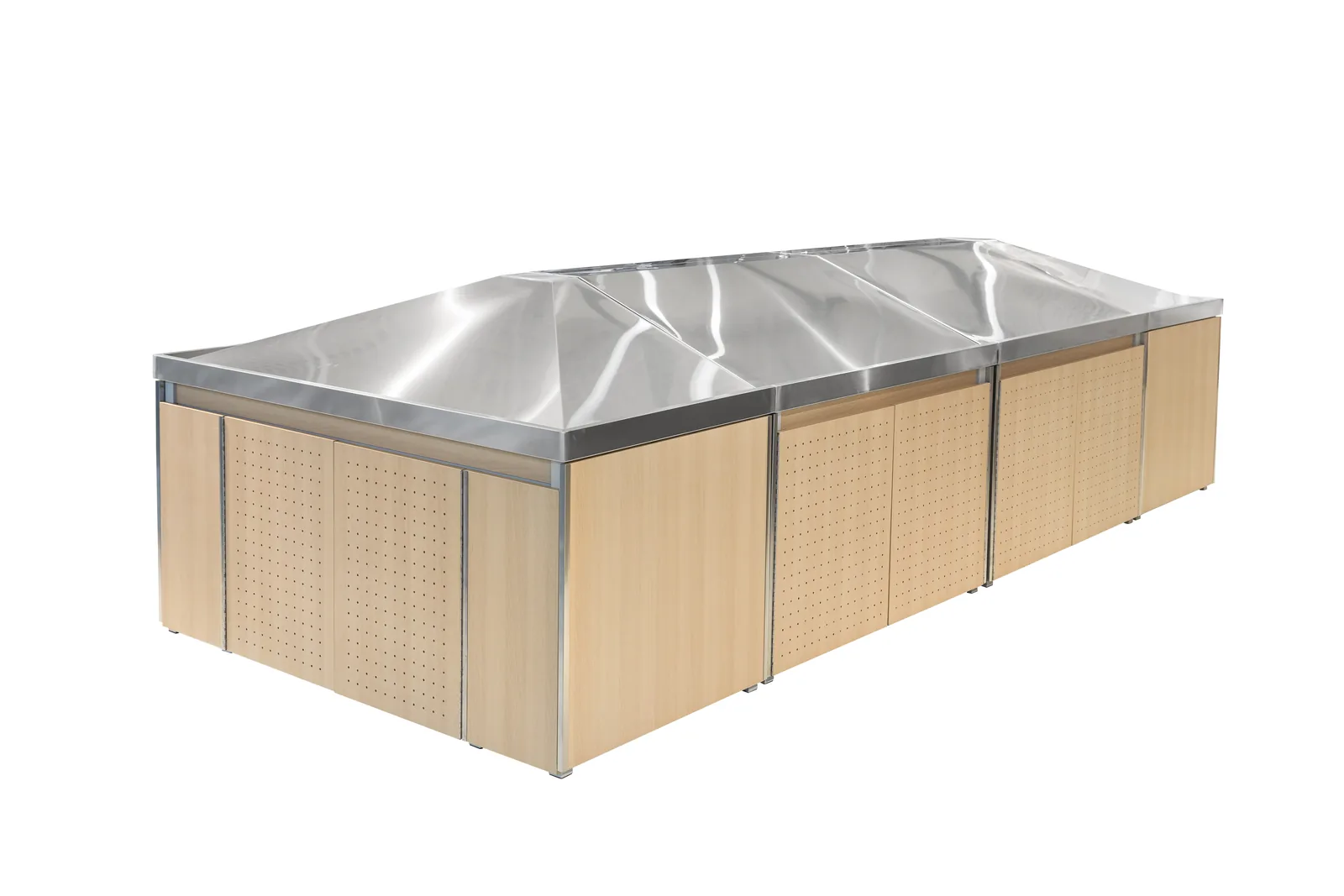
Ask the material question part by part. A produce rack is rarely one material all the way through, and the part that fails first is almost always the part nobody specified.
The Rack Types You Will Be Quoted
Material is only half the specification. Produce racks are also sold by type, and four of them turn up in most quotations: stainless steel racks, adjustable racks, tube type racks and top canopy racks. Which one suits you depends on the arrangement pattern you are working to and how much floor the section has, not on which is technically best.
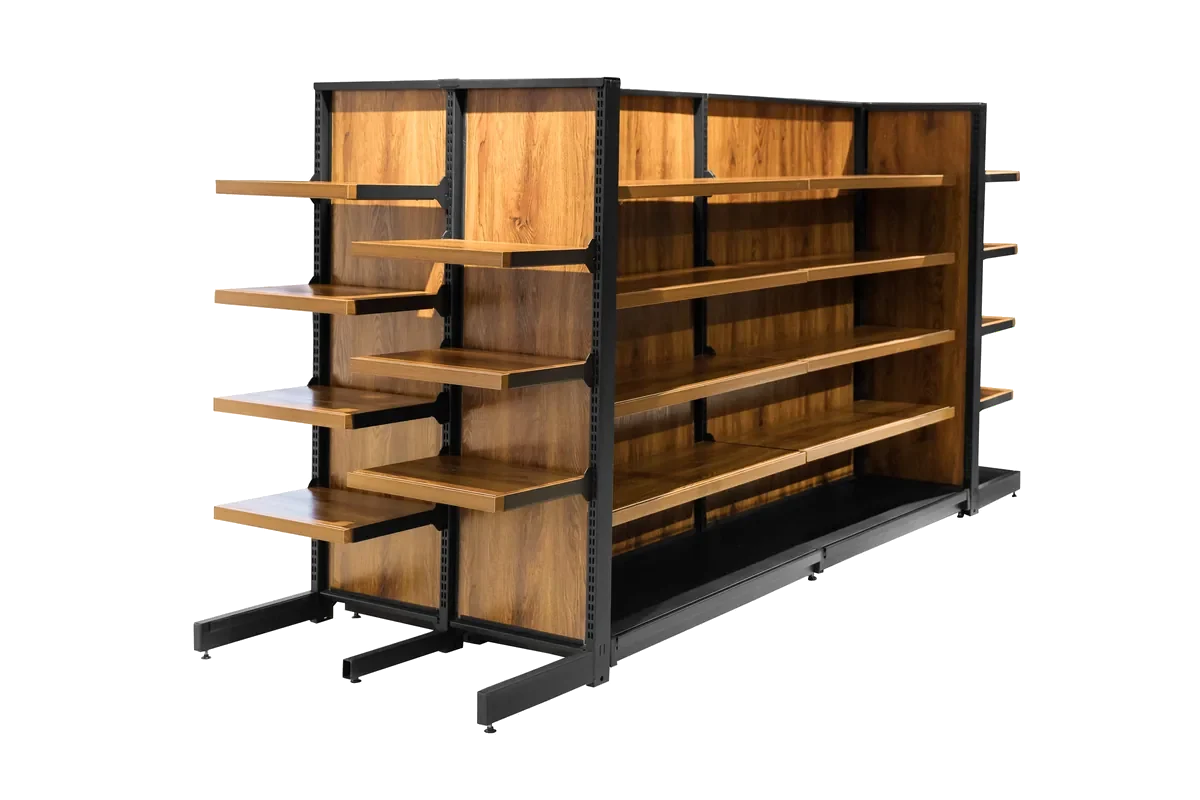
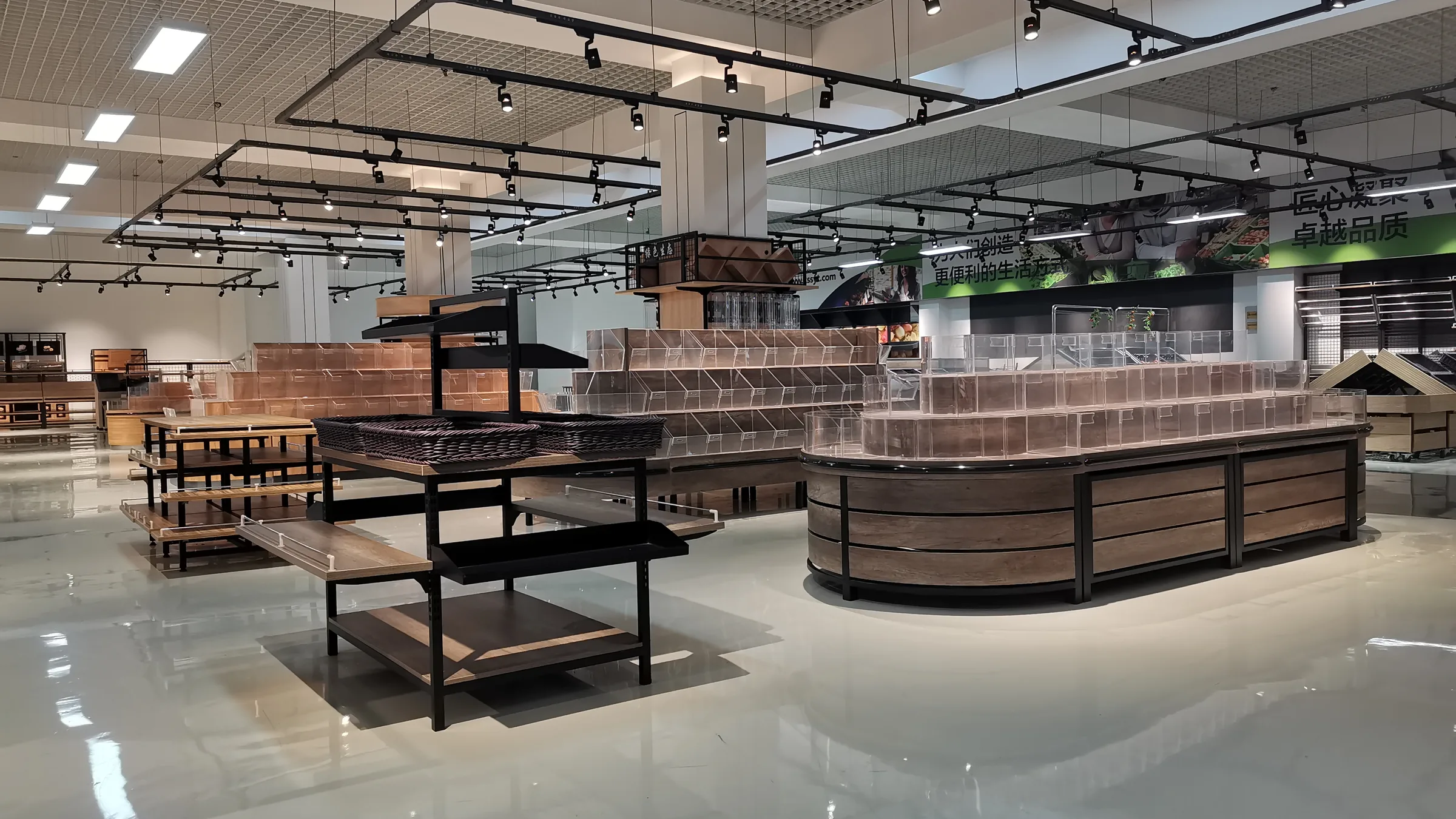
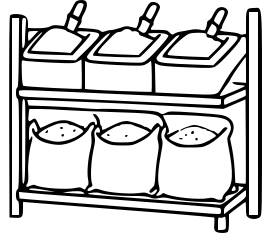
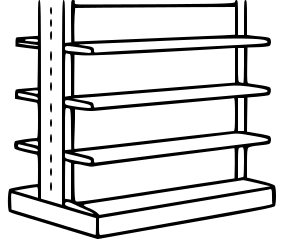
Cutting across that, our own fresh racks come in three styles, which is the vocabulary a quotation from us will use. Single-sided wall runs and double-sided mid-island units are what smaller supermarkets buy. Larger stores build the section from those two and add frame rattan basket displays alongside them for fruit and vegetables, which is where the softer, market-stall look in a produce aisle usually comes from.
Tray Geometry And The Size Ladder
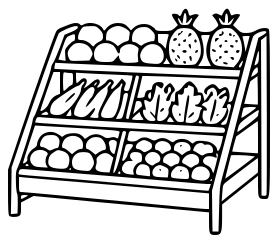
The geometry of a produce rack is not decoration. The usual arrangement puts three smaller rows at the top and makes the fourth and lowest one larger, so that the display opens up towards the floor and the shopper can see what is on every level. The rows are tilted towards the aisle for the same reason. Loading follows from the shape: smaller fruit and vegetables go in the upper three rows, the large ones sit at the bottom, and the trays themselves are sized alike so stock can be moved between levels.
Standard produce shelving is offered on a size ladder rather than in free dimensions, and knowing the ladder is what lets you check whether a quotation is a standard build or a special. The figures generally on offer are:
- Length: 602, 762, 877, 1050 and 1170 mm
- Depth: 300, 375, 450, 525 and 600 mm
- Height: 764, 1093, 1423, 1752, 2082 and 2410 mm
Our own fresh racks are quoted per group rather than per shelf, and the two standard groups differ by 200 mm of height for a reason that has nothing to do with capacity: an island stands in the open floor and has to be seen over, while a wall run blocks nothing and can go taller.
Recorded sizes for Keshun fresh racks
Single-sided wall run L1000 × W400 × H1700 mm per group. Double-sided mid-island L1000 × W800 × H1500 mm per group. Rattan basket displays are mostly custom size. Also on record in this category: a supermarket vegetable rack at 1200 × 750 × 850 mm and a stainless steel vegetable rack at 1200 × 800 × 1300 mm, both quoted in RAL and PANTONE colours.
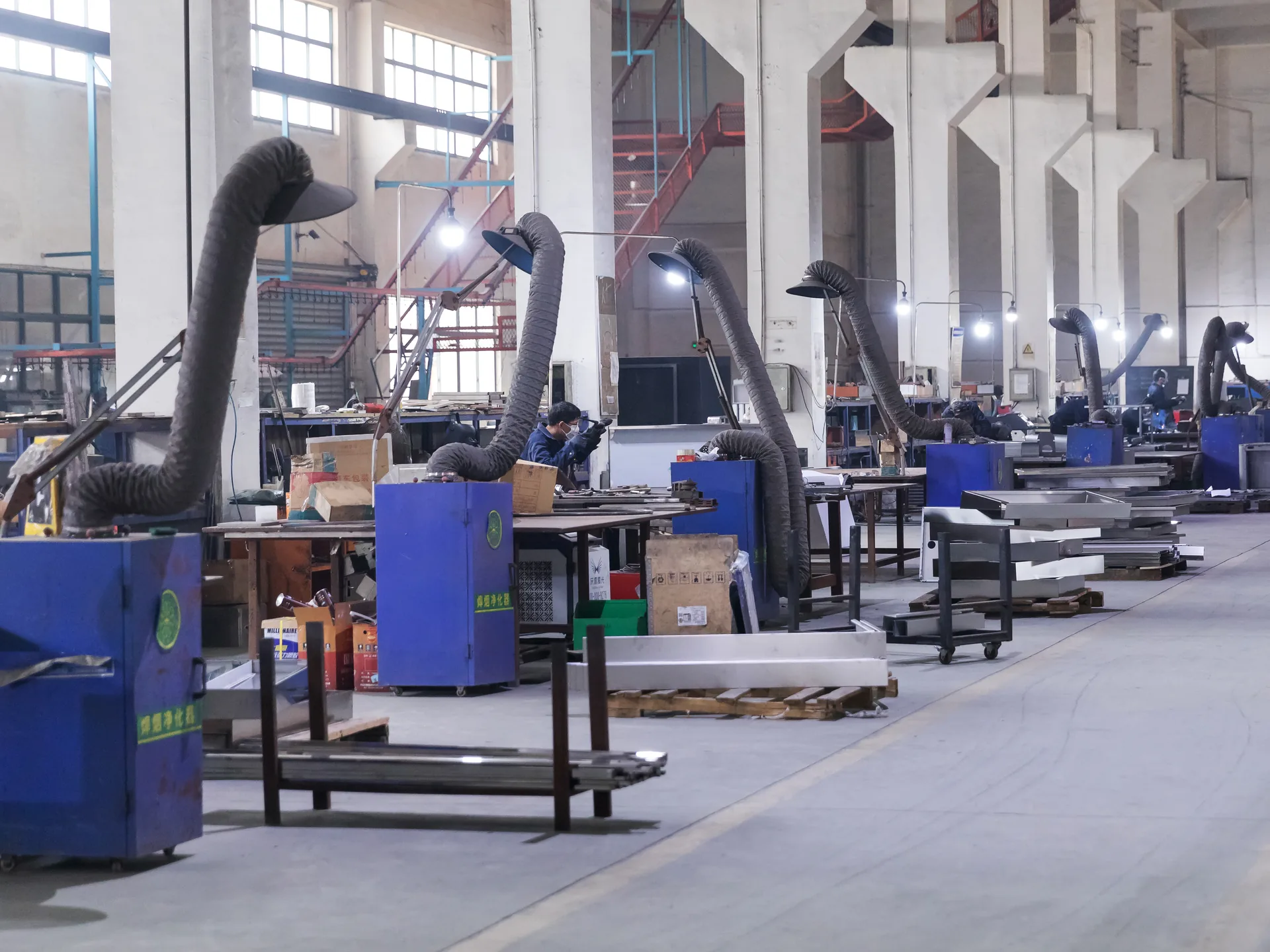
Both materials are effective at holding produce and both are easy to maintain, so the choice rarely comes down to plastic against metal in the abstract. It comes down to build quality, and build quality comes down to who made it. Steel fabrication, woodworking and stainless steel production all run in the same plant in Changshu, which is why a produce island, the shelving behind it and the counters at the front can leave in one colour and one wood tone — our About page sets out how that works.
Keshun Technical Team. First published 11 March 2019, rewritten 6 August 2026 from two earlier articles on rack materials, with sizes taken from our current product records.