

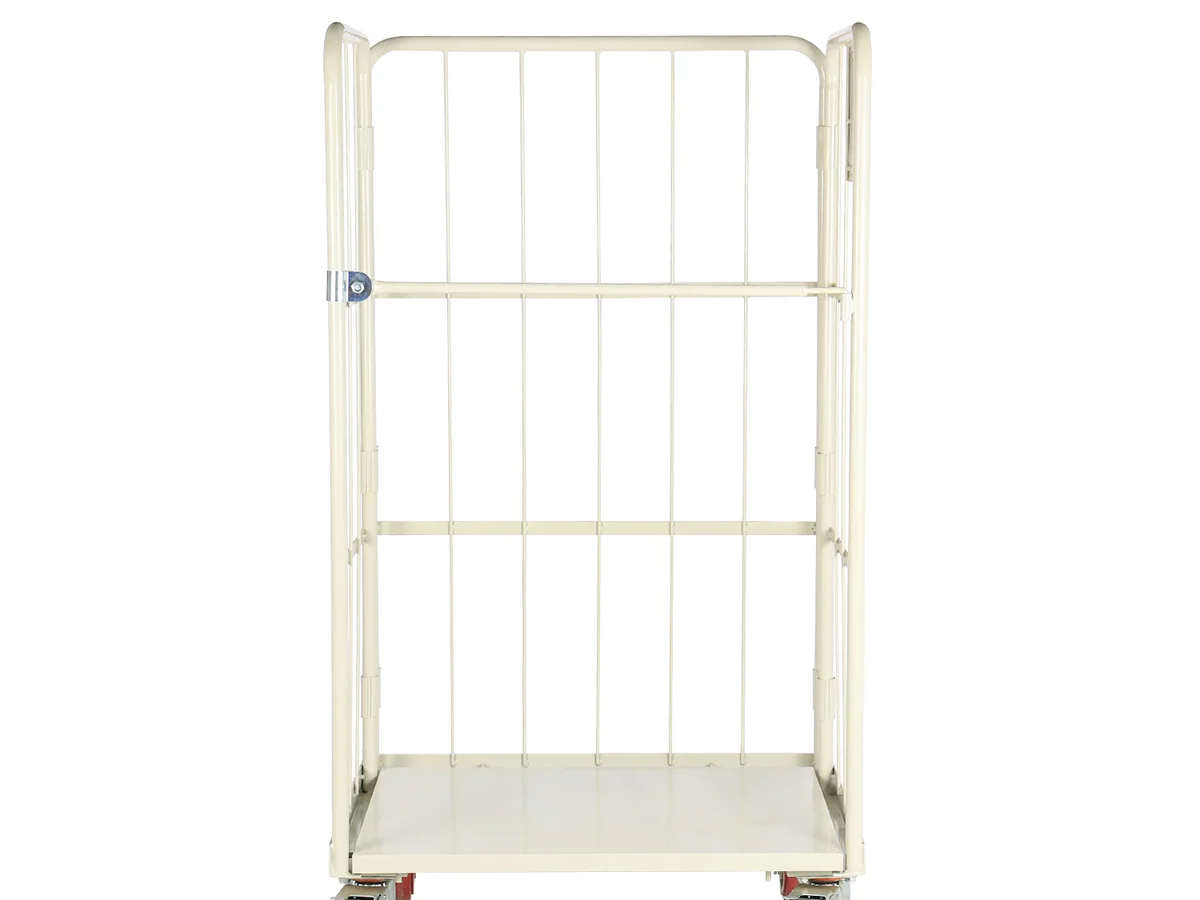
Mesh Side Panel
Load readable
Mesh rather than solid sheet. Staff read the load without opening the container, and on a ramp or in a lift a mesh side keeps the load contained without the sail area of a solid one.
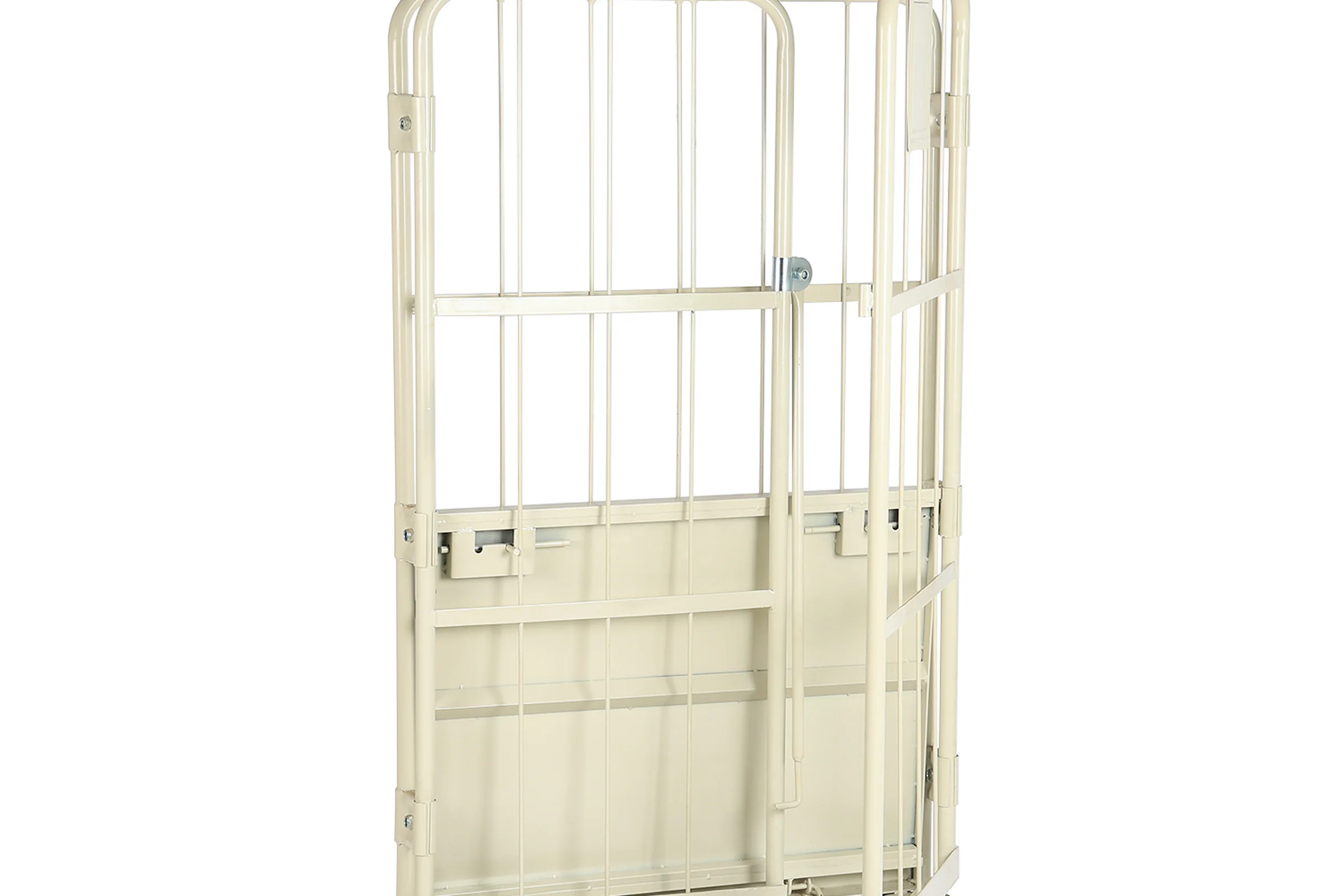
Mesh sides · folds flat · backstore to shop floor
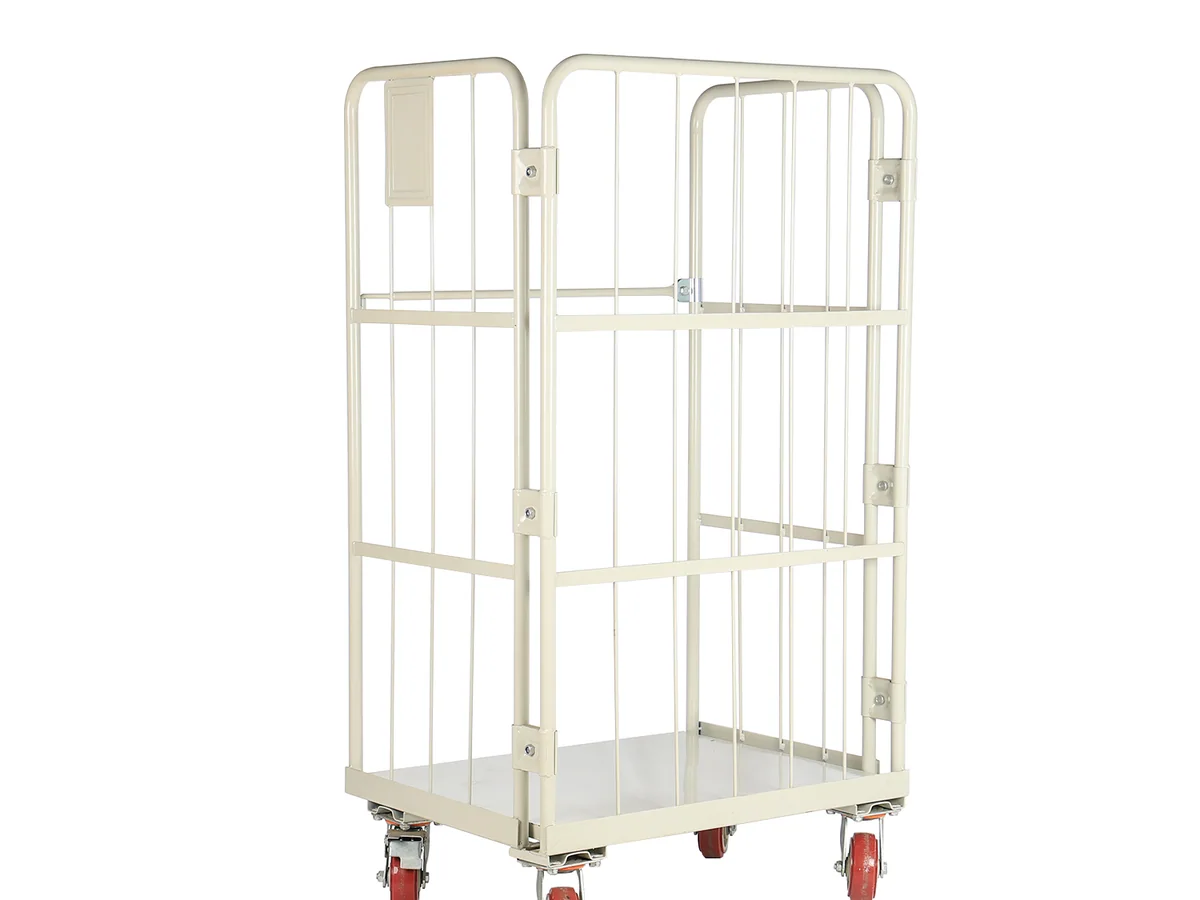
A full-height mesh roll container for moving stock in volume. The sides fold so an empty one takes a fraction of the space, which on a fleet of them is the whole argument.
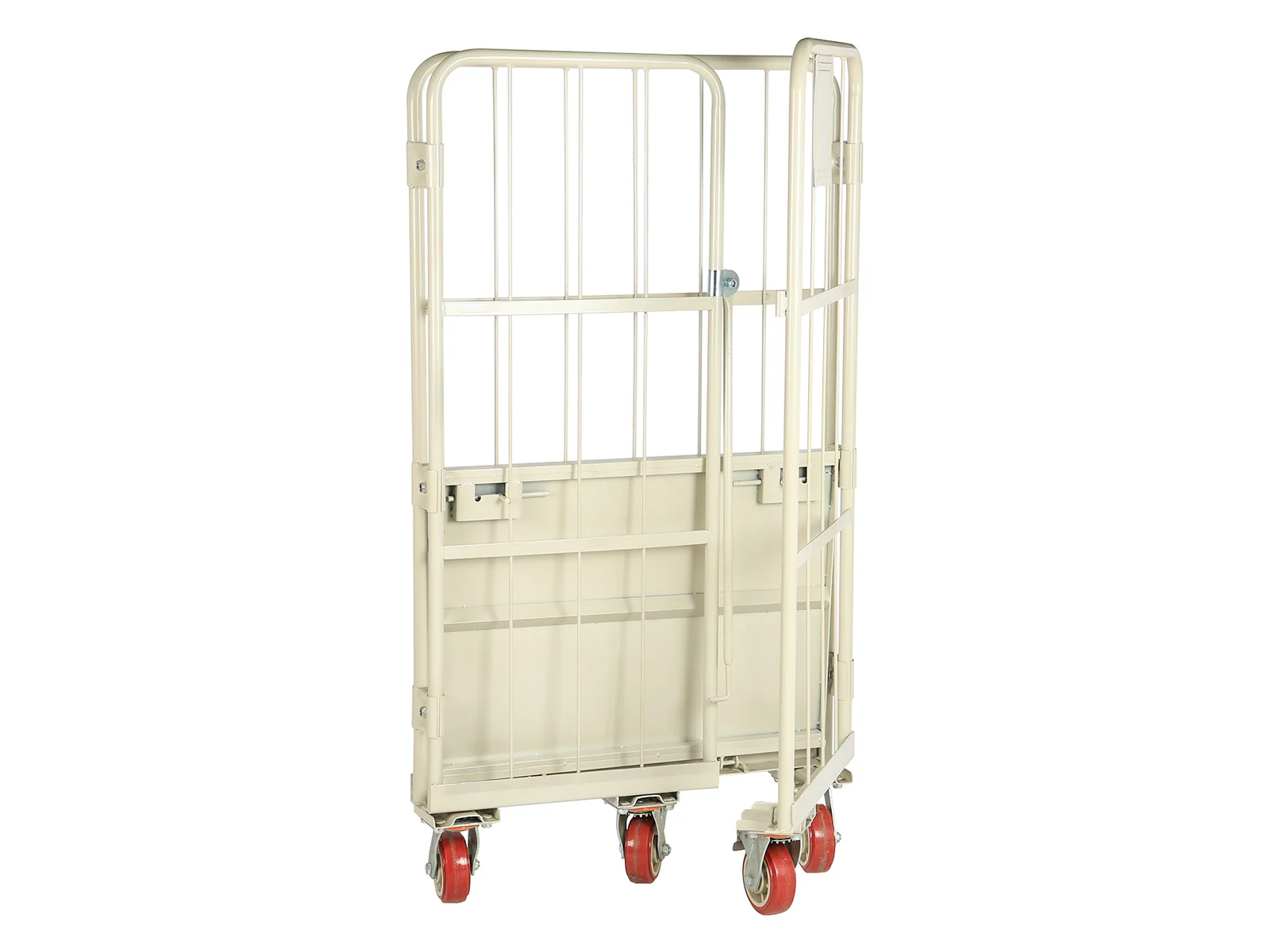
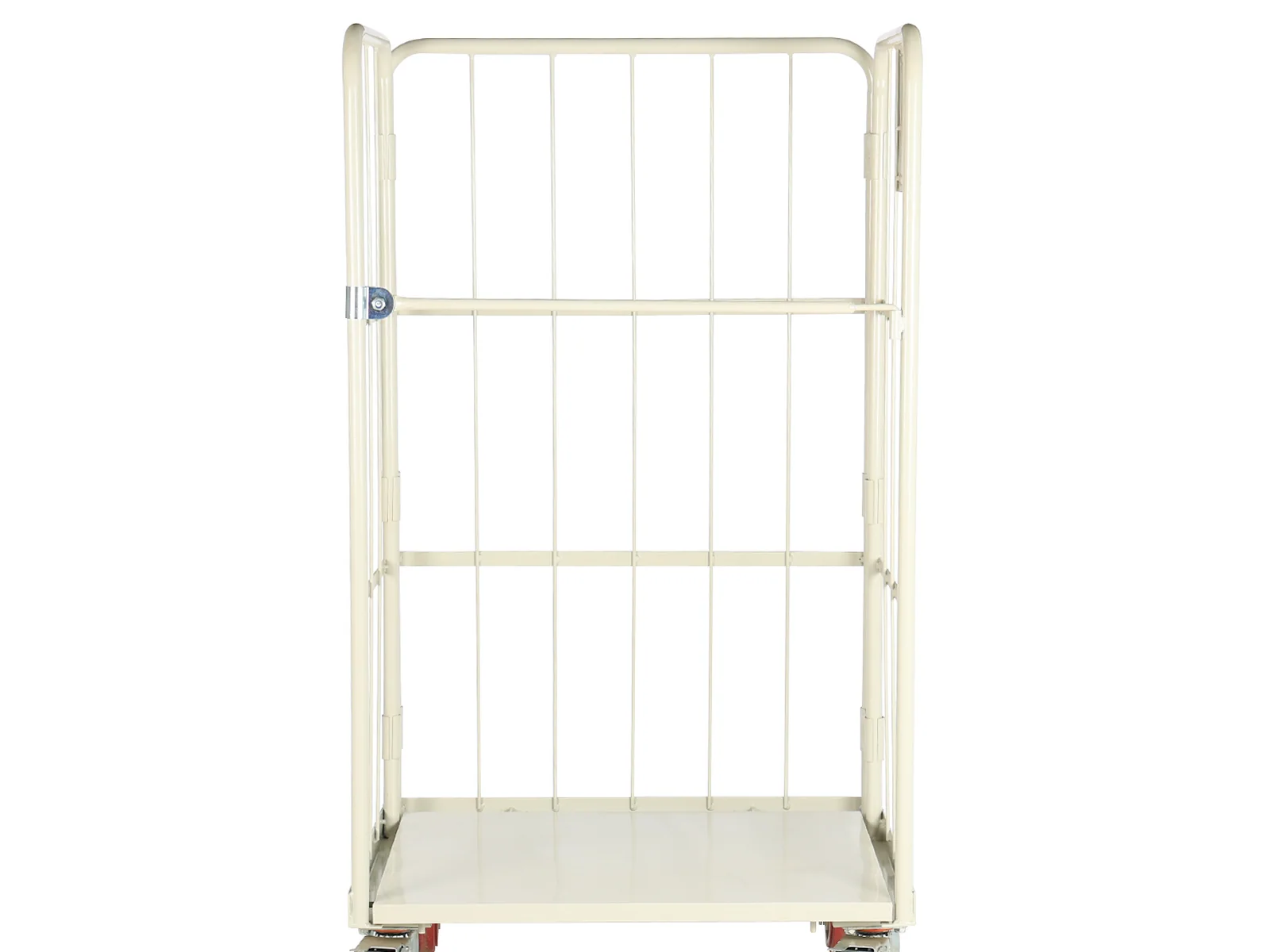
Studio angles on white, with close-ups below.
A roll container spends half its life empty, and an empty one that does not fold is a large steel box occupying backstore floor for no reason. The sides on this build fold down so an empty container collapses to a fraction of its footprint, and a stack of them takes the space one standing unit would.
The mesh sides do two jobs: they let staff see what is in a container without opening it, and they keep the load contained on a ramp or in a lift where a solid-sided cage would tip more readily. It is a back-of-house product and it is specified for continuous use.
A full-height mesh roll container for moving stock in volume. The sides fold so an empty one takes a fraction of the space, which on a fleet of them is the whole argument.
Supermarkets, convenience stores, chain retail and speciality stores. Tell us the store format and the floor area and the specification comes back written against them.
This is back-of-house equipment used continuously, so all four close-ups are about durability and folding.
Load readable
Mesh rather than solid sheet. Staff read the load without opening the container, and on a ramp or in a lift a mesh side keeps the load contained without the sail area of a solid one.
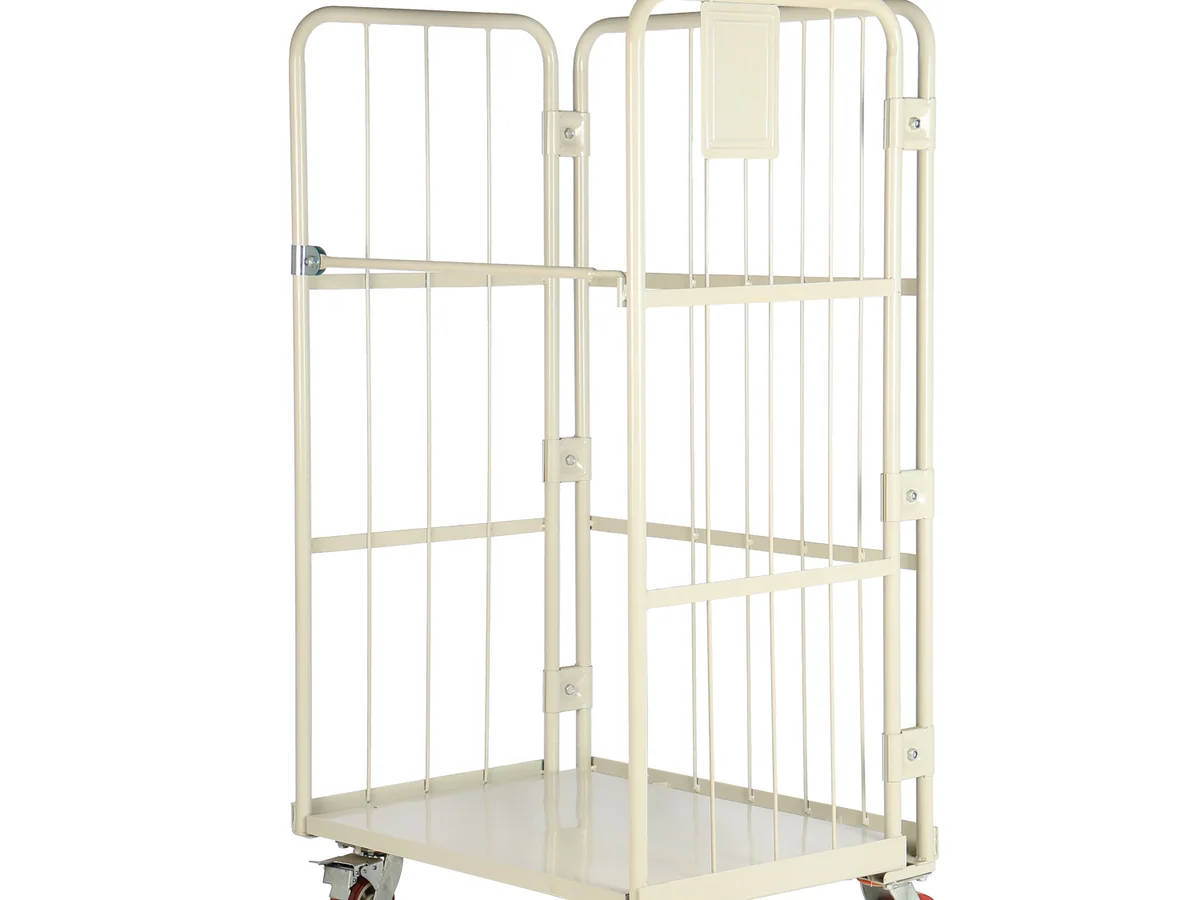
Sides fold down
The hinge is what the whole product depends on. An empty container that folds takes a fraction of the backstore floor, and across a fleet of them that is the entire economic argument.
Ramps and lifts
Castors are specified for continuous use and for the ramps and lift thresholds these cross daily. It is the most common early failure on back-of-house equipment.
Load rated
The base frame carries the whole load and takes every impact from being pushed into a lift. It is welded and sized against what you actually move.
Every item on this page is made to order. Send a floor plan, a hand sketch or a photograph of a fixture you like, and we quote against it.
Store fixtures are light for their size, so a container fills up on volume long before it fills up on weight. What decides your freight is not what one unit weighs — it is what shape the goods are in when they go through the container door. Everything we build leaves in one of three shapes.
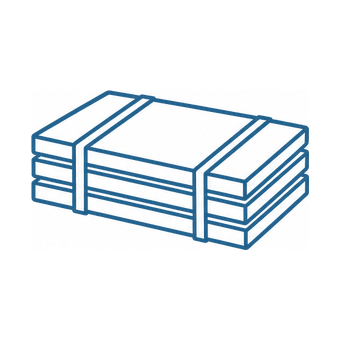
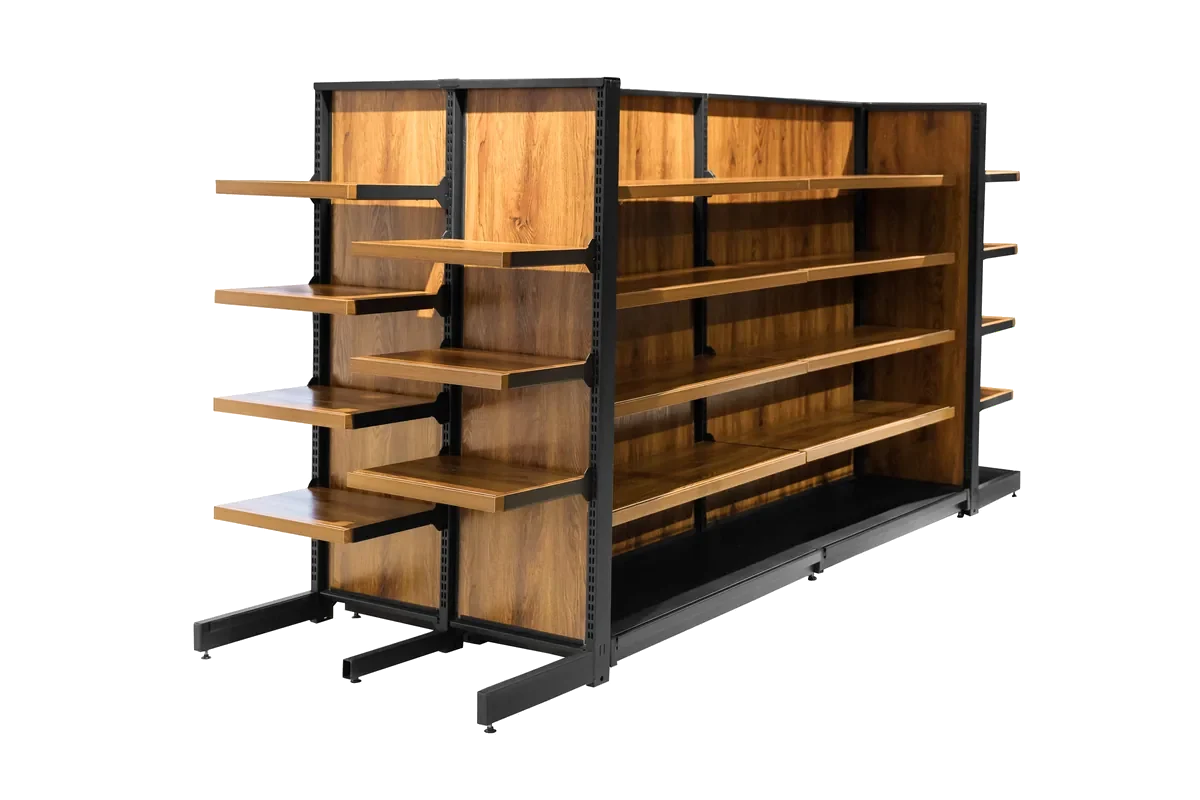
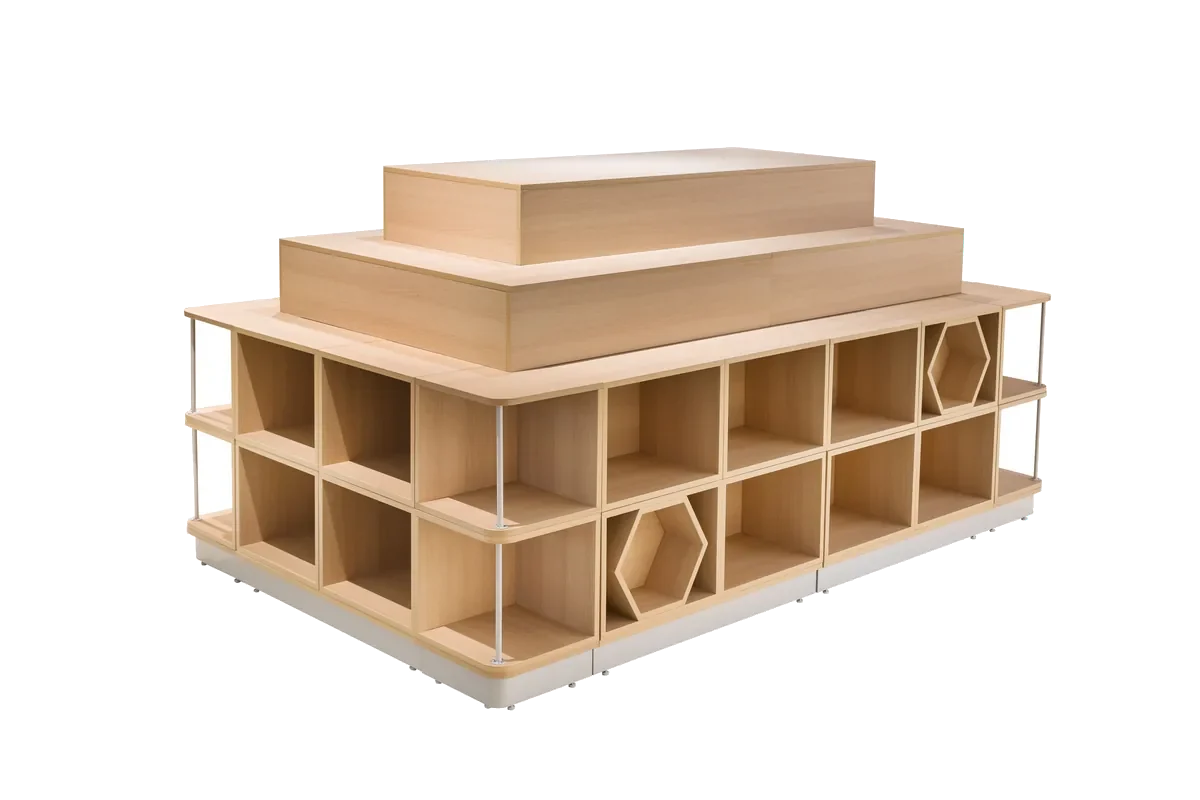
Shelving bays, produce islands and bulk cabinets travel as panels — uprights, shelves, back panels and plinths, strapped flat with bubble wrap on every component. They are built up on the shop floor, so the packing list and the assembly drawings travel with the goods.
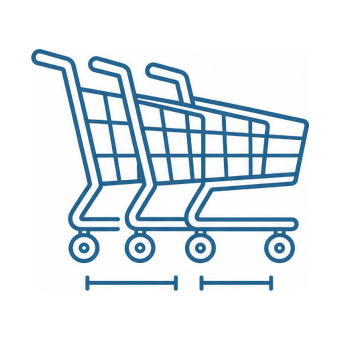
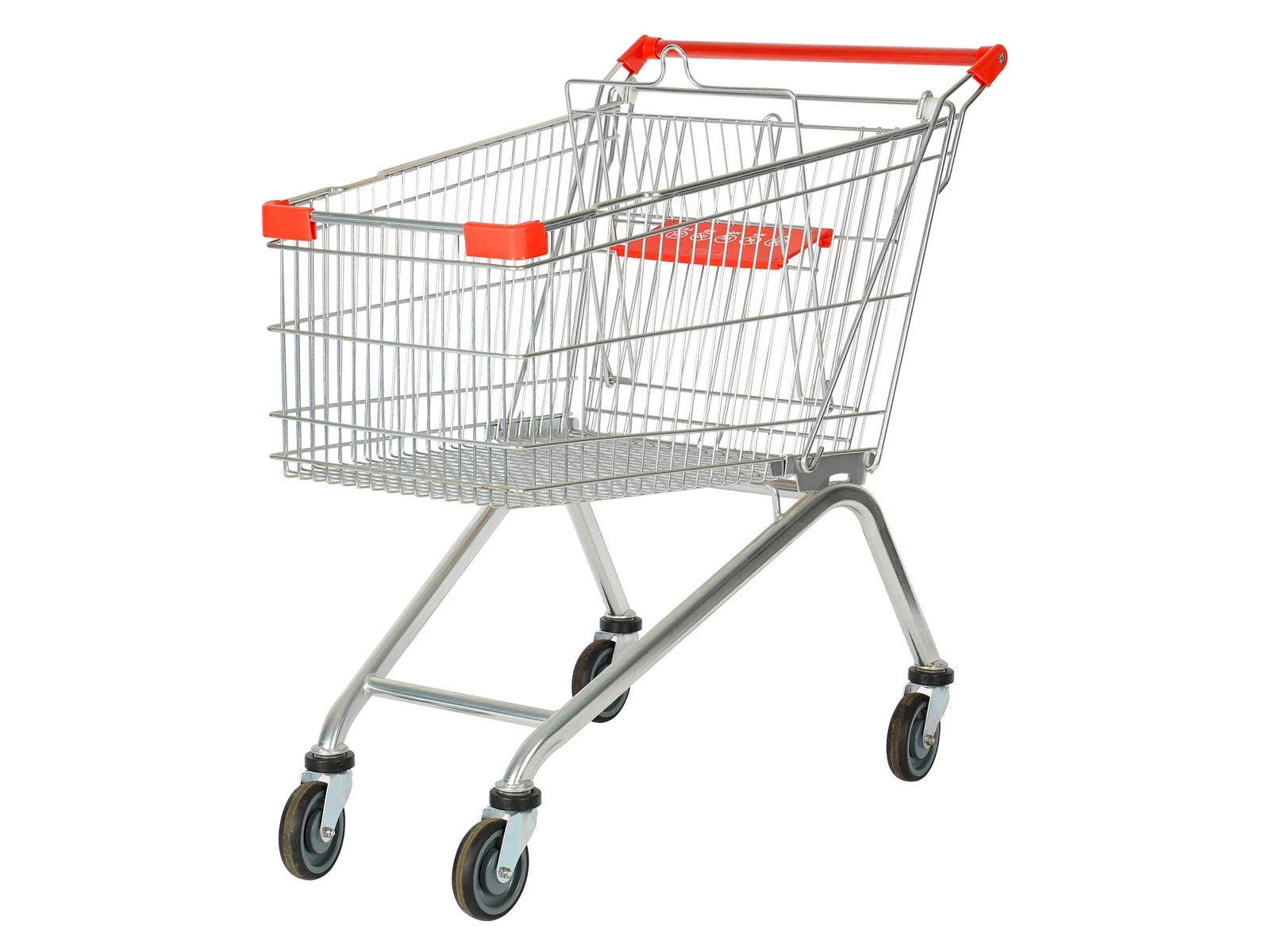
Trolleys slide into one another and baskets stack. Past the first unit, each extra one adds only its nesting pitch instead of its full length, so the shipped volume ends up a fraction of what the unit count suggests.
This model
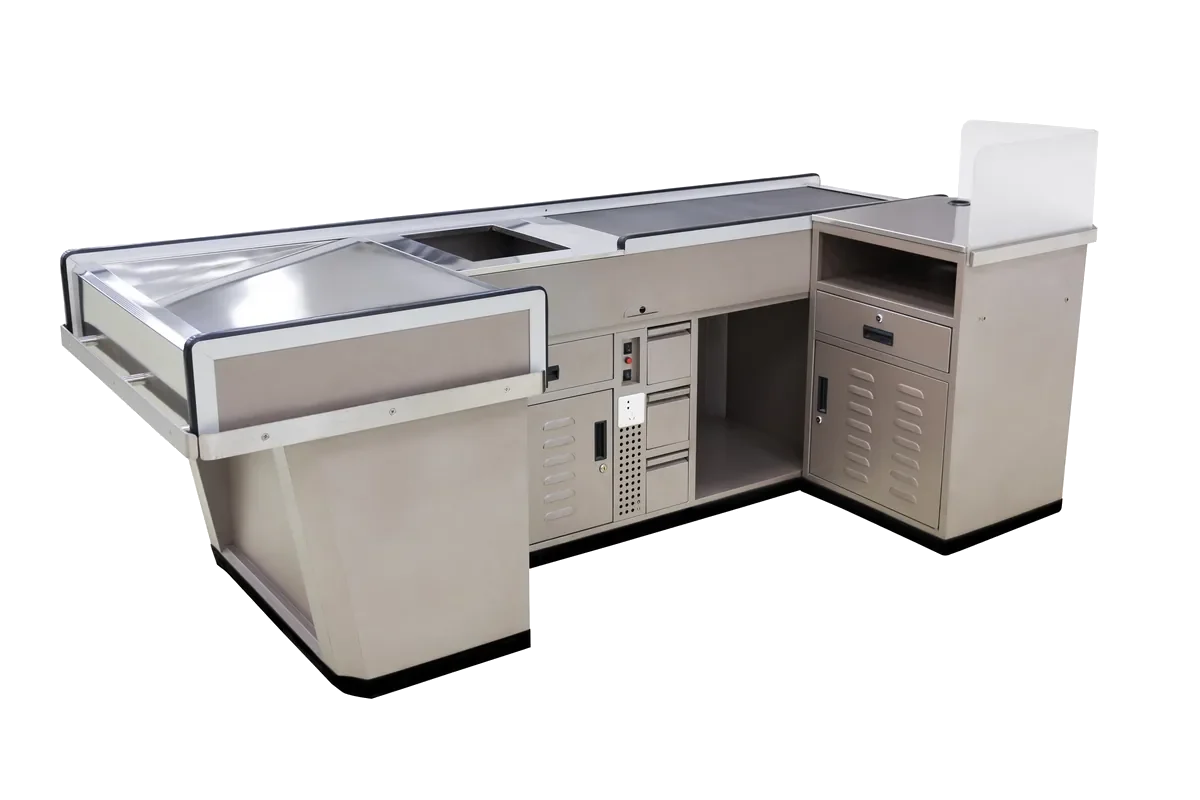
A checkout lane is welded, coated and fitted out as one piece, so it is crated whole with padding on the steel. Nothing waits to be assembled at the store beyond levelling it into the lane, and the crate is the counter plus a margin.
Trolleys are the one category where the unit count and the shipped volume are almost unrelated. They nest, so past the first unit each extra one adds only its nesting pitch instead of its full length — which is why a container of trolleys holds several times what the same container of assembled counters would. We do not publish litre capacities for this range. The figures circulating for it came from an old third-party listing rather than from our own production records, and they are being confirmed with the factory before they go on the site.
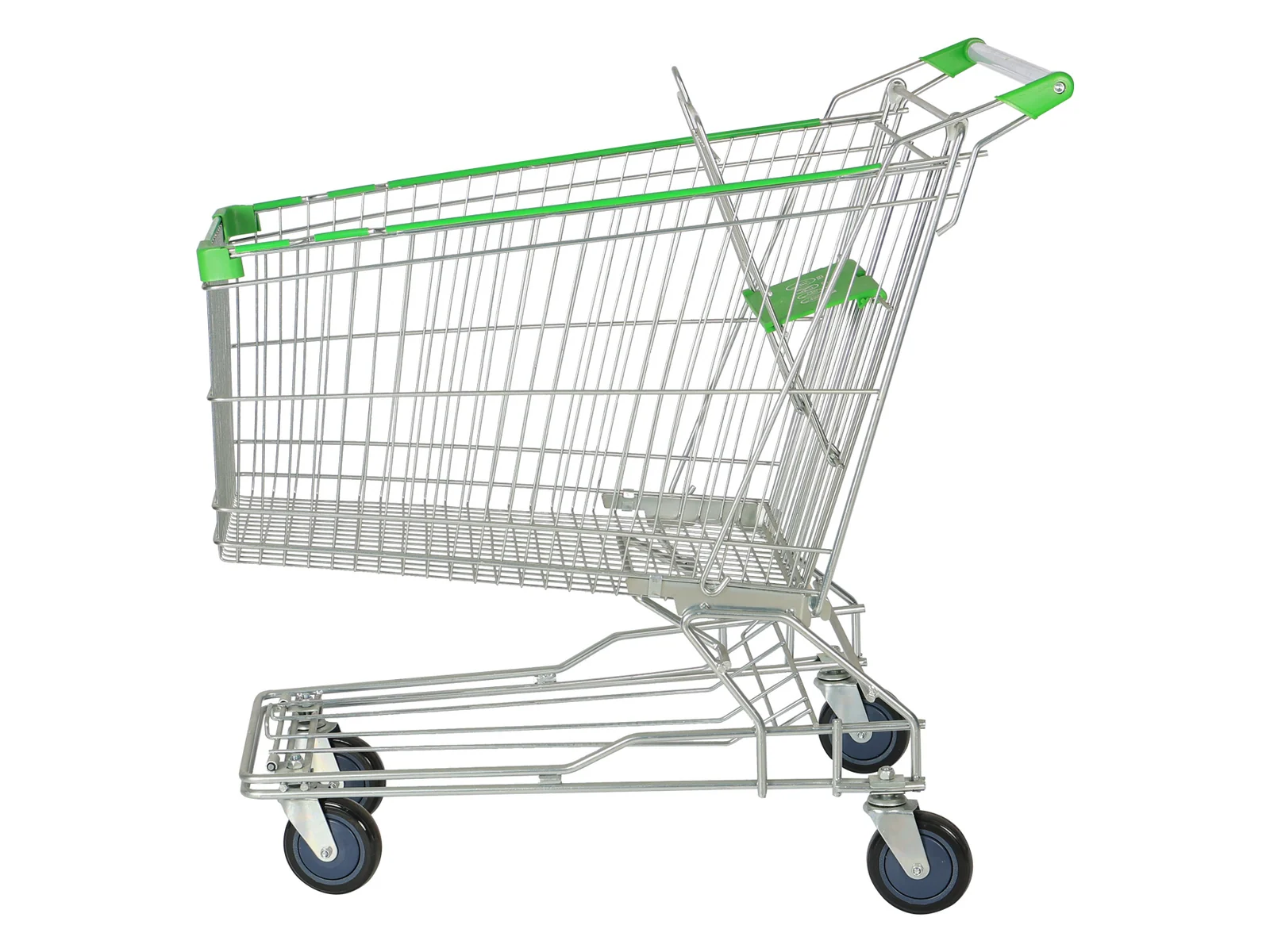
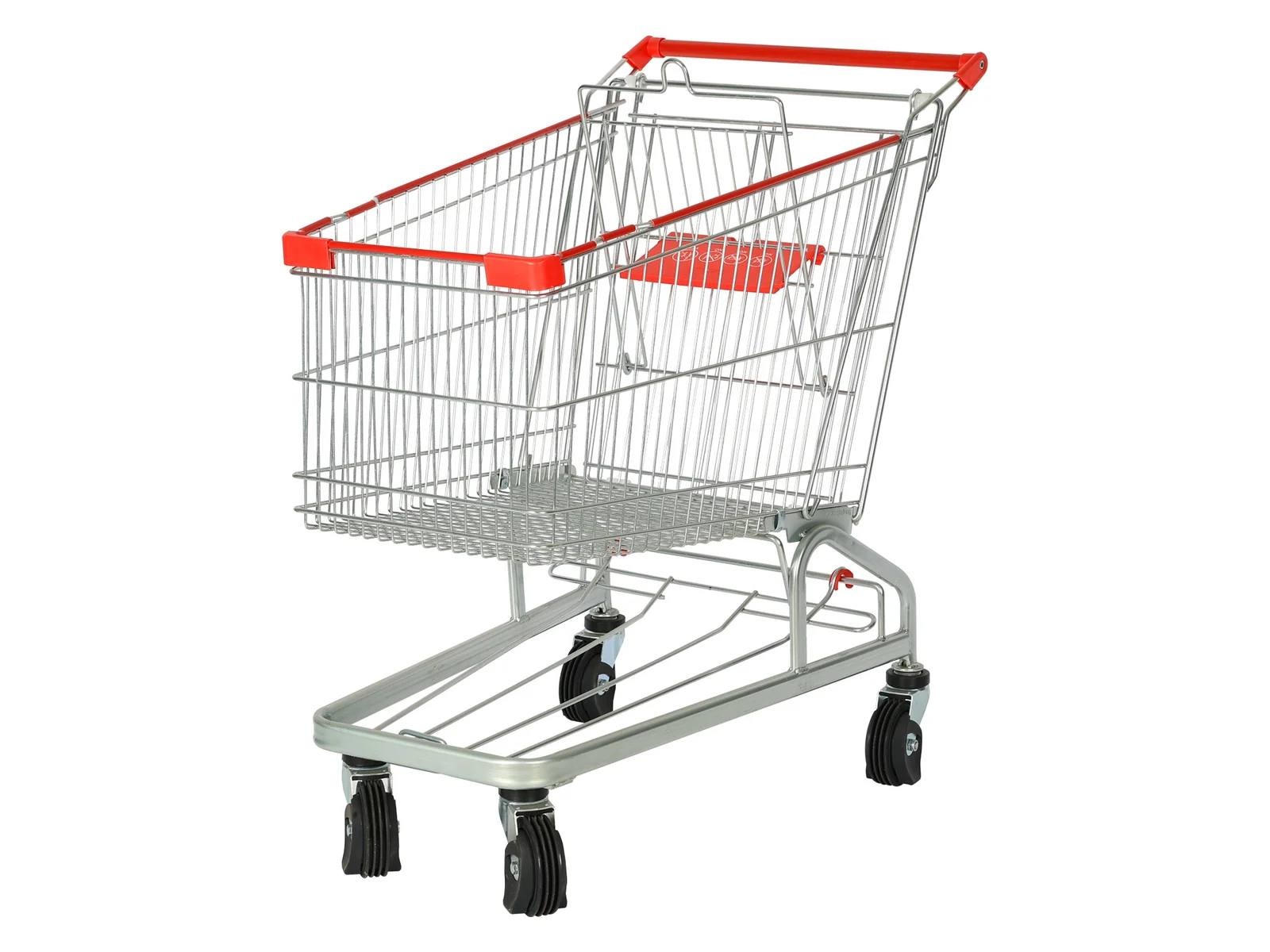
A trolley bay is part of the front of store, and what it stands next to decides how well it works.
The lane length has to leave room for a loaded trolley to turn out of it, which is a dimension worth checking before either is ordered.
See checkout countersAisle width is set by two loaded trolleys passing, so the shelving depth and the trolley size are one decision rather than two.
See shelving baysA promotion square at an aisle head is the first thing a trolley has to get past, and the clearance between them is worth drawing.
See retail display tablesHow many of each a store needs is a floor area question rather than a product question, and it is answered store by store on the equipment lists by store size.
Tell us what you move and how often. Both change the castors and the frame.
Tell us what you move in them, how often, and whether they cross ramps or lift thresholds. Those answers set the castors and the frame together.
The four that come up on nearly every enquiry for this build. If yours is not here, send it with your layout and it is answered alongside the quotation.
Far enough that an empty container collapses to a fraction of its standing footprint and a stack of them takes roughly the space of one standing unit. That is the main reason to specify folding over fixed.
Staff read the load without opening it, and on a ramp a mesh side has less sail area than a solid one. Solid sides suit a container that has to be sealed; most retail stock movement does not.
Continuous duty, and matched to the ramps and lift thresholds it crosses daily. This is where back-of-house equipment fails first, so it is worth specifying rather than defaulting.
It follows your delivery volume and how fast containers turn around rather than your store size. Tell us both and we will give you a number rather than a guess.