

Card Holder
At eye level
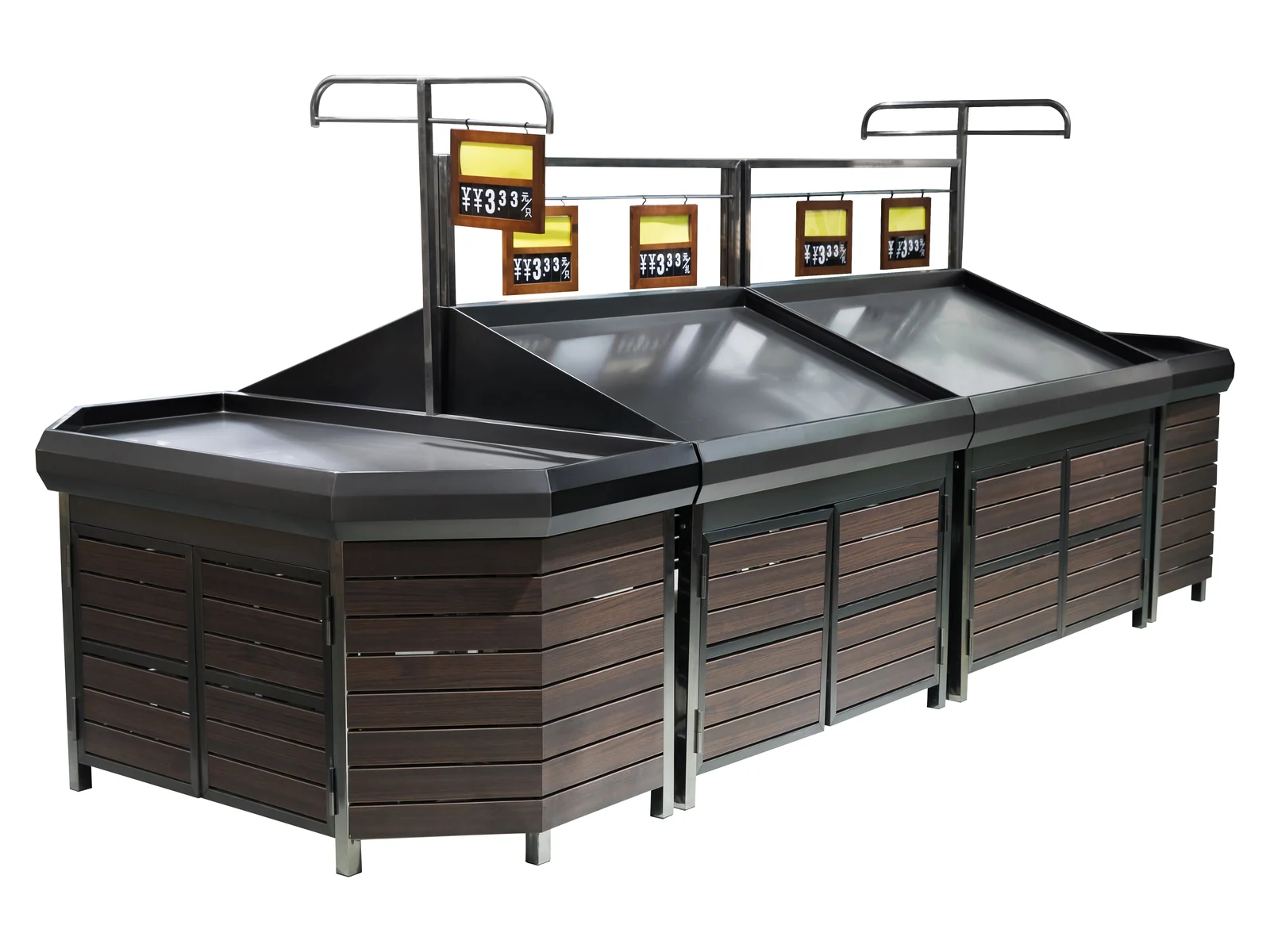
The holder takes a printed card and sits at eye level rather than at deck level. A shopper reads it from down the aisle, which is where the decision to walk over actually gets made.
Overhead sign rig · pale timber · stainless deck
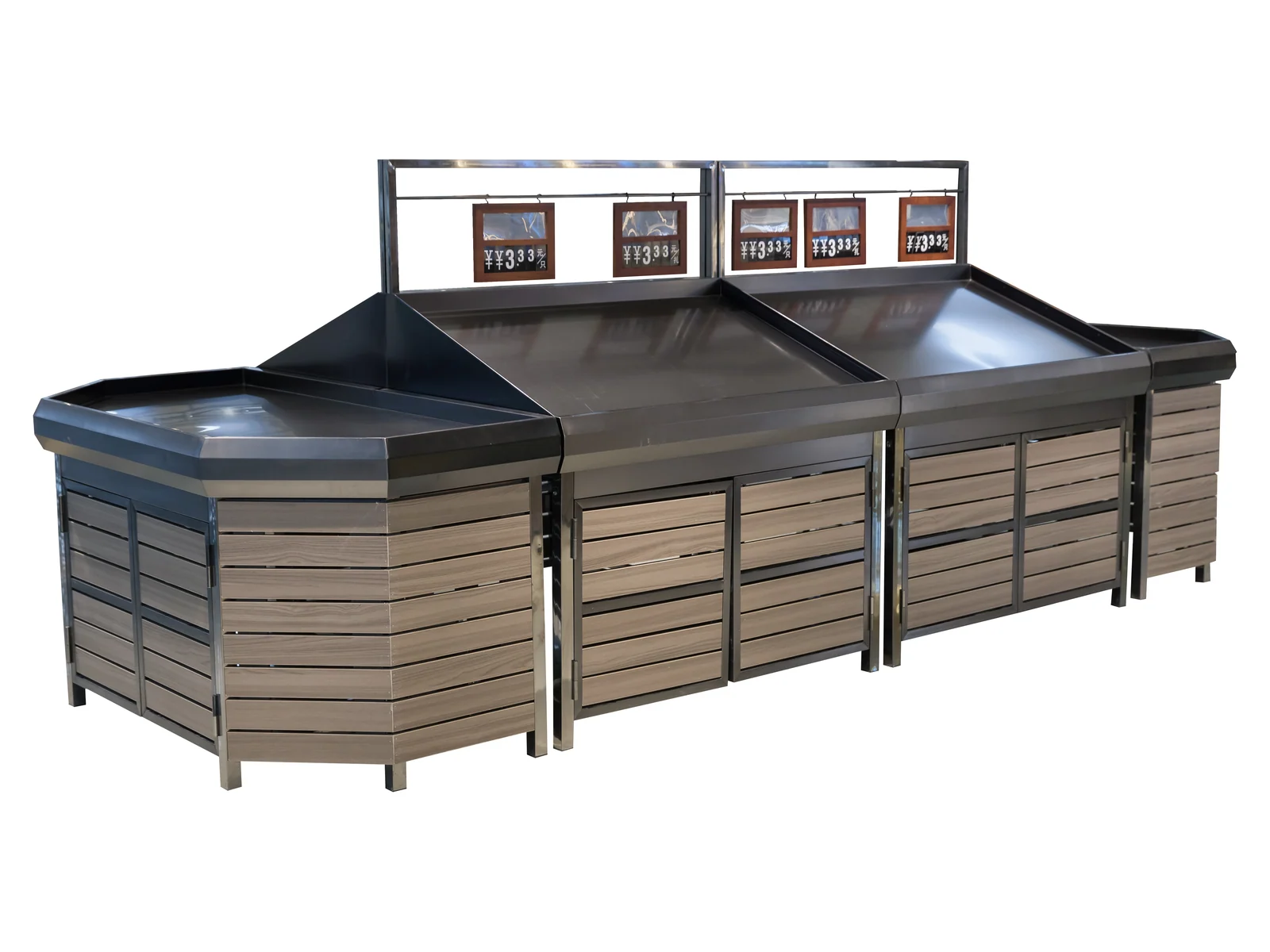
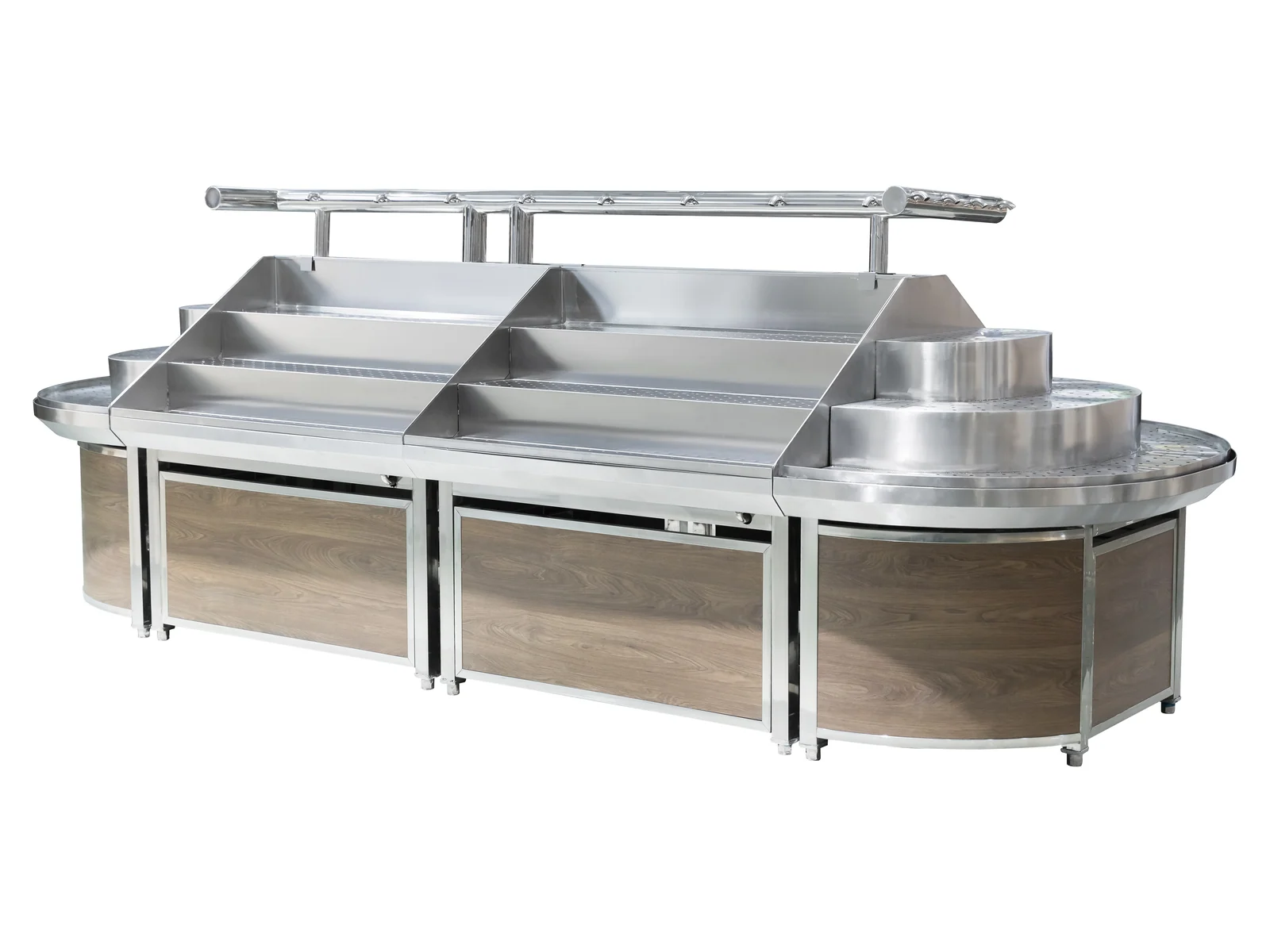
A long pale island with a rig above it carrying price and promotion cards at eye level. Produce prices change more often than anything else in the store, and a rig is what stops that becoming a daily job with sticky tape.
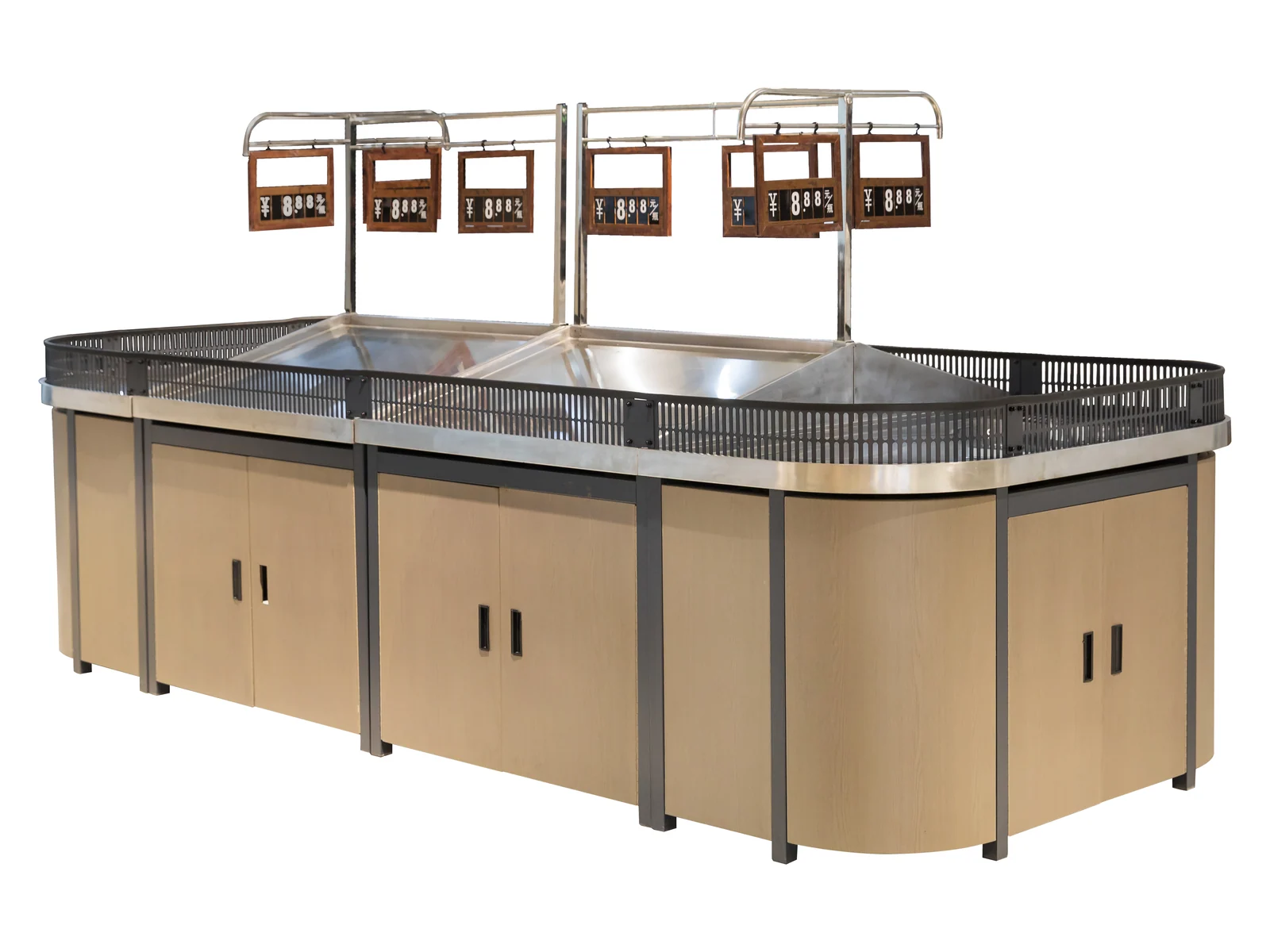
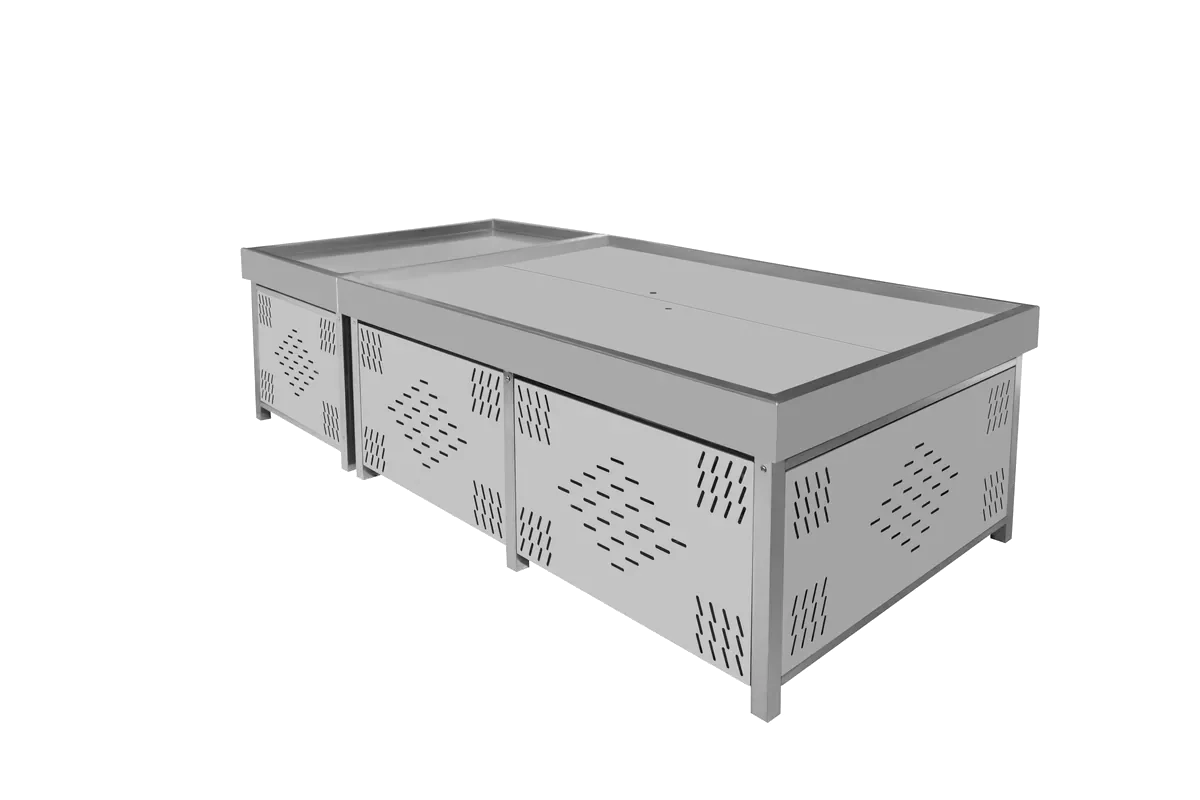
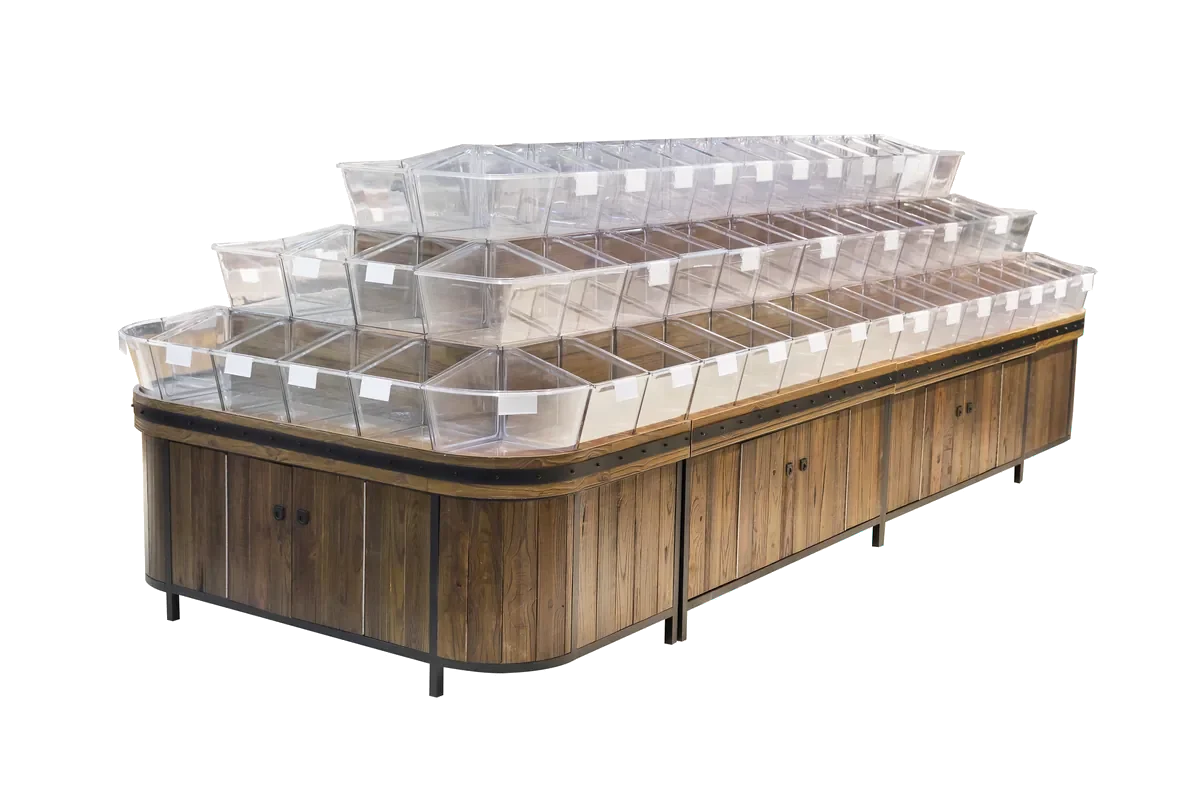
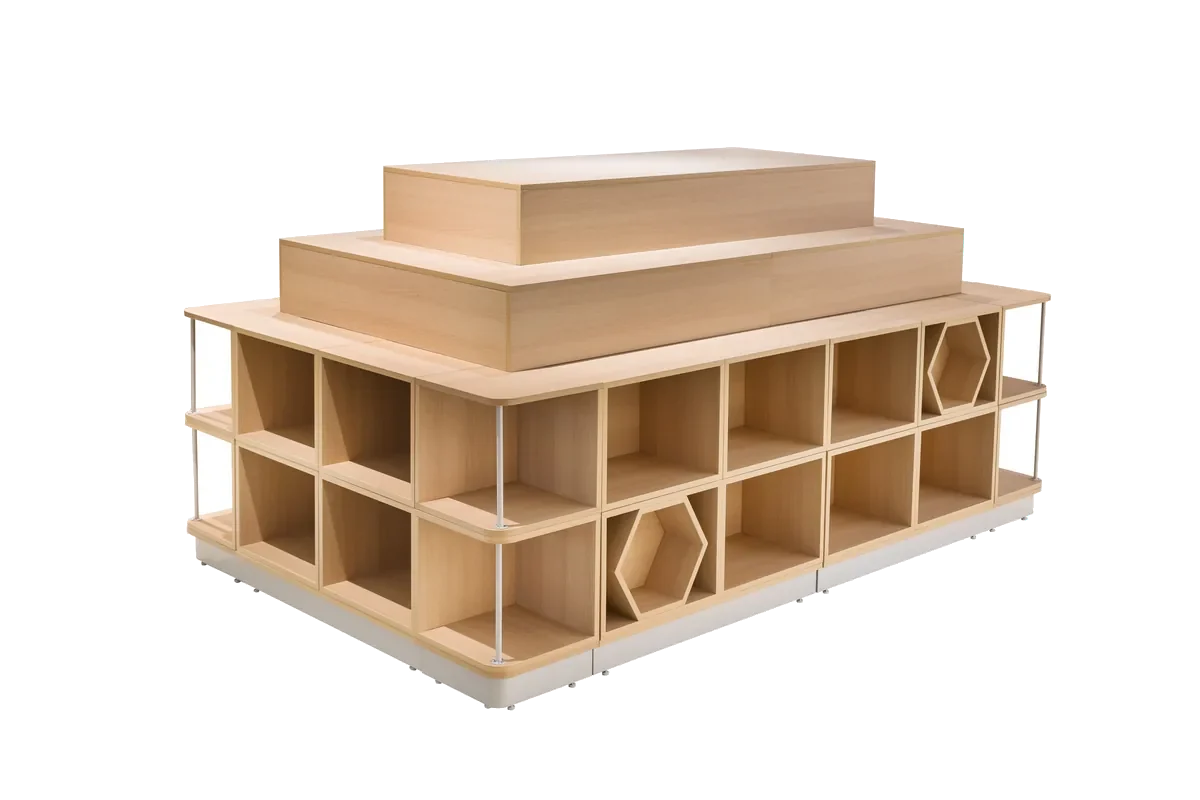
Studio angles on white. The sign holder, the post, the deck and the body panel are photographed below.
Produce is repriced more often than any other department — by season, by glut, by what came off the truck that morning. Cards taped to the deck edge get wet, get knocked and get ignored. This island carries a rig on posts above the deck, holding cards at eye level where a shopper reads them from down the aisle rather than from directly over the crate.
Underneath it is a conventional pale timber island with a stainless deck, worked from both sides. The posts rise from the island body rather than from the floor, so nothing new stands in the walking space and the whole assembly moves as one when the department is reset.
A long pale island with a rig above it carrying price and promotion cards at eye level. Produce prices change more often than anything else in the store, and a rig is what stops that becoming a daily job with sticky tape.
Supermarkets, convenience stores, chain retail and speciality stores. Tell us the store format and the floor area and the specification comes back written against them.
The rig is the reason to choose this island, so the first two close-ups are the holder and the post that carries it.
At eye level
The holder takes a printed card and sits at eye level rather than at deck level. A shopper reads it from down the aisle, which is where the decision to walk over actually gets made.
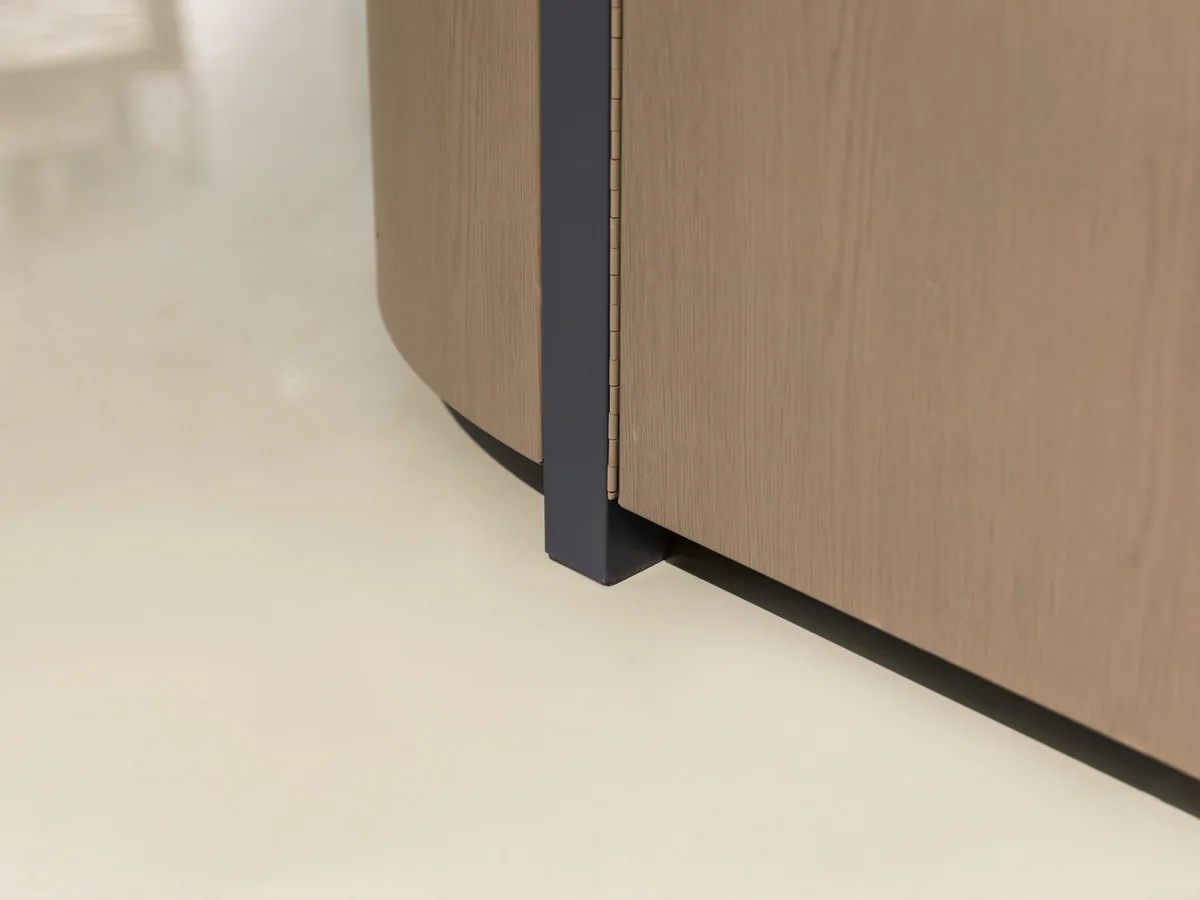
Rises from the body
The posts rise out of the island rather than standing on the floor. Nothing new occupies the walking space, and when the department is reset the rig moves with the fixture instead of being dismantled.
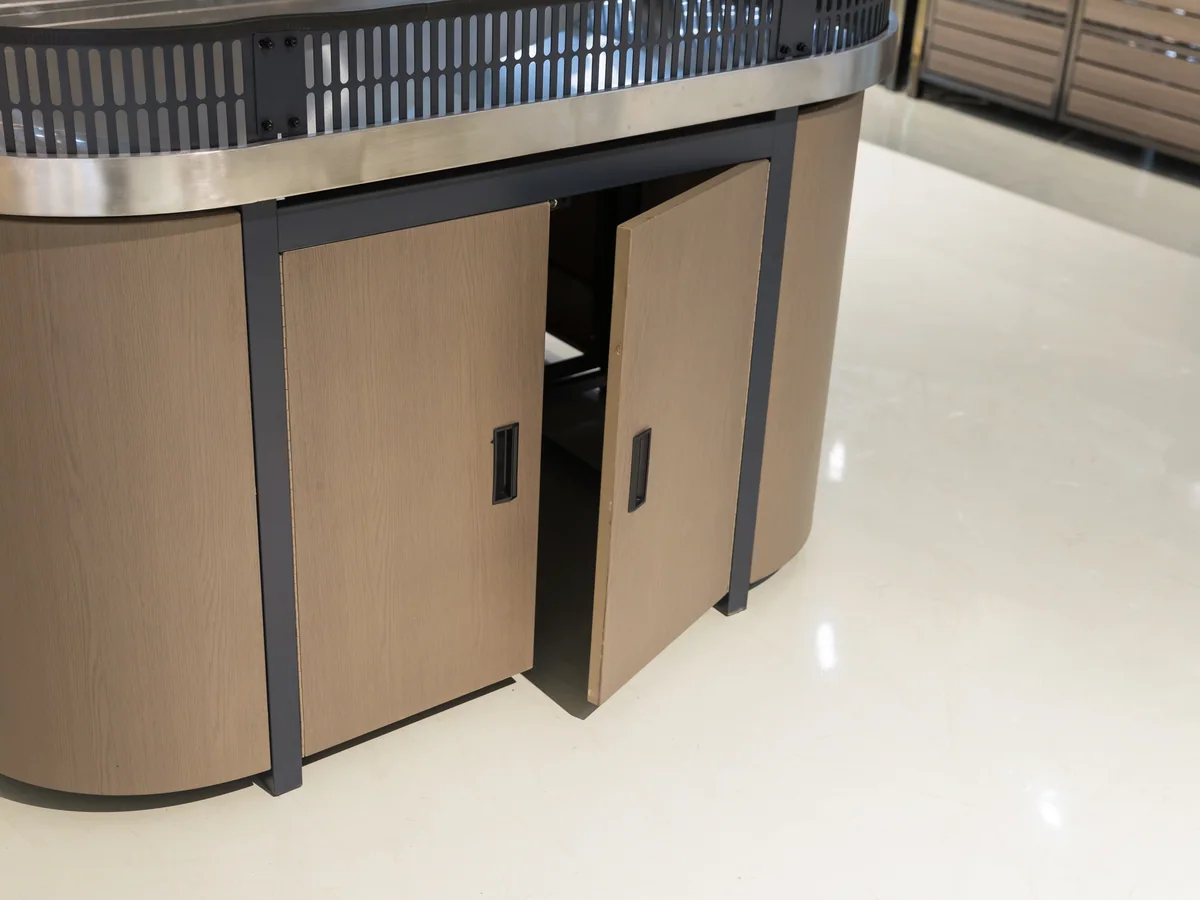
Under the rig
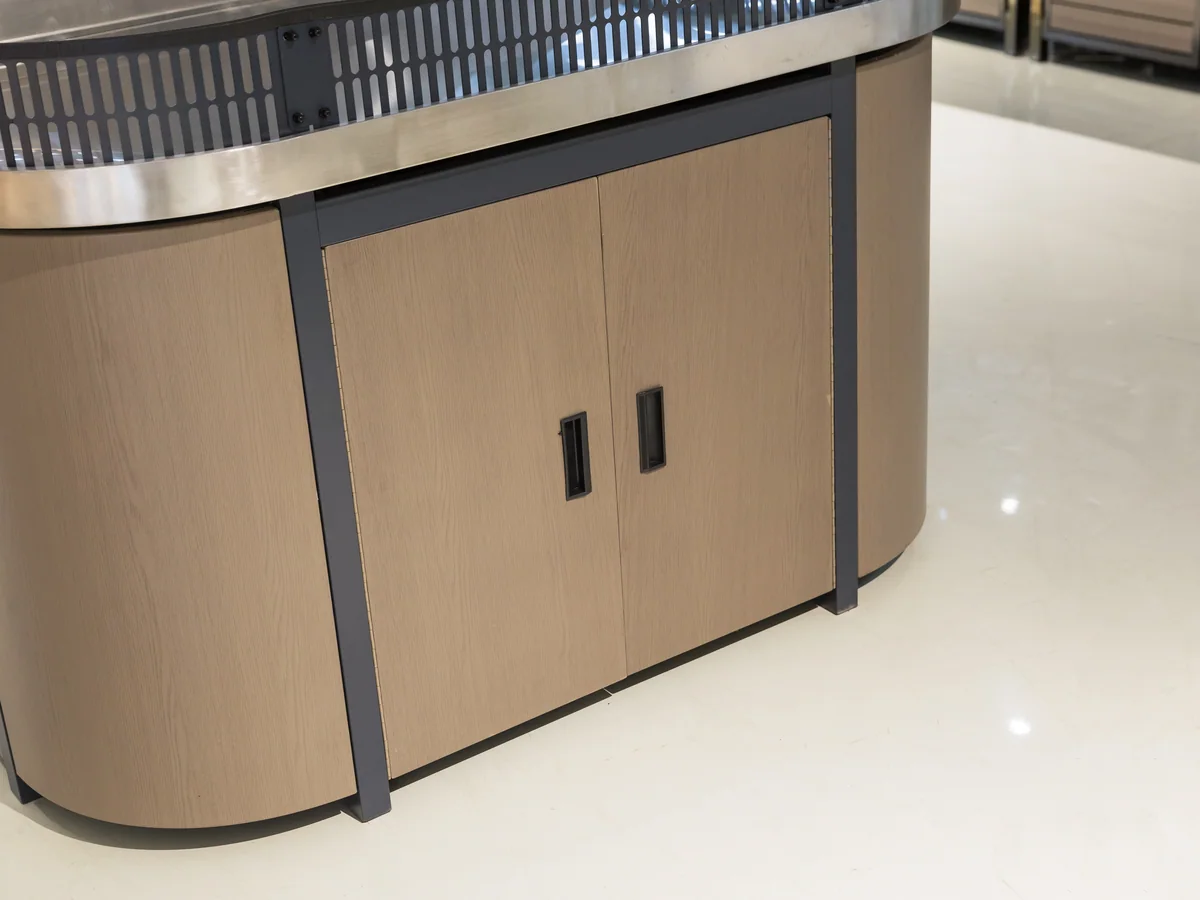
A stainless deck under a sign rig is a deliberate pairing: the rig means the deck edge is no longer carrying tickets, so it can be a clean wipe-down surface with nothing clipped to it.
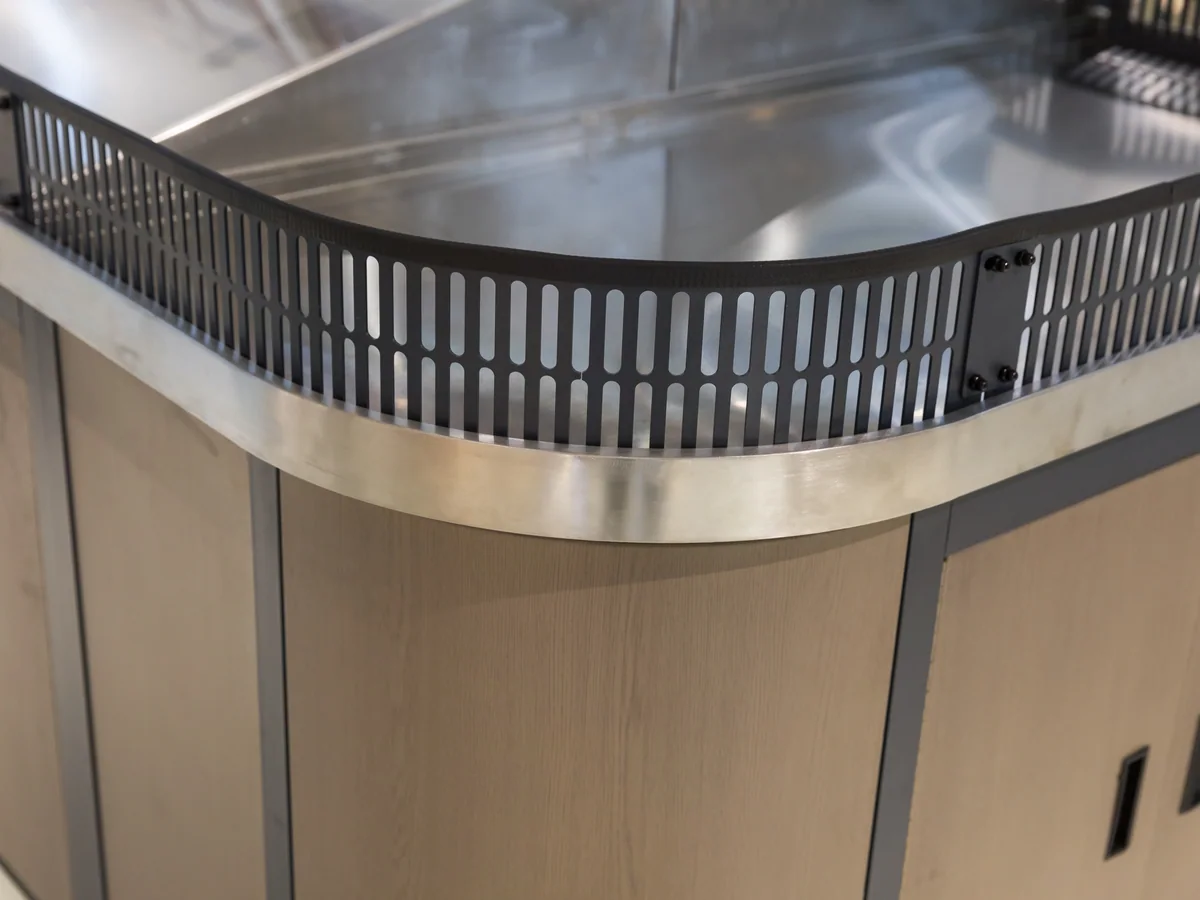
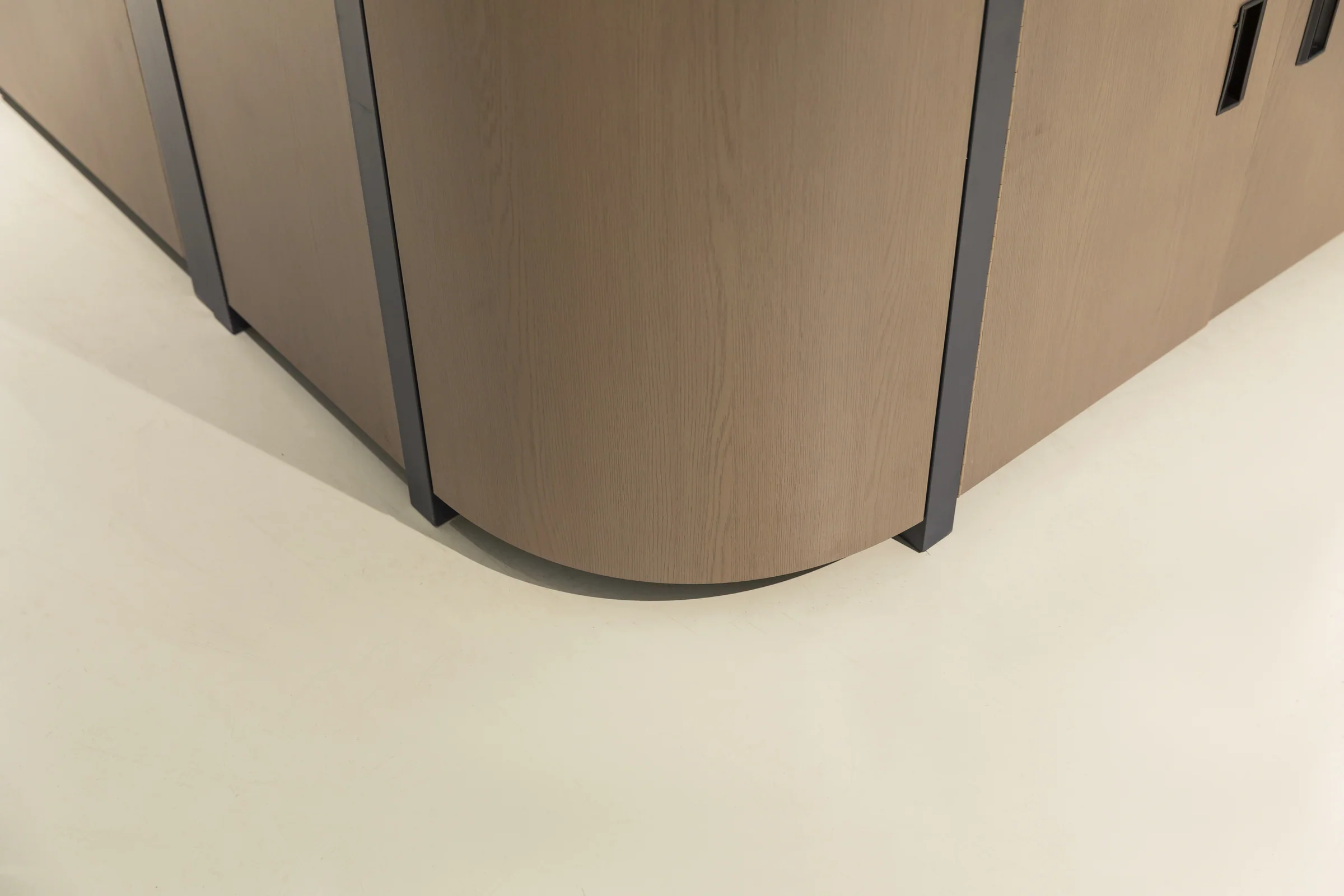
Paint-free wood grain board
Pale board over the steel frame. With signage above the fixture doing the talking, the body is deliberately quiet — two loud elements on one island is one too many.
Every item on this page is made to order. Send a floor plan, a hand sketch or a photograph of a fixture you like, and we quote against it.
Store fixtures are light for their size, so a container fills up on volume long before it fills up on weight. What decides your freight is not what one unit weighs — it is what shape the goods are in when they go through the container door. Everything we build leaves in one of three shapes.
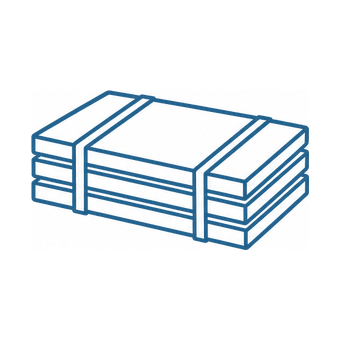
Shelving bays, produce islands and bulk cabinets travel as panels — uprights, shelves, back panels and plinths, strapped flat with bubble wrap on every component. They are built up on the shop floor, so the packing list and the assembly drawings travel with the goods.
This model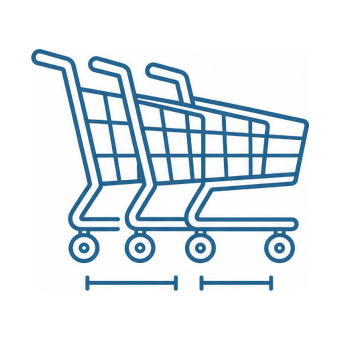
Trolleys slide into one another and baskets stack. Past the first unit, each extra one adds only its nesting pitch instead of its full length, so the shipped volume ends up a fraction of what the unit count suggests.

A checkout lane is welded, coated and fitted out as one piece, so it is crated whole with padding on the steel. Nothing waits to be assembled at the store beyond levelling it into the lane, and the crate is the counter plus a margin.
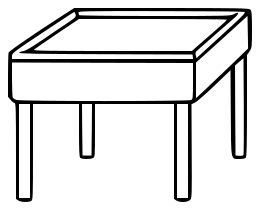
Produce islands ship flat as panels, so the container arithmetic runs on panel count rather than on finished size. Two of the builds in this category carry recorded dimensions — 1200 × 750 × 850 mm for the standard island table and 1200 × 800 × 1300 mm for the tall build — and those two are the reference points a loading plan is worked from. Everything else is cut to your aisle and confirmed on the packing list.
Produce is the wettest, heaviest and fastest turning department in the store, and it rarely arrives on its own. These three categories share the fresh aisle with it.
Where the produce run meets the fish counter, both fixtures want stainless at the contact surfaces and a drain in the same floor.
See ice display tablesLoose dry goods sit alongside loose produce in most store plans, and the two departments are read by shoppers as one open market area.
See bulk food binsProduce is promoted harder than any other department, and a 1000 mm square at the head of the aisle is how a glut gets moved.
See promotional display tablesHow many of each a store needs is a floor area question rather than a product question, and it is answered store by store on the equipment lists by store size.
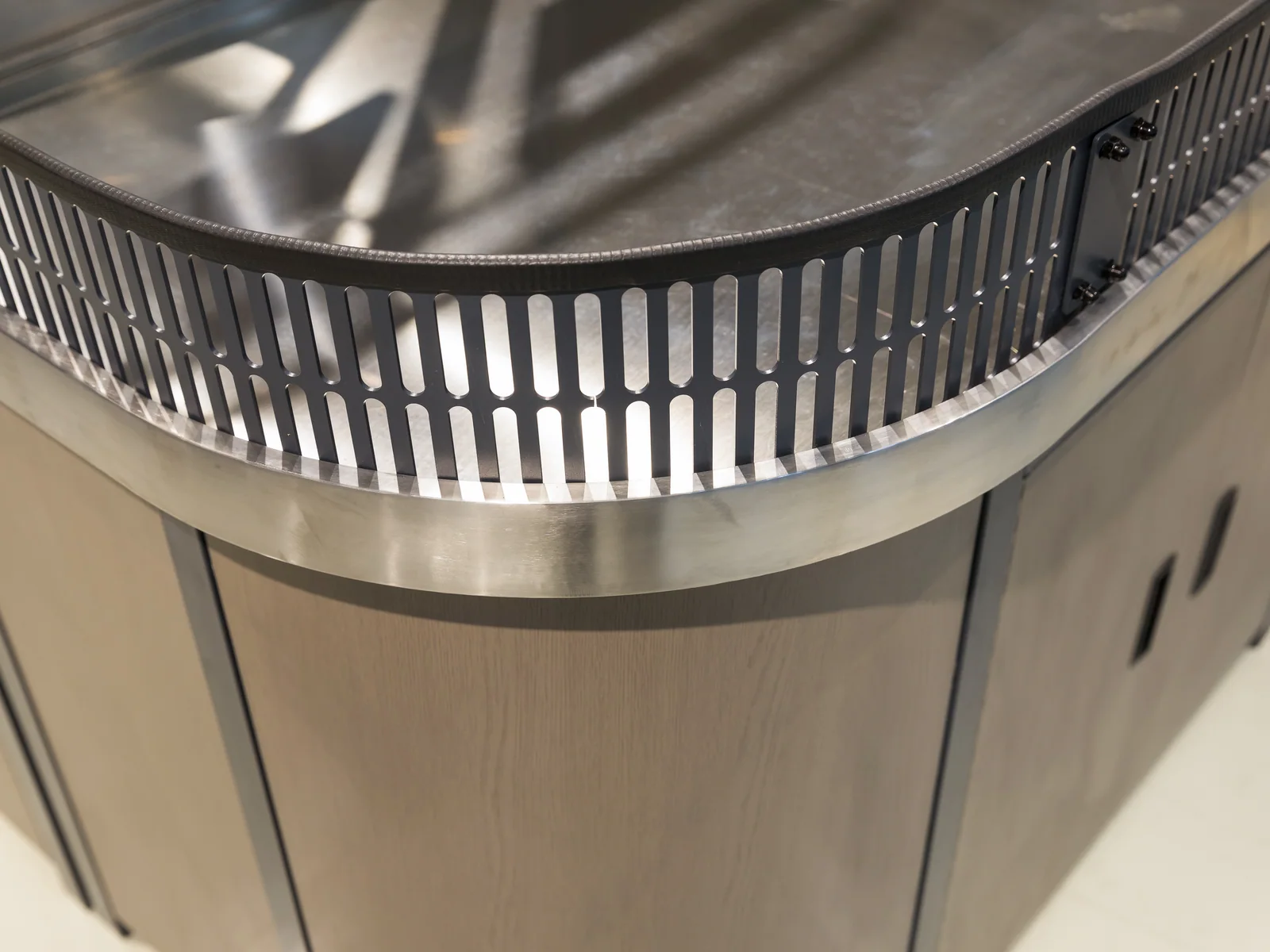
Send your ticket format and card size; the holders are made to them.
Send the size and format of the price cards you actually print. The holders are made to your ticket rather than to a standard, which is the difference between a rig that gets used and one that gets ignored.
The four that come up on nearly every enquiry for this build. If yours is not here, send it with your layout and it is answered alongside the quotation.
They are made to your ticket format rather than to a standard size. Send the card you actually print — that is the difference between a rig staff use and one they tape cards over.
The posts fix into the island body, so it can be specified on most of the builds in this category. Tell us which island you are ordering and we will confirm the body takes it.
It sits at eye level, which is exactly where it is meant to be read and exactly where it interrupts the view. On a small department that is a real cost; send the floor plan and we will say whether we would fit it.
Ticket holders are fitted and price tickets are supplied with the order. Produce is repriced constantly, so a store that has to source its own cards ends up with handwritten ones within a month.