
Wagon Wheel
Rolls, and is the look
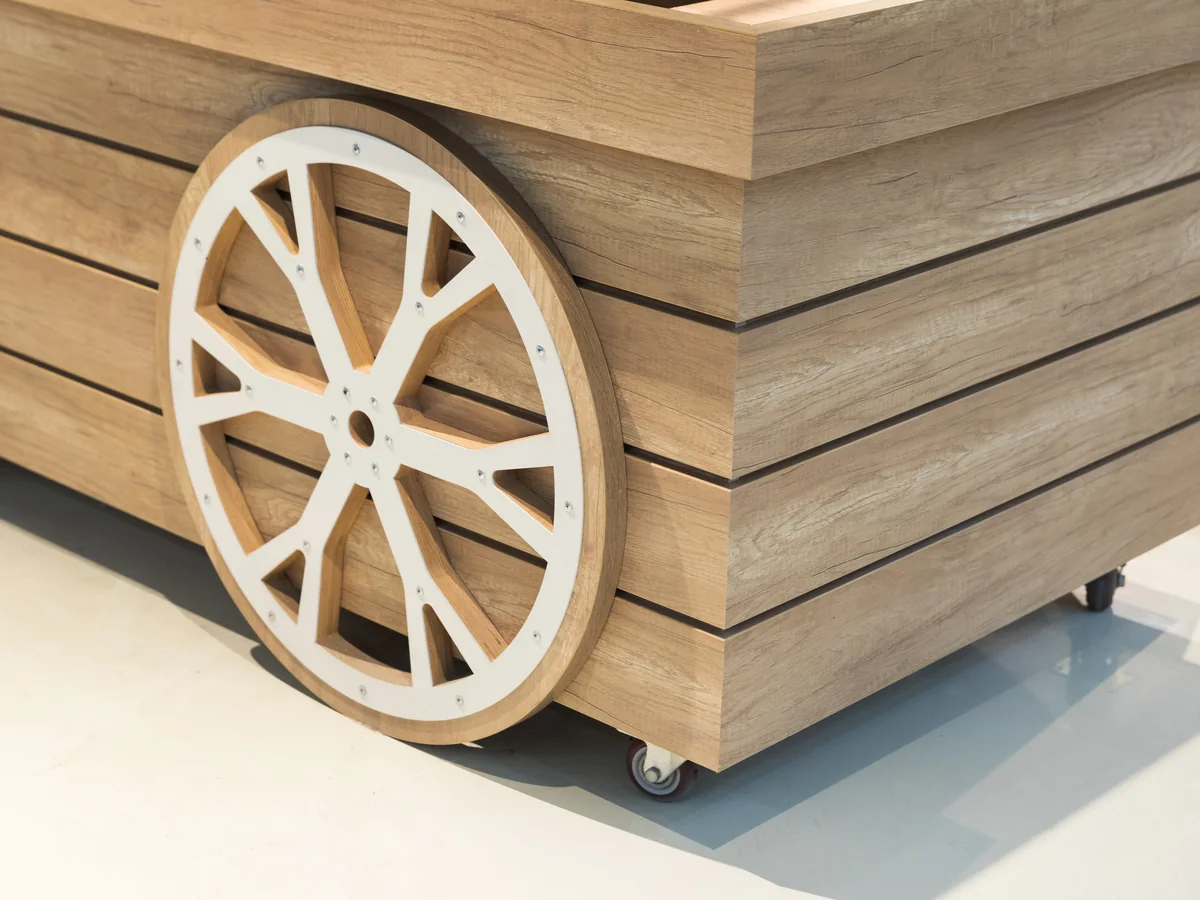
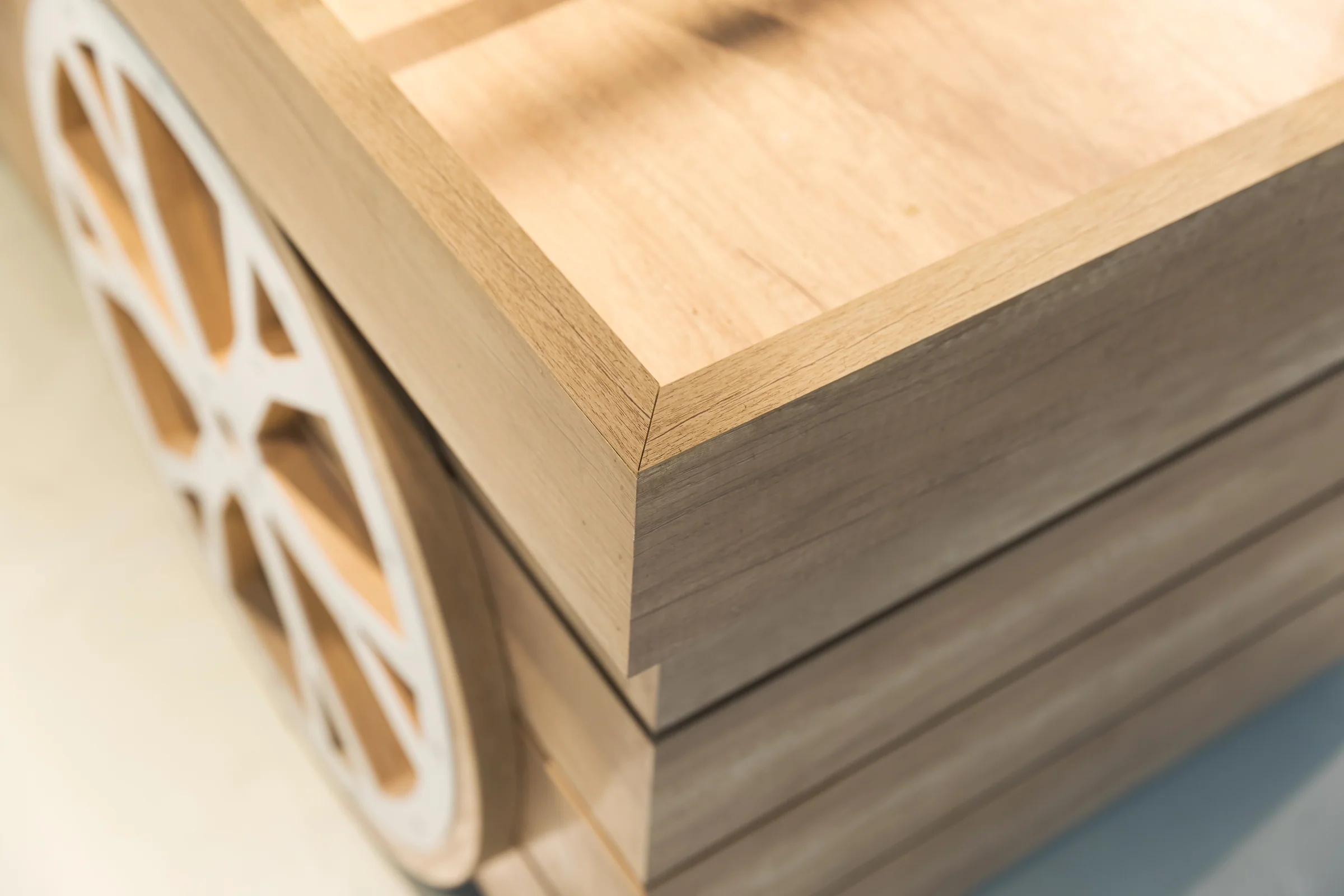
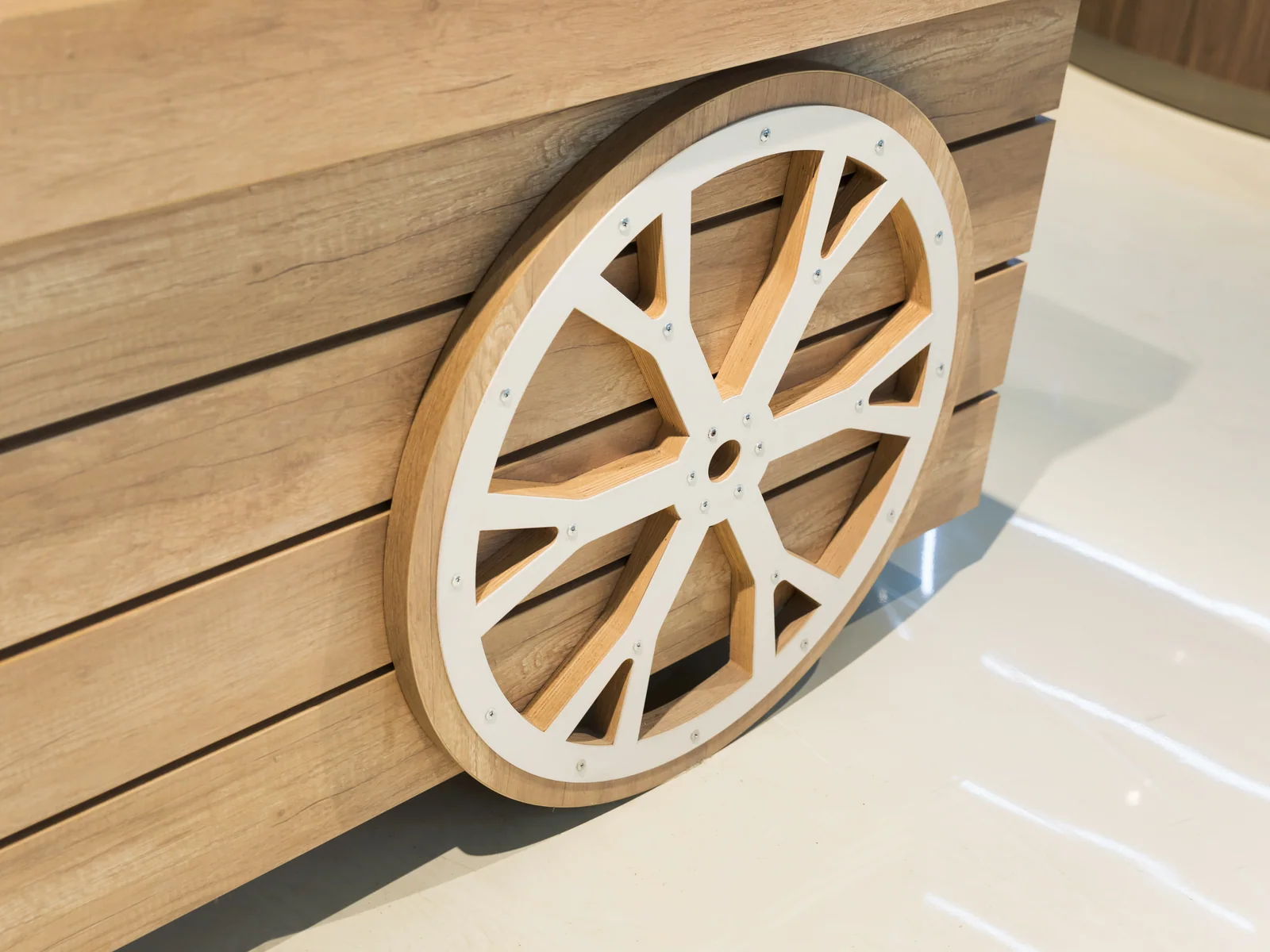
The wheels are doing two jobs: they move the cart and they are most of why it reads as a market stall rather than a trolley. They are sized to roll over a threshold, not just across a flat floor.
Market cart · striped canopy · mobile serving point
A timber market cart with wagon wheels and a striped canopy. It is a serving point that can be pushed to wherever the demonstration is, and it is the one fixture in our range that customers photograph.
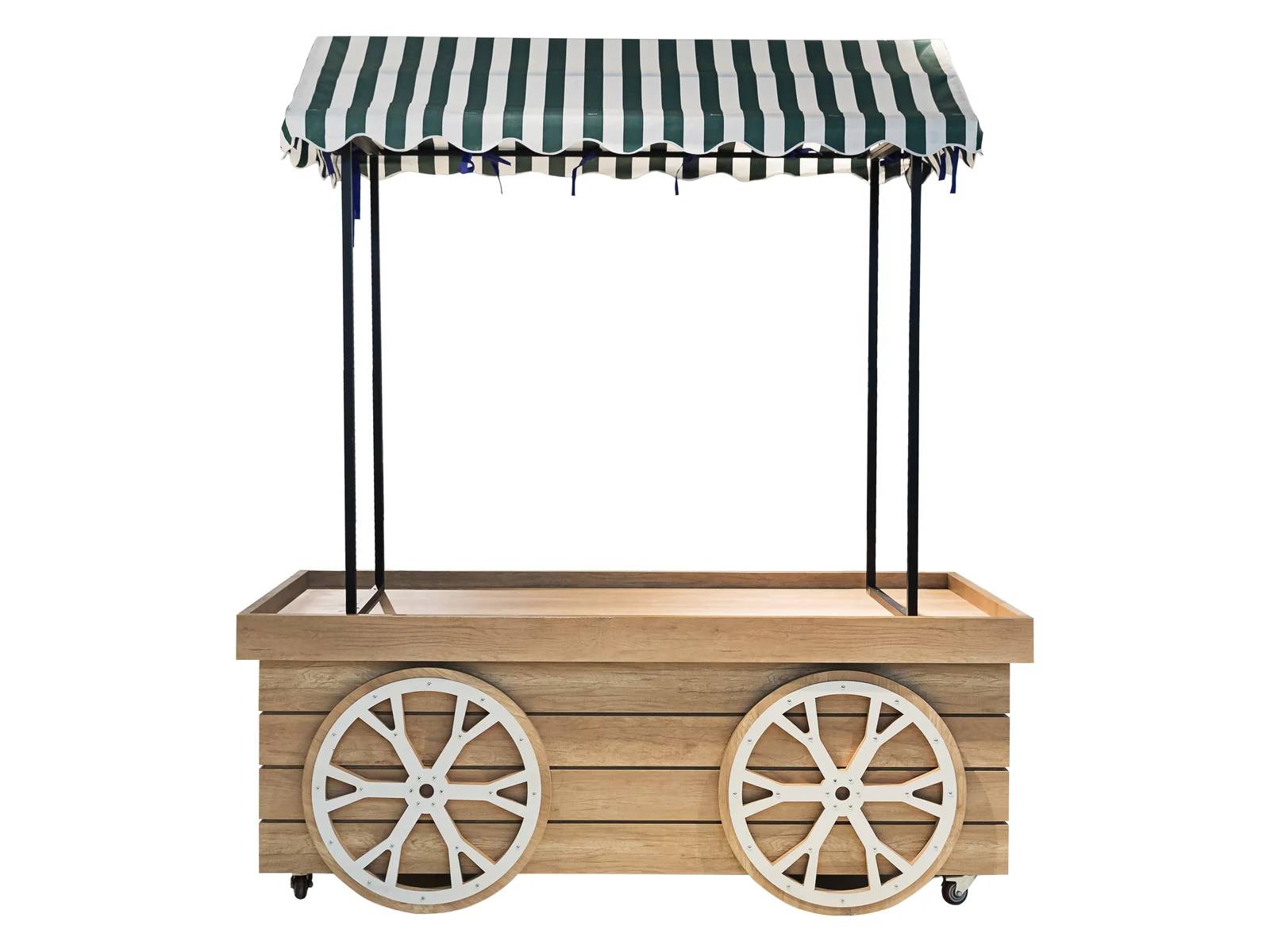
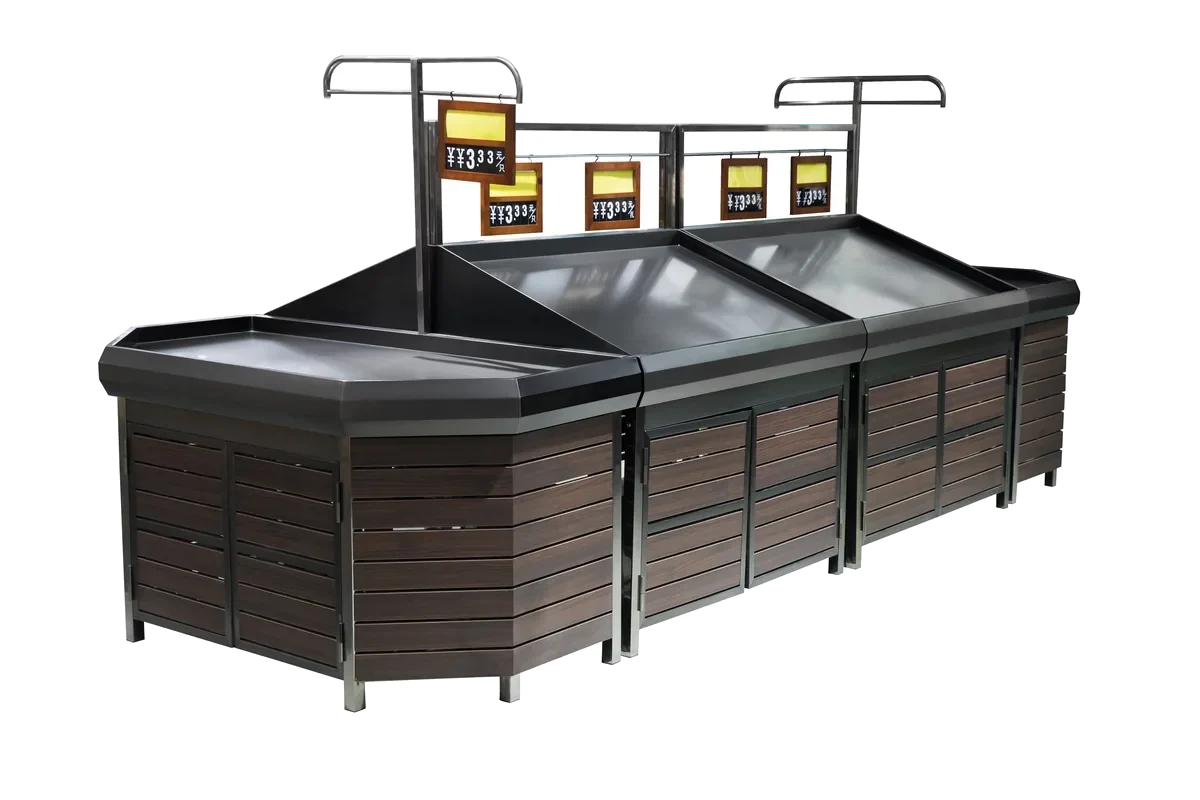
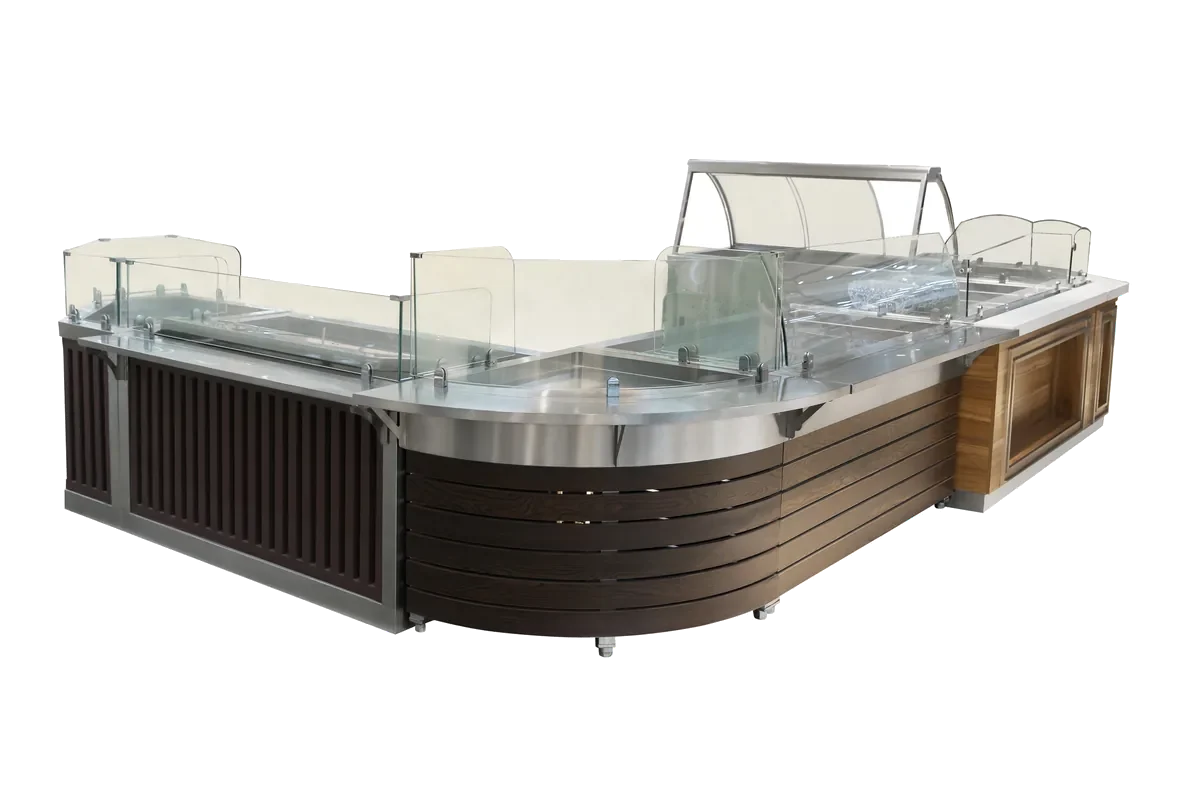
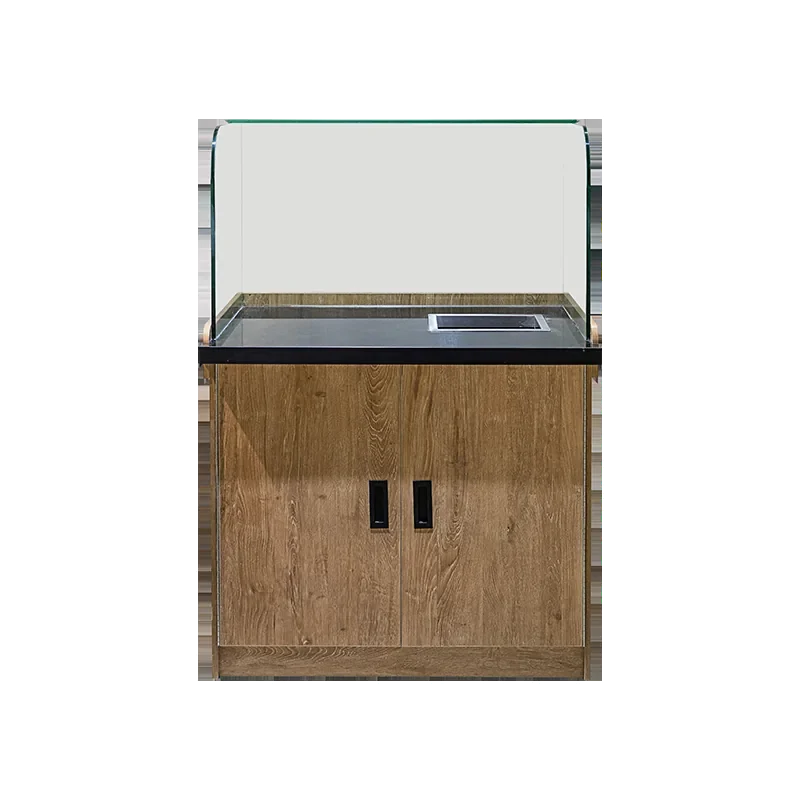
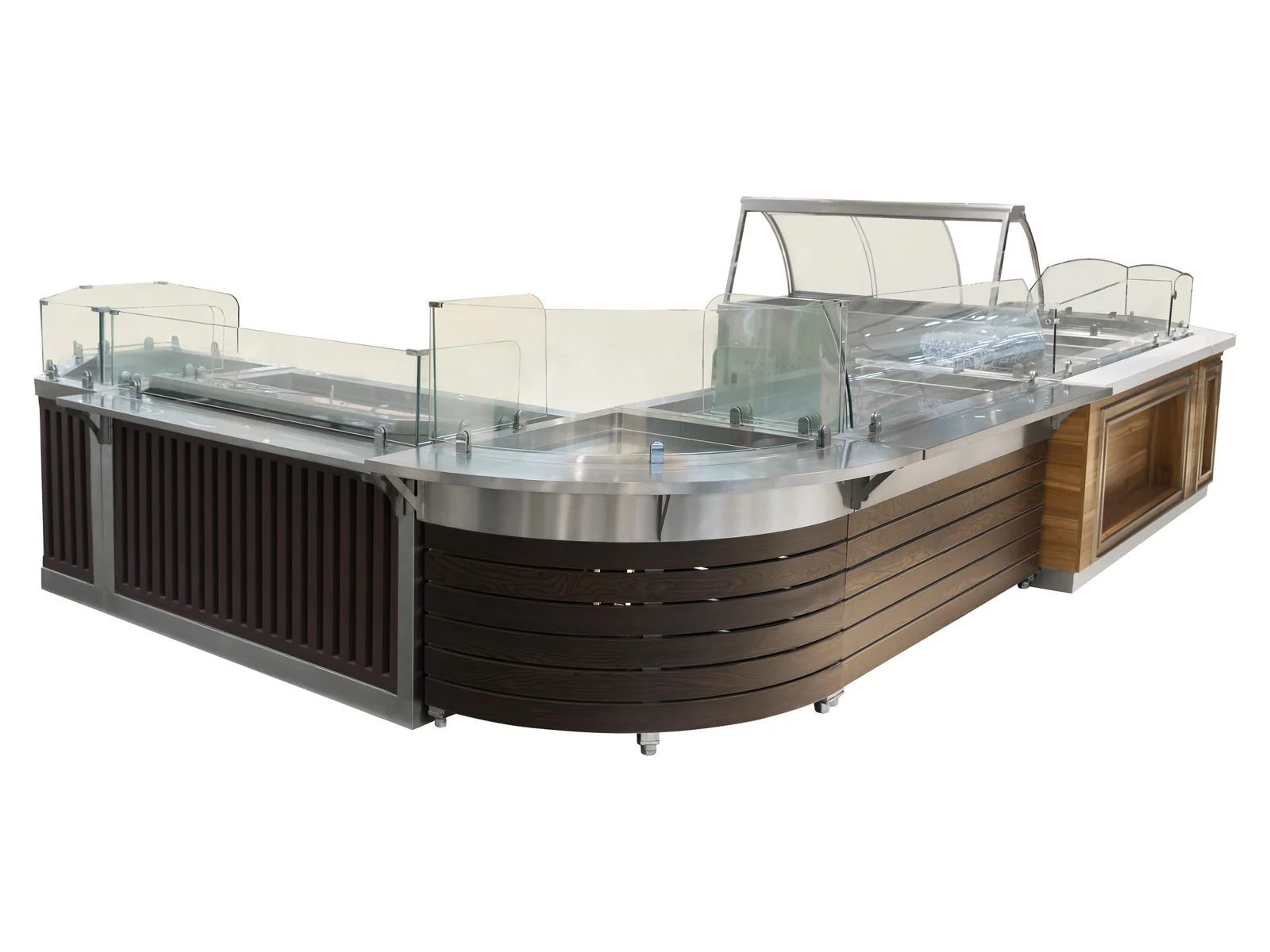
Studio angles on white. The wheel, the canopy, the timber body and the deck are photographed below.
Cooked food sells on smell and on sight of it being served, and both of those work best where the shoppers are — which is rarely where the counter was built. This cart is a mobile serving point: a timber body on wagon wheels under a striped canopy, pushed to the entrance for a promotion, to the aisle head for a tasting, back to the deli when the demonstration is over.
It is unashamedly a theatrical object. The wheels, the canopy and the timber are doing a job that no amount of good merchandising on a fixed counter achieves, which is making a shopper look at something they had not planned to buy. Where it carries unpackaged food, stainless goes at every contact surface.
A timber market cart with wagon wheels and a striped canopy. It is a serving point that can be pushed to wherever the demonstration is, and it is the one fixture in our range that customers photograph.
Supermarkets, convenience stores, chain retail and speciality stores. Tell us the store format and the floor area and the specification comes back written against them.
A cart is judged on whether it actually moves and whether it can be cleaned. These four cover both.
Rolls, and is the look
The wheels are doing two jobs: they move the cart and they are most of why it reads as a market stall rather than a trolley. They are sized to roll over a threshold, not just across a flat floor.
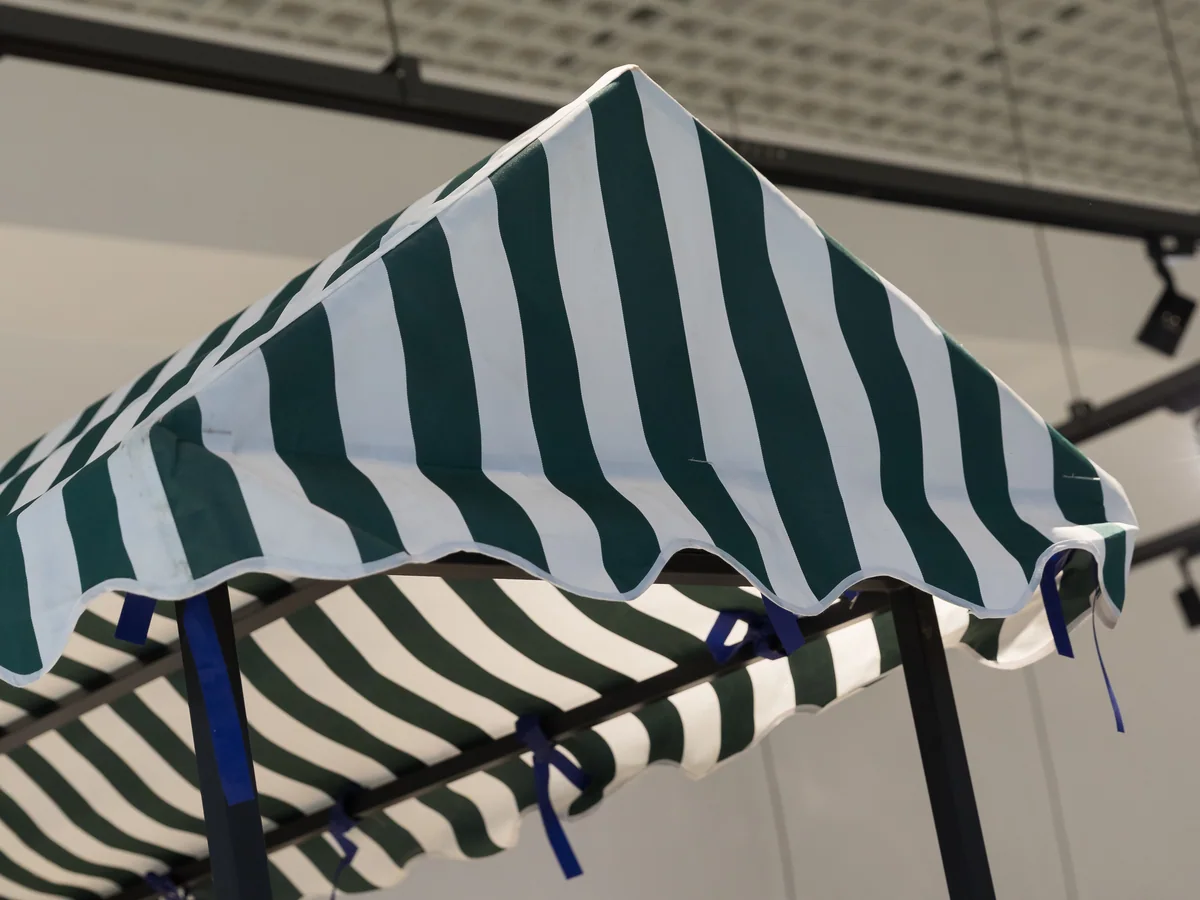
Fabric per order
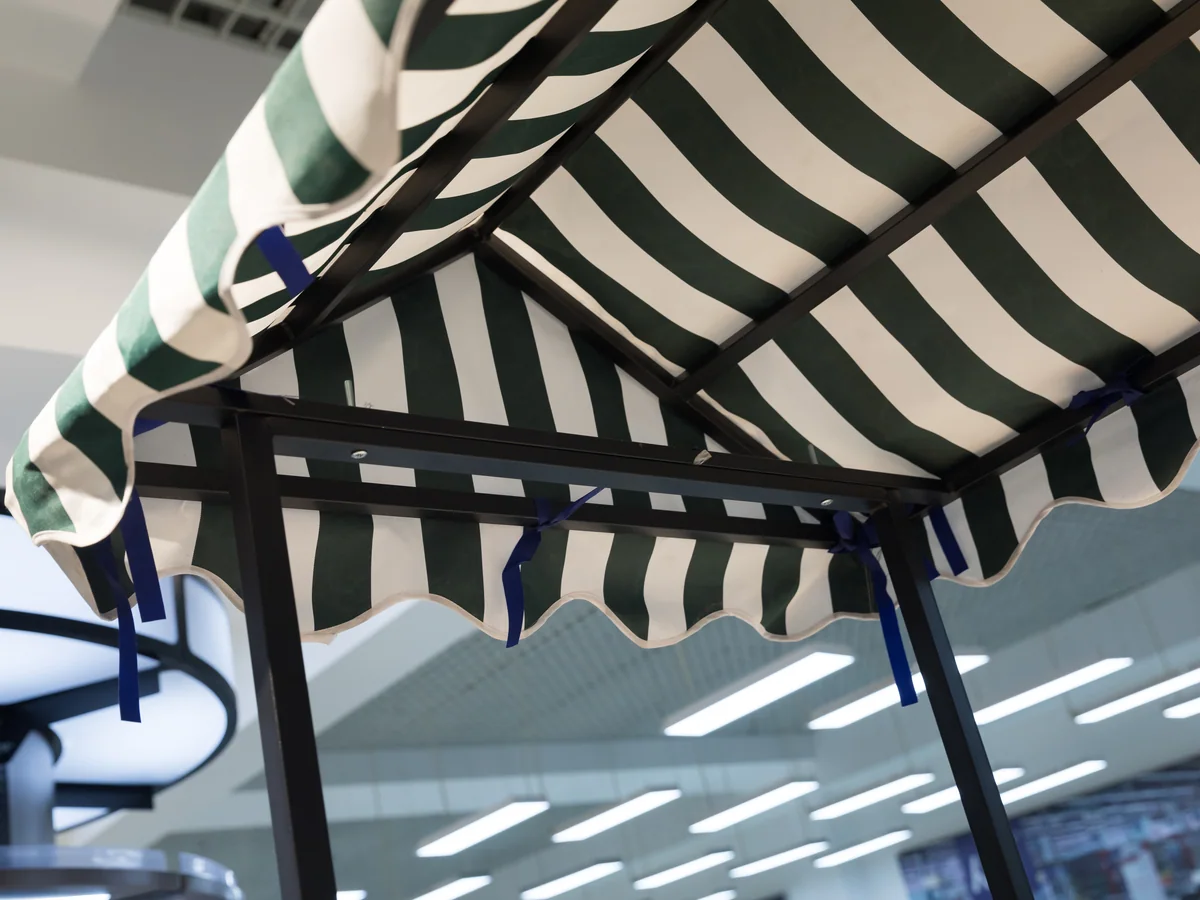
The canopy gives the cart a roofline that reads from across a store. Fabric and colour are specified per order, and it is worth choosing against your store colours rather than defaulting to the stripe.
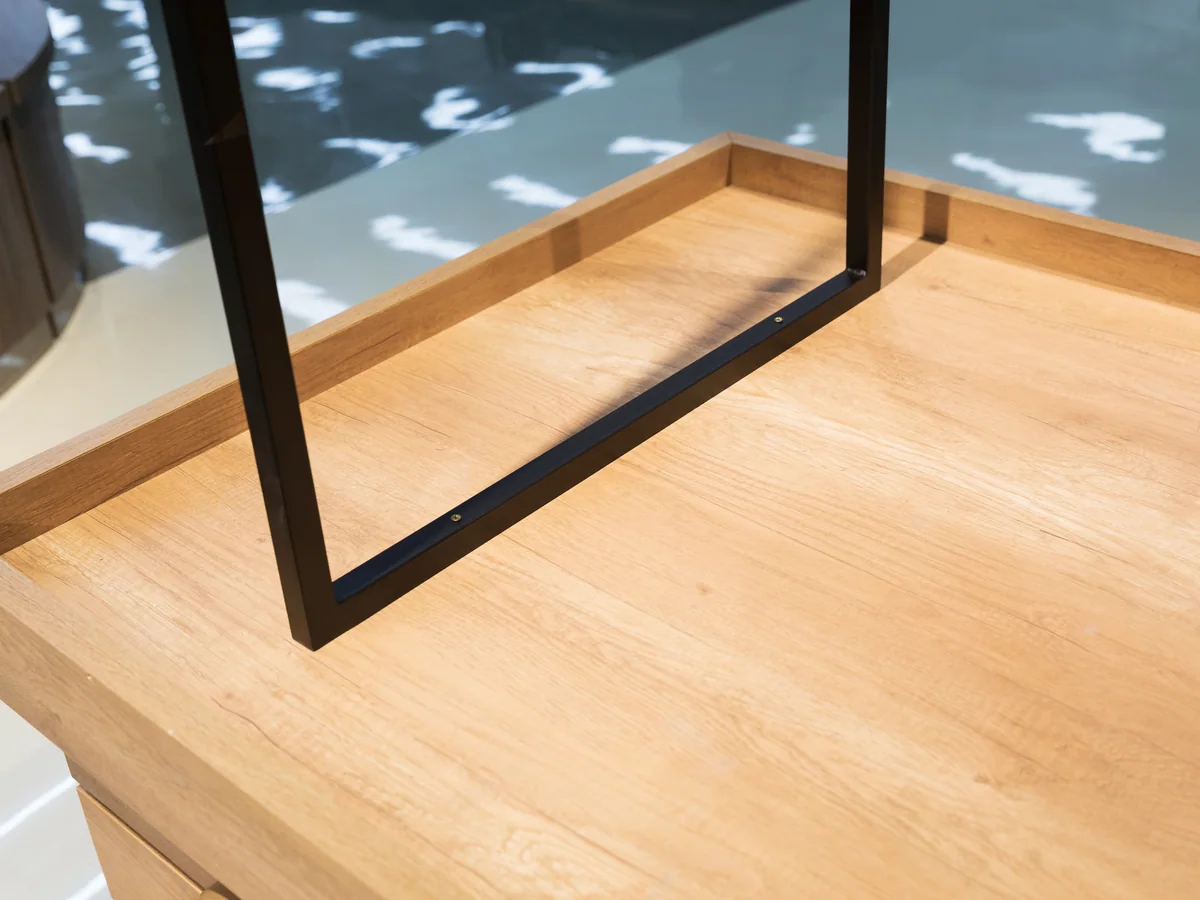
Board over steel
Board over a steel frame, so the cart is light enough for one person to move. A solid timber cart looks the same in a photograph and takes two people to reposition.
Stainless where food touches
Where the cart carries unpackaged food, the deck takes stainless steel board at every contact surface. Timber is fine for packaged goods and is not an option where a serving tong lands.
Every item on this page is made to order. Send a floor plan, a hand sketch or a photograph of a fixture you like, and we quote against it.
Store fixtures are light for their size, so a container fills up on volume long before it fills up on weight. What decides your freight is not what one unit weighs — it is what shape the goods are in when they go through the container door. Everything we build leaves in one of three shapes.
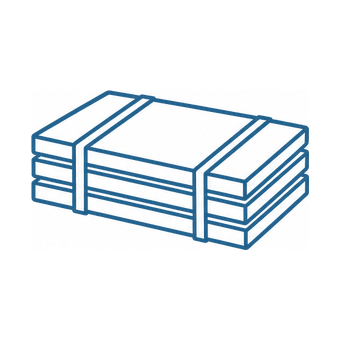
Shelving bays, produce islands and bulk cabinets travel as panels — uprights, shelves, back panels and plinths, strapped flat with bubble wrap on every component. They are built up on the shop floor, so the packing list and the assembly drawings travel with the goods.
This model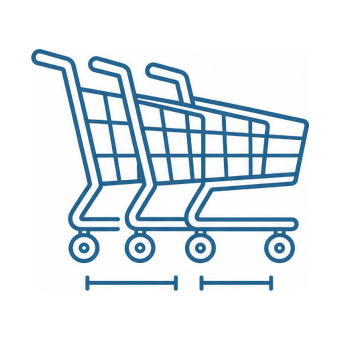
Trolleys slide into one another and baskets stack. Past the first unit, each extra one adds only its nesting pitch instead of its full length, so the shipped volume ends up a fraction of what the unit count suggests.

A checkout lane is welded, coated and fitted out as one piece, so it is crated whole with padding on the steel. Nothing waits to be assembled at the store beyond levelling it into the lane, and the crate is the counter plus a margin.
Cooked food fixtures flat pack as panels, glazing, stainless wells and trim. One build is on record for this area — KS-LW-01, a cured meat rack — and it is built to the serve-over run rather than sold in a fixed size. Case dimensions come back on the packing list.
Cooked food is a served department, and the fixtures around it have to work at the same pace.
Fresh produce and the wet counters share a floor drain and a wash-down routine, and they are read as one department.
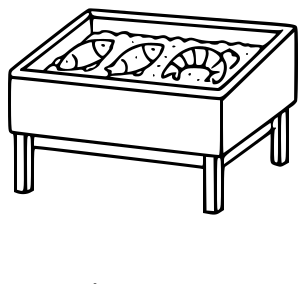
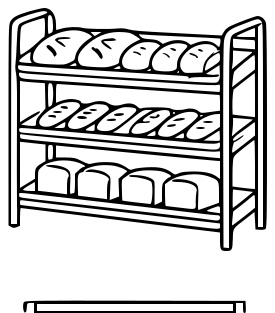
See produce display racksWhere the wet counter meets the cooked food counter, both want stainless at the contact surfaces.
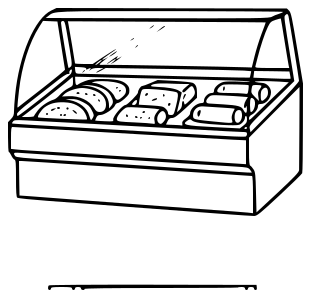
See deli display casesA served wet counter needs somewhere to weigh, and the scale well is built into the desk rather than sat on it.
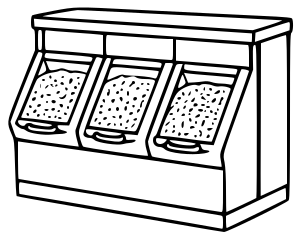
See store service countersHow many of each a store needs is a floor area question rather than a product question, and it is answered store by store on the equipment lists by store size.
Tell us what it will carry and which doorways it has to fit through.
Tell us what the cart will carry — packaged or unpackaged — and the narrowest doorway or aisle it has to pass through. Both change the build.
The four that come up on nearly every enquiry for this build. If yours is not here, send it with your layout and it is answered alongside the quotation.
Both, and it is worth being straight about that. It is built to be used — stainless at the food contact surfaces, wheels that roll over a threshold — but a large part of why stores buy it is that it looks like a market stall, and that is a legitimate reason.
Yes, which is why the body is board over a steel frame rather than solid timber. A cart that needs two people to reposition stays where it is, and then it is just an expensive counter.
Yes, and we would encourage it. The stripe photographed here is one option; a canopy in your own store colours reads as part of the shop rather than as a prop.
Where it carries unpackaged food, stainless steel board goes at every contact surface, and covers or screens are fitted per your local rule. Tell us the market and what it will serve.