
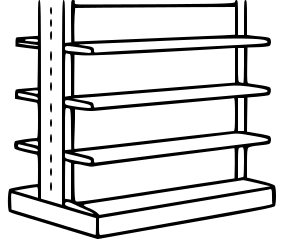
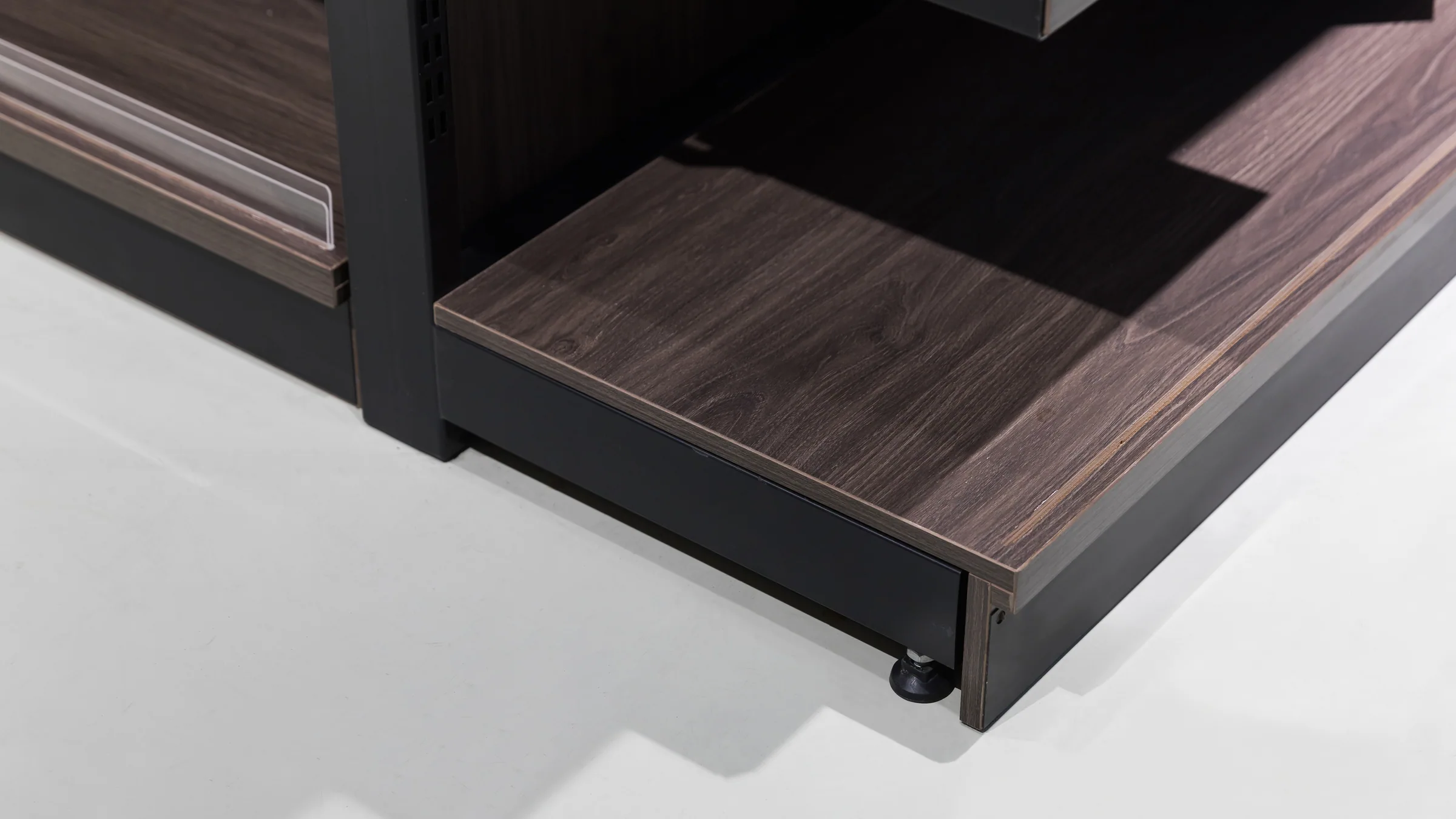
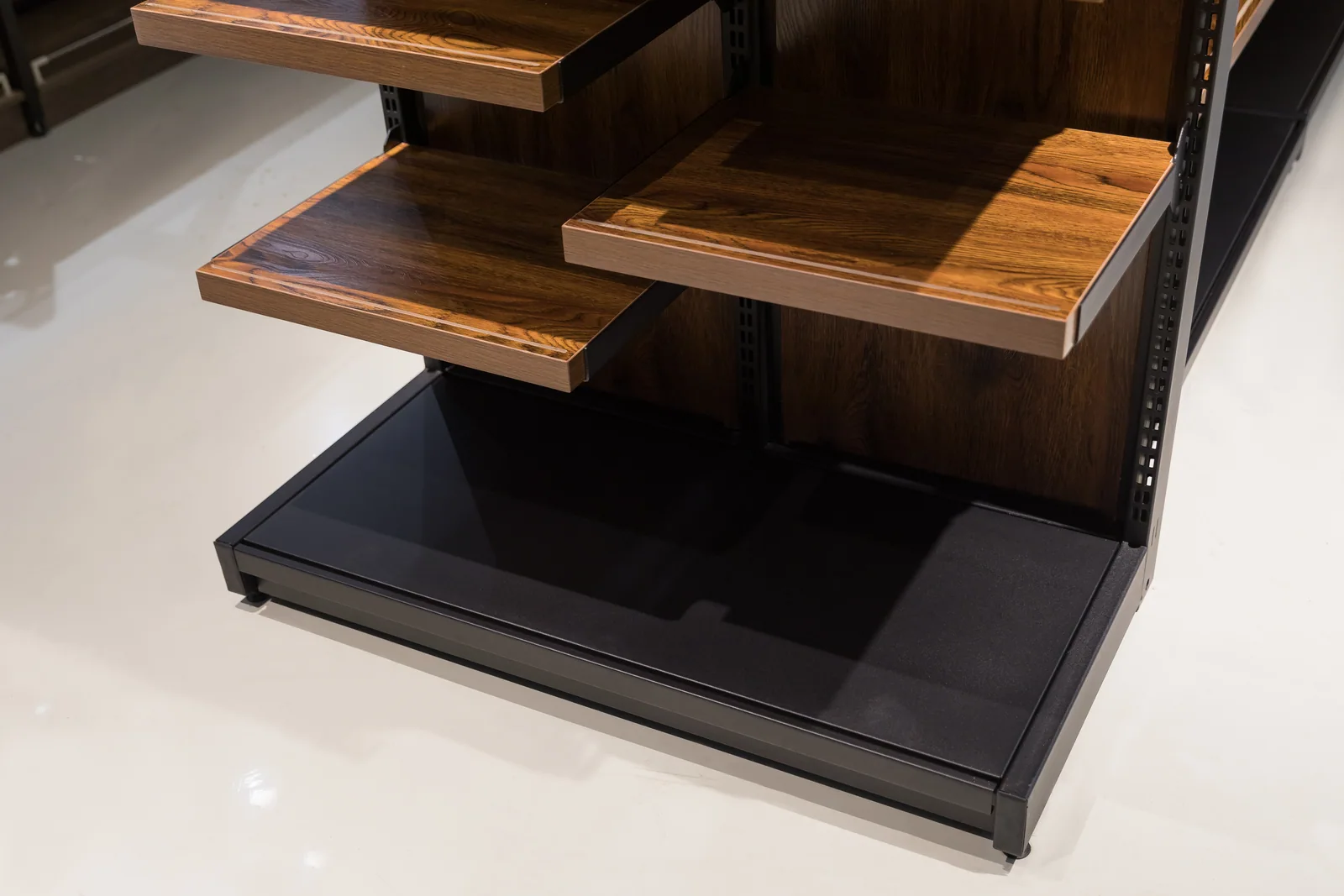
Supermarket shelving comes in two families, and almost every store fit-out has to choose between them: all-metal shelving, and steel and wood shelving where a steel frame carries timber facings. Both are made from good cold-rolled steel and both will hold your stock. What separates them is what the store looks like afterwards, and how much that is worth to you.
Key takeaways
- Both families use a cold-rolled steel frame. Corrosion resistance, load and service life come from that frame either way.
- Metal shelving is cut, bent, acid-and-phosphate washed and automatically baked-finished. Steel and wood adds a paint-free grain board.
- Metal is cheaper. Steel and wood costs slightly more and changes how the store feels, which is what most buyers are actually paying for.
The Frame Is The Same
Start with what does not differ. Both metal shelving and steel and wood shelving use high-quality cold-rolled steel for the overall framework, which is where corrosion resistance, load-bearing capacity and service life come from. A store choosing between the two is not choosing between a strong shelf and a weak one.
The frame is also why shelf positions are adjustable in both families. Positions run up the steel upright, so a bay set up for boxed goods can be reset for bottles without any component being replaced. That is the ordinary way a store rebalances its range in the second year.
How Each One Is Finished
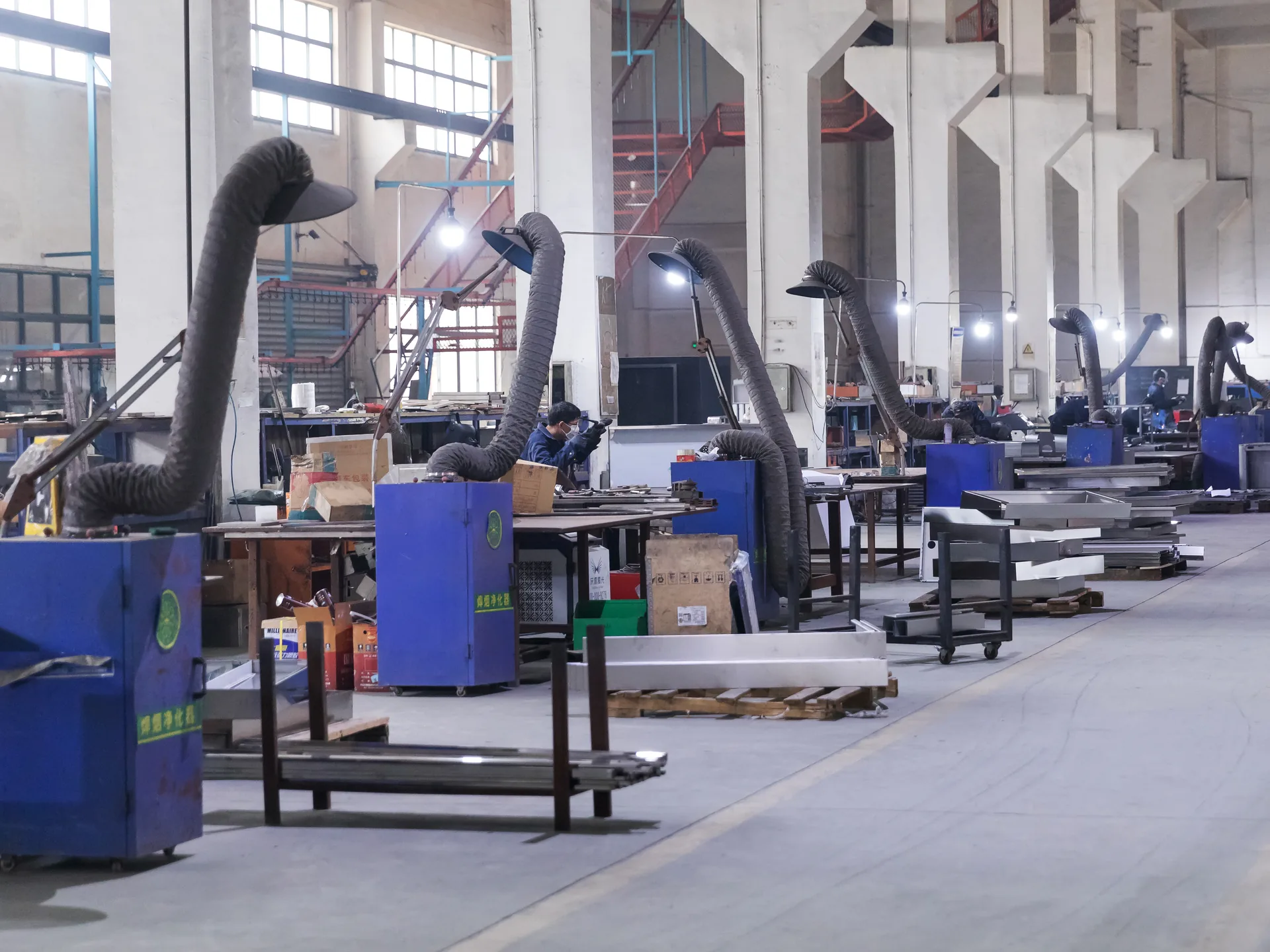
Metal shelving is generally produced through cutting, bending, acid and phosphate washing, and automatic baked finishing, and that is the finished product. It is a clean industrial process and it is the reason metal shelving is the cheaper of the two.
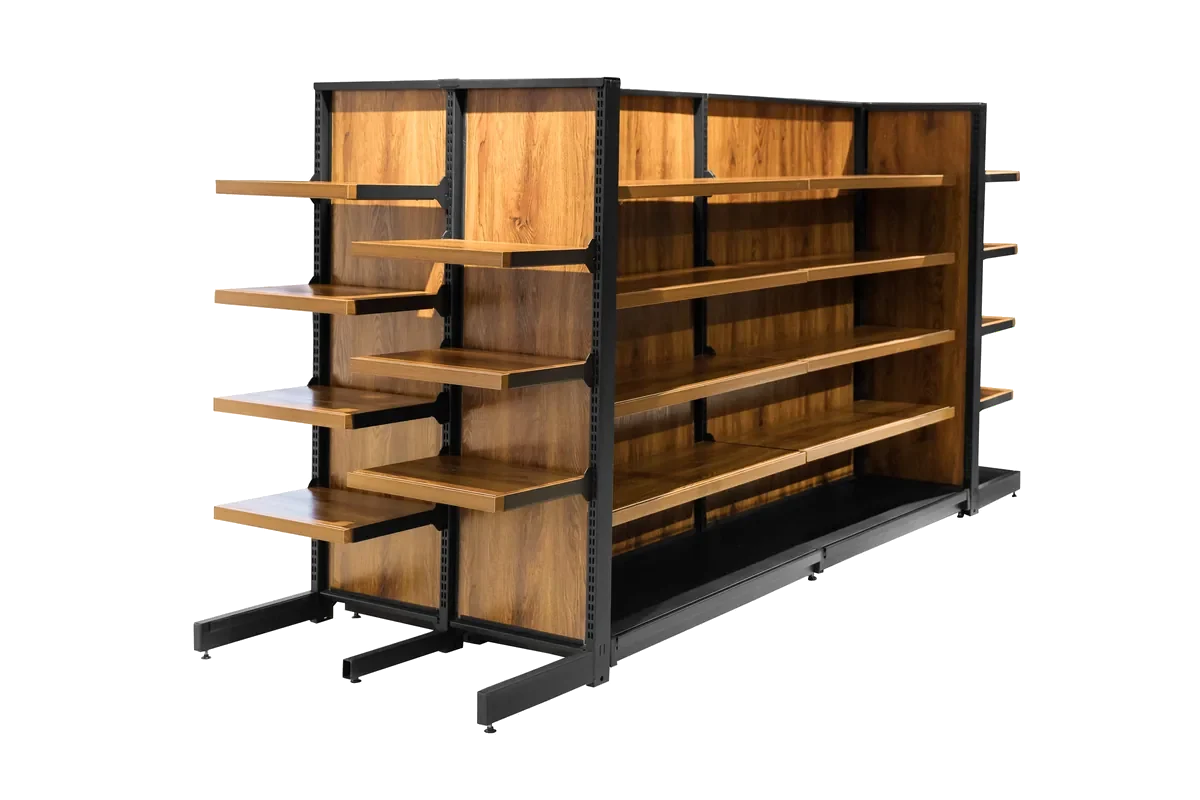
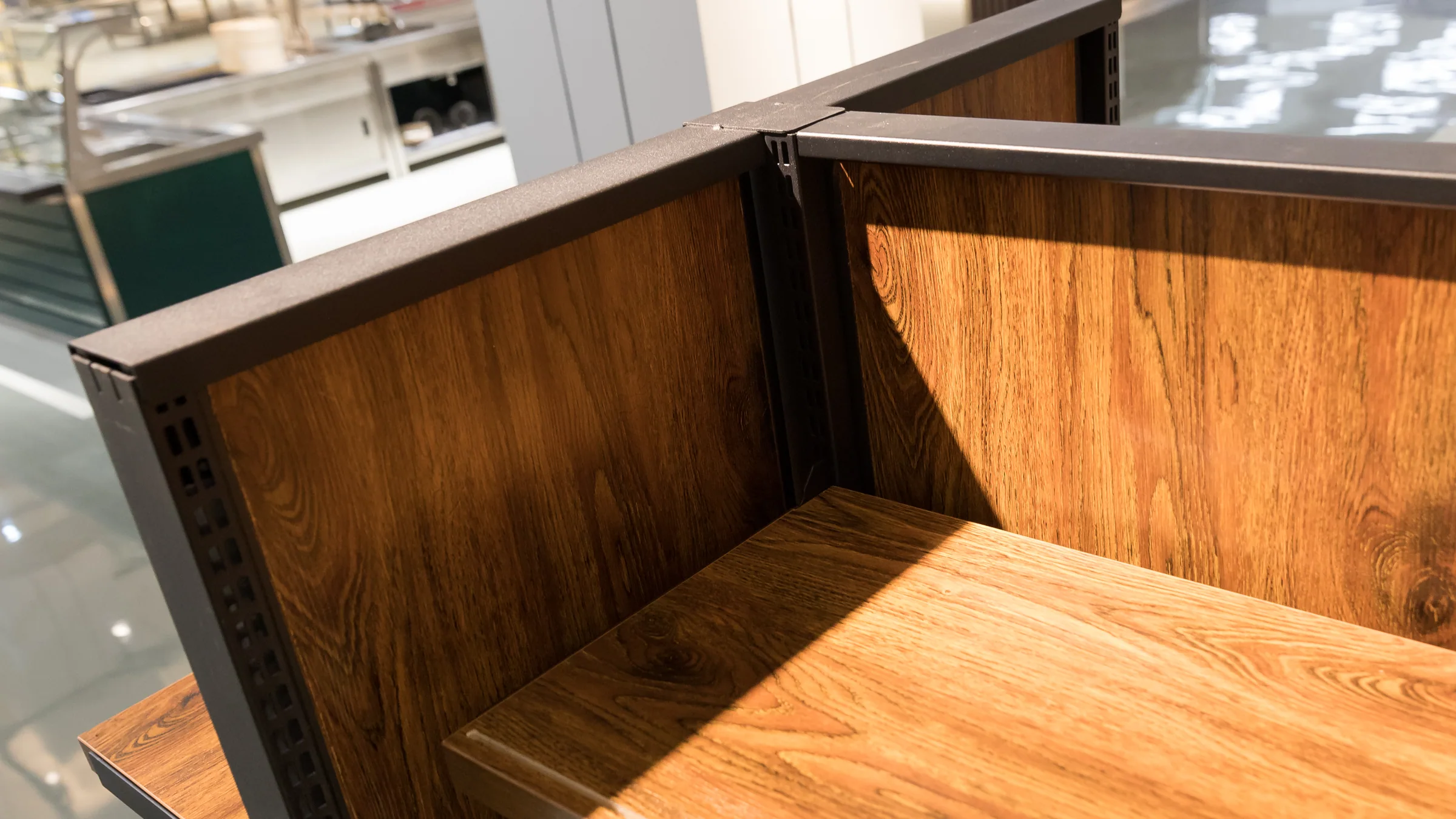
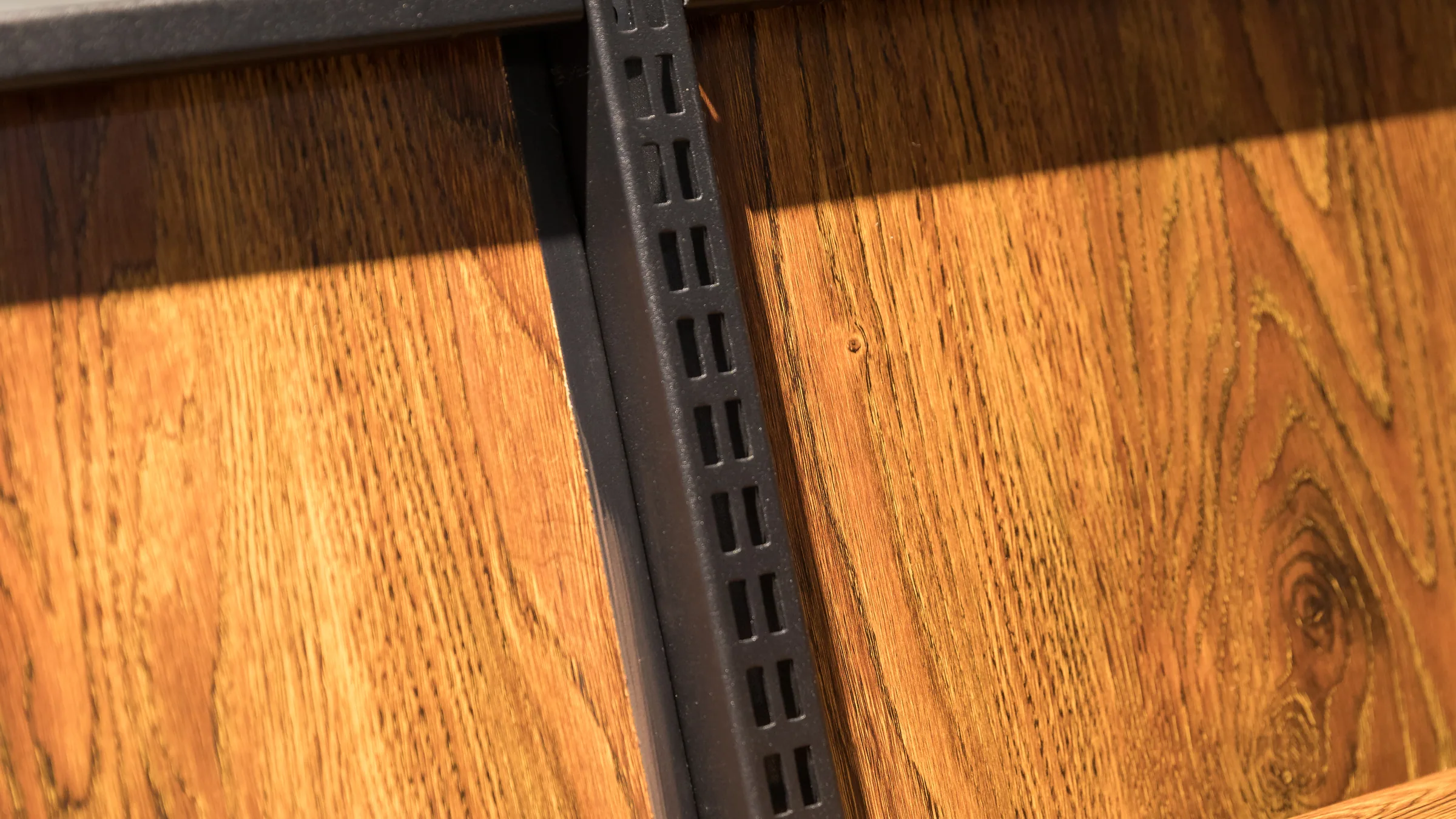
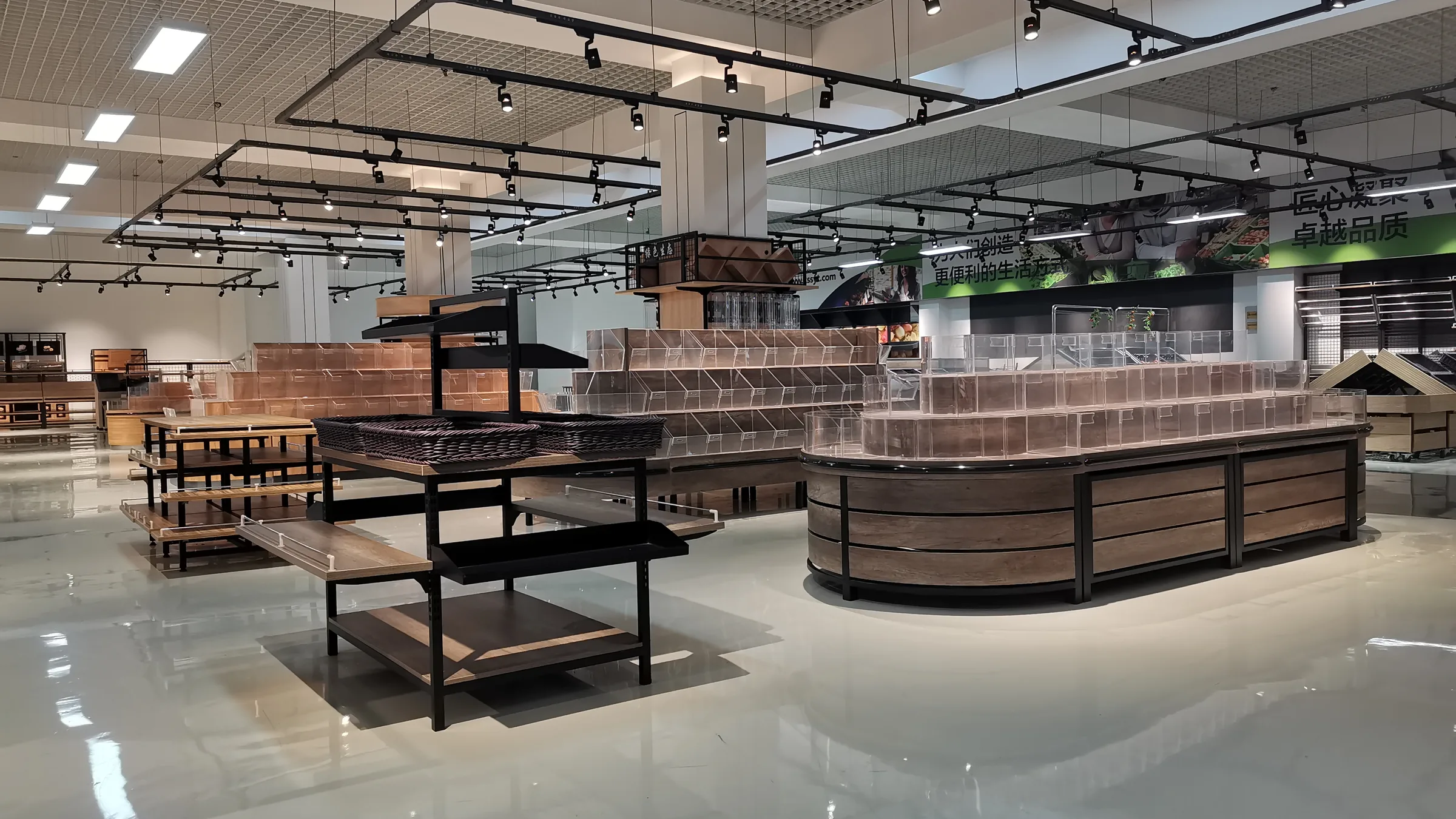
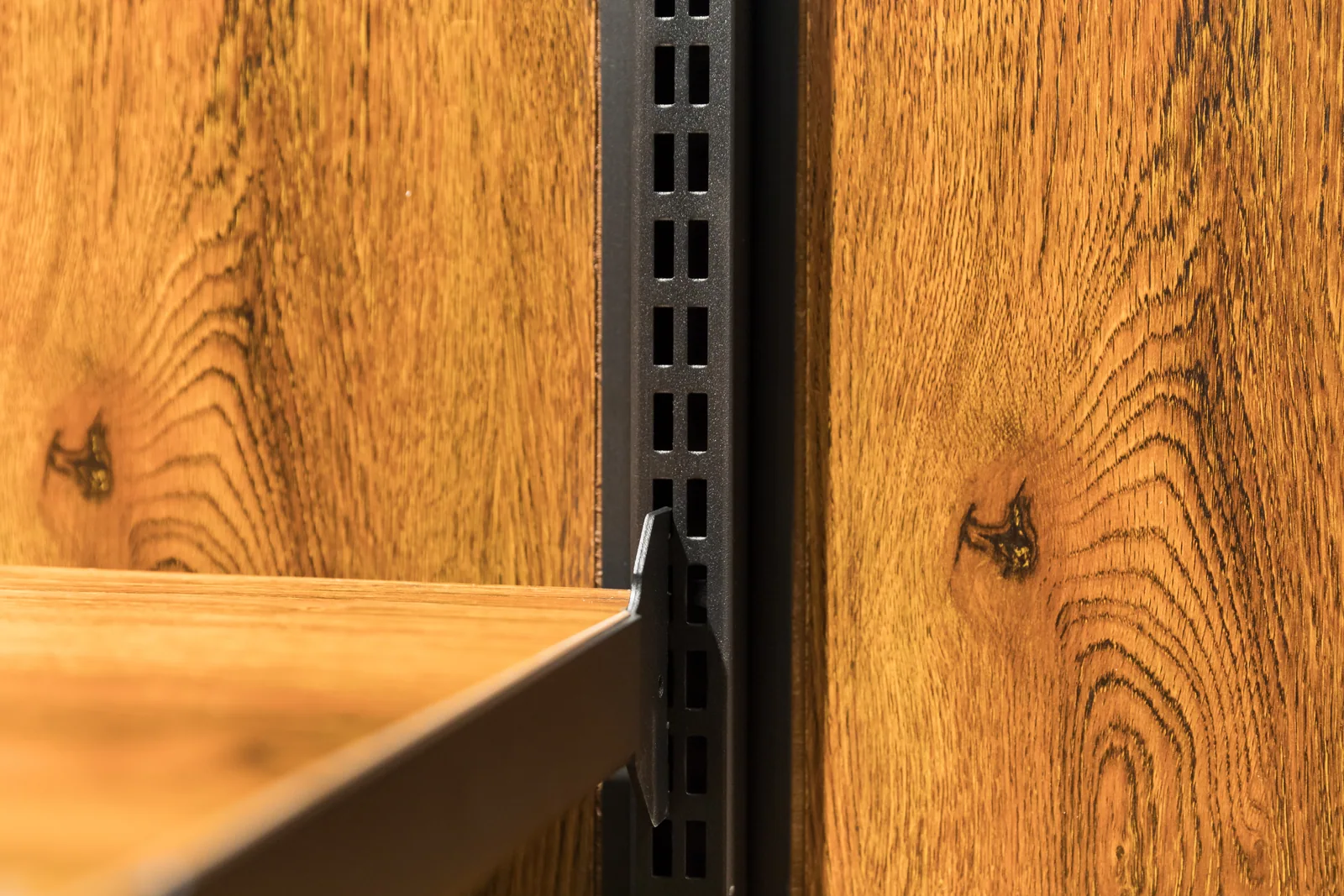
Steel and wood shelving adds a timber element, and the timber is a paint-free wood-grain board. We generally use density board or multi-layer board, which is safe and environmentally sound, without pollutants or harmful substances. It comes in a range of colours, and it looks and feels noticeably more refined than a painted metal panel does.
| Metal shelving | Steel and wood shelving | |
|---|---|---|
| Frame | High-quality cold-rolled steel | High-quality cold-rolled steel |
| Process | Cut, bend, acid and phosphate wash, baked finish | Same frame, plus paint-free wood-grain board |
| Board | None | Density board or multi-layer board |
| Price | Lower | Slightly higher |
| Load | Varies with carbon content and sheet thickness | Frame identical; board carries the display face |
| Best for | Value formats, back of house, high-churn ranges | Fashion-led stores and supermarkets selling on atmosphere |
Price And Load
Metal shelving is relatively cheap and steel and wood is slightly more expensive. On load, metal shelving varies with the carbon content of the steel and the thickness of the sheet, so a load figure is a specification rather than a category property — ask for it against the bay you are actually buying, not against the family.
That price gap is small per bay and meaningful across a store. It is worth being honest about what the extra buys, because it is not strength and it is not capacity. It is appearance.
Both will hold your stock for a decade. Only one of them changes how the shop feels while it is doing it.
What Each One Does To A Store
Metal shelving is traditional and classic, and inevitably a little plain. Steel and wood shelving is more attractive than ordinary steel shelving, and shoppers subconsciously prefer a good-looking environment. A steel and wood run gives a different feel in a store: it increases customer stickiness and, over time, the number of visits.
Steel and wood also reads as fashionable, simple and generous, and it works as a backdrop that suits the specific attributes of the goods on it rather than fighting them. In a store where the range is the reason people come, that matters less. In a store competing on atmosphere, it is most of the argument.
What is on record
Our steel and wood bays are recorded at L1000 × W400 × H1700 mm per group single-sided and L1000 × W800 × H1500 mm per group double-sided. Frames are folded from 0.8 to 1.5 mm metal sheet and powder coated; timber facings are 1.5 to 2.5 mm board. Colour is quoted in RAL or PANTONE references.
The honest summary is that this is a decision about positioning rather than about engineering. Work out what the store is competing on, and the shelving family follows from that.
Keshun Technical Team. First published 5 March 2022, rewritten 8 August 2026. Materials, processes and bay modules quoted above are the ones on record.