
Tray Shelf
Built to your tray
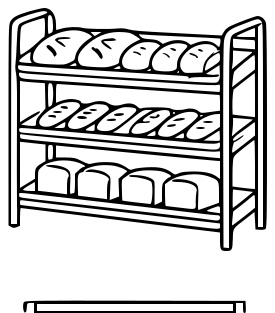
The shelf holds the bake tray itself rather than the loaves. Get the size wrong by a centimetre and the whole idea fails, which is why the tray dimension is the first thing we ask for.
Tray shelves · sign headers · oven tray straight on
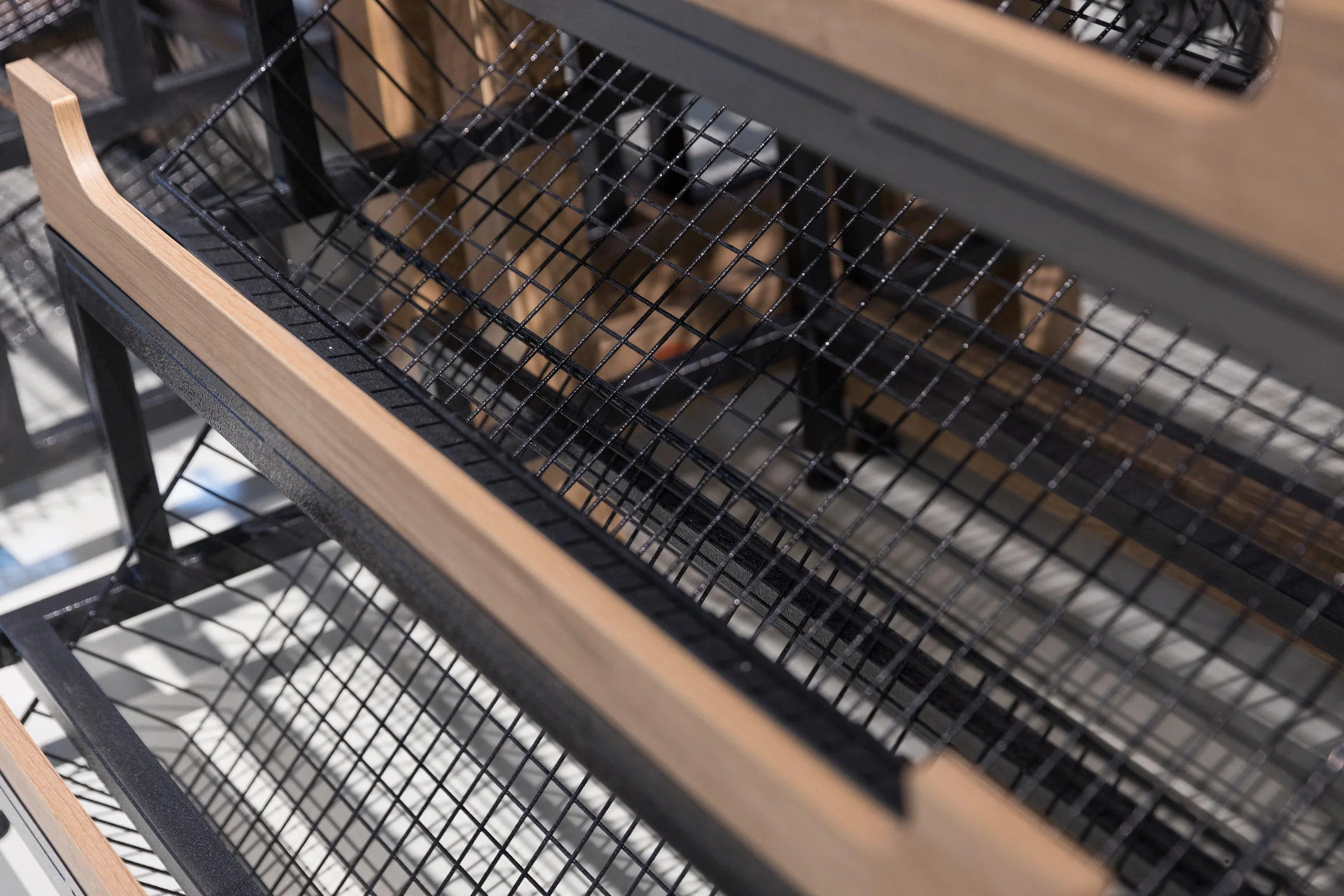
Shelves sized so a bake tray drops straight onto them from the oven rack. No decanting, no transfer, no second handling — which in a bakery is the whole labour cost.
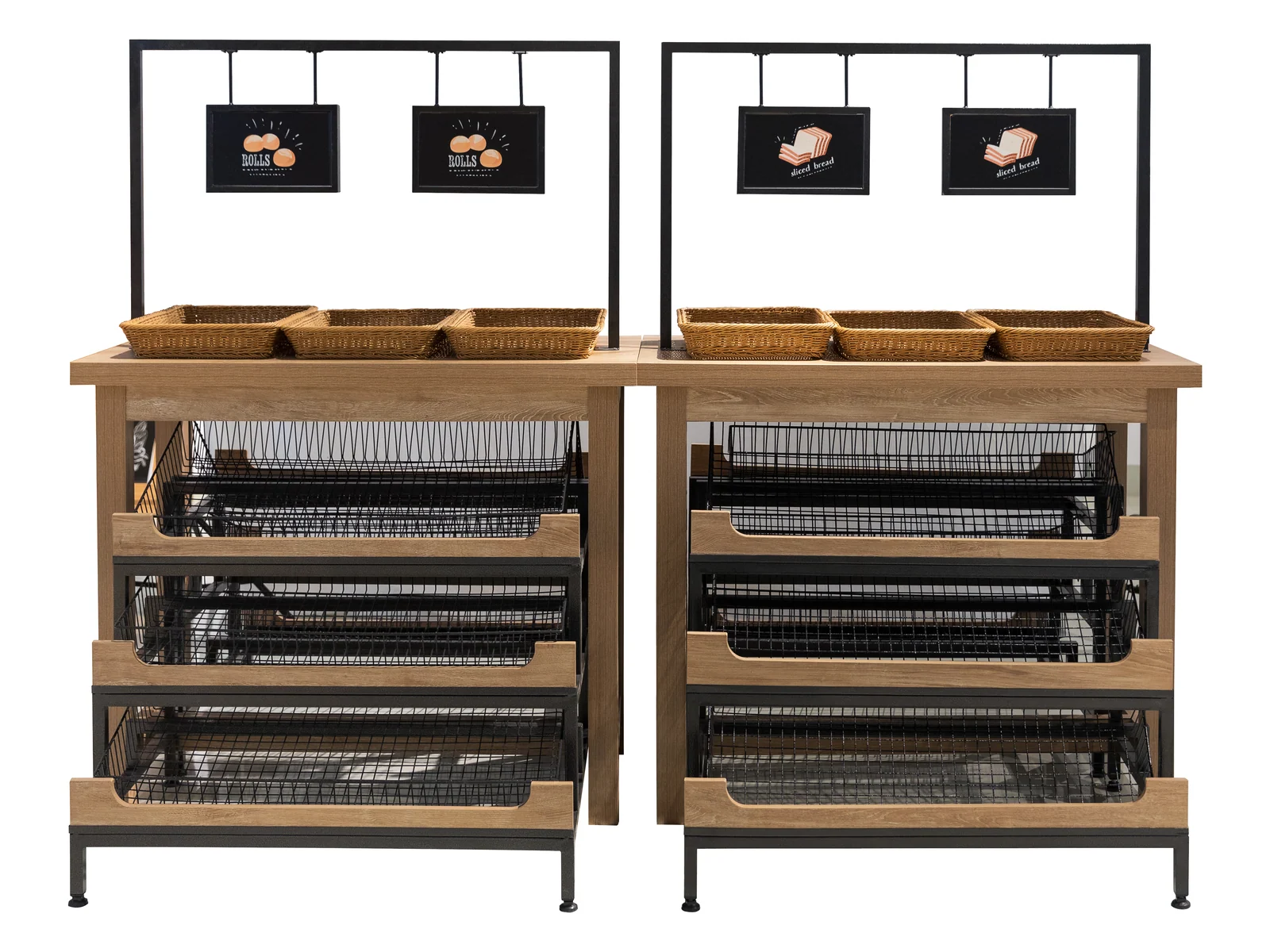
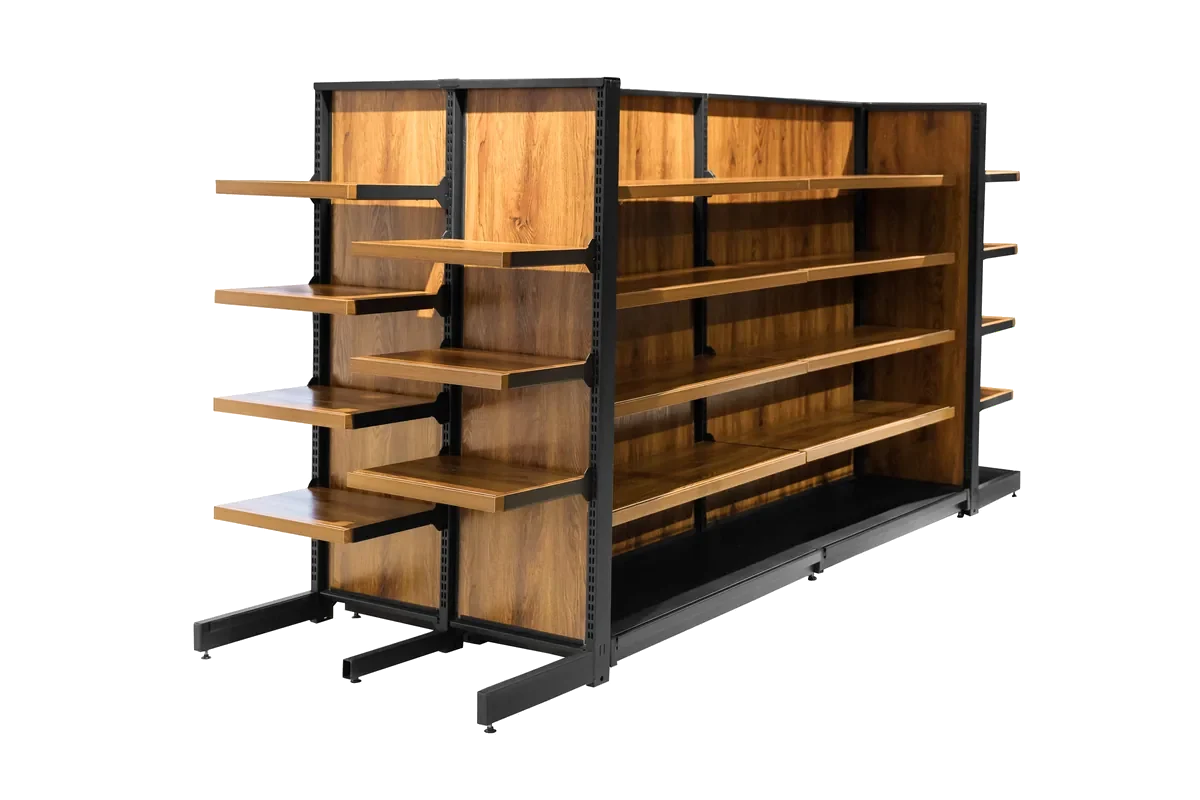
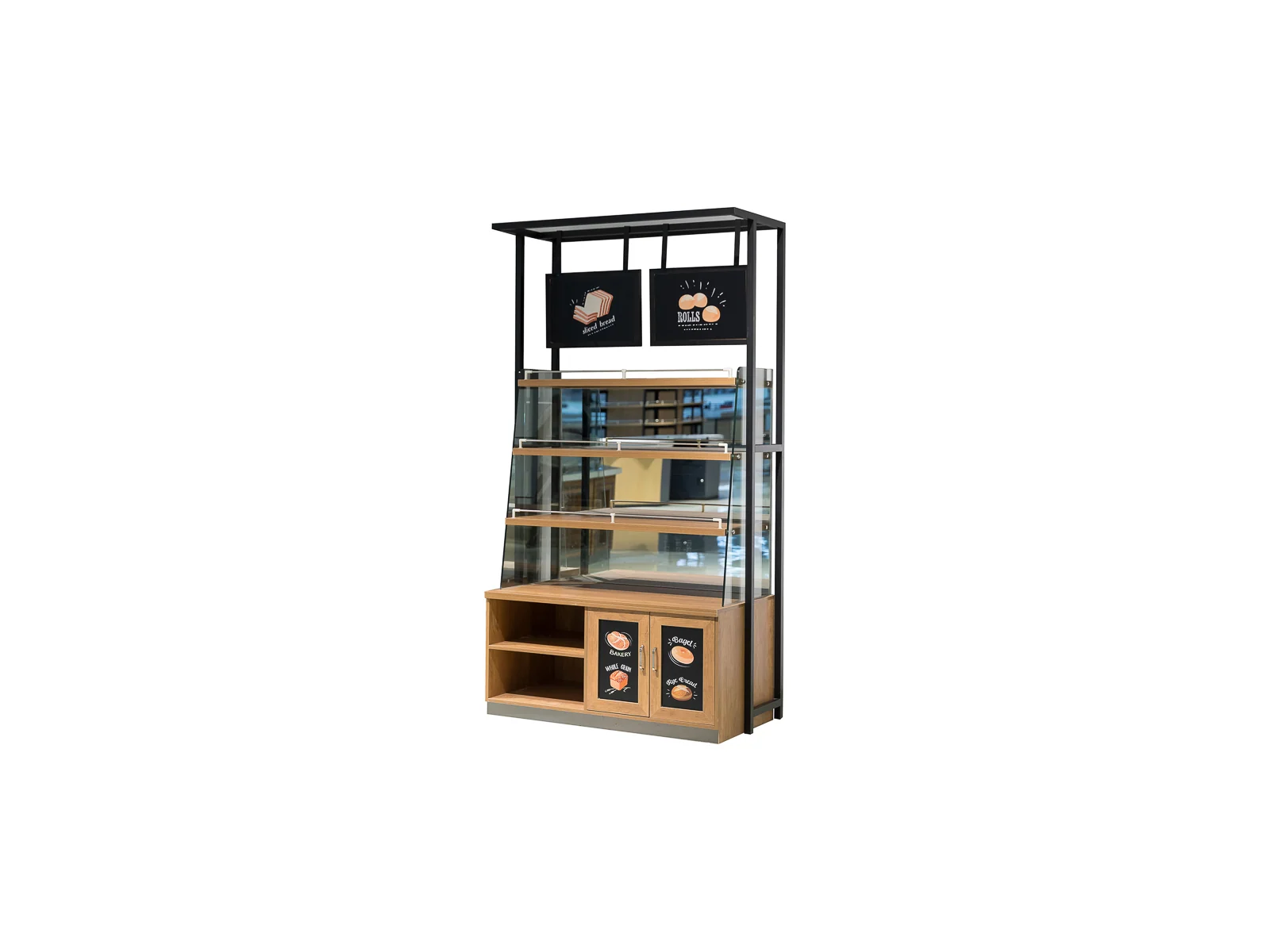
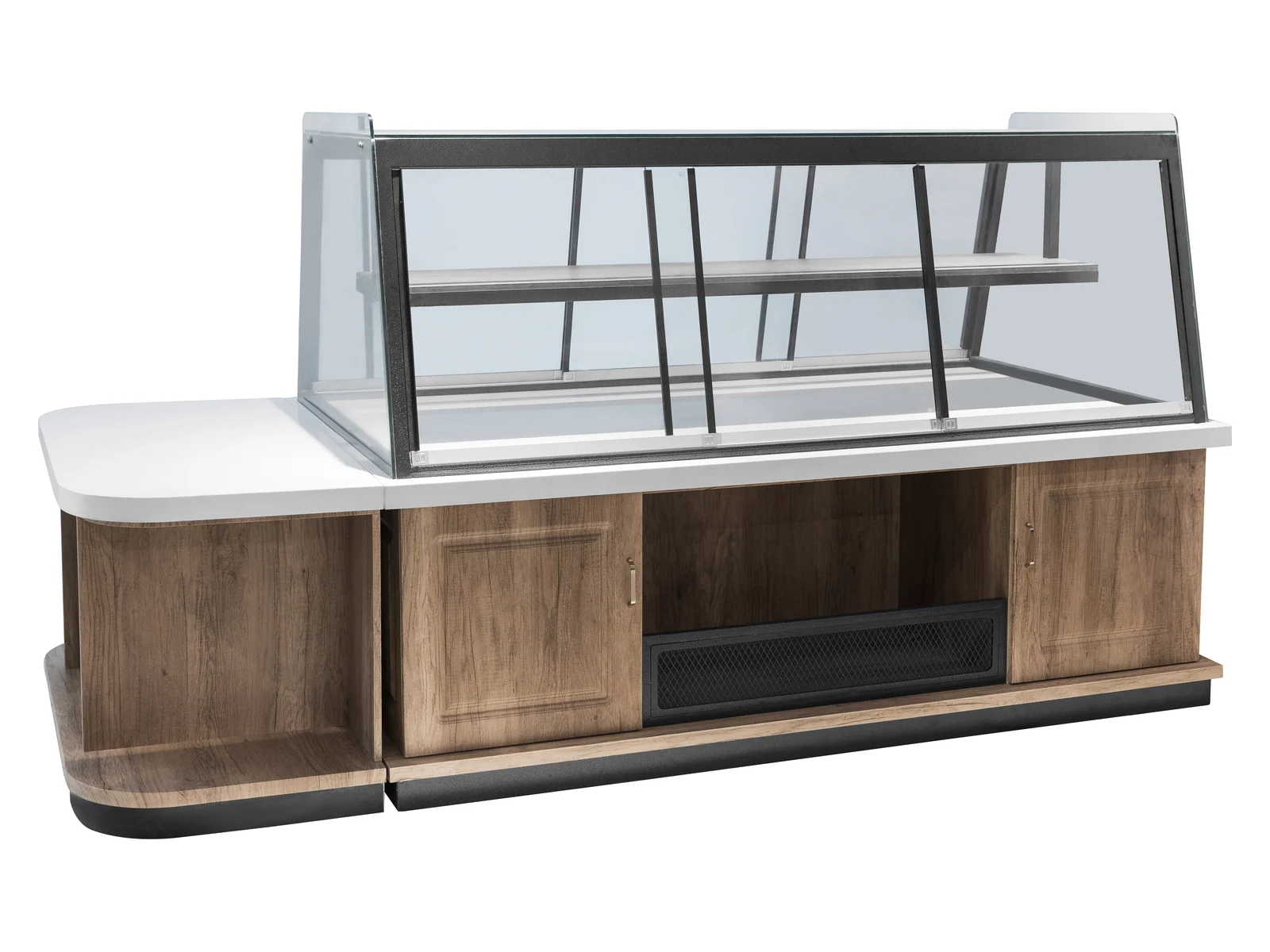
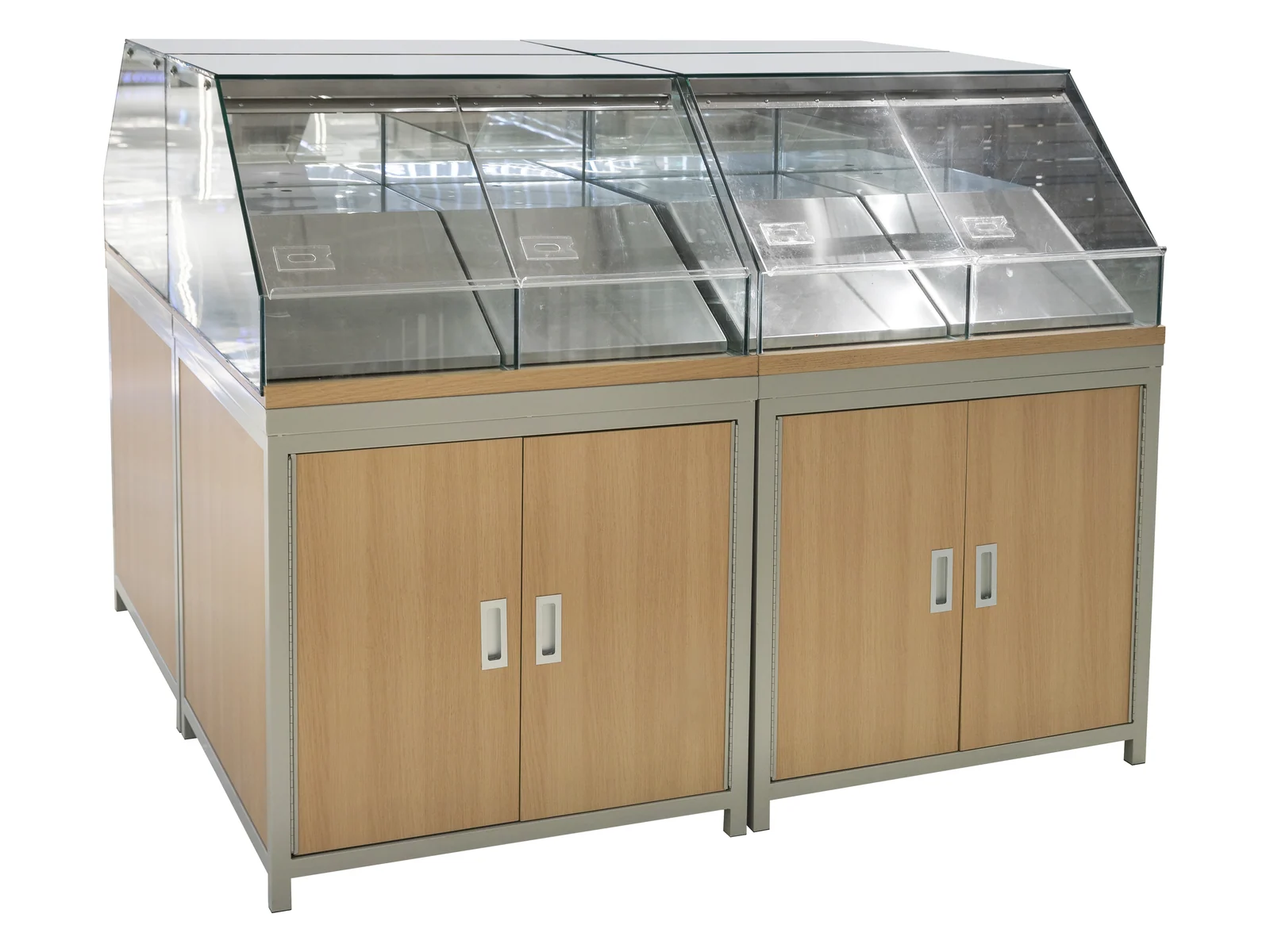
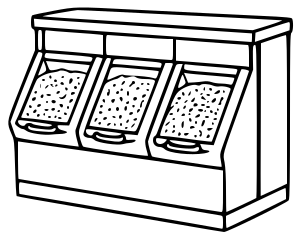
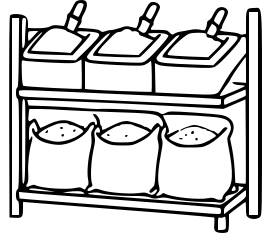
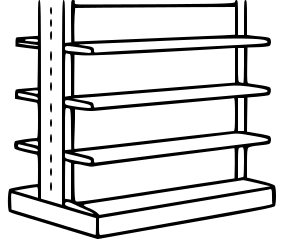
Studio angles on white. The tray shelf, the sign header, the post and the frame are photographed below.
In an in-store bakery the expensive part is not the oven, it is the handling. Every loaf that gets moved from a bake tray onto a display shelf is touched twice for no commercial gain. This rack removes that step: the shelves are sized and pitched so the bake tray itself sits on them, and the display is restocked by sliding a full tray in and taking an empty one out.
That only works if the shelf is built to your actual tray, which is why it is the first thing we ask for. Above the shelves, sign headers on posts carry the pricing and the product names, because bread is sold by variety and a shopper cannot tell two brown loaves apart without a label.
Shelves sized so a bake tray drops straight onto them from the oven rack. No decanting, no transfer, no second handling — which in a bakery is the whole labour cost.
Supermarkets, convenience stores, chain retail and speciality stores. Tell us the store format and the floor area and the specification comes back written against them.
A tray-fed rack is a dimensional problem before it is anything else. Two of these four are that dimension.
Built to your tray
The shelf holds the bake tray itself rather than the loaves. Get the size wrong by a centimetre and the whole idea fails, which is why the tray dimension is the first thing we ask for.
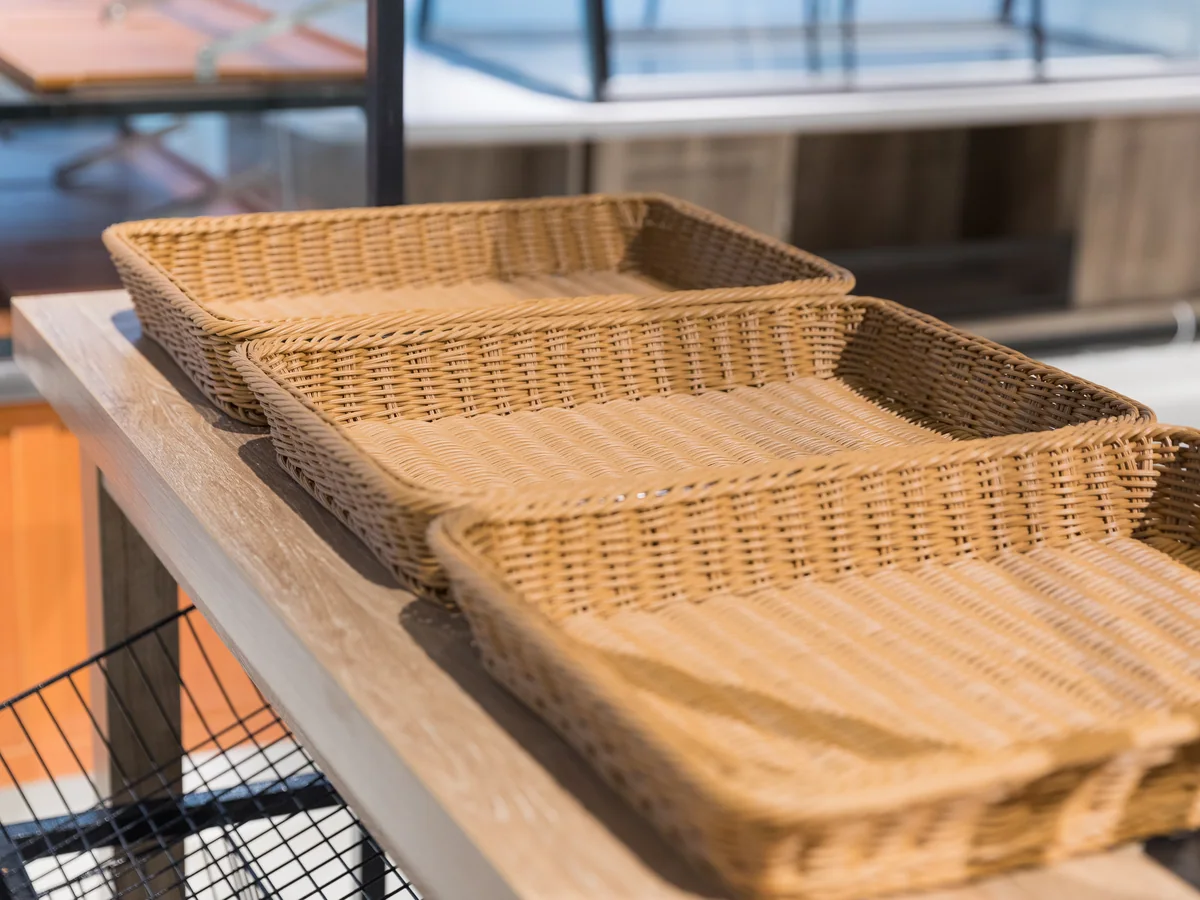
Set to loaded tray height
The pitch is set to a loaded tray rather than an empty one. A rack pitched to the tray alone means the top of every loaf touches the shelf above it.
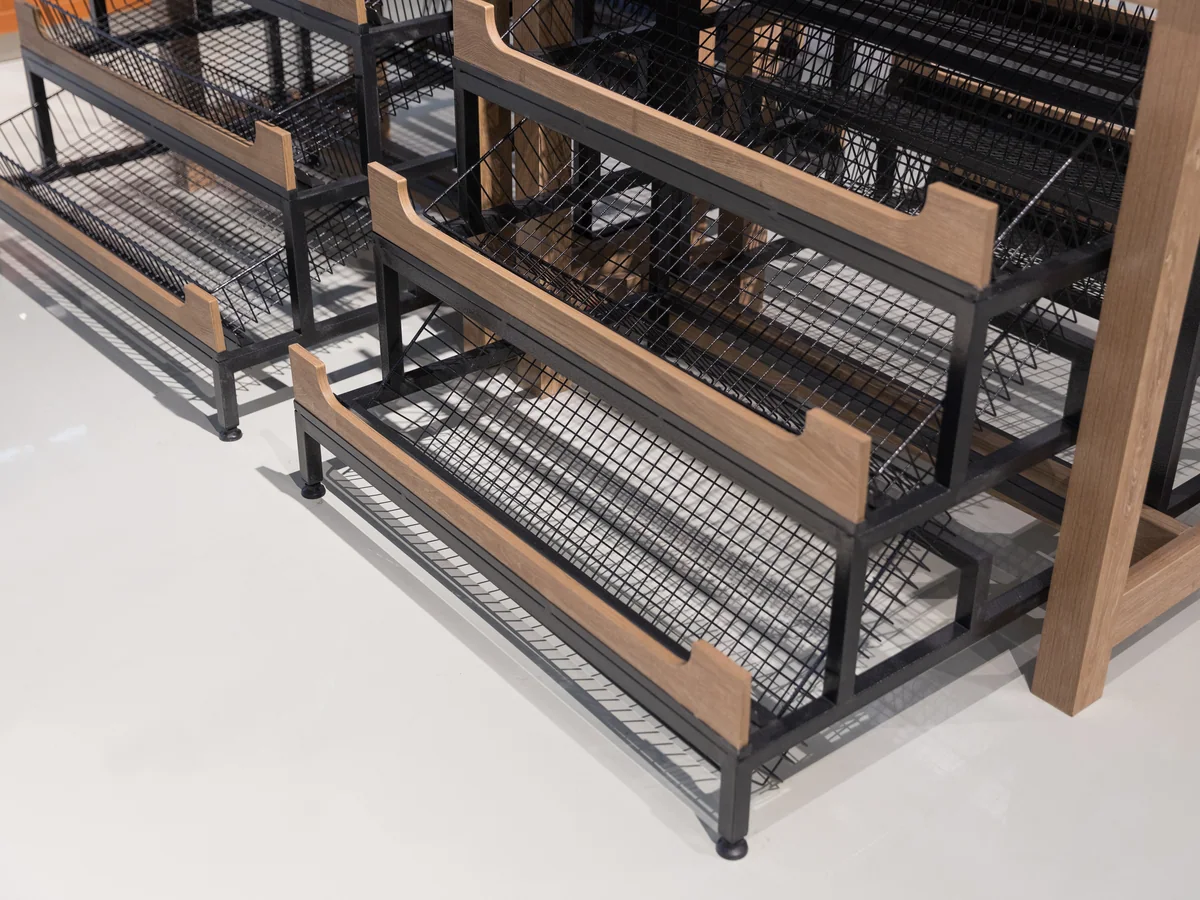
Variety and price
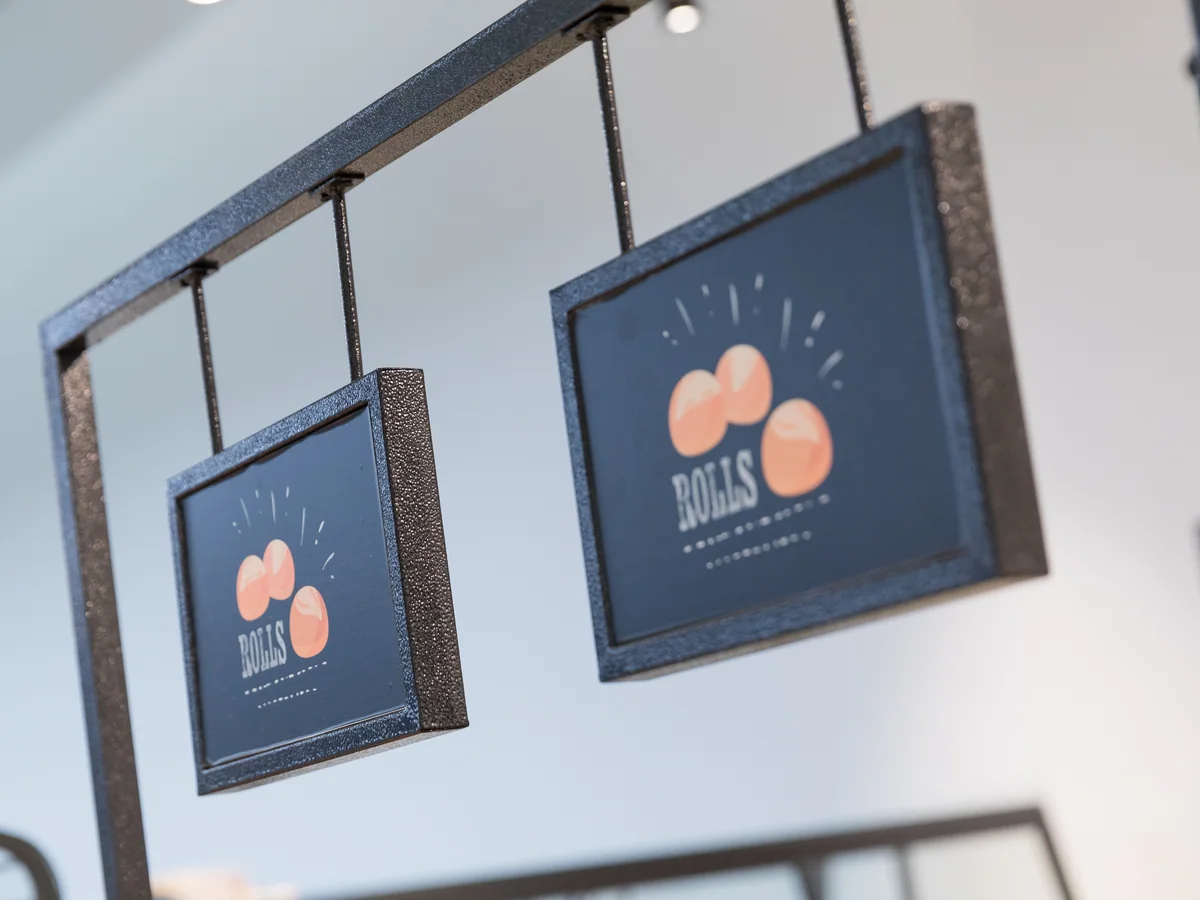
Bread sells by variety and a shopper cannot tell two brown loaves apart without a label. The header carries both the name and the price at eye level rather than on the shelf edge.
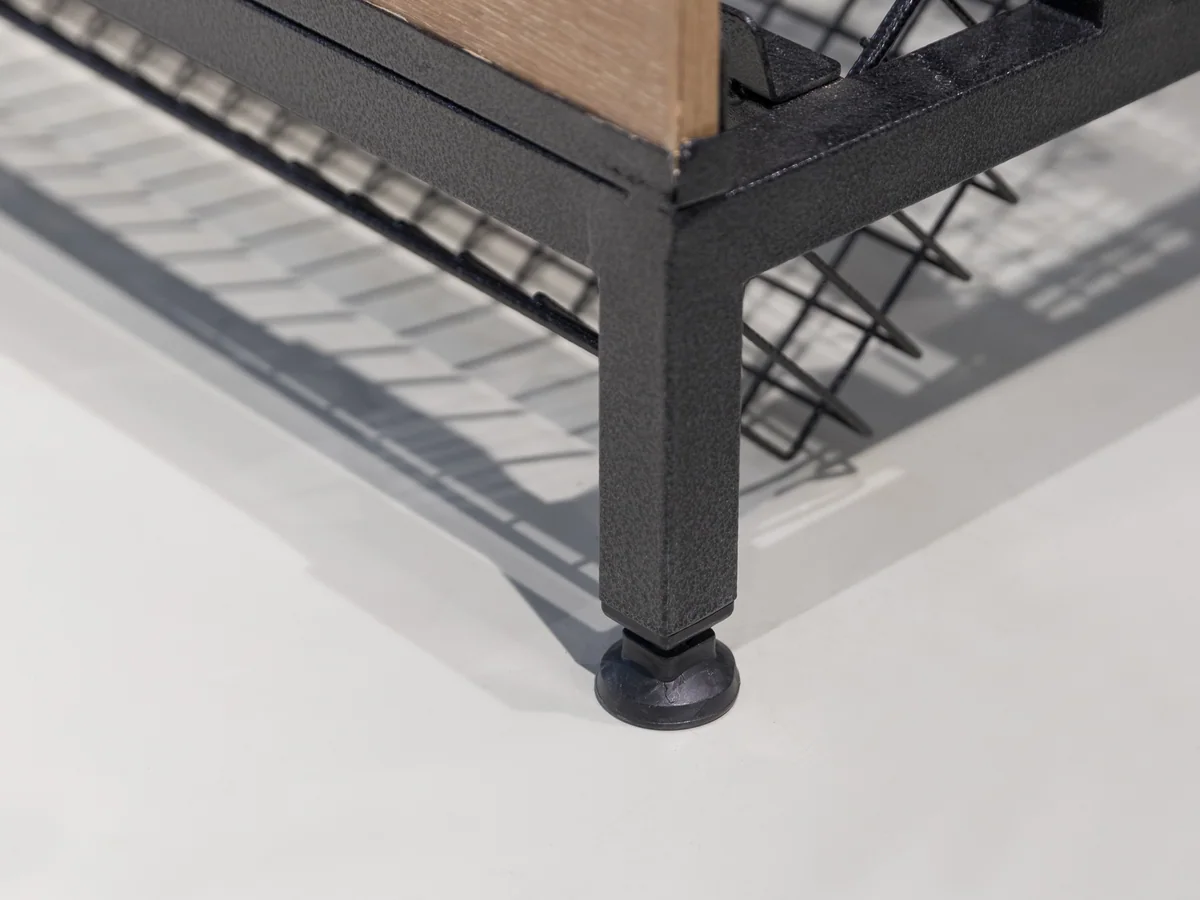
Rises from the rack
The posts rise from the rack itself, so the signage travels with the fixture and nothing extra stands in the aisle when the bakery is re-laid.
Every item on this page is made to order. Send a floor plan, a hand sketch or a photograph of a fixture you like, and we quote against it.
Store fixtures are light for their size, so a container fills up on volume long before it fills up on weight. What decides your freight is not what one unit weighs — it is what shape the goods are in when they go through the container door. Everything we build leaves in one of three shapes.
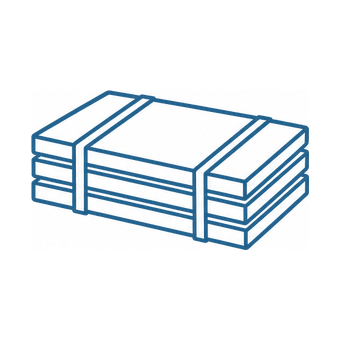
Shelving bays, produce islands and bulk cabinets travel as panels — uprights, shelves, back panels and plinths, strapped flat with bubble wrap on every component. They are built up on the shop floor, so the packing list and the assembly drawings travel with the goods.
This model
Trolleys slide into one another and baskets stack. Past the first unit, each extra one adds only its nesting pitch instead of its full length, so the shipped volume ends up a fraction of what the unit count suggests.
A checkout lane is welded, coated and fitted out as one piece, so it is crated whole with padding on the steel. Nothing waits to be assembled at the store beyond levelling it into the lane, and the crate is the counter plus a margin.
Bakery fixtures flat pack as panels, shelves, glazing and trim. Two bread racks are on record — KS-MBJ-01 and KS-MBJ-02 — and both are built to your bake tray and your bay rather than sold in fixed sizes, so the case dimensions come back on the packing list once the run is confirmed.
Bakery is a served department in most stores and a self-select one in others. Either way these three sit beside it.
Bakery and cooked food sit next to each other in most stores, and both are served rather than self-selected.
See deli display casesPackaged bakery lines go on the bays behind the counter, and they carry the same board tone.
See shelving baysBakery is promoted on the day, and a square at the counter end is where a morning batch actually moves.
See retail display tablesHow many of each a store needs is a floor area question rather than a product question, and it is answered store by store on the equipment lists by store size.
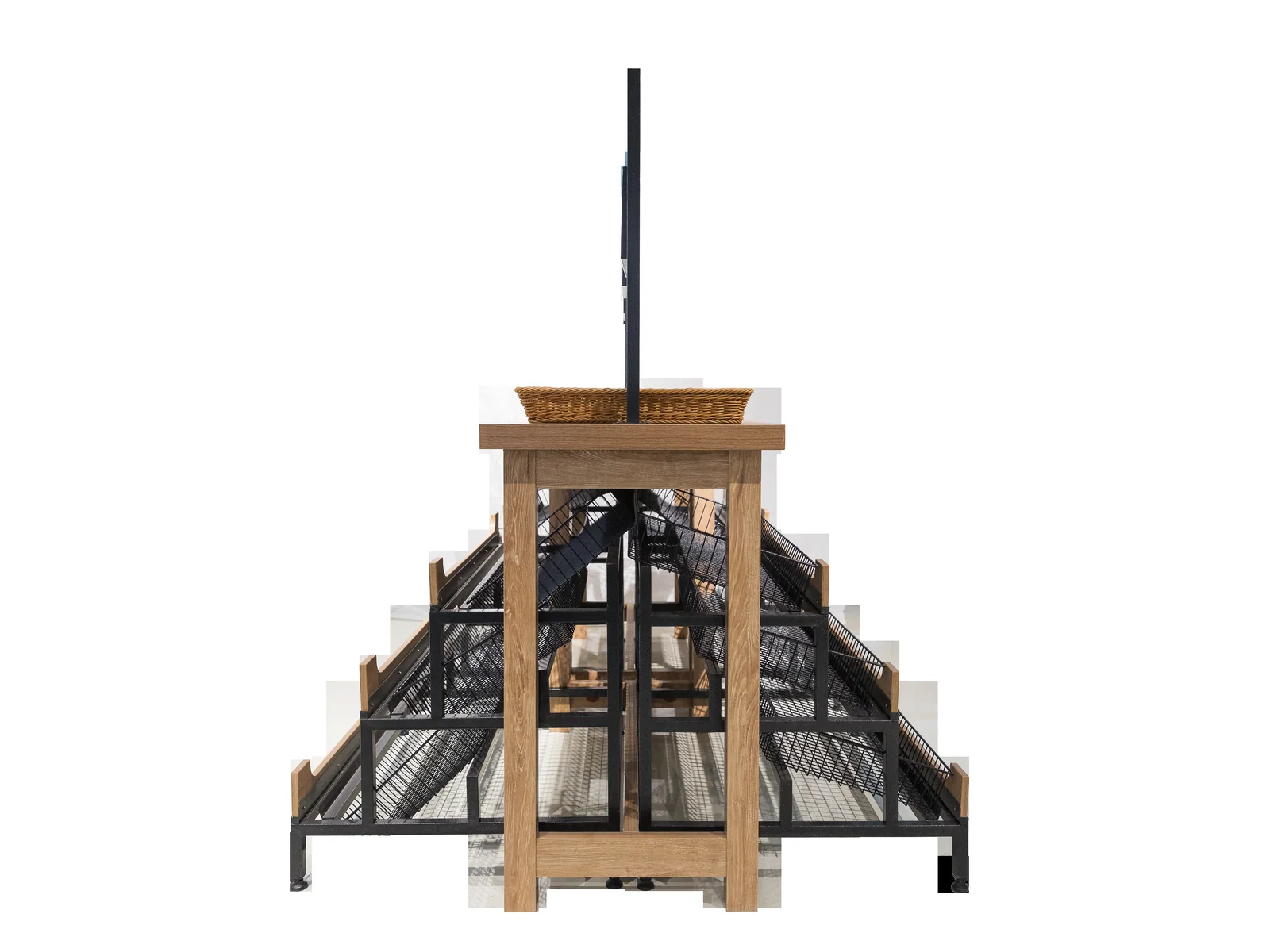
The bake tray dimension is the whole specification. Send it first.
Send the exact dimensions of your bake tray, including how tall a loaded one stands. Everything on this rack is built to those two numbers.
The four that come up on nearly every enquiry for this build. If yours is not here, send it with your layout and it is answered alongside the quotation.
Then the rack no longer fits, which is the honest risk of a tray-fed fixture. If you are likely to change, tell us and we will build the shelf to a range rather than to a single tray — it costs a little capacity and removes the risk.
Set to a loaded tray rather than an empty one. Send the tray dimensions and the height of a typical loaded tray, and the pitch comes back on the drawing.
Yes. Send it with the enquiry and it is set out on the drawing before production. OEM orders ship with no Keshun marking anywhere on the fixture.
That depends on your local rule for unpackaged bakery. A tray-fed rack takes covers where they are required, though it does reduce the speed advantage the fixture exists for — worth knowing before you specify.