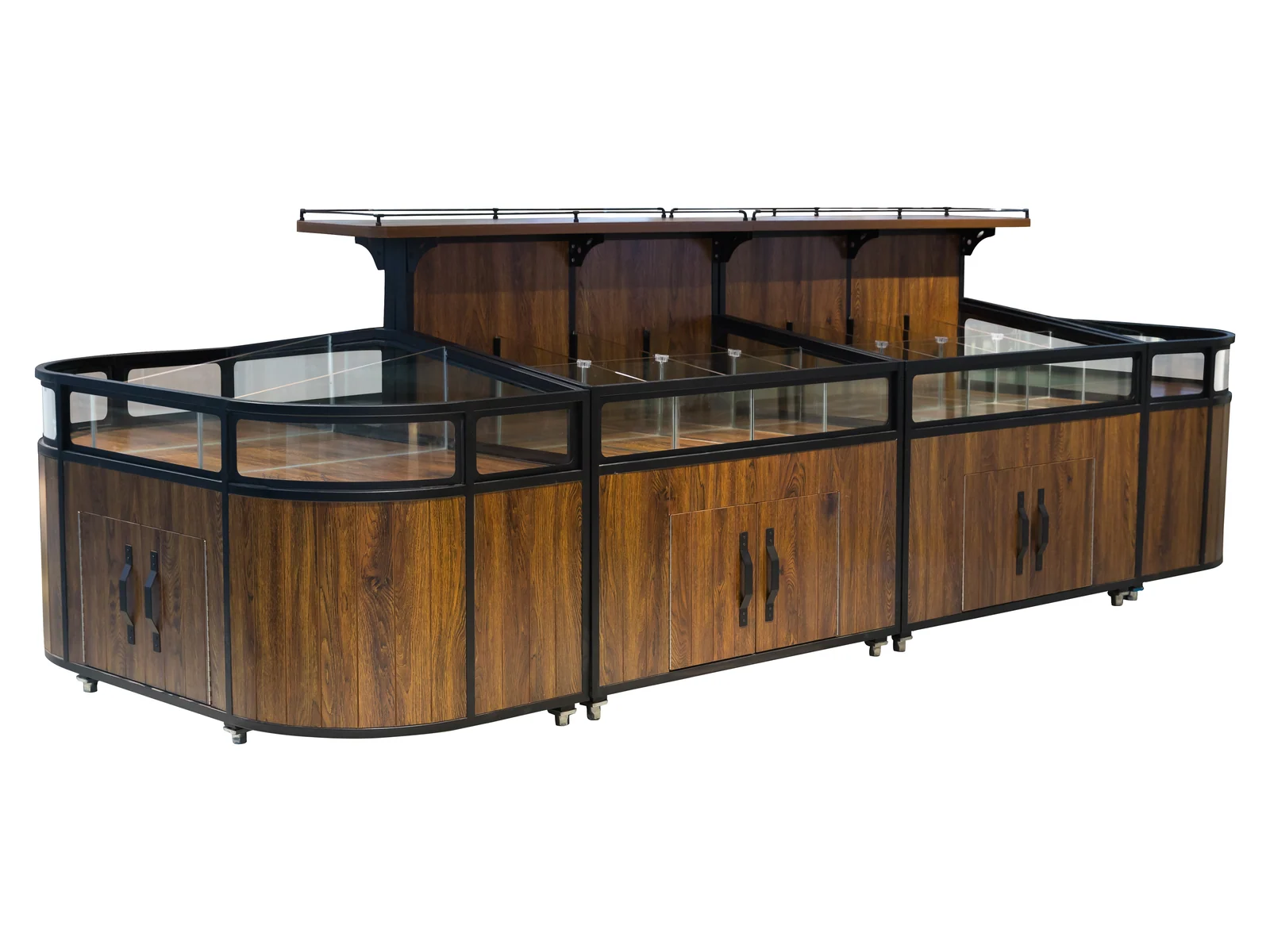
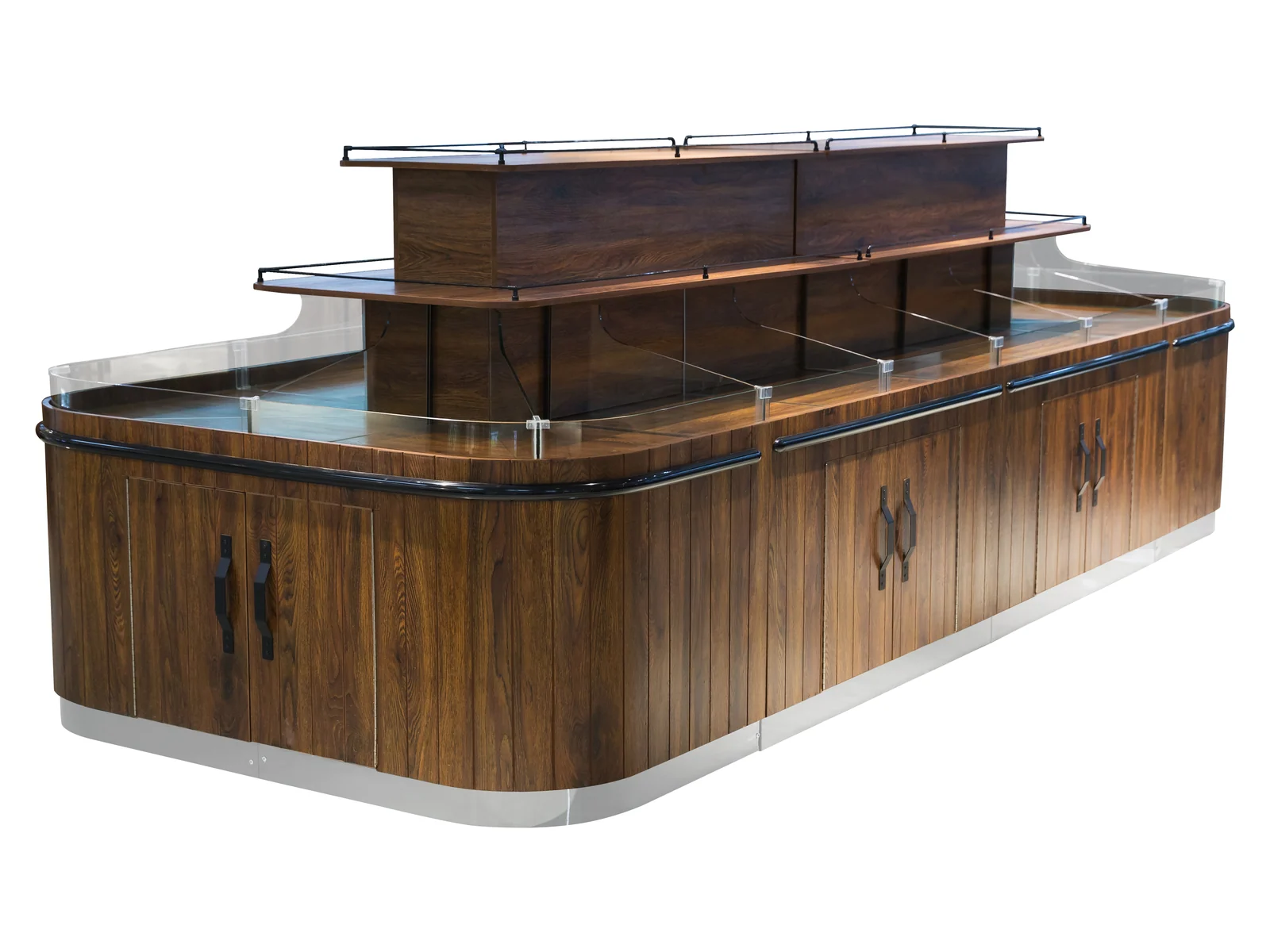
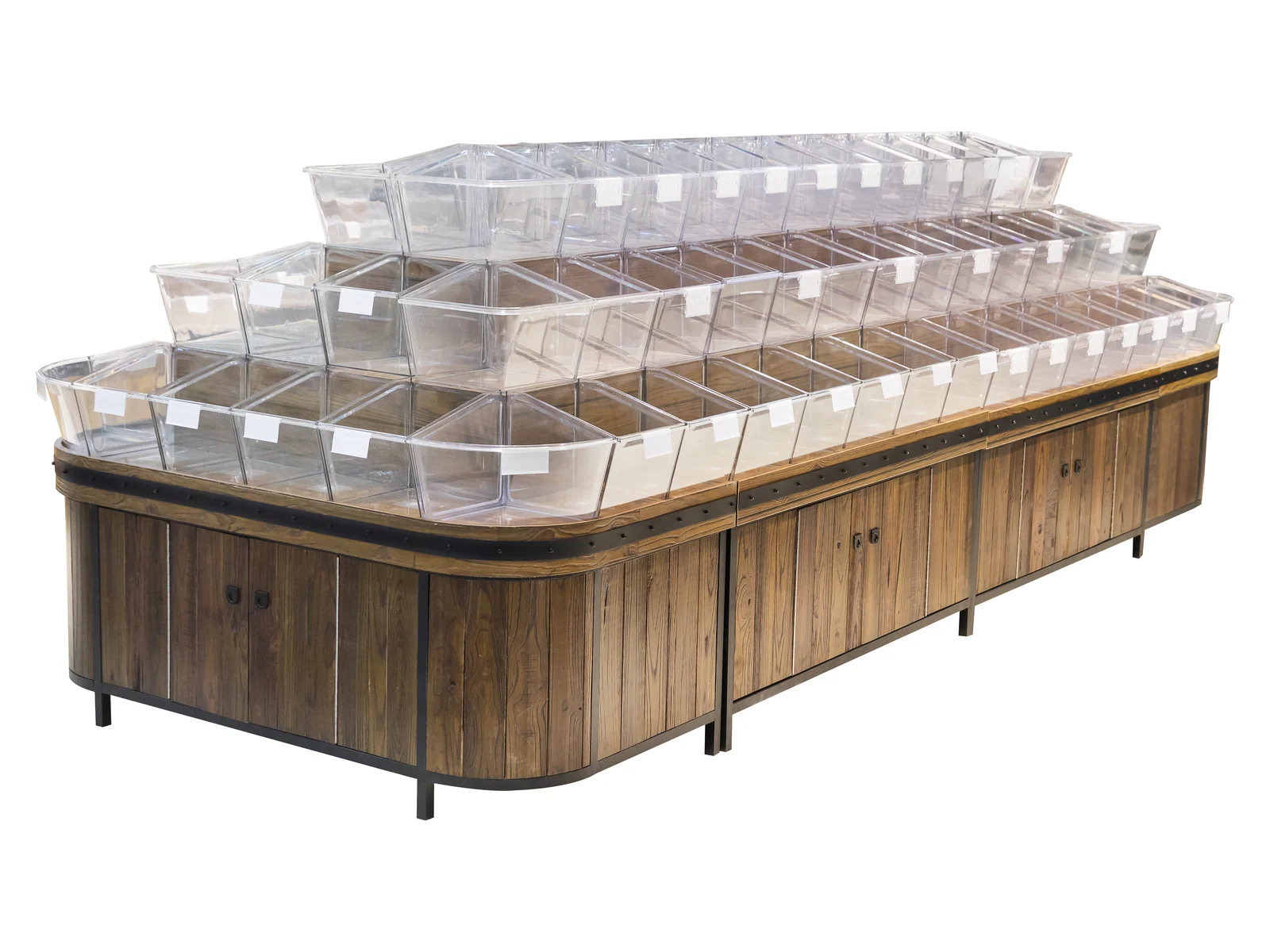
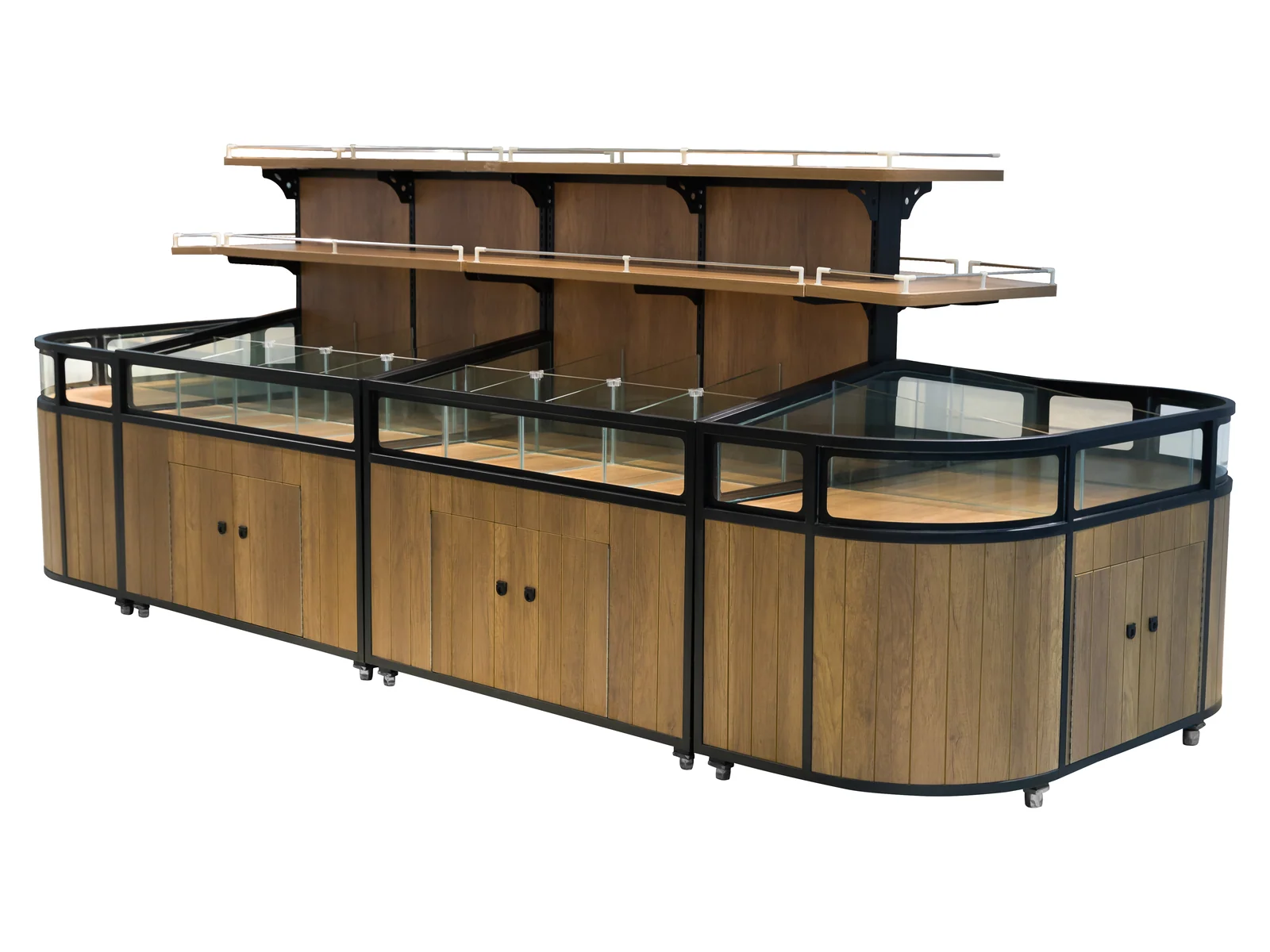
Keshun glazed top bulk island with ticket rails, dark timber doors and adjustable levelling feet

Glazed Top Bulk Island with Ticket Rails

Glazed top island · ticket rails · levelling feet

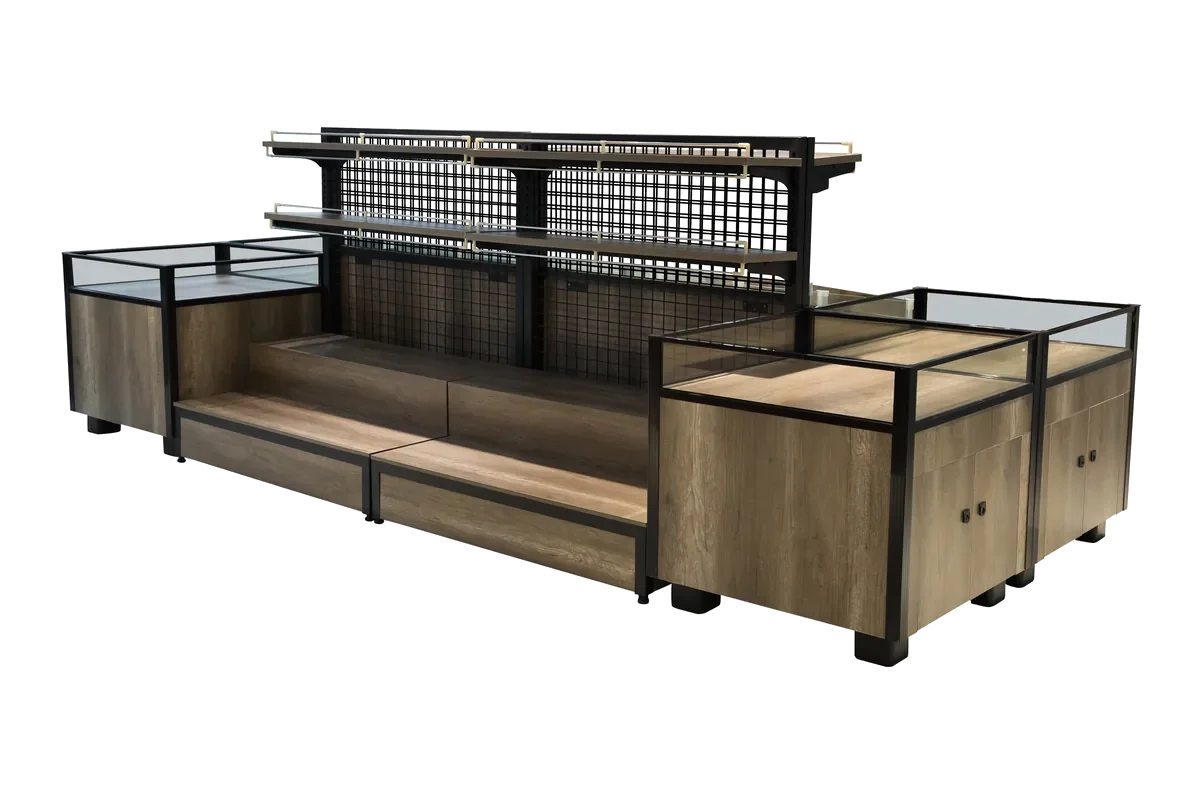
An island built in two glazed sections with a walk-through between them, ticket clips fitted along the display rails, and adjustable feet under the frame — which is the detail that matters on the uneven floors these fixtures usually land on.

Product File

Glazed Tops, Ticket Rails, And Feet That Adjust

The island is built in two glazed sections rather than one continuous run, with a gap between them that staff use to get inside the footprint without walking the whole length. Each section has a glazed display top with ticket clips fitted along the rail, so a price change is a card swap rather than a label peeled off a glass panel.

Underneath, the facing is a dark timber with long black bar handles on the doors, and the frame is black steel with a bracket junction where it meets the timber top. The thing worth noticing is at the bottom: white adjustable levelling feet under the frame. Shop floors are rarely flat, and a glazed island that is not level shows it in the glass long before anybody notices it in the frame.

Sections Two, with a walk-through
Feet Adjustable levelling
Overall size Cut to your aisle
Carcase 0.8–1.5 mm steel
  • Since 1999
  • Changshu, Jiangsu
  • ISO 9001
  • HS Code 94031000
Product Description

Glazed Top Bulk Island with Ticket Rails

An island built in two glazed sections with a walk-through between them, ticket clips fitted along the display rails, and adjustable feet under the frame — which is the detail that matters on the uneven floors these fixtures usually land on.

Key Features

  • Built to your drawing rather than to a fixed configuration — length, depth, height and internal layout all follow your floor plan.
  • Cold rolled steel body with the finish carried across every category on the same order, to one RAL or PANTONE reference.
  • Manufactured in our own plant in Changshu, where steel fabrication, woodworking and stainless steel production run on one site.

Applications

Supermarkets, convenience stores, chain retail and speciality stores. Tell us the store format and the floor area and the specification comes back written against them.

What The Photographs Show

Two of these four are the unglamorous parts — the ticket rail and the levelling feet. They are also the two that decide how the island looks after a year.
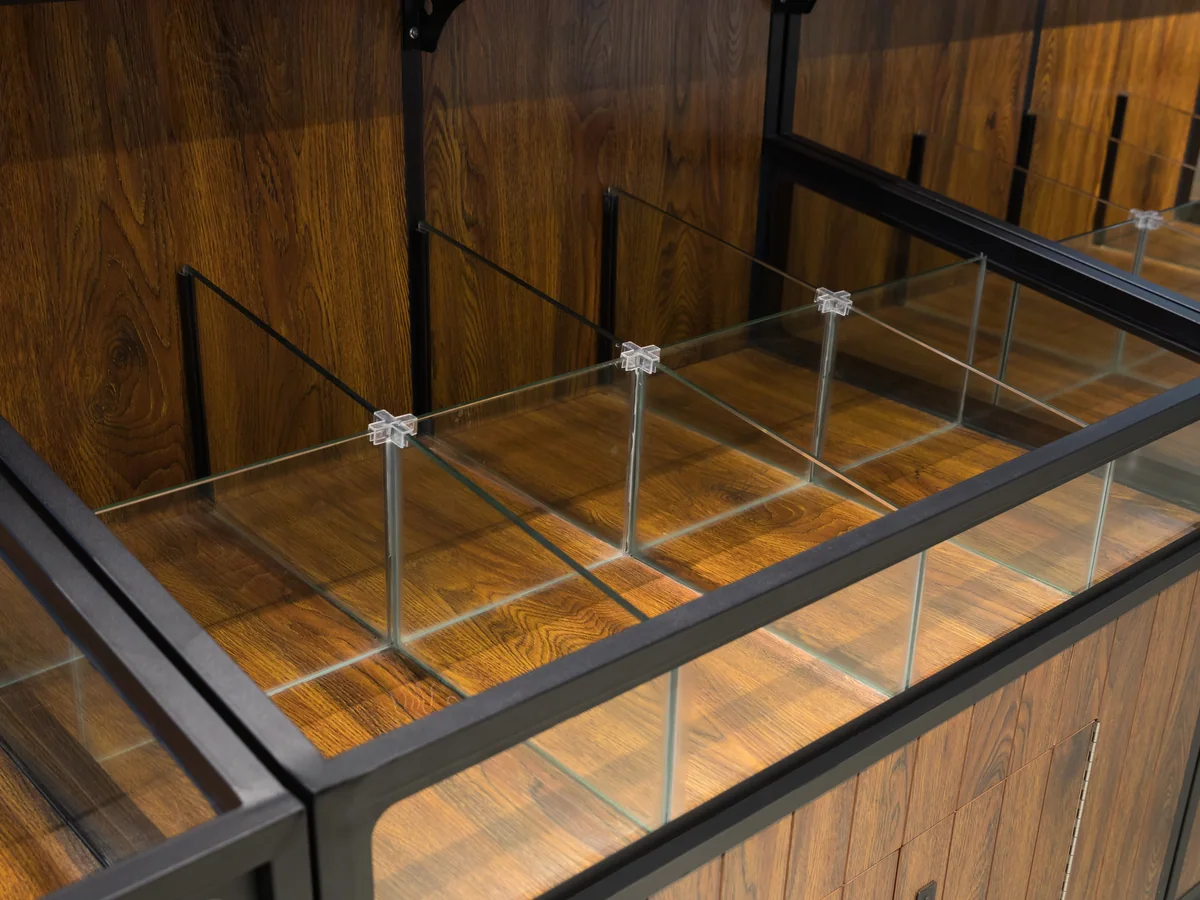
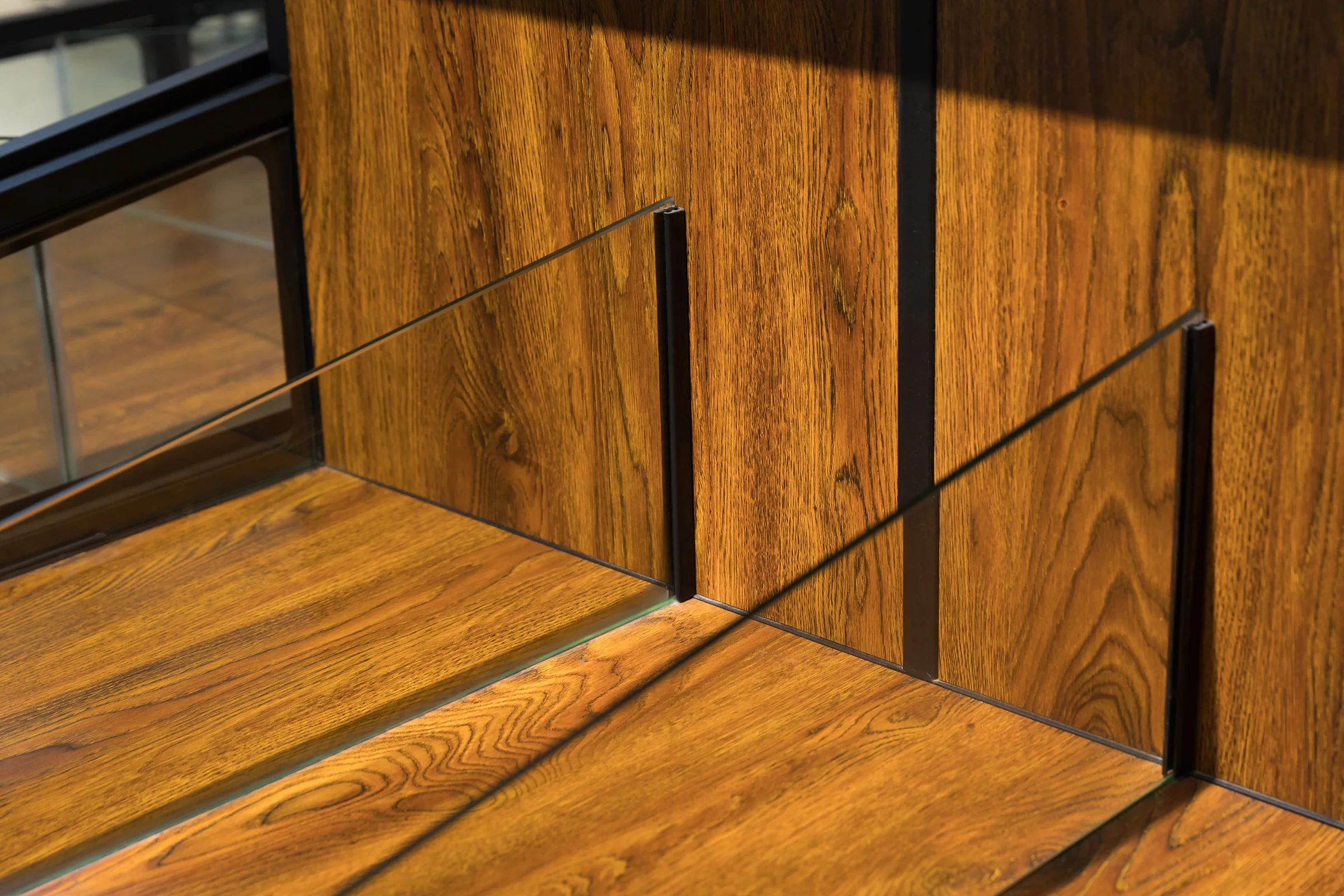
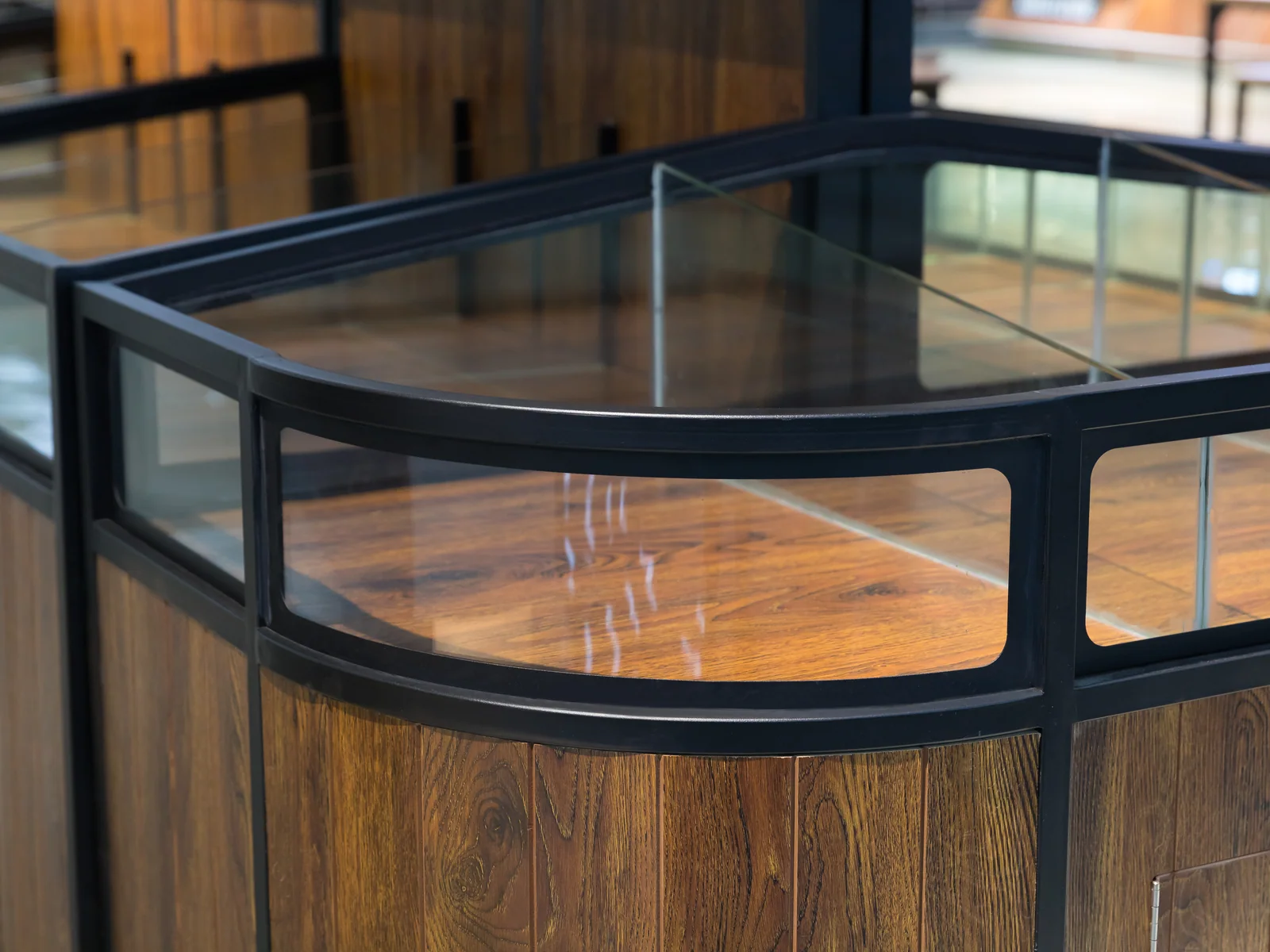
Close-up of the glazed display top with ticket clips fitted along the rail

Glazed Top And Ticket Clips

Clips on the rail, not the glass

The ticket clips are fitted to the rail rather than stuck to the glass. A price change becomes a card swap, and the glass never carries adhesive residue — which is what glazed tops normally look like after a year.
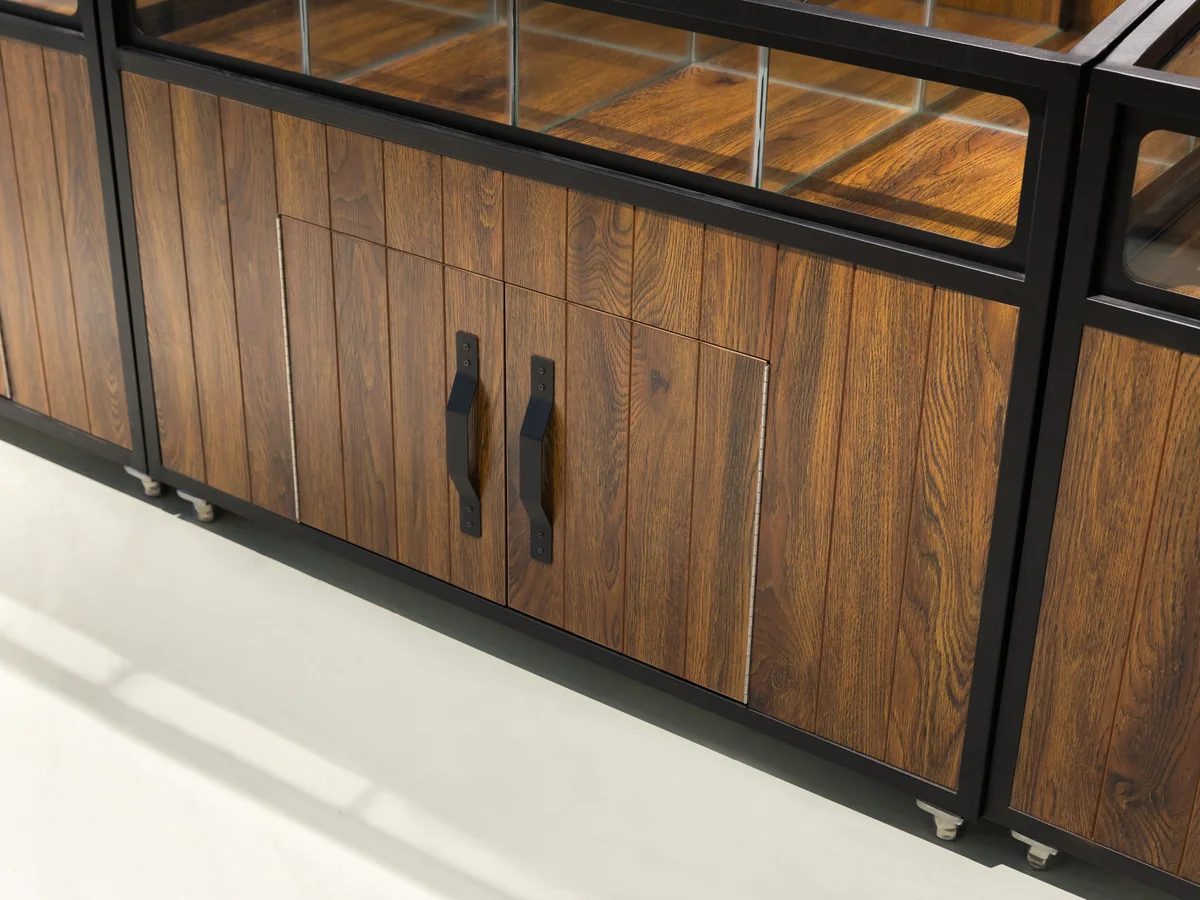
Close-up of the dark timber doors with long black bar handles

Bar Handle Doors

Full length black handles

Long bar handles rather than recessed pulls on this build, matching the black of the frame. On a two section island the doors get opened from both sides of the walk-through, so the handle has to be obvious.
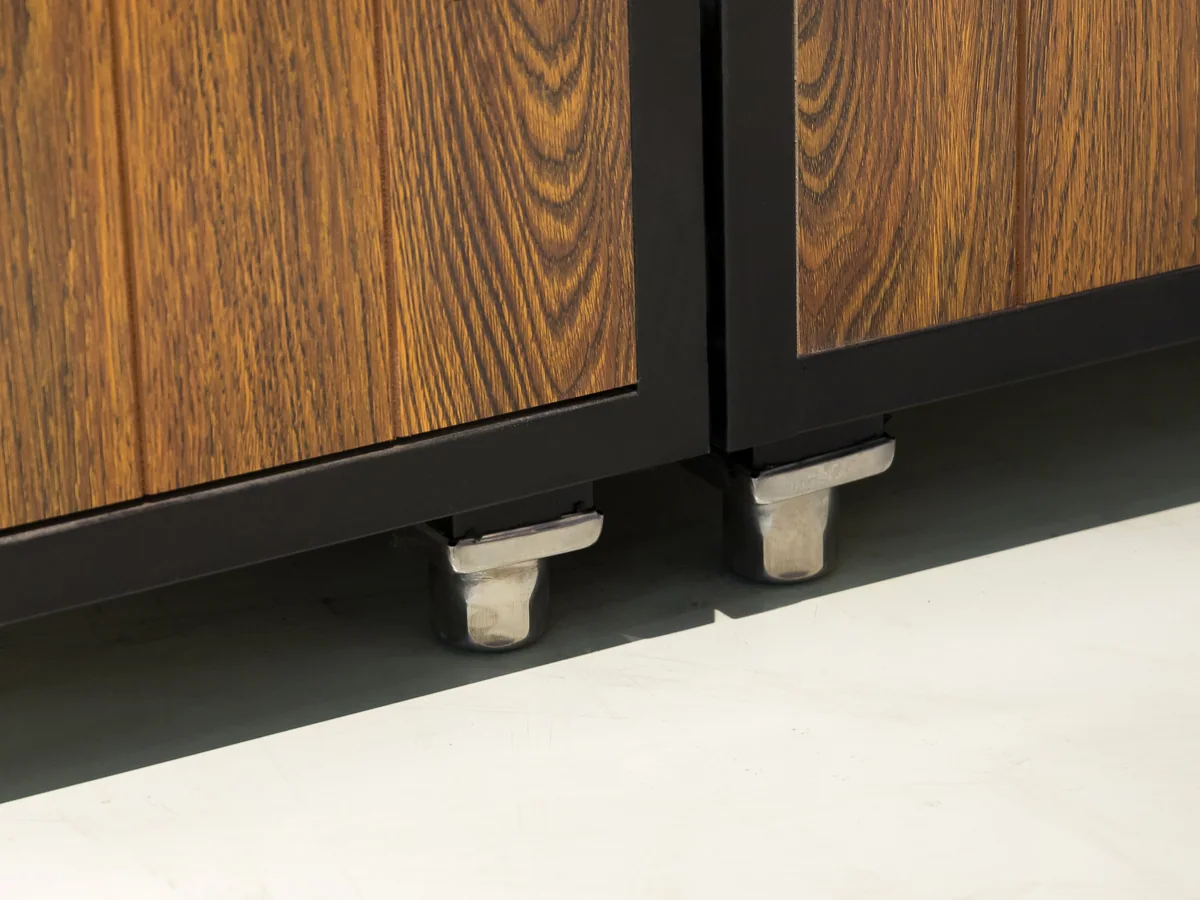
Close-up of the white adjustable levelling feet beneath the black steel frame

Adjustable Levelling Feet

One per frame leg

Each frame leg lands on an adjustable foot. Shop floors are not flat, and on a glazed island being out of level shows up in the glass line long before anyone notices it in the frame.
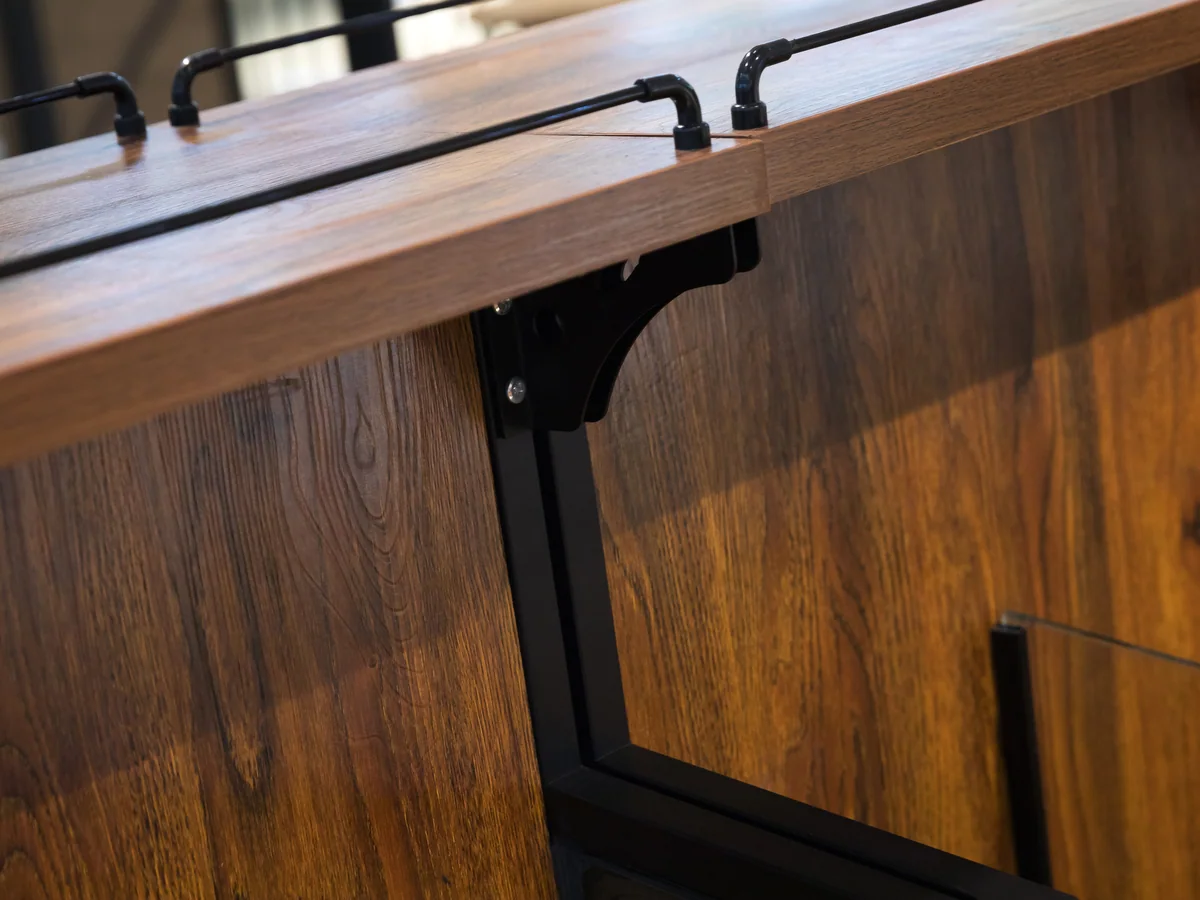
Close-up of the black bracket junction where the steel frame meets the timber top

Frame To Top Bracket

Bolted bracket, black

The frame meets the timber top through a bracket rather than being fixed straight into the board. It spreads the load into the frame and it means the top can be taken off and replaced without wrecking the fixing points.

Customisation

Every item on this page is made to order. Send a floor plan, a hand sketch or a photograph of a fixture you like, and we quote against it.

Shipping Form

How This Island Leaves The Factory

Store fixtures are light for their size, so a container fills up on volume long before it fills up on weight. What decides your freight is not what one unit weighs — it is what shape the goods are in when they go through the container door. Everything we build leaves in one of three shapes, and a bulk island is the one that travels best.

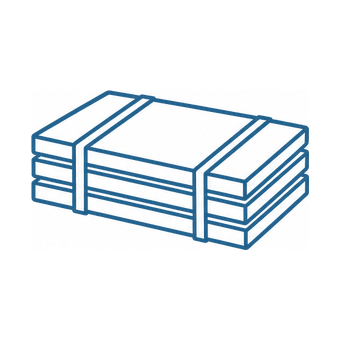
Line icon of four flat panels stacked and bound with two strapping bands

Flat Packed Cabinet Panels

Bulk islands travel as panels — carcase sides, shelves, bin rails, back panels and plinths, strapped flat with bubble wrap on every component. They are built up on the shop floor, so the packing list and the assembly drawings travel with the goods.

This model
Line icon of three supermarket trolleys nested into one another with a bracket marking the nesting pitch

Nested Trolleys And Hand Baskets

Trolleys slide into one another and baskets stack. Past the first unit, each extra one adds only its nesting pitch instead of its full length, so the shipped volume ends up a fraction of what the unit count suggests.

Line icon of an assembled checkout counter inside a dashed crate outline

Fully Assembled Counters

A checkout lane is welded, coated and fitted out as one piece, so it is crated whole. That is the expensive end of the freight scale, and it is the reason a counter order and a bulk order load so differently.

Because this island ships as panels rather than assembled, the container arithmetic runs on panel count instead of on finished size — which is why two islands of the same footprint can load very differently depending on how many compartments each one carries. We do not publish a units-per-container figure for that reason. It is worked out against your actual order and comes back on the packing list together with the case dimensions, once the island size is confirmed.

Ships With

What Usually Travels In The Same Container

A bulk island rarely arrives on its own. These three categories share the dry goods aisle with it, and putting them on one order is what lets a single colour reference run across the whole aisle, because it is then one batch of coating rather than three.

Grain and Rice Racks

Loose grain and loose dry goods almost always share an aisle, and both want stainless wherever a scoop lands. Ordering them together keeps the two halves of the aisle in one timber.

See grain racks

How many of each a store needs is a floor area question rather than a product question, and it is answered store by store on the equipment lists by store size.

Glazed top bulk island photographed along its length, showing both sections and the walk-through

Send the run length and how many staff work the aisle — that sets the walk-through gap.

Get A Quotation

Quote This Bulk Island

Tell us the run length and how your staff work the aisle. The walk-through gap between the two sections is set by that rather than by a standard dimension.

Your enquiry goes to keshun@kssyt.com. Drawings and floor plans are welcome by email — hand sketches included.

Buyer Questions

Four Questions Buyers Ask Before Ordering

The four that come up on nearly every enquiry for this build. If yours is not here, send it with your aisle drawing and it is answered alongside the quotation.

Q01 Why two sections instead of one long island?

So staff can cross the footprint without walking to the end of it. On a long glazed run the walk-through saves more time over a day than most people expect, and it also gives the island somewhere to break for a floor obstruction.

Q02 Are the levelling feet standard on the other builds?

Levelling is specified where a fixture needs it, and a glazed island needs it more than most because the glass shows any twist. If your floor is known to be uneven, say so with the enquiry and it is specified across the order rather than on one fixture.

Q03 Can the ticket clips take electronic labels?

The rail carries a clip system, and what goes in the clip is your decision. Price tickets are supplied with the order as standard; if you are running electronic shelf labels, tell us the rail profile they need and it is specified to suit.

Q04 Can the two sections be different lengths?

Yes. They are built in bays and there is no requirement for them to match, which is useful when the walk-through has to line up with something fixed — a column, a door or a service run in the floor.