

Slotted Base Panel
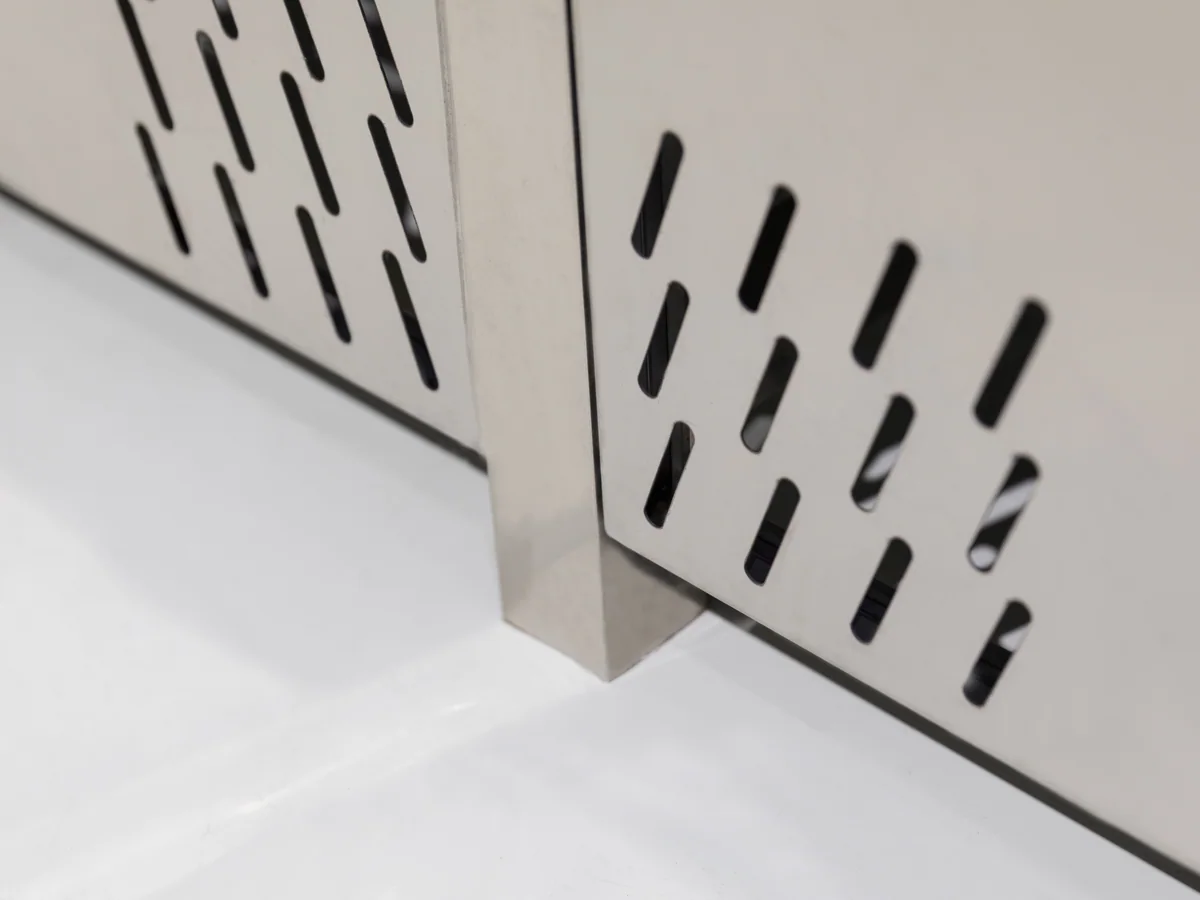
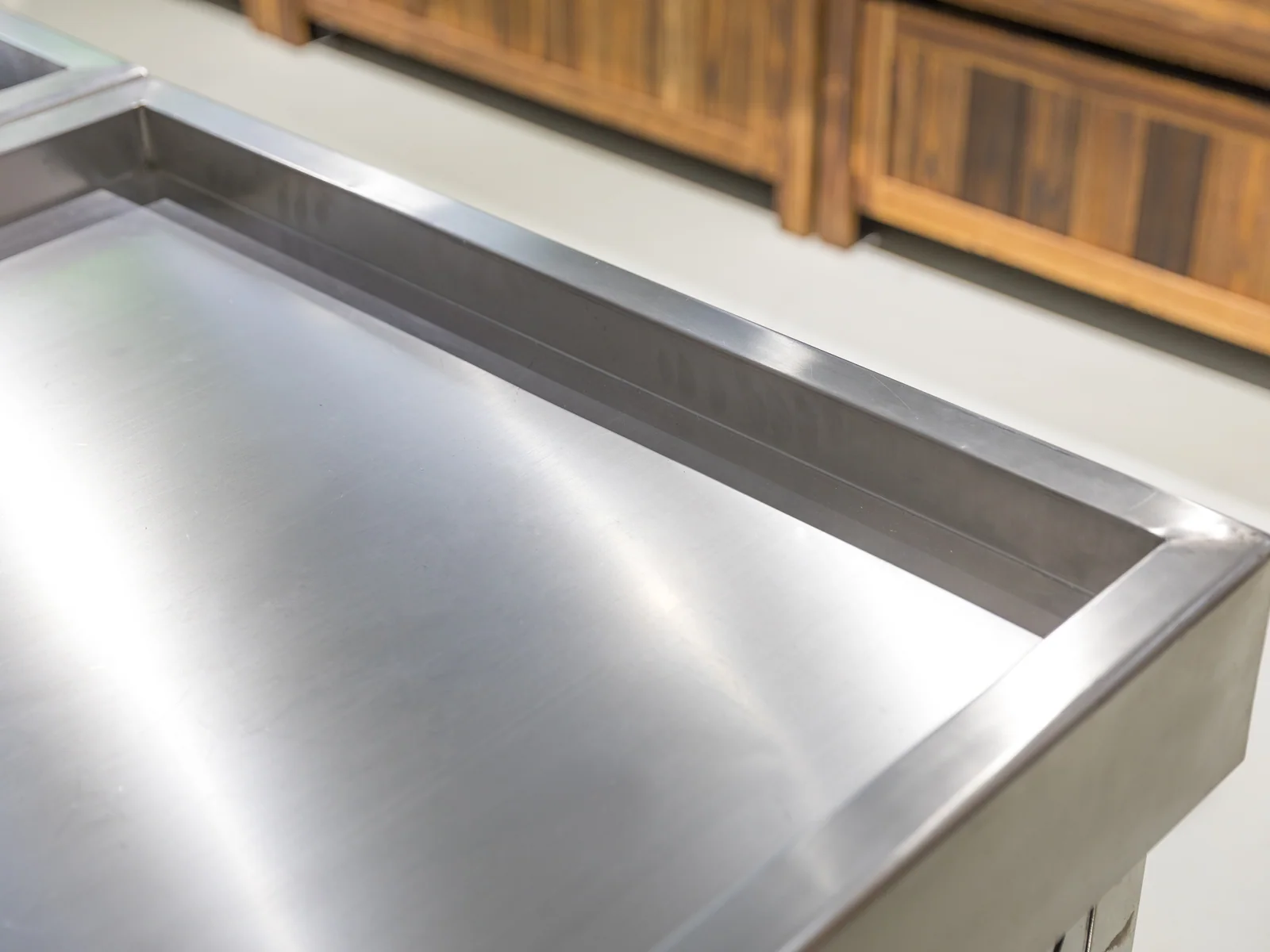
Airflow underneath
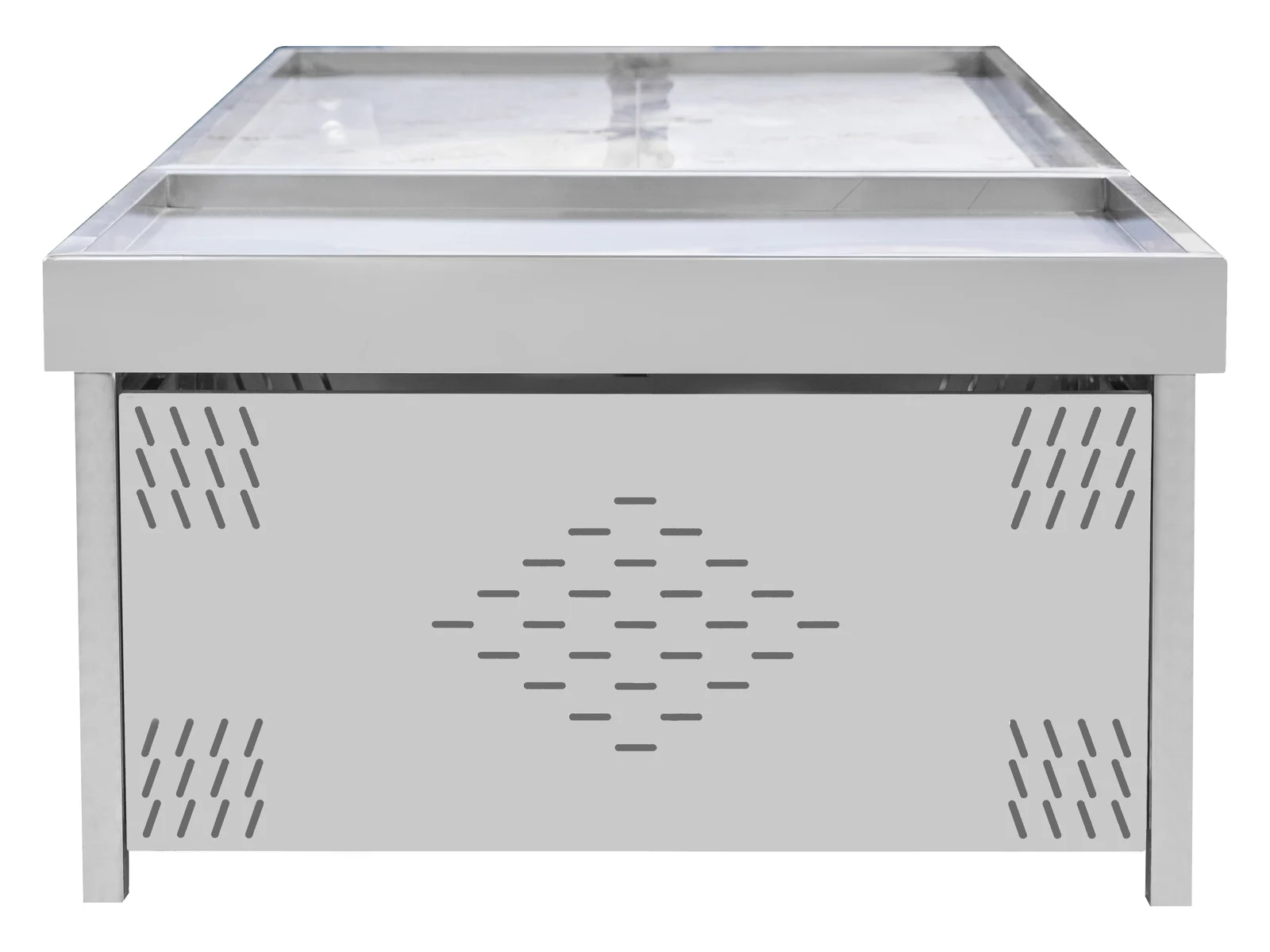
The base panels are slotted rather than solid. Under a fixture that is wet from opening to close, a sealed panel means the underside never dries, and that is where the smell in a fish department comes from.
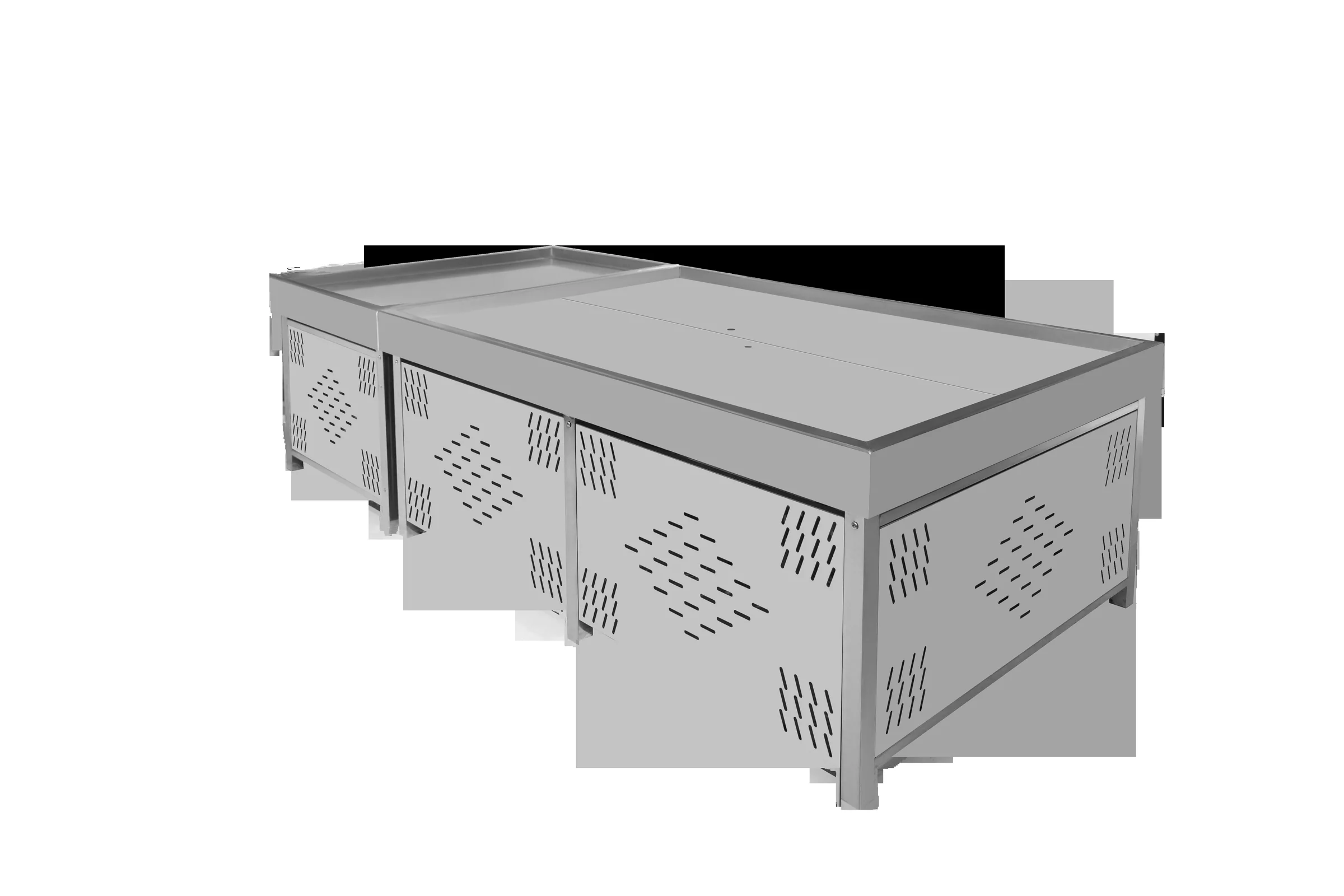
All stainless · pressed ice bed · slotted base
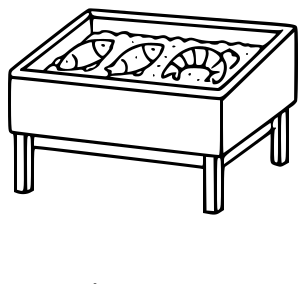
A long all-stainless ice table with a pressed bed and slotted base panels. Everything about it — the pressing, the fall, the slots — is about where the melt water goes.
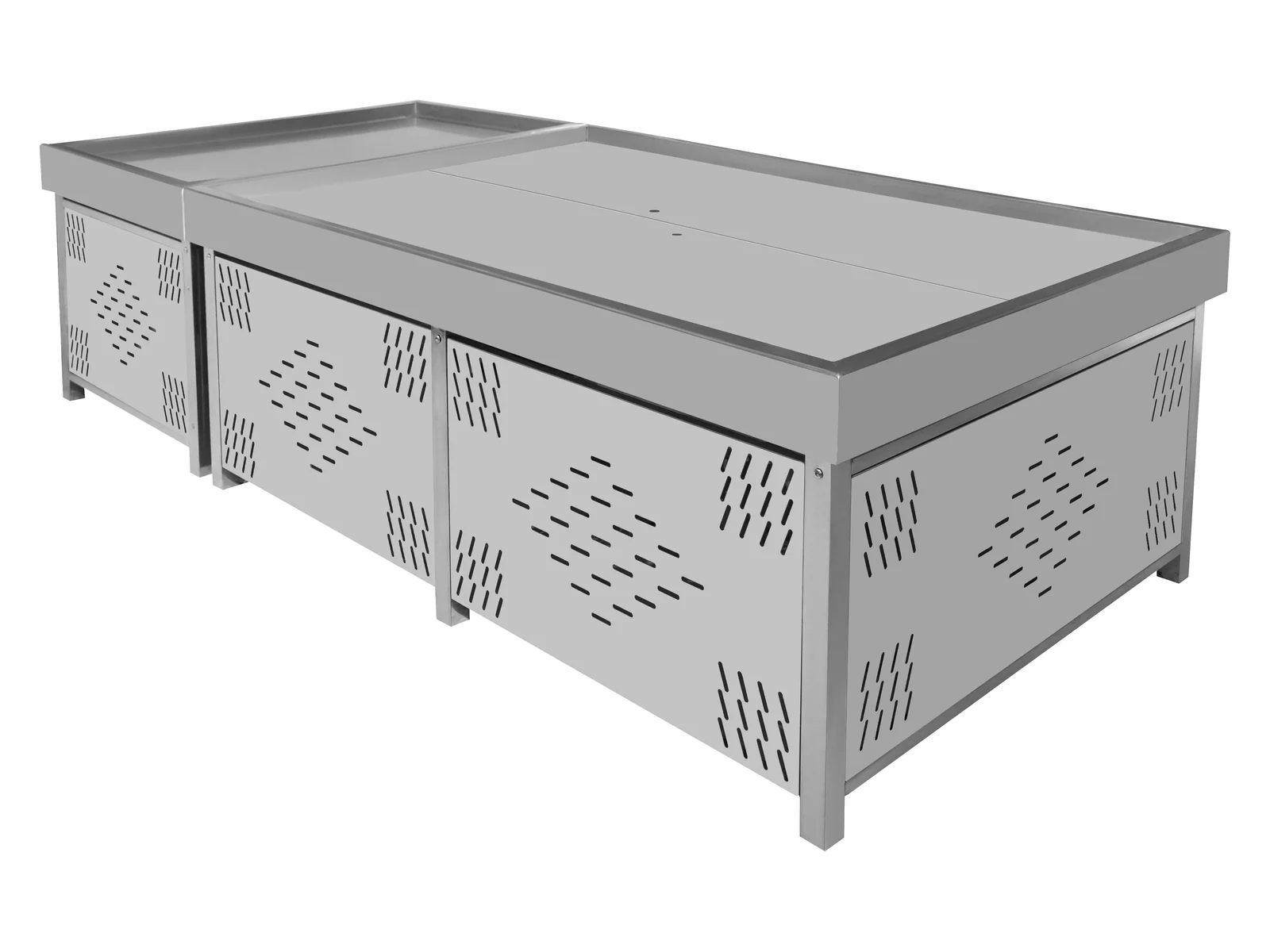
One studio angle on white with three close-ups below. The photography for this category covers two builds between them, so each page shows only its own unit.
An ice display is a fixture that is wet all day, every day. That single fact decides the whole build: the bed is pressed from one sheet so there is no seam for water to sit in, the fall runs to a drain point rather than to a puddle, and the base panels are slotted so the space underneath a permanently wet fixture can dry out between trading days.
It is stainless throughout, not as a finish choice but because nothing else survives the position. A timber-bodied fish table looks excellent for one season and then swells, stains and starts to smell, and no amount of cleaning reverses it.
A long all-stainless ice table with a pressed bed and slotted base panels. Everything about it — the pressing, the fall, the slots — is about where the melt water goes.
Supermarkets, convenience stores, chain retail and speciality stores. Tell us the store format and the floor area and the specification comes back written against them.
Three close-ups, and all of them are water management. That is an accurate reflection of what this fixture is.
Airflow underneath
The base panels are slotted rather than solid. Under a fixture that is wet from opening to close, a sealed panel means the underside never dries, and that is where the smell in a fish department comes from.
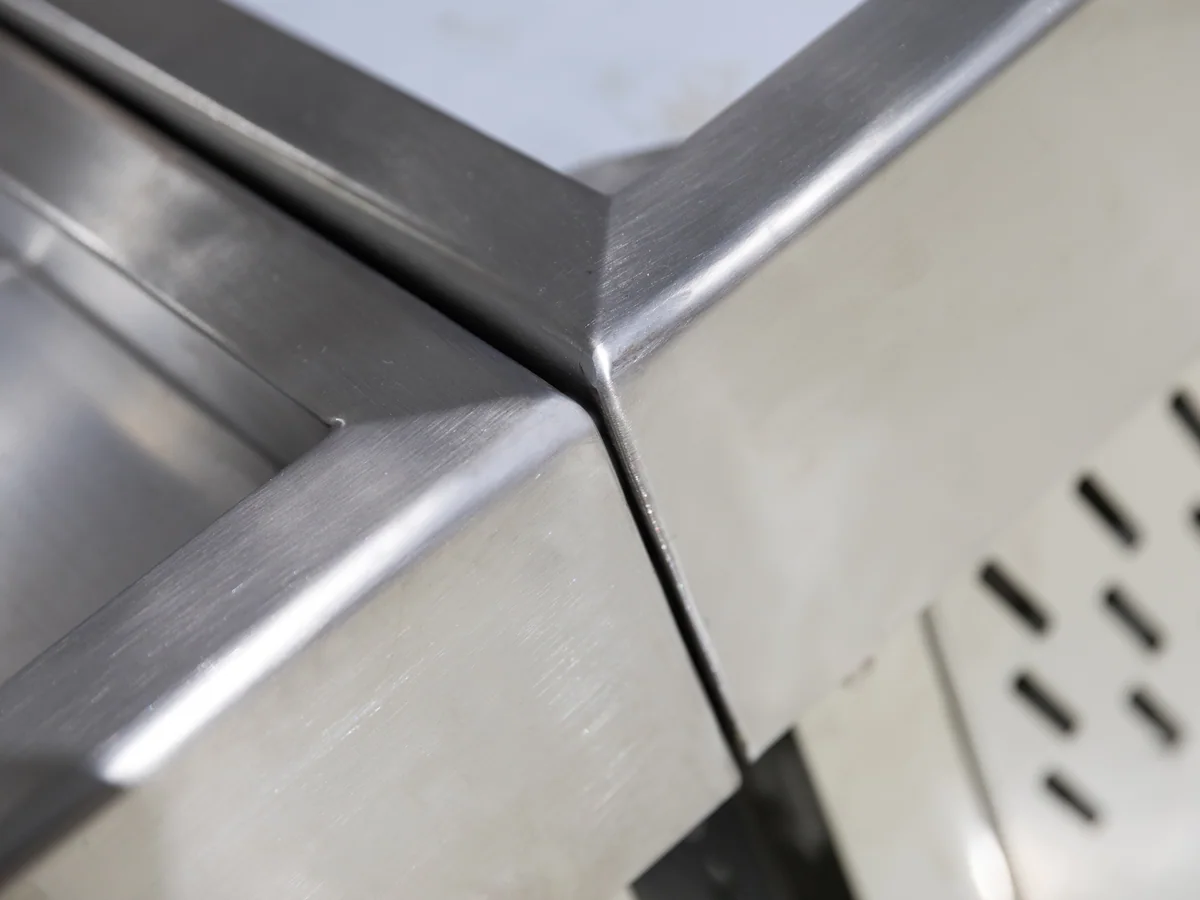
One sheet, no seam
The bed is pressed from a single sheet. A fabricated bed has welded internal corners, and on a fixture holding melting ice all day those seams are what fail and what harbour.
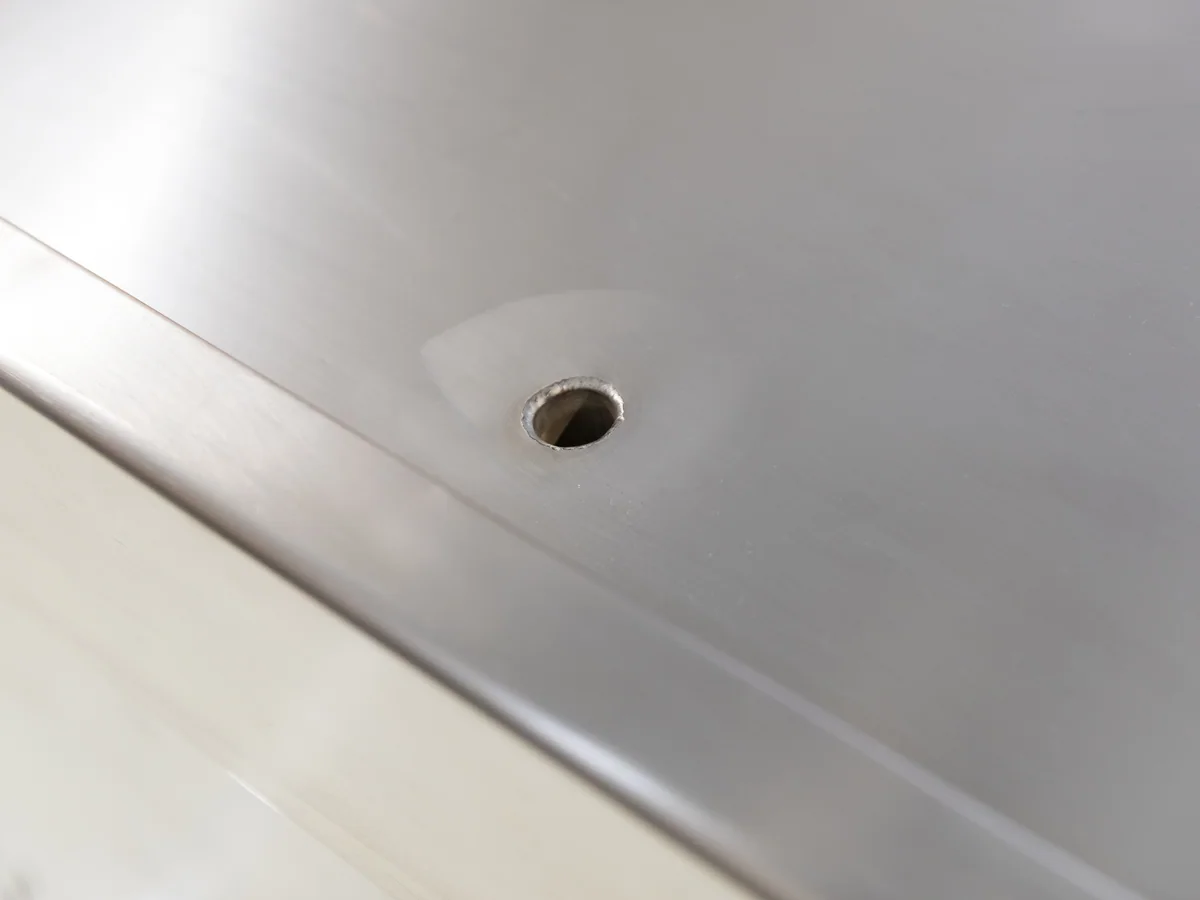
Fall runs to it
The fall is set so melt water runs to the drain point rather than to whichever corner happens to be low. Where that point is depends on your floor, so it is set against your layout.
No cut edge exposed
The bed edge is rolled over. Shoppers lean on it, staff drag crates across it, and a folded rather than rolled edge is one that opens up inside a year.
Every item on this page is made to order. Send a floor plan, a hand sketch or a photograph of a fixture you like, and we quote against it.
Store fixtures are light for their size, so a container fills up on volume long before it fills up on weight. What decides your freight is not what one unit weighs — it is what shape the goods are in when they go through the container door. Everything we build leaves in one of three shapes.
Shelving bays, produce islands and bulk cabinets travel as panels — uprights, shelves, back panels and plinths, strapped flat with bubble wrap on every component. They are built up on the shop floor, so the packing list and the assembly drawings travel with the goods.
This model
Trolleys slide into one another and baskets stack. Past the first unit, each extra one adds only its nesting pitch instead of its full length, so the shipped volume ends up a fraction of what the unit count suggests.

A checkout lane is welded, coated and fitted out as one piece, so it is crated whole with padding on the steel. Nothing waits to be assembled at the store beyond levelling it into the lane, and the crate is the counter plus a margin.
Ice tables flat pack as stainless panels, the bed pressing and the base louvres. Because the whole fixture is stainless, the panels are heavier for their size than a timber build and the loading plan is worked accordingly. Case dimensions come back on the packing list once the counter run is confirmed.
A wet counter is the hardest position in the store and it never stands alone. These three share its floor and its drain.
Fresh produce and the wet counters share a floor drain and a wash-down routine, and they are read as one department.
See produce display racksWhere the wet counter meets the cooked food counter, both want stainless at the contact surfaces.
See serve over countersA served wet counter needs somewhere to weigh, and the scale well is built into the desk rather than sat on it.
See store service countersHow many of each a store needs is a floor area question rather than a product question, and it is answered store by store on the store layout planning page.
Send the counter run and where your floor drain is. Both decide the fall.
Send the counter run length and tell us where the nearest floor drain is. If there is no drain near the position, say so — it changes the build significantly.
The four that come up on nearly every enquiry for this build. If yours is not here, send it with your layout and it is answered alongside the quotation.
It is built to your fish counter run rather than sold in a fixed size. Send the run length and the drain position and it comes back drawn to both.
Then the fall has to run to a collection point instead, which changes the build and adds a routine to your close-down. Tell us early — it is a much bigger difference than most buyers expect.
Because it would not last. A timber-bodied fish table looks excellent for one season and then swells and stains permanently. Where a store wants the match, we build a stainless table with timber end panels away from the water.
No — it is an ice bed, and the ice does the work. We do not manufacture refrigeration; where a chilled counter is needed we build the cabinetry around a unit you specify.