

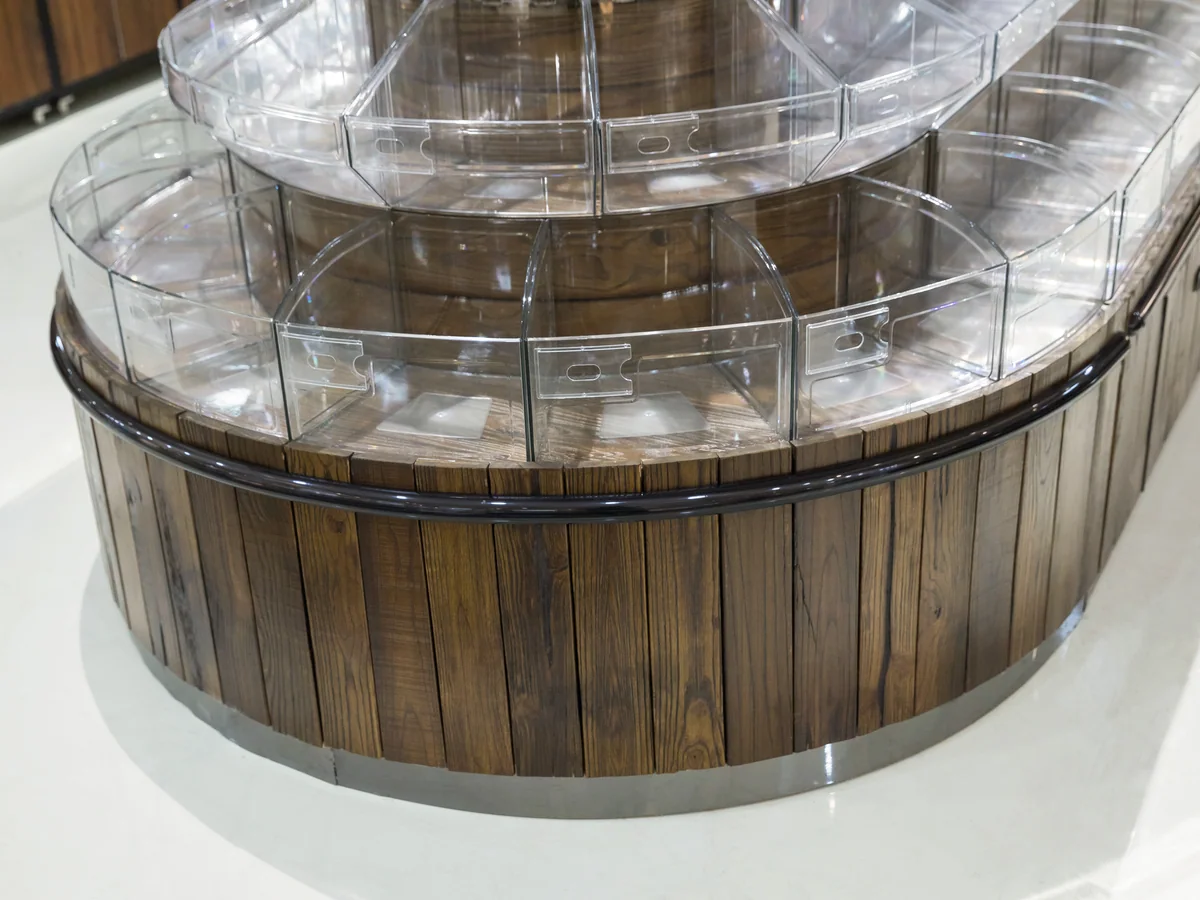
Stepped Bin Rings
Clear, ring per tier
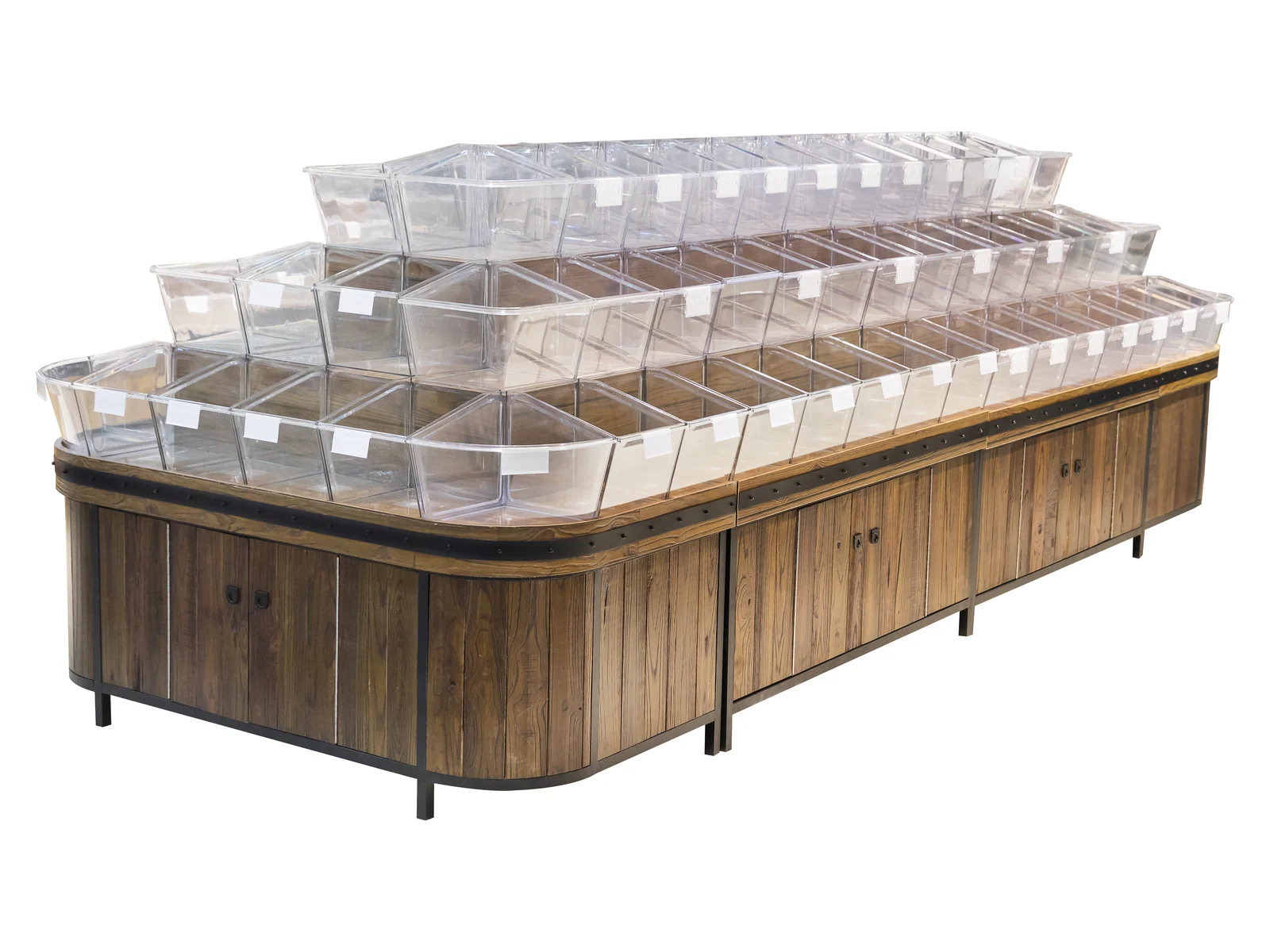
Each ring steps in from the one below. On a circular fixture that step is what keeps the upper rings visible from anywhere on the circumference, which is the entire reason to build round instead of square.
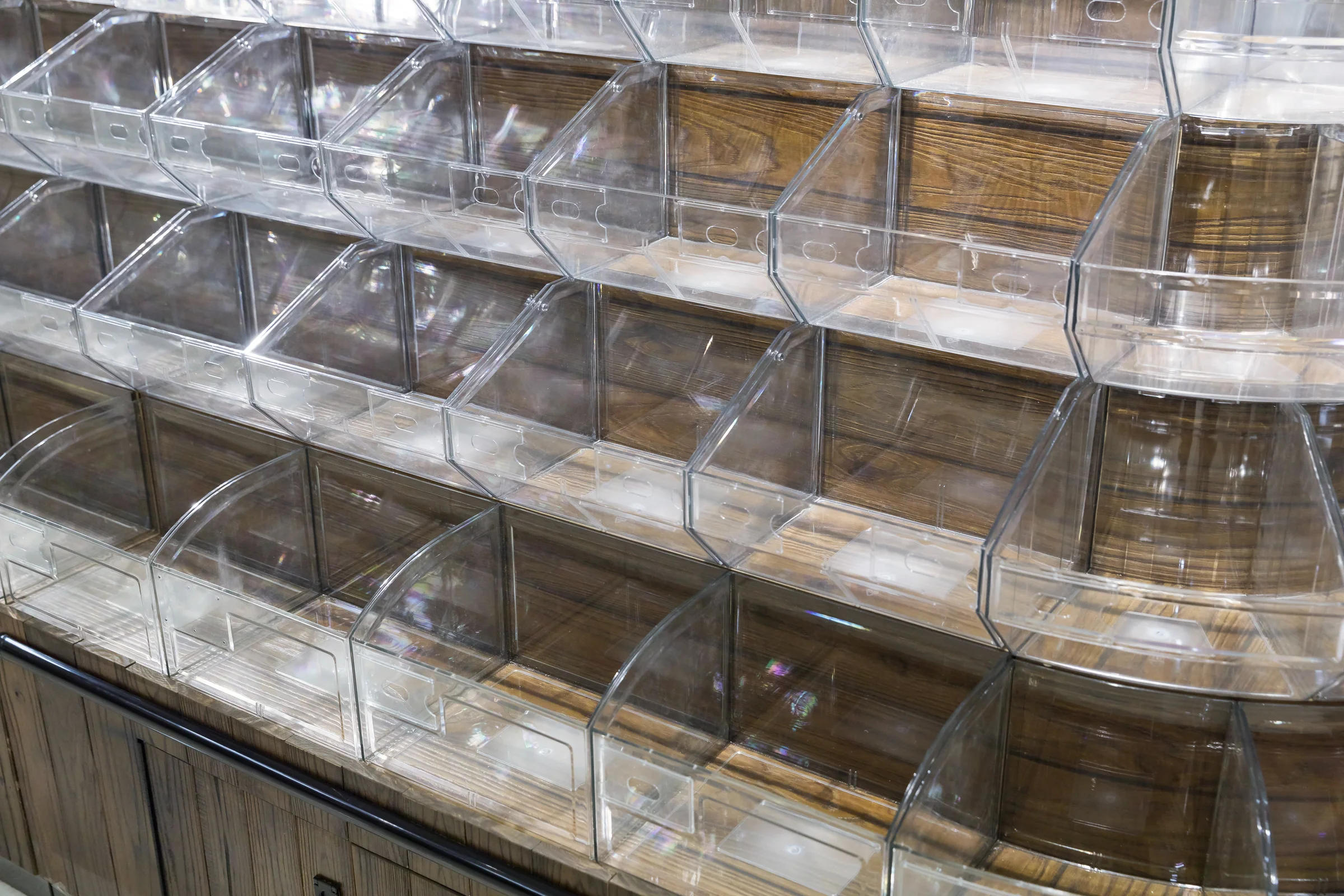
Round bin tower · circular tiers · staved timber
A circular tower rather than a rectangular island. Clear bins climb it in rings, it is shopped from every point of the compass, and the staved dark timber body gives it a barrel silhouette that nothing else on a supermarket floor has.
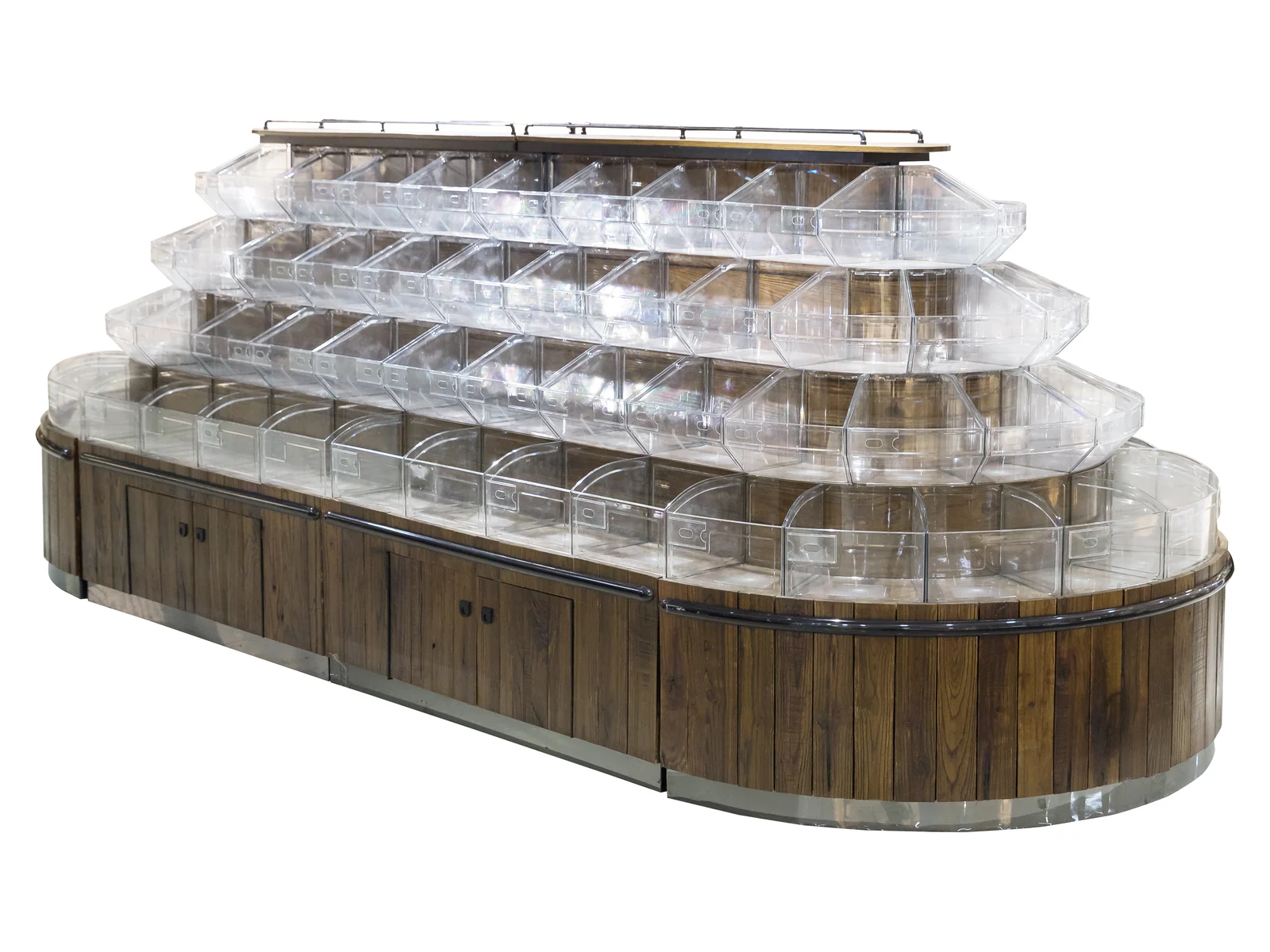
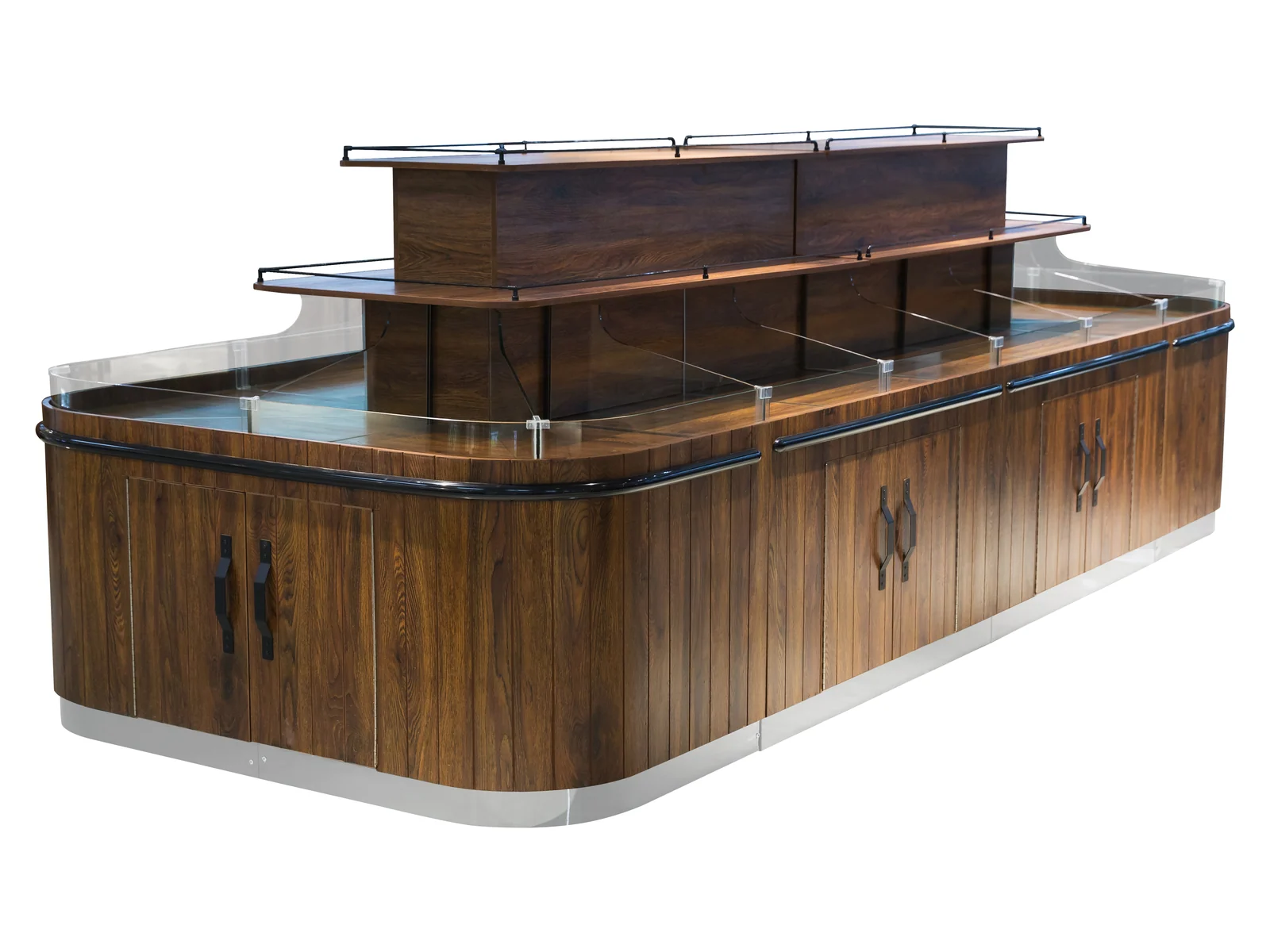
Two studio angles on white. The bin rings, the staved body with a door, the timber lid and the tower from an angle are below.
A rectangular island has two good faces and two ends. A round one has no back at all — every point on the circumference is a front, which is why a tower like this holds its own in the middle of a floor where a rectangular fixture would need to be aligned to the traffic. The bins climb it in rings, each ring stepping in from the one below so the whole tower is readable from any standing position.
The body is built from vertical timber staves in a dark tone, which is where the barrel reading comes from, and a round timber lid caps the top of the bin tower. Doors are let into the staved body for the refill storage inside. It is a harder fixture to build than a rectangular island, and it is the one customers photograph.
A circular tower rather than a rectangular island. Clear bins climb it in rings, it is shopped from every point of the compass, and the staved dark timber body gives it a barrel silhouette that nothing else on a supermarket floor has.
Supermarkets, convenience stores, chain retail and speciality stores. Tell us the store format and the floor area and the specification comes back written against them.
Round is harder than square in every part of this build: the rings, the staves, the door let into a curve, and the lid that finishes it.
Clear, ring per tier
Each ring steps in from the one below. On a circular fixture that step is what keeps the upper rings visible from anywhere on the circumference, which is the entire reason to build round instead of square.
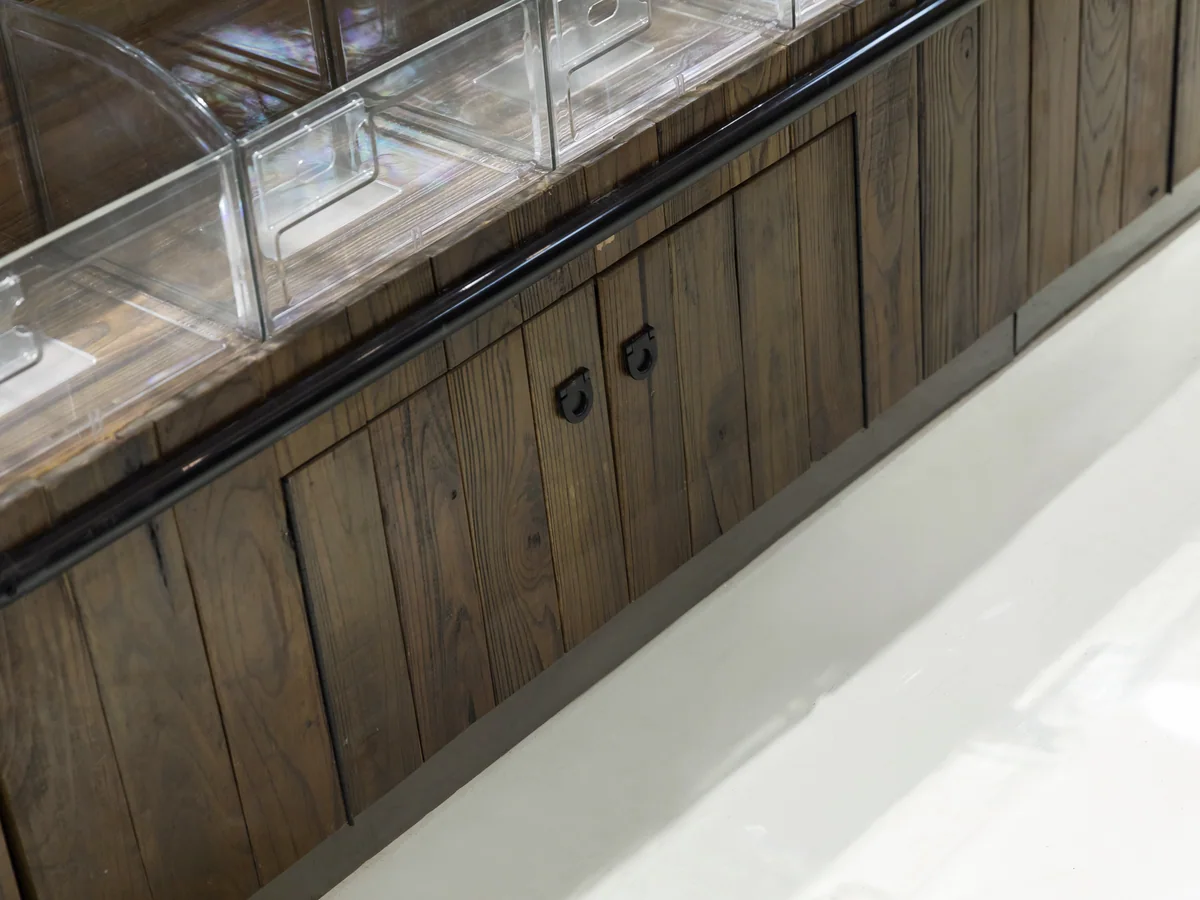
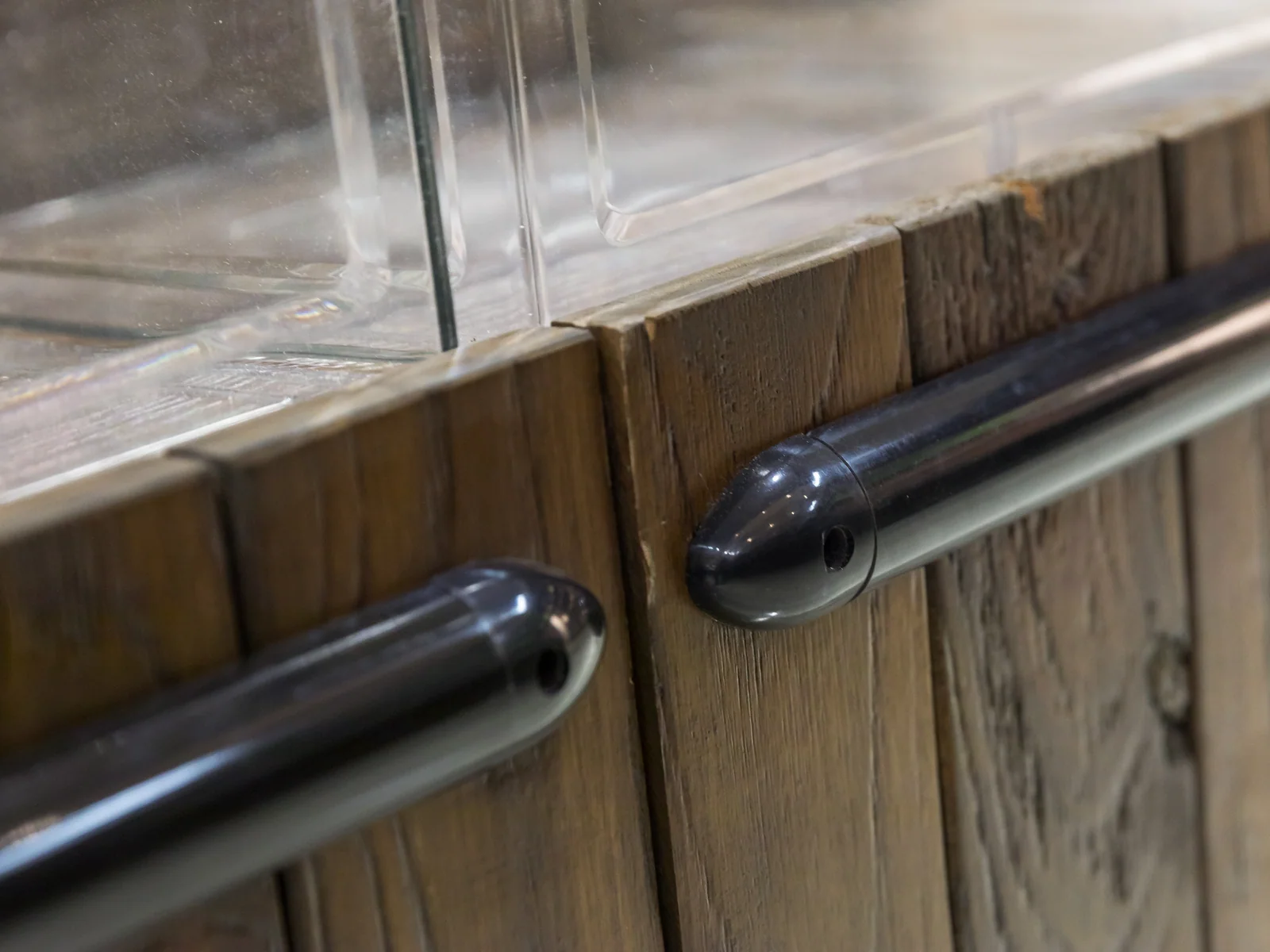
Vertical staves, door inset
The body is built from vertical staves and the storage doors are let into them rather than interrupting the run. It is what keeps the barrel silhouette intact while still giving the tower a usable interior.
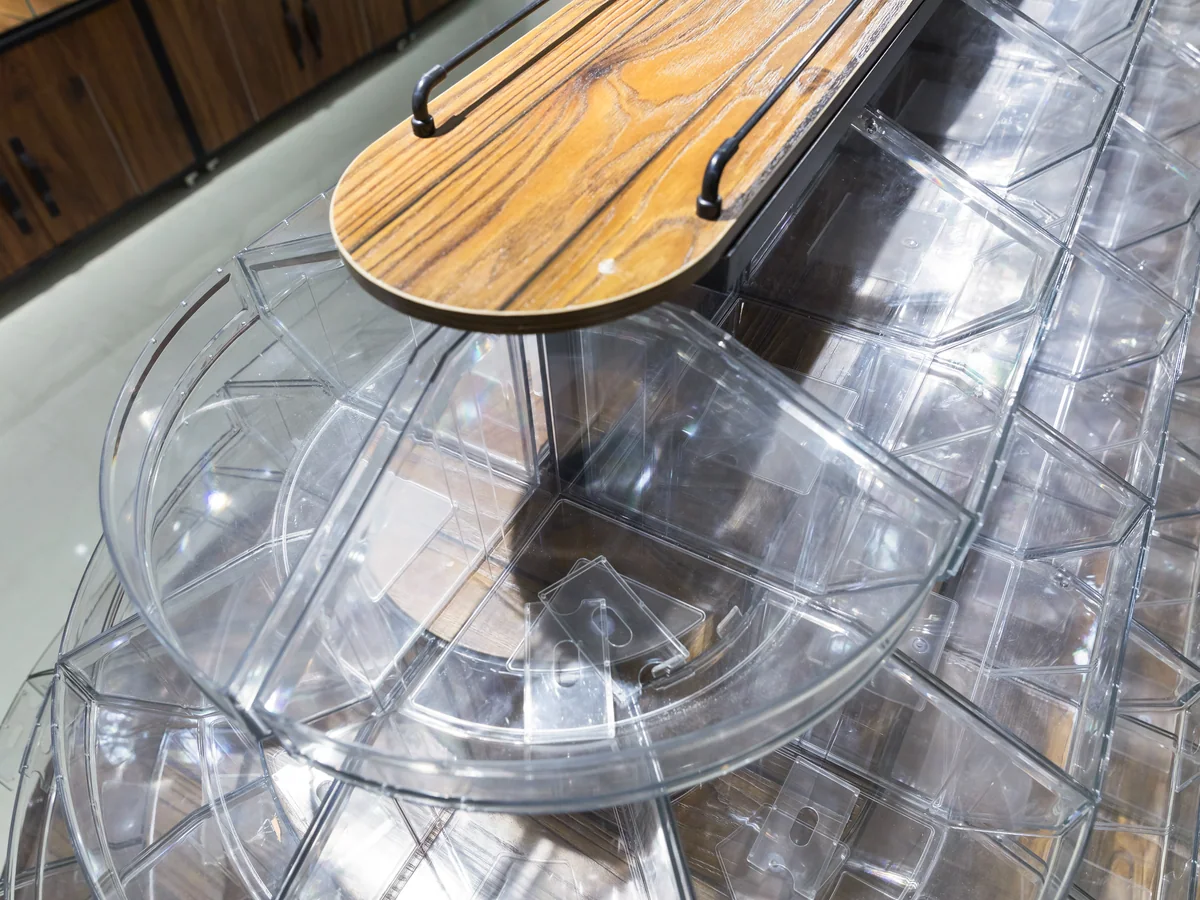
Caps the top ring
A solid timber disc caps the top. Without it the top ring of bins is the last thing a shopper sees and the tower reads as unfinished; with it the whole object has a top edge.
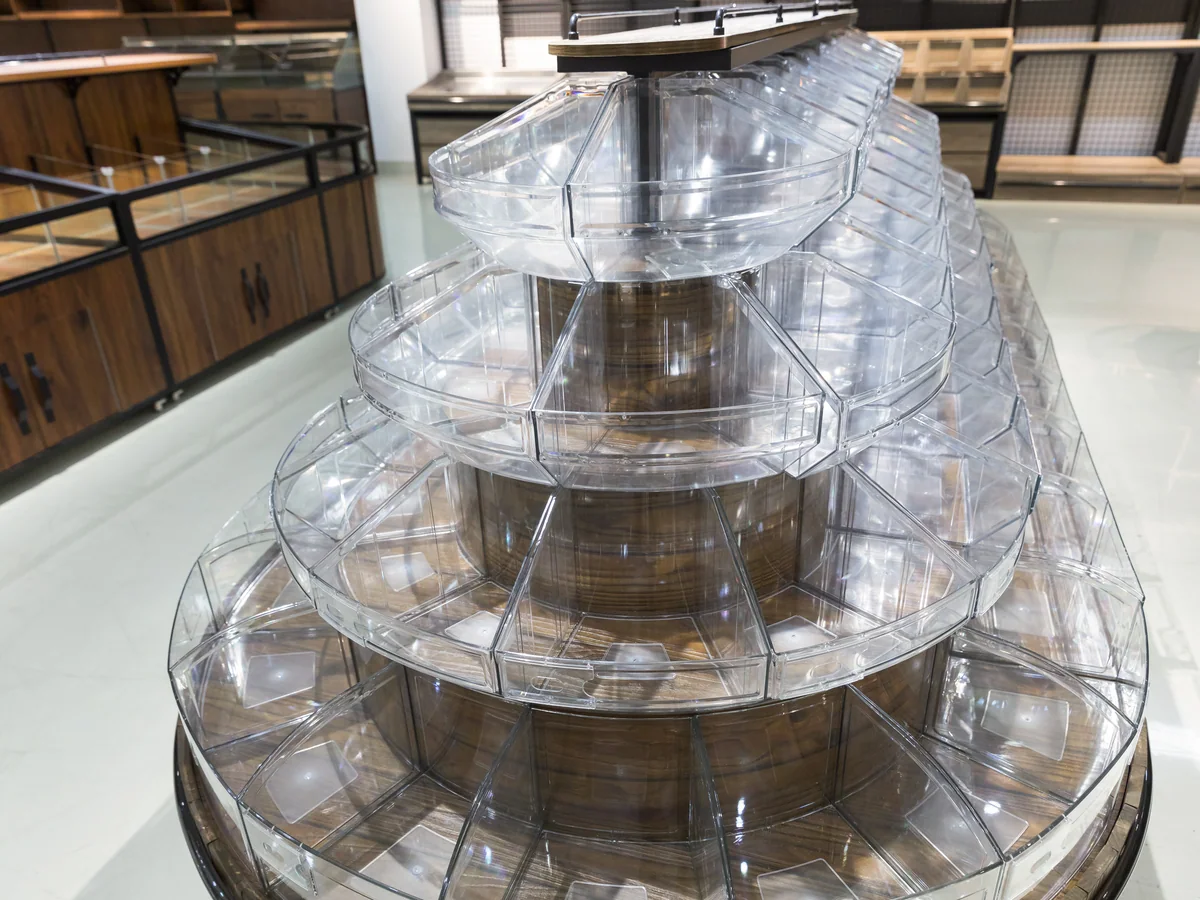
No back, any angle
From any angle the tower presents the same face. That is the property worth paying for on a mid-floor fixture, and it is why a round tower does not have to be aligned to your traffic flow the way an island does.
Every item on this page is made to order. Send a floor plan, a hand sketch or a photograph of a fixture you like, and we quote against it.
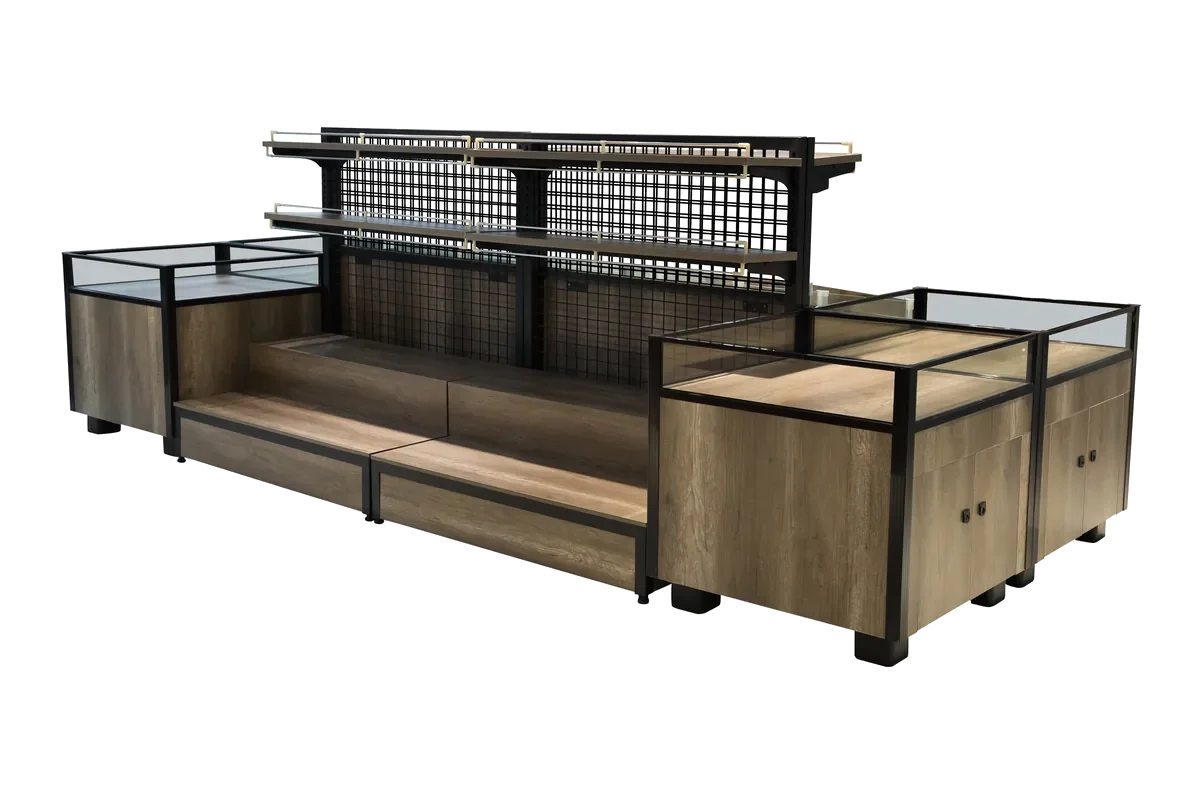
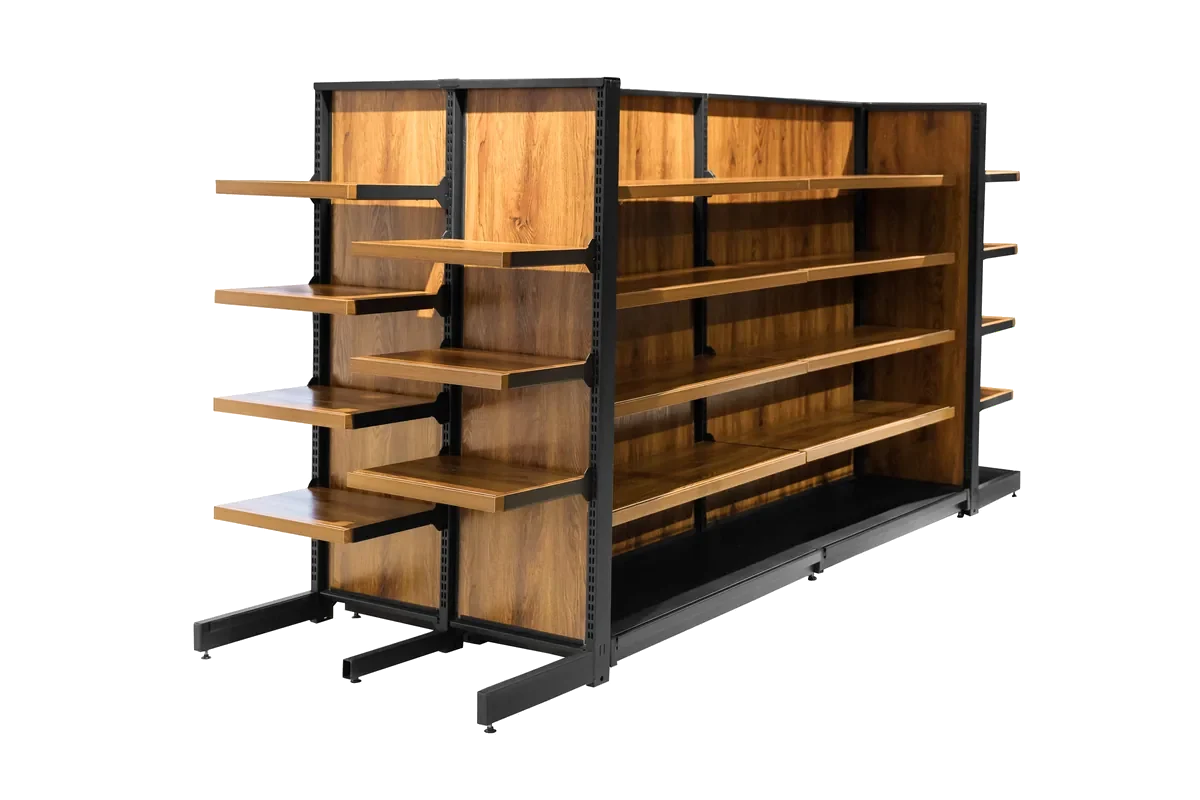
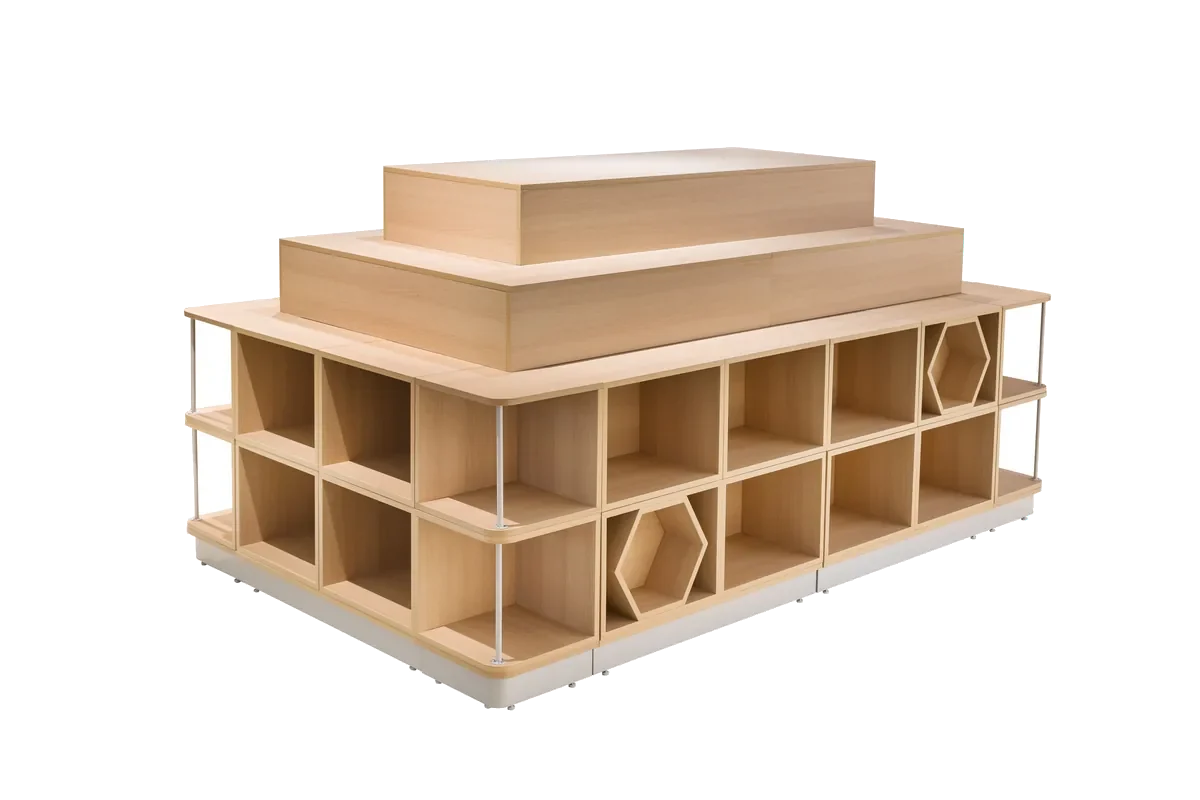
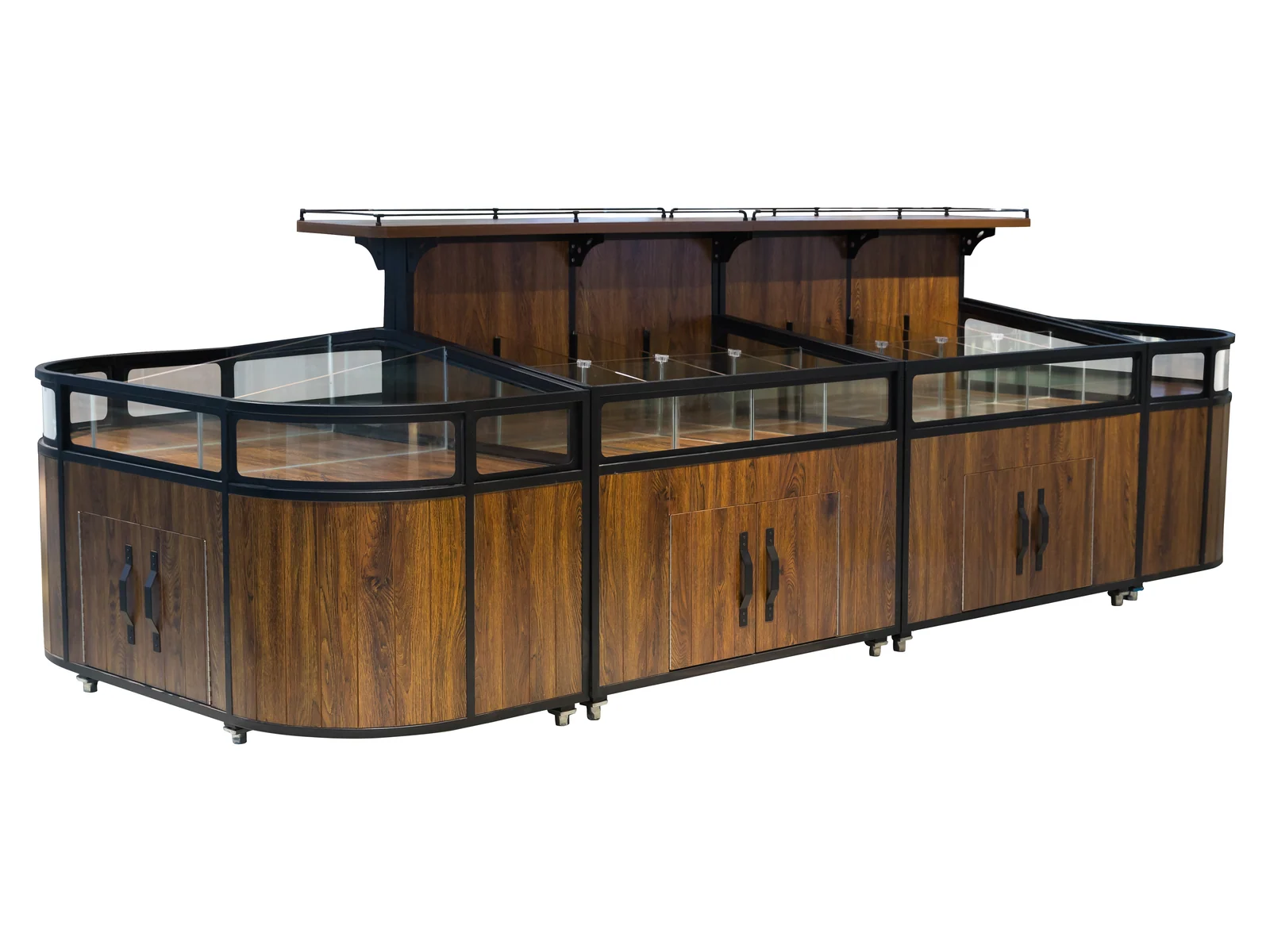
Store fixtures are light for their size, so a container fills up on volume long before it fills up on weight. What decides your freight is not what one unit weighs — it is what shape the goods are in when they go through the container door. Everything we build leaves in one of three shapes, and a bulk island is the one that travels best.
Bulk islands travel as panels — carcase sides, shelves, bin rails, back panels and plinths, strapped flat with bubble wrap on every component. They are built up on the shop floor, so the packing list and the assembly drawings travel with the goods.
This model
Trolleys slide into one another and baskets stack. Past the first unit, each extra one adds only its nesting pitch instead of its full length, so the shipped volume ends up a fraction of what the unit count suggests.

A checkout lane is welded, coated and fitted out as one piece, so it is crated whole. That is the expensive end of the freight scale, and it is the reason a counter order and a bulk order load so differently.
Because this island ships as panels rather than assembled, the container arithmetic runs on panel count instead of on finished size — which is why two islands of the same footprint can load very differently depending on how many compartments each one carries. We do not publish a units-per-container figure for that reason. It is worked out against your actual order and comes back on the packing list together with the case dimensions, once the island size is confirmed.
A bulk island rarely arrives on its own. These three categories share the dry goods aisle with it, and putting them on one order is what lets a single colour reference run across the whole aisle, because it is then one batch of coating rather than three.
Loose grain and loose dry goods almost always share an aisle, and both want stainless wherever a scoop lands. Ordering them together keeps the two halves of the aisle in one timber.
See grain racksThe bays that run behind and alongside a bulk island are what a shopper sees while standing at it, so they carry the same colour and the same board tone.
See shelving baysLoose lines are promoted constantly, and a 1000 mm promotion square at the head of the aisle is the cheapest way to push one without rebuilding the island.
See promotional display tablesHow many of each a store needs is a floor area question rather than a product question, and it is answered store by store on the supermarket layout design page.
Round towers are quoted on diameter and walking room. Send the floor space you have for it.
Send the floor space and how much walking room you want around it. A round tower needs clearance on all sides by definition, which is a different sum from a wall run.
The four that come up on nearly every enquiry for this build. If yours is not here, send it with your aisle drawing and it is answered alongside the quotation.
It takes more walking, because there is no single side to work from. Stores that run one usually put it on a slower line for that reason — a fast staple in a round tower means somebody circling it all day. It earns its place as a feature rather than as a workhorse.
Diameter is set to your floor space and the walking room you want around it. Send the floor area and it comes back dimensioned on the drawing.
Yes — doors are let into the staved body and the inside is refill storage. It is less capacity than a rectangular island of similar footprint, which is the honest trade for the shape.
Yes. The staves take the same finish options as everything else in the category, and any RAL or PANTONE reference is held across the order. A pale staved tower reads much lighter and loses some of the barrel character, which may or may not be what you want.