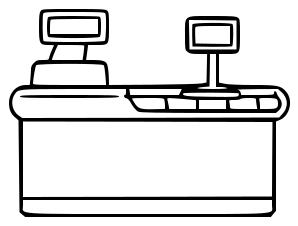
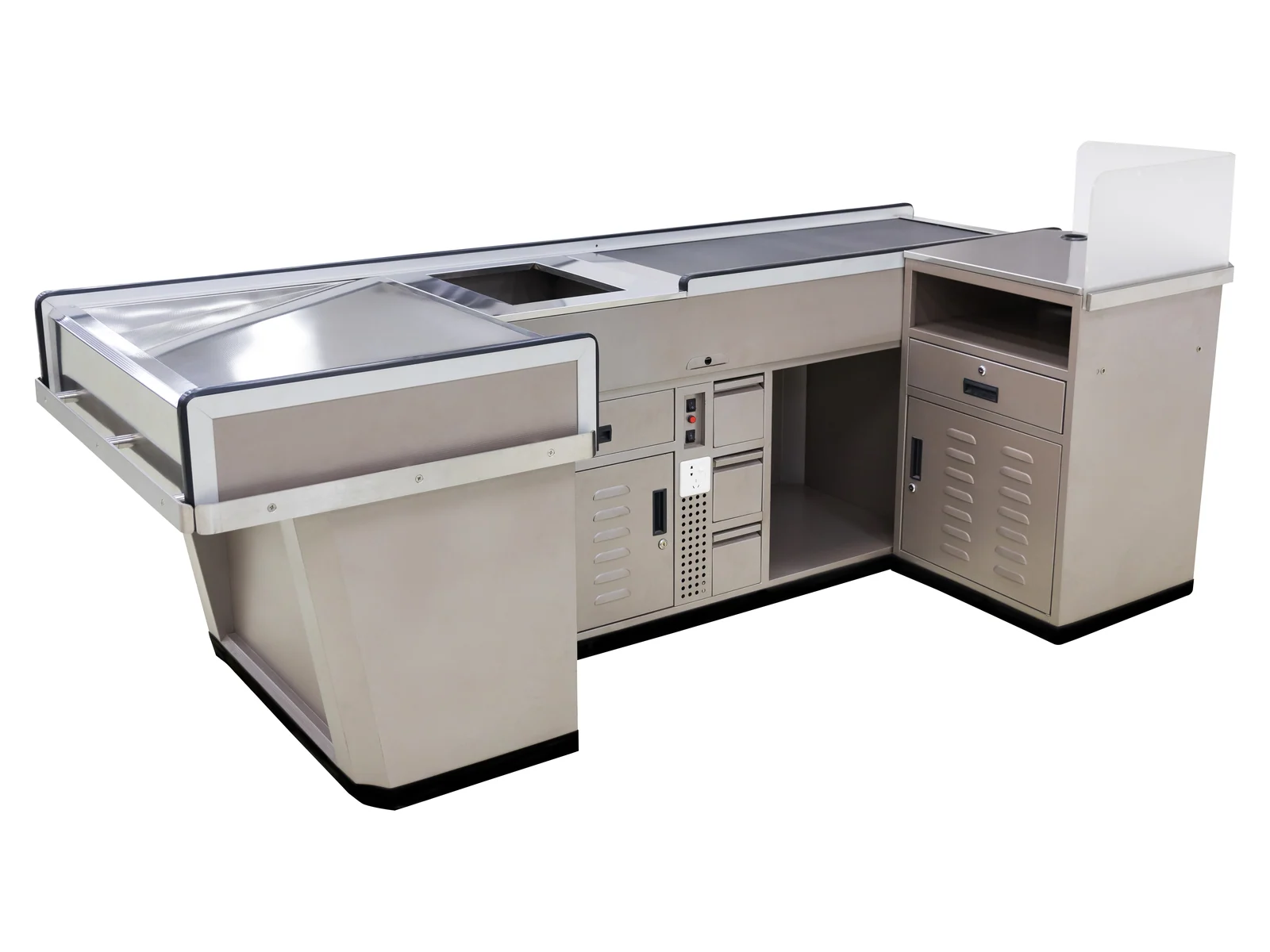
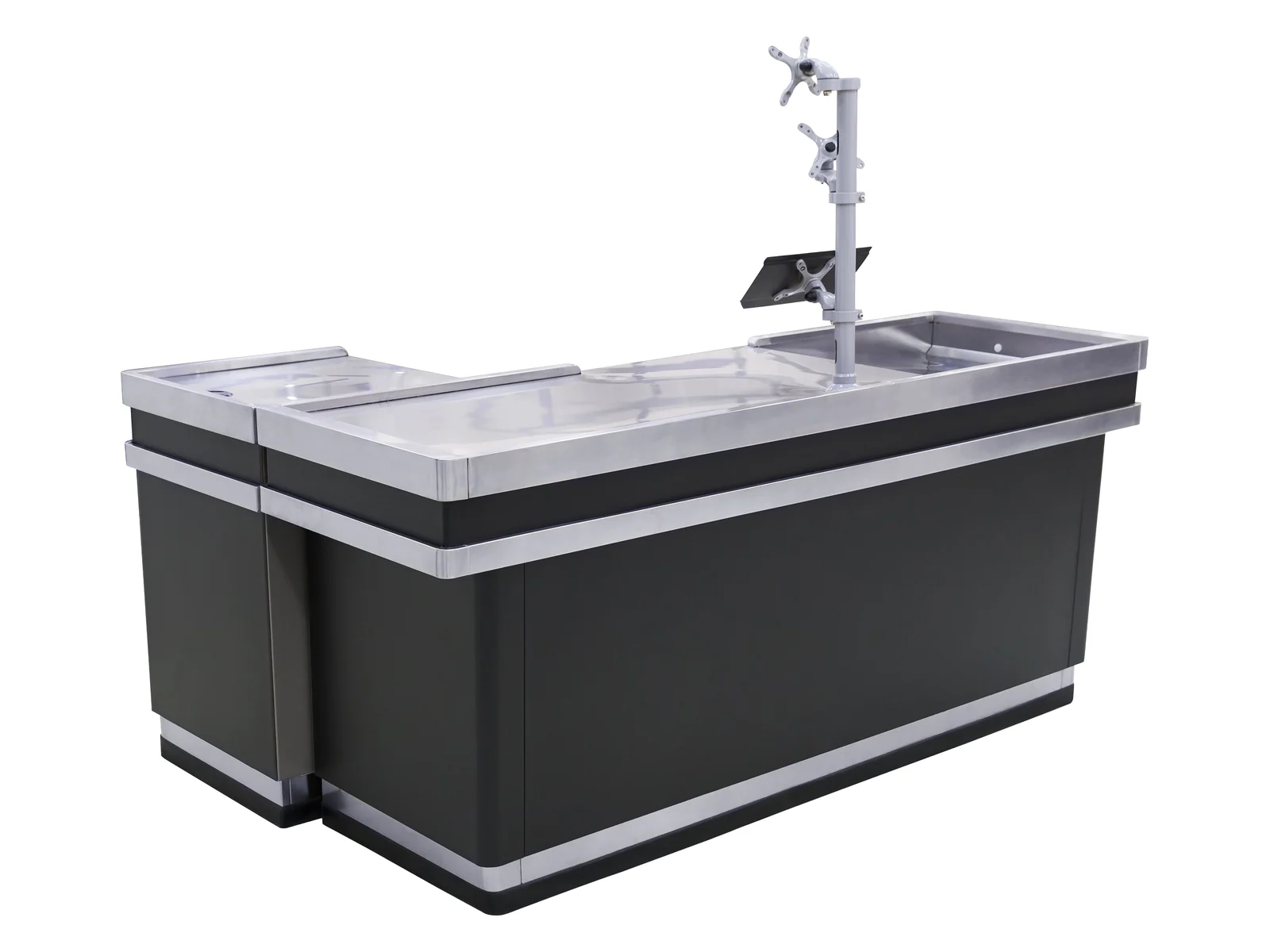
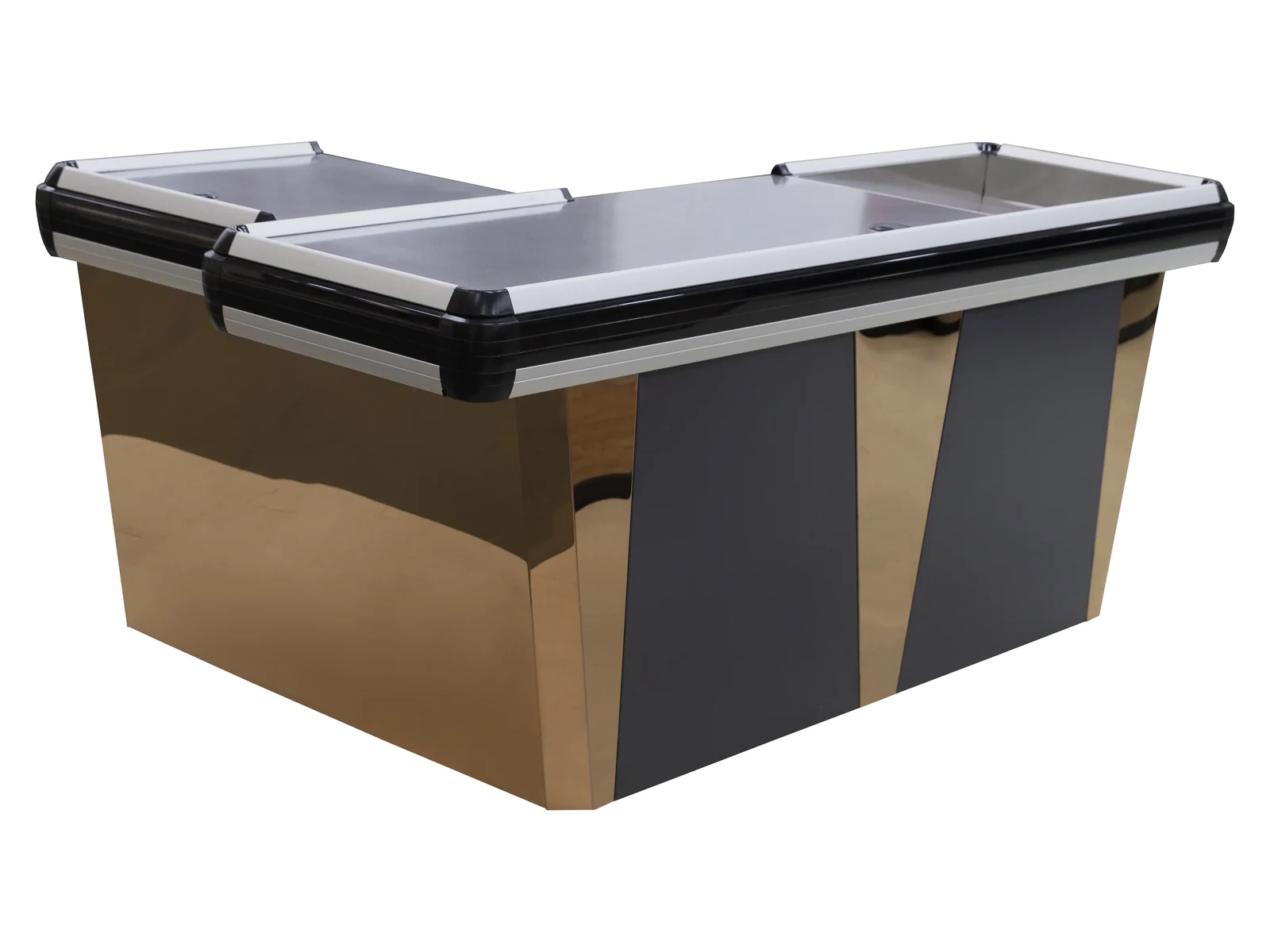
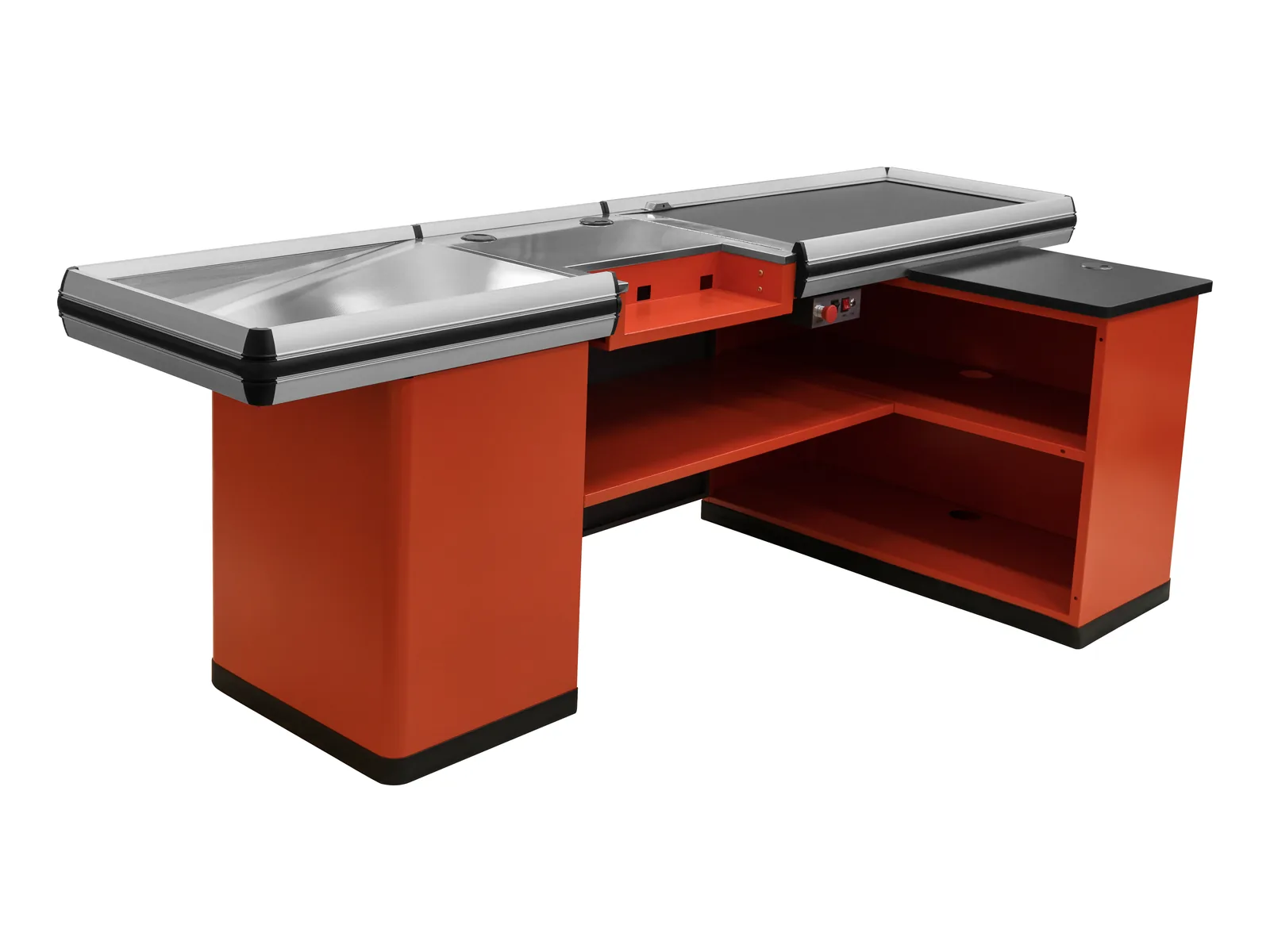
Cream and stainless Keshun cashier counter with a drawer bank and a raised end screen in the showroom

Supermarket Cashier Counter with Drawer Unit

Cash Desk Counter with Lockable Drawers and a Raised End Screen

A light-bodied lane with real storage in it — a drawer bank, a lockable cabinet and a raised screen closing the far end.

Product File

A Cashier Counter Built Around Its Storage

Most checkout counters treat the cabinet below the worktop as a box for the till and its cabling. This one treats it as furniture. A bank of drawers runs down one side of the body, a lockable cabinet sits beside it, and the operator has somewhere to put the things a shift actually generates: rolls, bags, dockets, refund slips and a float that has to be secured every time the lane closes.

The photographs are one build in one colour. The drawer bank, the lockable cabinet and the raised end screen are the fixed part of this counter. Length, depth and colour are not fixed by us — they are fixed by your checkout area, and the table below says exactly which rows are which.

Overall size Set against your lane layout
Storage Drawer bank and lockable cabinet
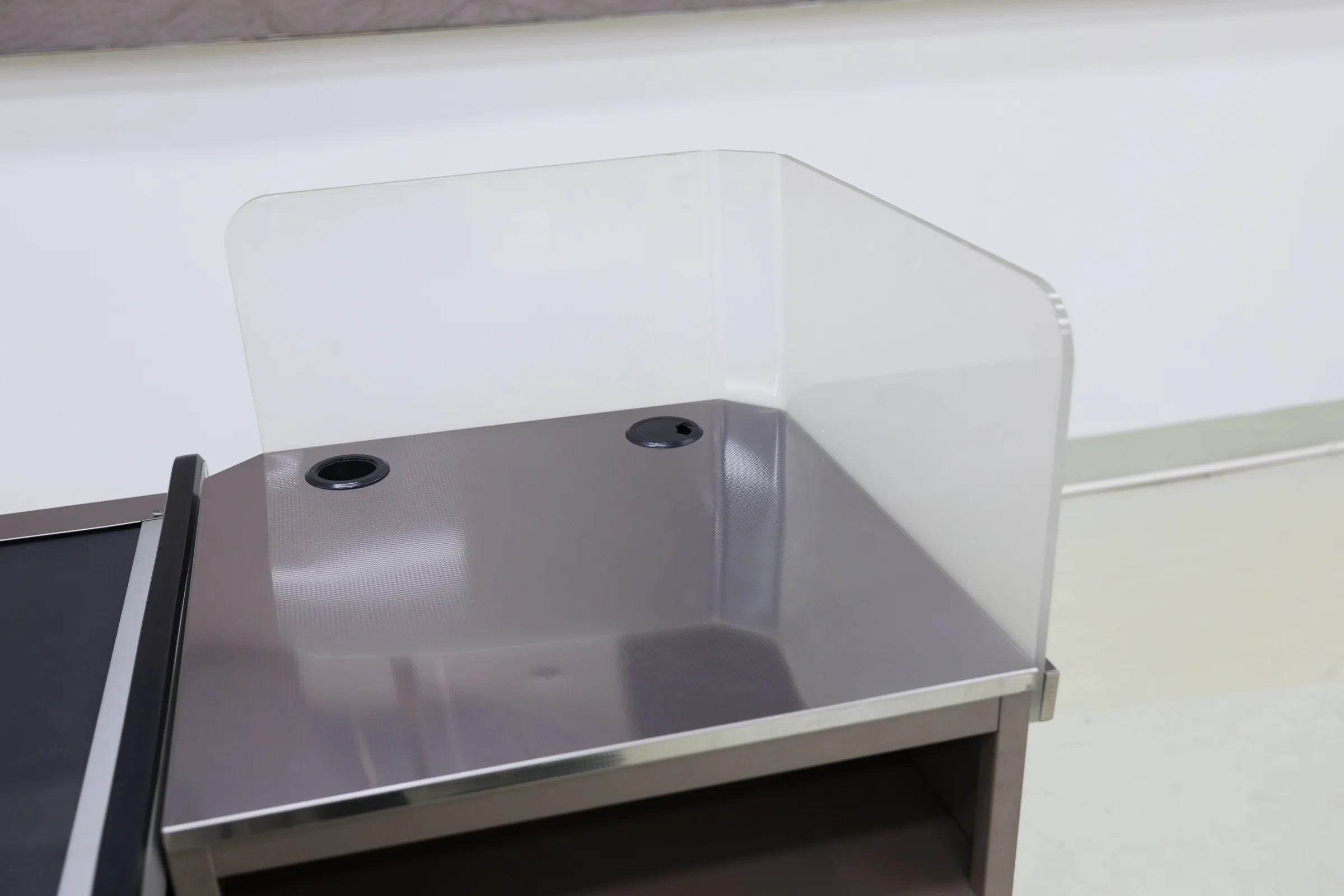
End screen Raised screen closing the far end
Shipping form Assembled, in an export case
  • Since 1999
  • Changshu, Jiangsu
  • ISO 9001
  • HS Code 94031000
Product Description

Supermarket Cashier Counter with Drawer Unit

A light-bodied lane with real storage in it — a drawer bank, a lockable cabinet and a raised screen closing the far end.

Key Features

  • Built to your drawing rather than to a fixed configuration — length, depth, height and internal layout all follow your floor plan.
  • Cold rolled steel body with the finish carried across every category on the same order, to one RAL or PANTONE reference.
  • Manufactured in our own plant in Changshu, where steel fabrication, woodworking and stainless steel production run on one site.

Applications

Supermarkets, convenience stores, chain retail and speciality stores. Tell us the store format and the floor area and the specification comes back written against them.

What The Photographs Show

Every close-up below is the same counter, shot in the showroom rather than in the studio. Each one shows a part of the build you would otherwise have to take on trust.

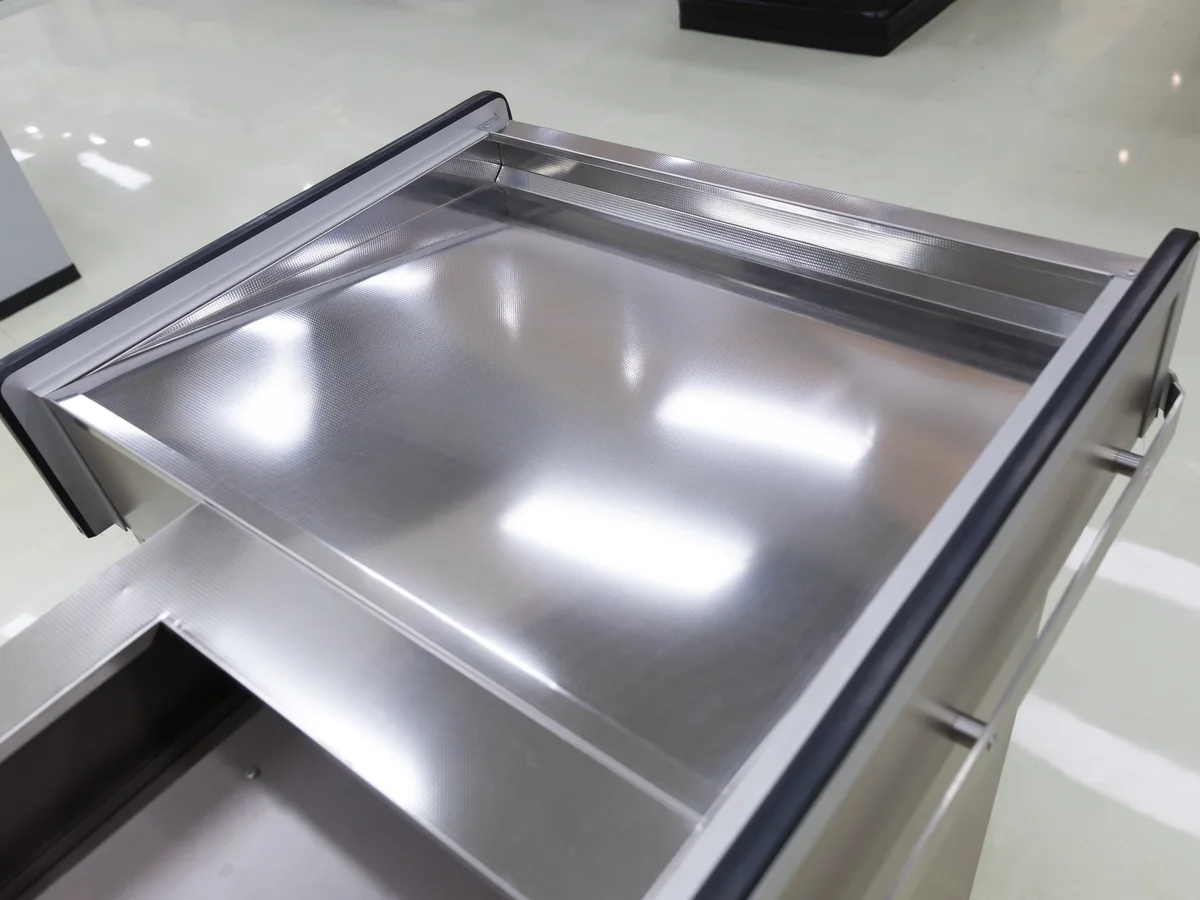
Open drawer in the bank under the worktop of a Keshun cashier counter

The Drawer Bank

Divided drawers under the worktop

Drawers run on the operator side, divided for coins, notes and the paperwork a lane generates. This is the part that separates a cashier counter from a table with a till on it: everything the operator needs is within reach without leaving the position.

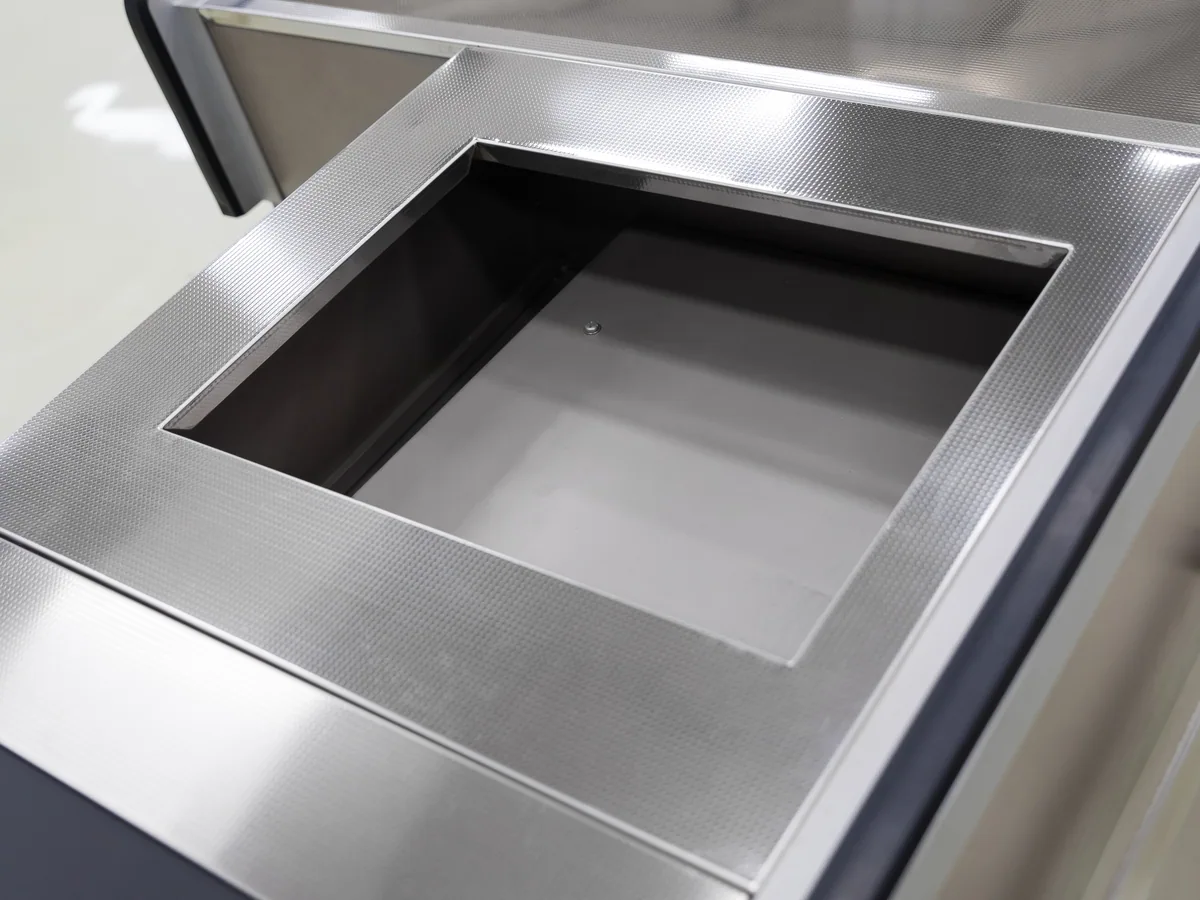
Pressed stainless well set into the worktop of a Keshun cashier counter

The Stainless Well

Pressed and welded into the worktop

The well is pressed into the top and welded rather than dropped in as a separate tray. There is no lip for coins to lodge behind and no joint that opens up, which matters on the one surface in the store that is wiped down several times a day.

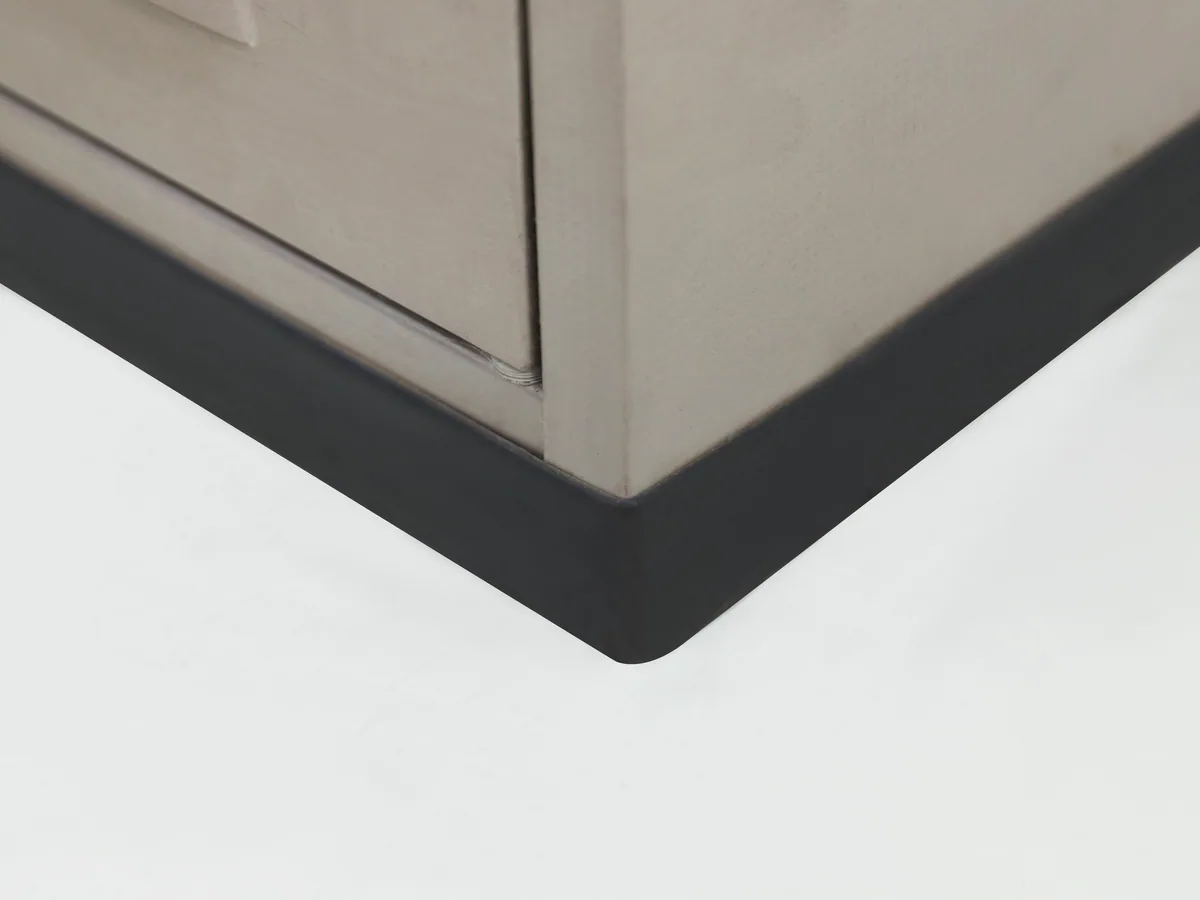
Aluminium border and moulded corner cap on the worktop edge of a Keshun cashier counter

Border And Corner

Aluminium border with a moulded corner cap

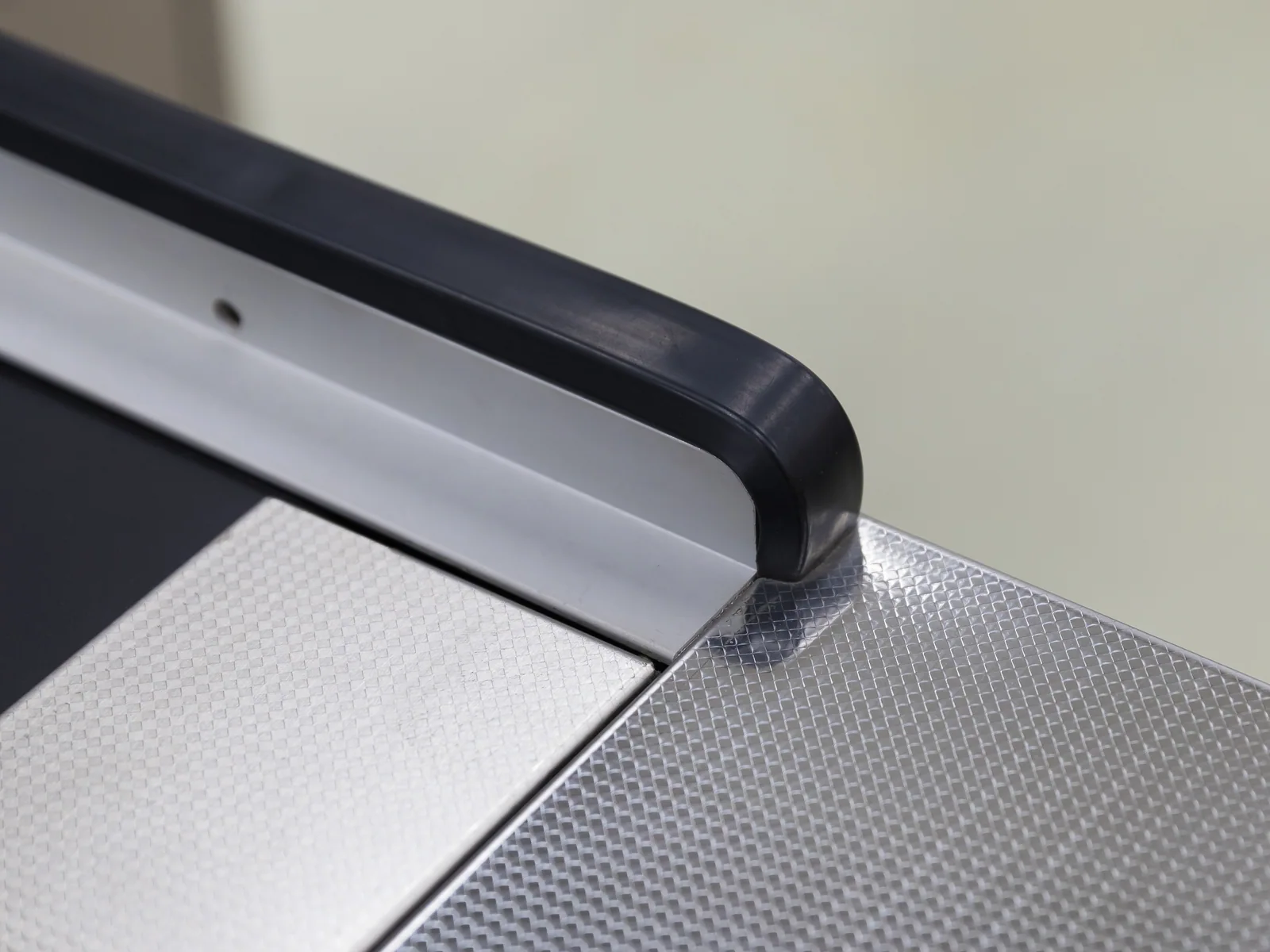
The border is closed with a moulded cap at the corner rather than a mitred joint. A mitre opens up over a few years of trolley traffic and a cap does not, and it takes the sharp edge off the part of a lane shoppers walk into.

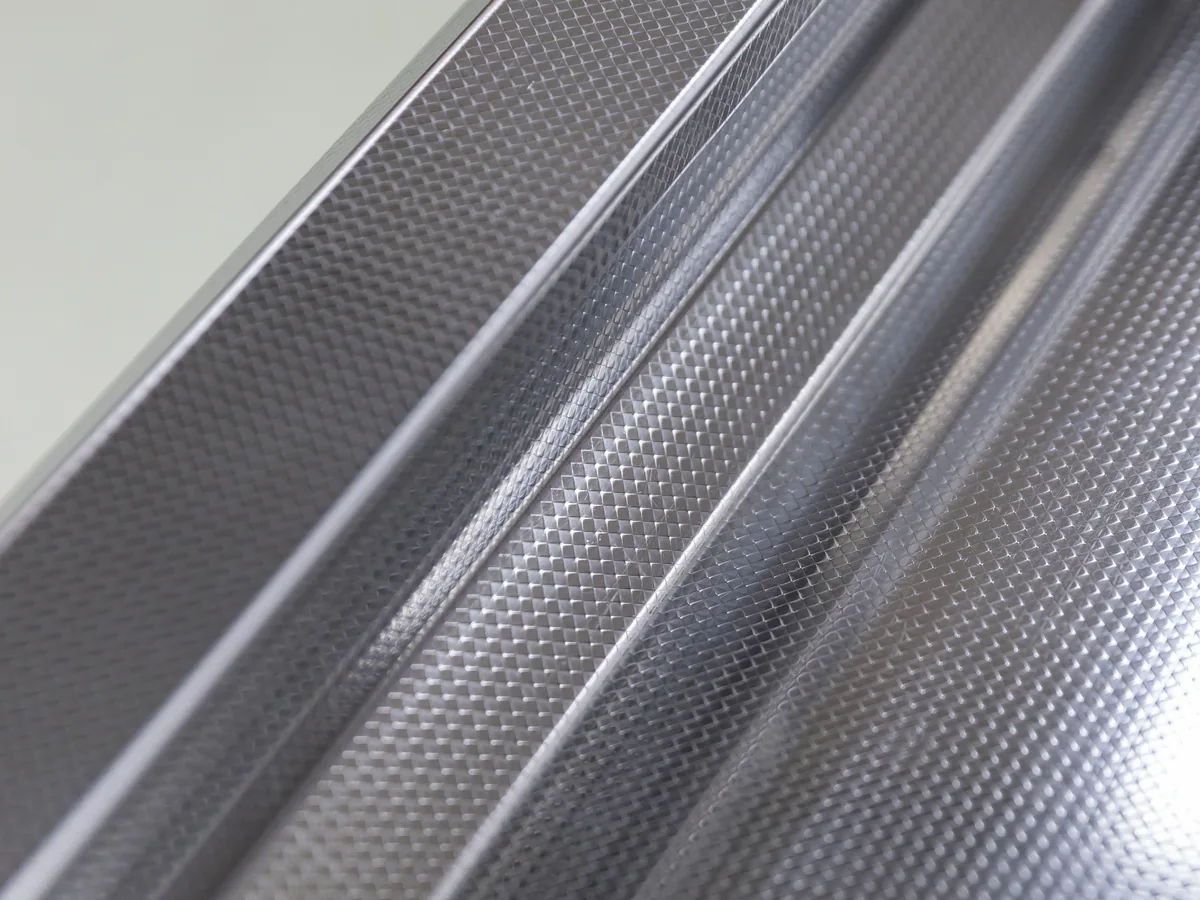
Embossed stainless deck surface on a Keshun supermarket cashier counter

Embossed Deck

Textured stainless on the working surface

The deck carries an embossed texture rather than a mirror polish. It hides the fine scratching that any working surface picks up, and it gives packed goods enough grip that they do not slide off when the lane is busy.

Customisation

Every item on this page is made to order. Send a floor plan, a hand sketch or a photograph of a fixture you like, and we quote against it.

Shipping Form

How This Counter Leaves The Factory

Store fixtures are light for their size, so a container fills up on volume long before it fills up on weight. The number that decides your freight is therefore not what one unit weighs — it is what shape the goods are in when they go through the container door. Everything we build leaves in one of three shapes, and which one it is changes the arithmetic completely.

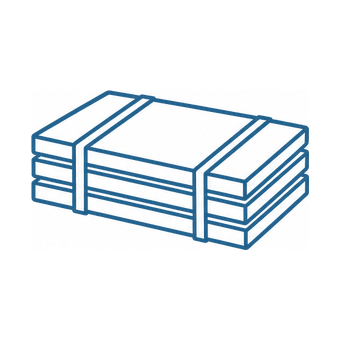
Line icon of four flat panels stacked and bound with two strapping bands

Flat Packed Cabinet And Shelving Panels

Shelving bays, produce islands and bulk cabinets travel as panels — uprights, shelves, back panels and plinths, strapped flat. They are built up on the shop floor, so the packing list and the assembly drawings travel with the goods.

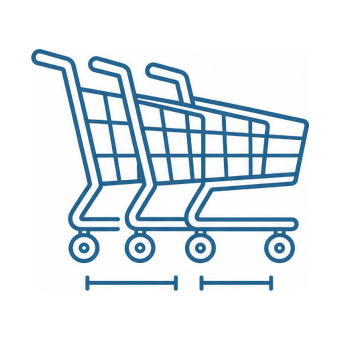
Line icon of three supermarket trolleys nested into one another with a bracket marking the nesting pitch

Nested Trolleys And Hand Baskets

Trolleys slide into one another and baskets stack. Past the first unit, each extra one adds only its nesting pitch instead of its full length, so the shipped volume ends up a fraction of what the unit count suggests.

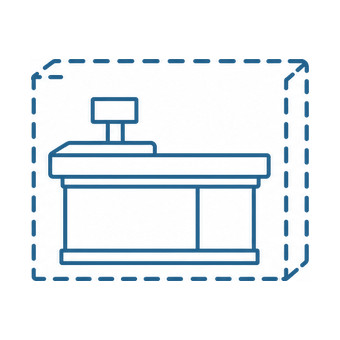
Line icon of an assembled checkout counter inside a dashed crate outline

Fully Assembled Checkout Counters

A checkout lane is welded, coated and fitted out as one piece, so it is crated whole with padding on the steel. Nothing waits to be assembled at the store beyond levelling it into the lane. It also means the crate is the counter plus a margin, so the length you order is the length that ships.

This model

Send us the quantity and the destination port. We come back with a loading plan built on your actual counter length, not on a catalogue average.

Ships With

What Usually Travels In The Same Container

Almost nobody buys one checkout counter. A front end is ordered as a set, and these three categories are the ones that come with it most often. Putting them on the same order is also what lets one colour run across the whole front of the store, because it is then one batch of coating rather than three.

Steel and Wood Shelving

The end bays that close off each aisle behind the checkouts are the shelving a shopper sees while queuing, so they carry the same colour and the same shelf finish as the lanes.

See shelving bays

How many of each a store needs is a floor area question rather than a product question, and it is answered store by store on the project page.

Close view of the stainless deck and border on a Keshun cashier counter with a drawer unit

Tell us the lane width, how many lanes and how much storage each one needs. If you have a drawing of the checkout area, send that instead — a sketch on paper is enough to start a drawing here.

Get A Quotation

Quote This Cashier Counter

Two things move the price on this counter: how long each lane is, and how much of the body is given over to drawers and lockable storage. Everything else on this page is already fixed.

Your enquiry goes to keshun@kssyt.com. Drawings and floor plans are welcome by email — hand sketches included.

Counter Questions

Four Questions Buyers Ask Before Ordering A Lane

The four that come up on nearly every enquiry for this build. If yours is not here, send it with your drawing and it is answered alongside the quotation.

Q01 Can this cashier counter be made to our lane width?

Yes, and it usually has to be. The counter lengths on record across our range are 1200, 1800, 1850 and 2000 mm, in depths from 600 to 1800 mm, all on the same 850 mm worktop height. Those are the sizes that have been built rather than a catalogue you have to choose from. Send us the width available for each lane and the counter is cut to it.

Q02 How many drawers can the bank hold?

It follows the body length rather than a fixed count, which is why we ask for the lane width first. What is standard is the division: coins and notes separated, with a second level that also takes card slips, refund dockets and change records. Tell us what your operators keep at the lane and the bank is drawn around it.

Q03 Does the drawer unit under the cashier counter lock?

Yes. The cabinet beside the drawer bank locks, and it is where the float and the equipment live when the lane is closed. On a counter without a belt this is the main security feature of the build, so it is worth confirming the key arrangement you want across a multi-lane order.

Q04 What is the raised screen at the end for?

It closes the lane off from the aisle behind it. Without it, a shopper standing at the counter is looking straight into the next aisle and goods on the deck can be reached from the wrong side. It also gives the run a definite end, which matters when several lanes stand side by side.