

Greek Key Fret
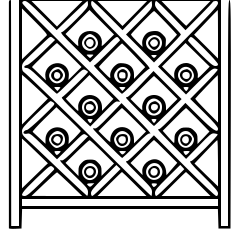
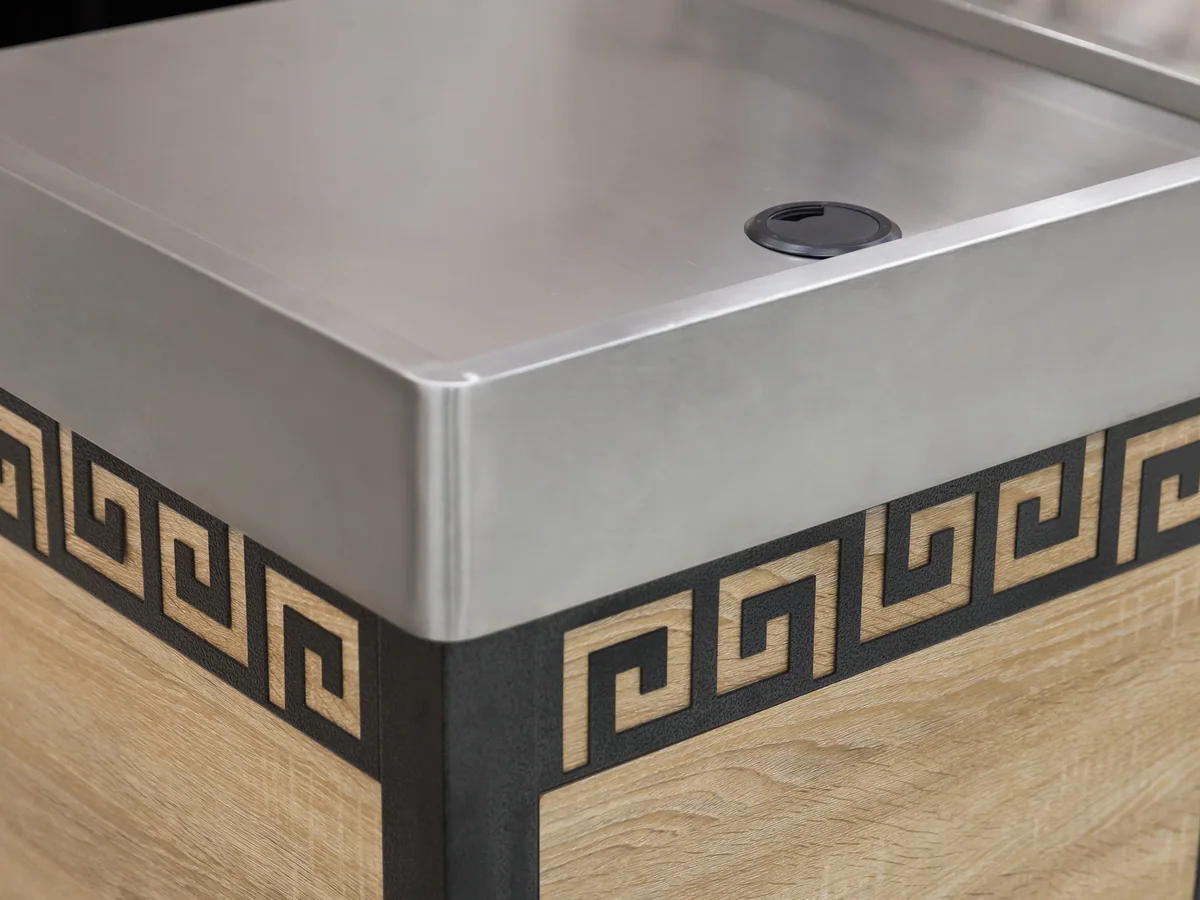
Repeating, upper panel
The fret repeats along the upper panel at eye level for a queuing shopper. It is cut rather than printed, so it holds a shadow line and does not flatten out under retail lighting.
Boutique lane · Greek key fret · monitor pole
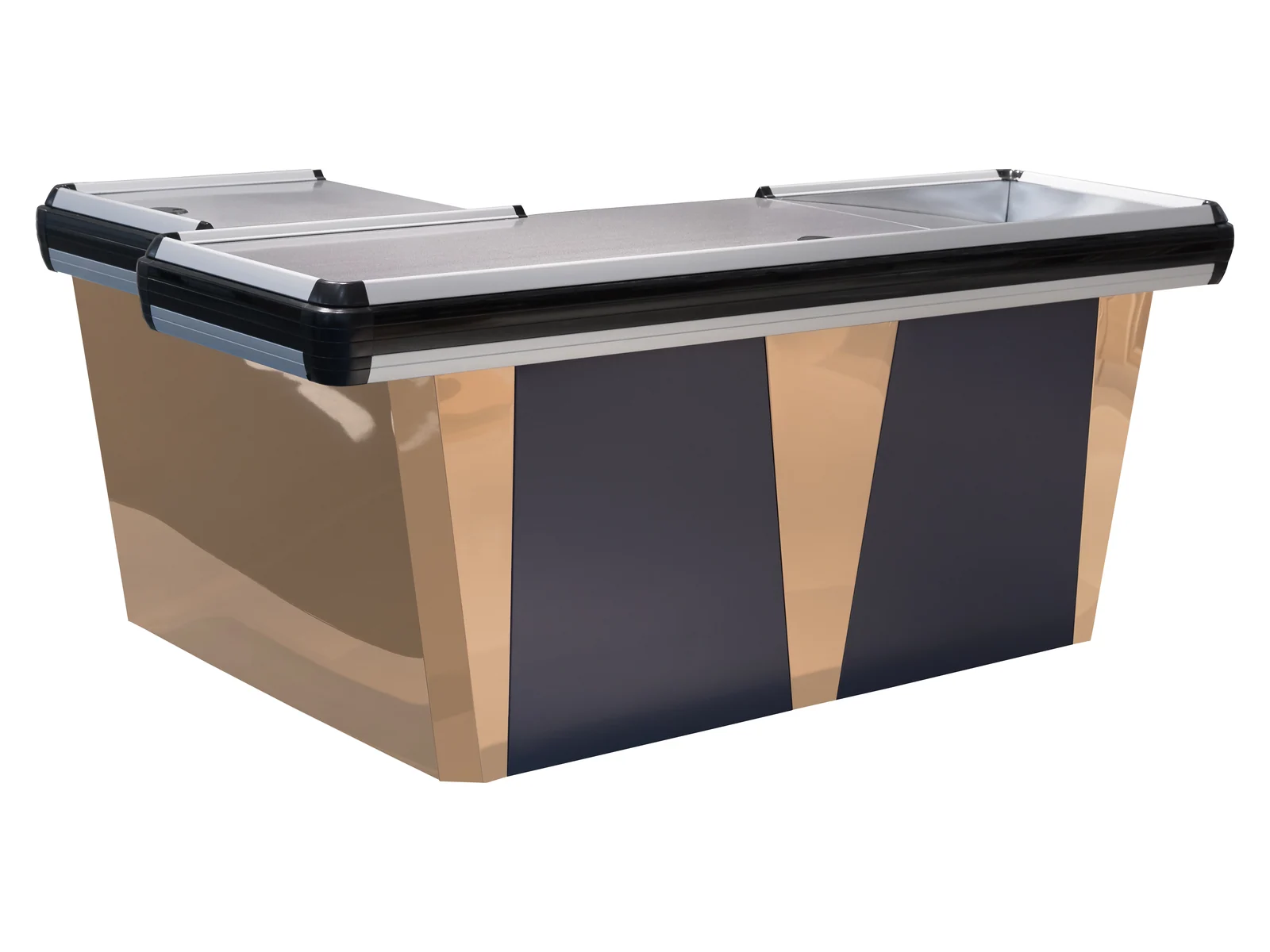
A light oak lane with a Greek key fret running along the top edge and a pole carrying the monitor and scanner. It is the counter for a store selling atmosphere rather than volume.
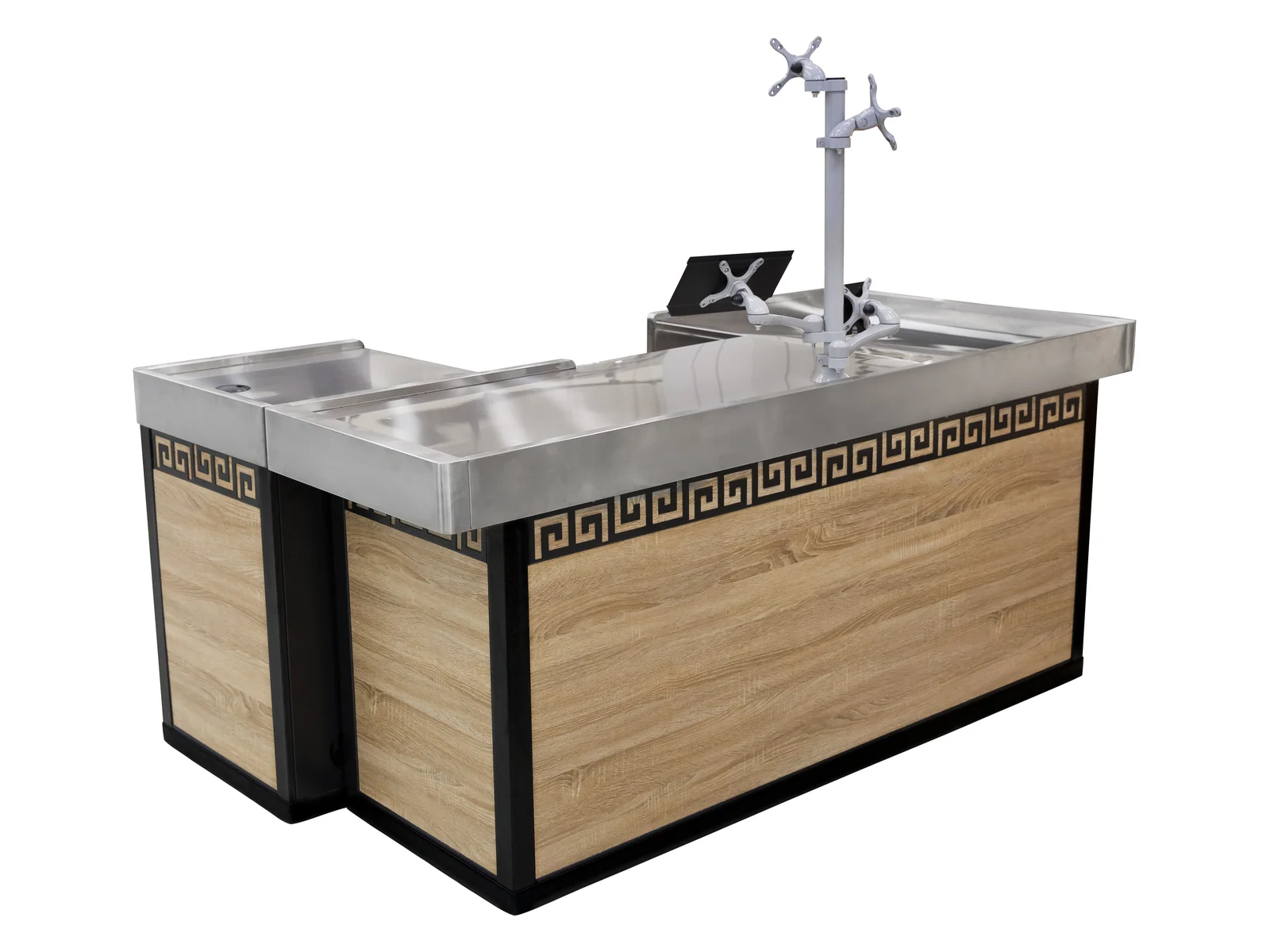
Studio angles on white. The fret, the pole head, the dark inset panel and the stainless top are photographed below.
A Greek key runs the length of the upper panel, cut as a repeating fret against light oak board. It is a decorative decision rather than a functional one and we would not pretend otherwise — but a delicatessen, a health food shop or a boutique grocer is selling a room as much as a basket, and a plain steel lane undoes that in one object.
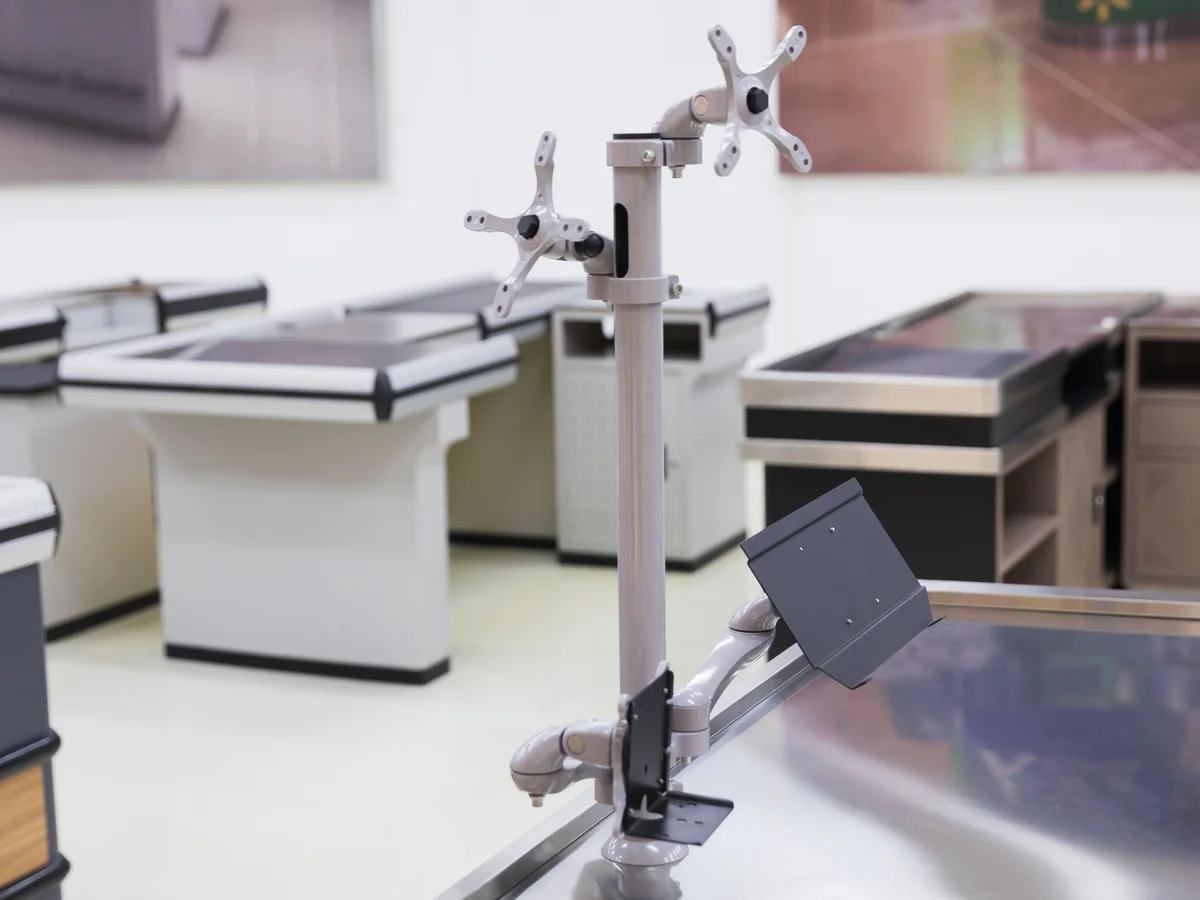
The working half is conventional and quietly good. A pole rises from the back edge carrying the monitor and the scanner arm, which lifts both off the worktop and gives the cashier the whole surface back. The top is pressed stainless at 850 mm, and a dark inset panel breaks the oak so the run does not read as one slab of timber.
A light oak lane with a Greek key fret running along the top edge and a pole carrying the monitor and scanner. It is the counter for a store selling atmosphere rather than volume.
Supermarkets, convenience stores, chain retail and speciality stores. Tell us the store format and the floor area and the specification comes back written against them.
Two of these four are the fret and the pole, because between them they are the reason to choose this lane over a plain one.
Repeating, upper panel
The fret repeats along the upper panel at eye level for a queuing shopper. It is cut rather than printed, so it holds a shadow line and does not flatten out under retail lighting.
Rises from the back edge
The pole takes the monitor and the scanner arm off the worktop entirely. On a lane this size the surface is the scarce thing, and a screen standing on it costs more than the pole does.
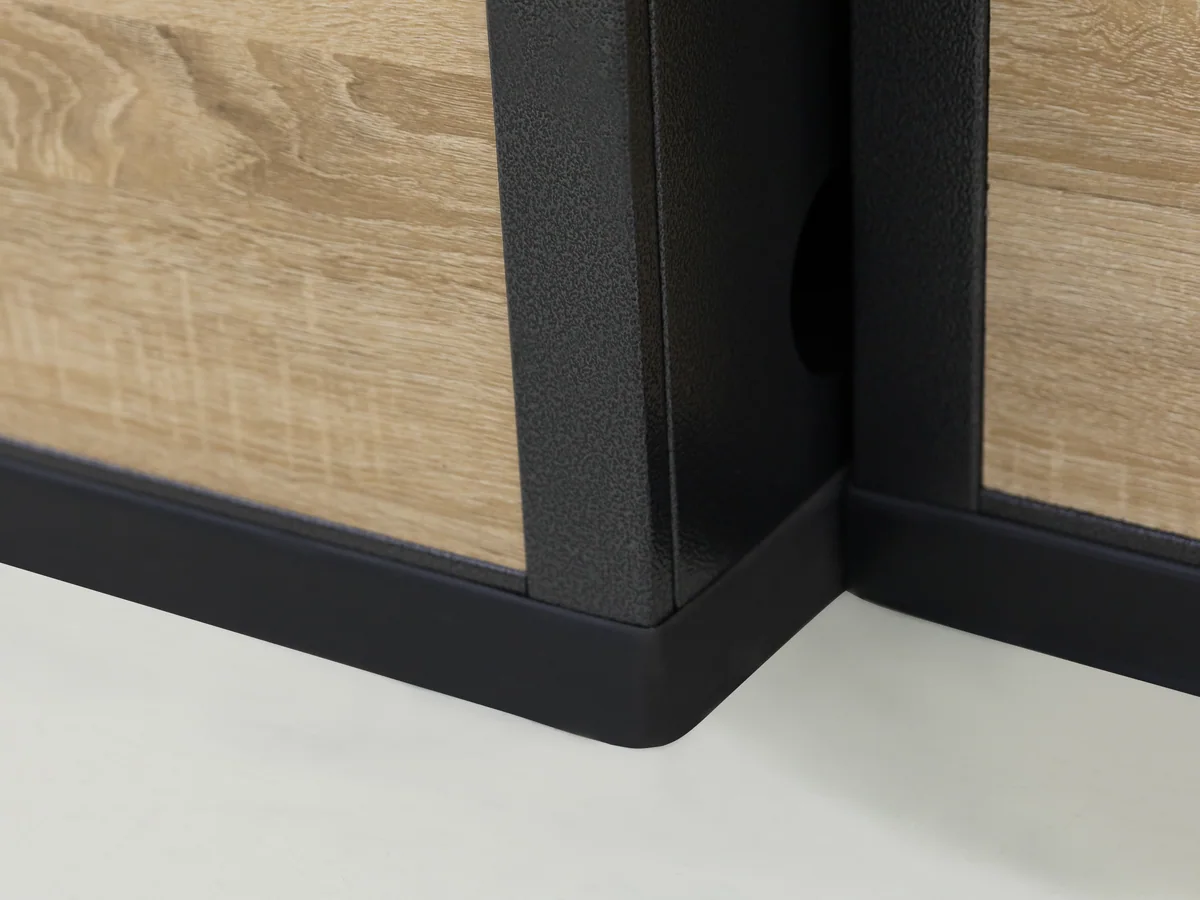
Breaks the timber run
A darker panel is let into the oak partway along the body. Without it a long light run reads as one slab; with it the counter has a front and a back even when seen straight on.
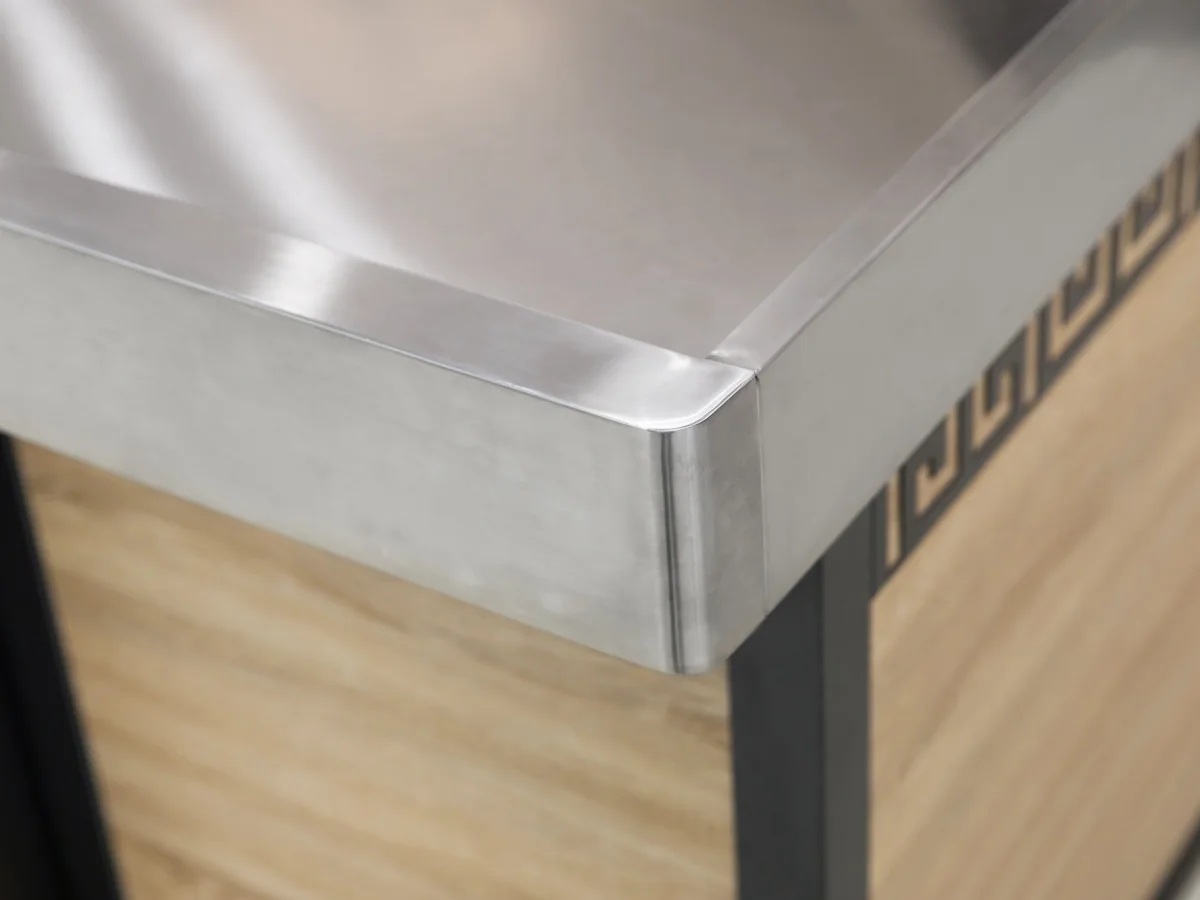
Pressed top, 850 mm
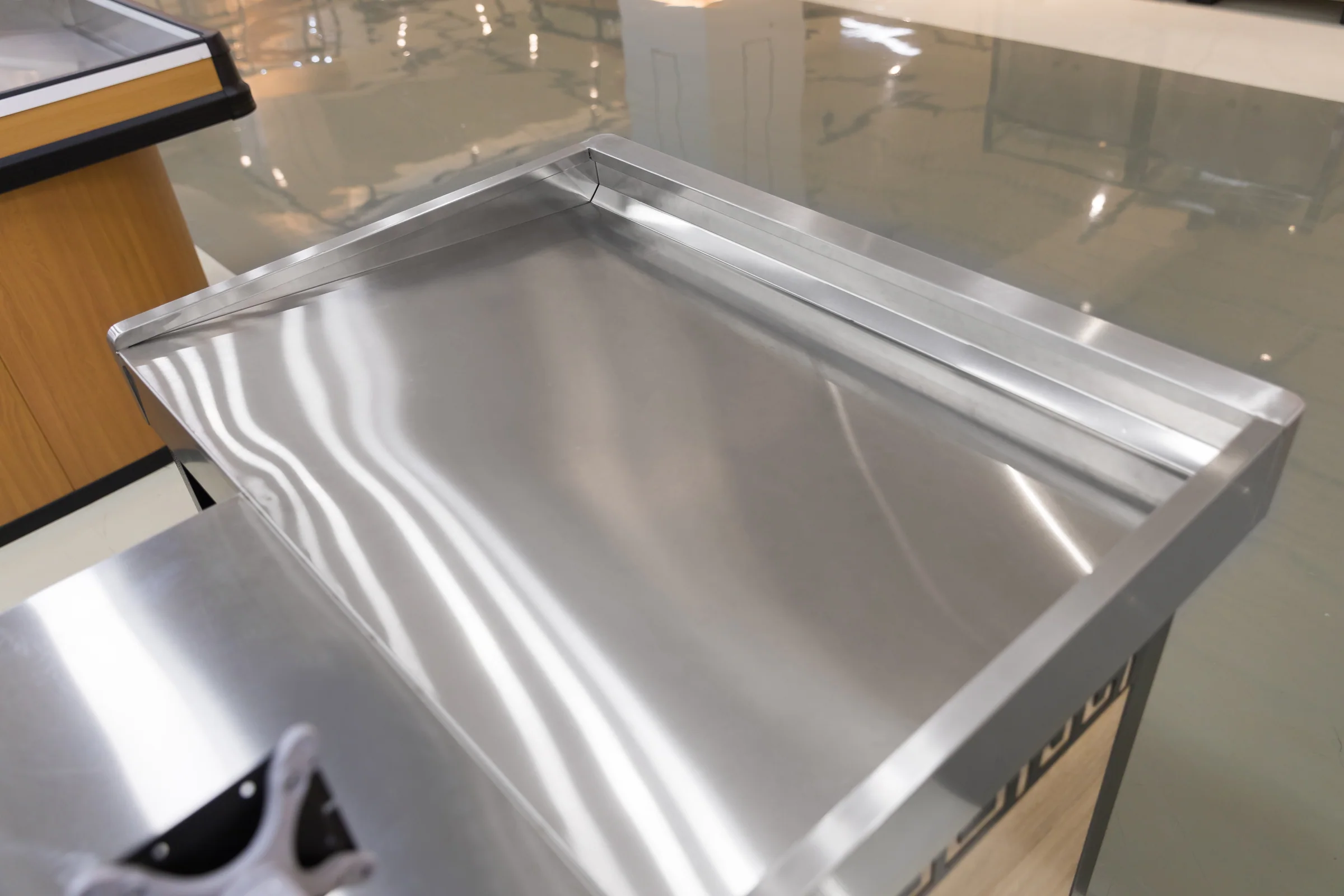
Where the stainless top meets the timber facing, the top overhangs slightly. That shadow gap is what keeps a wet top from running down onto the board, which is what ruins the front of a timber counter first.
Every item on this page is made to order. Send a floor plan, a hand sketch or a photograph of a fixture you like, and we quote against it.
Store fixtures are light for their size, so a container fills up on volume long before it fills up on weight. What decides your freight is not what one unit weighs — it is what shape the goods are in when they go through the container door. Everything we build leaves in one of three shapes.
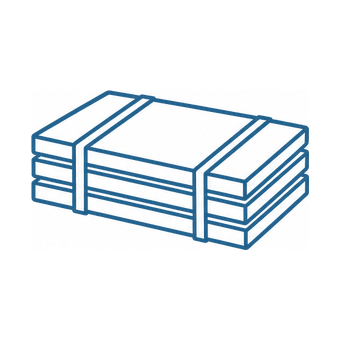
Shelving bays, produce islands and bulk cabinets travel as panels — uprights, shelves, back panels and plinths, strapped flat with bubble wrap on every component. They are built up on the shop floor, so the packing list and the assembly drawings travel with the goods.
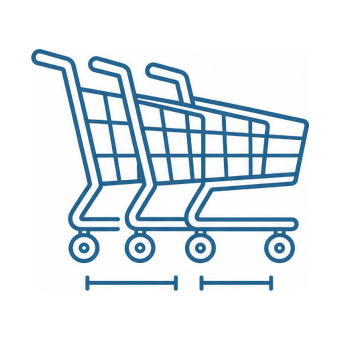
Trolleys slide into one another and baskets stack. Past the first unit, each extra one adds only its nesting pitch instead of its full length, so the shipped volume ends up a fraction of what the unit count suggests.

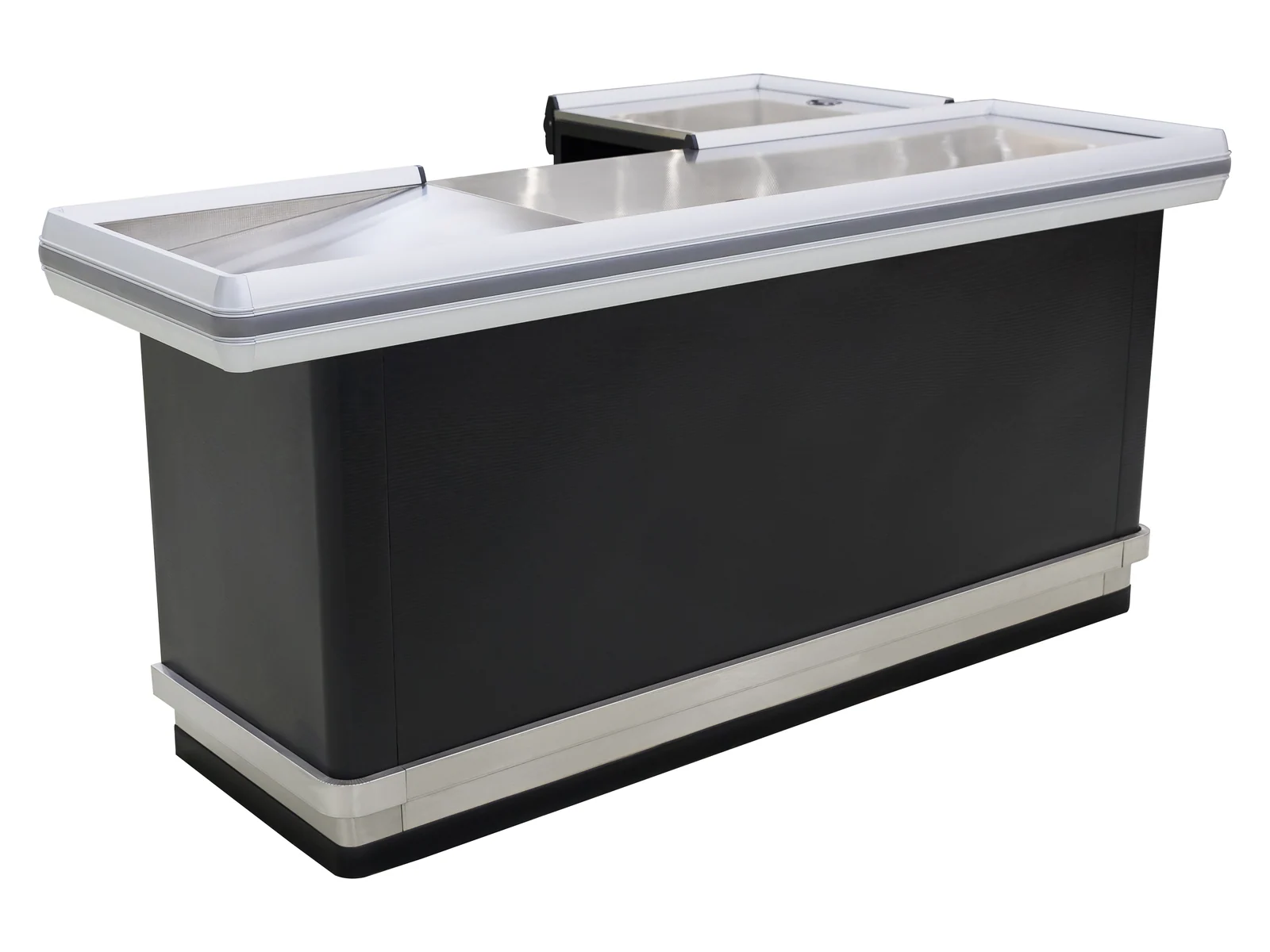
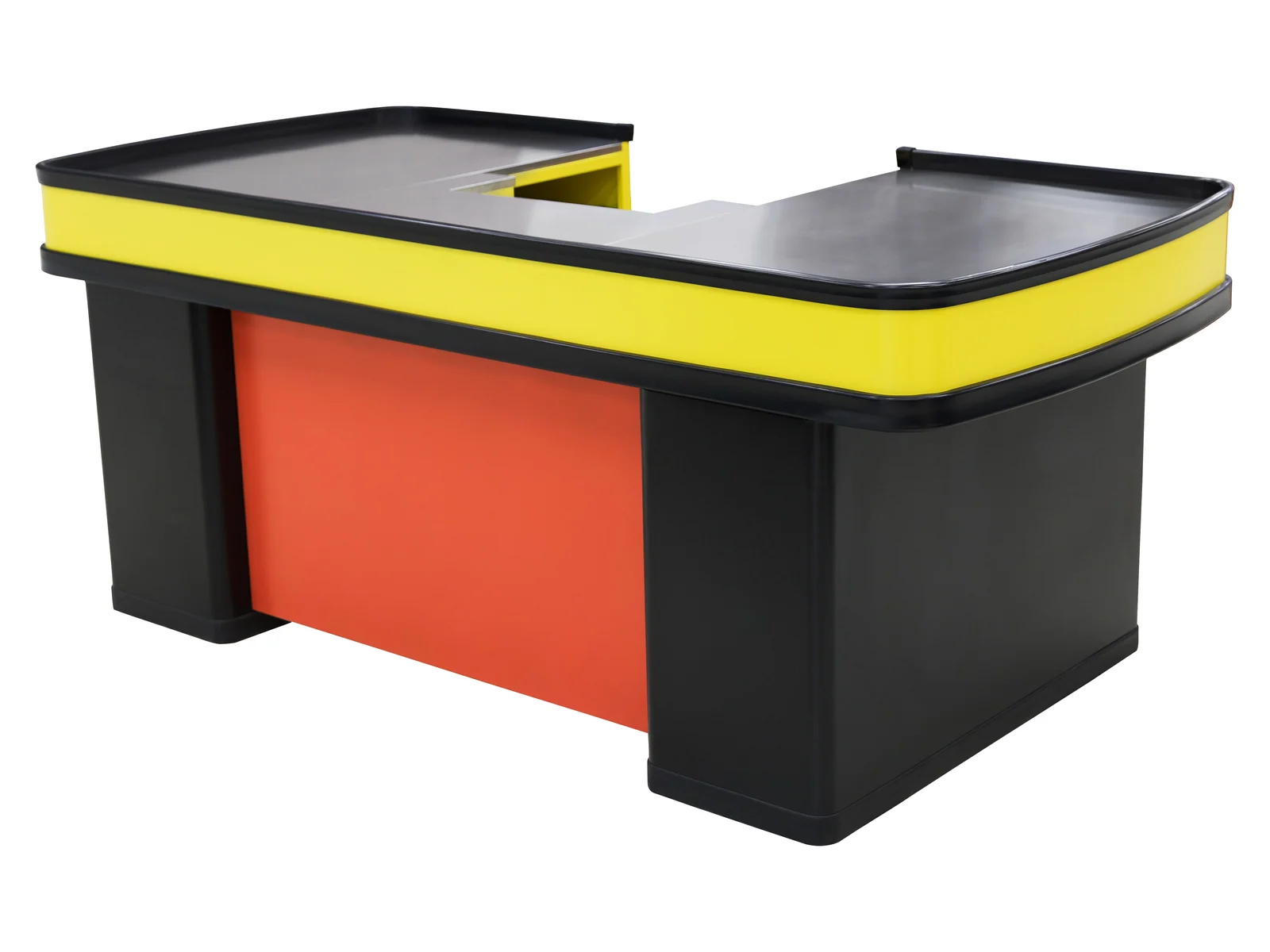
A checkout lane is welded, coated and fitted out as one piece, so it is crated whole with padding on the steel. Nothing waits to be assembled at the store beyond levelling it into the lane, and the crate is the counter plus a margin.
This modelA checkout lane ships assembled, so the crate is the counter plus a margin and the length you order is the length that loads. That is the expensive end of the freight scale, which is why a counter order is usually put on the same container as flat packed shelving and nested trolleys rather than shipped on its own. The loading plan comes back with your quotation.
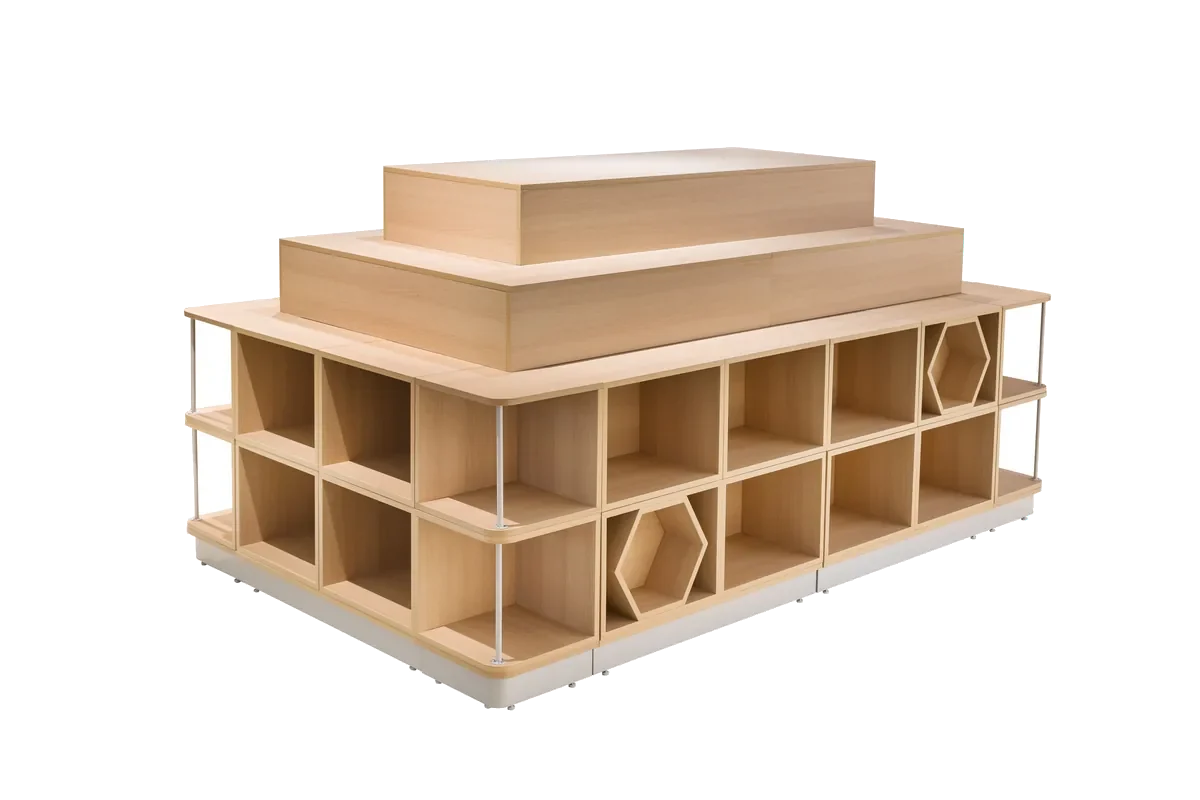
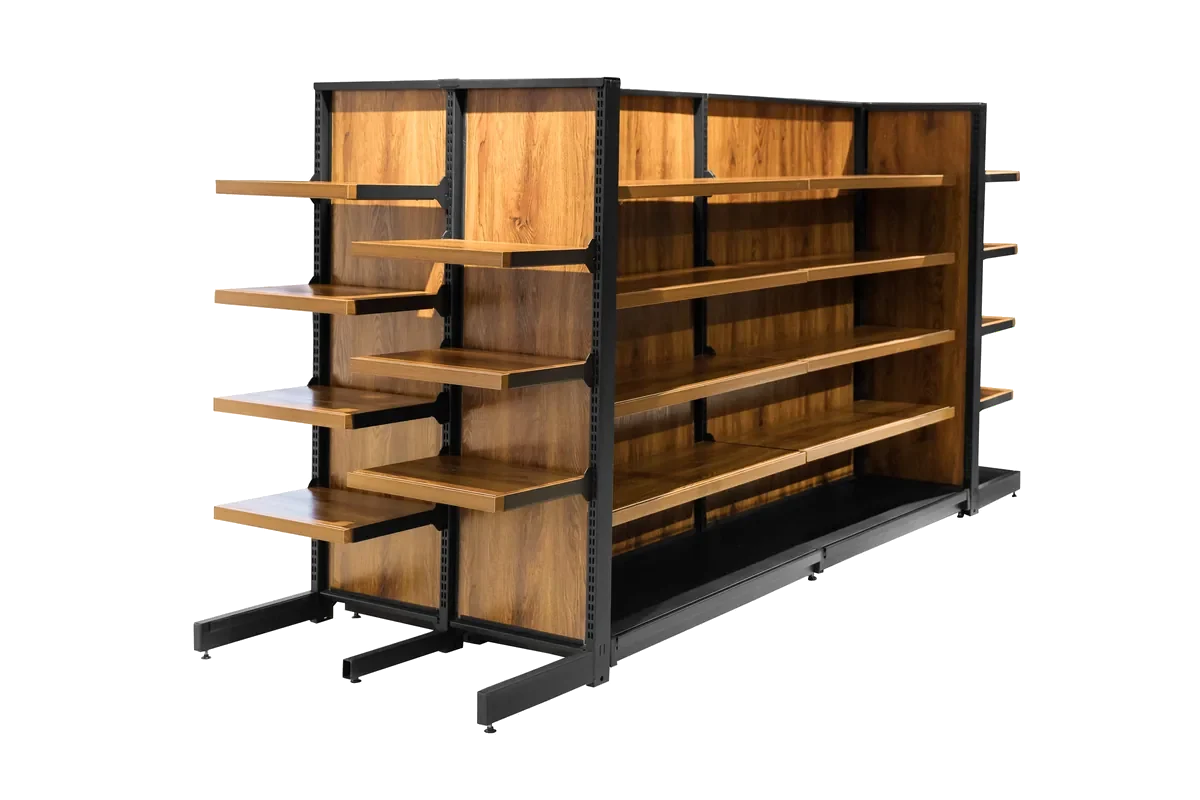
A checkout lane almost never arrives alone. These three categories share the front of the store with it, and putting them on one order is what lets a single colour reference run across the whole front, because it becomes one batch of coating rather than three.
The trolley bay sits within a few metres of the lane, and the lane length has to leave room for a loaded trolley to turn out of it.
See shopping carts and basketsThe 1000 mm promotion square is what fills the queue side of a lane, and it is the cheapest impulse position in the store.
See retail display tablesThe bays a shopper faces while queuing carry the same colour and board tone as the lane itself.
See shelving baysHow many of each a store needs is a floor area question rather than a product question, and it is answered store by store on the store layout planning page.
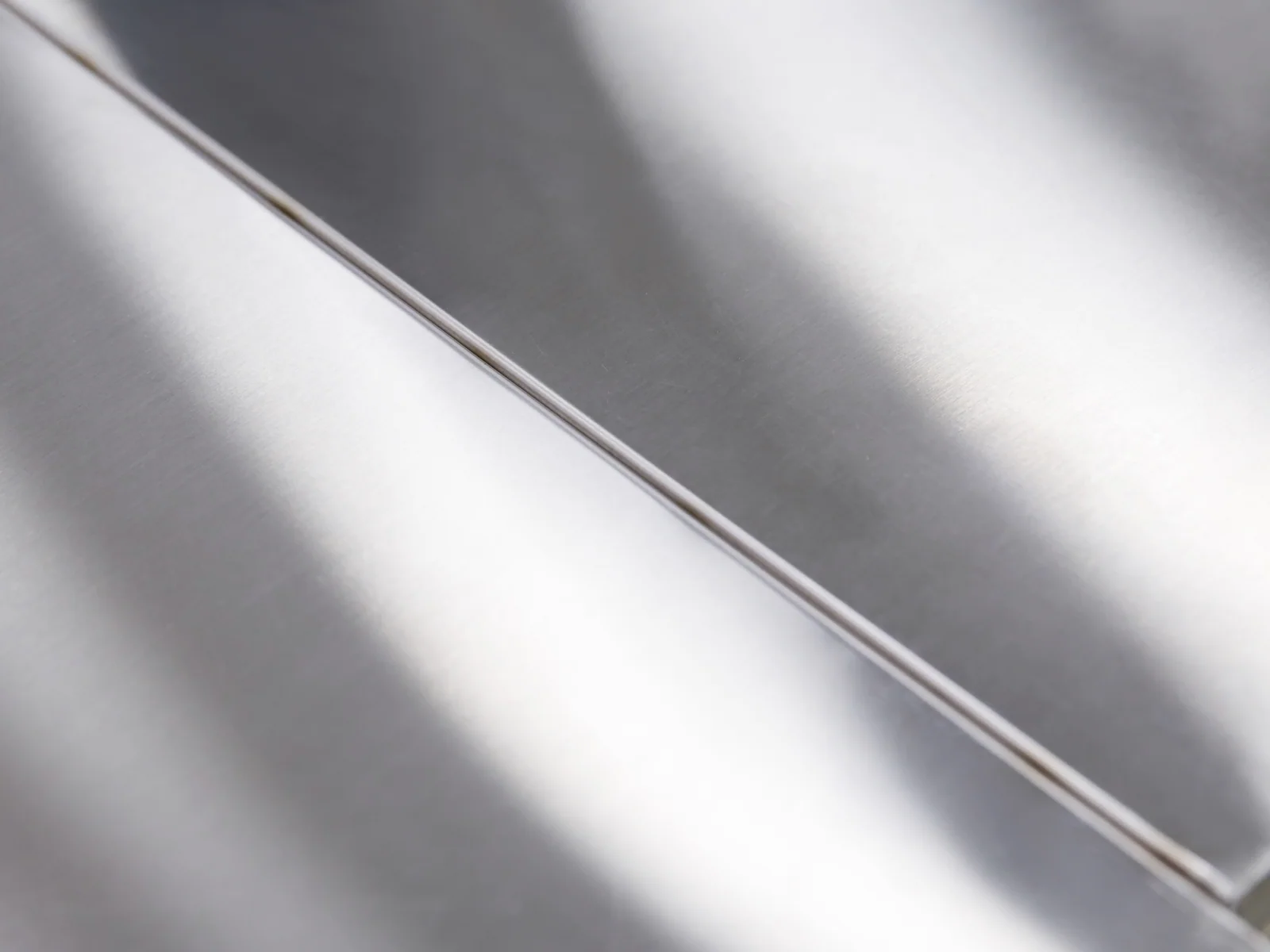
Send the till, scale and terminal you use — the cut-outs are made to your equipment.
Send the make of your till, scale and payment terminal along with the lane length. The cut-outs and the pole head are made to your actual equipment rather than to a generic hole.
The four that come up on nearly every enquiry for this build. If yours is not here, send it with your layout and it is answered alongside the quotation.
Yes, and the same carcase without it is a plain oak lane. The fret is what makes this counter suit a delicatessen or a boutique grocer; in a high volume store it is detail nobody has time to look at.
The head is made to your equipment rather than to a standard bracket. Send the make and model of the monitor and the scanner and it comes back specified — that is also when the cut-outs in the worktop are set.
It is paint-free wood grain board over a steel carcase, generally density board or multi-layer board at 1.5 to 2.5 mm. It is safe and environmentally sound, and it is what gives the counter its appearance while the steel does the work.
Not on this build. A boutique lane is specified without one because the basket sizes do not justify the length a belt adds — and the fret border is the point of the counter, which a belt housing would interrupt.