


Curved Head
Bin tiers follow the radius
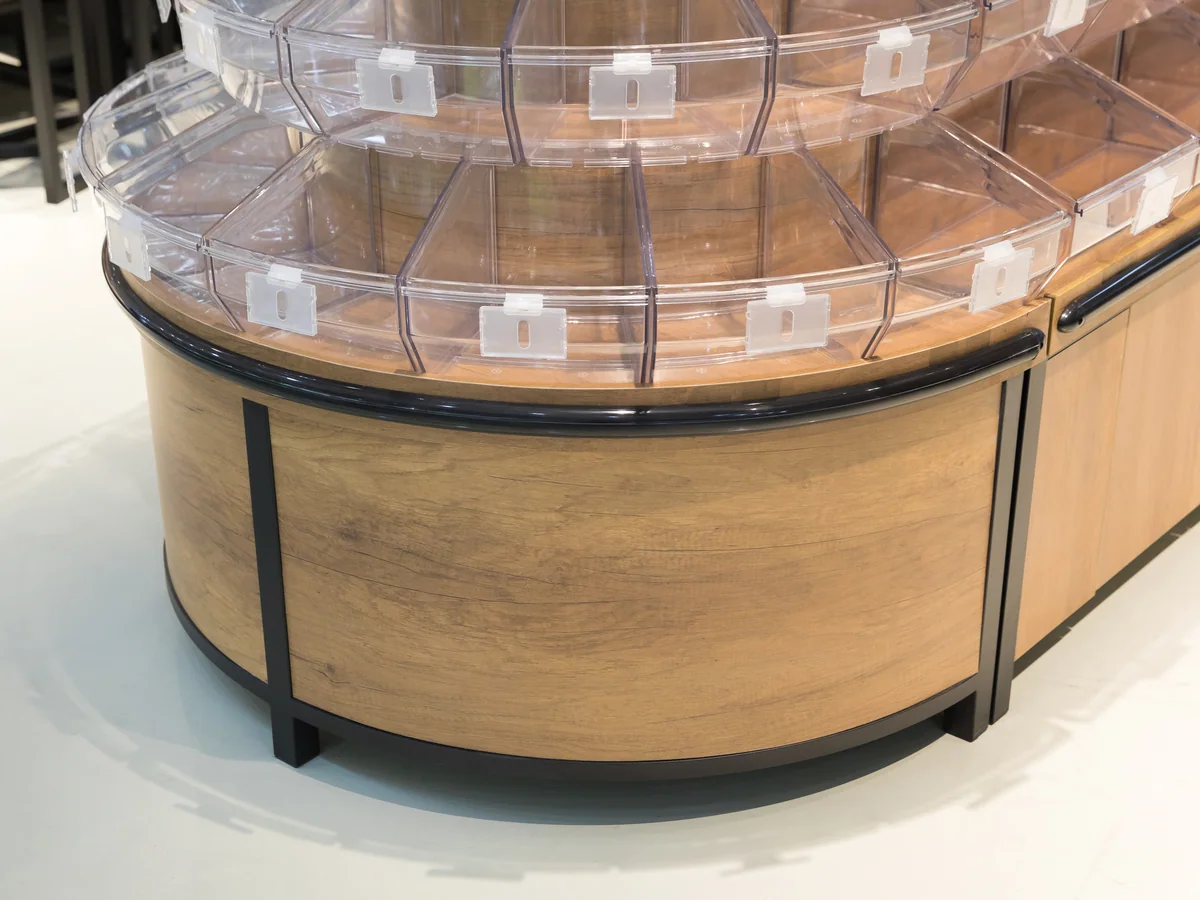
The tiers wrap the head rather than stopping at it. On a five row island that curve is a significant part of the total bin count, which is why it is built rather than squared off.
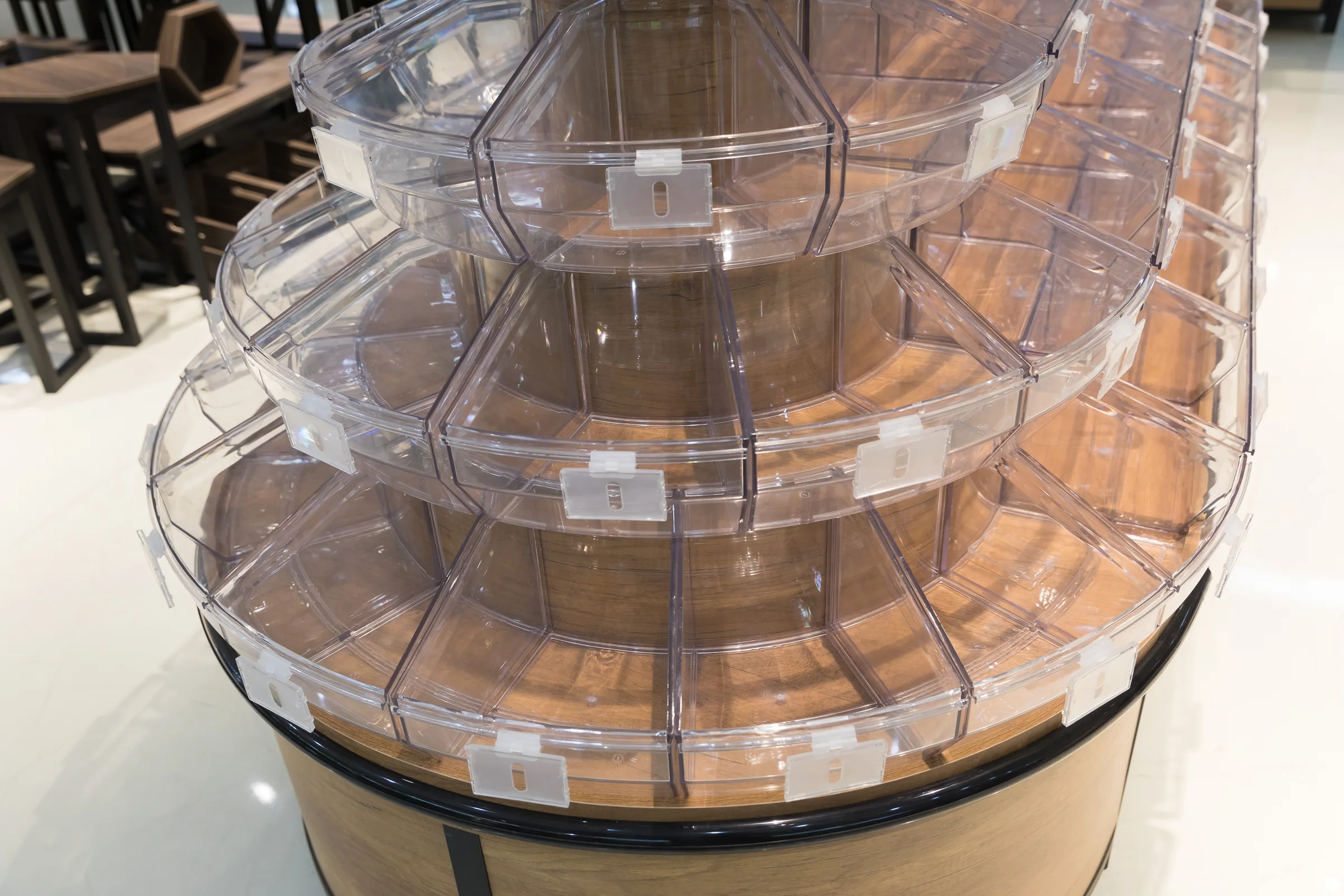
Five tier bin island · highest bin count · curved head
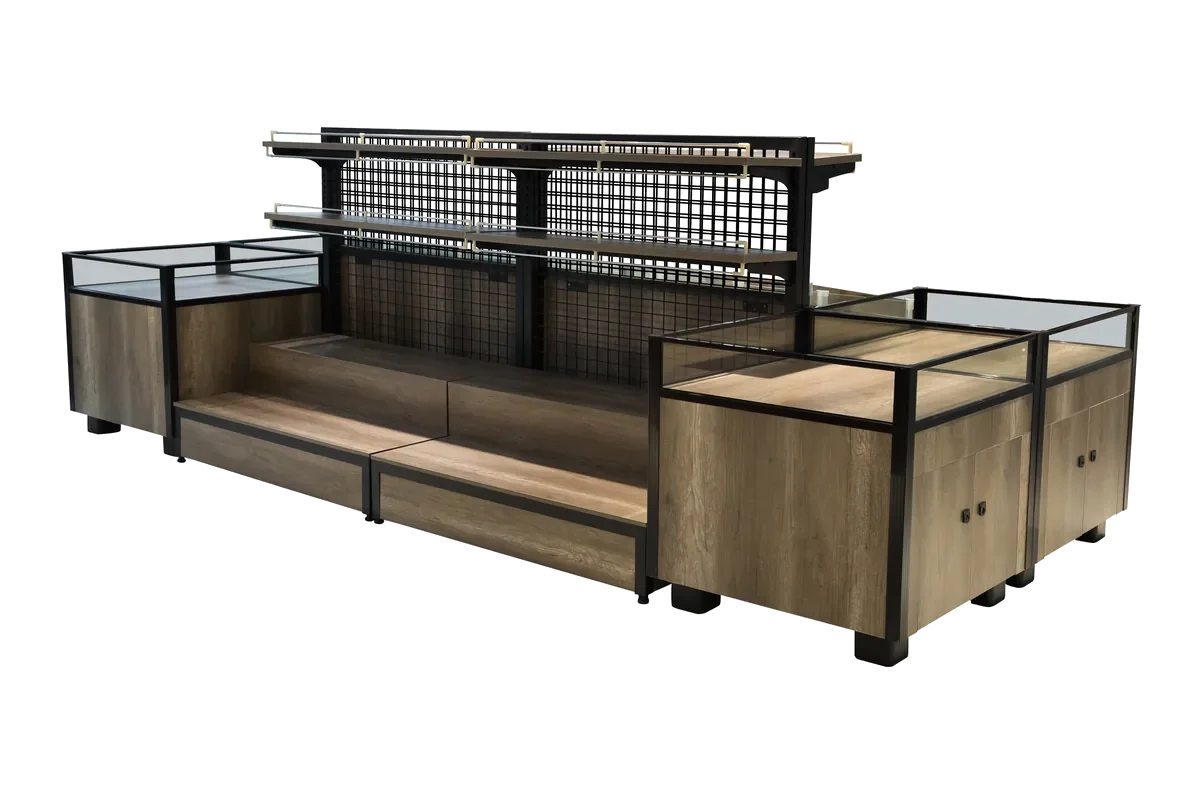
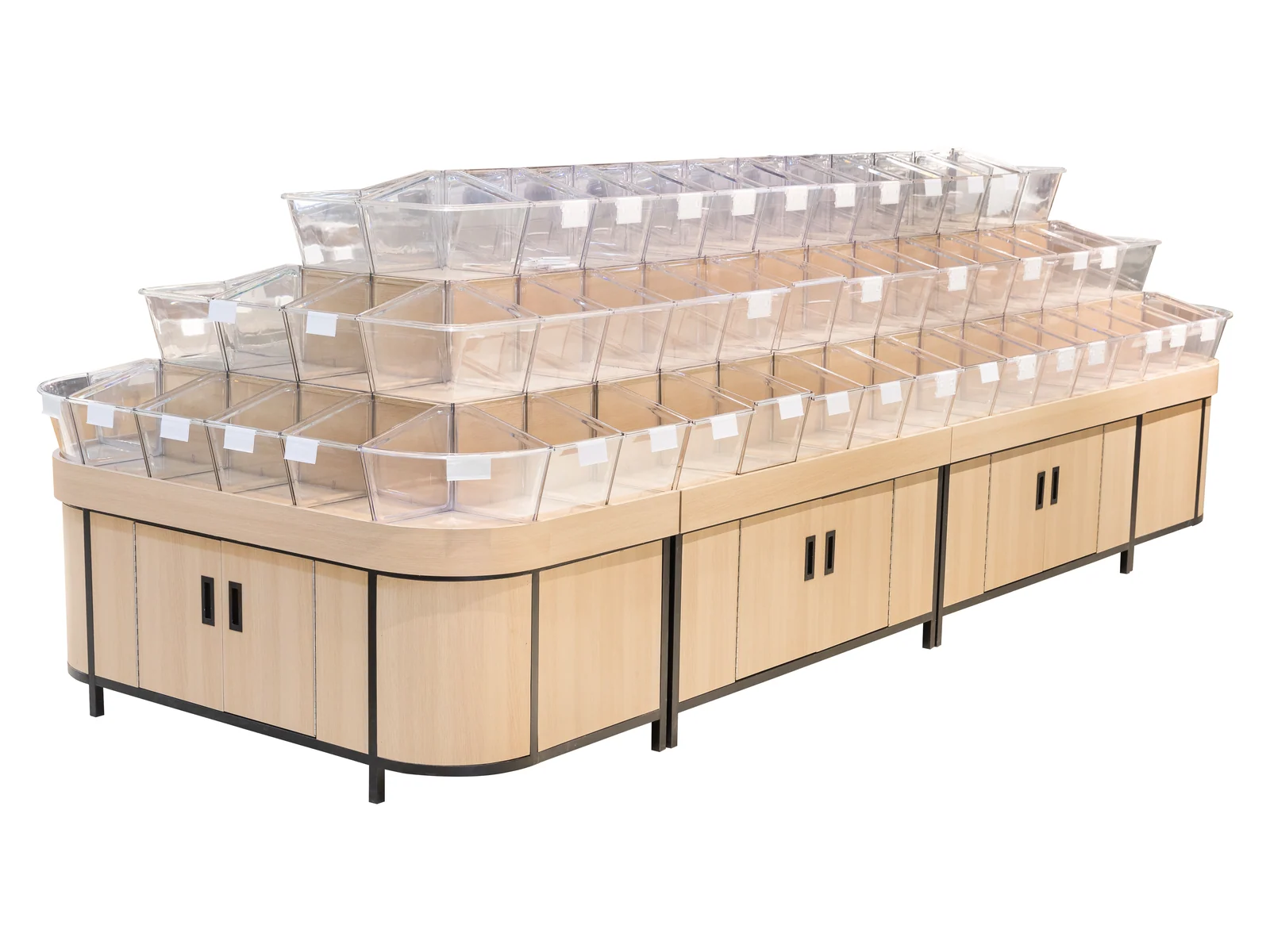
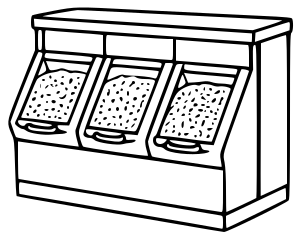
The densest fixture in this category. Five stepped rows of clear tilt bins climb the face of a golden timber island, which puts more loose lines in front of a shopper per metre of aisle than anything else we build.
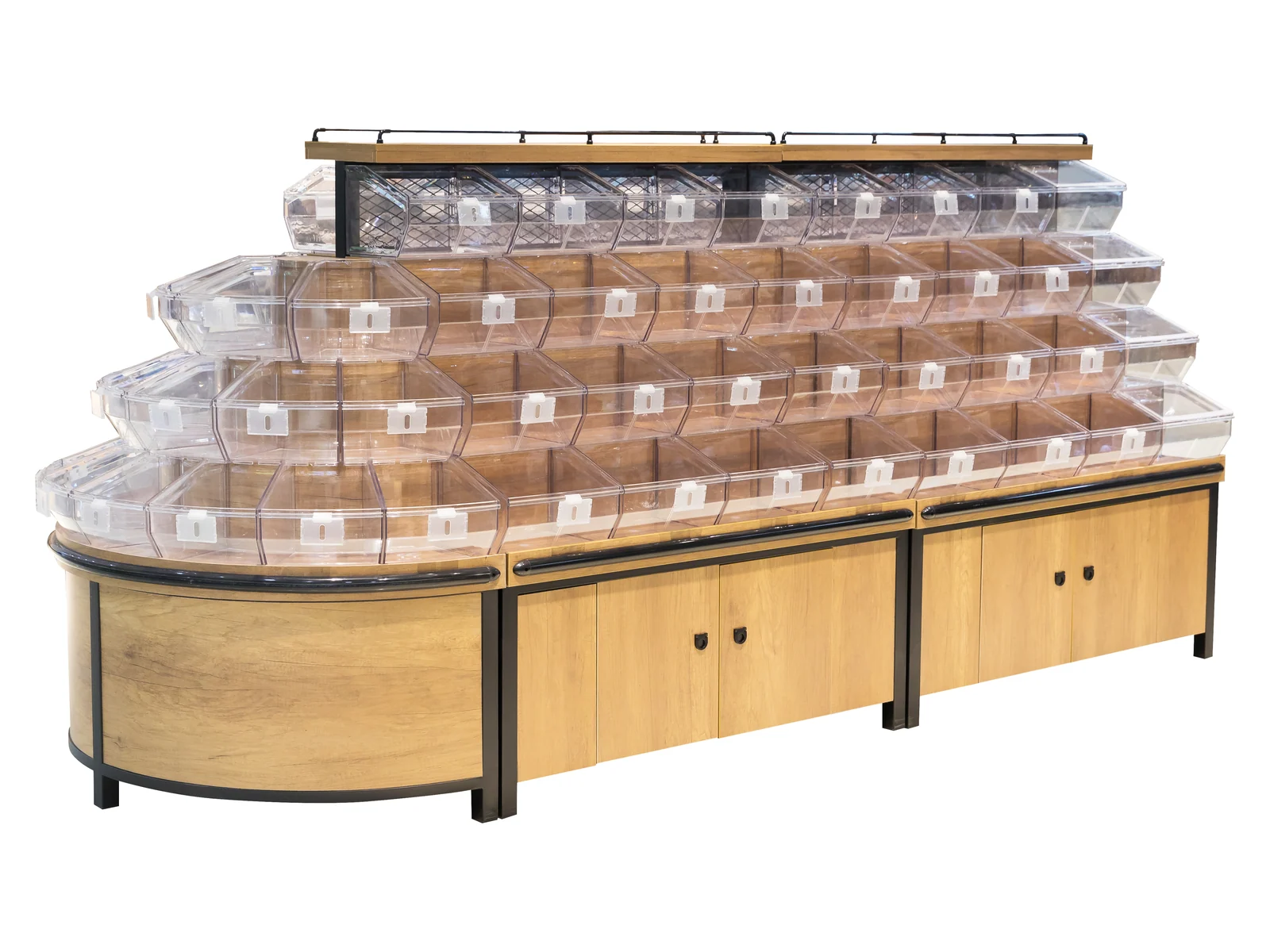
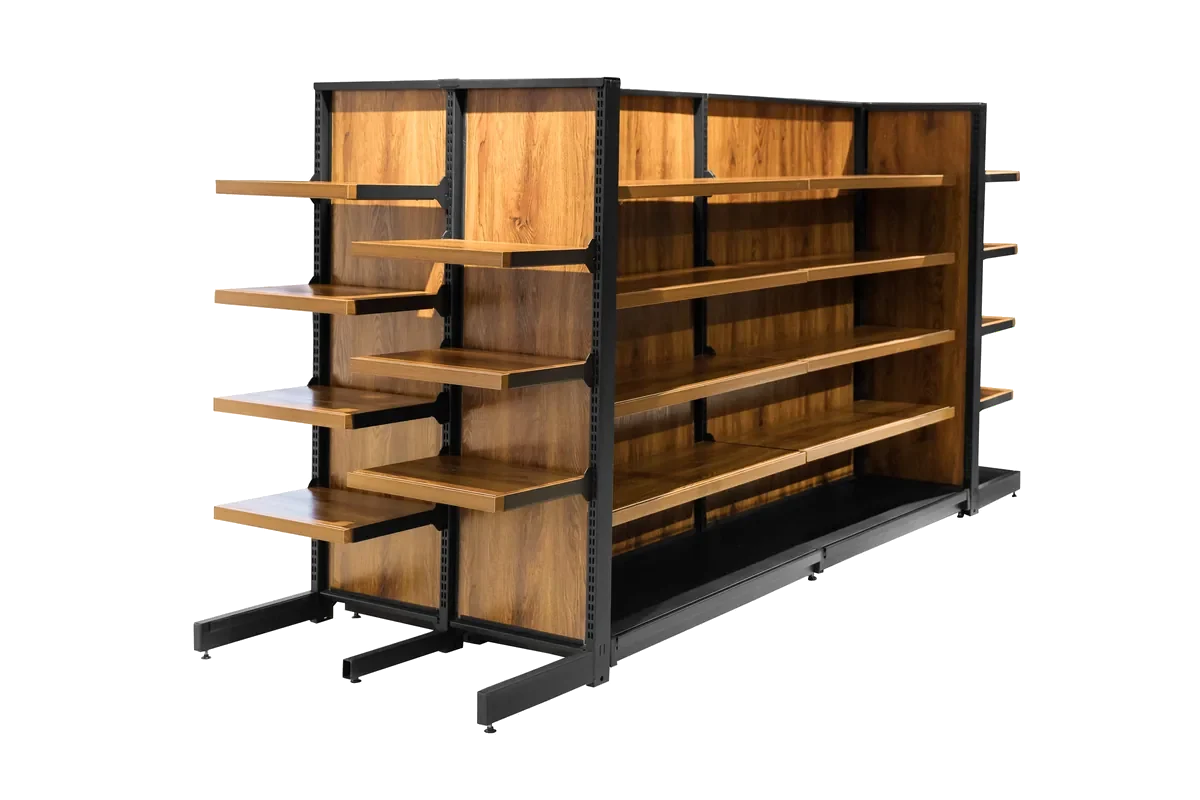
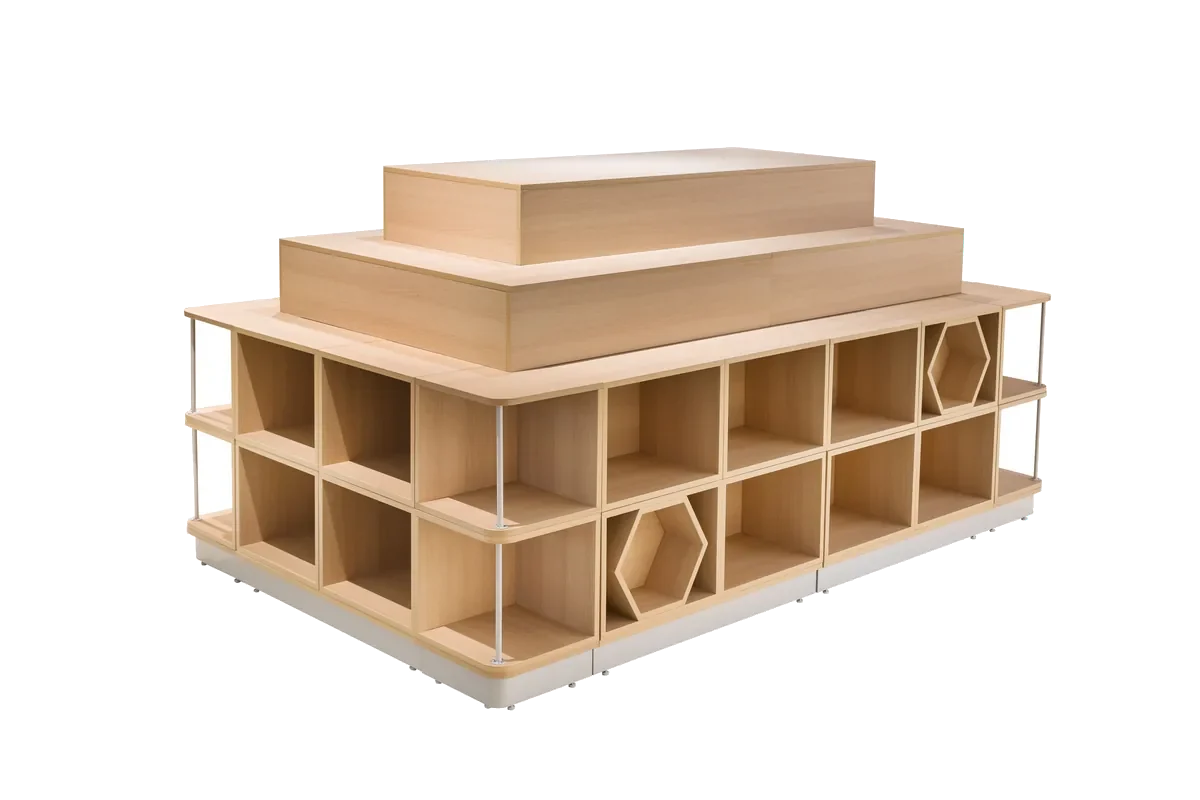
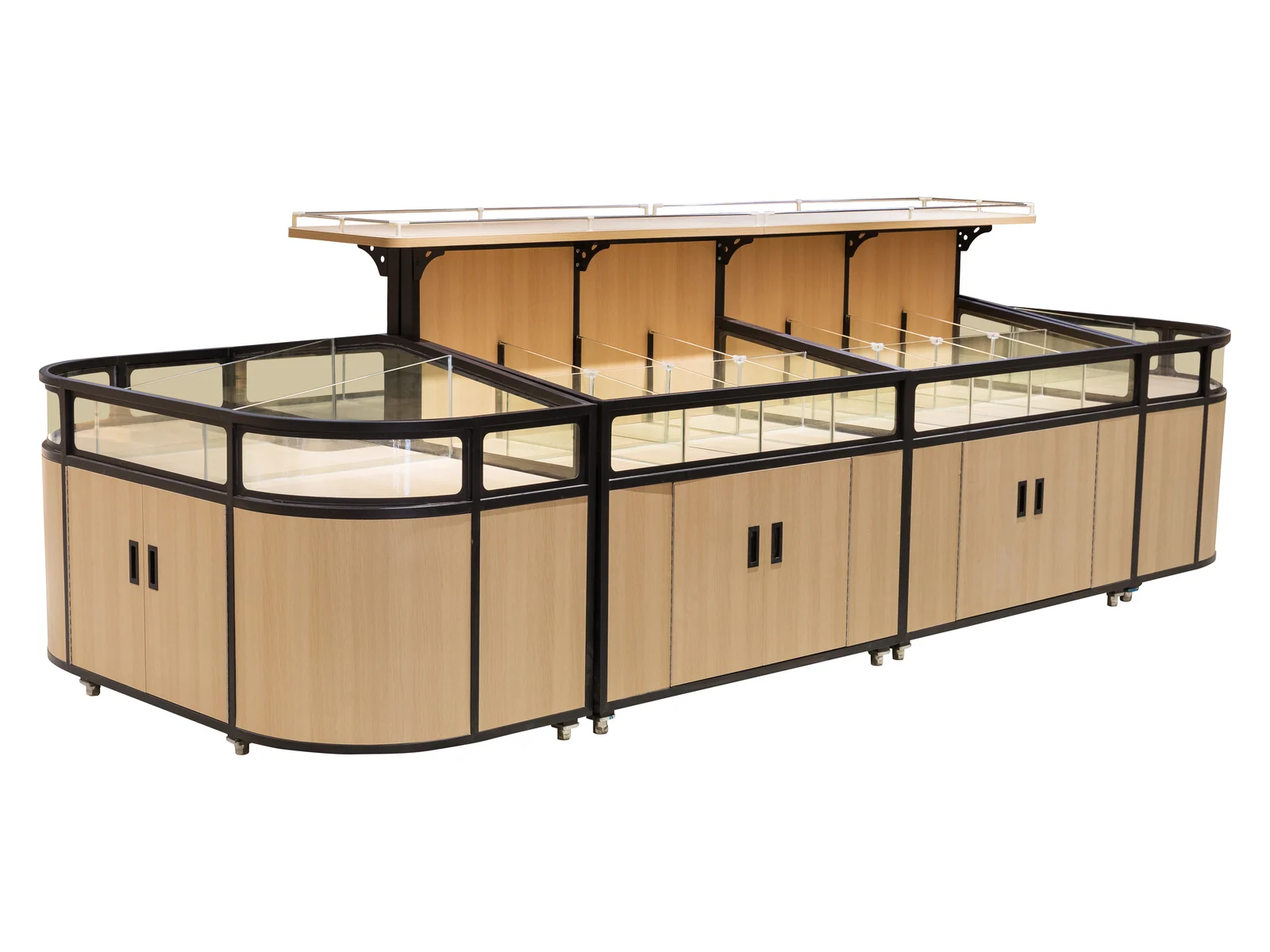
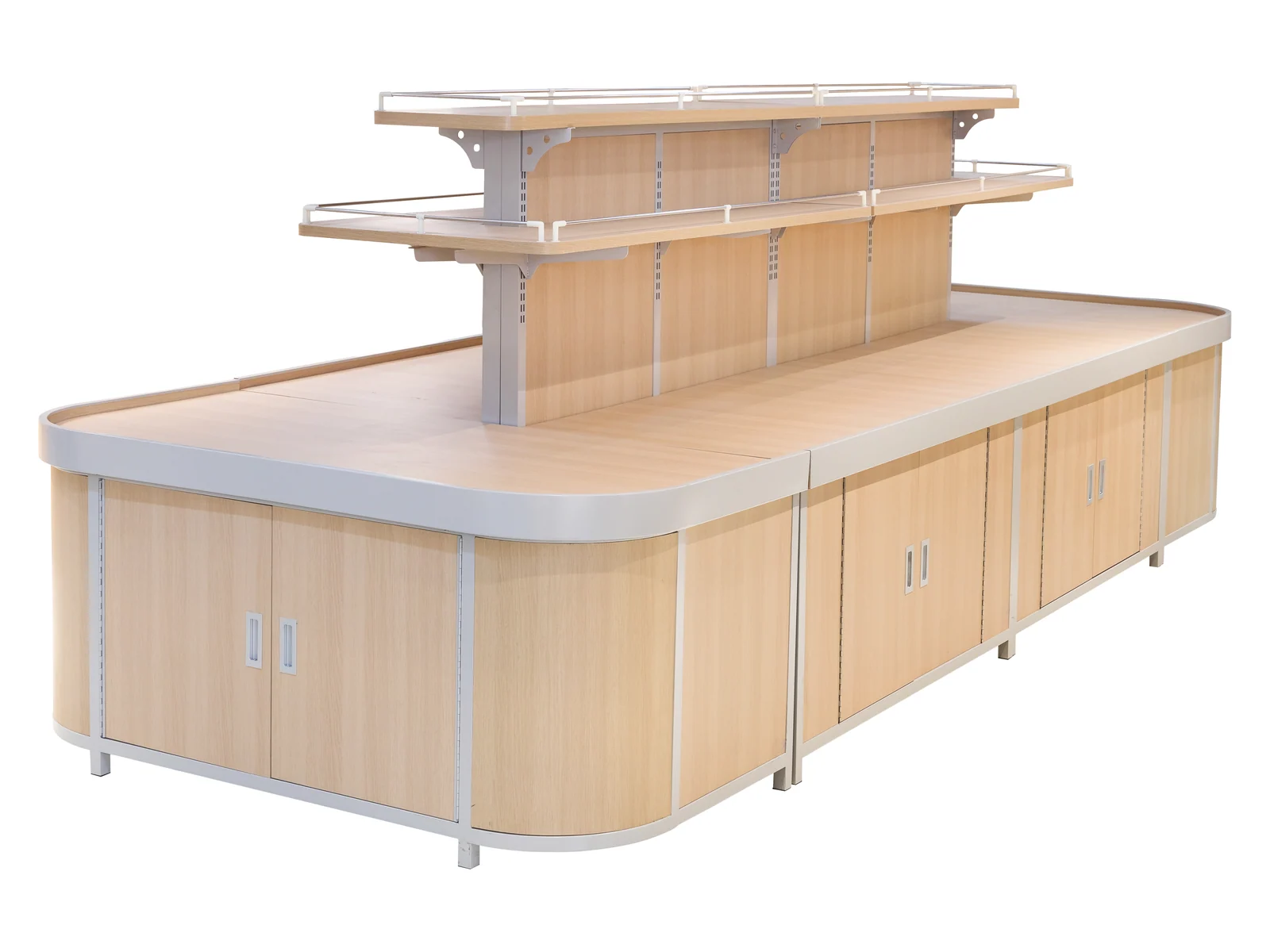
Two studio angles on white. The curved head, the leg detail, the base doors and a straight-on view of the bin rows are below.
Where the standard island runs three rows of bins, this one runs five. Each row steps back from the one below by enough that the top row is still readable from a standing position, and the result is a fixture that carries a whole loose goods range in a single run instead of spreading it over two. Stores with a wide dry goods range and a narrow floor are the ones that need it.
The trade is reach. Five rows put the top row higher than most shoppers will comfortably scoop from, so the convention is to load the top tiers with pre-bagged or slower moving lines and keep the scoopable stock on the lower two. The base is a golden timber cabinet run with recessed handles, carried on square black legs, and the head of the island is curved so the aisle end stays shoppable.
The densest fixture in this category. Five stepped rows of clear tilt bins climb the face of a golden timber island, which puts more loose lines in front of a shopper per metre of aisle than anything else we build.
Supermarkets, convenience stores, chain retail and speciality stores. Tell us the store format and the floor area and the specification comes back written against them.
Five loaded rows is real weight and real depth. These four show what carries it, and what it looks like from where a shopper stands.
Bin tiers follow the radius
The tiers wrap the head rather than stopping at it. On a five row island that curve is a significant part of the total bin count, which is why it is built rather than squared off.
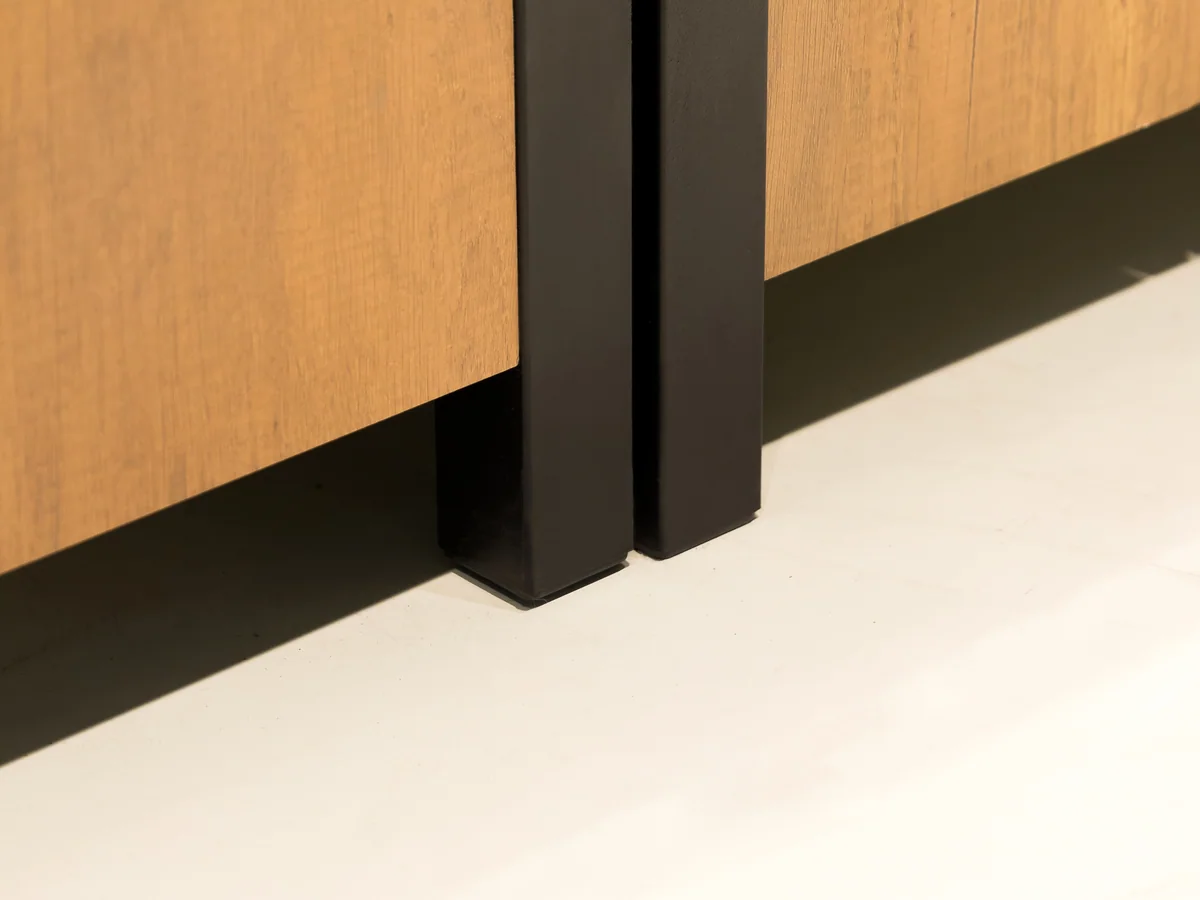
Black powder coated
The deck is carried on square section legs set back from the door line. Five loaded rows is real weight, and the leg is doing more work here than on the shallower builds in this category.
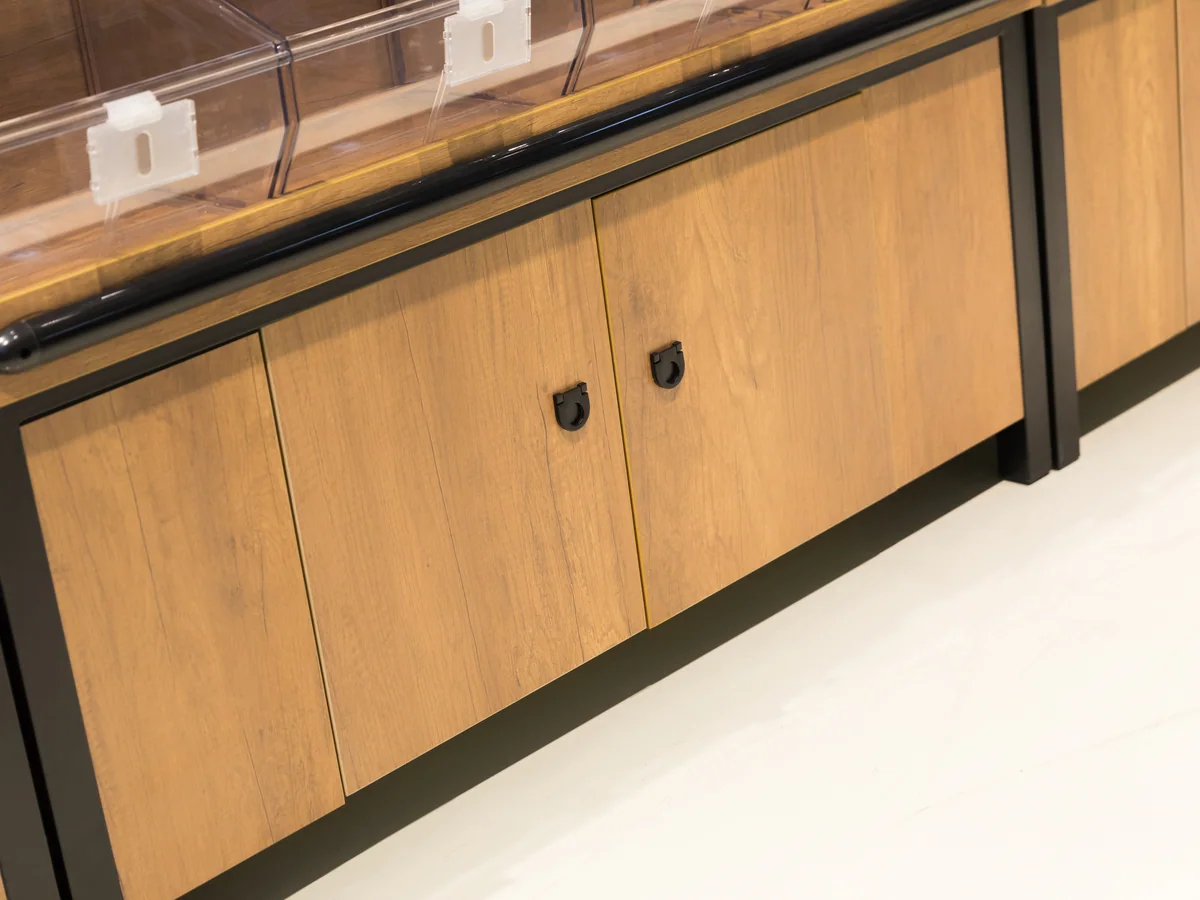
Recessed handles, flush
The base is a closed cabinet run in a warm timber tone. With five rows above it, this base does more refill storage than most — a deep island empties fast.
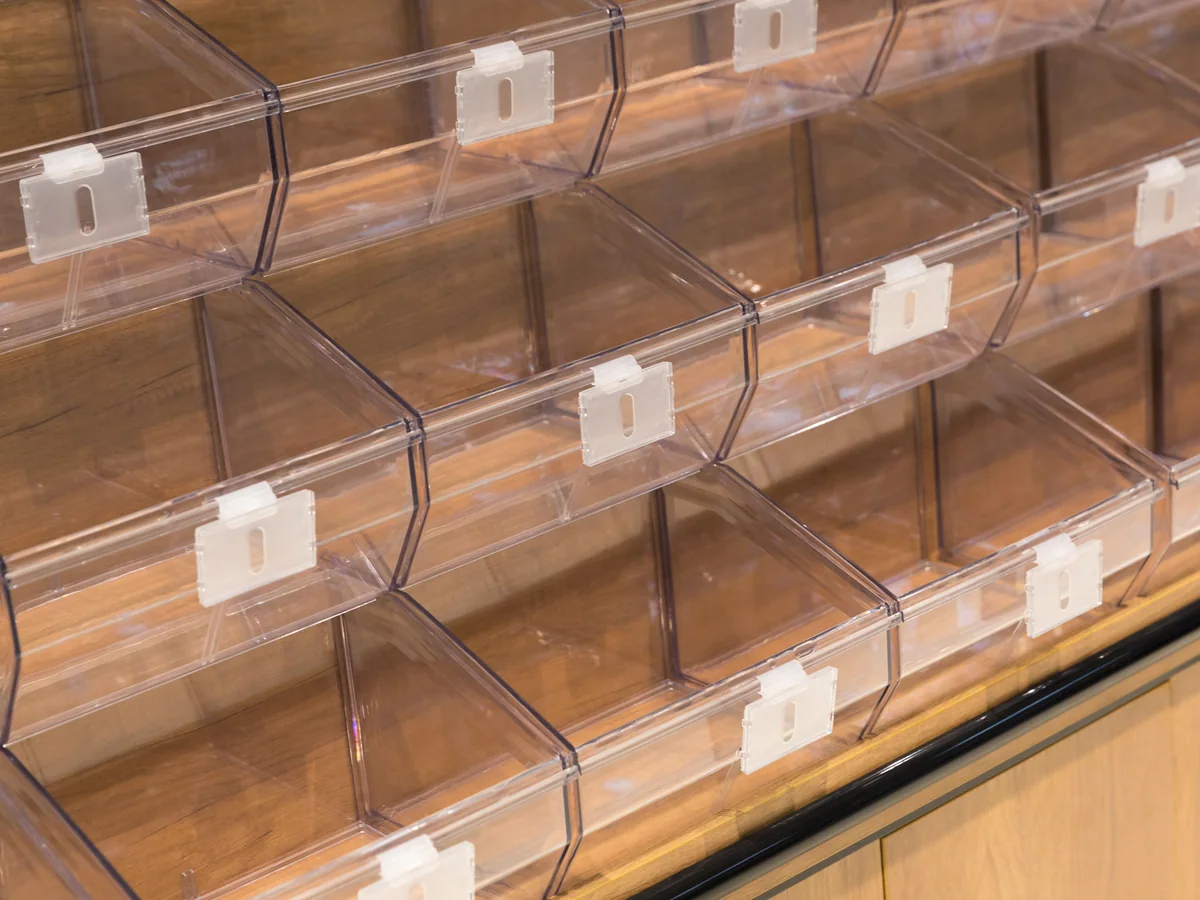
Clear, ticketed, tilt-out
Seen square on, the step between rows is what makes five tiers legible instead of a wall. It is also the reason the fixture is deeper front to back than a three row island, which is a floor plan consequence worth checking before ordering.
Every item on this page is made to order. Send a floor plan, a hand sketch or a photograph of a fixture you like, and we quote against it.
Store fixtures are light for their size, so a container fills up on volume long before it fills up on weight. What decides your freight is not what one unit weighs — it is what shape the goods are in when they go through the container door. Everything we build leaves in one of three shapes, and a bulk island is the one that travels best.
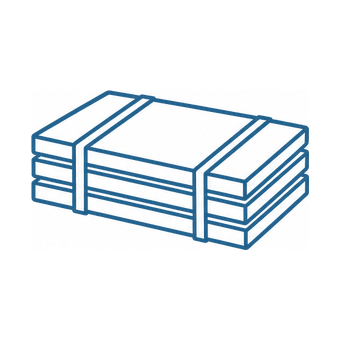
Bulk islands travel as panels — carcase sides, shelves, bin rails, back panels and plinths, strapped flat with bubble wrap on every component. They are built up on the shop floor, so the packing list and the assembly drawings travel with the goods.
This model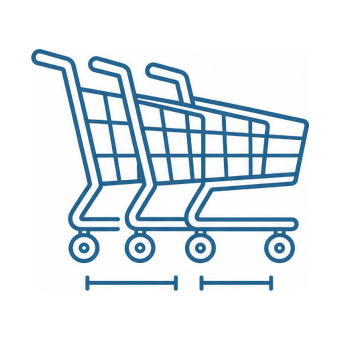
Trolleys slide into one another and baskets stack. Past the first unit, each extra one adds only its nesting pitch instead of its full length, so the shipped volume ends up a fraction of what the unit count suggests.

A checkout lane is welded, coated and fitted out as one piece, so it is crated whole. That is the expensive end of the freight scale, and it is the reason a counter order and a bulk order load so differently.
Because this island ships as panels rather than assembled, the container arithmetic runs on panel count instead of on finished size — which is why two islands of the same footprint can load very differently depending on how many compartments each one carries. We do not publish a units-per-container figure for that reason. It is worked out against your actual order and comes back on the packing list together with the case dimensions, once the island size is confirmed.
A bulk island rarely arrives on its own. These three categories share the dry goods aisle with it, and putting them on one order is what lets a single colour reference run across the whole aisle, because it is then one batch of coating rather than three.
Loose grain and loose dry goods almost always share an aisle, and both want stainless wherever a scoop lands. Ordering them together keeps the two halves of the aisle in one timber.
See grain racksThe bays that run behind and alongside a bulk island are what a shopper sees while standing at it, so they carry the same colour and the same board tone.
See shelving baysLoose lines are promoted constantly, and a 1000 mm promotion square at the head of the aisle is the cheapest way to push one without rebuilding the island.
See retail display tablesHow many of each a store needs is a floor area question rather than a product question, and it is answered store by store on the supermarket layout design page.
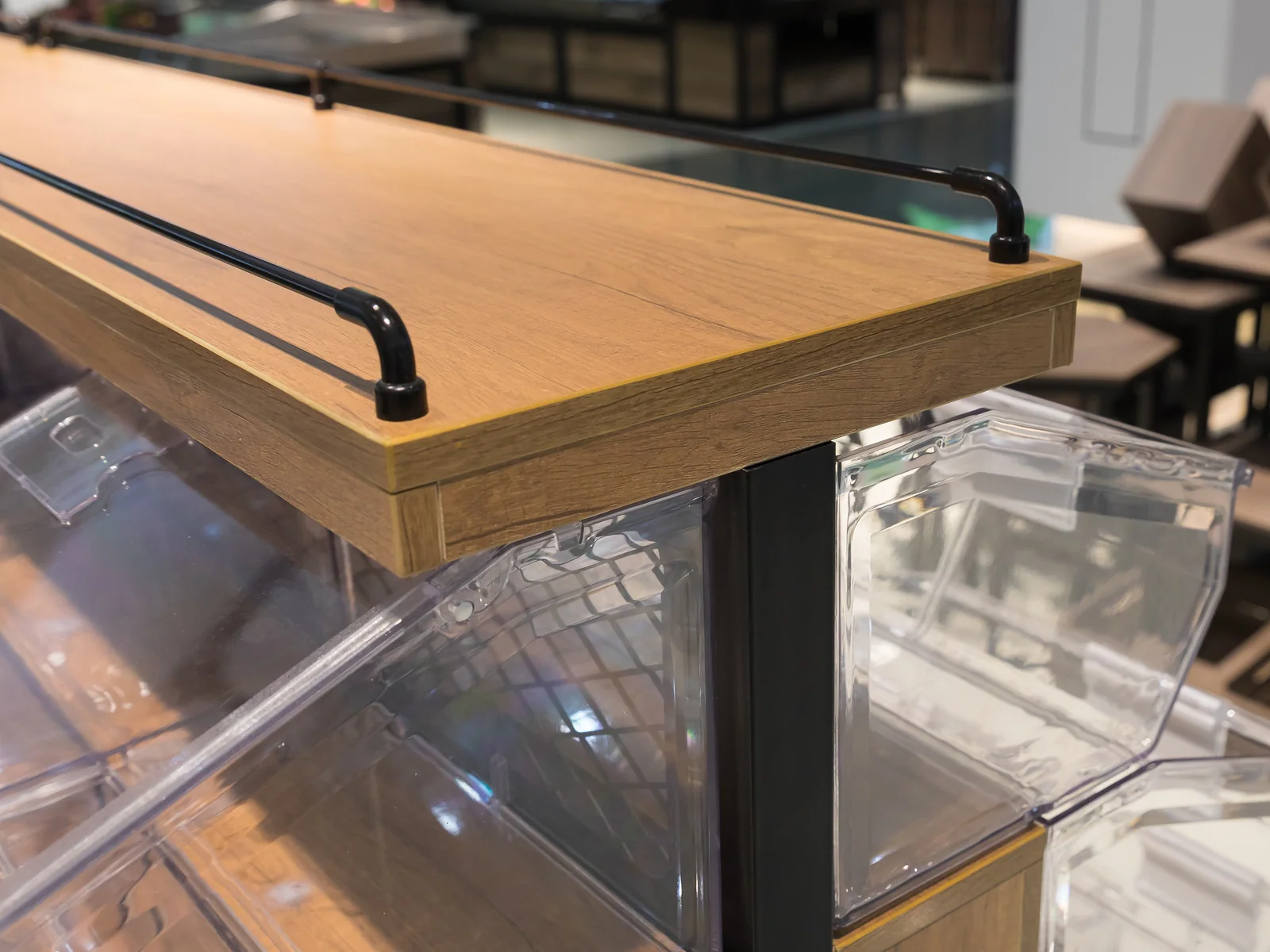
Five rows is a lot of fixture. Send the aisle width as well as the length so we can check it fits.
Send the aisle width with this one, not just the length. A five row island is deeper front to back than the standard build, and the width of the walking space is what decides whether it works.
The four that come up on nearly every enquiry for this build. If yours is not here, send it with your aisle drawing and it is answered alongside the quotation.
For scooping, usually yes. The working convention is pre-bagged or slower moving lines on the top two rows and scooped stock on the bottom two or three. If everything in your range is scooped, the three row island is the better fixture.
Meaningfully deeper front to back, because each row steps back to stay visible. Both are built to your aisle rather than to a catalogue size, so the way to compare them is on a drawing — send the aisle width and both come back at the same scale.
Yes, and on a free-standing island it is a sensible thing to do: five rows facing the main walking route and three facing the wall side. It is a per store plan decision because it depends which way your traffic runs.
The carcase is the same 0.8 to 1.5 mm steel across the category, and it is specified for a loaded island. Where a store is stocking unusually heavy lines we build to a heavier gauge on request — tell us what is going in the bins and we will say whether it is needed.