
Shelf Edge
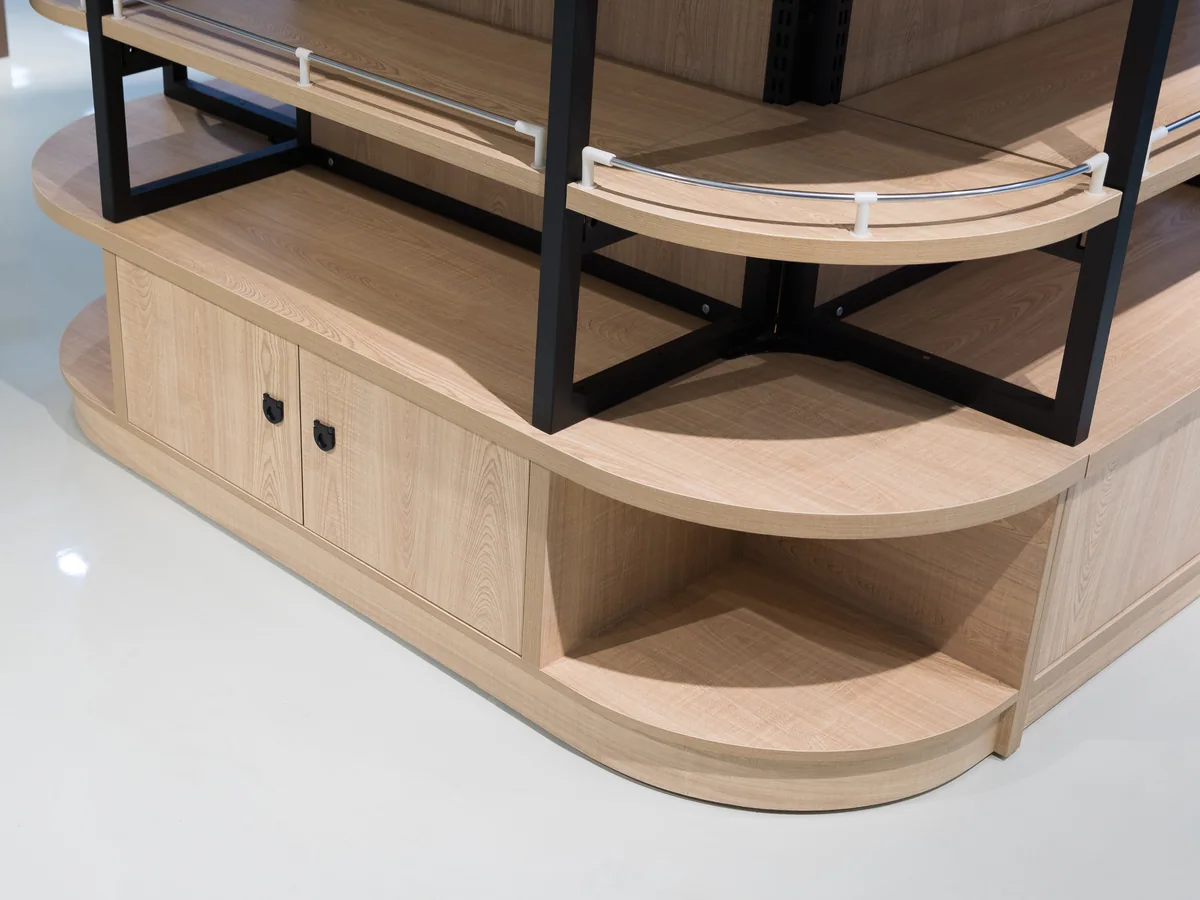
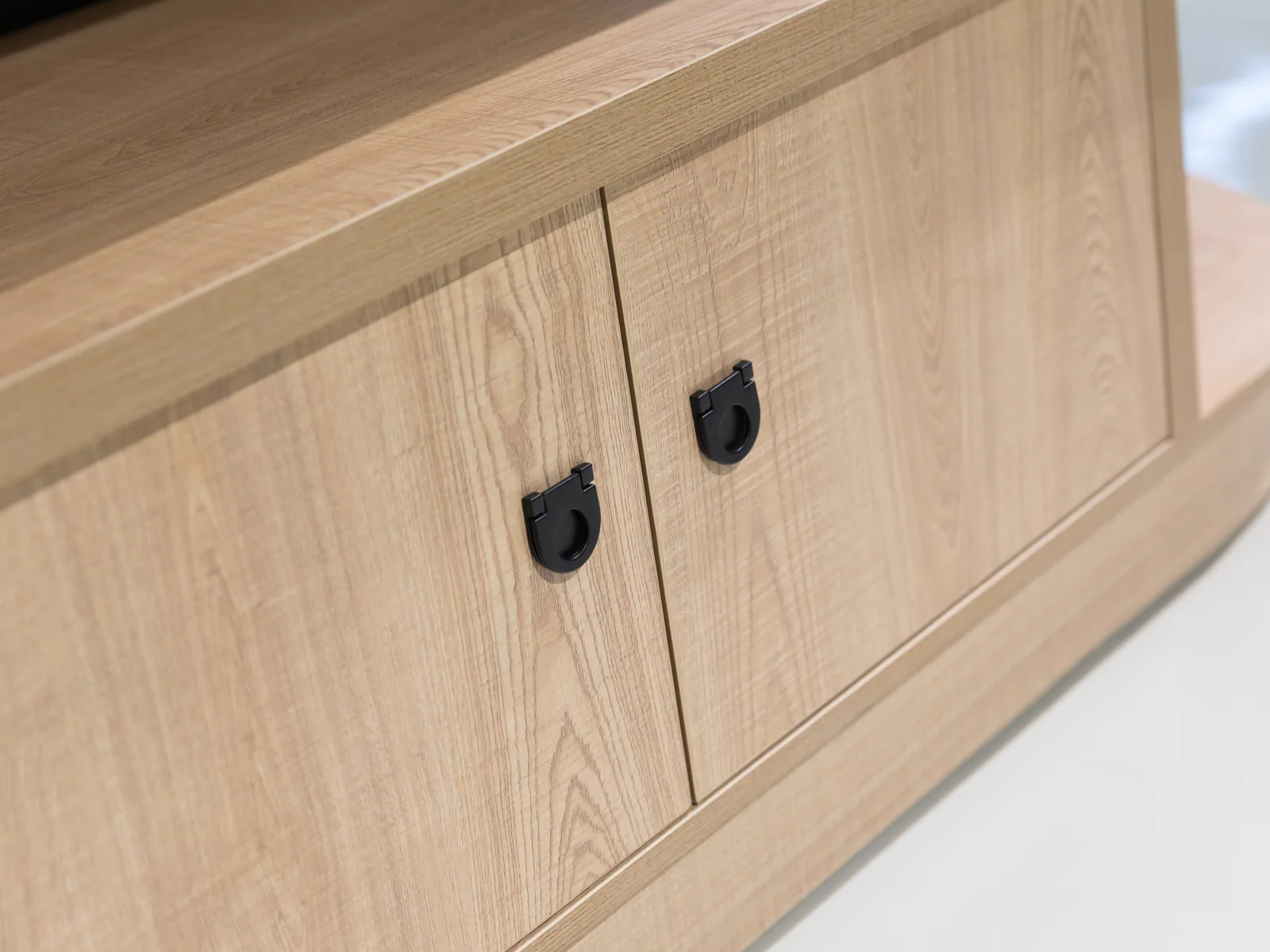
Timber board, radiused
The shelf edge follows the curve rather than being cut in facets. It costs more to make and it is the difference between a round tower and an octagonal one pretending to be round.
Round end cap · shelves on every side · plinth base
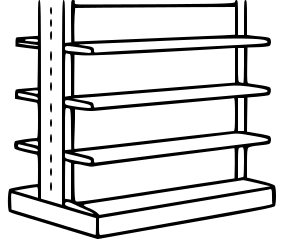
A round tower for the end of a shelving run. Shelves radiate all the way around a black steel core, so the fixture has no back and no bad side to face the traffic.
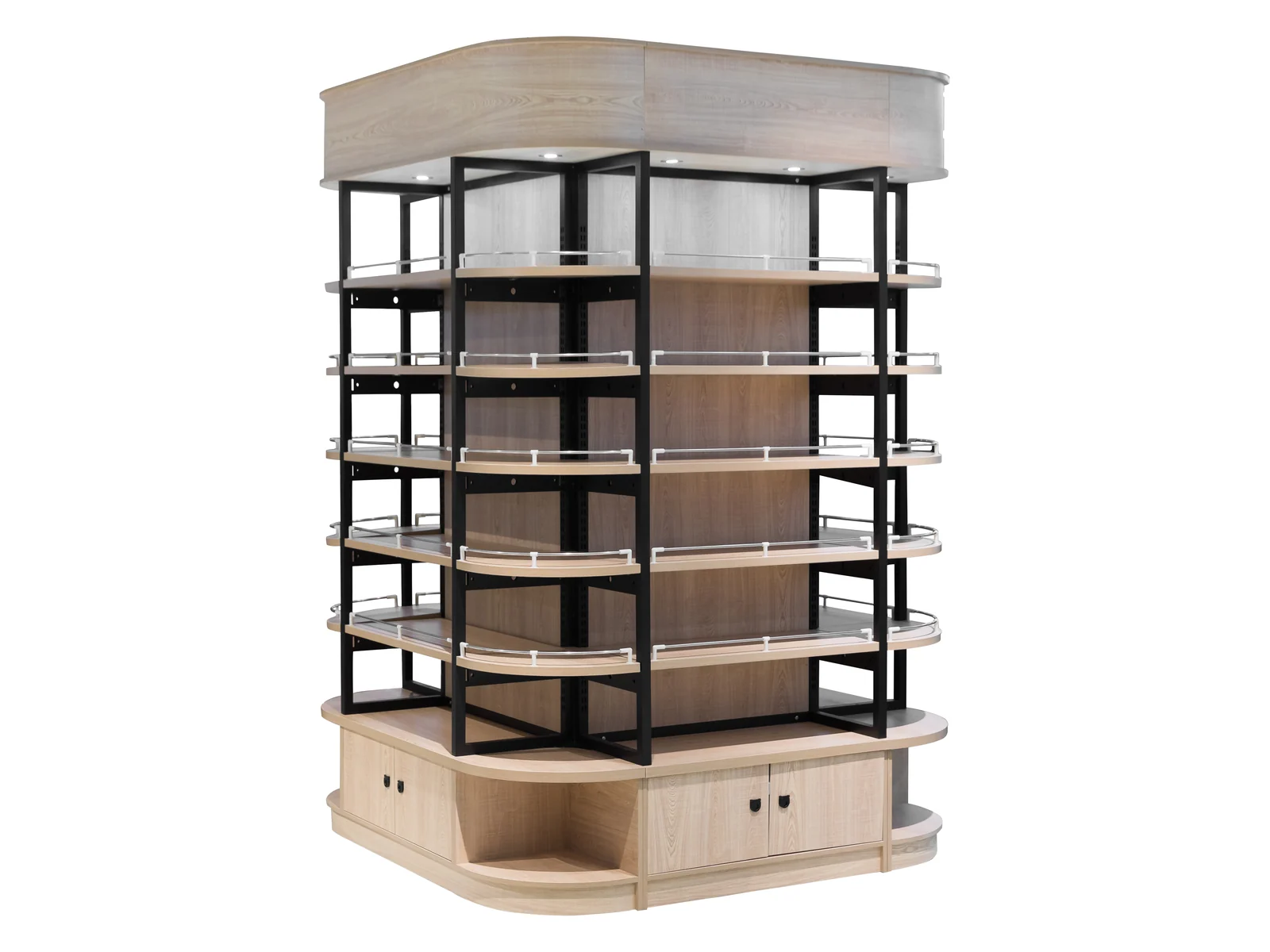
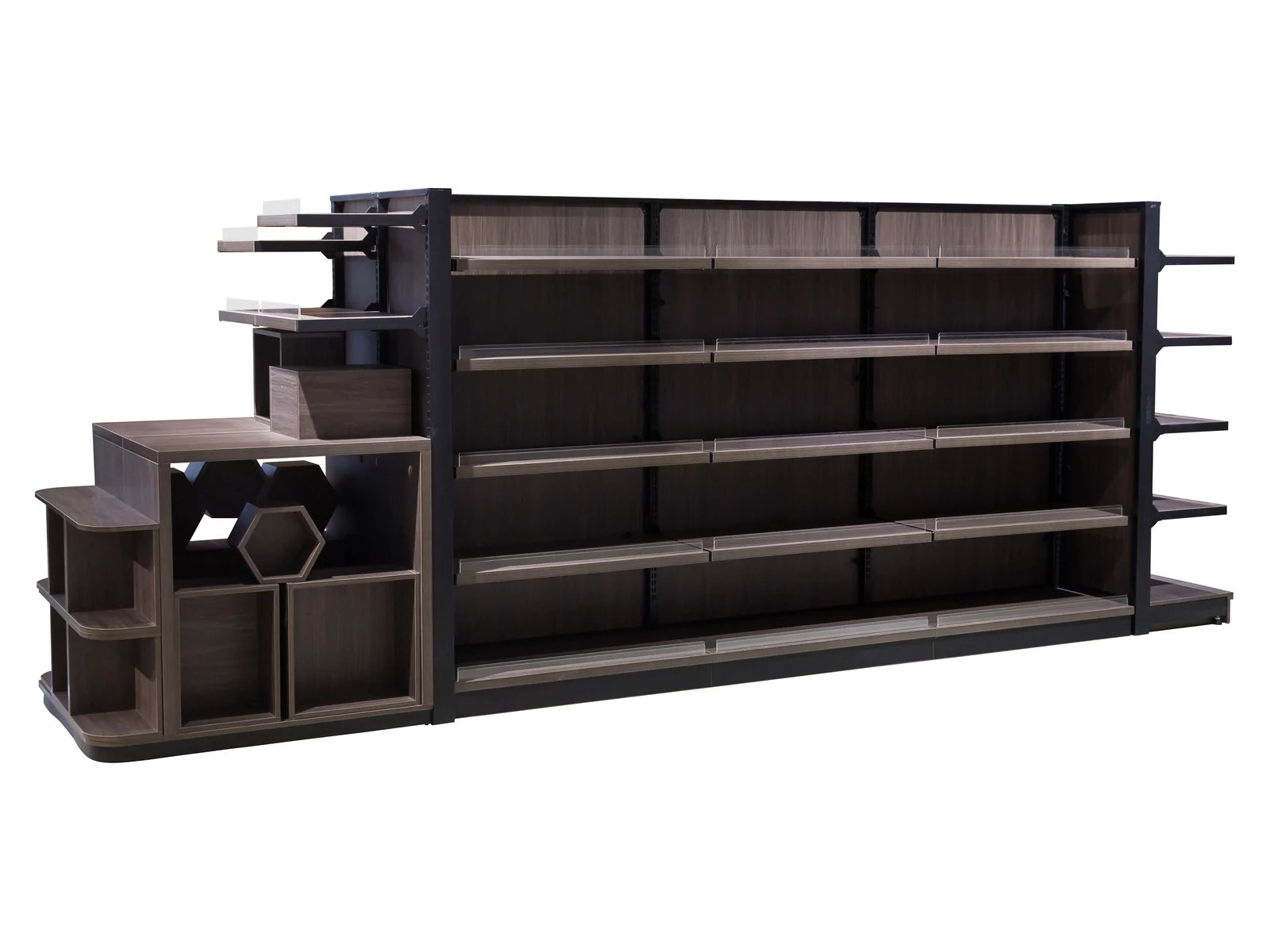
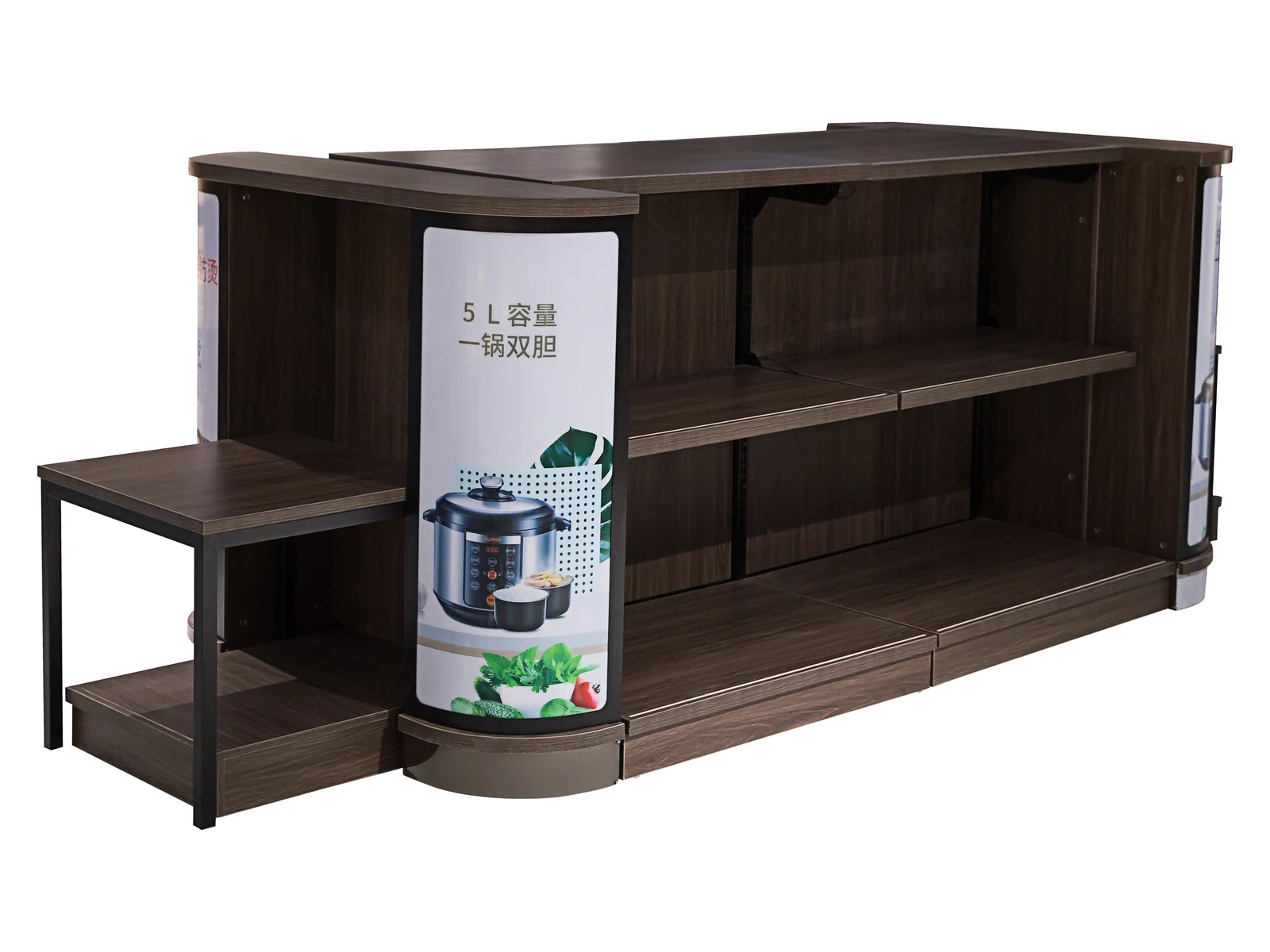
Studio angles on white. The shelf edge, the core, the plinth and a shelf junction are photographed below.
The end of a gondola run is the most walked-past position in a supermarket, and a flat end panel wastes it. This tower turns the end into a circular fixture with timber shelves radiating all the way round a black steel core. Every point on the circumference is a front, which means it does not have to be aligned to the traffic the way a rectangular end cap does.
It stands on a pale plinth that lifts the lowest shelf clear of the floor and takes the trolley contact that an end position collects daily. The shelves are timber board on the same steel system as the straight bays, so a store ordering both gets one colour reference and one board tone across the whole run.
A round tower for the end of a shelving run. Shelves radiate all the way around a black steel core, so the fixture has no back and no bad side to face the traffic.
Supermarkets, convenience stores, chain retail and speciality stores. Tell us the store format and the floor area and the specification comes back written against them.
A round fixture is presented from every angle at once, so all four of these are surfaces a shopper meets head on.
Timber board, radiused
The shelf edge follows the curve rather than being cut in facets. It costs more to make and it is the difference between a round tower and an octagonal one pretending to be round.
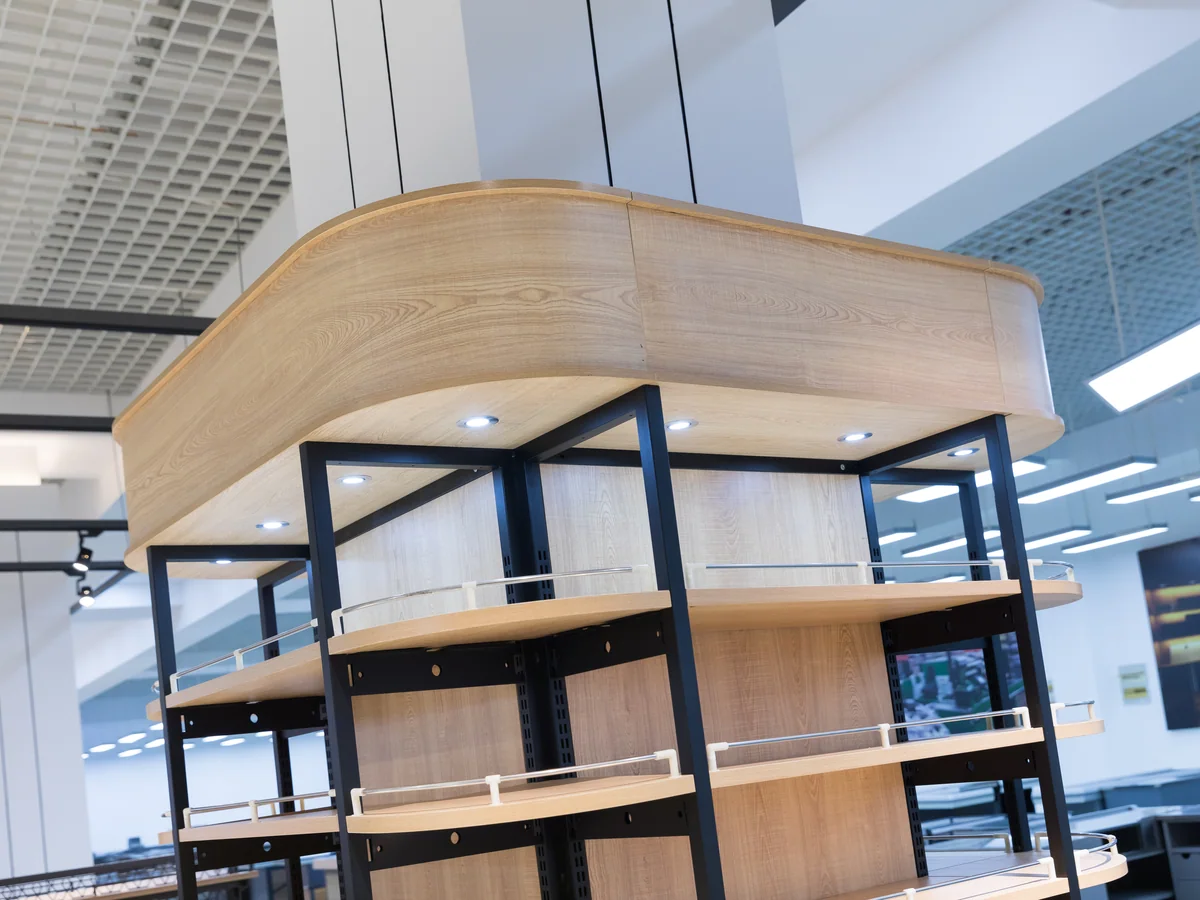
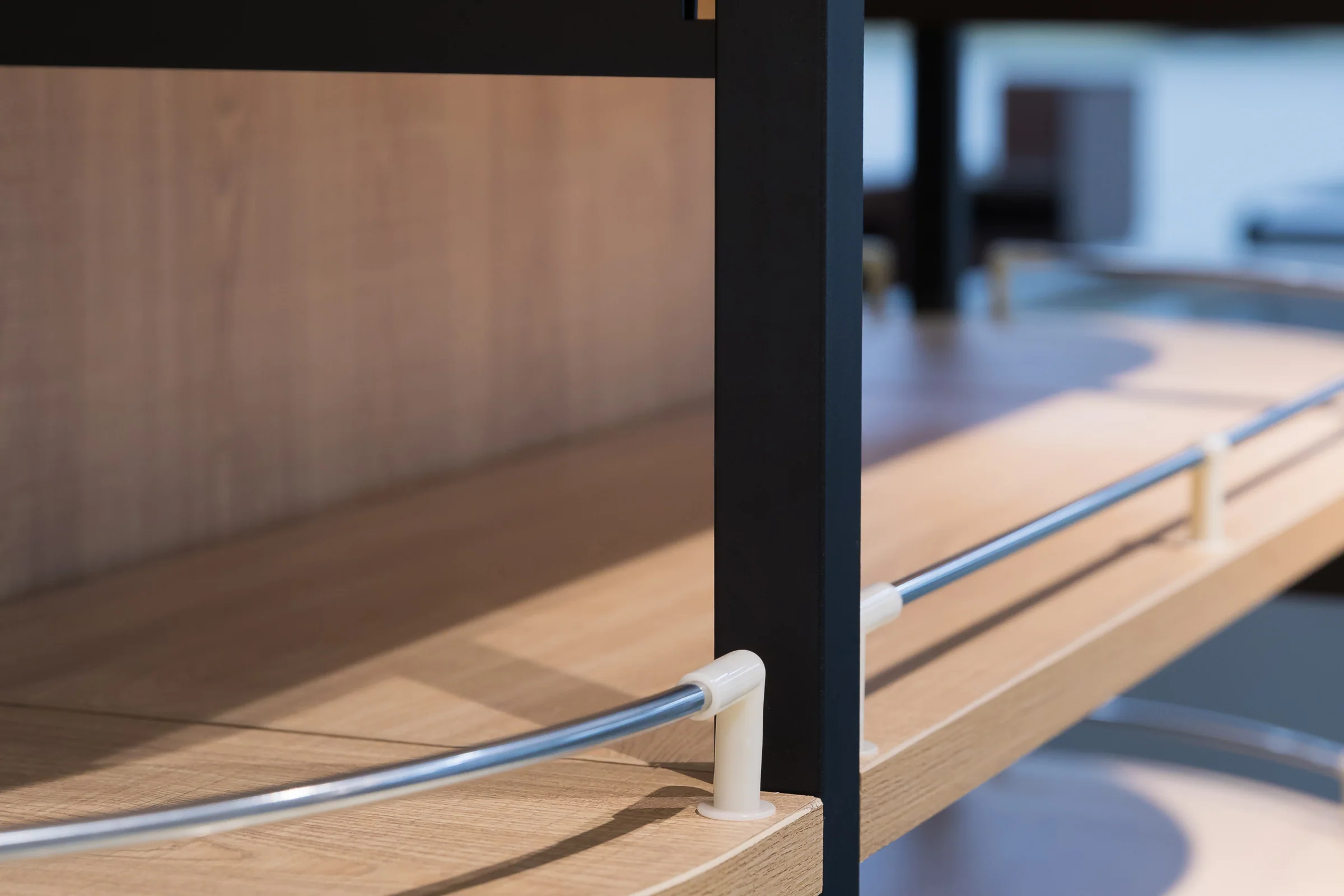
Carries every shelf
Every shelf loads back into the central core. That is what lets the fixture stand at an aisle head without being fixed to anything, and it is why the core is heavier gauge than a straight bay upright.
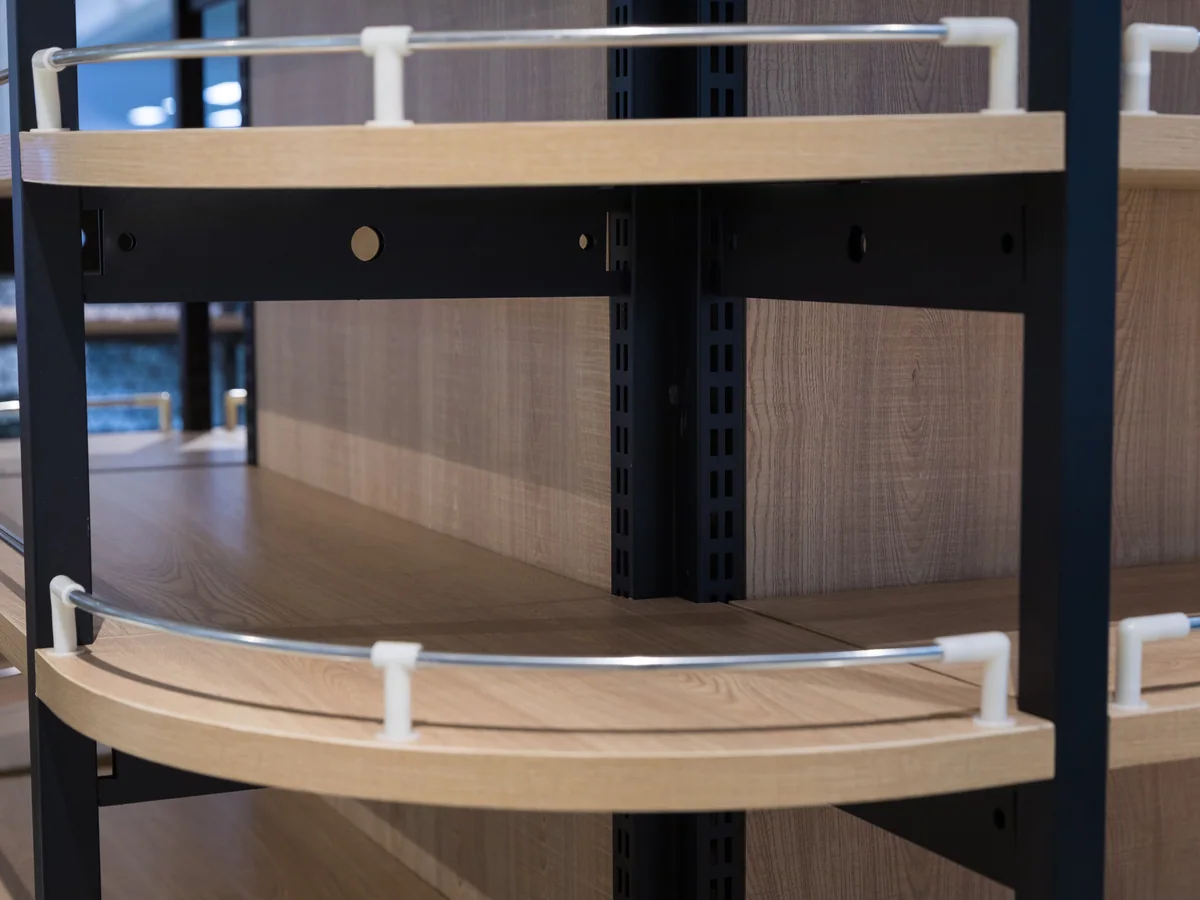
Lifts the lowest shelf
The plinth raises the bottom shelf off the floor and takes the trolley knocks. An end cap collects more contact than any other position in the store, and the plinth is what absorbs it.
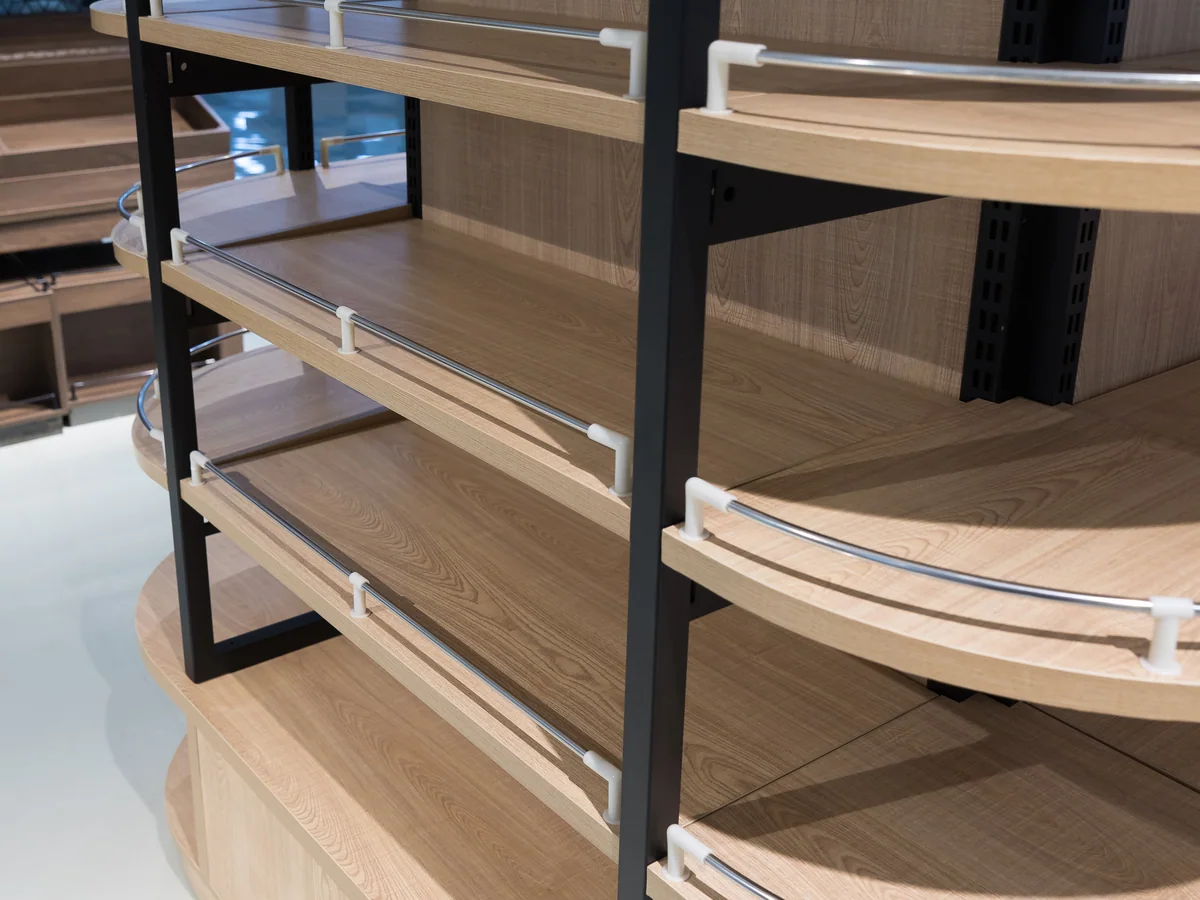
Fixed into the core
The shelf fixes into the core rather than hanging off a bracket in front of it. On a round fixture a visible bracket breaks the circle from every angle at once.
Every item on this page is made to order. Send a floor plan, a hand sketch or a photograph of a fixture you like, and we quote against it.
Store fixtures are light for their size, so a container fills up on volume long before it fills up on weight. What decides your freight is not what one unit weighs — it is what shape the goods are in when they go through the container door. Everything we build leaves in one of three shapes.
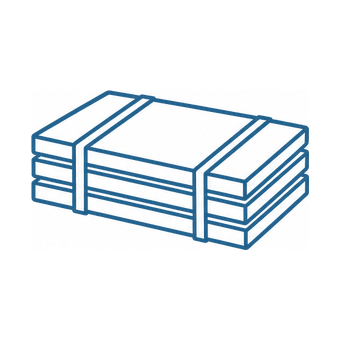
Shelving bays, produce islands and bulk cabinets travel as panels — uprights, shelves, back panels and plinths, strapped flat with bubble wrap on every component. They are built up on the shop floor, so the packing list and the assembly drawings travel with the goods.
This model
Trolleys slide into one another and baskets stack. Past the first unit, each extra one adds only its nesting pitch instead of its full length, so the shipped volume ends up a fraction of what the unit count suggests.
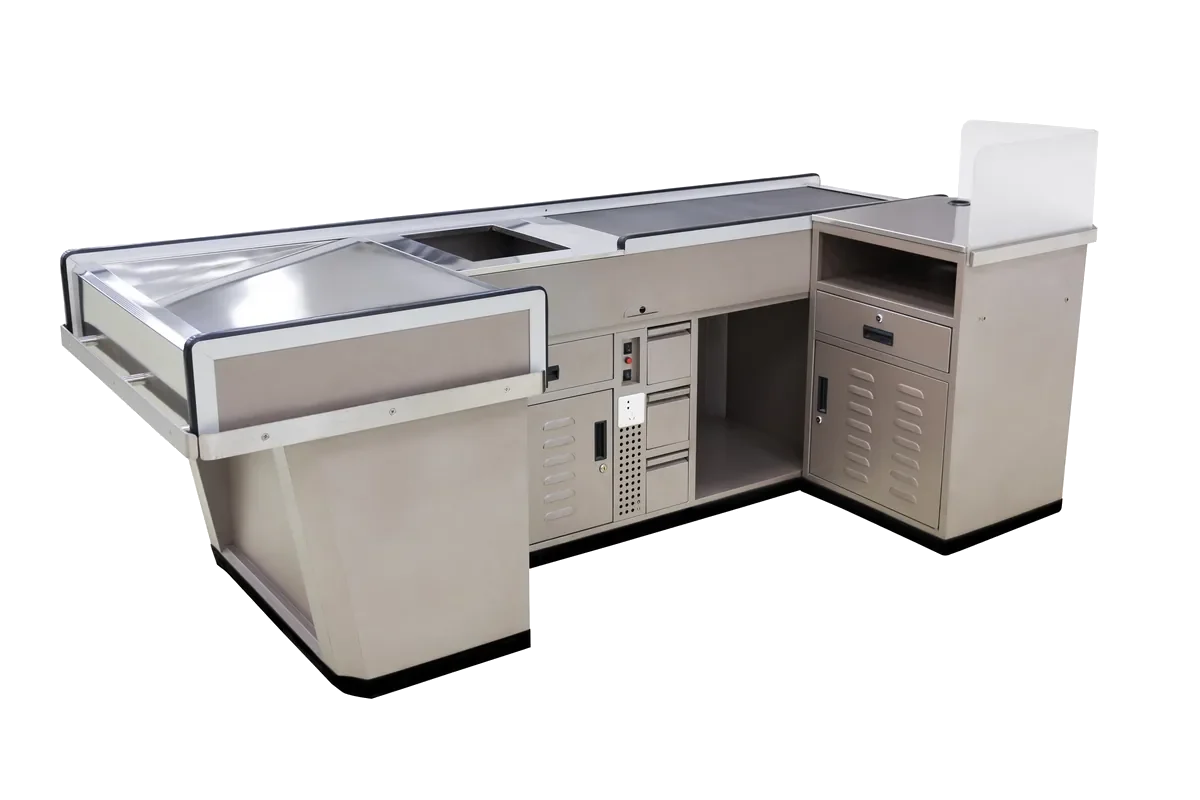
A checkout lane is welded, coated and fitted out as one piece, so it is crated whole with padding on the steel. Nothing waits to be assembled at the store beyond levelling it into the lane, and the crate is the counter plus a margin.
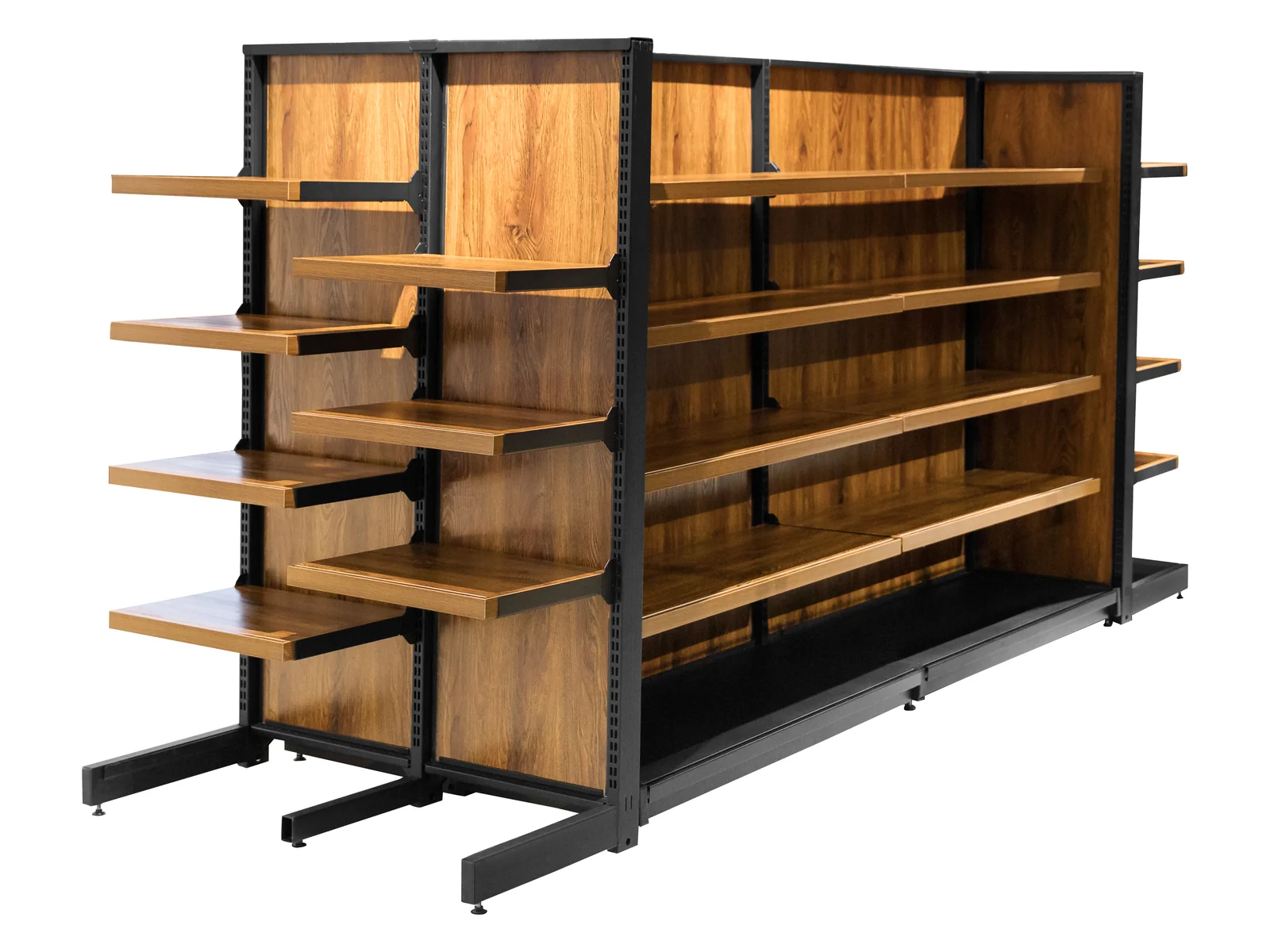
Shelving is the category flat packing was invented for: uprights, shelves, back panels and plinths all travel as flat strapped bundles, and a container of shelving carries several times the store area that the same container of assembled counters would. Two group sizes are on record — single-sided at L1000 × W400 × H1700 mm and double-sided at L1000 × W800 × H1500 mm — and a loading plan is worked from those.
Shelving is the backbone of the store and everything else is arranged against it. These three categories are what fill the gaps a shelving run leaves.
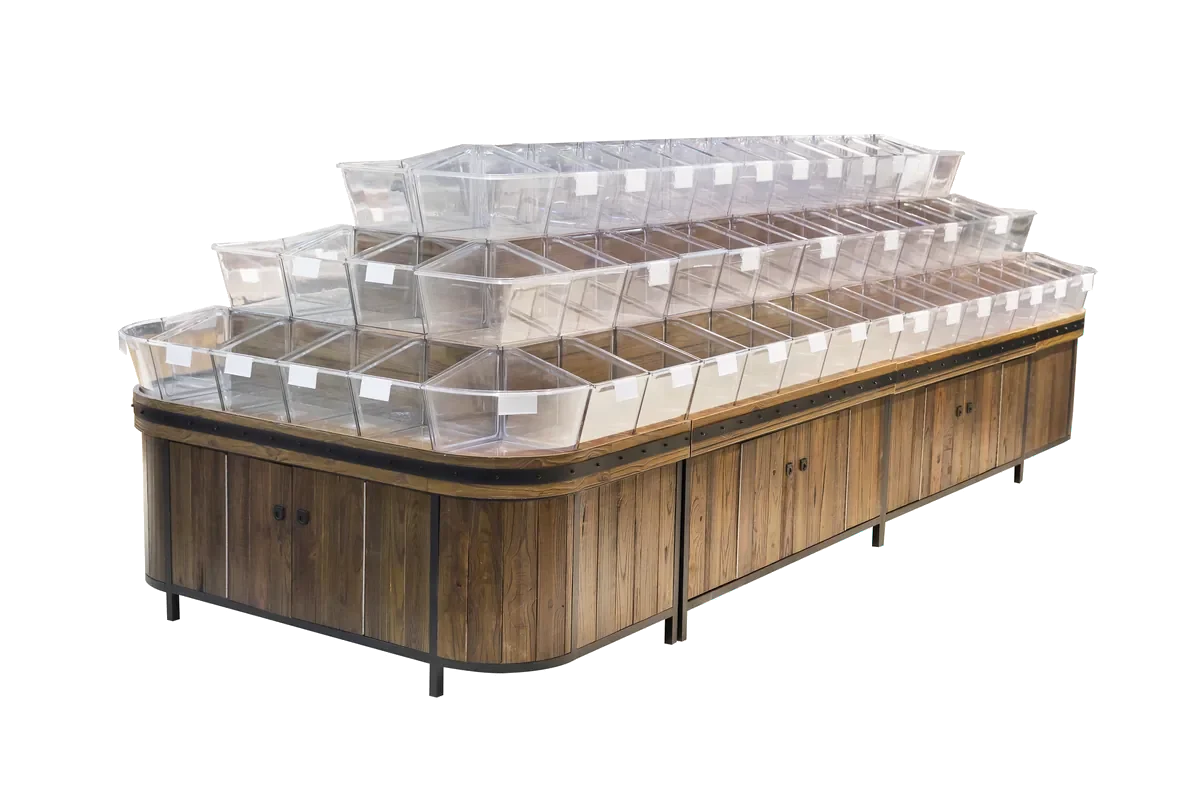
The islands that sit between shelving runs carry the loose lines the bays cannot, and they take the same colour reference.
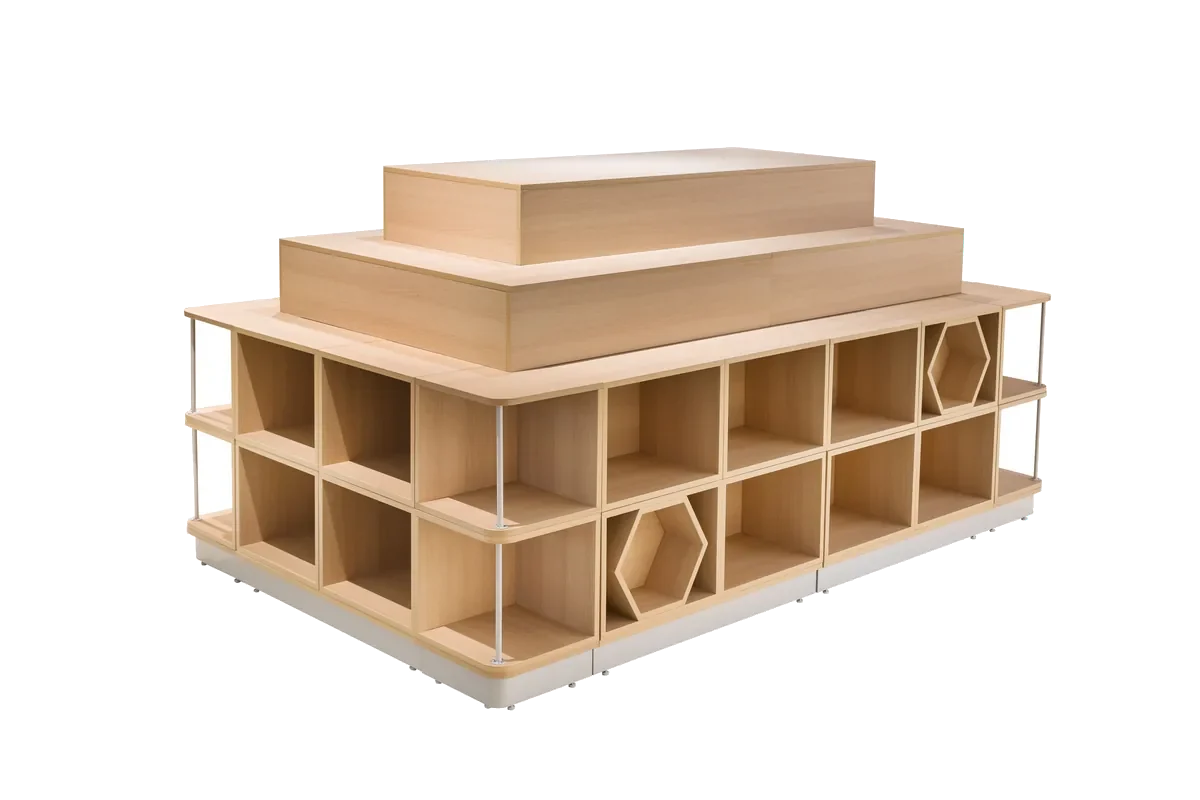
See bulk food binsA shelving run needs a head, and a 1000 mm promotion square is what turns the end of a bay into selling space.
See retail display tablesThe bays a shopper faces while queuing are read as part of the front of store, so they carry the same finish as the lanes.
See checkout countersHow many of each a store needs is a floor area question rather than a product question, and it is answered store by store on the supermarket layout design page.
Send the aisle head dimensions and the walking room you want around it.
Send the floor space at the aisle head and how much walking room you want around the tower. A round fixture needs clearance on all sides by definition.
The four that come up on nearly every enquiry for this build. If yours is not here, send it with your layout and it is answered alongside the quotation.
Diameter is set to the aisle head and to the walking room you want around it rather than sold in a fixed size. Send the floor area and it comes back dimensioned on the drawing.
It runs on the same steel system and takes the same board, so a store ordering both gets one colour reference and one board tone. That is the main practical argument for buying the end cap from whoever builds the run.
Yes — every shelf loads back into the central core rather than into the shelf opposite it. In practice an end cap is always loaded unevenly and that is what the core is sized for.
It follows your ceiling height and the sight lines you want to keep across the store. A tower that blocks the view of the back wall gets resented by your own staff, so send the ceiling height and we will draw it against the sight lines.