

When a wine shop is refitted, the display cabinet is the decision everything else waits on. Style, layout and build quality of the cabinet set the character of the whole interior, and most operators are specifying one for the first time. It looks complicated. In practice it comes down to three things, and if those three are right the rest of the specification follows.
Key takeaways
- Pick the manufacturer first. An experienced one saves time and floor area, not just money.
- Settle the style against the shop, not against a catalogue page. A wine cabinet is a feature, not a fixture.
- Material decides how it ages. Stainless steel and solid timber are the two that hold up.
First: Identify The Manufacturer
Manufacturing has moved quickly, and a great many companies now offer customised wine cabinets and display units. For an operator the most important thing is finding one with real experience, because an experienced manufacturer does more than deliver a better product: it saves you time and floor area. A cabinet drawn by somebody who has built a hundred wine walls arrives fitting the space it was drawn for, and does not need three site visits to make it work.
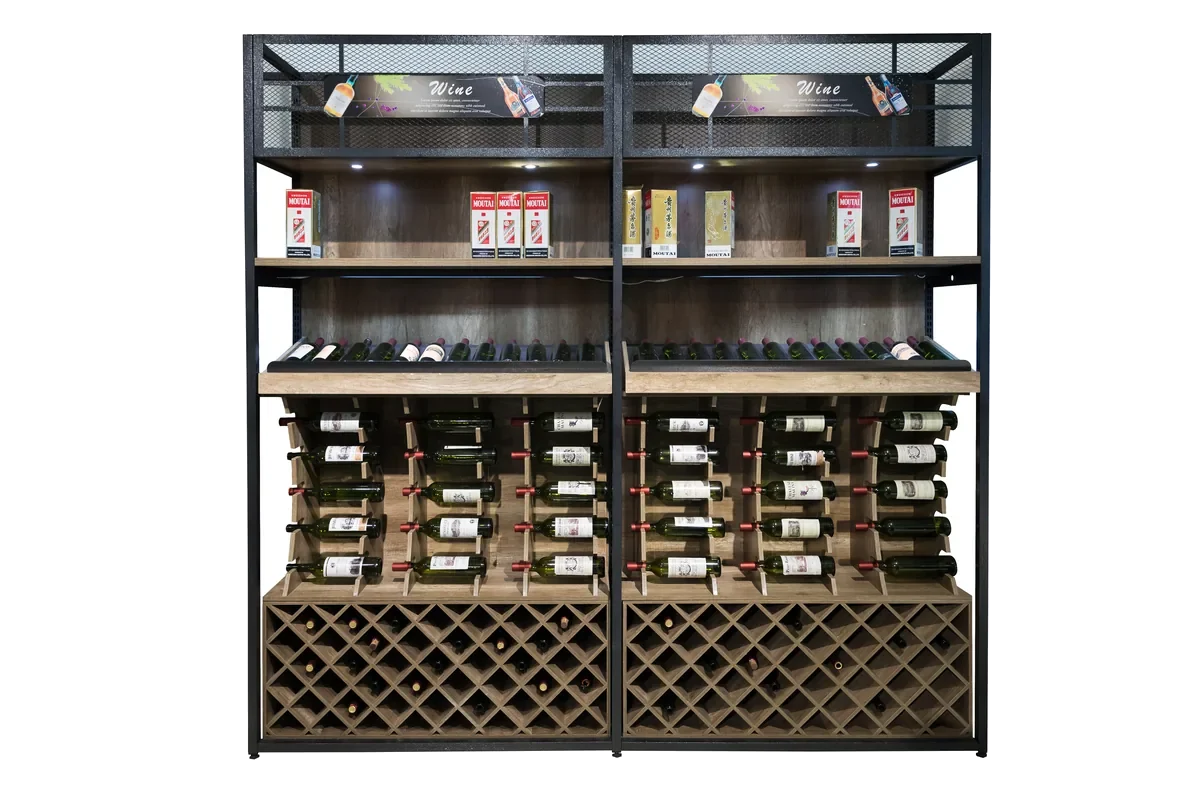
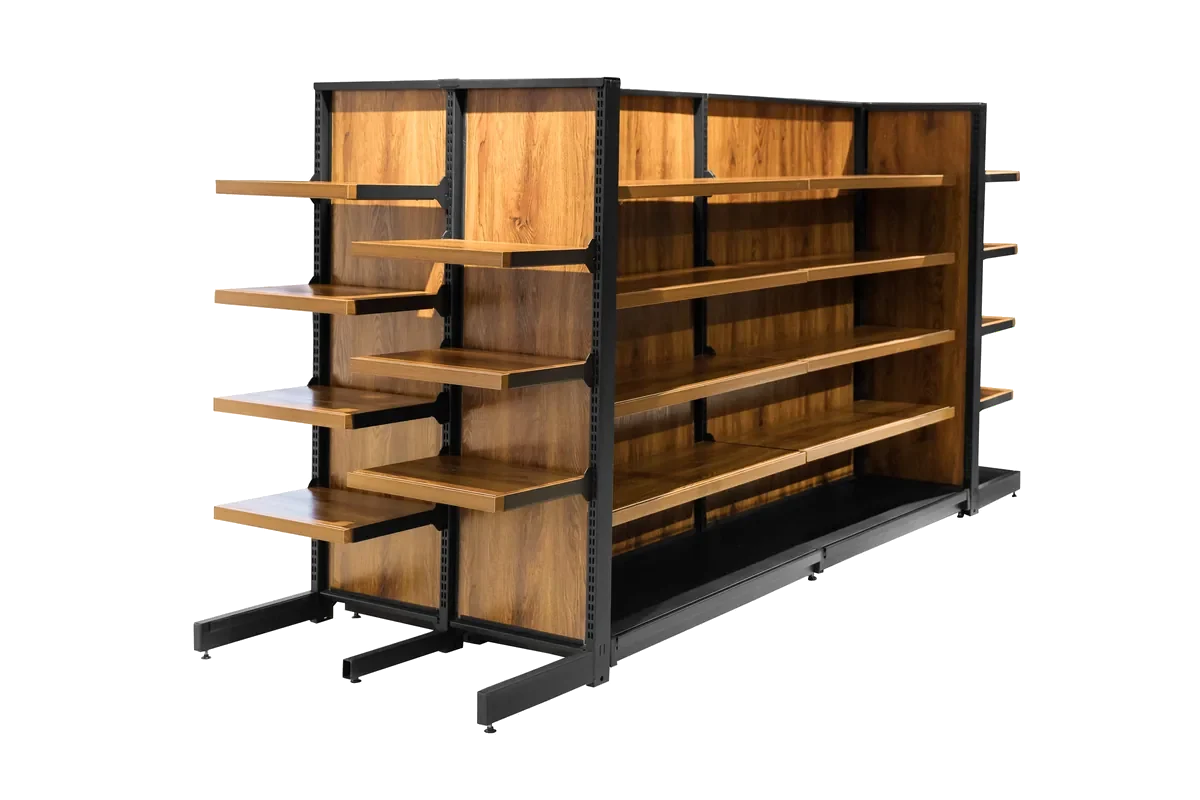
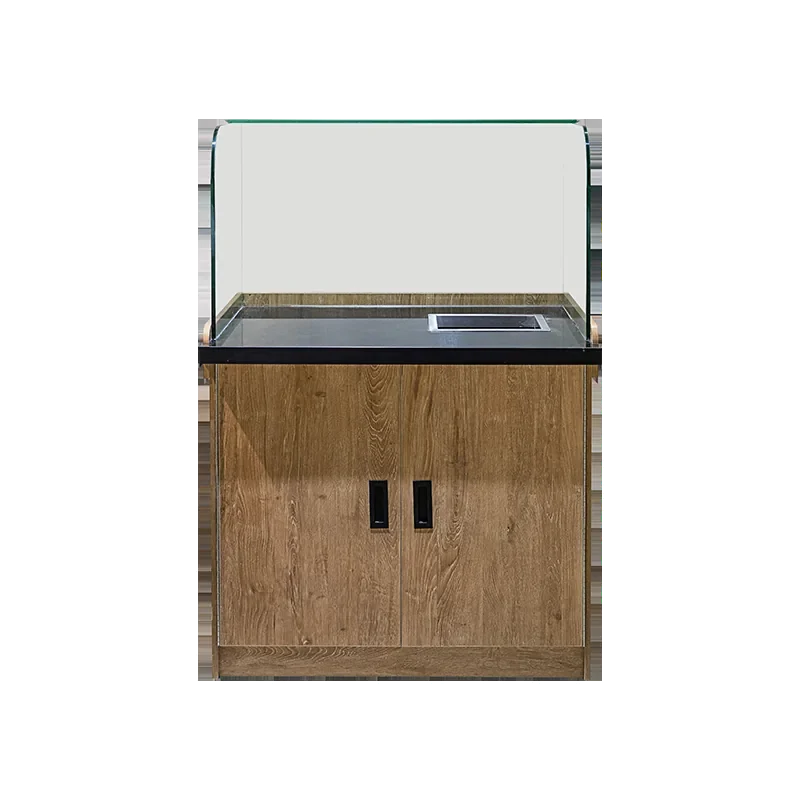
The practical test is what happens when you send a drawing back with a change on it. A manufacturer that can redraw a lattice pitch, move a shelf band or change a bay width without renegotiating the whole order is one that is actually making the cabinet. In our case wine fixtures are built in the same plant as the rest of the store equipment, which is also why the colour reference on a wine wall can be held identical to the shelving and the counter around it.
Second: Settle The Style
Wine cabinets differ in style more than in almost any other category we make, and the effect on the finished shop is enormous. Surveys of higher-end wine shops find they place great weight on the style of the cabinet: it has to carry something of the culture of wine, it has to have some artistic quality, and it has to be consistent with the rest of the shop's decoration. Those three pull in slightly different directions, which is why this is worth deciding early rather than late.
Most manufacturers will show a set of common styles, and it is sensible to start from those. Look at what is popular in the market and then push it somewhere specific, so the result is distinctive rather than generic. A cabinet that looks like every other wine cabinet does the job but does not do anything for the shop.
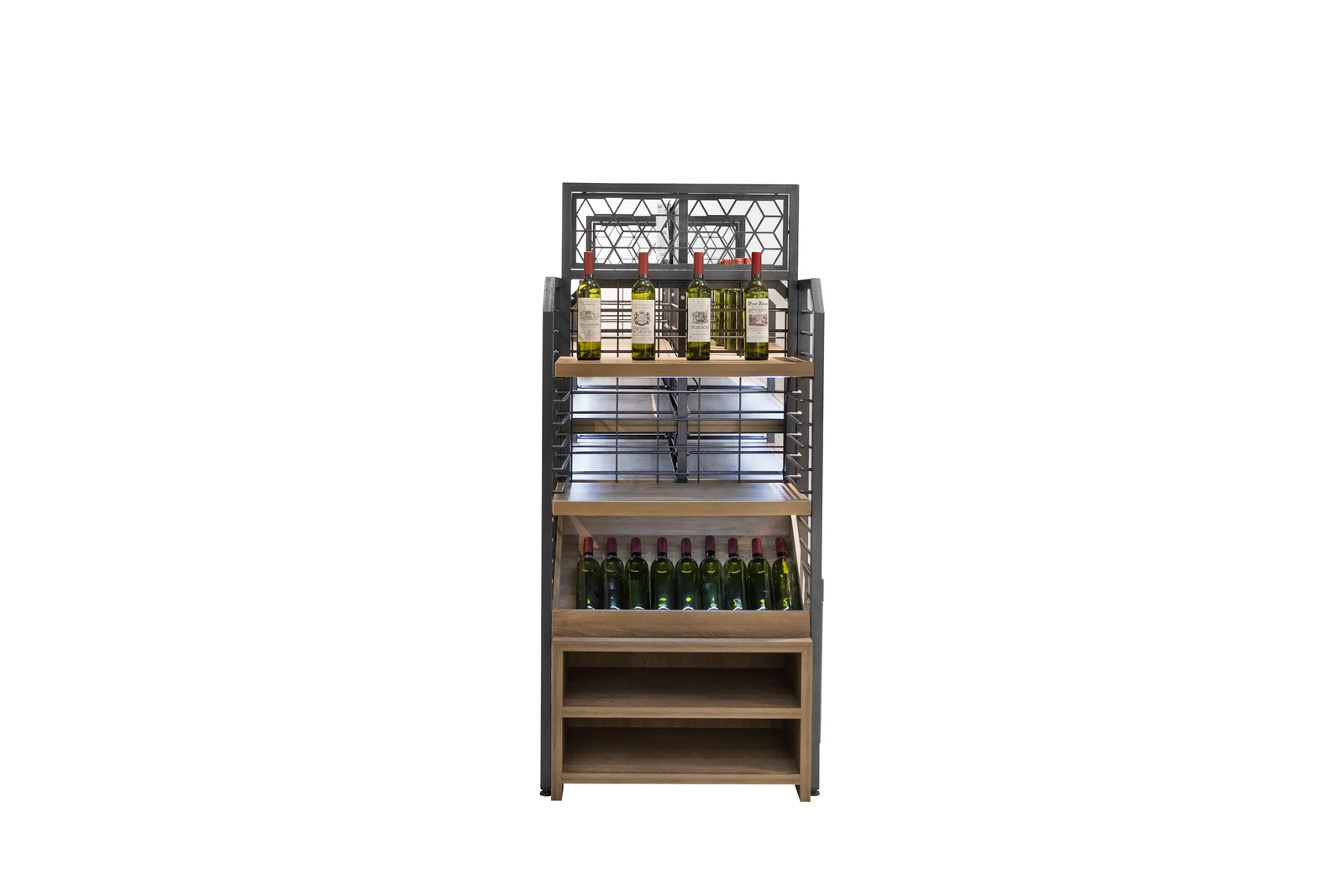
A wine cabinet is the one fixture in a shop that people photograph. That is a good test of whether the style decision was taken seriously.
Third: Guarantee The Quality
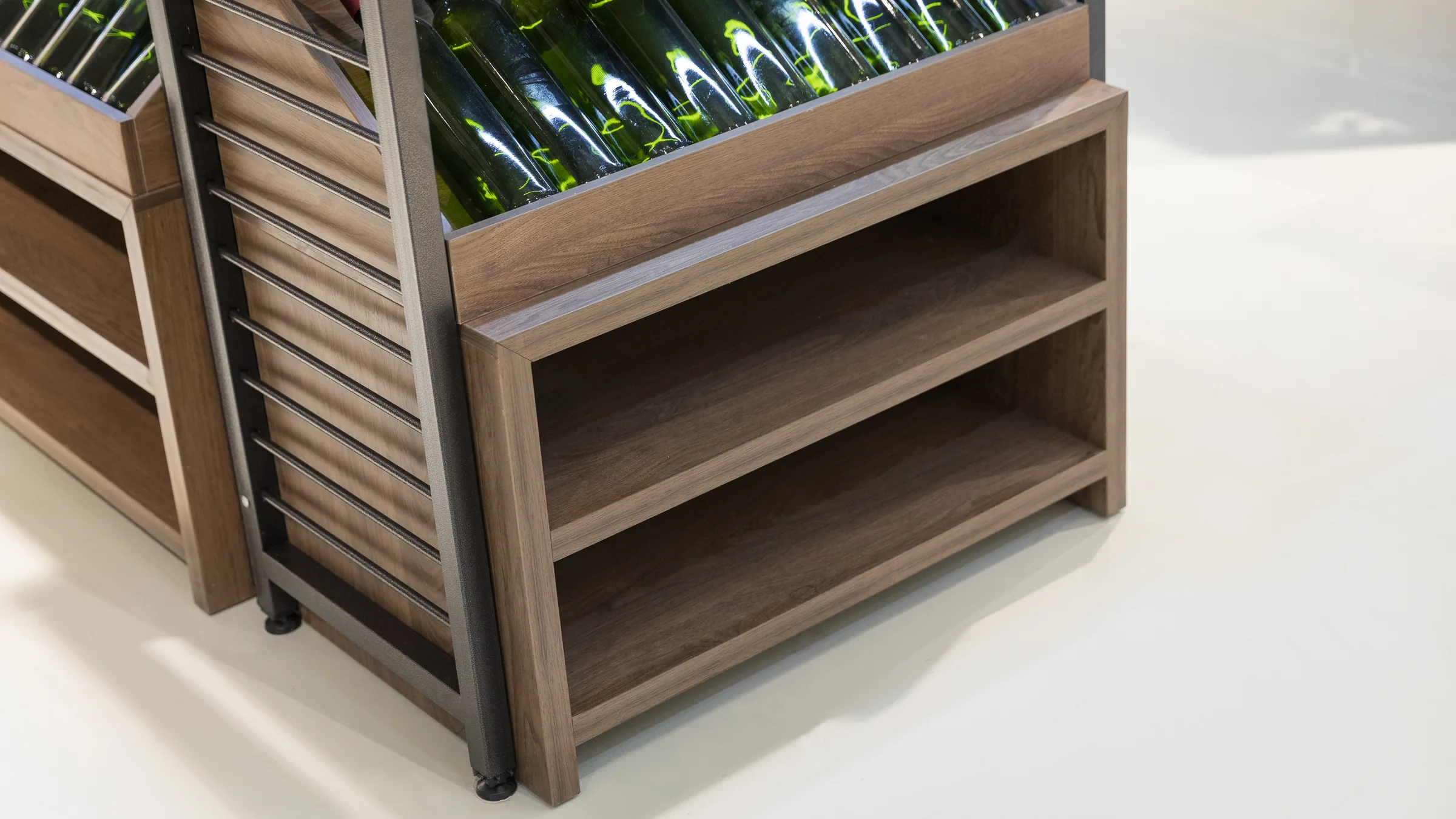
Quality here comes down to materials and to how the thing is made. Choose good materials: among everything available, stainless steel and solid timber remain the two most popular for wine display and the two that hold up. Both look better after five years than the alternatives, and both take the load a wine fixture actually carries.
That load is worth spelling out. A metre of standing bottles weighs several times what a metre of packaged dry goods weighs, and unlike a box a bottle concentrates that weight on a small footprint. Shelves need a lip, because a round bottle on a flat board rolls the first time a trolley catches the bay, and they need to sit on a proper frame rather than on shelf pins alone. Ask about both.
| Decision | What it fixes | What it costs to get wrong |
|---|---|---|
| Manufacturer | Whether the drawing arrives as a fixture that fits | Site rework, delay, floor area lost to a cabinet that is the wrong size |
| Style | How the shop reads to somebody walking in | A generic interior that cannot be recovered without refitting |
| Material | How the cabinet looks and holds up in year five | Sagging shelves, marked surfaces, a bay that has to be replaced |
What To Send With The Enquiry
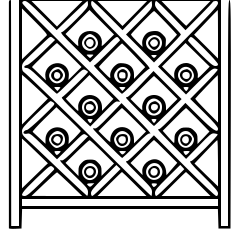
In practice the enquiry writes itself once those three are settled: the length of the wine run, whether the bottles stand on shelves or lie in a lattice, whether the display is lit, and whether tobacco shares the same block. If it does, tell us the local display rule you have to meet — that is the one part of this category where the regulation writes the specification rather than the buyer.
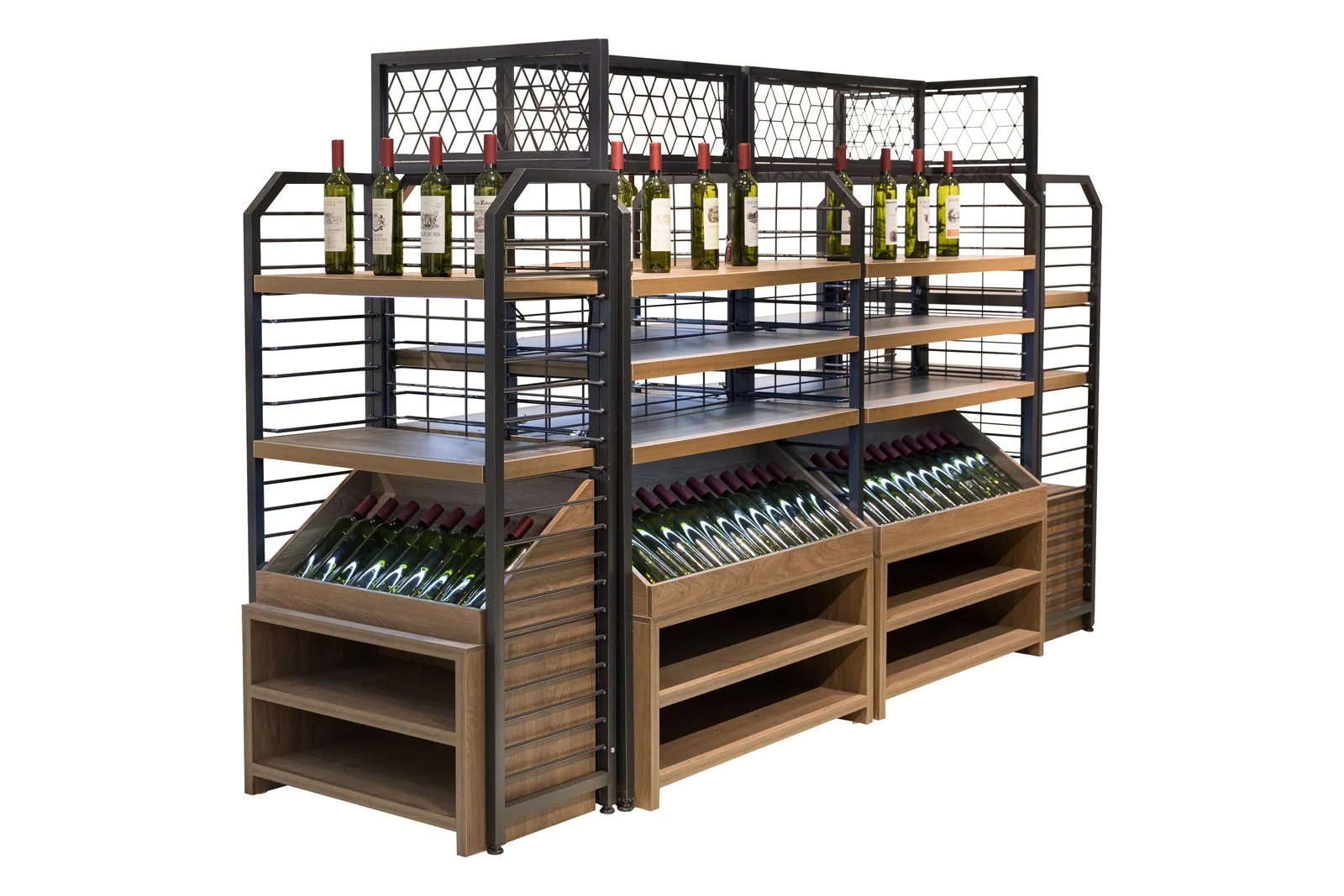
What is on record for this category
Two wine builds are on record, KS-YJG-01 and wineRack-Y01, and neither carries dimensions, so wine runs are drawn against your own space rather than picked from a size table. Bodies are built from 0.8 to 1.5 mm metal sheet with stainless steel board, or faced in 1.5 to 2.5 mm board, and quoted in RAL or PANTONE colours.
Raise the standard of the fitting-out and the shop draws more attention. Customising a wine display cabinet is genuinely not complicated once the three points above are dealt with: get the manufacturer, the style and the material right, and everything after that is drawing work.
Keshun Technical Team. First published 9 September 2023, rewritten 8 August 2026. Model references and material specifications above are the ones on record for this category.