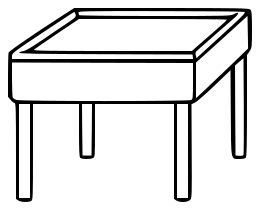


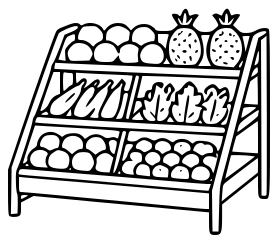
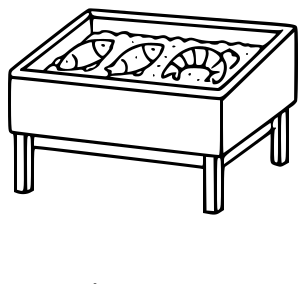
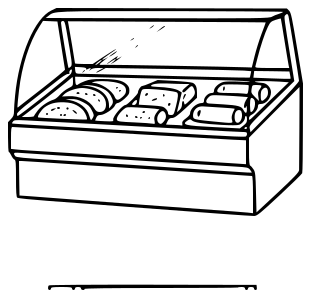
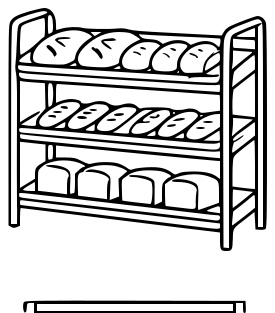
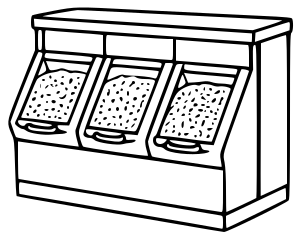
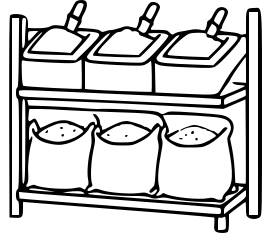
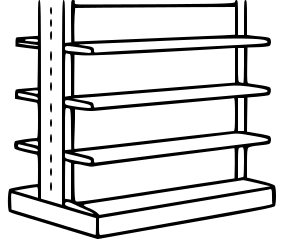

Fitting out a supermarket means buying between eight and twelve different kinds of equipment at once. Split that across four suppliers and you get four colour standards, four packing methods, four delivery dates and four people to chase when something is missing. Doing the whole thing from one plant is not a sales line; it changes what arrives on site and what condition it arrives in.
Key takeaways
- Steel fabrication, woodworking and stainless production all run on one site, which is what lets twelve categories leave in one colour.
- Colour is quoted as a RAL or PANTONE reference and held across the whole order rather than matched per category.
- Packing and loading are part of the specification. Fixtures ship in wooden export cases with the fittings already fitted.
Why One Plant Rather Than Four Suppliers
Supermarkets have become a fixed part of urban life, and the equipment that makes one work is unglamorous but unforgiving: if the shelving arrives in a slightly different brown from the checkout counters, everybody who walks in sees it, and nothing can be done about it afterwards. The single biggest argument for buying a whole store from one manufacturer is that the finish is decided once.
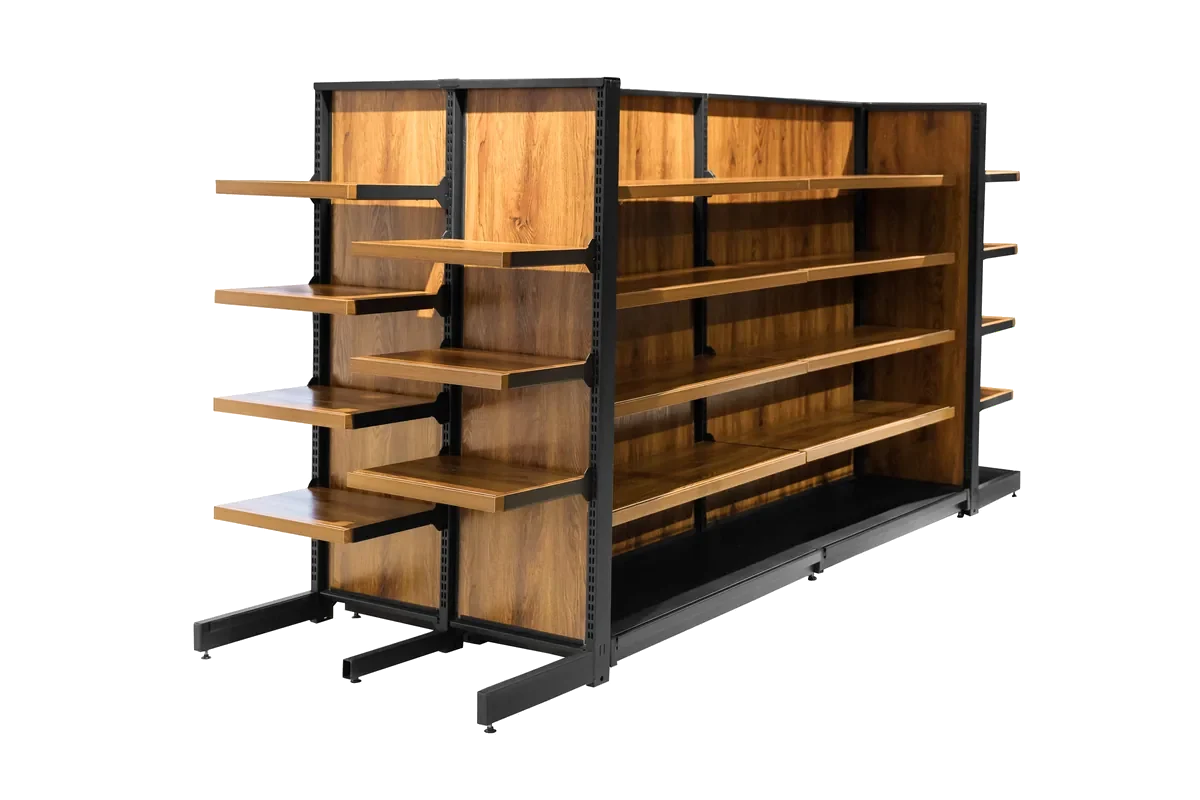
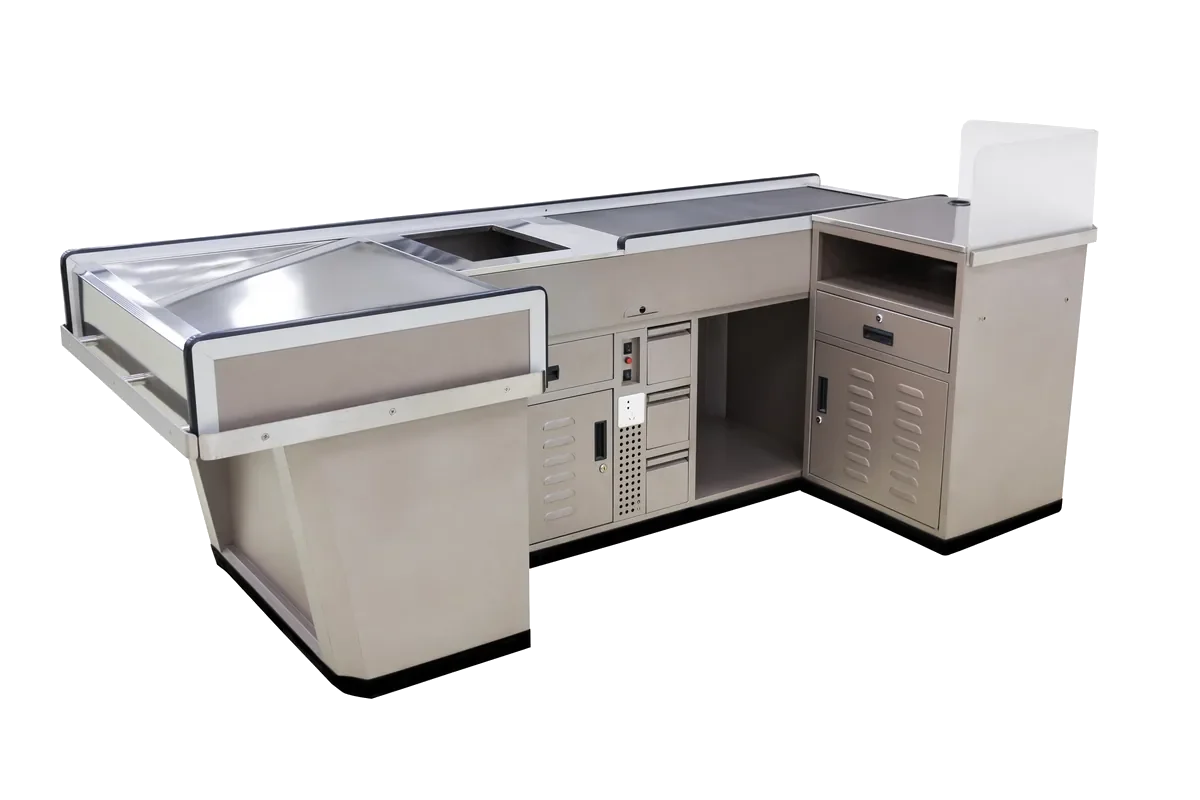
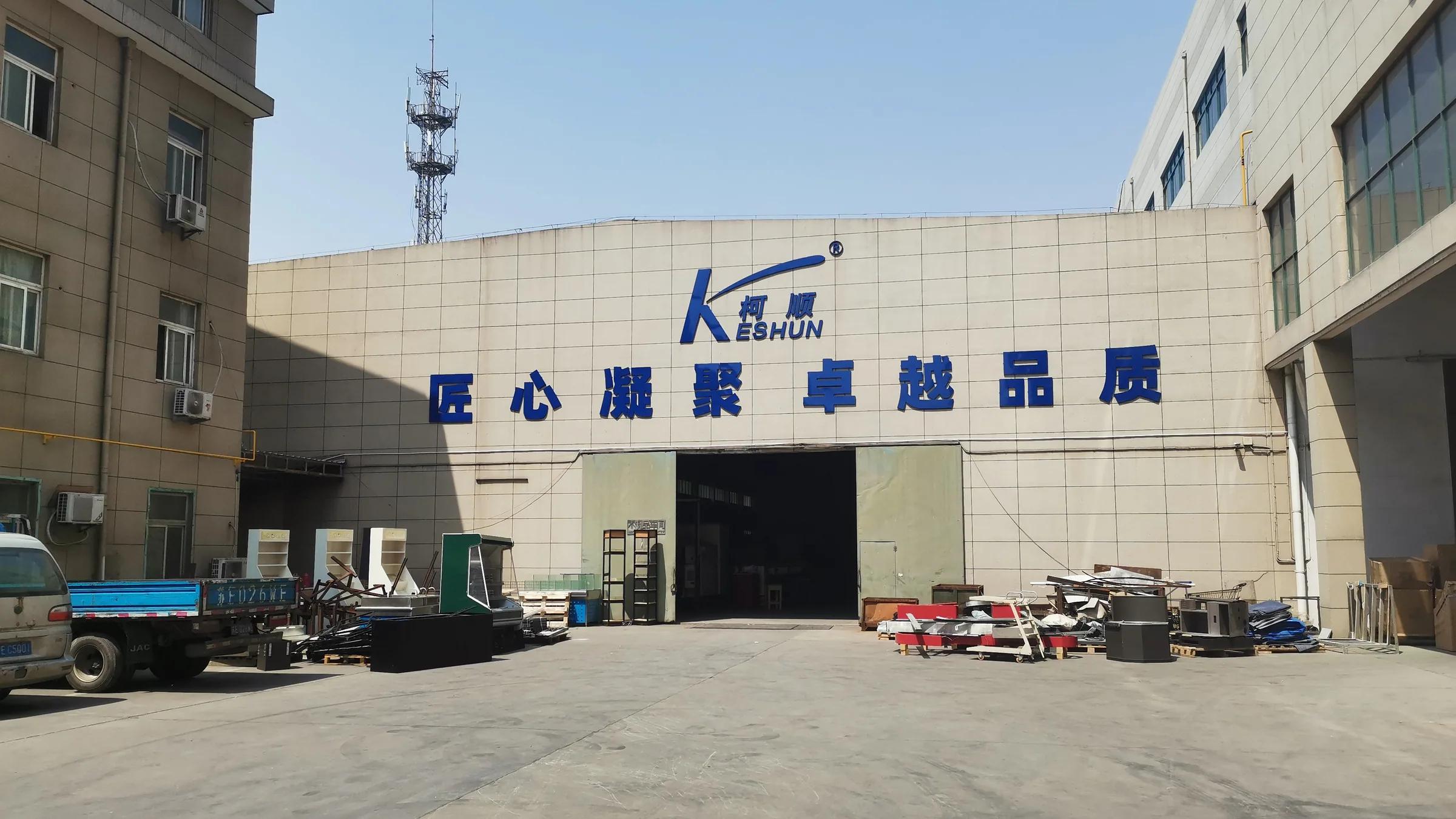
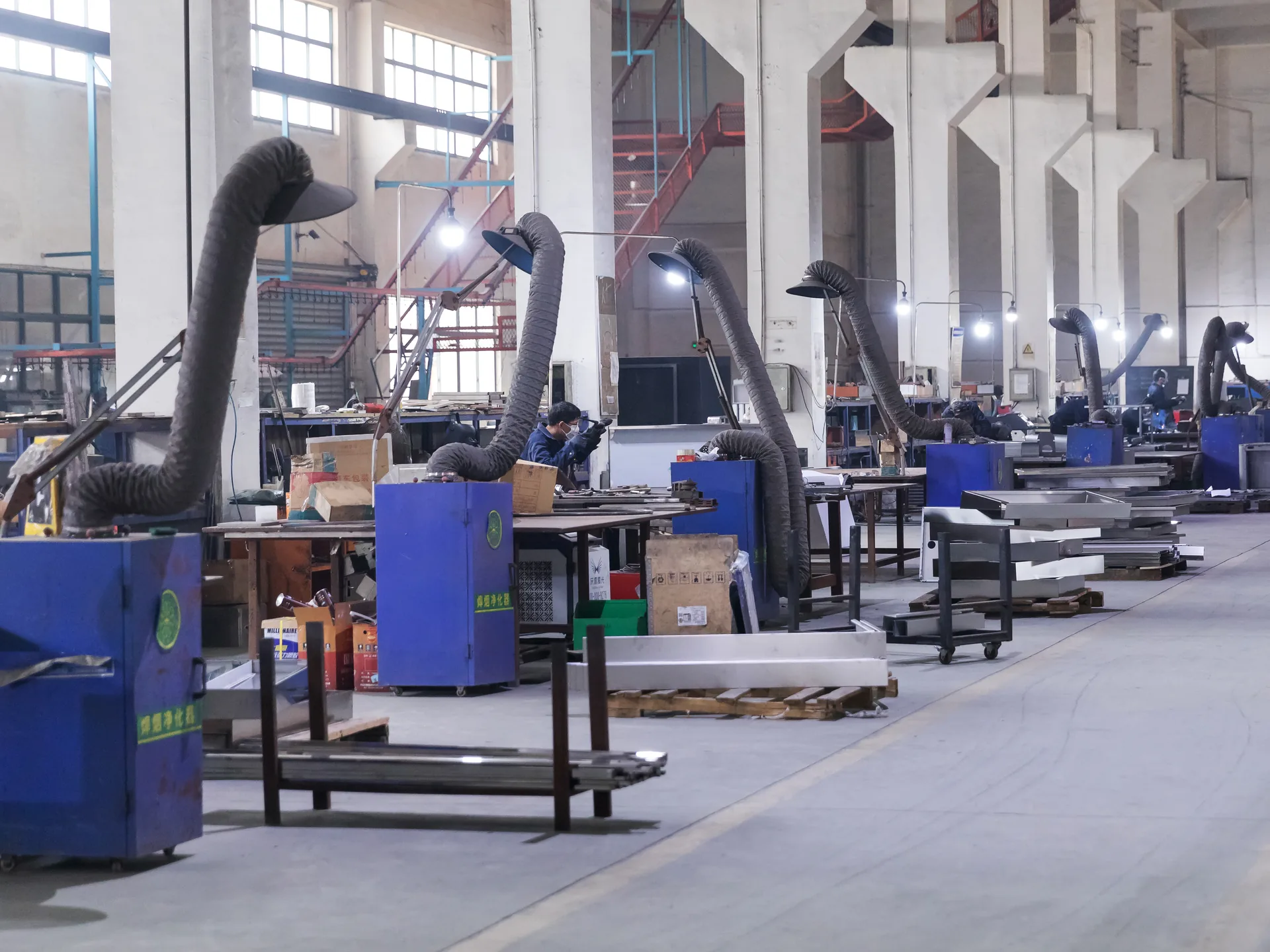
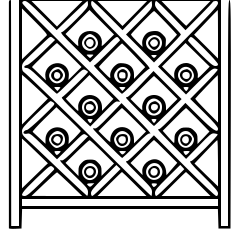
In our case steel fabrication, woodworking and stainless steel production all run in the same plant in Changshu. A checkout counter, the shelving behind it, the produce island across the floor and the wine wall at the back are not sourced from four places and hoped to match. They are made from the same board, coated to the same reference and packed on the same line.
One Colour Standard Across Twelve Categories
Colour on an order is quoted as a RAL or PANTONE reference rather than as a description, and that reference is held across every category on the order. It sounds like a small piece of administration. In practice it is the difference between a store that reads as one designed interior and one that reads as a collection of purchases, and it is impossible to recover once the containers are open.
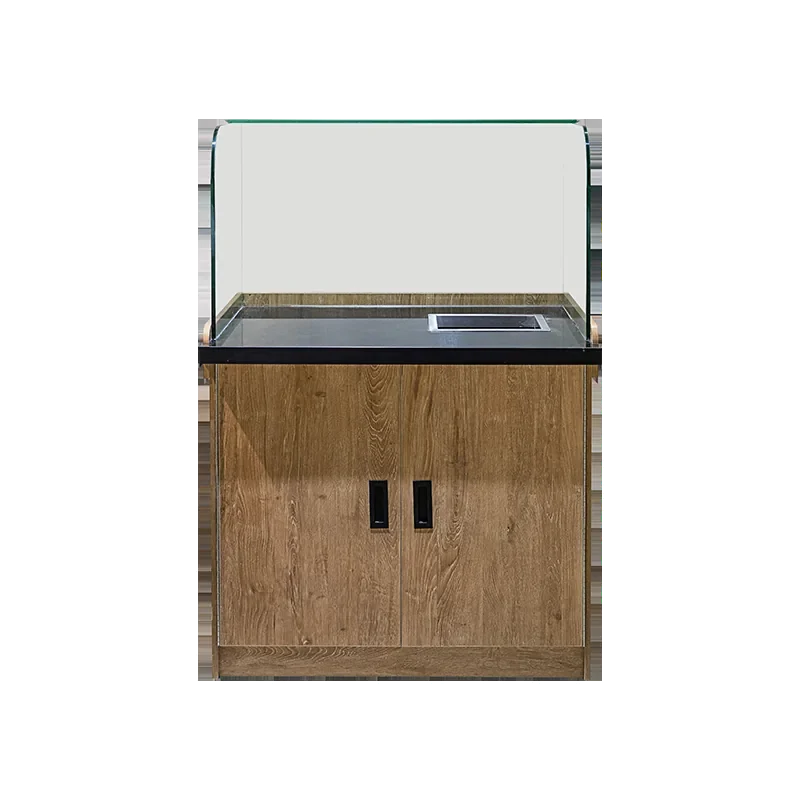
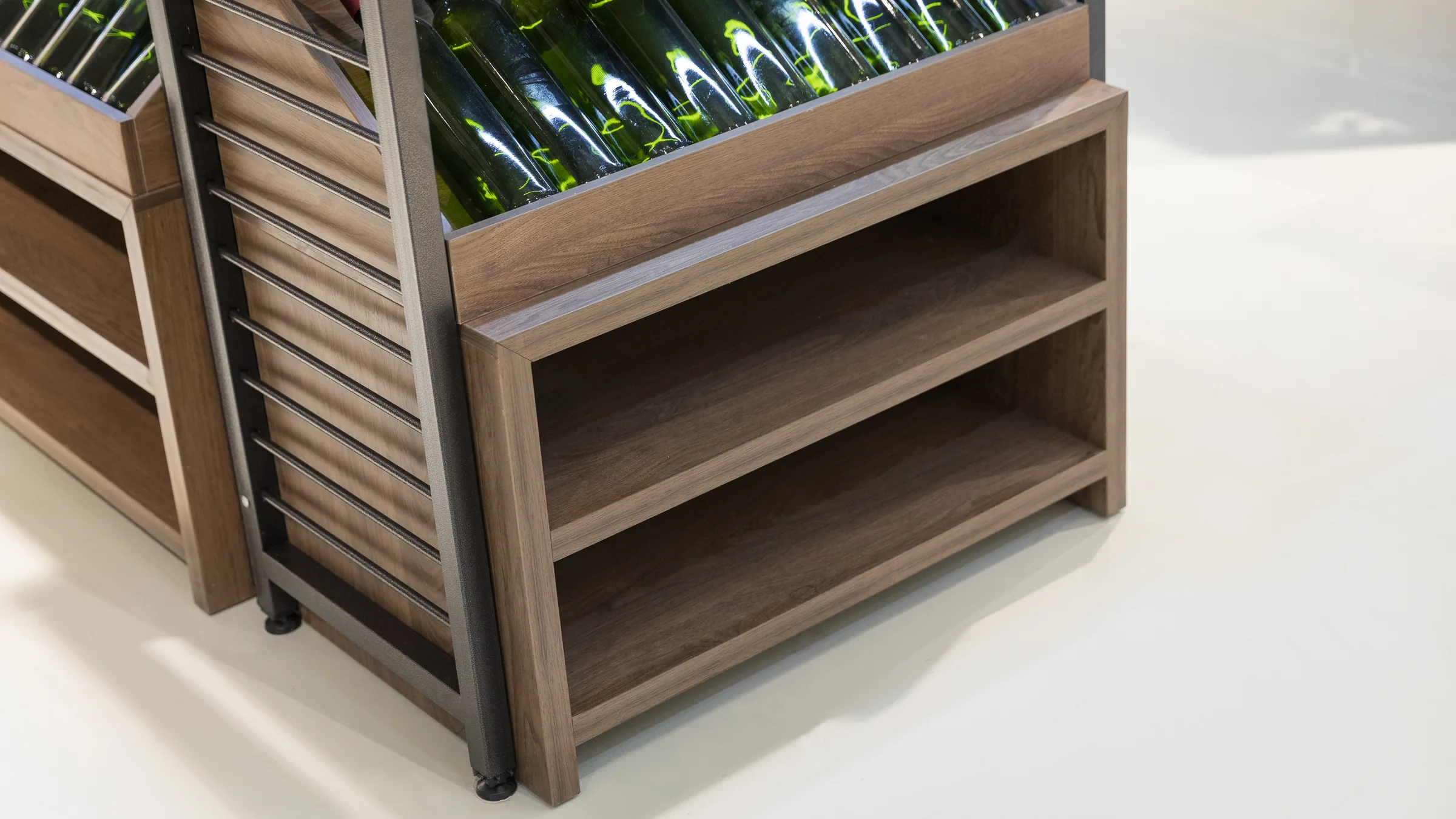
The same logic runs through the details. Edge treatments, plinth heights, board tone and the way a run terminates are common decisions rather than per-category ones. When a wood-faced checkout counter has to sit in a store already fitted with wooden shelving, that is a build we have on record rather than a special request.
Design Options Are Part Of The Supply, Not An Extra
From design through to production the same team handles the detail. To meet different businesses we offer a range of design options, including customisation of size, style and colour, so a buyer can choose fixtures that suit the brand and the store rather than adapting the store to what is in stock. That flexibility is the reason a plant with in-house engineering is worth more to a fit-out than a catalogue supplier with a bigger warehouse.
It also means the awkward parts of a store get built rather than worked around. Corners, returns, unequal bay lengths, a service desk that has to match a checkout run — these are ordinary drawing work here, and they are the parts of a fit-out that a purely stock-based supply cannot solve.
Packing Is Where Orders Are Won Or Lost
We pay attention to every detail from material selection through to packing method, with the aim that the product is undamaged when it arrives. Packing materials are combined to get maximum protection out of minimum volume, because on a sea freight order the space the packing occupies is space the customer is paying for.
Once quality inspection is passed, loading follows. Professional packing materials and proper fixing measures during transit reduce the risk of damage and are the reason a container arrives with intact goods rather than with a claim attached. Fittings that were ordered — bag holders, keyboard trays, sign frames, crate rails — are fitted before packing rather than shipped loose for the store to work out on opening week.

What is on record
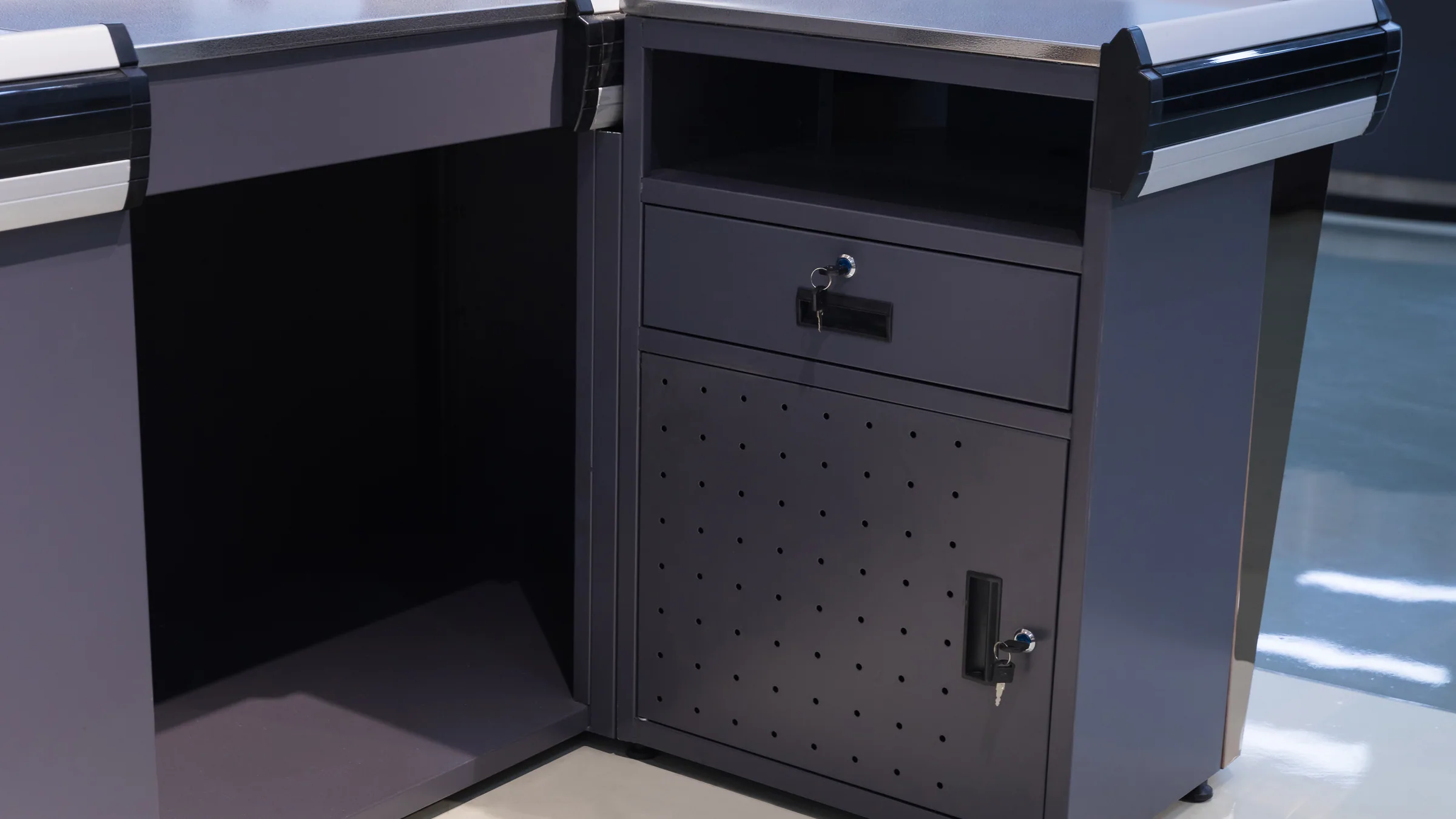
Manufacturing in Changshu since 1999. Twelve product categories built on one site. Bodies folded from 0.8 to 1.5 mm metal sheet with stainless steel board, or faced in 1.5 to 2.5 mm board. Colour quoted in RAL and PANTONE references. Standard export packing in wooden cases.
None of this is exotic. It is simply what happens when high-standard manufacturing, real quality inspection and a planned logistics process sit in the same building, and it is why a one-stop order tends to arrive as a store rather than as a delivery.
Keshun Technical Team. First published 20 December 2023, rewritten 8 August 2026. Materials, colour standards and packing described above are the ones currently on record.