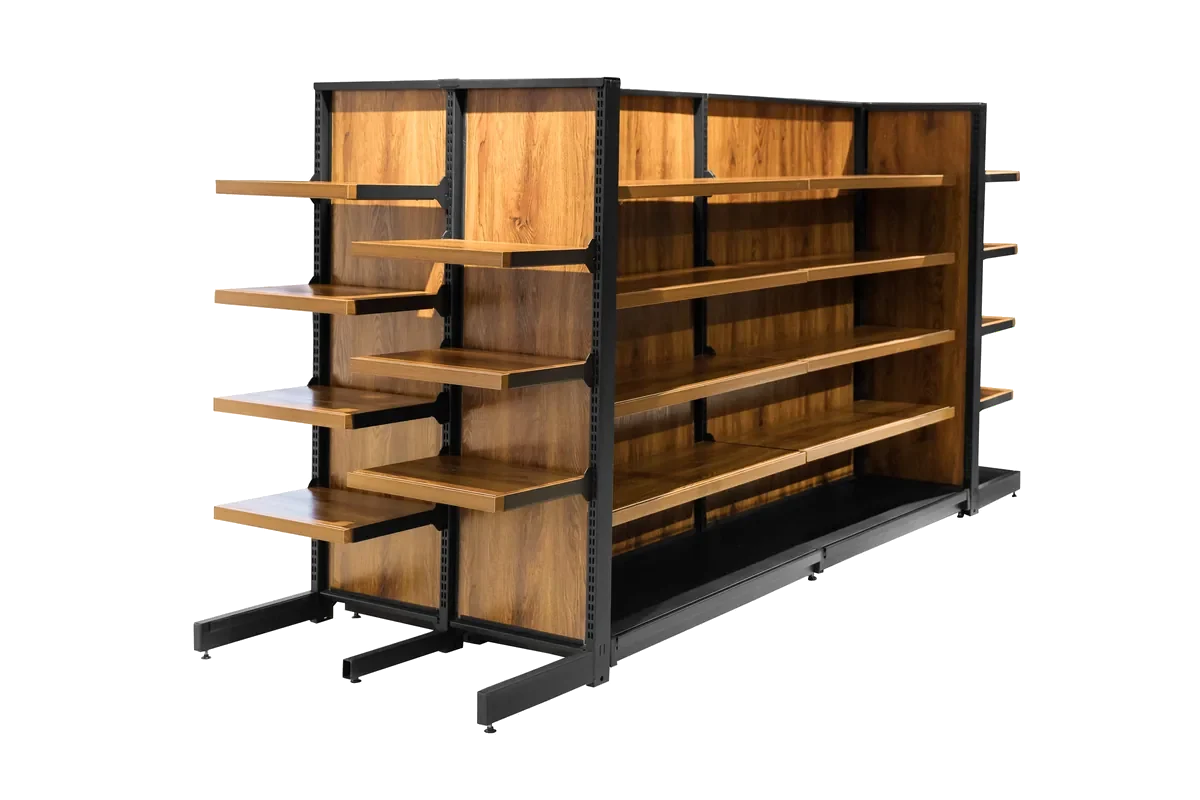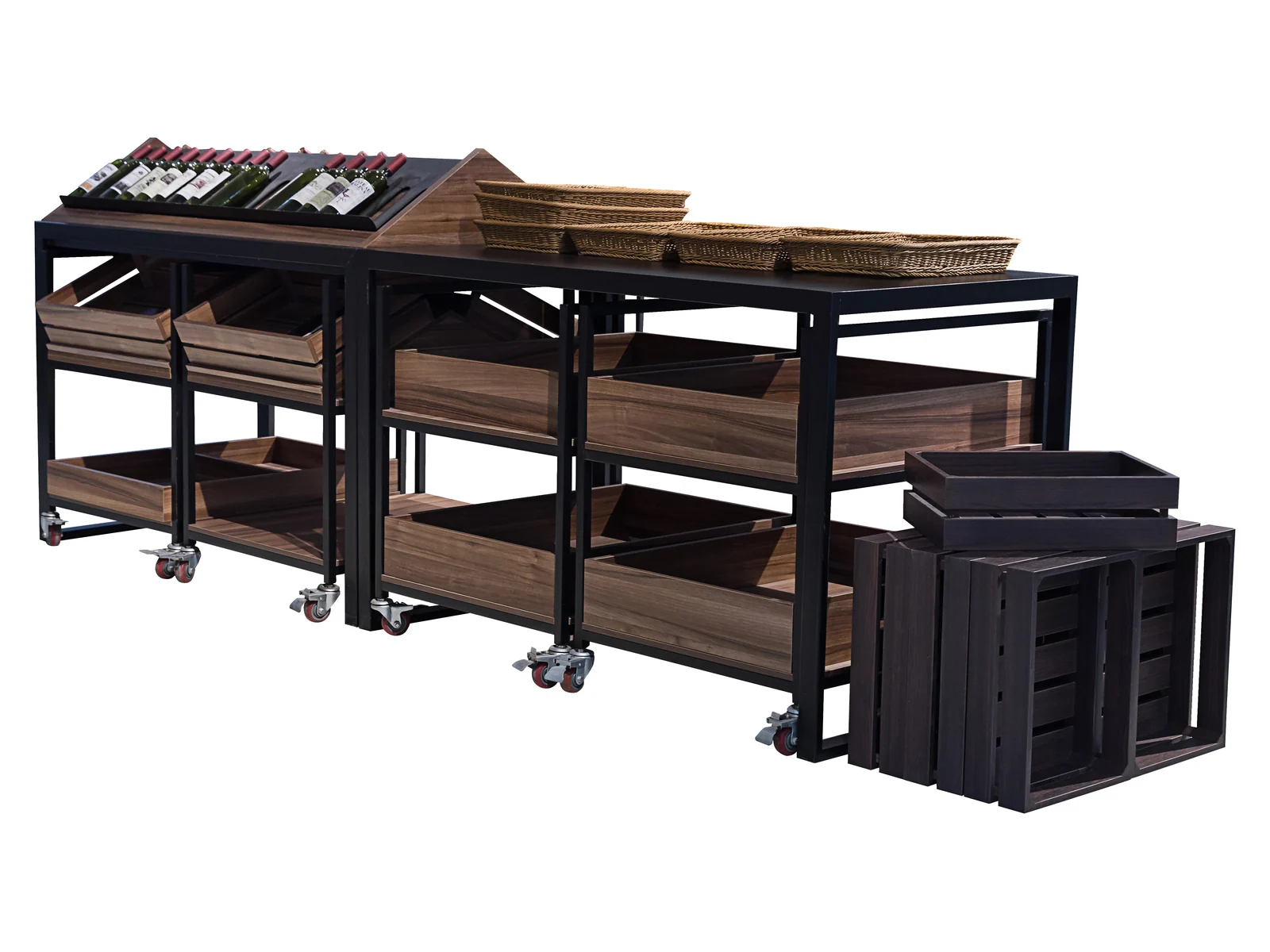

Angled Bottle Shelf
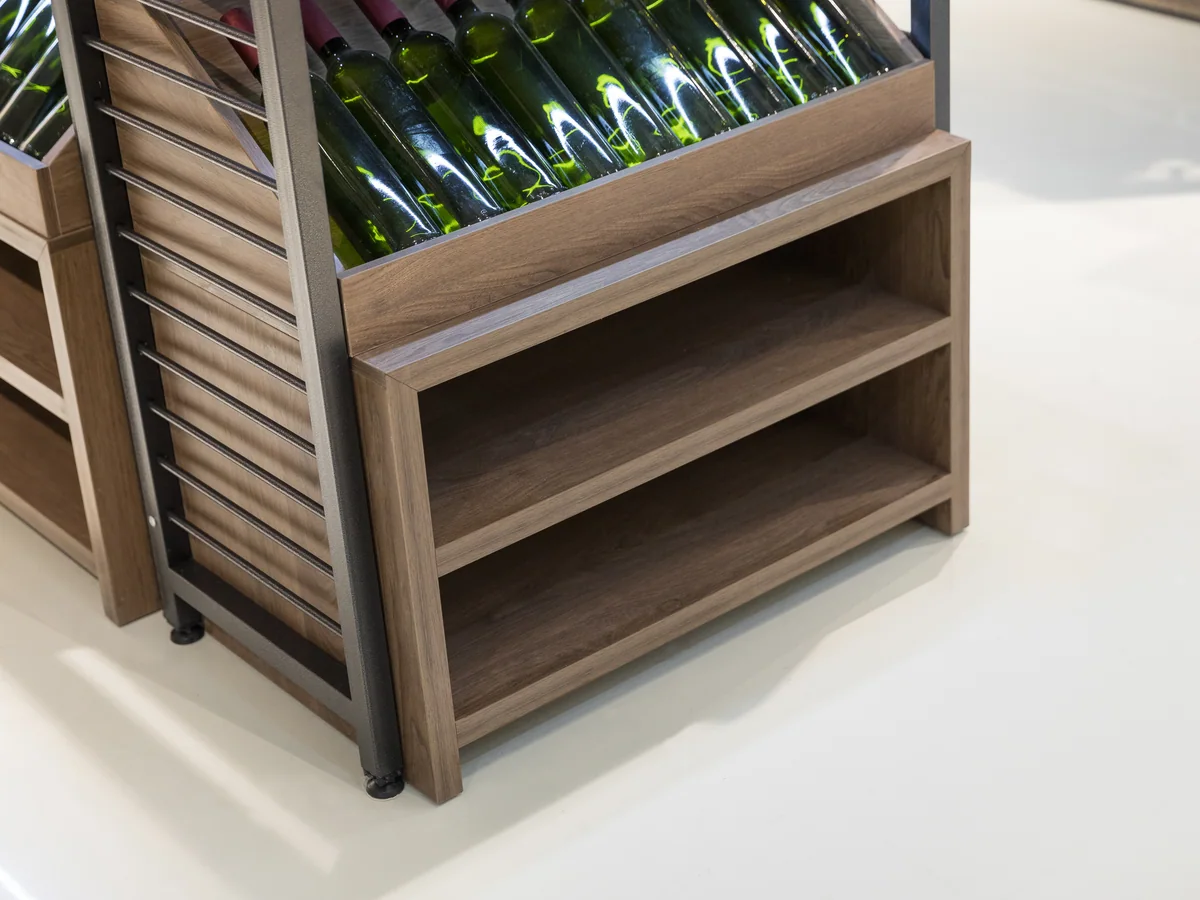
Label out, not shoulder out
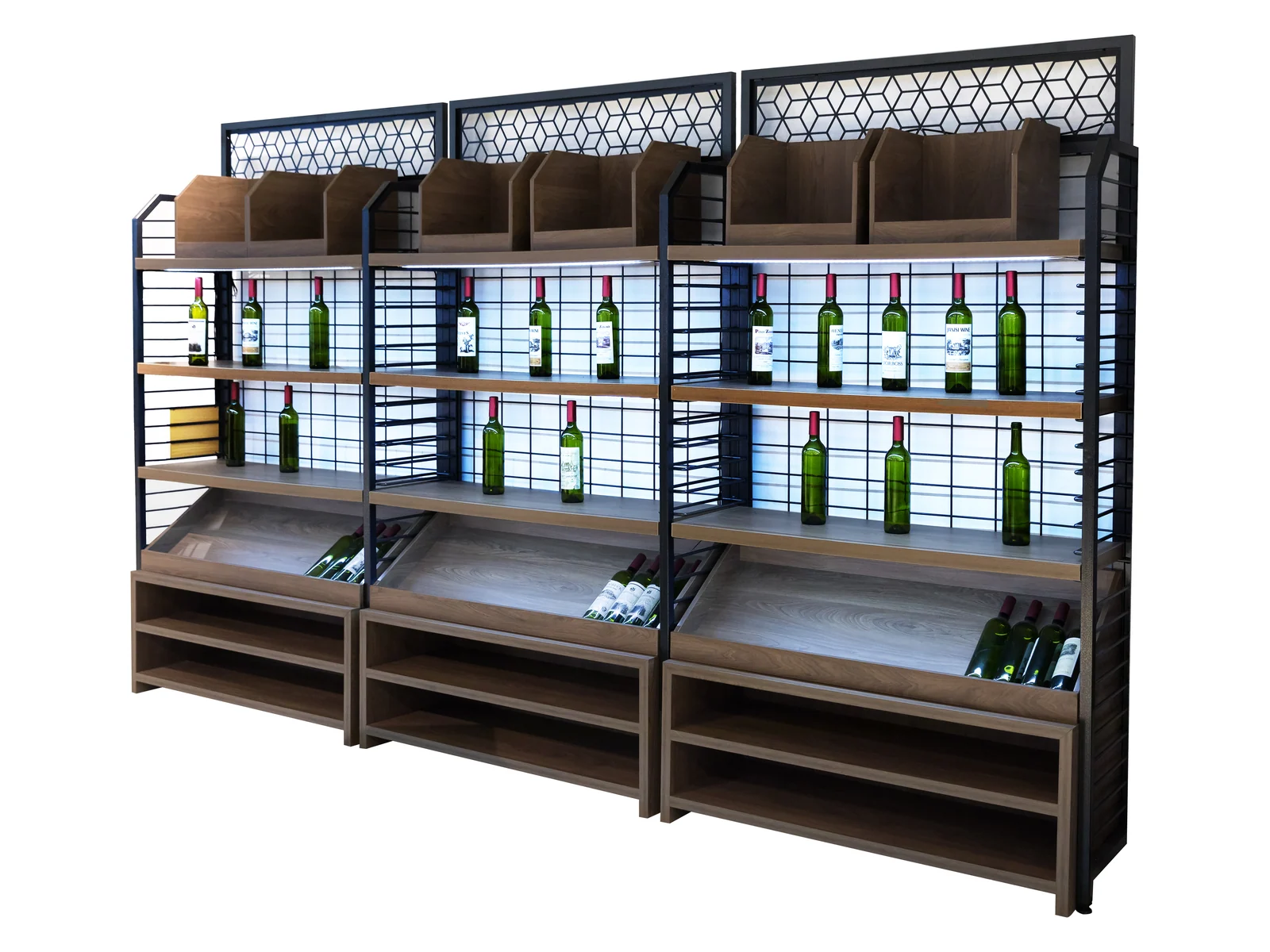
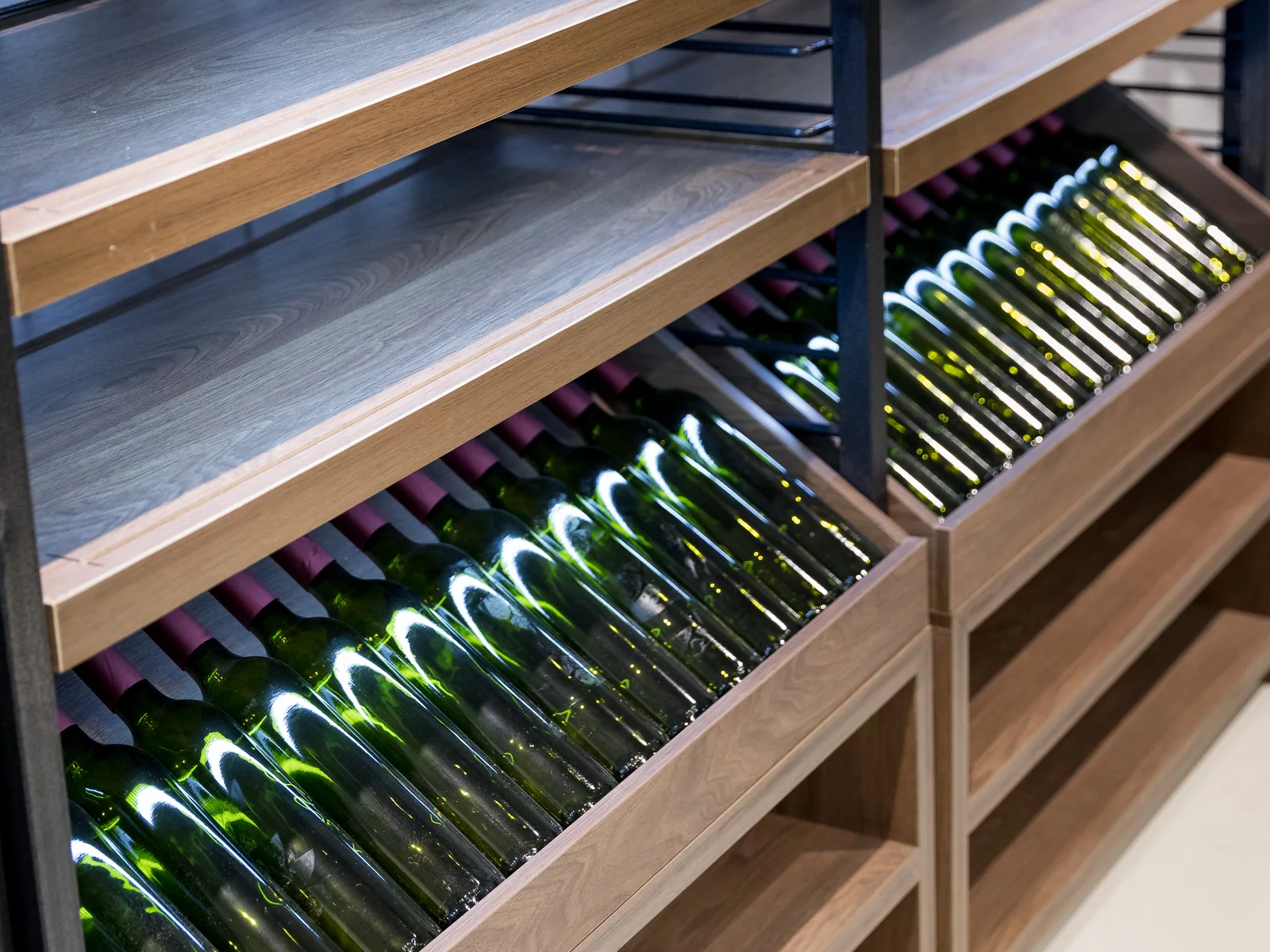
The shelf tips forward so the label faces the shopper. On a flat shelf the same bottle shows its shoulder and its cap, which sells nothing on a range where the label is the whole proposition.
Angled bottle shelves · fretwork panels · timber base
Angled shelves that tip every bottle label toward the shopper, under decorative fretwork panels. It is the presentation fixture in this category rather than the storage one.
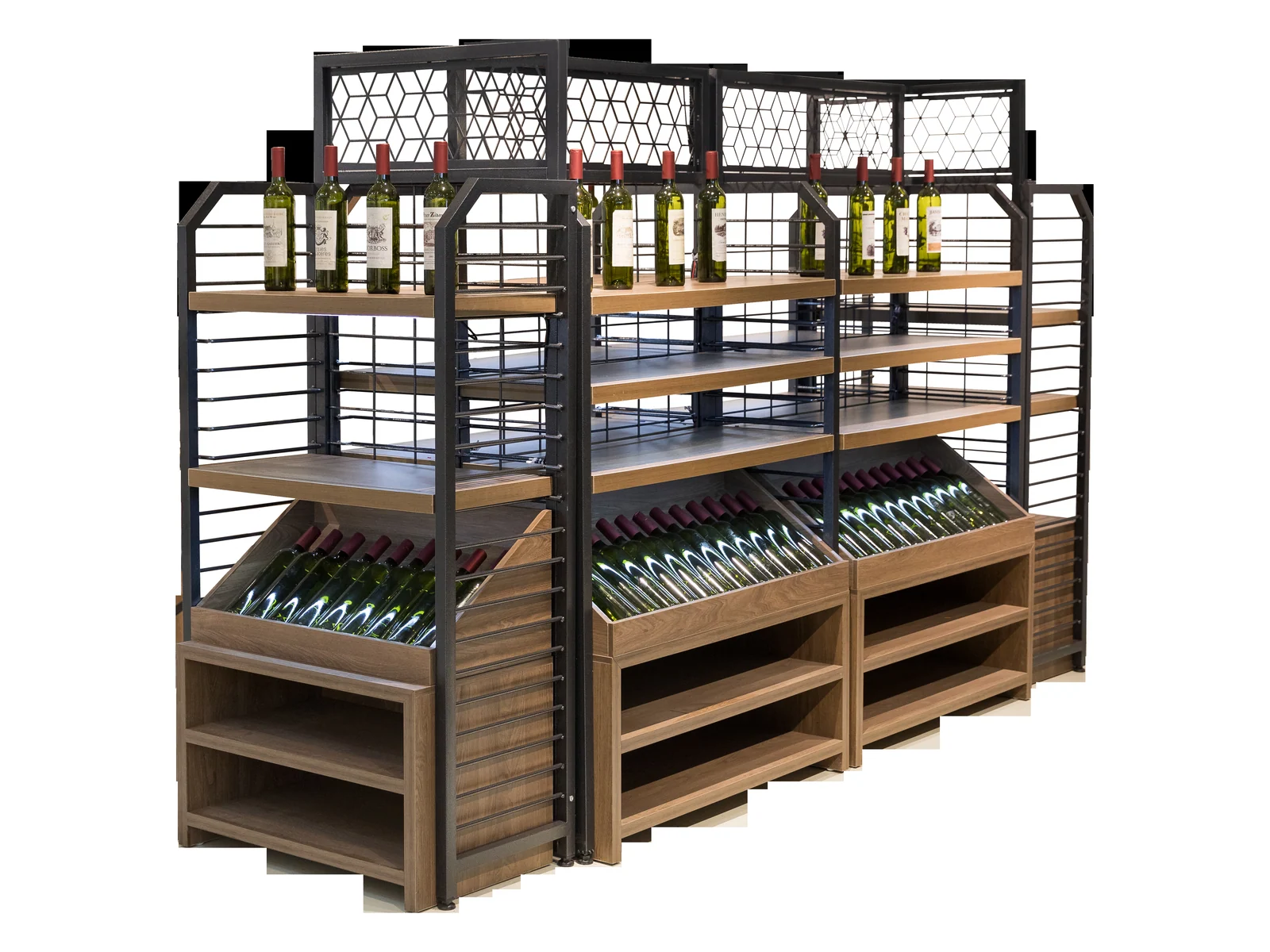
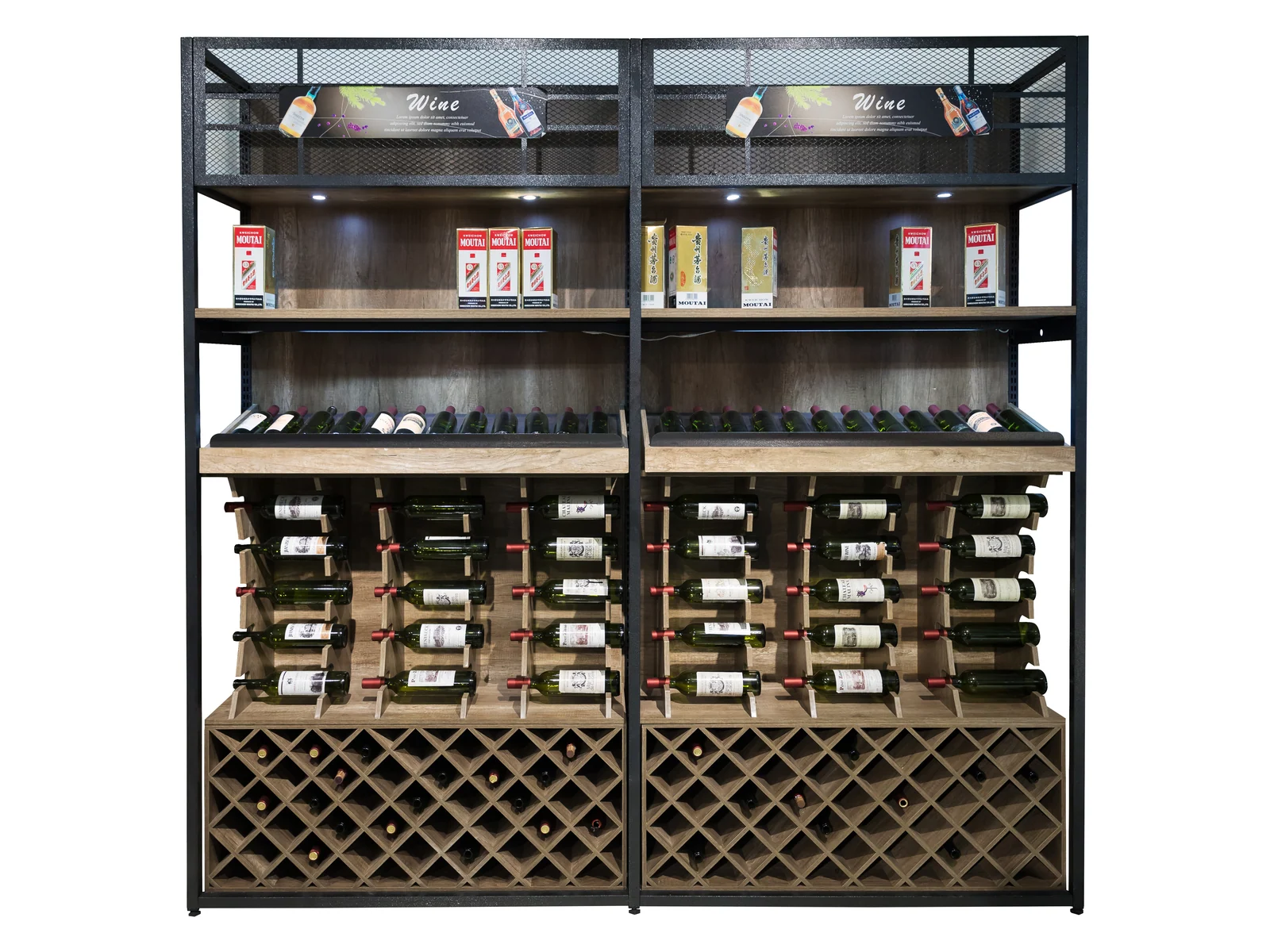
Studio angles on white. The angled shelf, the fretwork, the base cabinet and the frame are photographed below.
A bottle standing upright on a flat shelf shows a shopper its shoulder and its cap. Angle the shelf and the whole label comes into view, which on a wine range where the label is doing the selling changes the fixture from storage into display. Every shelf on this build is angled for that reason.
Above the shelves, fretwork panels give the fixture a top edge and a decorative register that a plain wine rack does not have. Below them, timber base cabinets take the back stock and the cases. It is the build for a store where wine is a destination category rather than a shelf in the grocery aisle.
Angled shelves that tip every bottle label toward the shopper, under decorative fretwork panels. It is the presentation fixture in this category rather than the storage one.
Supermarkets, convenience stores, chain retail and speciality stores. Tell us the store format and the floor area and the specification comes back written against them.
An angled shelf is a different object from a flat one, and the first two close-ups are why.
Label out, not shoulder out
The shelf tips forward so the label faces the shopper. On a flat shelf the same bottle shows its shoulder and its cap, which sells nothing on a range where the label is the whole proposition.
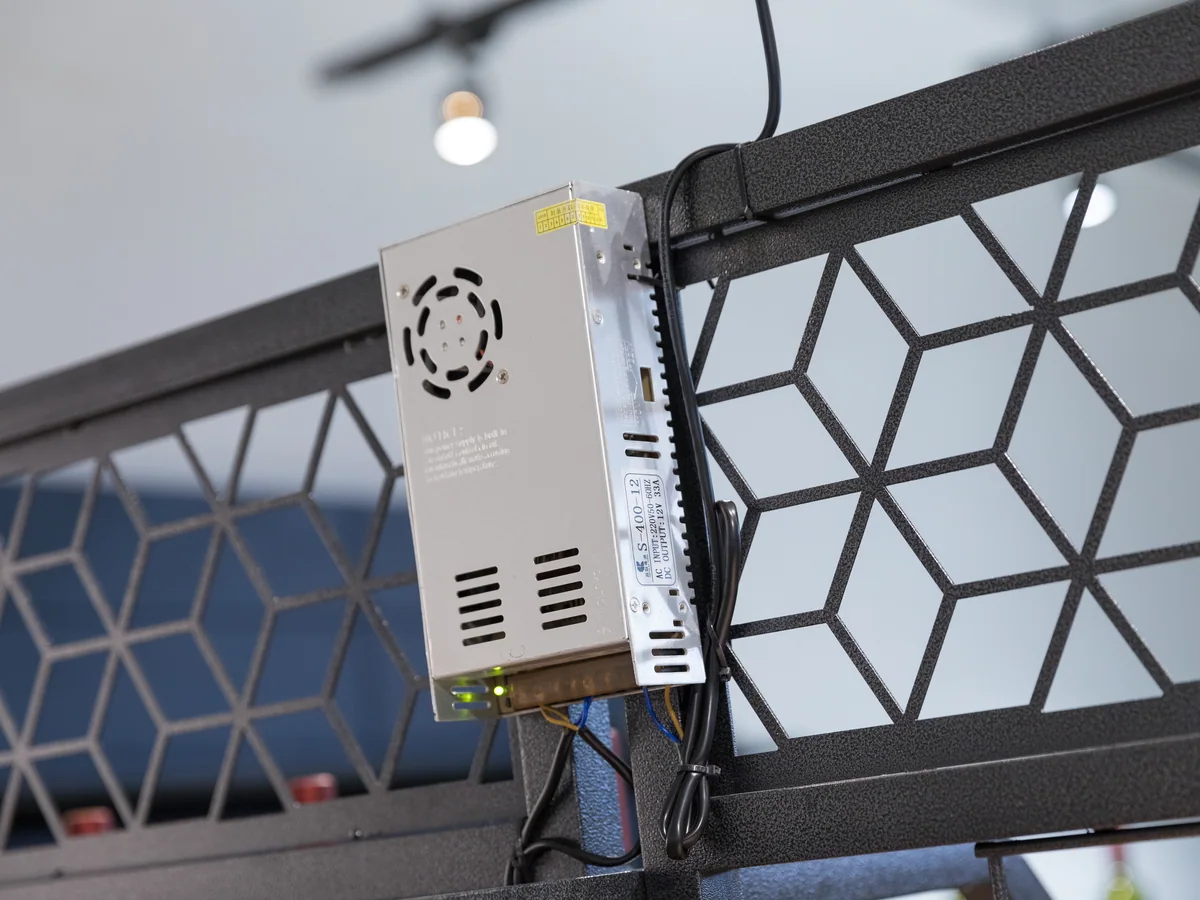
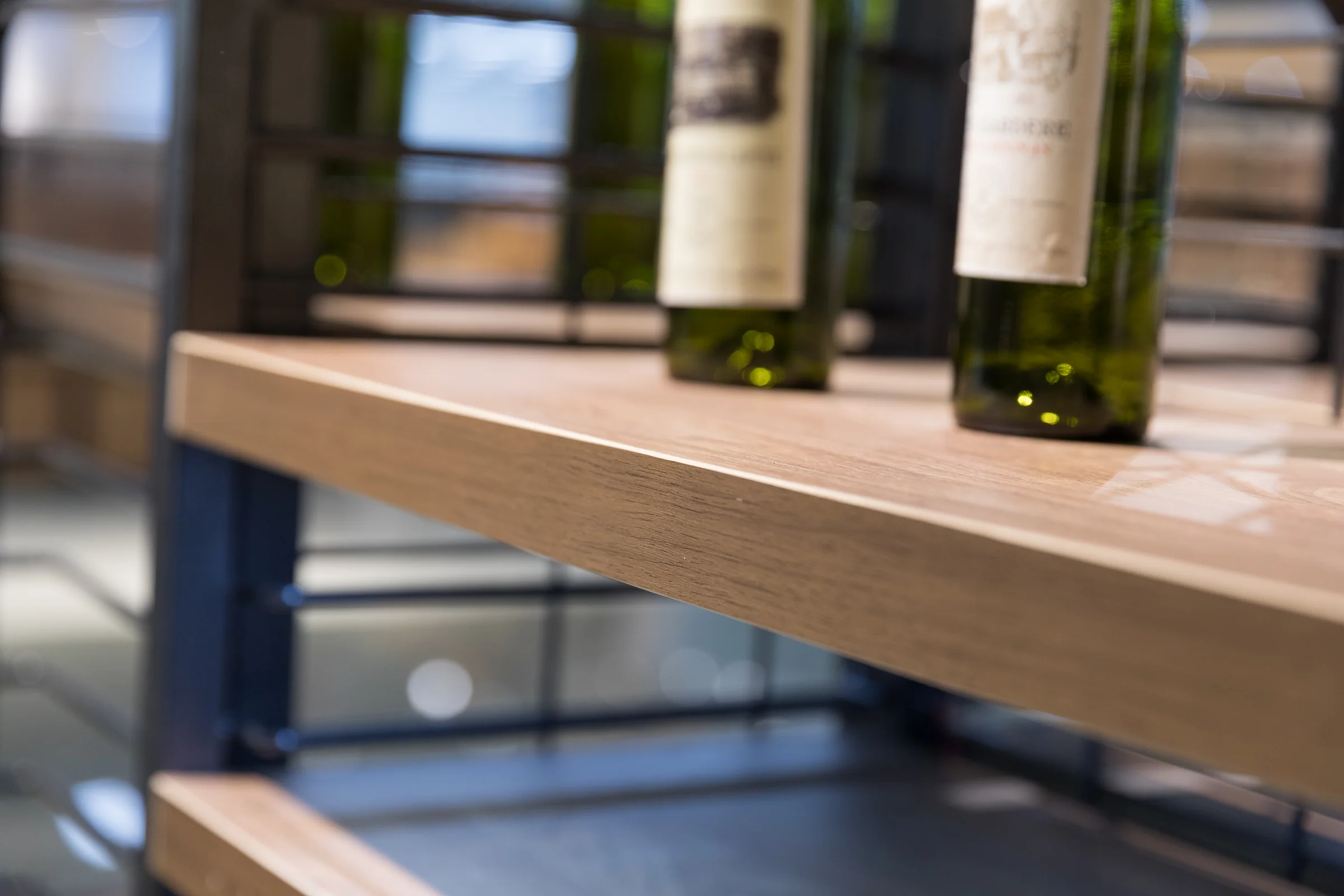
Holds the bottle on the angle
A stop along the front edge holds the bottle on the incline. It is the part that decides whether an angled shelf works or becomes a slow-motion accident on a busy Saturday.
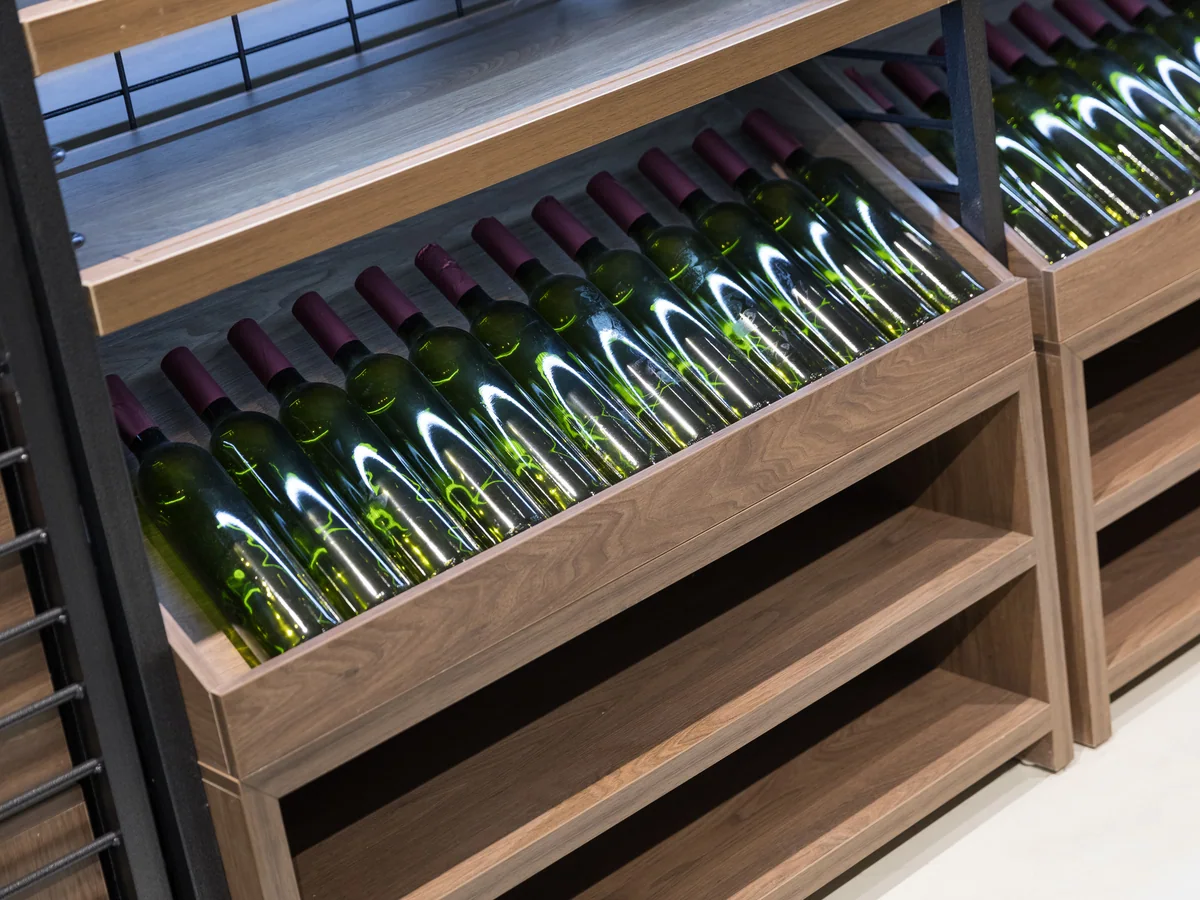
Cut, not printed
The fretwork is cut rather than printed, so it holds a shadow line. It gives the fixture a top edge and a register of detail that a plain rack does not have, which is most of why a store chooses this build.
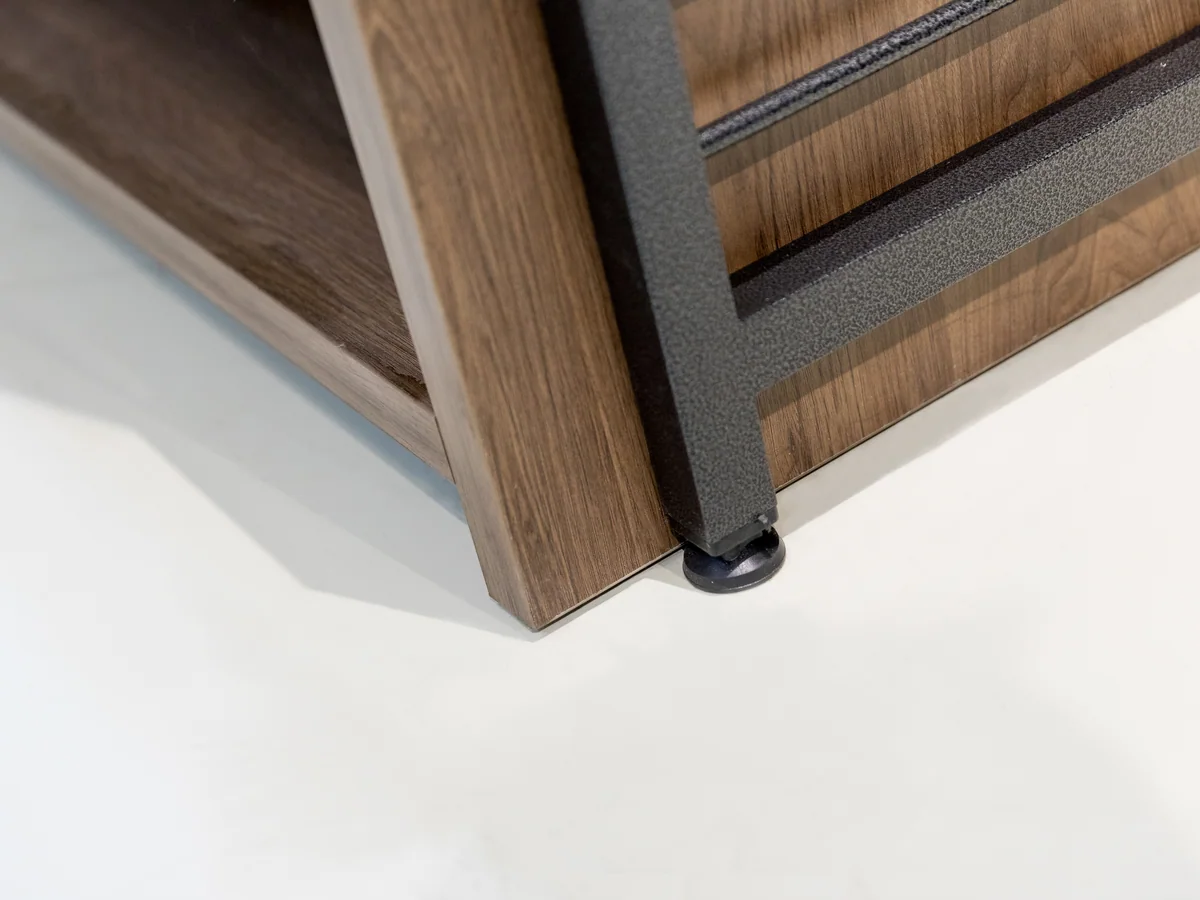
Cases and back stock
The base takes cases and back stock out of sight. Wine sells in multiples and a store with nowhere to put the cases ends up stacking them in the aisle, which undoes the whole fixture.
Every item on this page is made to order. Send a floor plan, a hand sketch or a photograph of a fixture you like, and we quote against it.
Store fixtures are light for their size, so a container fills up on volume long before it fills up on weight. What decides your freight is not what one unit weighs — it is what shape the goods are in when they go through the container door. Everything we build leaves in one of three shapes.
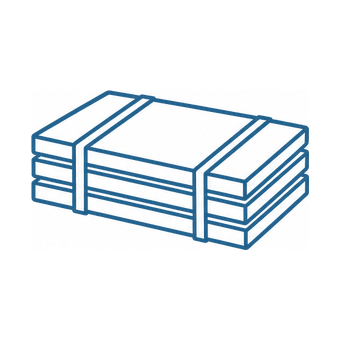
Shelving bays, produce islands and bulk cabinets travel as panels — uprights, shelves, back panels and plinths, strapped flat with bubble wrap on every component. They are built up on the shop floor, so the packing list and the assembly drawings travel with the goods.
This model
Trolleys slide into one another and baskets stack. Past the first unit, each extra one adds only its nesting pitch instead of its full length, so the shipped volume ends up a fraction of what the unit count suggests.

A checkout lane is welded, coated and fitted out as one piece, so it is crated whole with padding on the steel. Nothing waits to be assembled at the store beyond levelling it into the lane, and the crate is the counter plus a margin.
Wine and tobacco fixtures flat pack as panels, uprights, lattice sections and shelves. Two builds are on record for this category — KS-YJG-01 and wineRack-Y01 — and both are made to the wall rather than sold in fixed sizes, so the case dimensions come back on the packing list once the run is confirmed.
Wine and tobacco are the highest value density in the store, and they sit against fixtures that have to match them.
A wine wall usually terminates a shelving run, so the two carry the same board tone and the same colour reference.
See shelving baysTobacco is almost always behind or beside the lane, which makes the showcase and the counter one piece of joinery to the shopper.
See checkout countersWine is promoted by the case, and a square at the end of the run is where a multi-buy actually moves.
See retail display tablesHow many of each a store needs is a floor area question rather than a product question, and it is answered store by store on the project page.
Send your bay length and tell us whether the base needs to lock.
Send the bay length and tell us whether the base cabinets need to lock. Licensing rules on wine storage differ between markets and it is easier to build in than to retrofit.
The four that come up on nearly every enquiry for this build. If yours is not here, send it with your layout and it is answered alongside the quotation.
Not with the front stop fitted, which is what holds them on the incline. It is the detail that decides whether an angled shelf works, and it is why we would not build one without it.
The panels are cut, so a pattern can be specified. Send what you want with the enquiry and it is set out on the drawing before production — OEM orders ship with no Keshun marking anywhere.
Honestly, no. Angled shelving costs display density and buys label visibility, which only pays on a range where the label is doing the selling. For a price-led range the cellular racks in the other build hold more in the same wall.
They can, and in some markets they must. Licensing rules on alcohol storage differ more than any other category we build to, so tell us the market and it is specified to suit.