

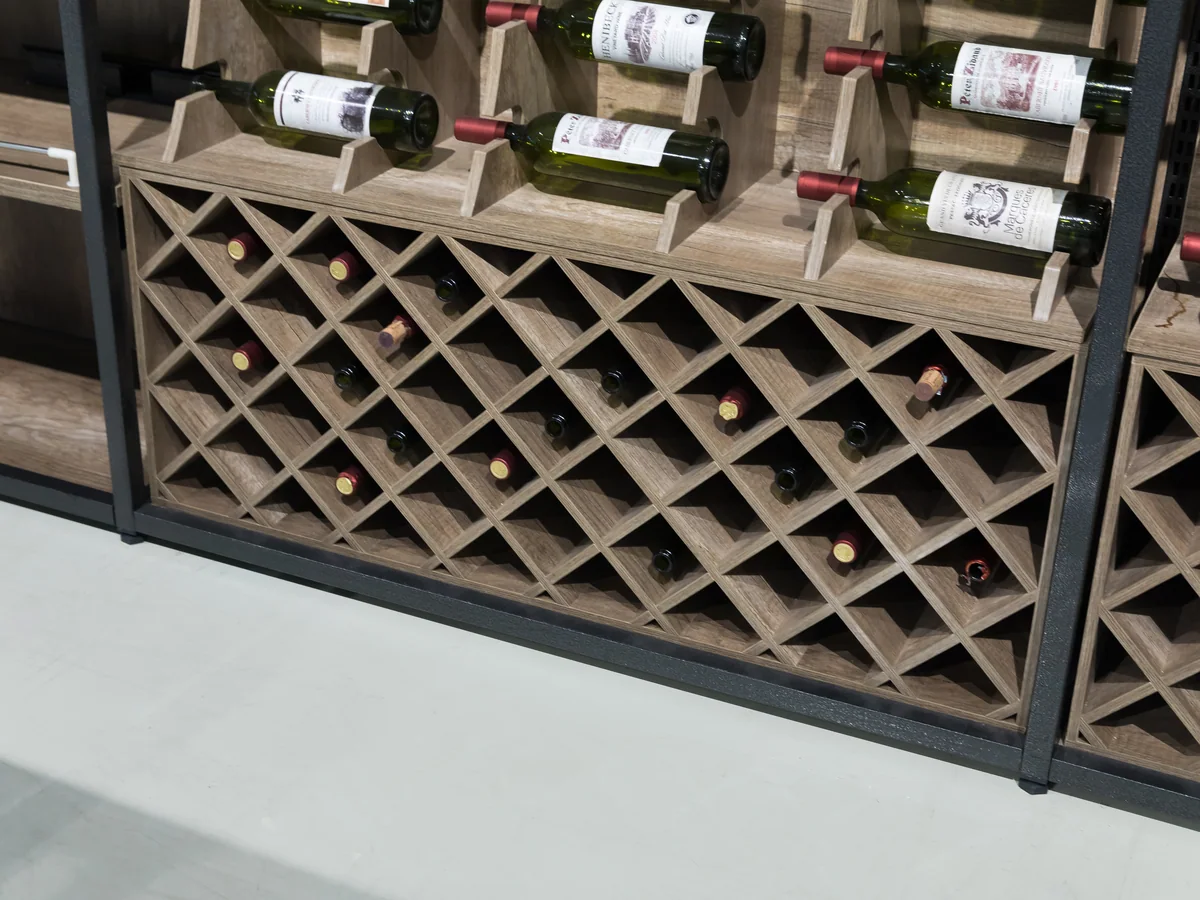
Diamond Lattice
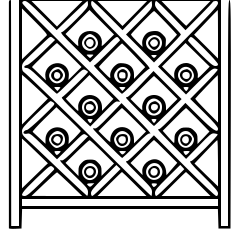
Bottles on their side
The lattice holds bottles horizontally, which is the correct position for anything corked and the densest way to store them. It is also the part of a wine wall that photographs best, which is not nothing.
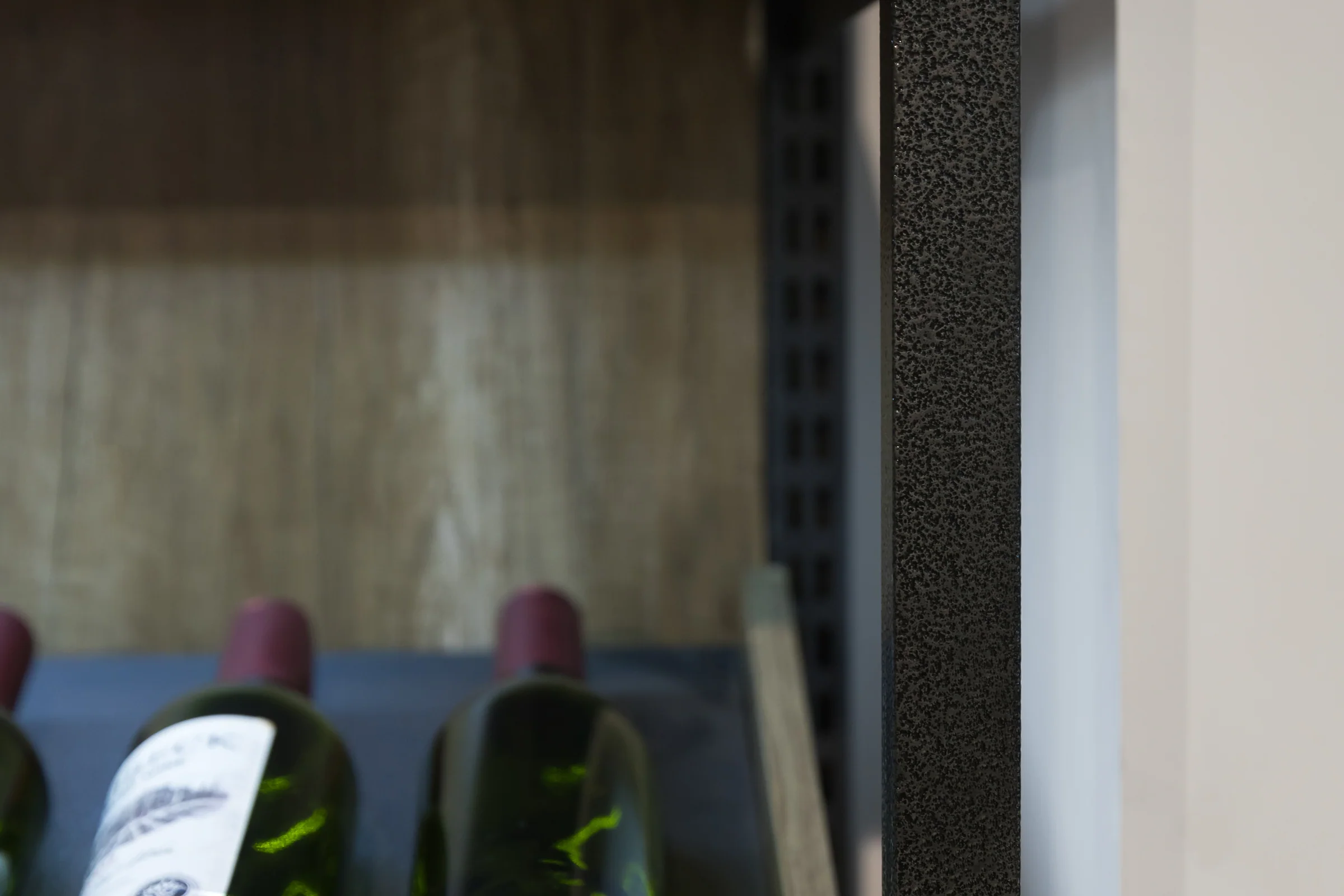
Diamond lattice · lit shelves · cellular racks
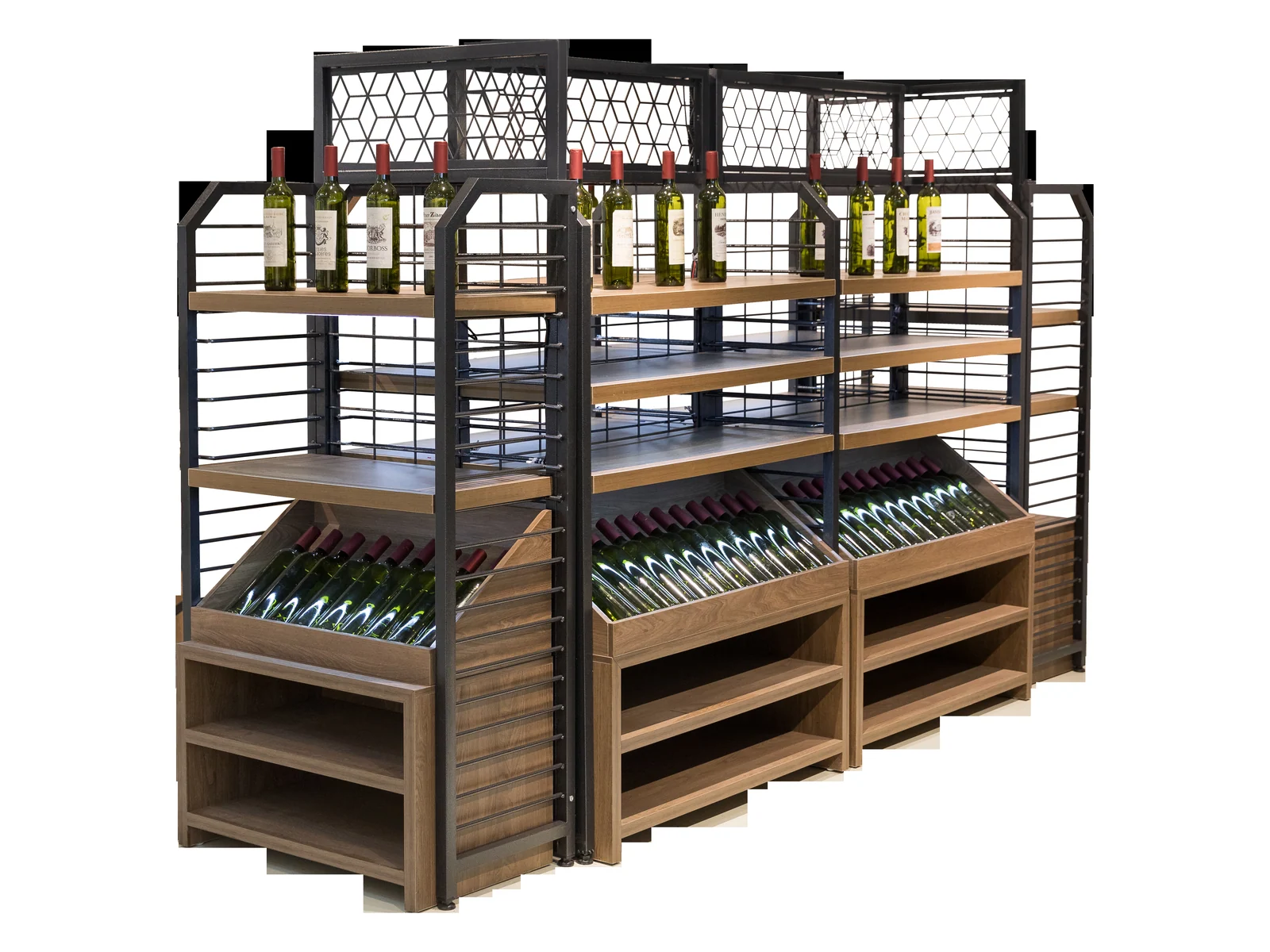
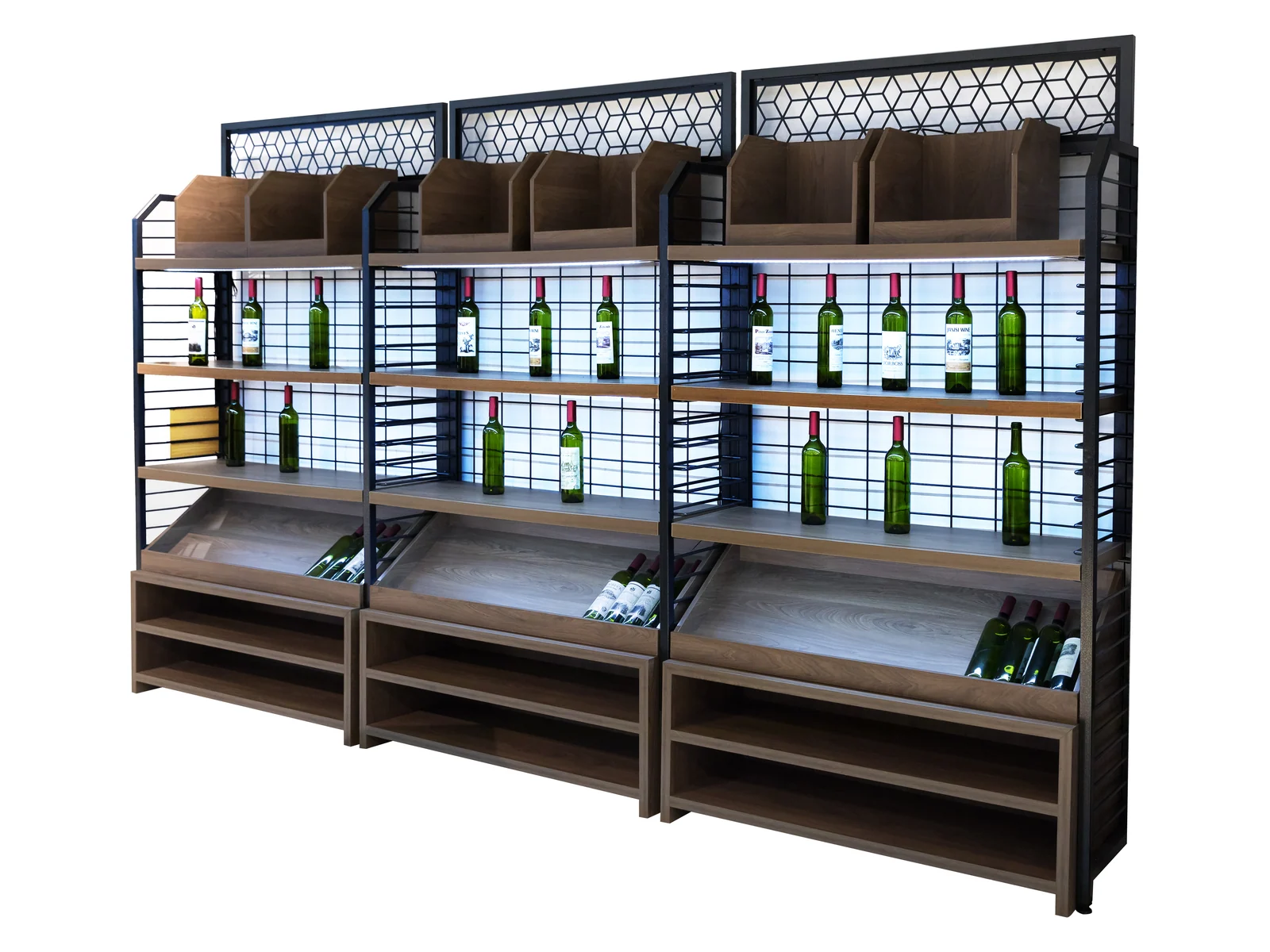
Three ways of holding a bottle in one wall: lit shelves at the top for the labels that sell on sight, cellular racks in the middle, and a diamond lattice at the base for bottles stored on their side.
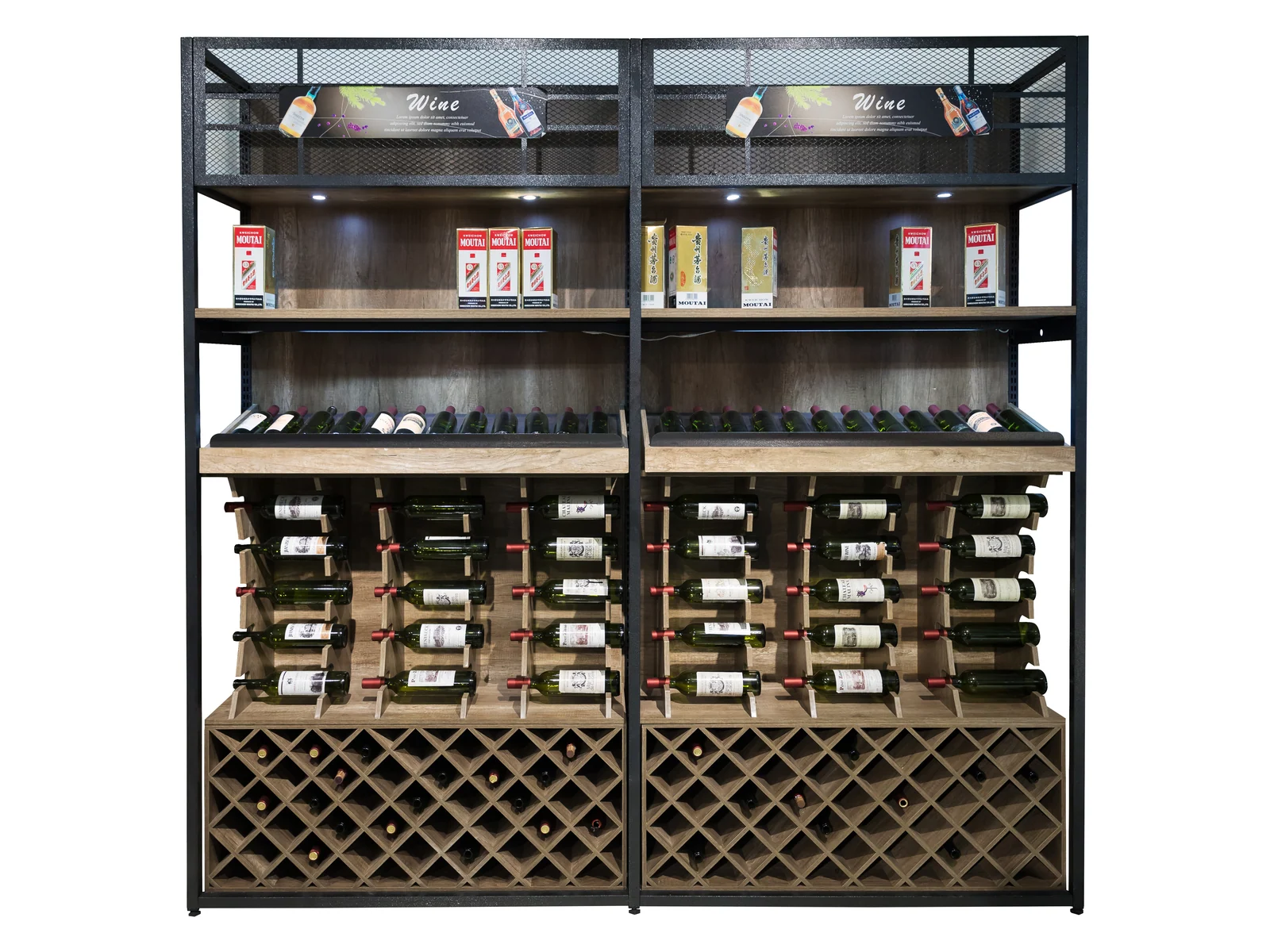
Studio angles on white. The lattice, the cellular rack, the lit shelf and the frame are photographed below.
A wine range is not one product. There are bottles that sell on their label and need to face out under light, bottles that sell on price and can sit in a cell, and bottles that need to lie down. Most wine fixtures pick one of the three and force the whole range into it. This wall does all three, stacked in the order that matches how a shopper reads a wall: lit display at eye level, cells below, lattice at the base.
The diamond lattice at the bottom is the part that needs saying plainly: it holds bottles on their side, which is the correct storage position for anything corked, and it holds a lot of them in a small footprint. Our records list KS-YJG-01 and wineRack-Y01 for this category, and both are made to the wall rather than sold in fixed sizes.
Three ways of holding a bottle in one wall: lit shelves at the top for the labels that sell on sight, cellular racks in the middle, and a diamond lattice at the base for bottles stored on their side.
Supermarkets, convenience stores, chain retail and speciality stores. Tell us the store format and the floor area and the specification comes back written against them.
Three bottle systems in one wall means three different joints. These four cover them and the frame that carries all of it.
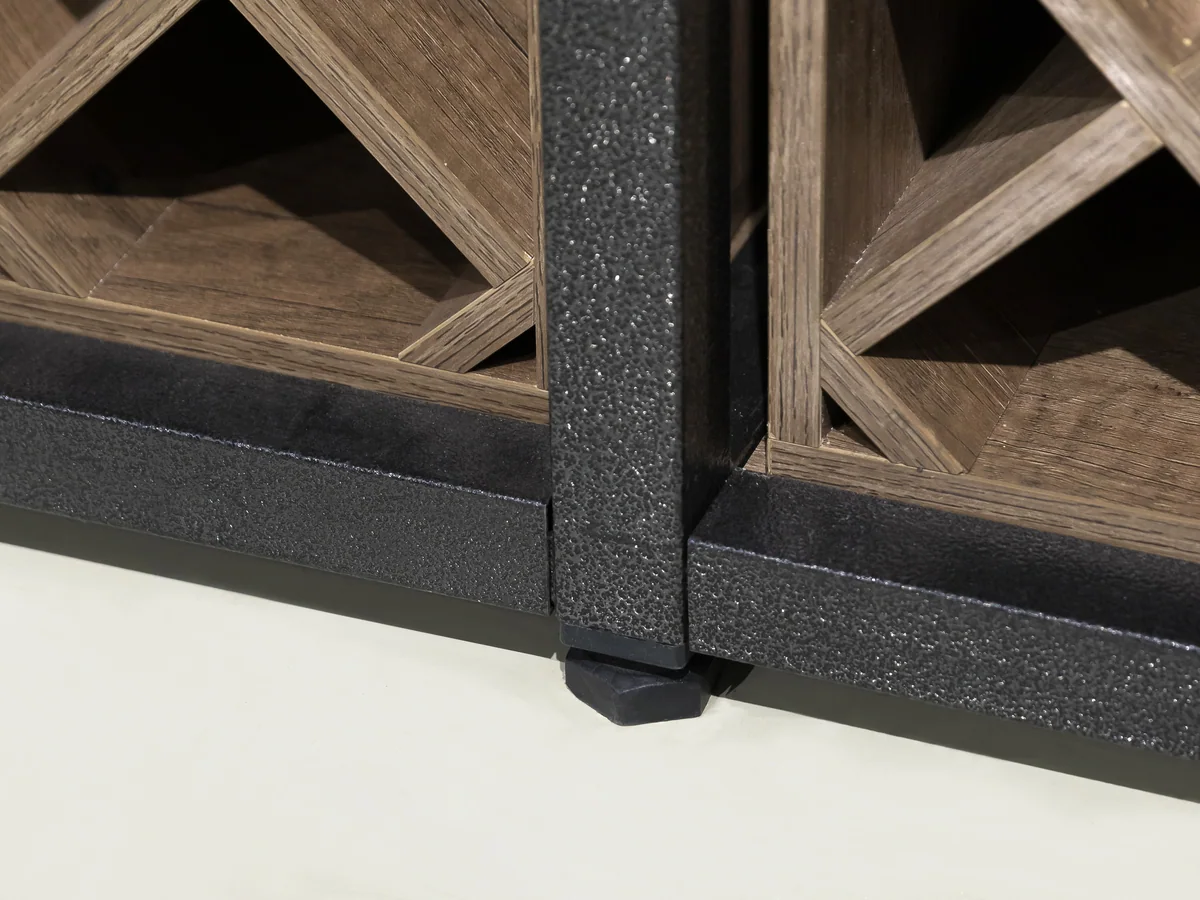
Bottles on their side
The lattice holds bottles horizontally, which is the correct position for anything corked and the densest way to store them. It is also the part of a wine wall that photographs best, which is not nothing.
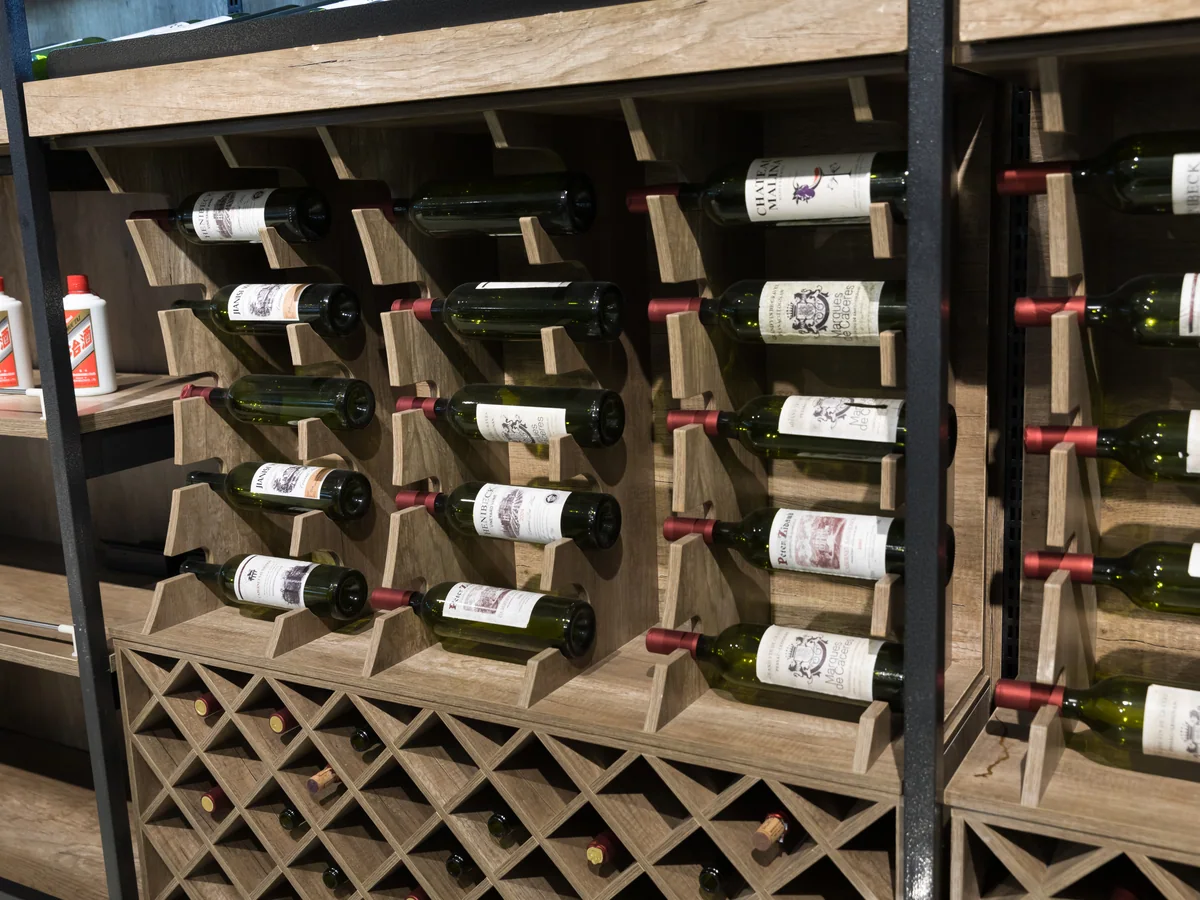
One bottle per cell
Individual cells in the middle band. A cell makes a bottle look considered rather than stacked, and it stops a shopper pulling one out and bringing three with it.
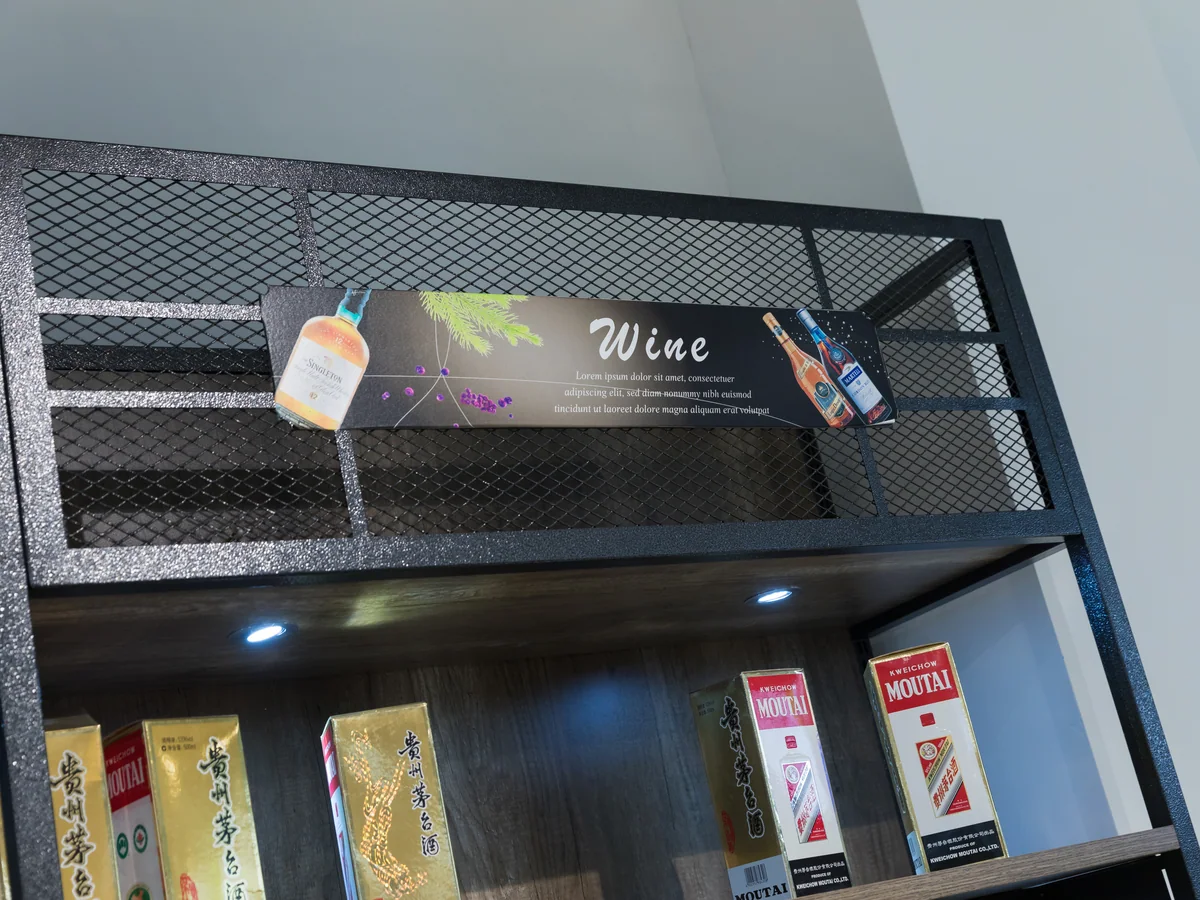
Labels facing out
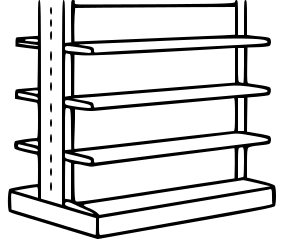
The top band is lit and the bottles face out. It is the only position on the wall where the label is doing the selling, so it is reserved for the lines that can carry that.
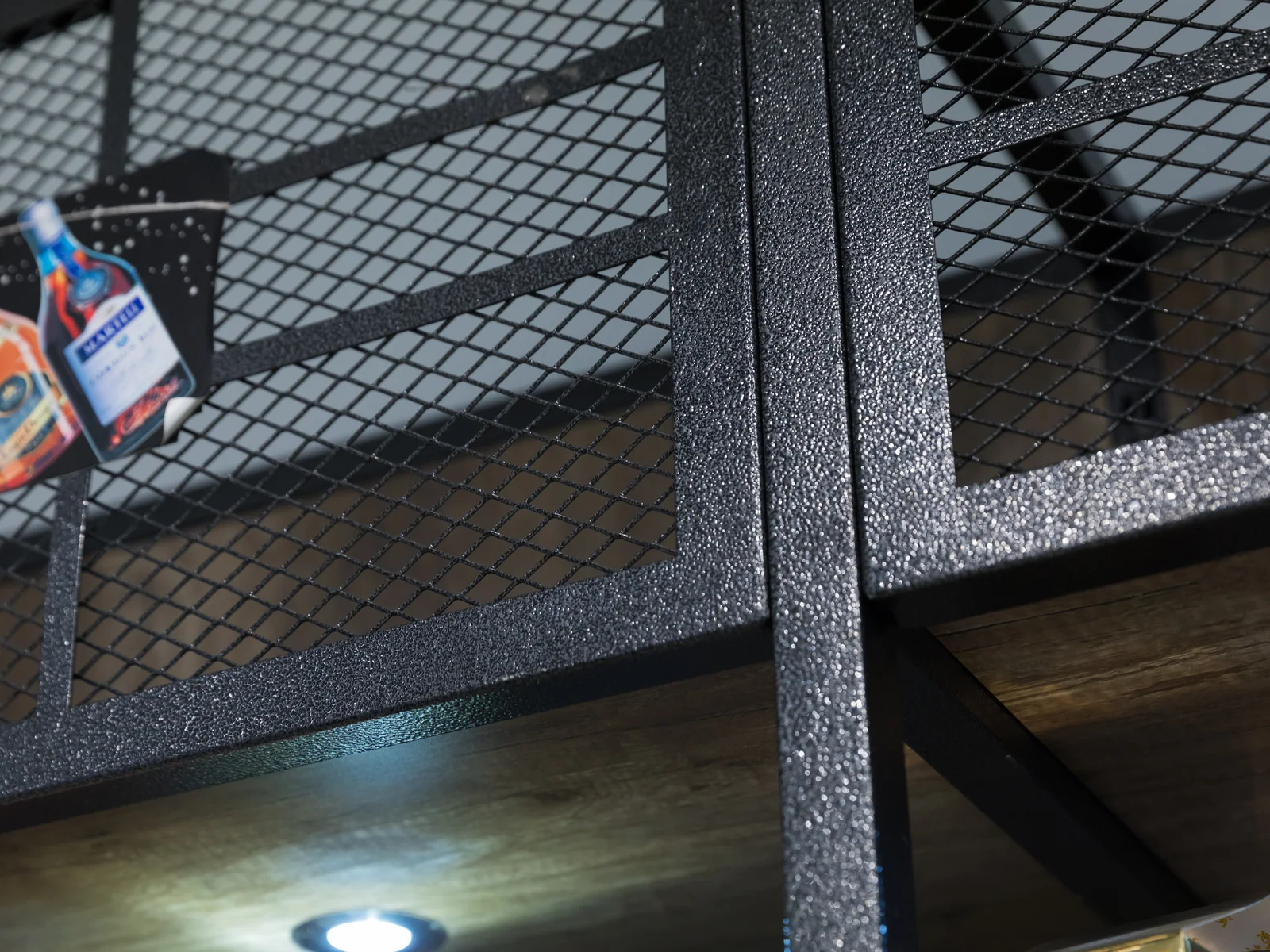
Carries all three systems
One frame carries the lattice, the cells and the lit shelves. Wine is heavy — a full lattice section is a serious load — and the frame is specified for a fully stocked wall rather than a display one.
Every item on this page is made to order. Send a floor plan, a hand sketch or a photograph of a fixture you like, and we quote against it.
Store fixtures are light for their size, so a container fills up on volume long before it fills up on weight. What decides your freight is not what one unit weighs — it is what shape the goods are in when they go through the container door. Everything we build leaves in one of three shapes.
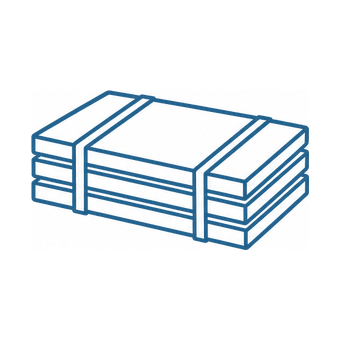
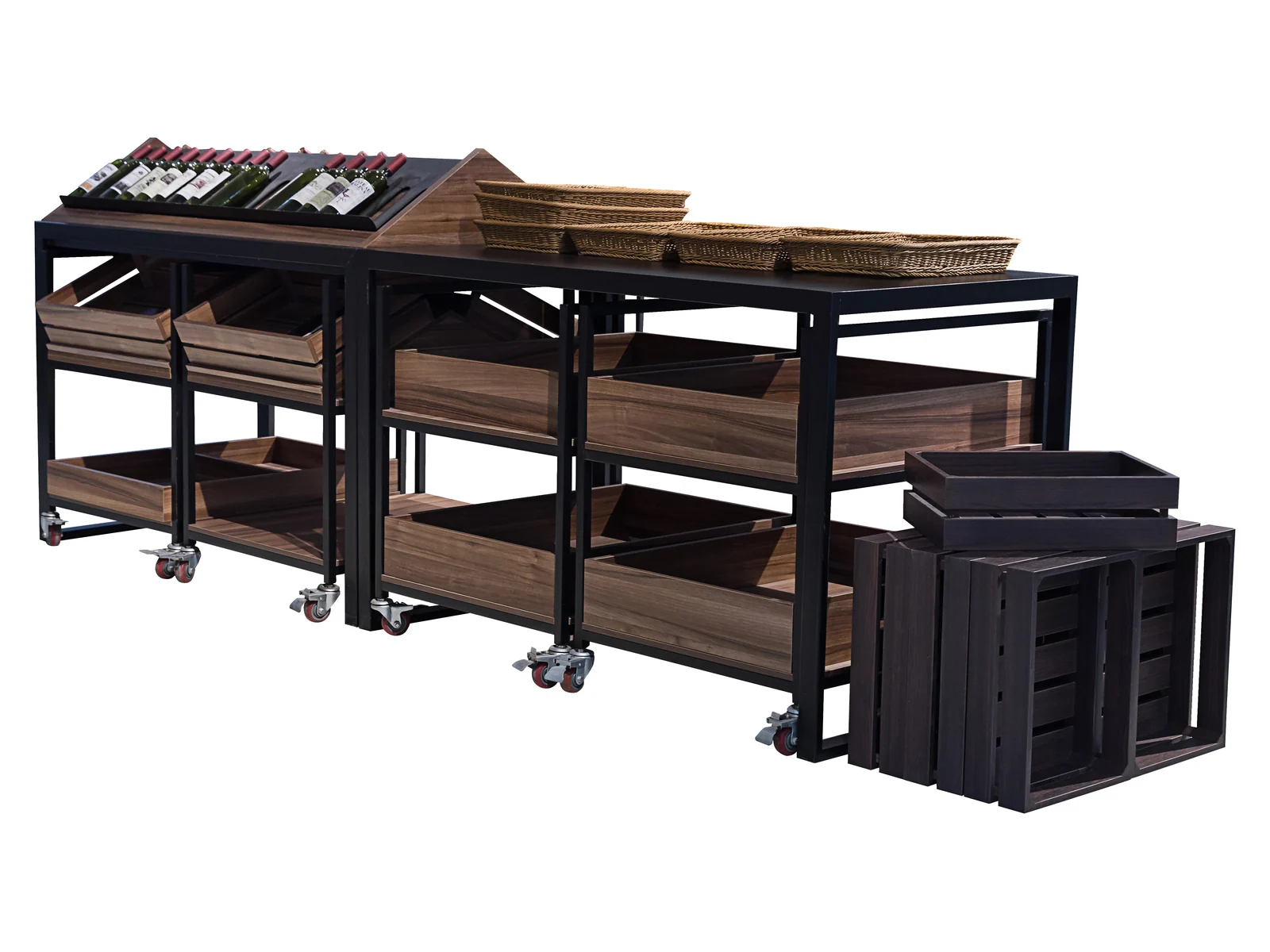
Shelving bays, produce islands and bulk cabinets travel as panels — uprights, shelves, back panels and plinths, strapped flat with bubble wrap on every component. They are built up on the shop floor, so the packing list and the assembly drawings travel with the goods.
This model
Trolleys slide into one another and baskets stack. Past the first unit, each extra one adds only its nesting pitch instead of its full length, so the shipped volume ends up a fraction of what the unit count suggests.

A checkout lane is welded, coated and fitted out as one piece, so it is crated whole with padding on the steel. Nothing waits to be assembled at the store beyond levelling it into the lane, and the crate is the counter plus a margin.
Wine and tobacco fixtures flat pack as panels, uprights, lattice sections and shelves. Two builds are on record for this category — KS-YJG-01 and wineRack-Y01 — and both are made to the wall rather than sold in fixed sizes, so the case dimensions come back on the packing list once the run is confirmed.
Wine and tobacco are the highest value density in the store, and they sit against fixtures that have to match them.
A wine wall usually terminates a shelving run, so the two carry the same board tone and the same colour reference.
See shelving baysTobacco is almost always behind or beside the lane, which makes the showcase and the counter one piece of joinery to the shopper.
See checkout countersWine is promoted by the case, and a square at the end of the run is where a multi-buy actually moves.
See retail display tablesHow many of each a store needs is a floor area question rather than a product question, and it is answered store by store on the store layout planning page.
Send your bay length and split your range into label-led, price-led and cellar lines.
Send the wall length and a rough split of your range into label-led, price-led and lay-down lines. That split is what sets the three bands.
The four that come up on nearly every enquiry for this build. If yours is not here, send it with your layout and it is answered alongside the quotation.
Both recorded builds in this category are made to the wall rather than sold in fixed sizes, so there is no catalogue dimension to quote. Send the bay length and the ceiling height and it comes back drawn to your wall.
The wall is built for it and the route is drawn before production. The fittings themselves are specified per order — tell us what you intend to use, or ask and we will advise on what the top band will carry.
A full lattice section is a serious load and the frame is specified for a fully stocked wall rather than a display one. If you are stocking heavier formats than standard bottles, say so and the gauge is checked against it.
Yes, and a store selling mostly screwcap and mid-price wine often should — lay-down storage is wasted on stock that turns in a fortnight. Tell us your range split and we will say which bands you actually need.