Walk through a busy supermarket at five in the afternoon and the queue is the shop. People with full baskets stand at the till moving things one at a time onto the counter, and the lane runs at the speed of whoever is slowest. A conveyor belt exists to break that dependency, and whether it is worth having comes down to one question: does a queue actually form at your lanes?
Key takeaways
- A belt lets two or three shoppers work one lane at once: one packing, one being scanned, one unloading.
- The separation bar is what makes that possible. Without it a belt saves nobody any time.
- Where queues rarely build, the same money buys a deeper counter with a real packing end, which does more.
What A Belt Lane Actually Is
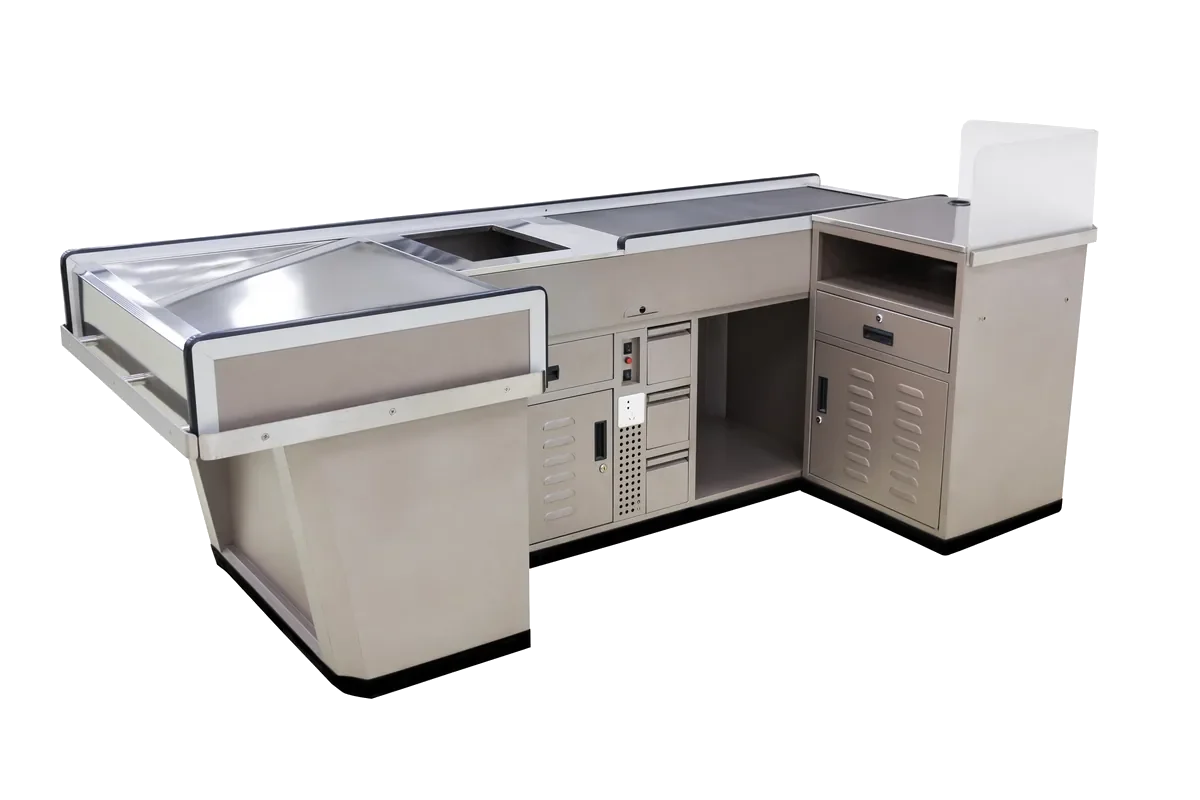
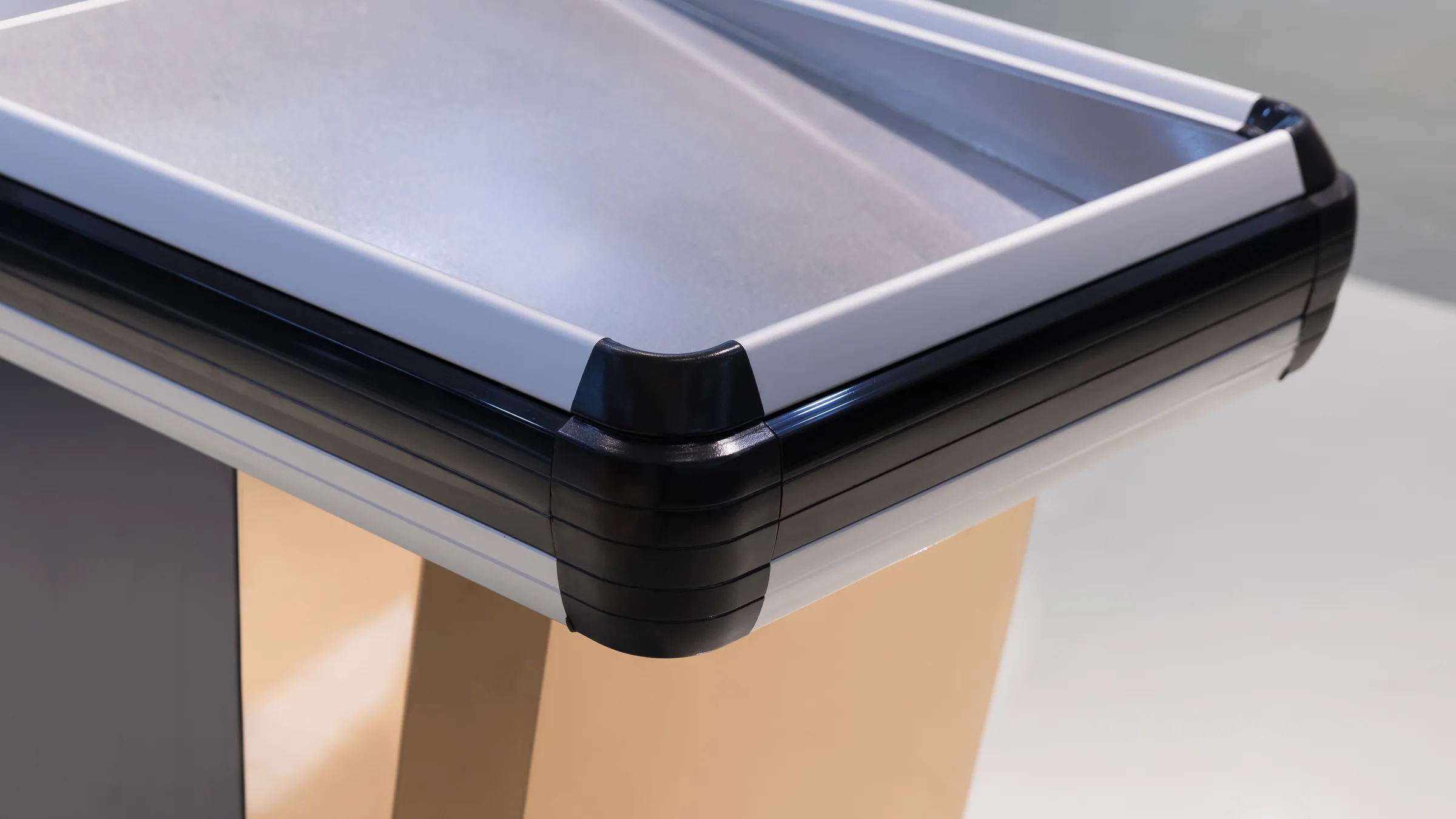
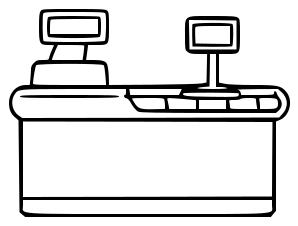
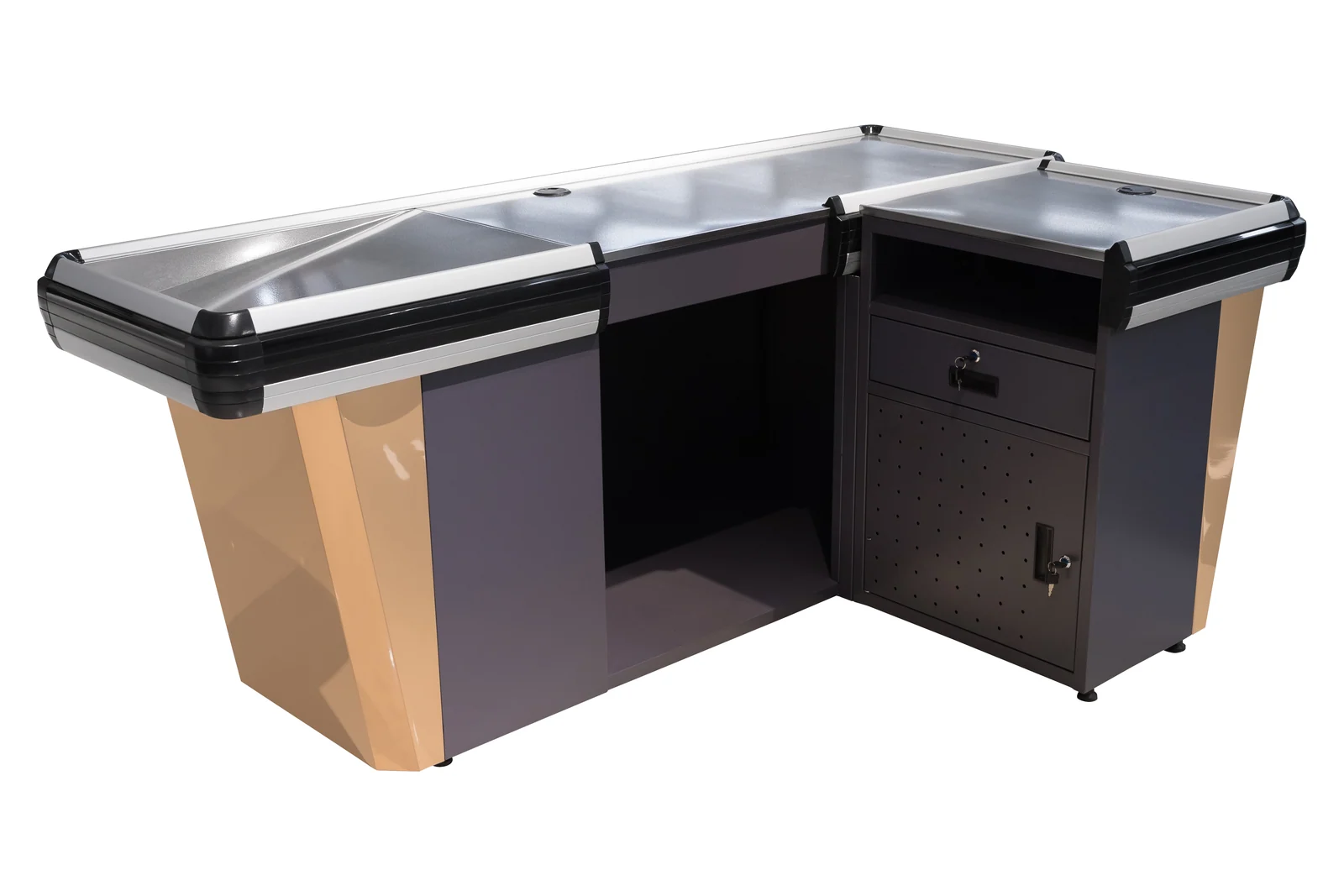
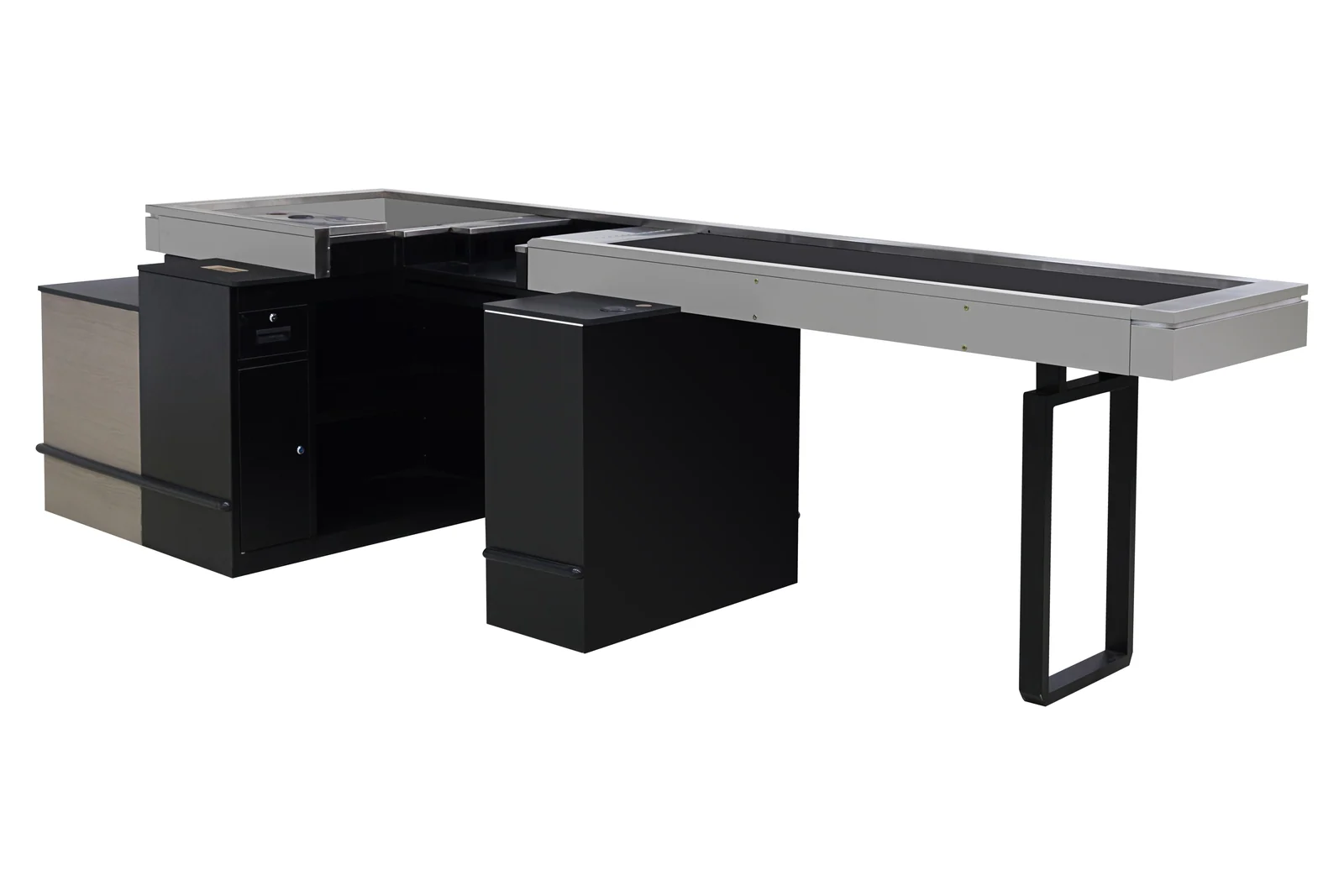
A checkout counter with a conveyor belt has a powered upper run that moves goods from the front of the counter towards the rear. The till position is mounted along the belt and can sit at a chosen point: near the front end, near the rear end, or somewhere between the two, depending on how the lane is worked and where the packing happens.
That is the mechanical description. The operational one is simpler: the belt replaces the shopper's arm. Rather than a customer reaching across a worktop to push goods towards the scanner, the goods travel there on their own, in the order they were put down.
The Separation Bar Is The Actual Invention
A belt with a powered lane and nothing else does not save much. What makes the arrangement work is the article separation bar, and it is worth understanding the sequence properly.
Before the previous customer's items have been scanned, the electric belt has already moved them to the cashier. The customer places a separation bar behind their own goods. While the cashier scans, the next customer is already loading their items onto the belt behind the bar. When the first customer's scan is finished and they are packing, the cashier moves straight on to the next. Two or three shoppers are working the same lane at the same time, in the order they arrived.
A belt without a separation bar is a moving worktop. A belt with one is a lane that three people can be standing in.
What It Does For The Cashier
A belt lane is materially different from the traditional counter used in most supermarkets, and the difference the cashier notices first is the reduction in repetitive lifting. Goods that would otherwise be dragged across a worktop by hand, hundreds of times a shift, arrive at the scan point instead. Over a full trading day that is a real difference in physical load, and it shows up in how the lane runs at the end of a shift rather than at the start.
The system itself is not complicated: the belt automatically transfers the goods the customer has bought to the cashier, ready for scanning and payment. The customer puts the goods down at the start of the belt and the cashier takes them off at the end. The control unit behind it is a simple design, cheap to make and straightforward to use, which is the main reason belt lanes have become ordinary rather than premium equipment.
| With a belt | Without a belt | |
|---|---|---|
| Shoppers per lane at once | Two or three, separated by the bar | One at a time |
| Cashier effort | Goods arrive at the scan point | Goods are pulled across the worktop |
| Body length needed | Longer; the belt deck has to run | Shorter; less of the front end used |
| Best for | Lanes where a queue forms | Small baskets, quiet lanes, peak-only lanes |
When Not To Buy One
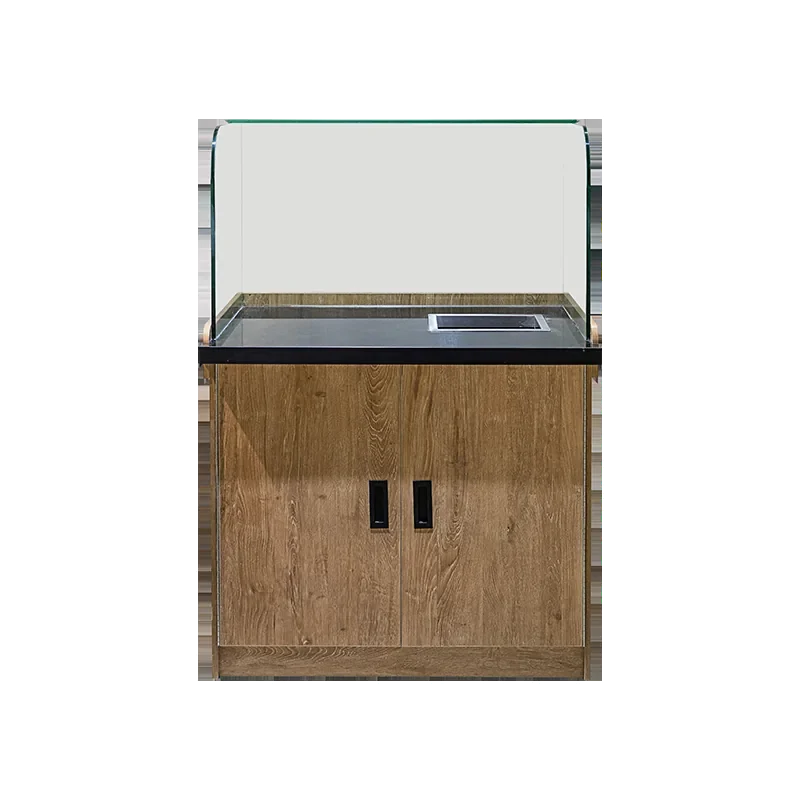
A belt earns its place where a queue builds. Where baskets are small and a queue rarely forms, the same budget buys a deeper counter with a genuine packing end, and that does more for the same shopper — somewhere to land a full basket and somewhere to pack it beats a moving deck that is empty most of the day.
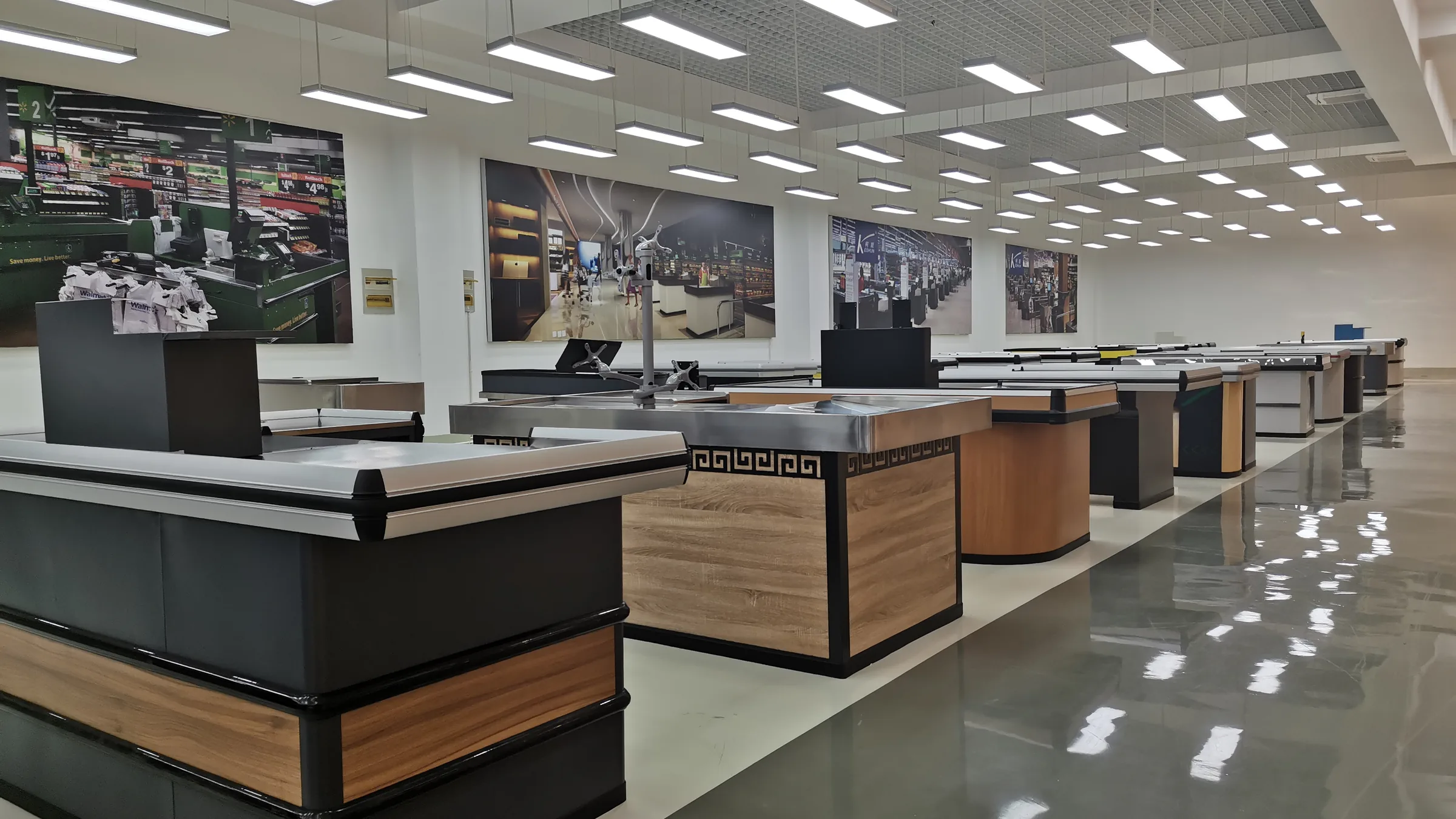
In practice this is a lane-by-lane decision rather than a whole-order one. Most front ends we quote end up with belts on the main lanes and plain decks on the rest. Tell us the busiest hour of the week and the typical basket, and the split more or less picks itself.
What is on record for this category
Seventeen checkout counter models. Recorded lengths 1200 to 2000 mm, recorded depths 600 to 1800 mm, and every recorded worktop at 850 mm. The longer sizes are the ones normally built with a belt; the shorter ones are usually quoted without. See the checkout counter range for the full size table.
Keshun Technical Team. First published 14 October 2019, rewritten 8 August 2026. The belt sequence described above is from our own product notes; the size figures are on record for this category.