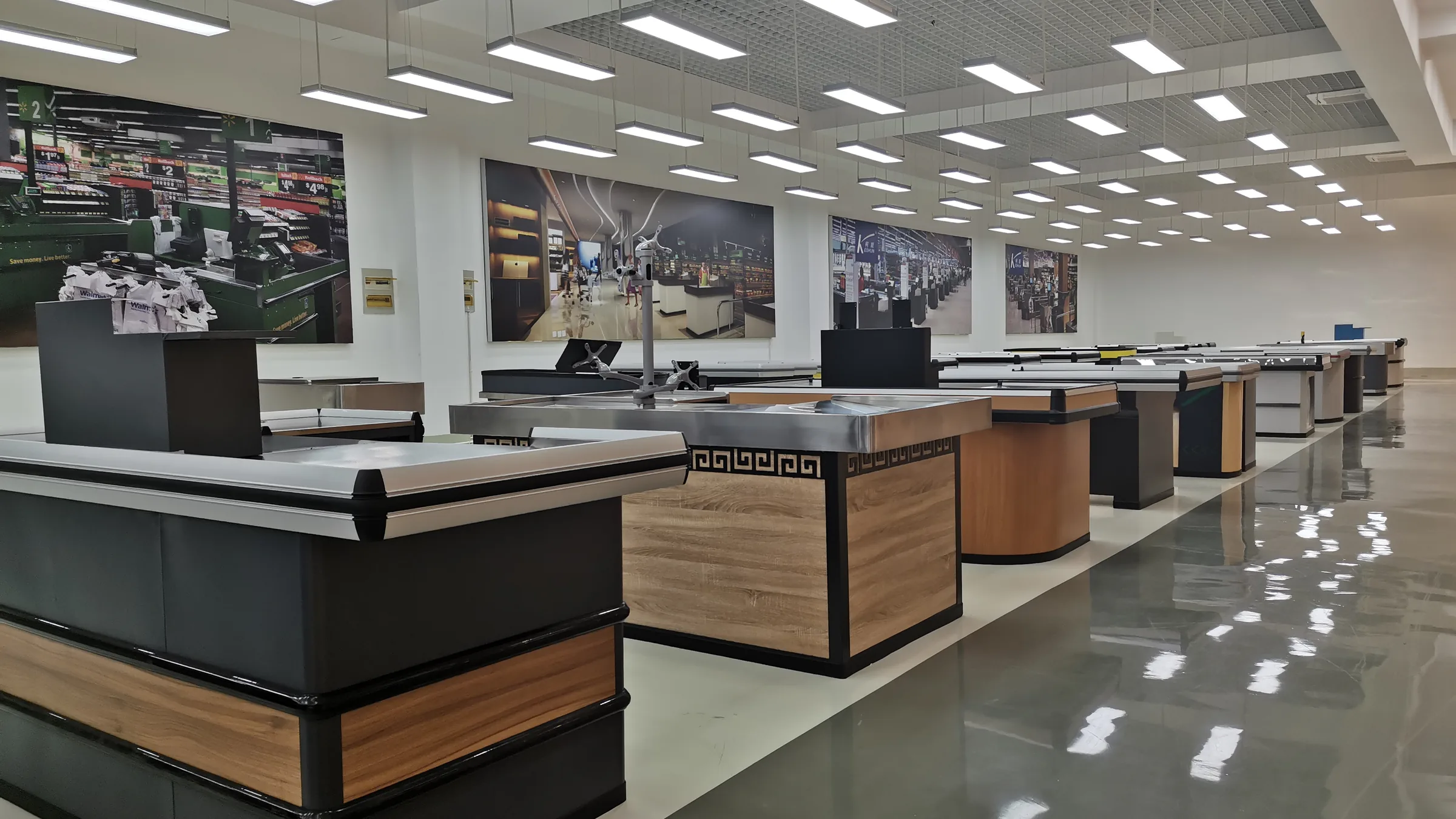

Checkout equipment is the piece of a shop that makes cash-and-carry work, and it comes in more distinct types than most buyers realise. They are not simply large, medium and small: they differ in what they are built around, and picking the wrong type is a more expensive mistake than picking the wrong size.
Key takeaways
- Four broad types: modern networked counters, retail counters, supermarket cash desks and compact cash desks.
- The difference is what the counter is built around — a terminal, a scanner, a lane or a small footprint.
- All our recorded counters share one 850 mm worktop height, so different types still line up in one front end.
The Modern Counter
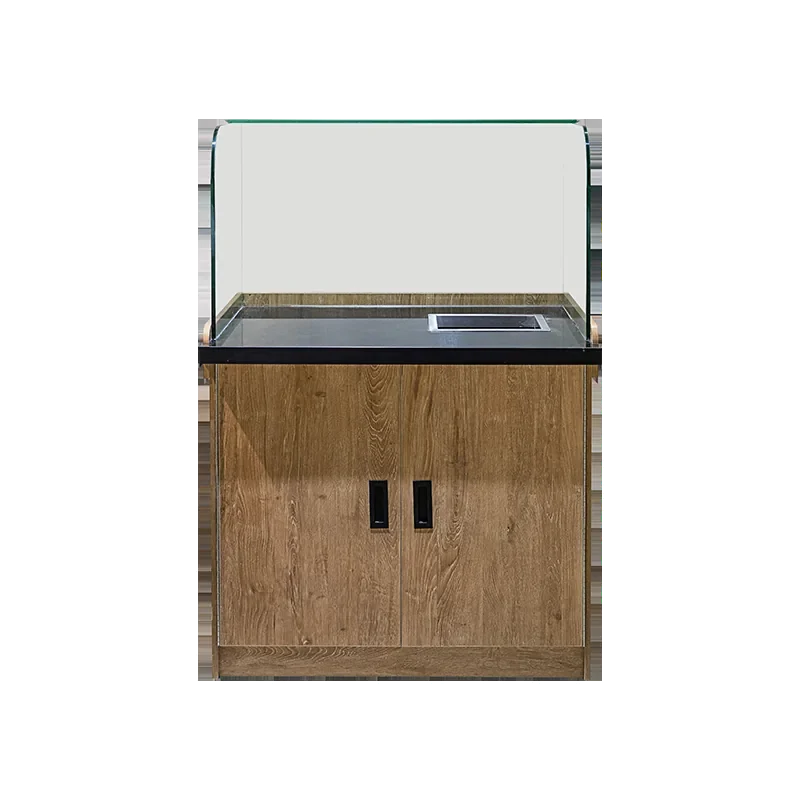
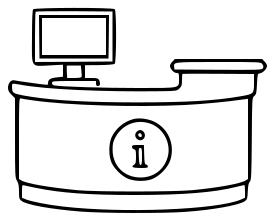
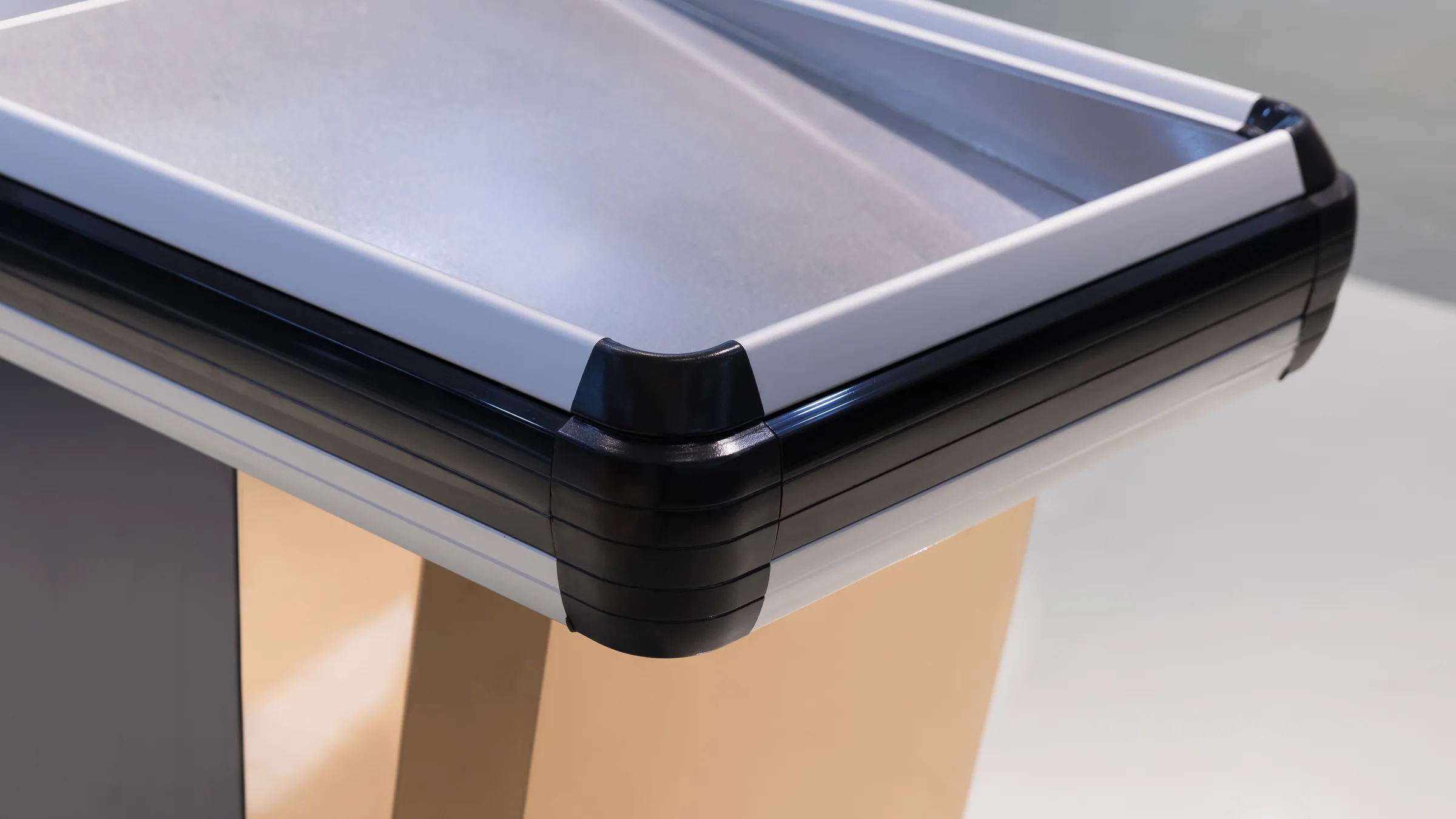
The modern checkout counter has substantially replaced the traditional one in a great many leading stores. It is built around technology: the operator works through a digital protocol to access the till and the checkout functions of the machine, rather than through a mechanical register. It is the premium end of supermarket checkout equipment, and it contains the elements an operator needs to work without friction.
For the fixture, the consequence is the cut-out and the cable route. A networked terminal, a scanner and a separate receipt printer all need a home on or under the worktop, and they need a path for the cabling that does not run across the cashier's knees. Those are decided when the counter is drawn, which is why a photograph of the equipment you already own is more useful to us than a description of it.
The Retail Checkout Counter
This is the most common type in any retail store. Its structure is effective and portable, and it holds the components and setup that let a shopper complete the checkout process immediately. The build is deliberately simple and straightforward compared with its counterparts: essentially the scanning of products and a secure place to deposit cash.
What it does have is organisation. Retail checkout counters are built with compartmentalised components so the shopkeeper can keep money in a particular order — and that ordering is what makes a small counter workable for one person handling both the sale and the float.
The Supermarket Cash Desk Counter
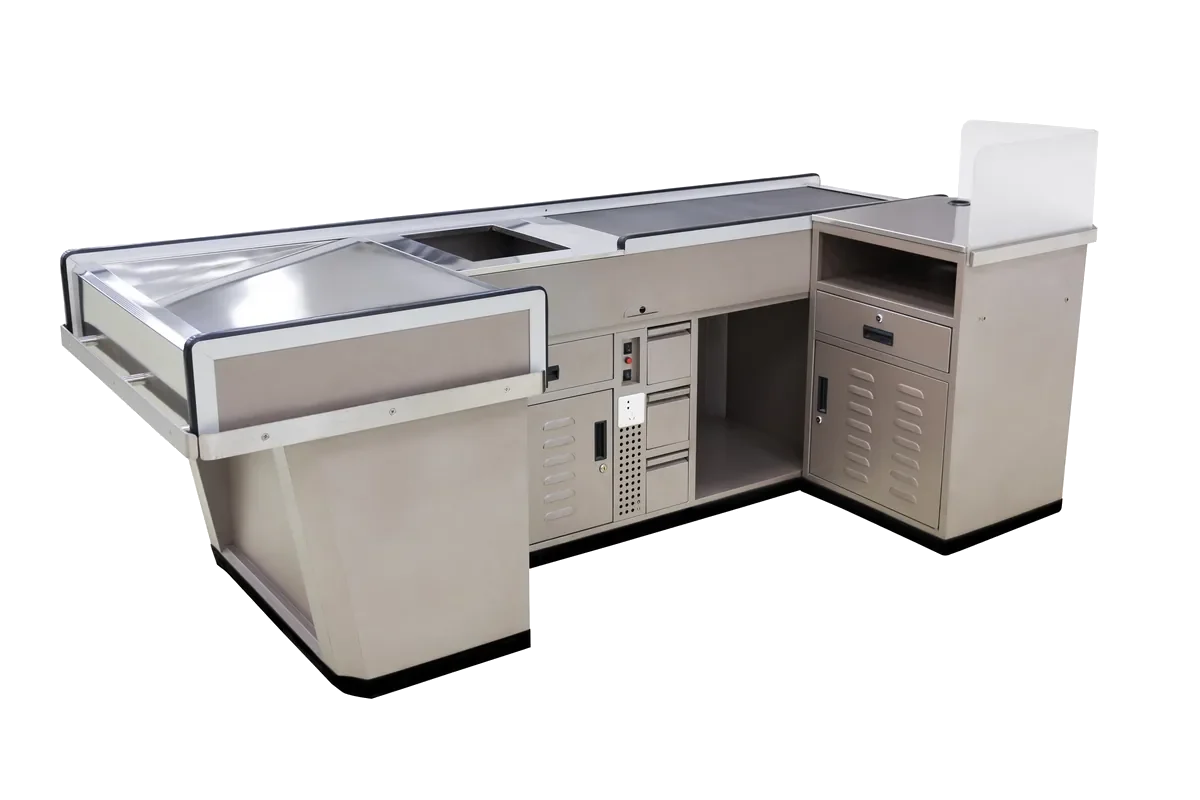
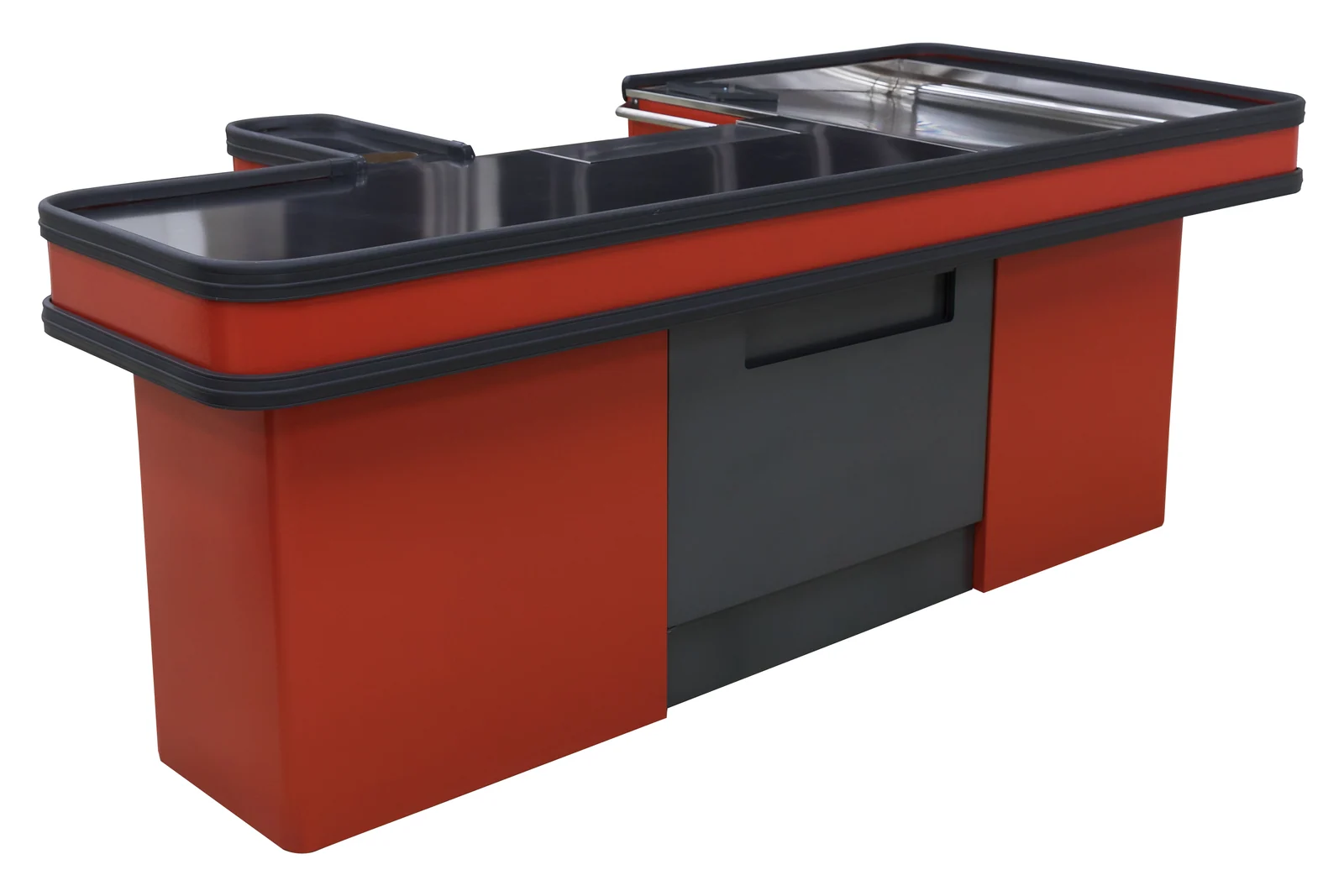
A supermarket cash desk counter is what most superstores use, and it has a distinctive layout: it lets the cashier reach a number of items on the counter at once rather than handling them strictly in sequence. It comes with a scanner and cash storage, and those two together are what complete it as a supermarket fixture rather than a shop counter.
When choosing supermarket checkout equipment, the thing to insist on is that it meets the store's checkout requirements without difficulty, and that when the machine has a problem it is dealt with immediately. A counter is bought once and used every trading hour for years, so the support arrangement behind it is part of the purchase.
A counter is bought once and used every trading hour for the next decade. What happens when something on it fails is part of the specification.
The Compact Cash Desk
As opposed to the large supermarket cash desk counter, there is a smaller cash desk checkout counter for stores where the front end is short and one person works the whole transaction. Our recorded file starts at 1200 mm long and 600 mm deep, which is the size that suits a convenience store or a second lane that only opens at peak.
A 600 mm deep counter is a paying station and very little else, and it is worth being clear-eyed about that. A counter of 1000 to 1200 mm deep gives the cashier somewhere to land a full basket and the customer somewhere to pack, which is what actually clears a queue. If the floor allows it, depth is usually the better investment.
| Type | Built around | Store format |
|---|---|---|
| Modern counter | A networked terminal and its peripherals | Larger stores running a full POS and stock system |
| Retail counter | Simple scan and a secure cash position | General retail; the most common type of all |
| Supermarket cash desk | A lane with a scanner and cash storage | Superstores and full supermarkets |
| Compact cash desk | A short footprint worked by one person | Convenience formats and peak-only lanes |
What They All Share
The useful thing about this category is that the types are more alike underneath than they look. Every counter in our records sits on an 850 mm worktop — all thirteen dimensioned builds, in four lengths and six depths — and the 600 × 600 × 850 mm cashier stand module beside them matches. That means a front end can mix a supermarket lane and a compact desk without the surfaces stepping, which is what lets a store add a lane later without the addition looking added.
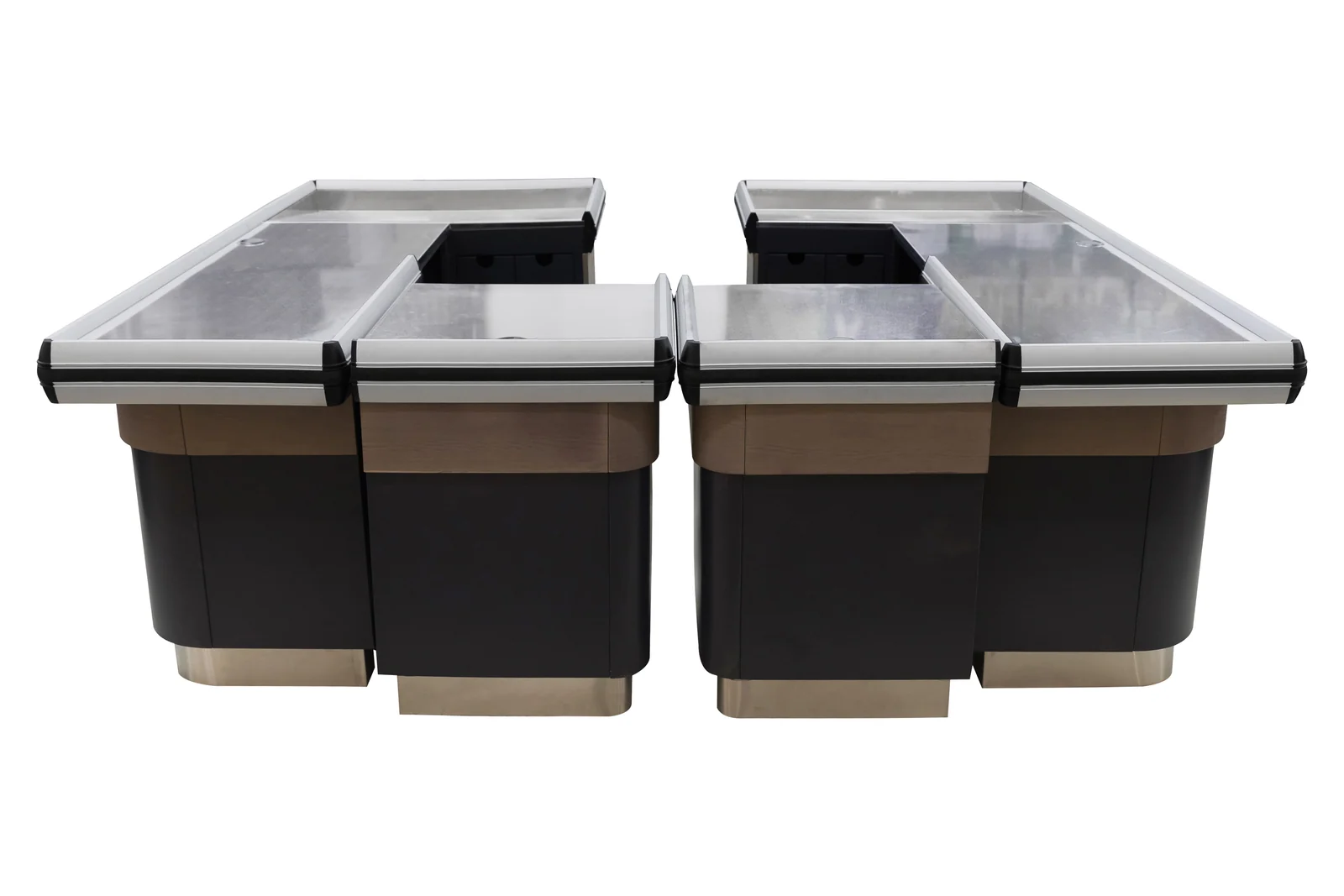
What is on record for this category
Seventeen checkout counter models. Recorded lengths 1200, 1800, 1850 and 2000 mm; recorded depths 600, 900, 1000, 1100, 1200 and 1800 mm; every recorded worktop at 850 mm. Bodies from 0.8 to 1.5 mm metal sheet with stainless steel board, or faced in 1.5 to 2.5 mm board. See the full size table.
Keshun Technical Team. First published 6 August 2018, rewritten 8 August 2026. The size figures quoted above are the ones on record for this category.