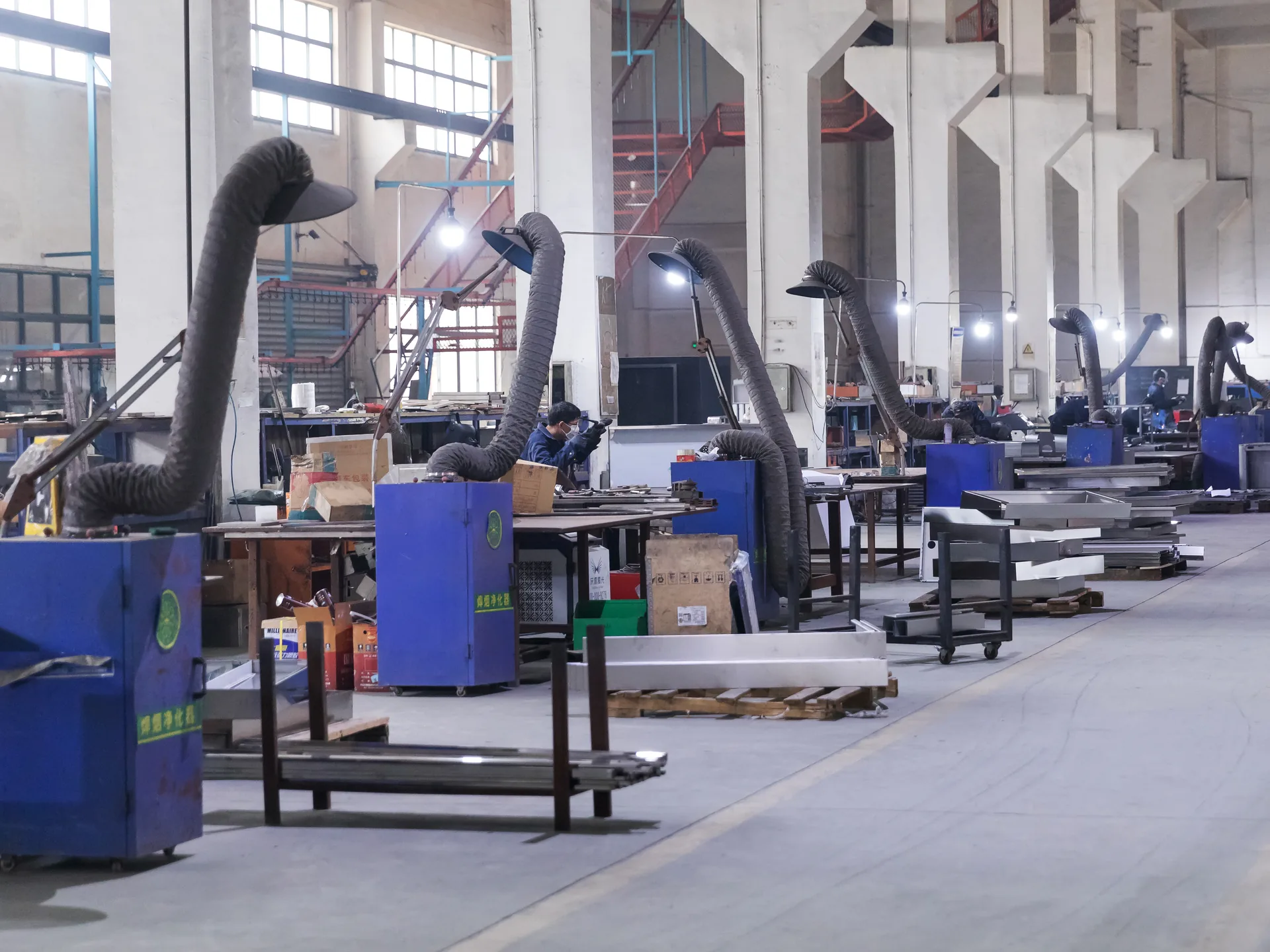

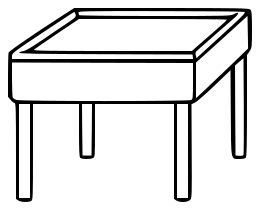



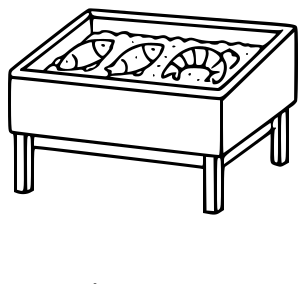
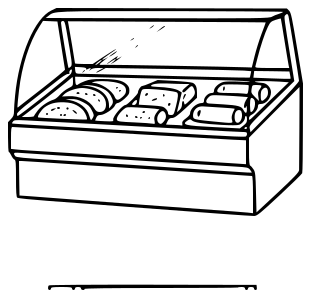
A seafood section is the hardest part of a supermarket to keep looking right. Fish smells, ice melts, and customers form an opinion about the whole shop from that one aisle — plenty of people avoid a supermarket entirely because its seafood section was not looked after. Most of that comes down to the stand it is displayed on, so it is worth knowing what to check before buying one.
Key takeaways
- Build quality first. If melting ice leaves rust on the base or the legs, the stand was the wrong one.
- Steel is the correct material for this category, and it is not a close call.
- Size and presentation matter more than styling. A wide stand with several racks gives you options; the design barely differs between builds.
Look For The Right Build Standard
The name tells you the problem: an ice fresh stand is going to hold a lot of ice, all day, every day. So the first thing to establish is build quality, and there is a plain test for it. If the melting ice leaves rust on the base or the legs of the stand, it is not good enough. Stands built with steel are the optimum choice for this category, and everything else is a compromise you will notice within a year.
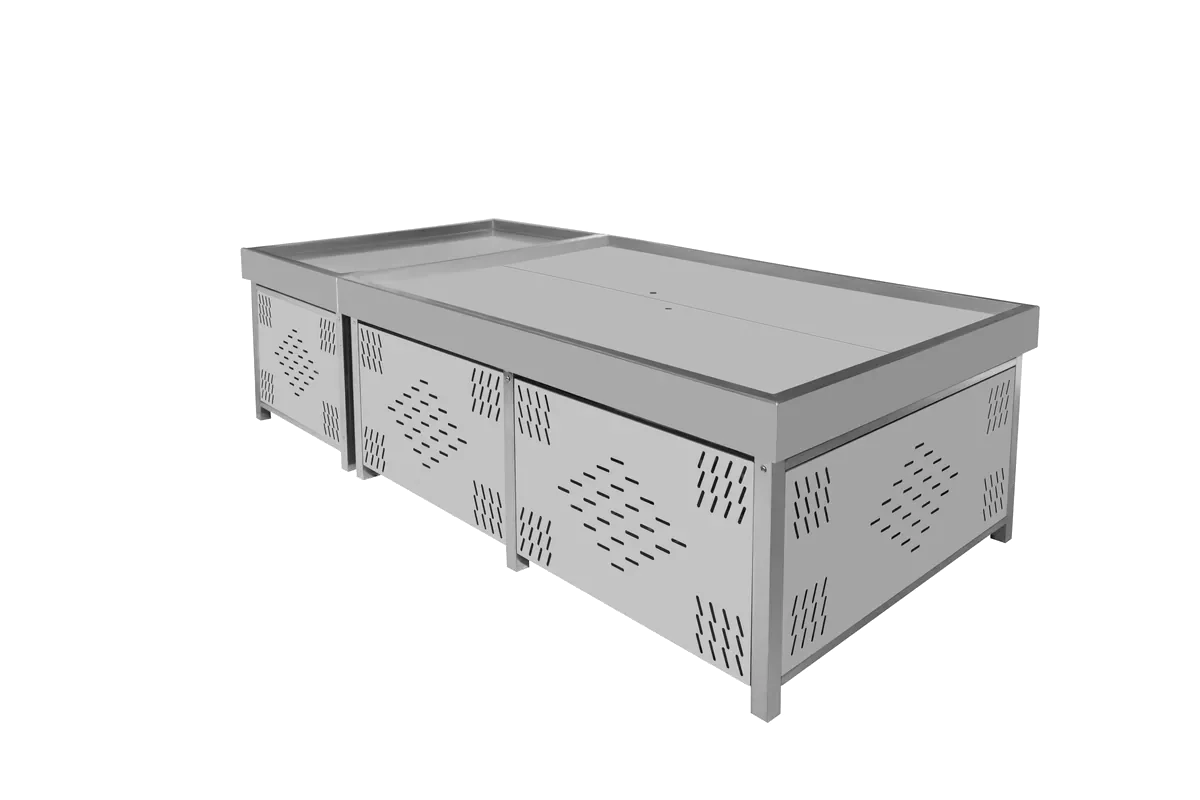
This is why our ice tables are stainless throughout rather than coated. A coated steel table under a constant water load fails at the coating first, usually at the point where the ice sits, and always somewhere nobody looks until there is a stain running down the leg. Our product records also specify drain outlets installed at the bottom of the unit, so the melt water leaves through the base rather than over the edge onto the floor in front of the counter.
Presentation: More Racks, More Options
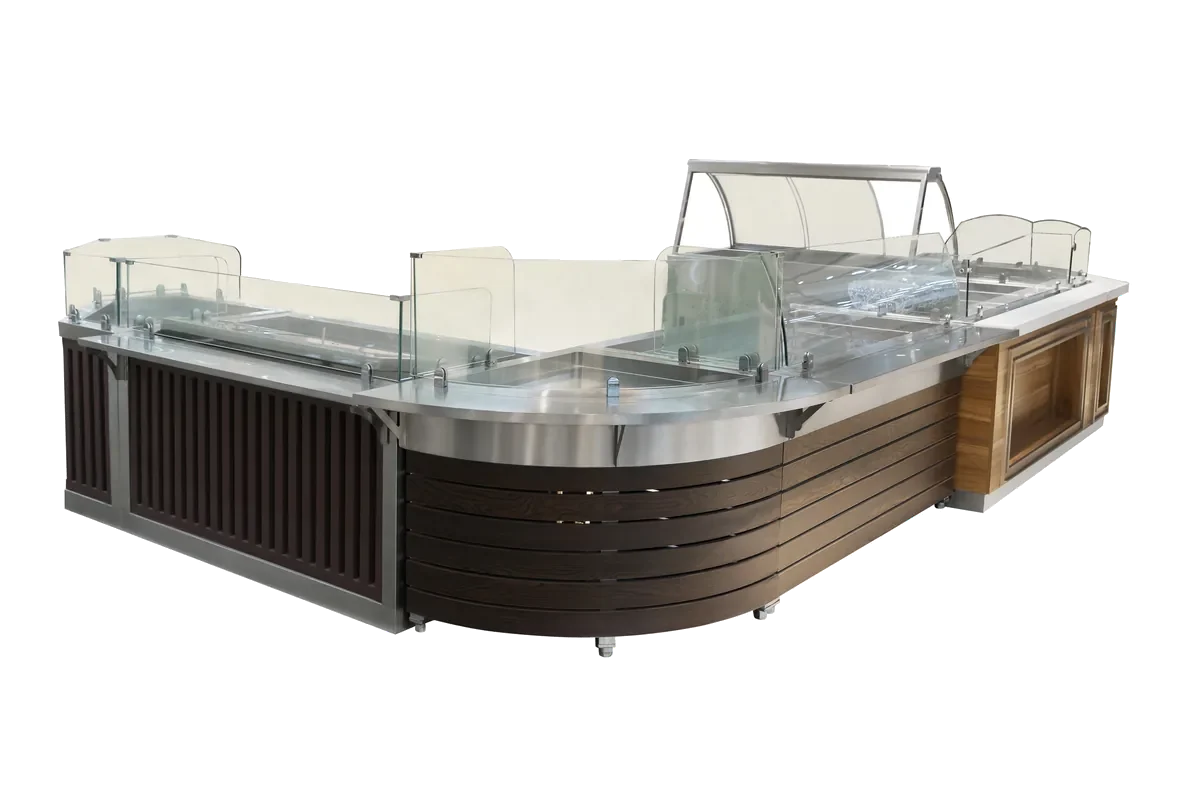
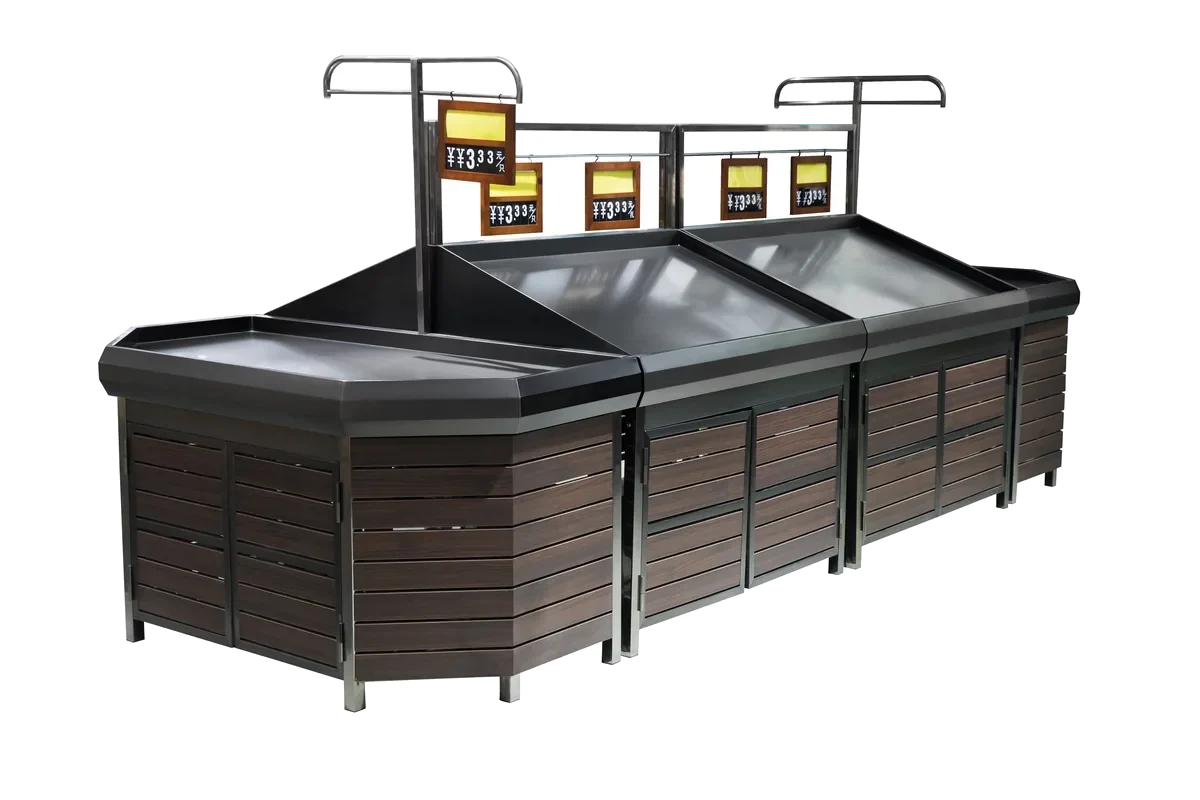
Supermarkets present seafood in different ways, and the more distinctive and attractive the arrangement, the more customers it holds. What that asks of the fixture is straightforward: the stand should have multiple racks or divisions so the right product can go in the right place, rather than everything being laid on one flat bed and sorted by eye.
This is a decision to take at the order rather than afterwards. An unbroken ice bed displays best and lets a fishmonger lay out whatever came in that morning. Divided wells keep species apart, which some markets require and most fishmongers prefer for shellfish. Both are built; what cannot be done is adding divisions to a bed that was pressed without them.
If melting ice leaves rust on the base or the legs of a stand, the stand was the wrong one. That test settles most of this category.
Keeping The Fish Looking Fresh
Ice food stands exist mainly to display seafood, and if the fish does not look fresh people will not only decline to buy it, they will avoid the store. Placing the stand under the right air conditioning helps considerably, which makes the position of the fixture a decision to take with the ceiling plan rather than after the equipment arrives.
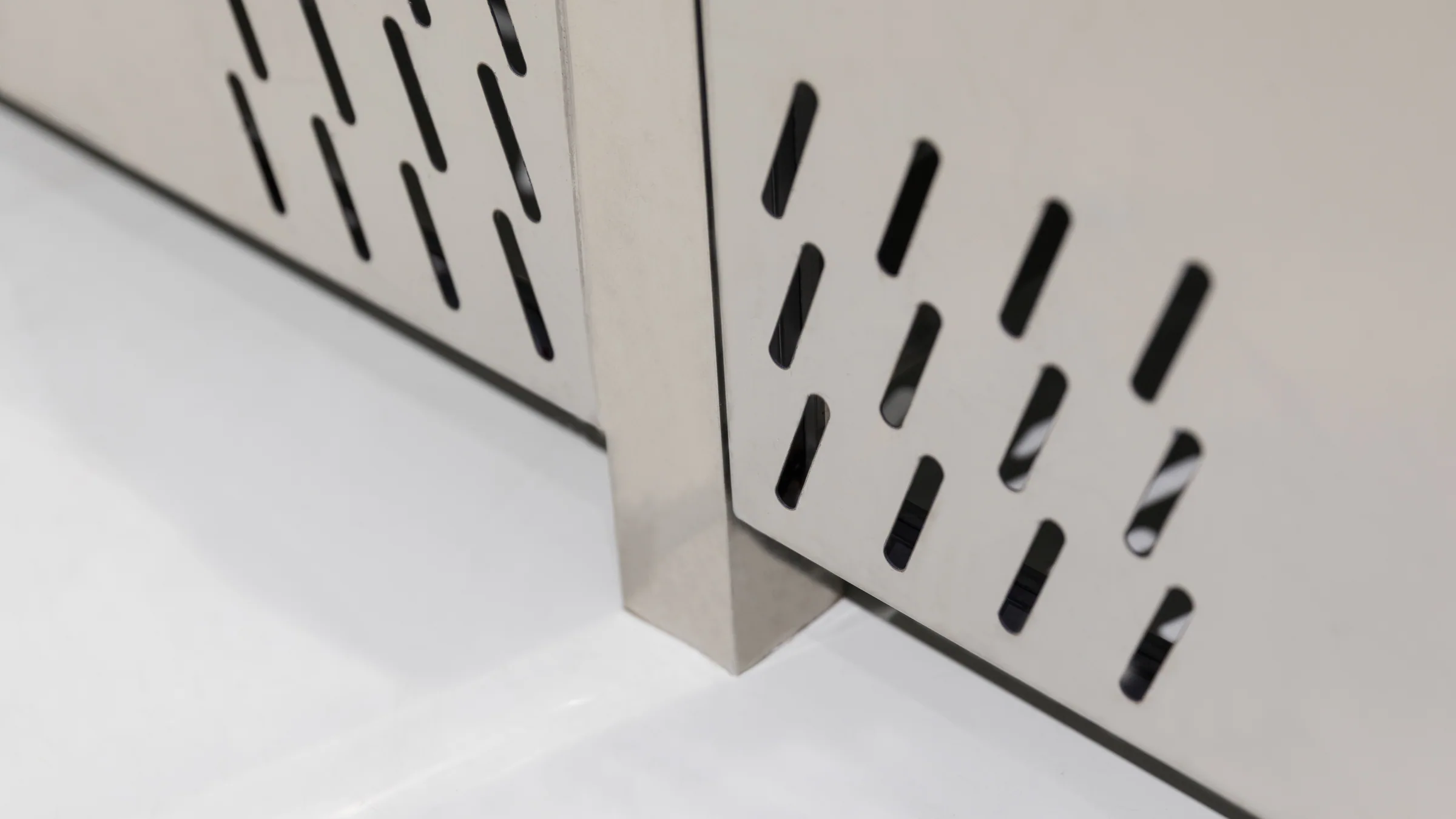
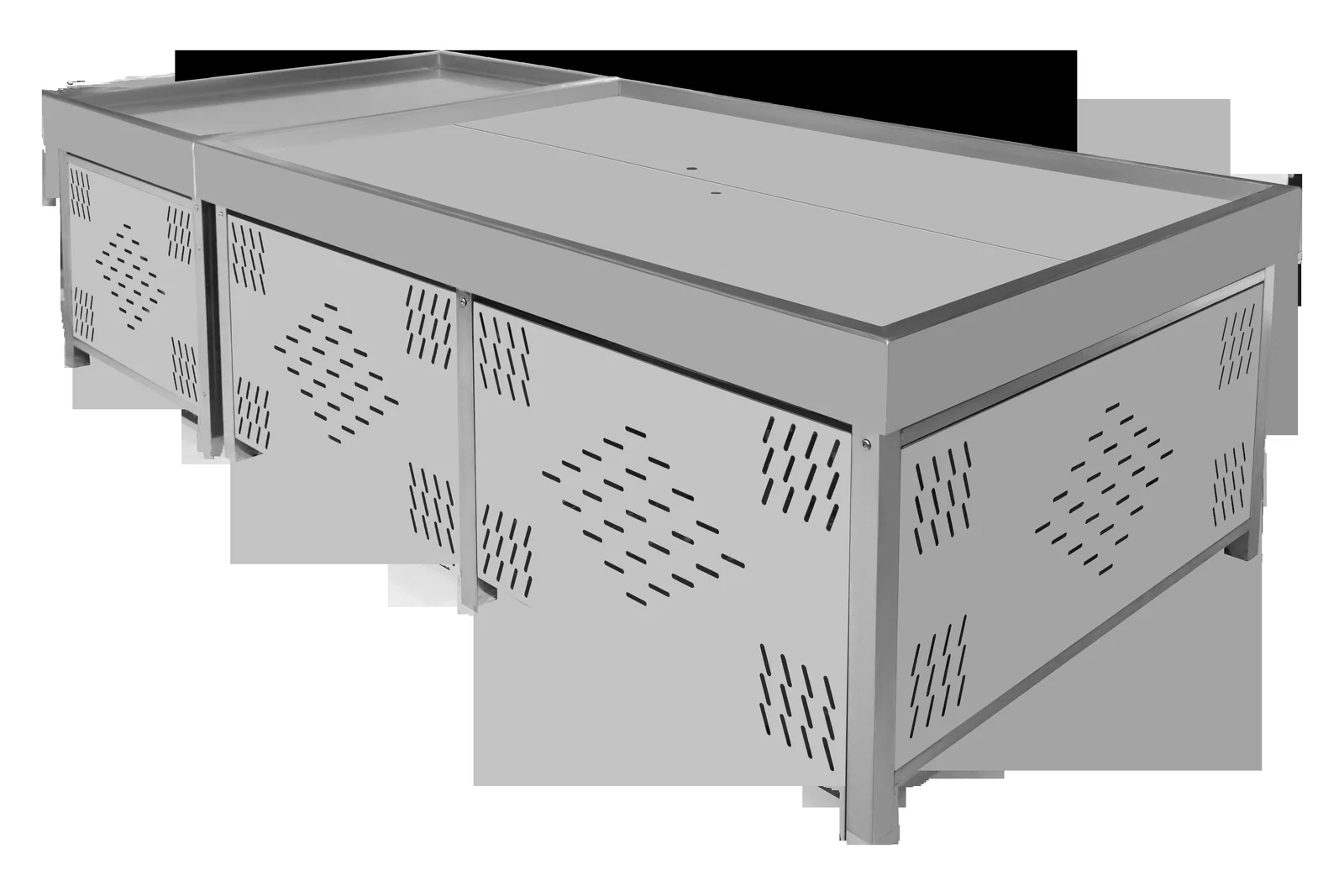
The louvred base panels on our builds are part of the same problem. Air has to move under a body that is cold and wet for the whole trading day, otherwise condensation gathers underneath the unit where nobody looks until there is a puddle. Ventilated panels are a cheaper fix than any coating and they do not wear out.
Size And Space
An ice fresh stand needs to be reasonably large and needs room to hold a lot of product. The more variety on display, the more it attracts customers: a wide, roomy stand with space for several lines gives shoppers options, and giving people options has a measurable effect on whether they come back. It is a small idea and an unglamorous one, but it shows up in repeat trade.
Our ice tables are built in sections rather than to a length, so a run grows by whole units. That makes the size question easy to answer — decide how much seafood frontage the counter needs and the section count follows.
| Check | What good looks like |
|---|---|
| Build | Stainless throughout; no rust at the base or legs after a season |
| Drainage | Outlets in the base, matched to what your floor already has |
| Presentation | Multiple racks or divided wells, decided before the bed is pressed |
| Air | Louvred base panels; the stand positioned under the air conditioning |
| Size | Wide enough to carry variety; built in sections so it grows by units |
Design Comes Last
Design is at the bottom of this list on purpose, because it matters less than people think. Ice fresh stands mostly share the same design and differ in size. As long as the product is fresh, the stand is kept clean and there is no smell coming off the display, people will keep coming back — and no amount of styling compensates when those three are wrong.
What is on record for this category
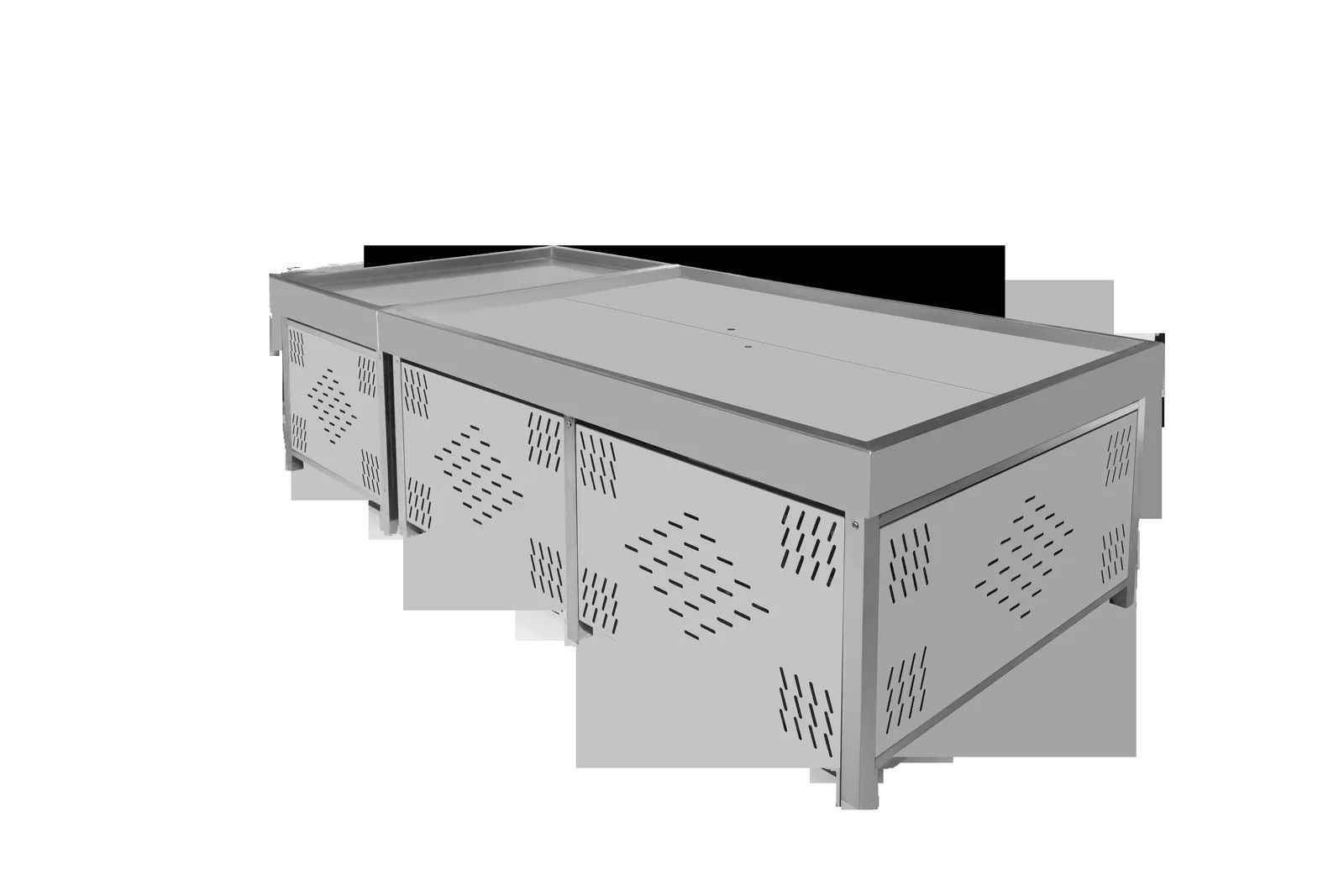
The ice fresh stand and the fish display counter are both on record as products, and both are built to the counter run, so we do not publish a size table. What is recorded is the build: stainless steel, with drain outlets installed at the bottom of the unit. See the ice fresh range.
Keshun Technical Team. First published 5 July 2019, rewritten 8 August 2026. The build guidance above is from our own product notes. Ice tables in this category are built to the counter run rather than sold in fixed sizes.